
Reviewed · GREEK THEATRE TOURS
Syracuse: Neapolis and Greek Theater guided tour
Syracuse’s Neapolis Archaeological Park is much easier to understand with someone beside you who can explain why these quarries, theaters, caves, and arenas mattered. The most memorable stop is the Ear of Dionysius, a tall, echoing cave linked to the tyrant Dionysus and surrounded by stories that sit somewhere between history and legend.
I like the way this tour joins major sights in one walk, and I like that the entrance ticket is included. Guides such as Giuseppe, Luca, and Laura have been praised for clear explanations, patient pacing, and thoughtful answers. The main drawback is that the tour may run in Italian and English at the same time, so some stops can take longer. One visitor also had trouble hearing the guide in a larger group.
In This Review
- Key points to know before you book
- Why Neapolis is worth your time in Syracuse
- Meeting your guide and entering the archaeological park
- Latomie del Paradiso: quarries turned into gardens
- The Ear of Dionysius and its unusual acoustics
- The Greek Theater and the view toward the harbor
- The Altar of Hieron II and Syracuse’s public power
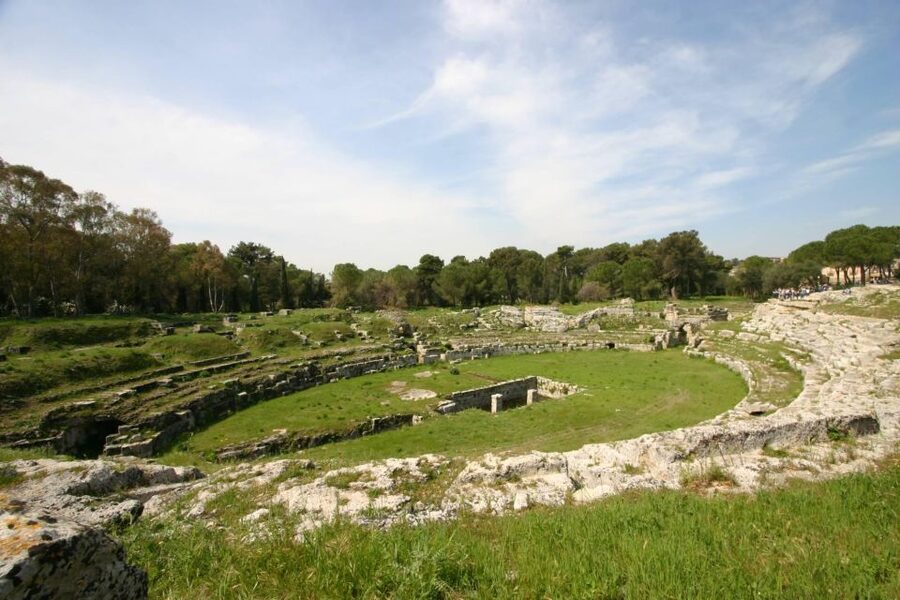
- The Roman Amphitheater and a later Syracuse
- How much the guide adds to the visit
- Timing, language, and group comfort
- Is $51 a fair price?
- Who should book this Neapolis tour?
- Should you book the Syracuse Neapolis tour?
- FAQ
- How long does the Syracuse Neapolis guided tour last?
- What language is the tour conducted in?
- What sights are included?
- Is the entrance ticket included?
- Where does the tour meet?
- How early should I arrive?
- Does the tour use a separate entrance?
- How much does the tour cost?
- Can I cancel the booking?
- Can I reserve the tour without paying immediately?
Key points to know before you book
- The Ear of Dionysius is the tour’s most atmospheric stop: Its unusual shape and acoustics make the cave memorable even before you hear its darker stories.
- The Greek Theater gives you Syracuse in one sweeping view: You see the theater, Nymphaeum Fountain, Grand Harbor, and traces of the city’s former power.
- You visit both Greek and Roman monuments: The route includes the Greek Theater, Altar of Hieron II, and Roman Amphitheater.
- The guide adds real value: Without context, the park can look like scattered stone. With explanations, the quarries and ruins connect into a story.
- Plan for a full two hours outdoors: You will walk between several sites, and shade may be limited in sunny weather.
- The price is reasonable for a guided archaeological visit: At $51 per person, you are paying for admission and a live guide rather than entry alone.
Why Neapolis is worth your time in Syracuse
Syracuse has more than one historic center, but Neapolis is where the city’s ancient public life comes into view. Greek settlers made Syracuse one of the major powers of the ancient Mediterranean, and later Roman rule left its own mark. In this park, you move through quarries, sacred spaces, performance venues, and an arena.
That variety is the reason I would not treat Neapolis as a quick walk past ruins. The setting is broad, and the remains are spread out. A guide can tell you what each place was used for, point out details you might otherwise miss, and explain how the same city changed across different periods.
The tour lasts two hours, which gives you enough time to see the principal monuments without turning the visit into an all-day archaeology lesson. You should still expect a steady walking tour rather than a series of short photo stops. The route includes a 20-minute introduction and sightseeing period in the archaeological park, followed by roughly 20 minutes at each of the main locations.
More Greek theatre visits around Syracuse:
- Syracuse: Greek Theater and Neapolis Guided Private Tour
★ 4.6 · 8 reviews - Greek Theater – Ortigia walking tour
★ 3.5 · 7 reviews - Syracuse: Greek Theater and Neapolis sunset tour
★ 5.0 · 4 reviews
Meeting your guide and entering the archaeological park
You may meet at the Neapolis Archaeological Park ticket office or at MOMENTO Ristorante, depending on the option you book. Check the exact meeting point on your reservation, and arrive 20 minutes before the start. That early arrival matters because the guide provides your park ticket directly at the meeting point.
The tour uses a separate entrance, described as a skip-the-line entrance. That can save useful time, especially when the park is busy. Still, the exact pace can depend on the group and on whether the guide is explaining the tour in both Italian and English.
The live tour is available in Italian and English. If you need English, listen closely at the start for the guide’s speaking style and position yourself near the guide. This is practical advice, not fussiness. One person found it hard to hear in a larger group, and the tour does not list headsets or microphones.
Latomie del Paradiso: quarries turned into gardens
The Latomie del Paradiso were ancient stone quarries. Today, they feel more like open-air gardens, with high rock walls and plant life softening the hard edges of the excavation. That contrast is part of their power. You are looking at a beautiful setting shaped by difficult labor.
A guide helps you understand the scale of the work. These quarries were not simply holes cut into the ground. They supplied stone for Syracuse and also held prisoners, making the site both useful and grim. The quiet greenery can hide how severe the place once was.
This is one of the stops where a good explanation changes your view. On your own, you may notice the rock walls and unusual shapes. With the guide, you get the human side of the site: the work, the suffering, and the way the quarries became part of the city’s story.
The park has sunny stretches, and one guide, Luca, was especially good at finding shaded spots while explaining the ruins. If you visit during a hot part of the year, bring water and wear a hat. The tour is only two hours, but the open setting can feel demanding in strong sun.
The Ear of Dionysius and its unusual acoustics
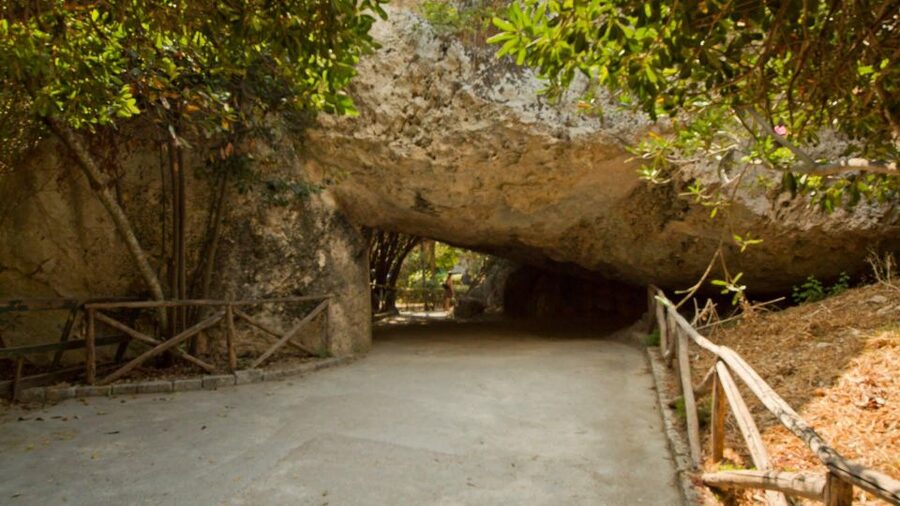
The Ear of Dionysius is a man-made cave cut into the quarry wall. Its tall, curved interior gives it an almost theatrical feel, and its acoustics make even a small sound carry in an unusual way.
The name is tied to the tyrant Dionysus. Stories connect the cave with his desire to overhear prisoners, though the exact line between fact and legend is not always clear. This is where a guide can be especially useful, because the site is full of dramatic claims and old stories that need careful handling.
The guide explains the connection between the cave, Dionysus, and Syracuse’s political world. You also get a chance to notice the sound itself. Laura, one of the guides who has led this tour, even sang inside the cave during one visit, using the acoustics to show why the space has such a strong effect.
Do not expect a long performance or a private stop. This is a popular part of the park, and your time inside may depend on the group and the conditions. But even a short visit gives you one of the clearest sensory memories of Neapolis.
A few more Syracuse tours and experiences worth weighing up
- Syracuse: Ortigia and Neapolis Guided Walking Tour
★ 4.7 · 205 reviews - From Syracuse: Mount Etna Guided Morning Hike & Food Tasting
★ 4.8 · 173 reviews - Syracuse: Highlights of Ortigia Guided Walking Tour
★ 4.2 · 136 reviews - Siracuse: Guided Velobike Tour
★ 4.5 · 116 reviews
The Greek Theater and the view toward the harbor
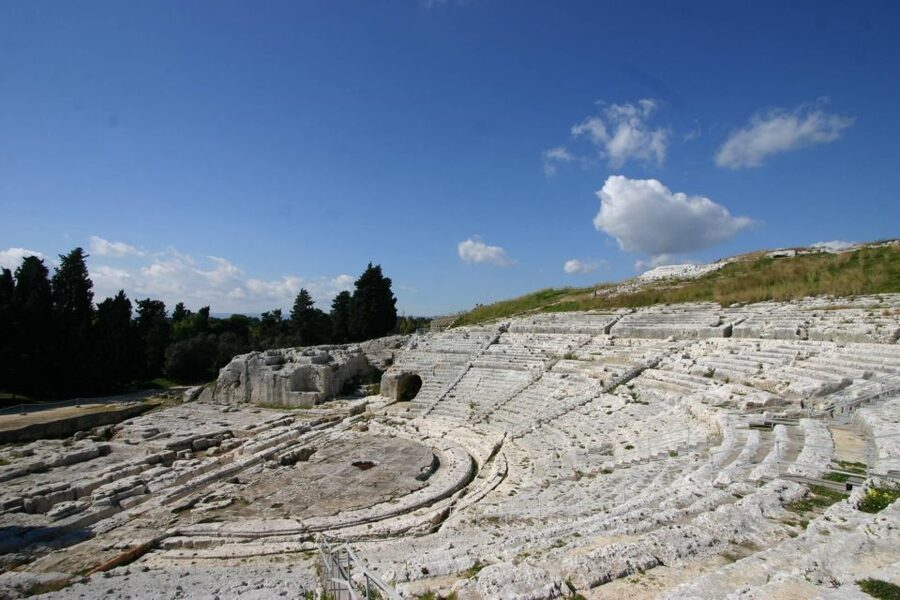
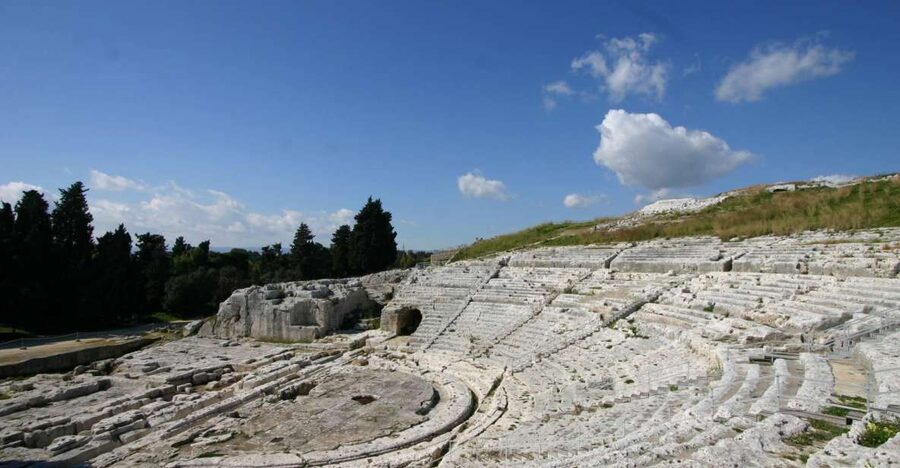
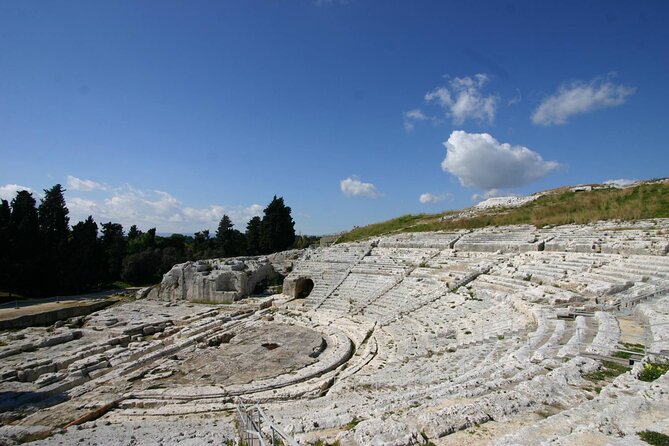
The Greek Theater is the central sight for many people. It was carved into the slope, following the shape of the ground rather than forcing a separate structure onto it. From the seating area, you can look across the theater and toward the Grand Harbor.
The site shows how performance and civic life were connected in Greek Syracuse. A theater was not just a place for entertainment. It was part of the public identity of the city, a place where stories, ideas, and power could reach a large audience.
Your guide explains the theater’s purpose and its place in Greater Greece, the Greek-speaking world of southern Italy and Sicily. That wider context is valuable because it keeps the monument from becoming just another old theater. Syracuse was not a small outpost. It was a major city with the wealth and ambition to build on a large scale.
One practical limitation is that you may not reach every part of the theater. A visitor specifically wished to go down to the bottom of the seating area. Depending on access rules and conditions on the day, the guide may keep the group to approved viewing areas. You still get the main views and the explanation, but do not book this expecting complete freedom to roam.
The Nymphaeum Fountain is included in this portion of the route. It adds another layer to the setting, linking water, natural features, and the theater area. The view across the Grand Harbor is a good reason to pause rather than rush straight to the next stop.
The Altar of Hieron II and Syracuse’s public power
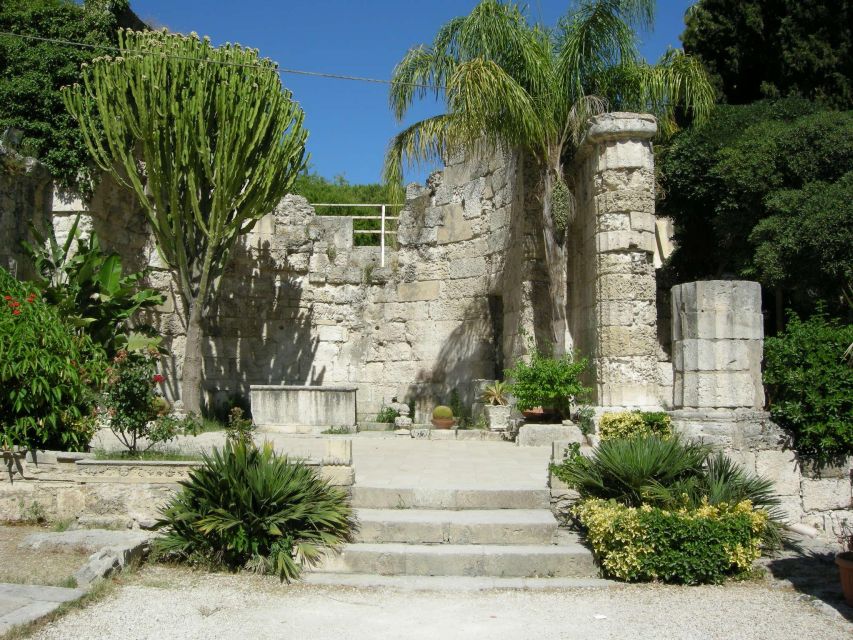
The Altar of Hieron II is a huge surviving reminder of Syracuse’s political and religious ambition. Much of what once stood here has been lost, but the scale of the remains gives you a sense of the monument’s original importance.
This is a place where the guide’s historical framing pays off. The altar was connected with public ceremony and the rule of Hieron II, one of Syracuse’s most important leaders. You begin to see how religion, government, and spectacle worked together in the ancient city.
The stop may not have the visual drama of the cave or theater. It is more open and fragmentary. But that is exactly why you need to look carefully and listen. The guide can help you imagine the structure from the surviving foundations rather than judging it only by what remains above ground.
The Roman Amphitheater and a later Syracuse
The Roman Amphitheater brings you into a different chapter. Here, the focus shifts from Greek theater and civic culture to Roman public spectacle, including gladiatorial games.
The oval form is easier to read than some of the more damaged monuments in the park. You can picture crowds gathered around the arena and understand how public entertainment worked under Roman rule. The guide also explains what changed in Syracuse after Roman control replaced the earlier Greek dominance.
This final stop rounds out the tour. You are not seeing only one period or one kind of monument. The route moves from quarry labor to Greek performance, from political ceremony to Roman spectacle. That sequence makes the park feel like a city with layers rather than a collection of unrelated ruins.
The amphitheater may be less atmospheric than the Ear of Dionysius, and it may not offer the same wide harbor view as the Greek Theater. Its value is historical balance. It shows that Syracuse continued to matter after its Greek age, even as its public life took on a Roman form.
How much the guide adds to the visit
The strongest reason to book this tour is the guide. The physical site is impressive, but many of its details are not self-explanatory. You need help connecting quarrying, mythology, Greek urban life, political rule, and Roman entertainment.
Giuseppe has been praised for answering questions and keeping explanations clear. Luca has been noted for adding context while choosing shaded places to talk. Laura has been described as friendly, measured, and willing to stay after the formal tour for extra discussion. Empeeria, the provider, also uses guides who know the park well and keep the group together in a busy archaeological setting.
The style can vary by guide, of course. The positive pattern is clear: the best guides do not simply recite dates. They explain what people did in each place and why the ruins matter. That is especially useful if you are visiting with children or with family members who do not usually enjoy archaeology.
A classics student could also get plenty from the tour. The explanations go beyond the most basic facts, and the site offers material connected with Greek life in Sicily, ancient engineering, political power, and Roman culture.
Timing, language, and group comfort
A two-hour tour sounds compact, but the park contains several major sites. The time works because the route concentrates on the principal monuments rather than trying to cover every corner.
If the tour is conducted in Italian and English together, you may spend longer at each stop. That can be helpful if you like more explanation, but it also means less free time for photography or quiet viewing. The guide may need to repeat information, and the group’s pace will not be entirely in your hands.
Try to stand close to the guide, particularly at the Latomie and Roman Amphitheater, where sound may carry unevenly. Since no audio equipment is included in the tour details, hearing the live explanation depends on your position and the guide’s voice.
The experience is a walking visit through an archaeological park. The information provided does not specify accessibility arrangements, group size, or toilet facilities, so you should ask the provider if any of those points matter to your plans.
Is $51 a fair price?
At $51 per person, the tour includes entry to the Neapolis Archaeological Park and two hours with a live Italian or English-speaking guide. That makes it more than a simple admission ticket, but the added cost is tied to the interpretation, not transportation, food, or extra services.
I think the value is good if you want to understand what you are seeing. Without a guide, you can admire the stone, the cave, the theater, and the arena. With a guide, you get the links between them, plus the stories of Dionysus, Hieron II, Greek Syracuse, and Roman rule.
The value is weaker if you prefer to move at your own pace or spend a long time taking photographs at one monument. The fixed two-hour schedule and bilingual format may feel restrictive to independent sightseers. For most first-time visitors to Syracuse, though, the included admission and concentrated route make the price sensible.
You can cancel up to 24 hours before the activity for a full refund, and you can reserve now and pay later. Those terms make it easier to fit the tour into a changing Sicily itinerary.
Who should book this Neapolis tour?
I would choose this experience if you want a clear introduction to Syracuse’s ancient sites in one morning or afternoon. It suits first-time visitors, families, history fans, and anyone who would rather hear a story than read a row of signs.
It is also a good pick if you have only limited time in Syracuse. In two hours, you see the park’s main attractions and leave with enough context to explore the rest of the city more intelligently.
You may want a different arrangement if you need a private tour, require a very slow pace, or want full freedom inside the Greek Theater. The tour is guided, scheduled, and possibly bilingual, so it favors structure over independence.
Should you book the Syracuse Neapolis tour?
Book it if you want the ancient city explained rather than simply photographed. The Ear of Dionysius gives you atmosphere, the Greek Theater gives you the great view, the Latomie reveal the human cost behind the beauty, and the Roman Amphitheater completes the story.
The main points to plan around are the 20-minute early arrival, outdoor walking, possible Italian and English explanations together, and the need to stay close enough to hear. At $51, the combination of admission and a live guide makes this a solid choice for most visitors who want more than a quick look at Syracuse’s ruins.
FAQ
How long does the Syracuse Neapolis guided tour last?
The tour lasts two hours.
What language is the tour conducted in?
The live guide speaks Italian or English. The tour may be conducted in both languages at the same time.
What sights are included?
The route includes the Neapolis Archaeological Park, Latomie del Paradiso, the Ear of Dionysius, the Greek Theater, the Nymphaeum Fountain, the Altar of Hieron II, and the Roman Amphitheater.
Is the entrance ticket included?
Yes. Entry to the Neapolis Archaeological Park is included, and the guide provides the ticket at the meeting point.
Where does the tour meet?
The meeting point can be either the Neapolis Archaeological Park ticket office or MOMENTO Ristorante, depending on the option booked.
How early should I arrive?
You should arrive 20 minutes before the scheduled start time.
Does the tour use a separate entrance?
Yes. The activity includes access through a separate entrance.
How much does the tour cost?
The listed price is $51 per person.
Can I cancel the booking?
You can cancel up to 24 hours in advance for a full refund.
Can I reserve the tour without paying immediately?
Yes. The reserve-now, pay-later option allows you to keep your plans flexible and pay nothing at the time of booking.
Just added around Syracuse
- Sicily Boats Avola: Plemmirio boat tour 4 people 4 hours★ 5.0 · 3 reviews
- From Syracuse: Private Taormina and Castelmola tour with lunch★ 5.0 · 3 reviews
- Siracusa Iris Photography Experience★ 5.0 · 3 reviews
- Siracusa E-bike rental service★ 5.0 · 3 reviews
- Tour Ragusa Ibla, Modica and Noto, from Syracuse★ 5.0 · 3 reviews
- Cyclops Tour★ 4.5 · 3 reviews
- Archaeological Syracuse: Neapolis Park private tour★ 5.0 · 3 reviews
- Tour of Syracuse by Ape Calessino★ 3.0 · 3 reviews
Greek Theatre Tours, compared.
Guided tour of the Greek Theater and the Neapolis of Syracuse
Read our review →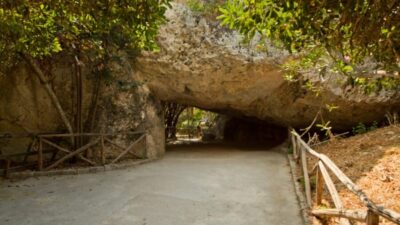

Skip-the-Line Taormina Half Day Greek Theater and Historic Center
Read our review →
Excursion HALF DAY- Syracuse Greek Theatre and the island of Ortigia.
Read our review →
Browse the lists this tour appears in