
Reviewed · GREEK THEATRE TOURS
Syracuse: Greek Theater and Neapolis sunset tour
Syracuse saves one of its best views for the end of the day. As the light turns orange, you walk through ancient quarries, stand inside the eerie Ear of Dionysius, and look from the Greek Theater toward the harbor.
I like two things right away: the ticket is included, so you avoid the entrance line, and the guide connects each monument with a story rather than leaving you to read scattered signs. Guide Francisco, praised for giving detailed explanations, is one example of the strong guiding this tour aims to provide.
The main tradeoff is pace. Two hours is enough for a useful introduction, but not enough for a leisurely archaeological study. Sunset timing can also make the tour popular, so arrive 20 minutes early and expect a group walk rather than a private, slow wander.
In This Review
- Why this sunset walk is worth considering
- Why sunset changes Neapolis Archaeological Park
- Meeting the guide beside the Neapolis entrance
- Latomie del Paradiso: quarries with a darker past
- The Ear of Dionysius and its strange acoustics
- The Greek Theater and Nymphaeum Fountain
- The Altar of Hieron II and Syracuse’s scale
- The Roman Amphitheater and gladiator stories
- What the $46 price includes
- How this tour suits different visitors
- Practical tips for getting more from the two hours
- Should you book the Syracuse sunset tour?
- FAQ
- Where does the Syracuse sunset tour meet?
- How long does the tour last?
- Is admission to Neapolis Archaeological Park included?
- Which sites are visited?
- What languages are offered?
- How early should I arrive?
- Can I cancel the booking?
Why this sunset walk is worth considering
- The Ear of Dionysius at dusk: See the famous cave when warm light reaches the quarry walls, while hearing the story of Dionysius and the cave’s remarkable acoustics.
- A Greek Theater with a harbor view: The theater, Nymphaeum Fountain, and broad view toward Syracuse’s harbor make this more than a ruins stop.
- Ancient quarries turned into gardens: The Latomie del Paradiso show the dramatic spaces where stone was cut and hard labor once took place.
- Roman gladiator stories: The Roman Amphitheater gives the walk a later chapter, moving you from Greek Syracuse into the period of Roman rule.
- A simple two-hour format: With admission and a live English or Italian guide included, this works well when your time in Syracuse is limited.
- Flexible booking terms: You can cancel up to 24 hours before the start for a full refund, and reserve now while paying later.
Why sunset changes Neapolis Archaeological Park
Neapolis is not a single monument. It is a large archaeological area where Greek, Hellenistic, and Roman remains share the same ground. The sunset tour uses the falling light as part of the experience, not just as a convenient start time.
That matters in Syracuse. Harsh midday sun can flatten pale stone and make open archaeological sites feel exposed. Near sunset, the quarry walls take on warmer color, shadows grow longer, and the different heights of the site become easier to read.
You should still think of this as a history walk first. The sunset adds atmosphere, but the guide’s explanations give the monuments their meaning. Without that context, an amphitheater is simply a ring of stone and a quarry is simply a hollow in the rock.
The activity lasts two hours and returns to Via Luigi Bernabò Brea. The route is guided on foot inside the park, with several stops planned at roughly 20 minutes each. That structure keeps the visit moving and covers the major sights, though it leaves little room for extended photography or independent exploring.
More Greek theatre visits around Syracuse:
- Syracuse: Neapolis and Greek Theater guided tour
★ 4.5 · 160 reviews - Syracuse: Greek Theater and Neapolis Guided Private Tour
★ 4.6 · 8 reviews - Greek Theater – Ortigia walking tour
★ 3.5 · 7 reviews
Meeting the guide beside the Neapolis entrance
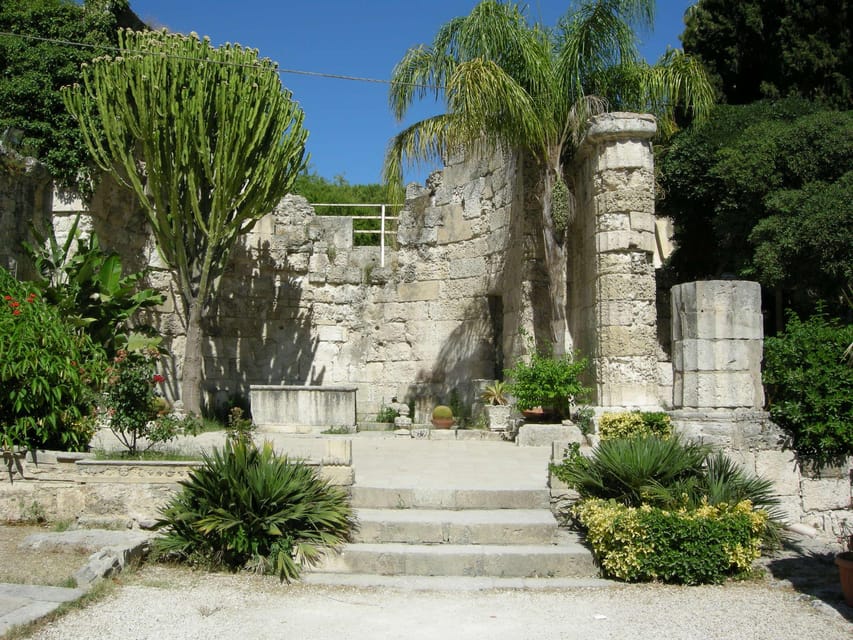
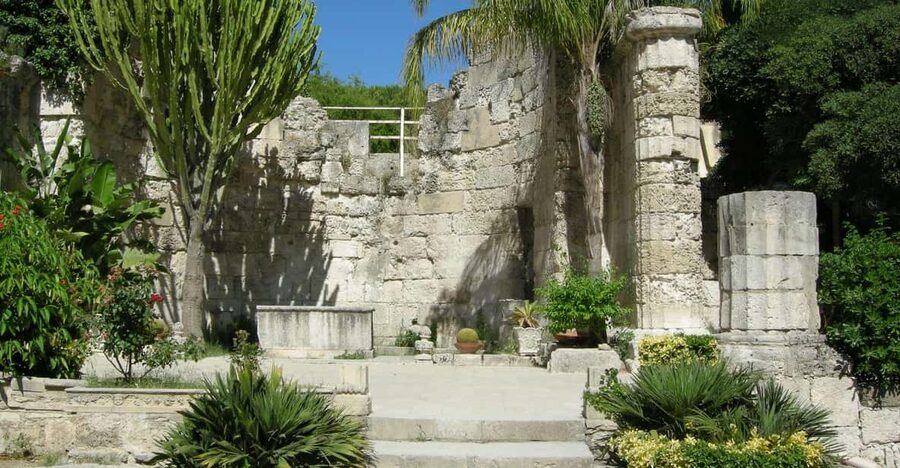
Your meeting point is in front of the Neapolis entrance gate, on the Via Romagnoli and Viale Augusto side. The entrance ticket is handed to you directly by the guide there, so you do not need to arrange a separate park admission.
Arrive 20 minutes before the scheduled start. This is particularly useful at sunset, when a late arrival could mean missing the opening explanation or having trouble finding the group near the gate.
The tour is offered in English and Italian. The guide may conduct both languages at the same time, so the pace can be a little slower than on a single-language walk. For many people, that is a fair exchange for having a live guide and a set route through a large site.
The experience is listed as wheelchair accessible. If accessibility is important to you, it is sensible to confirm the exact route and current conditions when booking, since archaeological parks can include uneven historic surfaces even when an activity is marked accessible.
Latomie del Paradiso: quarries with a darker past
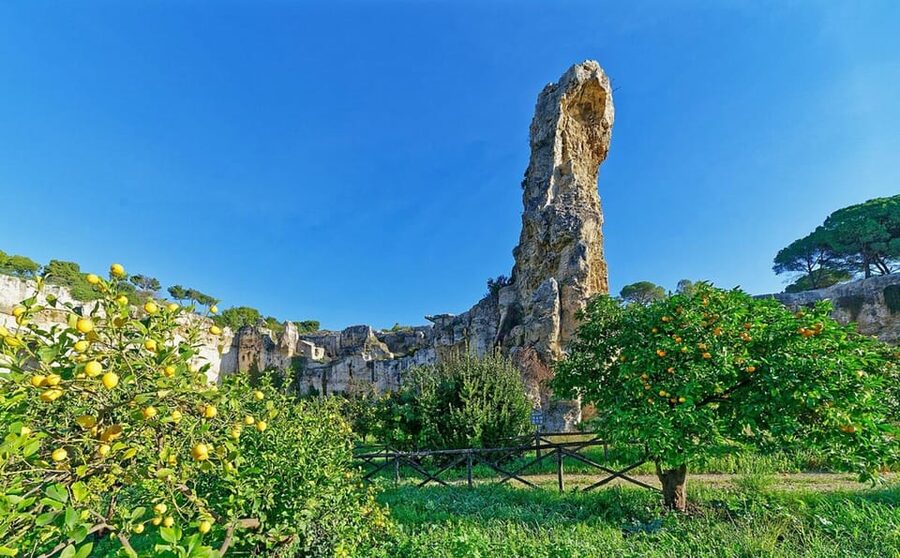
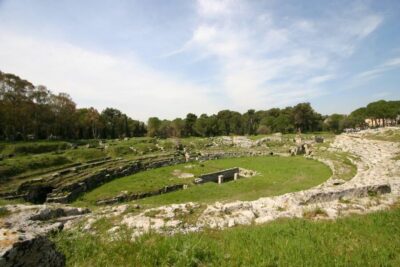
The Latomie del Paradiso are ancient stone quarries, now shaped into natural garden spaces. At first glance, the greenery and high rock walls can make the area feel calm. The guide’s account brings back the harder reality: these were work sites where enormous amounts of stone were cut and where dark episodes unfolded.
This is a good early stop because it gives you the physical scale of Syracuse. The walls are not small fragments in a museum. They are broad excavated spaces, and the rock itself explains how the city was built.
I like the contrast here. The quarries have a peaceful look at sunset, yet their past involves exhausting labor and political power. You get a sense of how ancient Syracuse depended on both engineering and human effort.
The planned visit lasts about 20 minutes. That is enough for an explanation and a look around, but you should not expect a long botanical visit or time to roam every path. Keep your attention on the guide, since the setting alone cannot explain why these quarries mattered.
The Ear of Dionysius and its strange acoustics
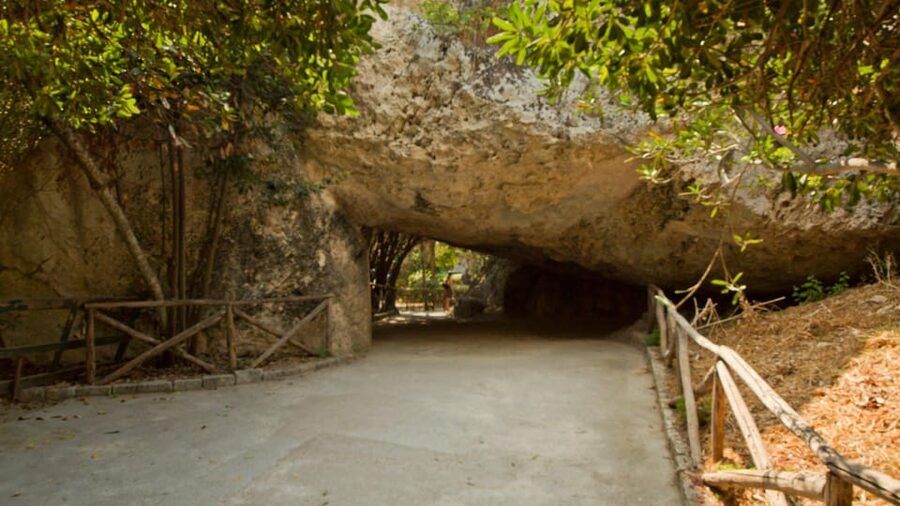
The Ear of Dionysius is one of the most memorable stops in Neapolis. This tall, curved cave is famous for its acoustics and its link to the tyrant Dionysius. The name itself invites a story, and the tour uses the cave to explain the ruler’s intrigues and the legends that grew around the site.
The warm colors of sunset make the cave especially atmospheric. Light catches parts of the stone while other sections fall into shadow. You can appreciate the shape of the cavern, then listen as the guide explains why its sound carries so well.
This is where a guide adds real value. You may see the unusual opening and the smooth, towering walls, but the story of Dionysius gives the place a human edge. Ancient Syracuse was not only about temples and public buildings. It was also shaped by rulers, fear, strategy, and myth.
The stop is scheduled for around 20 minutes. That makes it a focused visit rather than a long acoustic experiment. The attraction is also one of the most recognizable points in the park, so the sunset setting does not guarantee solitude. Still, the changing light gives you a better sense of the cave’s depth than a quick daytime pass might.
More things to do after dark in Syracuse:
- Syracuse: Ortigia Sunset Cruise with Aperitif
★ 4.8 · 291 reviews - Siracusa: Ortigia & Sea Caves Boat Tour with Sunset Apertif
★ 4.9 · 94 reviews - Syracuse: Sunset cruise including aperitif and swim stop
★ 4.9 · 9 reviews - Syracuse: Sunset Aperitif Tour
★ 4.4 · 4 reviews
The Greek Theater and Nymphaeum Fountain
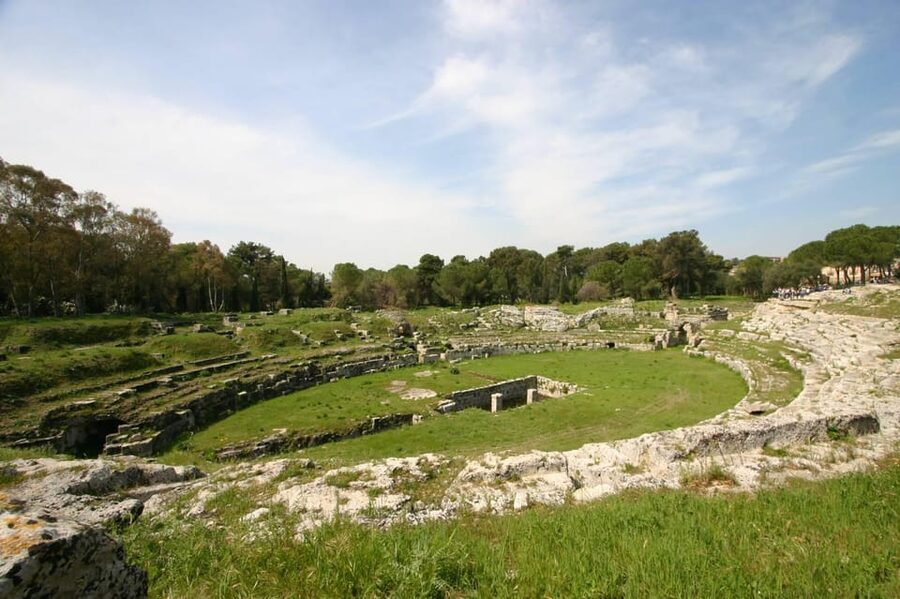
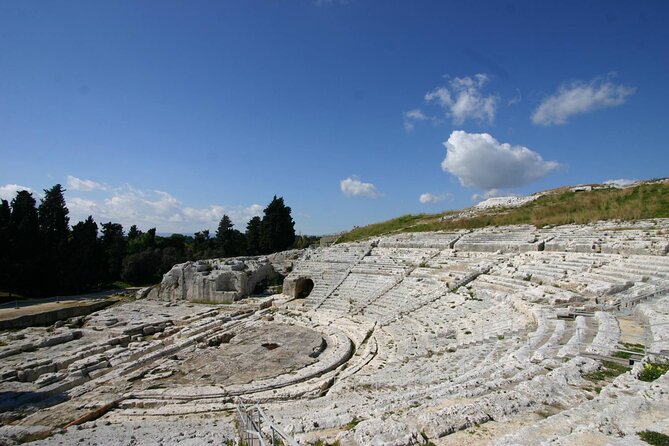
The Greek Theater is the emotional center of the walk. Cut into the hillside, it shows the scale of public life in ancient Syracuse. The setting also opens toward a broad view that includes the great harbor, which becomes particularly striking as the sun lowers.
The guide’s job here is to help you imagine the theater as a working place, not just a photogenic ruin. You can look across the stone seating and understand how the site used the natural slope. The Nymphaeum Fountain adds another layer, linking the theater area to water and the surrounding setting.
This is one of the places where you should pause for a view. The tour is only two hours, but do not let the schedule rush you past the panorama. The combination of the theater, fountain, harbor, and golden sky is the clearest reason to choose the sunset departure instead of an ordinary daytime entrance.
The drawback is simple: the light changes quickly. If you want the best view, stay close to the guide and be ready when the group reaches the overlook. You may not have time to find several different angles or take a long series of photographs.
The Altar of Hieron II and Syracuse’s scale
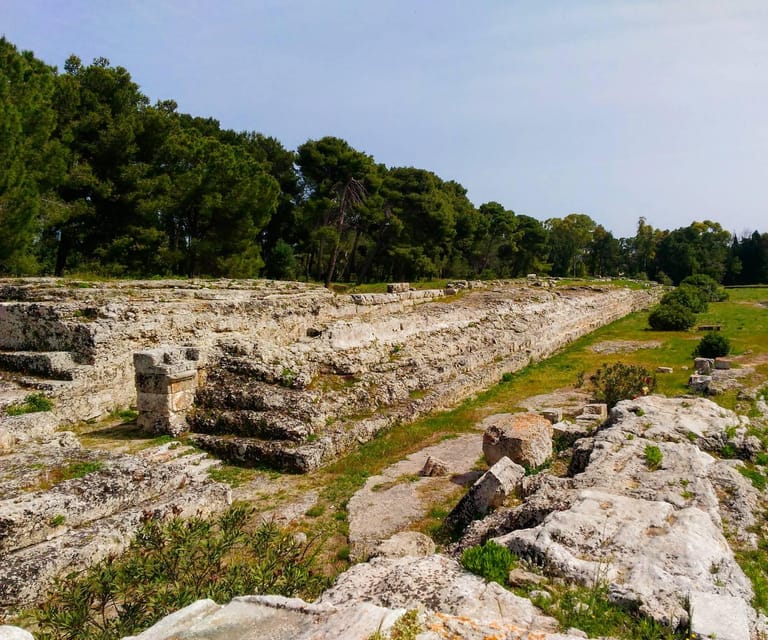
The Altar of Hieron II is another reminder that Syracuse was a major power in the ancient Mediterranean. Its size and purpose help show the ambitions of the city’s rulers. At dusk, the remaining stone takes on a more dramatic look, especially as the sky shifts from bright gold to deeper color.
This stop works best when you let the guide supply the missing pieces. An altar this large can be difficult to understand from the surviving remains alone. The explanation connects the site to Syracuse’s public ceremonies and political life.
You should not expect a complete structure. Like much of Neapolis, the site asks you to read outlines, foundations, and scale. That is not a weakness of the tour, but it does mean you will get more from it if you enjoy history that requires some imagination.
The Altar of Hieron II also helps break up the visit. After the enclosed feel of the quarries and cave, you return to a more open section where the evening sky becomes part of the view.
The Roman Amphitheater and gladiator stories
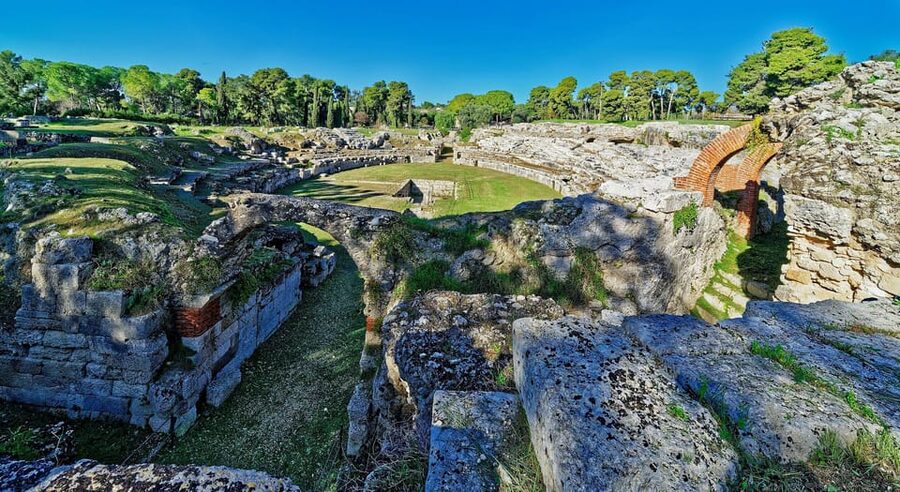
The final major stop is the Roman Amphitheater. Here the story moves forward from Greek Syracuse to the city under Roman rule. The guide explains the gladiatorial games and the way the arena functioned, giving you a different picture of public entertainment and power.
The amphitheater is a useful finale because it shows that Syracuse did not disappear after the Greek period. The city continued to matter, and its monuments reflect changing rulers and customs. The play of light and shadow at sunset adds drama, but the Roman chapter is what gives the stop its weight.
You may find the amphitheater less immediately intimate than the Ear of Dionysius. It is a large open structure, and much of its effect comes from understanding how people once used the space. Listen for the details about the games, since the guide’s explanation turns a broad oval ruin into a place with action and tension.
Ending here also keeps the tour varied. You have seen quarry labor, a legendary cave, a Greek performance site, a monumental altar, and a Roman arena. That range is the real strength of the route.
What the $46 price includes
At $46 per person, this is not the cheapest way to enter Neapolis Archaeological Park. You are paying for more than admission, though. The price includes the park ticket, a live guided tour, and a planned route through the major monuments at a carefully chosen time of day.
I consider that reasonable for visitors who want context and have only two hours. A self-guided visit may cost less, but you would need to organize your own explanations and decide how to connect the Greek and Roman remains. Here, the guide gives you a clear sequence and keeps the walk moving.
The value is strongest if you are visiting Syracuse for a short stay, or if ancient sites tend to blur together without a story. It is weaker for confident archaeology enthusiasts who prefer to read at their own speed, take long photographs, or spend a full afternoon on one monument.
The ticket-line benefit also matters. You meet the guide outside the gate, receive admission there, and avoid dealing with a separate ticket purchase. That saves only a little time, but at sunset, small bits of organization help.
The tour allows free cancellation up to 24 hours before the start and offers reserve-now, pay-later booking. Those terms add flexibility when your Sicily plans are still shifting.
How this tour suits different visitors
I would recommend this walk to you if you want a compact introduction to Syracuse’s ancient center. It suits first-time visitors, couples looking for an atmospheric evening activity, and anyone who prefers a guide’s explanation over a stack of information panels.
It also works well for people who want variety. In two hours, you cover quarries, a cave, a Greek theater, an altar, and a Roman amphitheater. You do not spend the whole visit on one ruin.
Families may appreciate the Ear of Dionysius and the gladiator stories, which give younger visitors concrete images to follow. The tour is still history-focused, so it may not hold the attention of children who need frequent hands-on activities.
You should choose a longer or self-guided visit if your priority is detailed photography or close archaeological study. The timed sequence is efficient, but it is not designed for lingering at every location.
The activity is wheelchair accessible according to the tour information, and the languages are English and Italian. Since both languages may sometimes be handled during the same tour, ask about the language arrangement if you need a fully single-language experience.
Practical tips for getting more from the two hours
Arrive 20 minutes early at the gate on the Via Romagnoli and Viale Augusto side. This gives you time to identify the guide, receive your ticket, and settle in before the park visit begins.
Wear shoes suitable for a walking tour through an archaeological park. The supplied information does not specify the surface conditions in detail, but ancient sites commonly require attention to footing, and you will be moving between several locations.
Bring a camera, but keep it ready rather than planning a long photo session at each stop. The light near sunset changes fast, especially around the Greek Theater and the harbor view.
Listen closely at the Ear of Dionysius and the Roman Amphitheater. These are the stops where the stories do the most work. The cave’s acoustics and Dionysian legend, followed by the gladiator account, give the route its strongest narrative moments.
If you want a particular start time, check availability before booking. The tour is built around sunset, and the exact departure schedule can change with the season.
Should you book the Syracuse sunset tour?
Book it if you want a well-organized, two-hour introduction to Neapolis with admission included and a guide to explain the monuments. The Greek Theater and harbor view are the visual high point, while the Ear of Dionysius and Roman Amphitheater provide the best stories.
Skip it if you want to explore alone, read every sign, or spend a long time photographing the site. At $46, the tour makes most sense when you value the guide, the sunset timing, and the convenience of a set route.
For a first visit to Syracuse, I think it is a sensible choice. The consistently positive feedback highlights friendly, detailed guiding, with Francisco singled out for clear historical explanations. Just arrive early, accept the brisk pace, and let the changing light do some of the work.
FAQ
Where does the Syracuse sunset tour meet?
Meet the guide in front of the Neapolis entrance gate on the Via Romagnoli and Viale Augusto side.
How long does the tour last?
The tour lasts two hours and returns to Via Luigi Bernabò Brea.
Is admission to Neapolis Archaeological Park included?
Yes. The entrance ticket is included and is provided directly by the guide at the meeting point.
Which sites are visited?
The route includes Neapolis Archaeological Park, the Latomie del Paradiso, the Ear of Dionysius, the Greek Theater, the Nymphaeum Fountain, the Altar of Hieron II, and the Roman Amphitheater.
What languages are offered?
The live tour guide is available in English and Italian. The tour may sometimes be conducted in both languages at the same time.
How early should I arrive?
You should arrive at the meeting point 20 minutes before the activity begins.
Can I cancel the booking?
Yes. You can cancel up to 24 hours in advance for a full refund. You can also reserve now and pay later.
Just added around Syracuse
- Sicily Boats Avola: Plemmirio boat tour 4 people 4 hours★ 5.0 · 3 reviews
- From Syracuse: Private Taormina and Castelmola tour with lunch★ 5.0 · 3 reviews
- Siracusa Iris Photography Experience★ 5.0 · 3 reviews
- Siracusa E-bike rental service★ 5.0 · 3 reviews
- Tour Ragusa Ibla, Modica and Noto, from Syracuse★ 5.0 · 3 reviews
- Cyclops Tour★ 4.5 · 3 reviews
- Archaeological Syracuse: Neapolis Park private tour★ 5.0 · 3 reviews
- Tour of Syracuse by Ape Calessino★ 3.0 · 3 reviews
Greek Theatre Tours, compared.

Guided tour of the Greek Theater and the Neapolis of Syracuse
Read our review →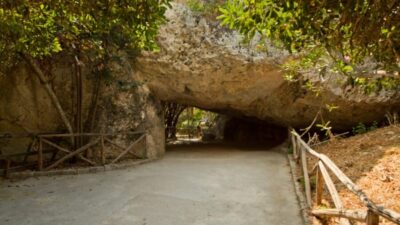

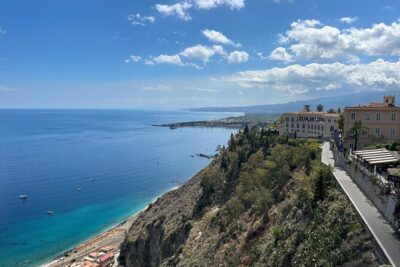
Skip-the-Line Taormina Half Day Greek Theater and Historic Center
Read our review →
Excursion HALF DAY- Syracuse Greek Theatre and the island of Ortigia.
Read our review →Browse the lists this tour appears in