
Reviewed · GREEK THEATRE TOURS
Guided tour of the Greek Theater and the Neapolis of Syracuse
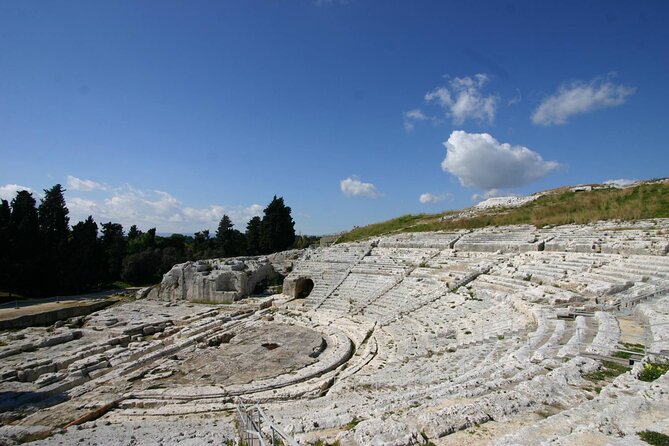
Syracuse’s Neapolis Archaeological Park brings several major ancient sites into one visit, with the enormous Greek Theater as the main event. In roughly two hours, your guide connects the theater, the Ear of Dionysus, the Latomie, and Cordari Cave to the long story of Syracuse, founded in the eighth century B.C.
I like the 9 a.m. start, since the park is largely open to the sun and an early visit can make the walking far more pleasant. I also like that admission is included and handed to you by the guide at the meeting point, so you do not have to sort out a separate ticket before entering.
The main thing to consider is the group size, which can reach 25 people. Some of the paths include up-and-down climbing, and if the guide is speaking in both English and Italian, the two-hour visit may feel brisk.
In This Review
- Key points to know before booking
- Why Neapolis matters in Syracuse
- The Greek Theater is the main reason to go
- The Ear of Dionysus adds myth and atmosphere
- Latomie and Cordari Cave broaden the visit
- What the guide adds to the experience
- Is $51.66 a fair price?
- The 9 a.m. meeting plan
- Walking, heat, and group size
- Who should book this Neapolis tour?
- Booking and cancellation details
- Should you book it?
- FAQ
- How long does the guided Neapolis tour last?
- What sites are included?
- Is admission to Neapolis included?
- What time does the tour start?
- Where does the tour meet?
- Is the tour offered in English?
- How many people can join the tour?
- Can most people participate?
- Can I cancel for a full refund?
Key points to know before booking
- The Greek Theater is the centerpiece: You visit one of the largest Greek theaters in the Mediterranean.
- The tour covers several ancient sites: The route includes the Ear of Dionysus, the Latomie, and Cordari Cave.
- Start at 9 a.m. for cooler conditions: Much of the park is exposed, and the Sicilian heat can become tiring later in the day.
- Rita has earned especially warm praise: If she leads your visit, expect strong command of the site and its long story.
- The group can reach 25 people: That keeps the price moderate, but it may feel less personal than a small-group tour.
- Admission and cancellation protection are included: You receive the park ticket from the guide, and free cancellation is available up to 24 hours before departure.
Why Neapolis matters in Syracuse
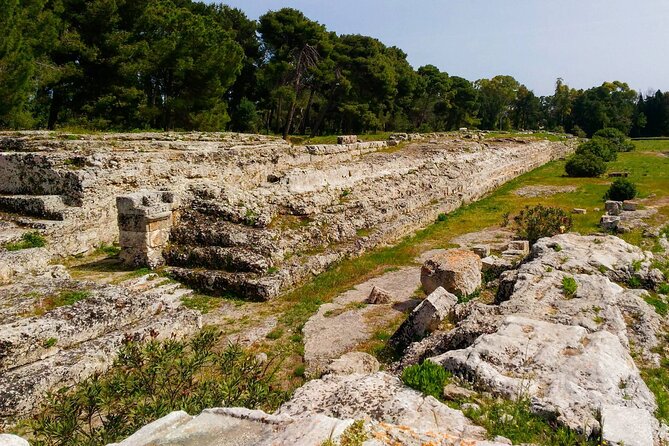
Syracuse was founded in the eighth century B.C. and became one of the major centers of the ancient Mediterranean. You can visit the park independently, but the remains make more sense when someone explains how the different parts fit into the story of the city.
That context is the main reason to book a guided visit rather than simply walk through the grounds with a ticket. The ruins are substantial, but they do not always explain themselves. A guide can point out what you are seeing, connect the monuments to Syracuse’s Greek period, and bring in the myths tied to Neapolis.
The tour is not a full-day archaeological program. It is a focused introduction, lasting about two hours in total, with around an hour and a half devoted to the archaeological park. That makes it easy to pair with other sightseeing in Syracuse, though you should not expect time for a slow, independent study of every corner.
More Greek theatre visits around Sicily:
- Syracuse: Neapolis and Greek Theater guided tour
★ 4.5 · 160 reviews - Private Taormina Walking Tour & Greek Theatre
★ 4.0 · 43 reviews - Syracuse: Greek Theater and Neapolis Guided Private Tour
★ 4.6 · 8 reviews
The Greek Theater is the main reason to go
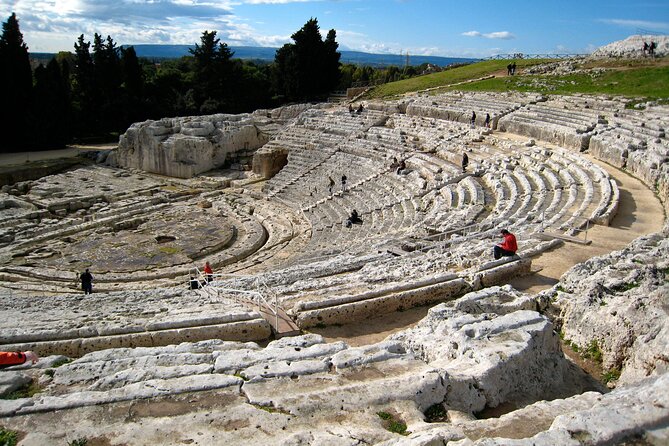
The Greek Theater is the clearest highlight of the visit. It is one of the largest Greek theaters in the Mediterranean, and its scale gives you an immediate sense of Syracuse’s importance in the ancient world.
A guide adds value here because the theater is more than a large stone structure. You want help reading the space, understanding its place in the city, and hearing the historical and mythological material connected with it. The strongest part of the tour is likely to be the explanation given while you are standing in and around this major monument.
I would give this stop your full attention. Take in the size, the setting, and the way the site has survived. The park is not a polished museum display. It is an outdoor archaeological area, so the experience depends on your guide and on your ability to look carefully at the remains.
The open setting also explains why the early start matters. At 9 a.m., you have a better chance of walking before the worst heat of the day. You may find that the morning light and quieter paths make it easier to listen, take photographs, and keep your energy for the rest of the park.
The Ear of Dionysus adds myth and atmosphere
The Ear of Dionysus is one of the park’s memorable features, especially for visitors who enjoy the mix of archaeology and legend. Its name points to the myths associated with Syracuse, and the guide uses this stop to add a more human and imaginative side to the ancient remains.
You should expect interpretation rather than a long physical activity here. The attraction is part of the larger Neapolis visit, so your guide will likely place it beside the theater, the Latomie, and Cordari Cave instead of treating it as a separate outing.
This is one reason the tour suits first-time visitors to Syracuse. You get several different types of ancient remains in one route. The Greek Theater gives you scale, while the Ear of Dionysus brings in stories and local legend.
Keep in mind that a shared guide may need to move the group along. If you enjoy spending a long time at one site, you may want to return to the park on your own after the tour, assuming your plans and ticket conditions allow it. The guided visit is best viewed as a structured introduction.
Latomie and Cordari Cave broaden the visit
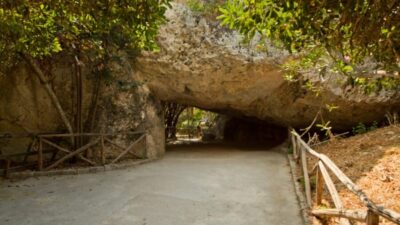
The Latomie and Cordari Cave give the tour more range than a simple theater visit. These features help show that Neapolis is a large archaeological park with different kinds of remains, not just one monument.
Your guide explains the history and myths connected with these places. That storytelling matters because the names alone do not tell you why each stop is important. The tour gives you a sequence of sights and an explanation of how they belong to the wider ancient city.
The walking is described as manageable, but it is not completely flat. You should expect some climbing up and down, especially as you move through the park. Good shoes are sensible, and you will be more comfortable if you do not treat this as a quick stroll in town.
The route is also exposed in places. Bring water and use sun protection, especially during warmer months. The morning departure is the most useful practical feature here, since much of the park is in the open.
A few more Sicily tours and experiences worth weighing up
- Mount Etna: Guided Volcano Summit Hiking Tour with Cable Car
★ 4.7 · 3,784 reviews - Taormina: Ancient Theater Skip-the-Line Ticket & Audio Guide
★ 4.5 · 1,701 reviews - Palermo: Teatro Massimo Opera House Guided Tour
★ 4.5 · 1,573 reviews - Etna Volcano: South Side Guided Summit Hike
★ 4.7 · 1,545 reviews
What the guide adds to the experience
Guide quality will shape this tour more than any other factor. The most favorable feedback highlights Rita, whose command of the site and its long, varied story received especially strong praise. If Rita is leading your departure, you can expect a guide who gives the archaeology a clear narrative rather than simply naming the ruins.
The tour is offered in English, but it may be conducted in English and Italian at the same time. That is important to know before you reserve. A bilingual format can work well, but explanations may take longer, and the English portion may feel less continuous than on an English-only departure.
The guides are also expected to explain the earliest Greek period of Syracuse. That is useful because the park is not just a collection of old stones. You are looking at a place tied to a city founded more than two thousand years ago, with layers of history and myth that can be difficult to sort out without help.
I would ask at the meeting point which language arrangement applies to your group. You can still have a good visit if both languages are used, but it is better to know the format before the tour starts.
Is $51.66 a fair price?
At $51.66 per person, the tour sits in the moderate-price range for a guided archaeological visit. The ticket to Neapolis is included, and you are paying for an English-language guide, site interpretation, and a set route through several major features.
The value is strongest if you want a clear introduction and do not want to research the park before arriving. The guide can save you time and help you notice details you might otherwise pass without understanding. For a first visit to Syracuse, that structure can be worth the extra cost over admission alone.
The value is weaker if you prefer to set your own pace or already know the ancient history of the site. A group of up to 25 can feel fairly large, and one rating specifically found the group a little big. You may not get many chances for personal questions, especially if the visit is bilingual.
The tour lasts approximately two hours, with about 90 minutes listed for the park visit. That is a good length for travelers who want one focused activity in the morning. It is not enough time for a highly detailed archaeological study, so set your expectations accordingly.
The 9 a.m. meeting plan
The tour starts at the ticket office on Via Luigi Bernabò Brea in Syracuse. You should arrive 20 minutes early, which means planning to be at the meeting point by 8:40 a.m. The guide provides your entrance ticket directly there.
That ticket arrangement is convenient. You do not have to find a separate ticket counter or wonder how to enter the park after booking. Still, give yourself enough time to locate the office without rushing, particularly if you are unfamiliar with this part of Syracuse.
The tour ends back at the same meeting point. This makes it easier to continue with your day, since you return to a known location rather than finishing at an unrelated part of the city.
The meeting point is near public transportation, which helps if you are staying elsewhere in Syracuse. The supplied information does not specify a particular bus route or travel time, so check your own route before departure rather than assuming a short walk from your accommodation.
Walking, heat, and group size
Most people can take part, but this is an outdoor archaeological visit with some uneven movement and up-and-down sections. You do not need to treat it as a strenuous hike, yet comfortable footwear will make the route easier.
Heat is the bigger concern. One of the most useful pieces of practical advice is to go as early as possible because much of the park is open to the sun. The 9 a.m. time is not just convenient for scheduling. It can change how enjoyable the walking feels.
A maximum of 25 people is manageable, but it is not an intimate private tour. You may need to stay close to the guide so you can hear the explanations. If you hang back to take photographs, you could lose part of the commentary.
This group size also affects questions. You can certainly ask, but the guide has to keep everyone moving and may be working in two languages. If you want long conversations about individual monuments, a private guide would offer a different experience, though the price here is more accessible.
Who should book this Neapolis tour?
I would recommend it to a first-time visitor who wants the main archaeological sights explained in a single morning. It is also a good match for anyone who prefers a guide to wandering through a large site without much context.
History fans should enjoy the combination of ancient Greek remains, myths, and the story of Syracuse from its earliest Greek period. The Greek Theater alone gives the visit a strong focus, while the Ear of Dionysus, Latomie, and Cordari Cave keep the route varied.
Families and older visitors should consider the heat and the climbing before booking. The walking is not described as especially difficult, but it is still an outdoor site with some uneven movement. An early start and suitable shoes will help.
Independent sightseers may find the group format limiting. If you want to linger, sketch, photograph, or read every sign at your own speed, you may prefer to explore without a guide. The guided option is best for explanation and efficiency, not maximum freedom.
Booking and cancellation details
You receive confirmation at the time of booking, and the tour uses a mobile ticket. The entrance ticket itself is provided by the guide at the meeting point, so keep your booking information available when you arrive.
Free cancellation is available if you cancel at least 24 hours before the local start time. Cancellations made less than 24 hours before departure are not refunded, and changes inside that period are not accepted.
The activity depends on good weather and a minimum number of participants. If poor weather cancels the tour, you are offered another date or a full refund. If the minimum number is not reached, you are offered another date or activity, or a full refund.
Should you book it?
Book this tour if you want the Greek Theater and the main Neapolis sights explained clearly in one early morning visit. The included admission, the practical two-hour length, and the chance of a strong guide such as Rita make the $51.66 price reasonable for a first look at Syracuse’s ancient center.
Skip it if you need a private pace, dislike bilingual guiding, or want to spend hours examining each monument. For most visitors, the best choice is the 9 a.m. departure, when the open park is cooler and less crowded. Arrive 20 minutes early, wear comfortable shoes, bring water, and stay close to the guide.
FAQ
How long does the guided Neapolis tour last?
The experience lasts approximately two hours. About one hour and 30 minutes is allocated to the guided visit inside the Neapolis Archaeological Park.
What sites are included?
The visit includes the Greek Theater, the Ear of Dionysus, the Latomie, and Cordari Cave within the Neapolis Archaeological Park.
Is admission to Neapolis included?
Yes. The entrance ticket to the Neapolis Archaeological Park is included and is provided directly by the guide at the meeting point.
What time does the tour start?
The tour starts at 9:00 a.m. You should arrive at the meeting point 20 minutes before the scheduled start.
Where does the tour meet?
The meeting point is the ticket office on Via Luigi Bernabò Brea, 96100 Syracuse, Italy. The tour ends back at the same meeting point.
Is the tour offered in English?
Yes, English is offered. The tour may also be conducted in Italian and English at the same time.
How many people can join the tour?
The maximum group size is 25 people.
Can most people participate?
Most people can participate, but the visit includes some up-and-down climbing. The park is also largely outdoors, so heat may affect your comfort.
Can I cancel for a full refund?
Yes, you can cancel for a full refund up to 24 hours before the experience start time. Cancellations made less than 24 hours before the start are not refunded.
Just added around Sicily
- Anti-Mafia Heroes (Cool Hours) Morning Walking Tour★ 5.0 · 3 reviews
- Nicolosi: Excursion Etna Craters at 3000 mt.★ 4.2 · 3 reviews
- DISCOVER THE SECRET OF PALERMO Walking Tour Combining Art and best street food★ 5.0 · 3 reviews
- The art of the Italian Aperitivo with a local: Learn & Enjoy in Palermo★ 5.0 · 3 reviews
- Taormina PRIVATE EAST COAST EXCURSIONS 2 Exclusive Days with Guide Driver★ 5.0 · 3 reviews
- Guided kayak tour inside the Stagnone of Marsala★ 5.0 · 3 reviews
- Monti Rossi Adventure Park Entry Ticket Full★ 5.0 · 3 reviews
- Catania : Diving for patented divers★ 5.0 · 3 reviews
Greek Theatre Tours, compared.


Skip-the-Line Taormina Half Day Greek Theater and Historic Center
Read our review →
Excursion HALF DAY- Syracuse Greek Theatre and the island of Ortigia.
Read our review →
Browse the lists this tour appears in