
Reviewed · ORTIGIA TOURS
Syracuse: Ortigia and Neapolis Guided Walking Tour
Syracuse makes the most sense when you see its ancient Greek remains and its white-stone island together. This private walk links the Neapolis Archaeological Park with Ortigia, where the Cathedral incorporates the ancient Temple of Athena. I like the strong historical range, and I like having a guide who can connect Greek religion, Roman rule, Arab influence, and later Spanish architecture in one clear story.
The two best features are the small private group, limited to five people, and the chance to ask questions as you go. Guides such as Giuseppe, Anna, Laura, and Marcelo have earned praise for lively storytelling and for adjusting the pace to families and older walkers. The main drawback is cost: at $317.20 per group, you also pay monument entrance fees, and three hours can feel tight for two major areas.
In This Review
- Key points at a glance
- Why Syracuse is best seen in two parts
- Starting at Neapolis Archaeological Park
- The Greek Theater and the view toward the Ionian Sea
- Paradise Latomia and the Ear of Dionysus
- The Roman Amphitheater and Syracuse’s later ancient chapter
- Ortigia, where the ancient city keeps changing shape
- What the private format adds
- Timing, transport, and the real three-hour limit
- Weather, footwear, and access
- Who gets the most from this Syracuse walk
- Should you book it?
- FAQ
- How long does the Syracuse and Ortigia tour last?
- What sites are included on the walk?
- Is the archaeological park entrance fee included?
- Where does the tour begin?
- Is transportation included between Neapolis and Ortigia?
- Is the tour suitable for children?
- Which languages are available?
Key points at a glance
- Two eras in one walk: Pair the Greek Theater and ancient quarries with Ortigia’s Cathedral and Temple of Athena.
- Private group of up to five: You get room for questions, family needs, and a pace that does not belong to a large crowd.
- The Greek Theater is the visual high point: Look across the theater toward the Ionian Sea while your guide explains its purpose and design.
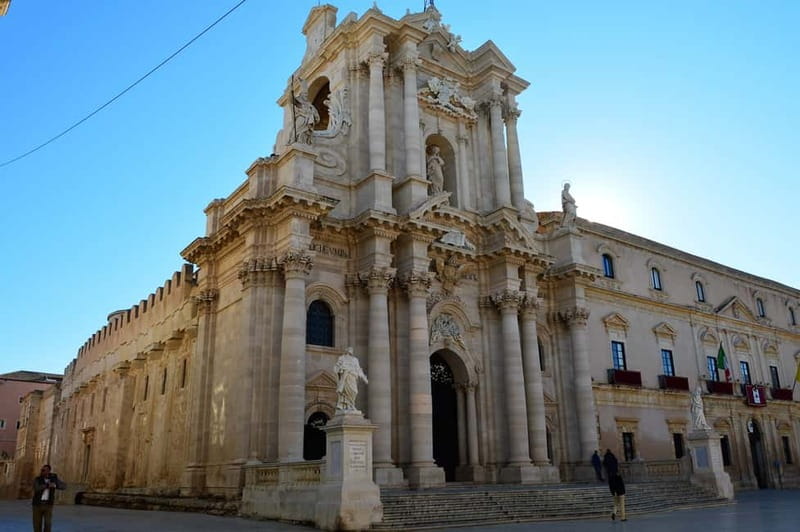
- The Cathedral hides an older building inside it: The church incorporates the pagan Temple of Athena, making the interior a lesson in changing faiths and building styles.
- Entrance fees are extra: Budget separately for the archaeological park, with one recent booking noting a fee of €13 per person.
- Wear proper walking gear: Comfortable shoes, a hat, and water matter in the open archaeological park.
Why Syracuse is best seen in two parts
Syracuse is not one tidy ancient site. Its remains are spread between the mainland archaeological park and Ortigia, the small island that forms the historic heart of the city. Seeing only one side leaves an incomplete picture.
The Neapolis Archaeological Park gives you scale. You see theaters, quarries, caves, and evidence of the city’s power in the Greek and Roman periods. Ortigia gives you continuity. Ancient columns, medieval streets, churches, and later architectural layers sit close together in a compact area.
I like this pairing because it prevents the ancient remains from feeling like isolated ruins. Your guide can explain how a Greek city became a Roman city, then changed again under Arab, Spanish, and other rulers. The story is not only about monuments. It is about a place that kept being rebuilt.
The private format helps here. A guide can stop when you have a question, explain a carved detail, or slow down for children. Several guides have also been praised for making the past easy to picture through legends, stories, and lively explanations rather than a string of dates.
More Walking Tours in Syracuse
- Syracuse: Street Food Walking Tour in Ortigia with Tastings
★ 4.9 · 293 reviews - Syracuse: Ortigia Private Walking Tour
★ 4.8 · 181 reviews - Syracuse: Ortigia Classic Walking Tour
★ 4.7 · 167 reviews
Starting at Neapolis Archaeological Park
The stated meeting point is the ticket office at Biglietteria Parco Archeologico Neapolis on Via Luigi Bernabò Brea. Your guide meets you there with a sign showing the local partner’s name. The published starting options also include the area near the Temple of Apollo, so check your confirmed meeting instructions carefully before setting out.
The archaeological park is the practical place to begin because it gathers Syracuse’s most important Greek and Roman remains in one visit. This is also where you need to be ready for sun, uneven ground, and plenty of walking. The park is wheelchair accessible, but anyone who walks slowly should tell the guide at the start.
Entrance fees are not included in the tour price. One booking specifically recorded the archaeological park admission as €13 per person, though you should confirm the current amount when booking. This extra charge matters when you compare the tour with a simple self-guided visit.
The advantage of paying for a guide is not just finding the monuments. The park is easier to understand when someone explains how its theaters, quarries, and religious spaces worked together. Without that context, the remains can look like impressive pieces scattered across a large green site.
The Greek Theater and the view toward the Ionian Sea
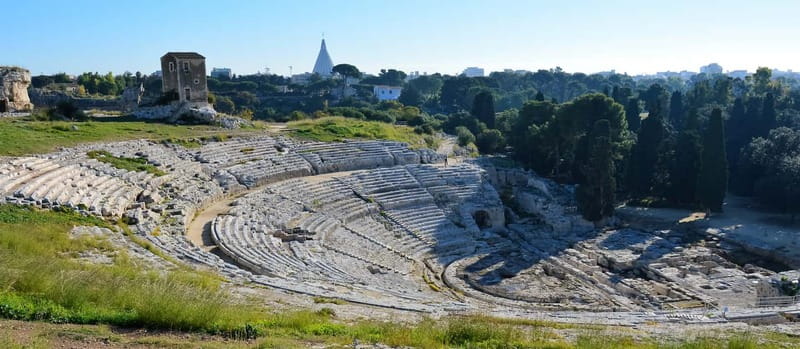
The Greek Theater is one of the essential stops. Its broad stone seating and open setting show how Greek performance was tied to civic life, religion, and the natural surroundings. Your guide explains the theater’s function and the practices connected with it, giving the stones a human purpose.
The view toward the Ionian Sea adds to the stop. It is a good place to pause for photos, but do not let the view distract you from the shape of the theater itself. The scale helps you understand that Syracuse was not a minor outpost. It was a major Greek power in the Mediterranean.
This is also a place where a guide’s delivery makes a real difference. Giuseppe has been praised for using colorful, interactive storytelling, including with teenagers. Anna has been described as passionate and clear, with a smooth pace that leaves time to look, photograph, and ask questions.
A three-hour tour cannot give you unlimited time at every site. If you want long periods for photography or close study, you may need to be disciplined. The private format helps, since you can tell the guide which parts matter most to you.
Paradise Latomia and the Ear of Dionysus
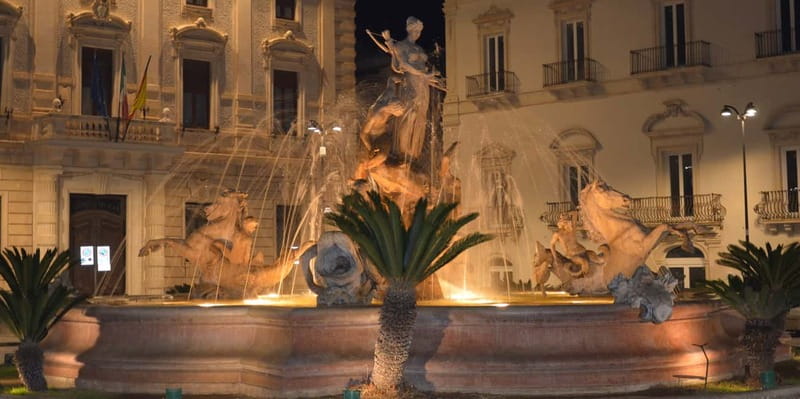
The Paradise Latomia is an ancient stone quarry, now a dramatic open space within the park. It helps explain where Syracuse obtained building stone and how the city’s monumental construction was tied to excavation and labor.
The Ear of Dionysus is the most memorable feature in this area. This tall, cave-like cut in the rock has an unusual shape and strong acoustic qualities. Your guide explains its place in local stories and history, but keep in mind that legends and documented events are not always the same thing. A good guide will help you separate the two.
Marcelo has received particular praise for his enthusiasm for archaeology and for covering the city’s Greek beginnings, Roman occupation, Arab period, and Spanish rule. That broad background is useful here, because the quarry is not just a dramatic cave. It is part of the city’s long military, civic, and architectural story.
Expect some time in the open air. A hat and bottle of water are sensible, especially if your starting time falls in the hotter part of the day. Comfortable shoes are more important than stylish ones.
More Ortigia walks in Syracuse:
- Siracusa: Ortigia Boat Tour with Marine Grotto
★ 4.7 · 617 reviews - Siracusa: Ortigia & Sea Caves Speedboat Tour with Swim Stop
★ 4.9 · 499 reviews - Syracuse: Pillirina, Ortigia, and Sea Caves Tour by Boat
★ 4.6 · 348 reviews - Syracuse: Ortigia Island and Sea Caves Boat Tour with Drinks
★ 4.6 · 337 reviews
The Roman Amphitheater and Syracuse’s later ancient chapter
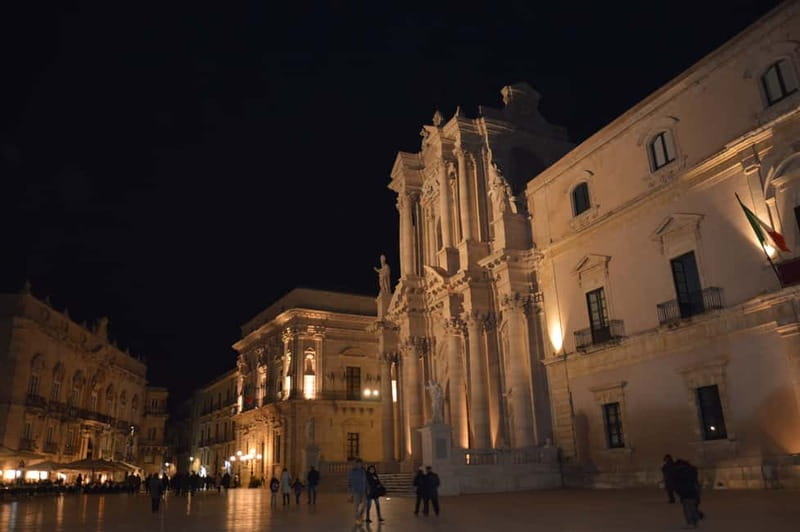
The Roman Amphitheater adds a different mood to the park. Its shape and design belong to Roman public entertainment rather than the Greek theater tradition. Seeing both in one visit lets you compare how two ancient cultures used architecture to organize large public events.
Your guide can explain the contrast between Greek and Roman civic life, religious practices, and building styles. This is one of the tour’s strongest educational features. Instead of treating the Roman monument as just another stop, the guide places it beside what you have already seen.
The itinerary describes two ancient theaters, meaning the Greek Theater and Roman Amphitheater form a useful pair. The Greek site is especially tied to drama and Greek civic culture, while the Roman structure shows the later phase of Syracuse under Roman power.
The park is not a museum with every object labeled in front of you. That makes live explanation valuable, but it also means the quality of the tour depends on your guide. The reported guides are named often in the booking feedback: Giuseppe, Anna, Marcelo, Laura, and Rosanna. Their styles differ, yet the consistent strengths are clear explanations, patience, and a willingness to answer questions.
Ortigia, where the ancient city keeps changing shape
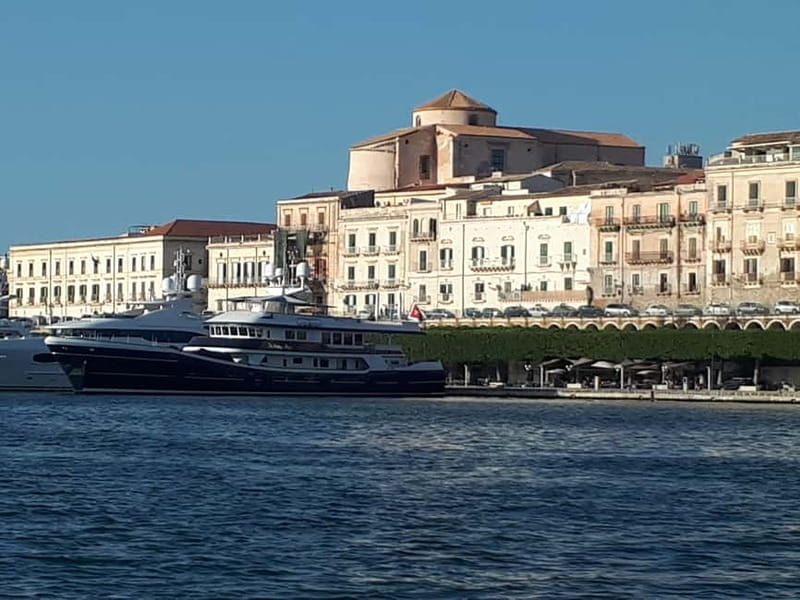
The walk through Ortigia is more about layers than one grand ruin. The island’s narrow streets form a compact maze of limestone buildings, churches, small squares, and ancient remains. Your guide helps you see how Syracuse changed hands and beliefs without losing its connection to its Greek past.
The Cathedral of Syracuse is the key stop. It incorporates the ancient Temple of Athena, so the building is both a Christian church and a visible record of an older pagan sanctuary. This is the kind of place where a guide earns the fee. You need someone to point out what belongs to which period and explain how the building’s architectural styles developed.
The Temple of Athena is especially important because it links religion and political power. Your guide discusses the temple’s place in ancient Syracuse and then shows how its remains became part of the cathedral. The result is more interesting than seeing either monument alone.
Ortigia’s streets can feel confusing at first, which is why the guided walk is useful. The route is designed to bring you through the main sights without asking you to decipher a map at every turn. Still, this is a walking tour, not a sightseeing bus. You should expect time on your feet and limited opportunity to stop for a meal.
One strong point from the feedback is the guides’ ability to keep the island walk personal. Giuseppe has been praised for answering a long stream of questions, while Rosanna has been noted for explaining Syracuse’s continuing Greek identity. Anna has also been praised for confirming the meeting details and adapting to changing conditions.
What the private format adds
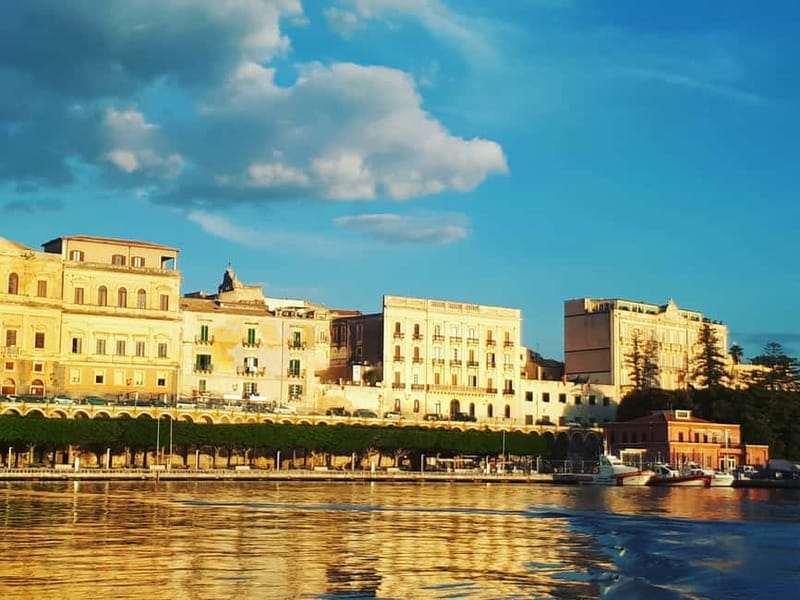
At $317.20 for a group of up to five, the price only makes sense if you use the private format well. For five people, the listed cost works out to about $63.44 per person before entrance fees. For two people, the per-person cost is much higher.
I see the value most clearly for families, close friends, and small groups who want control over the conversation. You can ask about a particular temple, spend more time on the Greek Theater, or request a slower pace without waiting for a large group.
The private setting is also helpful with children. The tour accepts children of all ages, and guides are expected to involve both parents and children in the discussion. Giuseppe was praised for holding the attention of teenagers through interactive storytelling. Anna was described as patient with two children and a delayed arrival.
Older walkers should be realistic about the amount of ground covered. One booking described a group of four older adults moving at a slower pace, with the guide adjusting well. That is encouraging, but you should still tell the guide about mobility needs before the walk begins.
Headsets are included, which is useful in open spaces and busy streets. You do not need to stay shoulder to shoulder with the guide to catch every word. The tour is offered in English, French, Italian, Russian, Spanish, and German.
Timing, transport, and the real three-hour limit
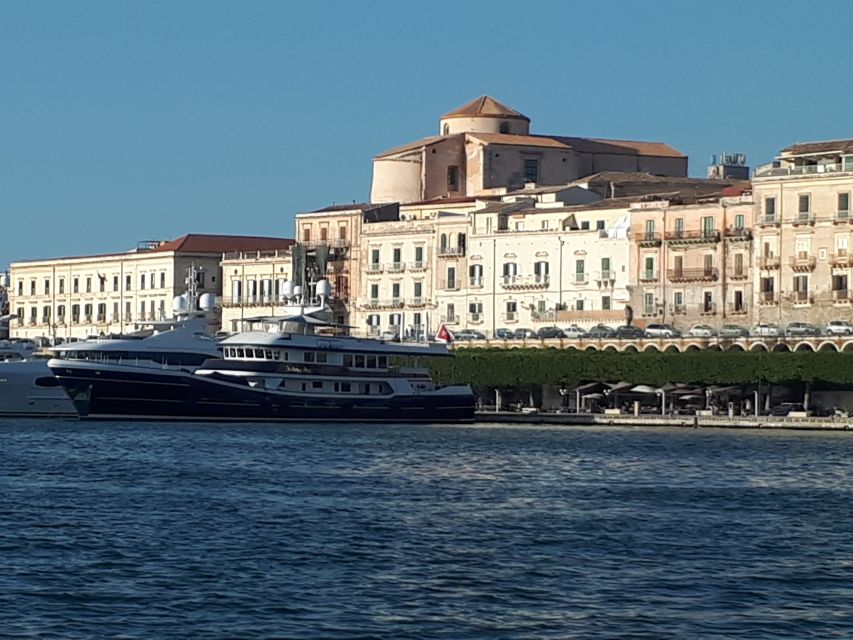
The published duration is three hours. That is enough for a well-paced introduction to the archaeological park and Ortigia, but it is not enough for an unhurried museum-style visit. You will need to keep moving between the major stops.
Some private tours run beyond the planned time when the guide and group agree. One group described a tour lasting three and a half hours, and another said Marcelo spent more than four hours with them. Treat these as individual arrangements, not as a promise. Plan your day around the official three-hour schedule.
Pick-up and drop-off are not included. The activity is listed as ending back at the meeting point, while the itinerary also gives Ortigia and Neapolis as possible drop-off locations. Because those details do not fully match, confirm where you will finish before booking other plans.
One group used a short taxi ride between the park and Ortigia during its private tour. Do not assume that transport is included in the price. If your guide suggests a taxi, you should expect to pay that cost separately.
The best practical approach is to avoid scheduling a tight dinner reservation, train, or shore excursion immediately afterward. Give yourself room for a slower pace, a rain delay, or a few extra questions.
Weather, footwear, and access
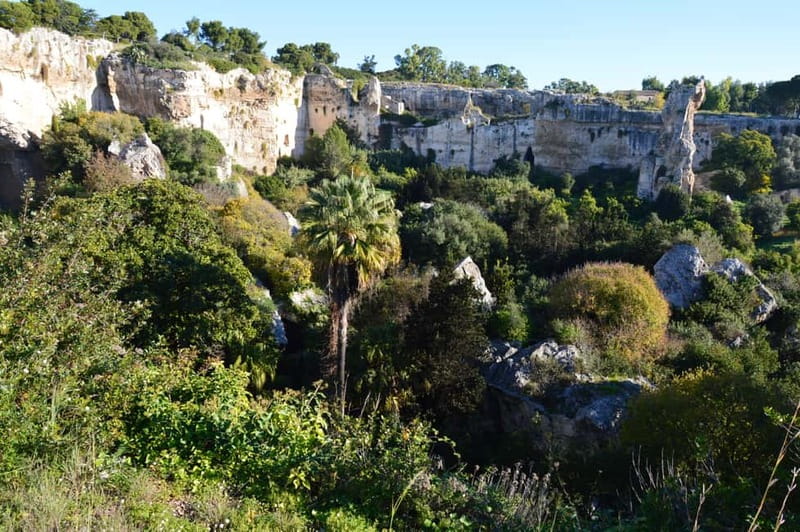
The park is exposed, so bring a hat and water. Comfortable shoes are essential for the archaeological grounds and Ortigia’s old streets. A sudden rainstorm caught one group during its island walk, yet the guide continued with patience and energy. A light rain layer is sensible if the forecast looks uncertain.
The tour is wheelchair accessible, but accessibility does not mean every surface will feel effortless. Ancient sites and old streets can present practical challenges. Contact the provider in advance if you need specific assistance, and explain what kind of pace works for your group.
The activity can accommodate children of all ages. Parents should still bring water and plan for the fact that the archaeological park may be tiring. A private guide makes it easier to pause, but the tour remains a three-hour walking experience.
Free cancellation is available up to 24 hours before the tour for a full refund. You can also reserve now and pay later, which helps if your Syracuse plans depend on weather or a changing Sicily itinerary.
Who gets the most from this Syracuse walk
I would choose this tour if you want a strong first look at Syracuse and prefer explanation over simply taking photos. It suits couples, families, and small groups who value conversation and do not want to join a large party.
It is particularly useful if ancient Greek history feels hard to place. The guide connects the Temple of Athena, Greek Theater, Roman Amphitheater, quarry, and Cathedral instead of presenting them as unrelated stops.
Families should consider it because guides have shown patience with children and teenagers. History-minded visitors should look for Giuseppe, Marcelo, Anna, Laura, or Rosanna when guide selection is available, based on the strong descriptions of their teaching styles.
I would hesitate if you want a cheap introduction or lots of free time. The $317.20 group price is high for two people, entrance fees are extra, and the schedule covers a lot. A self-guided visit may suit you better if you already understand the sites and prefer wandering alone.
Should you book it?
Book this private Syracuse tour if you want the archaeological park and Ortigia explained as one connected story. The Greek Theater, Roman Amphitheater, Ear of Dionysus, Temple of Athena, and Cathedral are far more meaningful when you understand how religion, politics, and changing rulers shaped them.
The price is easiest to justify with four or five people, or with a family that wants a flexible pace. Confirm the entrance fee, meeting point, end point, and any taxi cost before you go. If you bring good shoes, water, and realistic expectations about the three-hour schedule, this is a strong way to get your bearings in Syracuse.
FAQ
How long does the Syracuse and Ortigia tour last?
The scheduled duration is three hours. Some private groups have spent longer with their guide, but extra time is not guaranteed.
What sites are included on the walk?
The tour covers the Neapolis Archaeological Park and Ortigia. Stops include the Greek Theater, Roman Amphitheater, Paradise Latomia, Ear of Dionysus, Temple of Athena, and Cathedral of Syracuse.
Is the archaeological park entrance fee included?
No. Monument entrance fees are not included. One booking noted an archaeological park admission fee of €13 per person, but you should confirm the current price.
Where does the tour begin?
The stated meeting point is the Biglietteria Parco Archeologico Neapolis on Via Luigi Bernabò Brea, 96100 Siracusa. Your guide meets you at the ticket office with a sign showing the local partner’s name.
Is transportation included between Neapolis and Ortigia?
Pick-up and drop-off are not included. A short taxi ride was used by one private group, but you should not assume that a taxi or other transfer is part of the tour price.
Is the tour suitable for children?
Yes. Children of all ages can join, and the guide will involve both parents and children. The private format also makes it easier to ask for a suitable pace.
Which languages are available?
Live guides are available in English, French, Italian, Russian, Spanish, and German.
Just added around Syracuse
- Sicily Boats Avola: Plemmirio boat tour 4 people 4 hours★ 5.0 · 3 reviews
- From Syracuse: Private Taormina and Castelmola tour with lunch★ 5.0 · 3 reviews
- Siracusa Iris Photography Experience★ 5.0 · 3 reviews
- Siracusa E-bike rental service★ 5.0 · 3 reviews
- Tour Ragusa Ibla, Modica and Noto, from Syracuse★ 5.0 · 3 reviews
- Cyclops Tour★ 4.5 · 3 reviews
- Archaeological Syracuse: Neapolis Park private tour★ 5.0 · 3 reviews
- Tour of Syracuse by Ape Calessino★ 3.0 · 3 reviews
Ortigia Tours, compared.
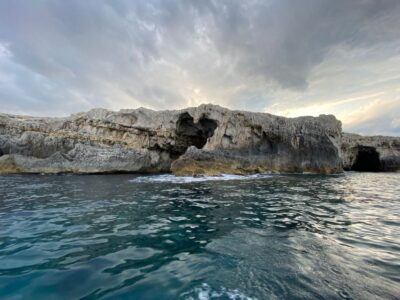
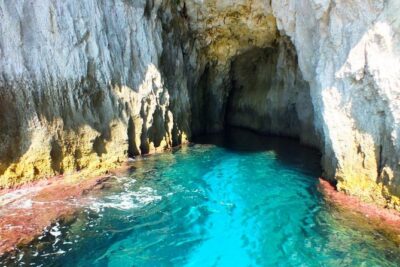
Tour of the island of Ortigia and exploration of sea caves with baths.
Read our review →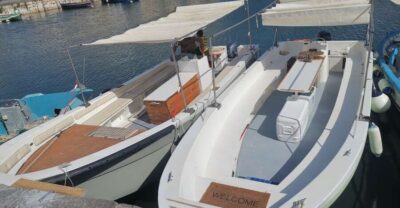
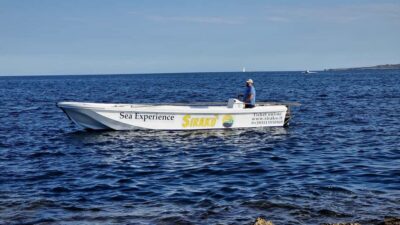
Ortigia & Sea Caves Speedboat Tour with Swim Stop
Read our review →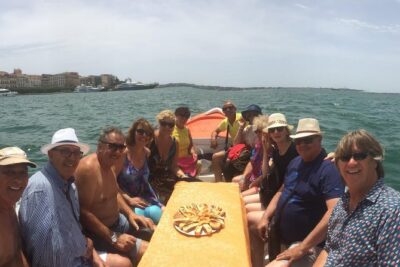
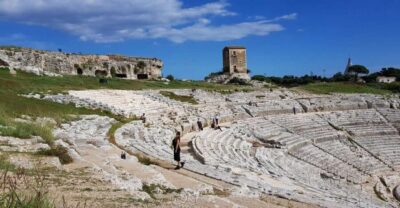

Ortigia Island and Sea Caves Boat Tour with Drinks
Read our review →Browse the lists this tour appears in