
Reviewed · ORTIGIA TOURS
Syracuse: Ortigia Private Walking Tour
Ortigia packs Greek ruins, a cathedral built inside a pagan temple, sea views, and grand Baroque streets into a compact island old town. This two-hour private walking tour gives you the story behind those layers instead of leaving you to guess what you are looking at.
I like the relaxed pace and the chance to ask questions as you walk. I also like the flexible ending, since you can finish at Piazza Archimede or request the fish and fruit market when it is open. The main consideration is that admission to the cathedral is extra, and the market option works only in the morning on working days.
In This Review
- Key points at a glance
- Why Ortigia is best understood on foot
- From the Apollo Temple into Ortigia’s historic lanes
- Cathedral Square and the Doric temple inside
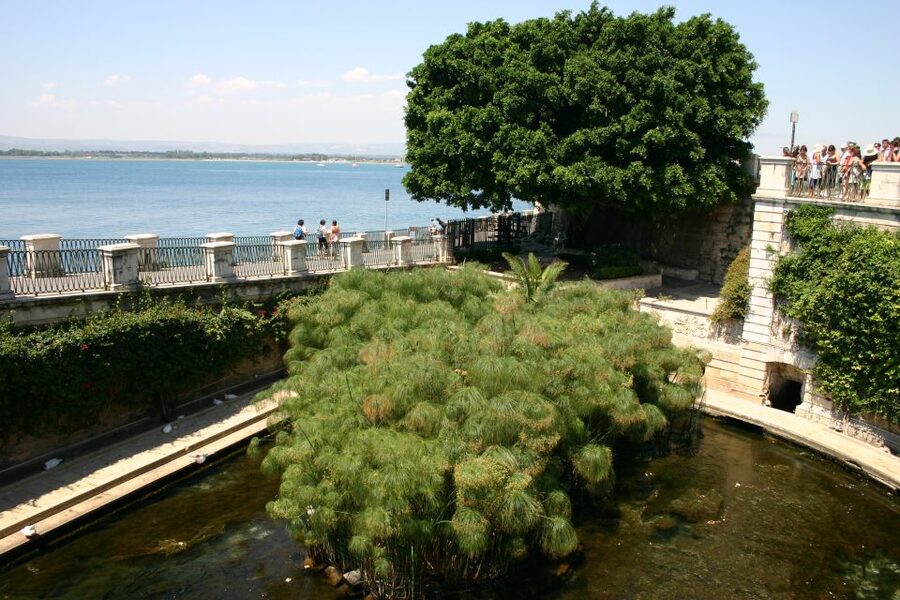
- Aretusa Fountain beside the sea
- The Jewish Quarter and Via Maestranza
- Piazza Archimede and the Fountain of Diana
- How the private format affects the experience
- Guide style and what to expect
- What to wear and bring
- Who will get the most from this walk
- Should you book the Ortigia private walking tour?
- FAQ
- How long does the Ortigia walking tour last?
- Where does the tour begin?
- Where does the guide wait at Largo XXV Luglio?
- Where does the tour finish?
- Is the market open throughout the day?
- Is the cathedral entrance included?
- What clothing is required for the cathedral?
- What languages are available?
- Is the tour private?
- Is cancellation available?
Key points at a glance
- A temple begins the story: Meet beside the Greek Temple of Apollo at Largo XXV Luglio, the historic gateway into Ortigia.
- One church, several eras: Syracuse Cathedral still incorporates the columns and structure of an ancient Doric temple.
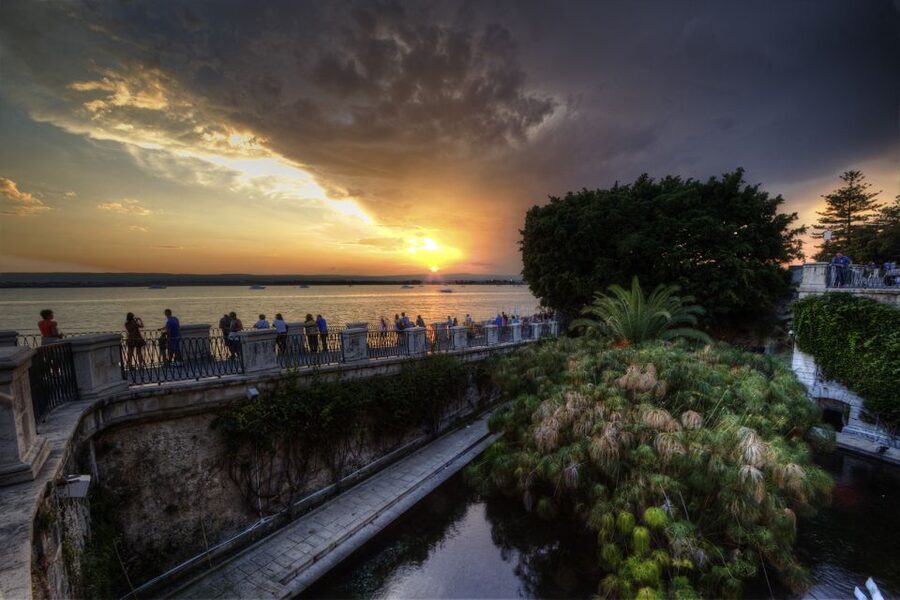
- A sea-facing route: Walk to Aretusa Fountain, where fresh water and papyrus sit beside the waterfront.
- A genuinely private format: The price covers up to nine people, making it attractive for families and small groups.
- Guides who bring the details alive: Eva and Galina are two guides associated with especially strong experiences on this route.
- An easy walking introduction: The tour is wheelchair accessible and offered in English, Italian, or German.
Why Ortigia is best understood on foot
Ortigia is small enough to cross on foot, but its past is anything but simple. Greeks, Romans, Byzantines, Arabs, Normans, and later Sicilian rulers all left marks here. The pleasure of this walk is seeing those changes close together, often in the same building.
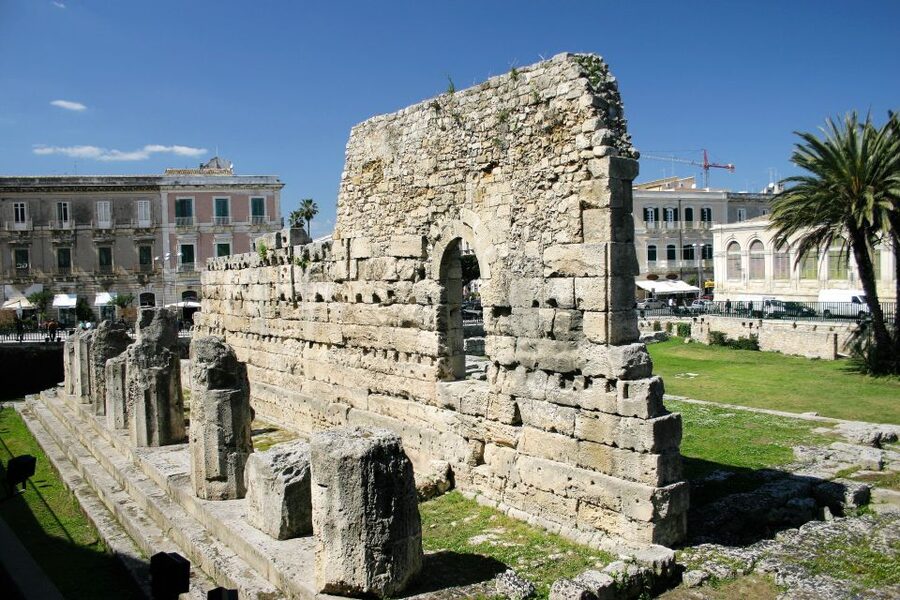
You begin at Largo XXV Luglio, just beside the Temple of Apollo. This is a practical meeting point because it sits at the entrance to the island and gives you an immediate sense of Syracuse’s ancient roots. Look for the Hermes Sicily Tours sign or logo. Depending on the weather, the guide waits between the small fountain and the benches in front of the temple.
The Apollo Temple is not a complete monument in the way some visitors expect. Its weathered remains are part of the modern street scene. That is precisely what makes the opening useful. Your guide can explain what you are seeing before you move into the denser streets of Ortigia, where ancient stones are often hidden inside later buildings.
This first stop also helps you get your bearings. Instead of starting with a general city lecture, the guide places Syracuse in front of you, one surviving structure at a time.
More Walking Tours in Syracuse
- Syracuse: Street Food Walking Tour in Ortigia with Tastings
★ 4.9 · 293 reviews - Syracuse: Ortigia and Neapolis Guided Walking Tour
★ 4.7 · 205 reviews - Syracuse: Ortigia Classic Walking Tour
★ 4.7 · 167 reviews
From the Apollo Temple into Ortigia’s historic lanes
After the introduction, the route crosses the old town through picturesque streets. The walking itself is gentle, with information stops along the way rather than a long speech delivered in one place.
That format works well for Ortigia. The streets change quickly, and your guide can point out architectural details that are easy to miss while you are watching for cafés, doorways, and sea glimpses. You will hear how different rulers shaped the island and how the old center developed around its ancient core.
A private guide is especially useful here. If your group is interested in archaeology, church art, architecture, or local history, you can ask for more detail in that direction. If you are with children or relatives who prefer a lighter pace, you are not tied to a large group’s schedule.
The language choices are English, Italian, and German for private tours. Shared tours are offered in English or Italian during some parts of the year, so check the option carefully when booking if language matters to your group.
Cathedral Square and the Doric temple inside
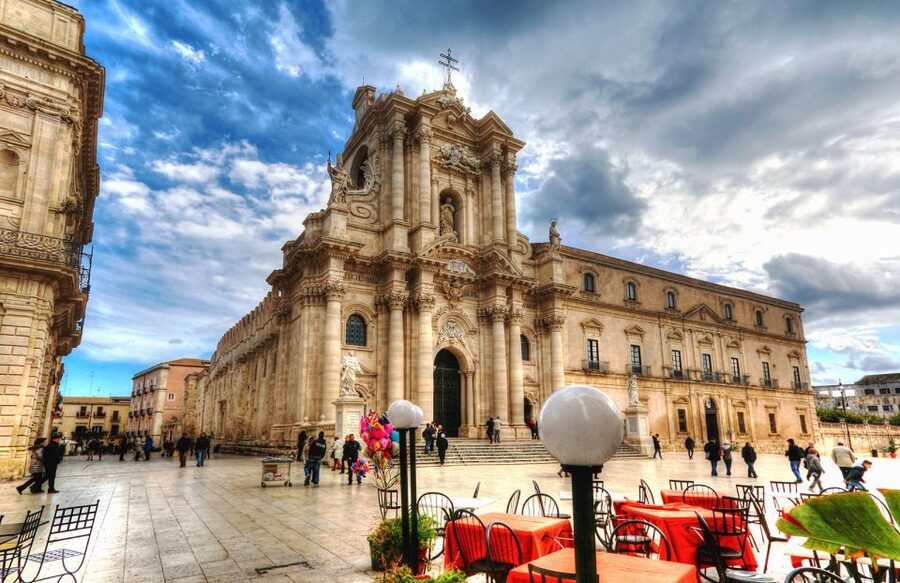
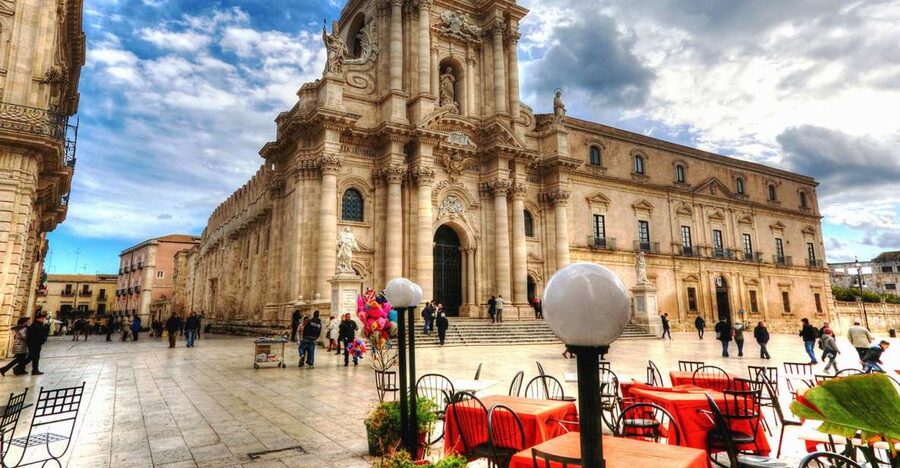
Cathedral Square is the visual high point of the walk. The bright limestone buildings create a broad, theatrical space, with the town hall, Palazzo Beneventano, the bishop’s palace, St. Lucy’s Church, and the cathedral gathered around it.
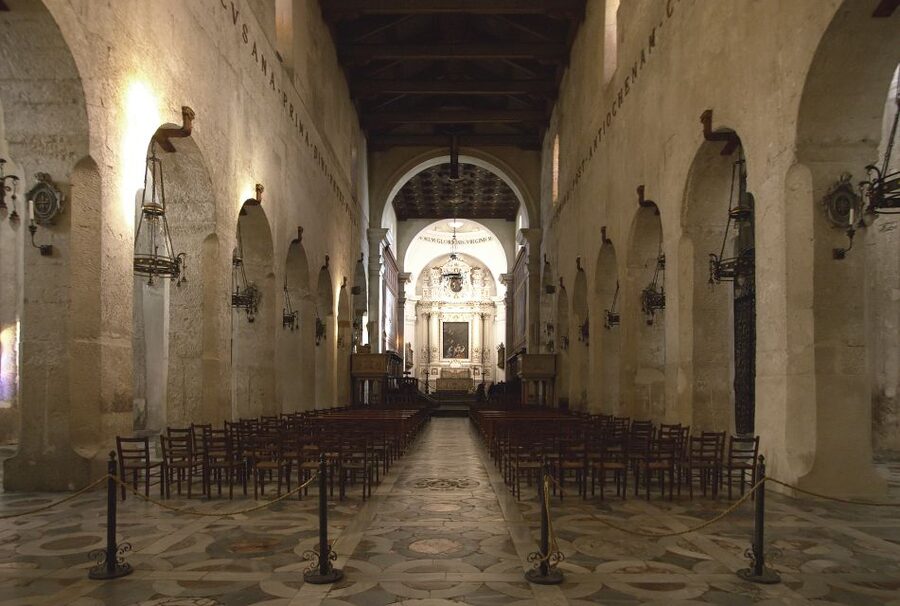
The cathedral deserves special attention because it is not simply a Baroque church. Its structure incorporates an ancient pagan temple, and Doric columns from that earlier building remain part of the church. You are looking at several periods at once: Greek foundations, later religious use, and the bright Sicilian Baroque style that gives the square its current character.
I find this kind of site far more rewarding with a guide. Without context, the cathedral can look like a beautiful pale-stone church. With an explanation, you begin to notice the older elements and understand why the building is so unusual.
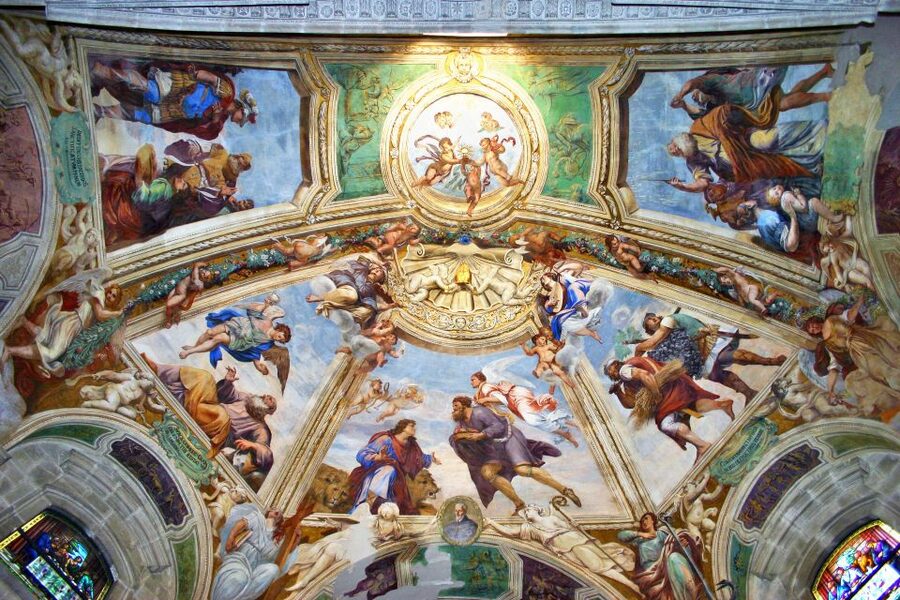
You can enter the cathedral during the tour, but this is optional and the admission fee is not included. Dress correctly if you plan to go inside. Shorts and sleeveless tops are not allowed, and both men and women need to cover their shoulders. This is worth planning for, especially in hot weather. A light layer in your day bag can save you from missing the interior.
The tour does not include admission fees at any stop, so bring a little extra if you want to enter the cathedral or visit another paid site. The guide can explain what you are seeing outside even if you decide not to go in.
Aretusa Fountain beside the sea
The route continues to Aretusa Fountain, one of Ortigia’s most distinctive waterfront sights. The spring is tied to the myth of Aretusa, a story told by Ovid, and its clear water supports papyrus.
That plant is an unexpected sight in the middle of an old Mediterranean city. The guide also connects it with Syracuse in the age of Archimedes, giving the stop a useful link between myth, natural water, and the city’s ancient intellectual life.
The fountain is not just another monument to photograph. It gives the walk a change of mood after the formal buildings of Cathedral Square. You move from limestone façades and church history to open air, water, and views across the sea.
The viewpoint stop is brief, but it adds value to the route. If the weather is clear, you get a better sense of Ortigia’s position as a small island joined to Syracuse. The sea also helps explain why this place mattered so much to successive powers. The route uses the waterfront as part of the story rather than treating it as a quick backdrop.
More Ortigia walks in Syracuse:
- Siracusa: Ortigia Boat Tour with Marine Grotto
★ 4.7 · 617 reviews - Siracusa: Ortigia & Sea Caves Speedboat Tour with Swim Stop
★ 4.9 · 499 reviews - Syracuse: Pillirina, Ortigia, and Sea Caves Tour by Boat
★ 4.6 · 348 reviews - Syracuse: Ortigia Island and Sea Caves Boat Tour with Drinks
★ 4.6 · 337 reviews
The Jewish Quarter and Via Maestranza
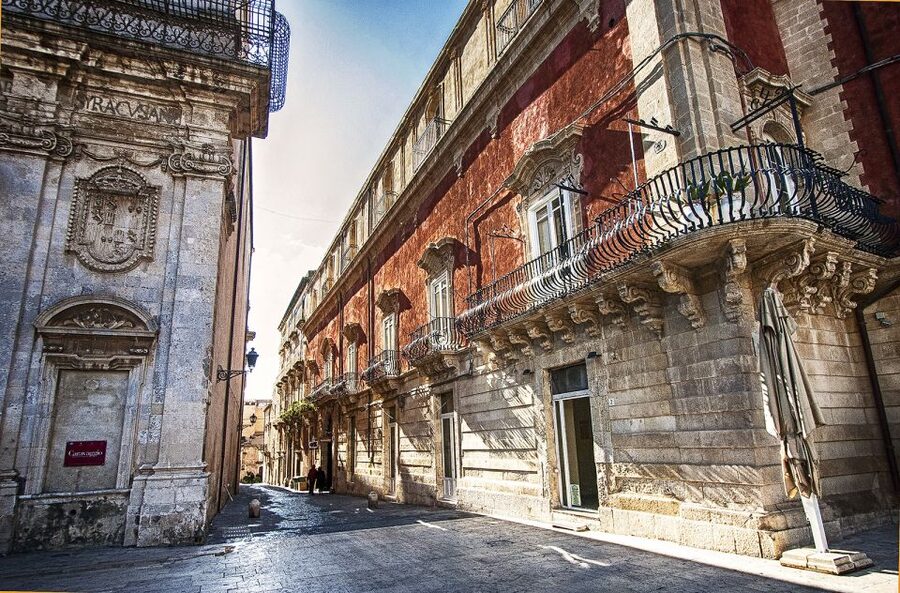
On the return route, you pass through the Jewish Quarter and continue along Via Maestranza. This section shifts attention from ancient Syracuse to the social structure of later Ortigia.
Via Maestranza was the street of the town’s noble families, and its large homes give you a feel for the status those families wanted to display. Your guide can help you read the façades and urban layout, turning a pleasant stroll into a lesson about who lived where and how the town was organized.
The Jewish Quarter adds another layer to the route. It helps show that Ortigia’s identity was shaped by communities as well as rulers. The value of this part is not a single famous monument. It is the way the streets connect the island’s different chapters.
This is also where the tour feels less like a checklist. You are not being rushed from one major attraction to another. You are walking through the old town and letting the buildings fill in the gaps between the headline sights.
Piazza Archimede and the Fountain of Diana
The formal ending is Piazza Archimede, in the heart of Ortigia. The square is home to the neoclassical Fountain of Diana, which recalls the city’s ancient past in a later artistic style.
It makes sense as the final stop. By this point, you have seen Greek remains, religious buildings, noble residences, a Jewish quarter, a mythological spring, and a neoclassical fountain. The square gathers those themes together without pretending that Syracuse belongs to one period only.
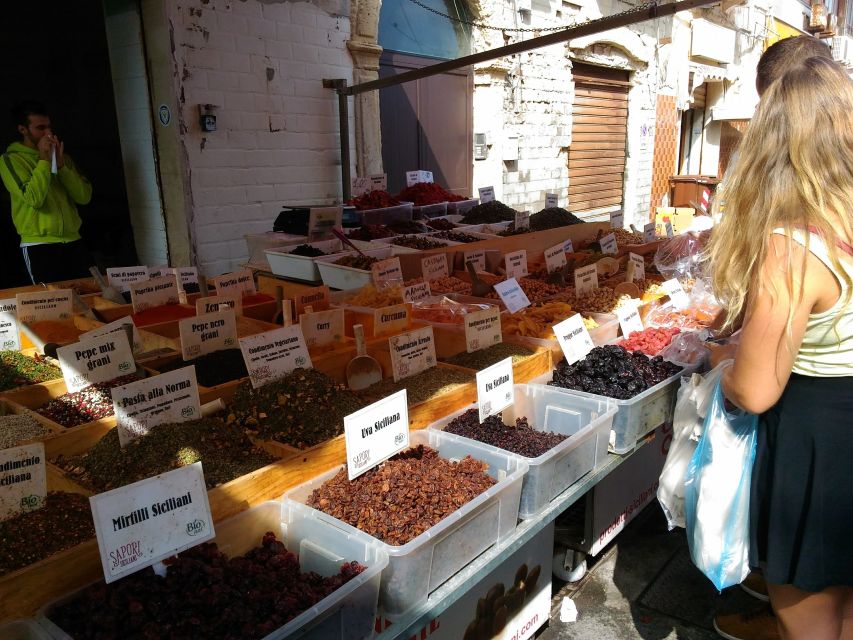
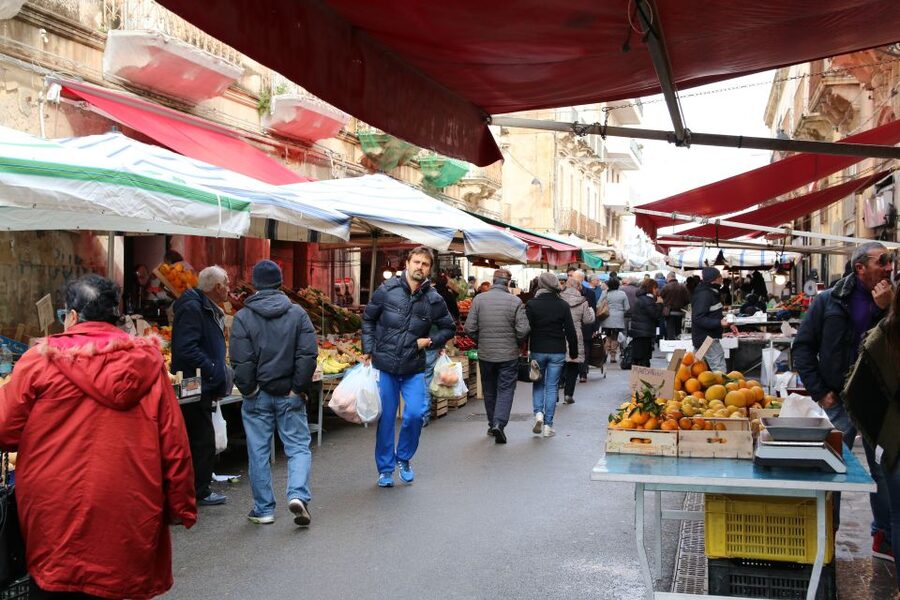
The standard end point is back at the meeting area, but you can ask your guide to finish at the local fish and fruit market instead. That option is useful if you want to continue with a more everyday side of Ortigia after the monuments.
Plan carefully, though. The market is open only in the morning and on working days. An afternoon, evening, weekend, or holiday tour will not provide the same option. If the market is a priority, choose your starting time around it and confirm that the route can end there.
How the private format affects the experience
The price is $220.91 for a group of up to nine people. That looks expensive for a two-hour walk if you are alone or traveling as a couple. At the full group limit, however, it works out to about $24.55 per person, before any entrance fees.
That makes the tour strongest for families and small groups who can share the cost. You receive a private walk with a licensed guide rather than joining a fixed crowd. The guide can adjust explanations, answer questions, and alter the pace within the two-hour window.
A shared option is available during some periods of the year and may suit solo visitors or couples seeking a lower price. Shared tours are offered in English or Italian, while private tours can be booked in English, Italian, or German throughout the year.
Two hours is enough for a well-paced introduction, not a complete study of Syracuse. You will see the principal sights from the outside and have the chance to enter the cathedral if you choose. If you want long interior visits, extended photography stops, or several paid attractions, you will need more time beyond this tour.
The private structure also helps when conditions are less than perfect. One guide, Eva, has been praised for keeping the walk informative even in rain, and for adapting the route when an official visit restricted access around Ortigia. That flexibility is useful in a historic center where weather, ceremonies, and security arrangements can affect the streets.
Guide style and what to expect
The strongest part of this experience is the guide-led explanation. Eva has been described as friendly, clear in English, flexible, and strong on both local history and architecture. Galina has also been singled out for showing archaeological and architectural details and for making a private family tour comfortable and open to questions.
Guide quality can vary from one person to another, but this route clearly depends on having someone who can connect the stops. The Apollo Temple, cathedral, Aretusa Fountain, and Fountain of Diana are attractive on their own. The guide’s job is to show how they relate.
The pace is a good match for people who want a gentle walk with regular information stops. You are not expected to cover Ortigia at a forced speed. At the same time, the tour is compact, so keep questions focused if your group has several interests.
The tour is wheelchair accessible, an important practical point in an old town where you may otherwise worry about access. The information provided does not describe the exact surface or route conditions at every street, so anyone with specific mobility needs should confirm details in advance.
What to wear and bring
Wear comfortable walking shoes and clothing suitable for a church visit. The route is outdoors for much of its length, but the cathedral requires covered shoulders and no shorts or sleeveless tops for men or women.
Bring water, especially in warm weather, and consider a light shoulder-covering layer. You should also have money available for admission fees, since they are not included in the tour price.
If you want the market ending, book a morning on a working day. Do not assume that the market will be open simply because your tour is taking place in Ortigia. The market schedule is one of the few details that can change the shape of your day.
The meeting point is easy to identify if you follow the instructions: the Apollo Temple entrance to Ortigia in Largo XXV Luglio, near the small fountain and benches. Look for the Hermes Sicily Tours sign or logo rather than waiting at a general city meeting point.
Who will get the most from this walk
I would recommend this tour to first-time visitors who want an efficient introduction to Ortigia without spending half a day on a large group excursion. It is also a strong choice for families, since the private format lets the guide adjust the pace and answer individual questions.
History and architecture enthusiasts will appreciate the range of periods packed into the route. The cathedral is the key example, but the walk also links Greek ruins, later religious use, aristocratic homes, Jewish heritage, mythology, and neoclassical design.
The tour suits visitors staying in Syracuse who want orientation early in their visit. After two hours, you will know where Piazza Archimede, Cathedral Square, Aretusa Fountain, Via Maestranza, and the market sit in relation to one another.
It is less suitable if you want extensive interior access or a long archaeology-focused visit. The walk is an overview, albeit a thoughtful one. You will need to return independently for more time at the cathedral or other attractions.
Should you book the Ortigia private walking tour?
Book it if you are traveling with a family or group of up to nine and want the cost of a private guide spread across several people. The route covers the essential sights, the guides have received strong praise for clear explanations and flexible pacing, and the cathedral gives the walk a memorable centerpiece.
For a couple, the price is harder to justify unless you place a high value on privacy, questions, and a guide in your preferred language. A shared tour can offer better value if it is available for your dates.
Choose a morning working-day departure if the fish and fruit market matters to you. Choose clothing that meets church rules if you want to enter the cathedral. With those details handled, this is a compact and worthwhile way to make sense of Ortigia’s remarkable mixture of ancient and later Syracuse.
FAQ
How long does the Ortigia walking tour last?
The tour lasts two hours. Check availability for the starting times offered on your date.
Where does the tour begin?
Meet your guide at the Temple of Apollo, at the entrance to Ortigia in Largo XXV Luglio. The guide will have a Hermes Sicily Tours sign or logo.
Where does the guide wait at Largo XXV Luglio?
Depending on the weather, the guide waits between the small fountain on the right side and the benches in front of the temple.
Where does the tour finish?
The tour ends at Piazza Archimede in the heart of Ortigia, although you can ask the guide to finish at the local fish and fruit market instead.
Is the market open throughout the day?
No. The market is open only in the morning and on working days.
Is the cathedral entrance included?
No. Visiting the cathedral interior is optional, and admission is not included in the tour price.
What clothing is required for the cathedral?
Shorts and sleeveless tops are not allowed. Both men and women must cover their shoulders to enter places of worship.
What languages are available?
Private tours are offered in English, Italian, or German. Shared tours are available in English or Italian during some periods of the year.
Is the tour private?
The experience can be booked as a private tour all year. A shared group option is available during some periods, and small groups are also offered.
Is cancellation available?
You can cancel up to 24 hours in advance for a full refund. You can also reserve now and pay later.
Just added around Syracuse
- Sicily Boats Avola: Plemmirio boat tour 4 people 4 hours★ 5.0 · 3 reviews
- From Syracuse: Private Taormina and Castelmola tour with lunch★ 5.0 · 3 reviews
- Siracusa Iris Photography Experience★ 5.0 · 3 reviews
- Siracusa E-bike rental service★ 5.0 · 3 reviews
- Tour Ragusa Ibla, Modica and Noto, from Syracuse★ 5.0 · 3 reviews
- Cyclops Tour★ 4.5 · 3 reviews
- Archaeological Syracuse: Neapolis Park private tour★ 5.0 · 3 reviews
- Tour of Syracuse by Ape Calessino★ 3.0 · 3 reviews
Ortigia Tours, compared.
Tour of the island of Ortigia and exploration of sea caves with baths.
Read our review →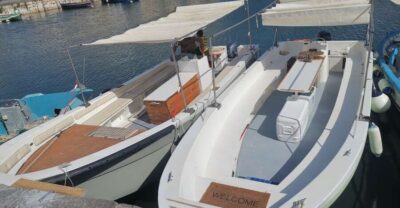
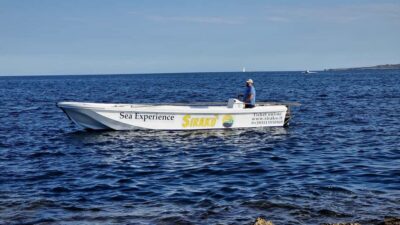
Ortigia & Sea Caves Speedboat Tour with Swim Stop
Read our review →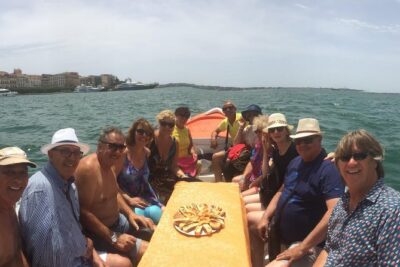

Ortigia Island and Sea Caves Boat Tour with Drinks
Read our review →Browse the lists this tour appears in