
Reviewed · ORTIGIA TOURS
Syracuse: Ortigia Classic Walking Tour
Syracuse’s old town is a compact island where Greek columns, Baroque palaces, Christian churches, and a freshwater spring fit into a two-hour walk. This tour gives you a clear route through Ortigia, beginning at the ancient Temple of Apollo and finishing around Piazza Archimede.
I like the small-group feel, usually about 10 people with a maximum of 25, and the way the tour connects famous sights with local customs, especially the feast of Saint Lucy. I also like the practical audio headsets used for larger groups, which help you hear the guide without everyone crowding around.
The main drawback is that Ortigia can feel crowded, especially around narrow streets and busy squares. The meeting point can also be a little vague when several walking tours gather in the same area, so arrive early and confirm the exact starting spot.
In This Review
- Key points to know before booking
- Why this Ortigia walk is a useful first look at Syracuse
- Starting at the Temple of Apollo
- Piazza Archimede and the Fountain of Diana
- Piazza Duomo and Syracuse Cathedral
- The Aretusa Spring and the waterfront
- Via della Giudecca and the old Jewish quarter
- Church of Saint John the Baptist
- The guides and the feel of the group
- How much value do you get for $22?
- Practical advice for a smoother walk
- Who should book this Syracuse walking tour?
- Should you book the Ortigia Classic Walking Tour?
- FAQ
- How long does the Ortigia Classic Walking Tour last?
- Where does the tour start?
- Where does the tour end?
- Is the cathedral entrance included?
- What languages are offered?
- Is the tour wheelchair accessible?
- What should I bring?
Key points to know before booking
- The Temple of Apollo begins the story: See one of the earliest large Greek stone temples built in the western Greek colonies.
- A two-hour introduction to Ortigia: Cover the main old-town sights without committing to a half-day tour.
- The cathedral visit costs an extra €2: The church interior is optional and depends on access during your visit.
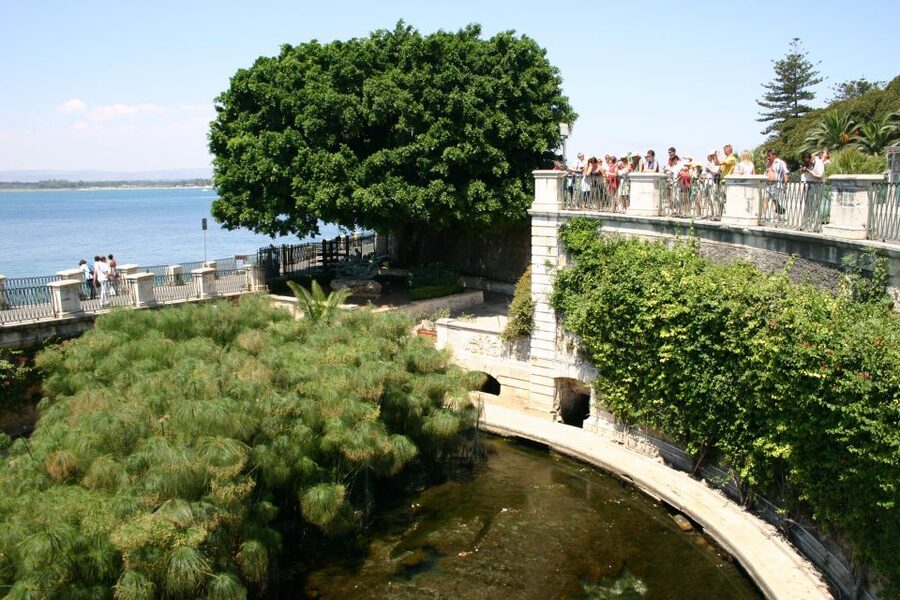
- The Aretusa Spring adds a memorable natural stop: Look for the papyrus plants beside the seafront.
- The route includes the old Jewish quarter: Via della Giudecca brings a different layer of Syracuse’s past.
- Eva has earned special praise: She is known for a calm pace, clear explanations, and helpful suggestions for the rest of your stay.
Why this Ortigia walk is a useful first look at Syracuse
Ortigia is easy to explore on foot, but it is not always easy to understand at first glance. A Greek temple may sit beside a modern street, a church may contain the columns of an older pagan building, and a pretty square may carry several names and centuries of change.
That is where a guided walk earns its €22 price. You are not simply checking off monuments. You are getting a framework for the old town, so later visits to the cathedral, the waterfront, or the archaeological area outside Ortigia make more sense.
The pace is designed for sightseeing rather than exercise. You stop for explanations, photographs, and views, and the route allows time to look around instead of marching from one address to the next. For a first morning or afternoon in Syracuse, I consider that good value.
The tour is offered in English or Italian. In a very small group, the guide may explain things in both languages, so ask about this when you book if language clarity matters to you.
More Walking Tours in Syracuse
- Syracuse: Street Food Walking Tour in Ortigia with Tastings
★ 4.9 · 293 reviews - Syracuse: Ortigia and Neapolis Guided Walking Tour
★ 4.7 · 205 reviews - Syracuse: Ortigia Private Walking Tour
★ 4.8 · 181 reviews
Starting at the Temple of Apollo
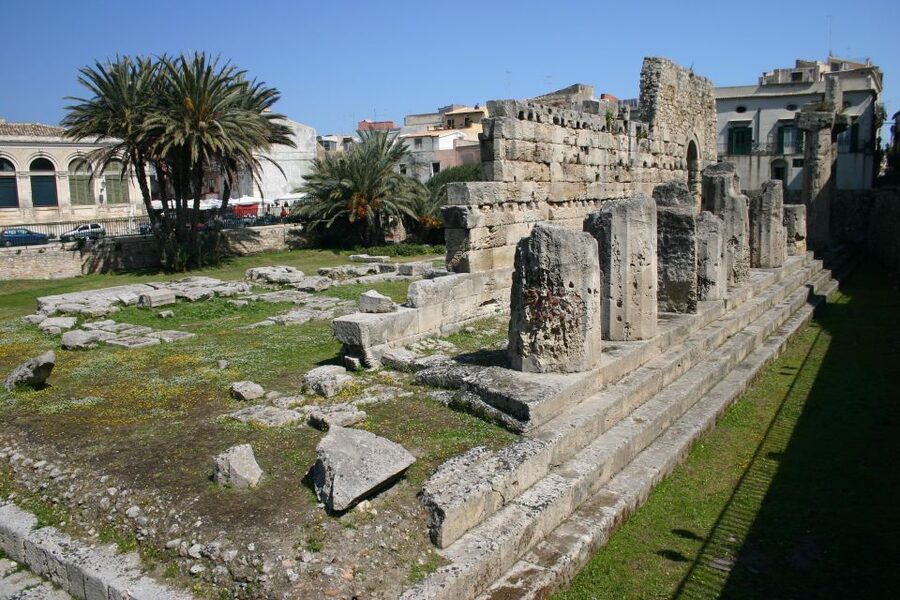
The walk begins near Largo XXV Luglio, at the entrance to Ortigia, beside the Temple of Apollo. This is a smart starting point because it places you at the edge of the old town and introduces the oldest major layer of Syracuse before moving into the later city.
The Temple of Apollo is described as the first large stone temple built by the ancient Greeks in the western colonies. Even from the outside, its weathered Doric remains make the city’s age immediately clear. Your guide explains what you are seeing and puts the ruins into the larger story of Syracuse as one of the most important Greek colonies.
Do not expect a long archaeological visit here. The value is the orientation. You begin with the ancient foundation, then walk into streets still used as part of daily life.
The starting point can be busy, with several tour groups gathering nearby. Give yourself extra time, keep your booking details handy, and look for the specific guide or tour identification. This is one place where arriving exactly at the last minute could create needless stress.
Piazza Archimede and the Fountain of Diana
From the Apollo Temple, the route moves toward Piazza Archimede. The square is centered on the Fountain of Diana, a decorative landmark with a strong connection to Syracuse’s classical identity.
This stop helps you shift from ruins to the living town. You see how Ortigia’s public spaces work today while hearing about the civilizations that shaped them. The guide points out details you could easily pass without context, including the way Greek and later Sicilian traditions overlap.
The square also serves as a useful reference point during your stay. The tour ends around Piazza Archimede or the Fountain of Diana, depending on the meeting option, so you can remain in the center of Ortigia afterward rather than needing transport back to the outskirts.
One practical point: crowded pedestrian streets and occasional vehicles can make it harder to stay close to the guide. Larger groups receive headsets, and the equipment has been especially useful for hearing explanations without the guide needing to shout.
Piazza Duomo and Syracuse Cathedral
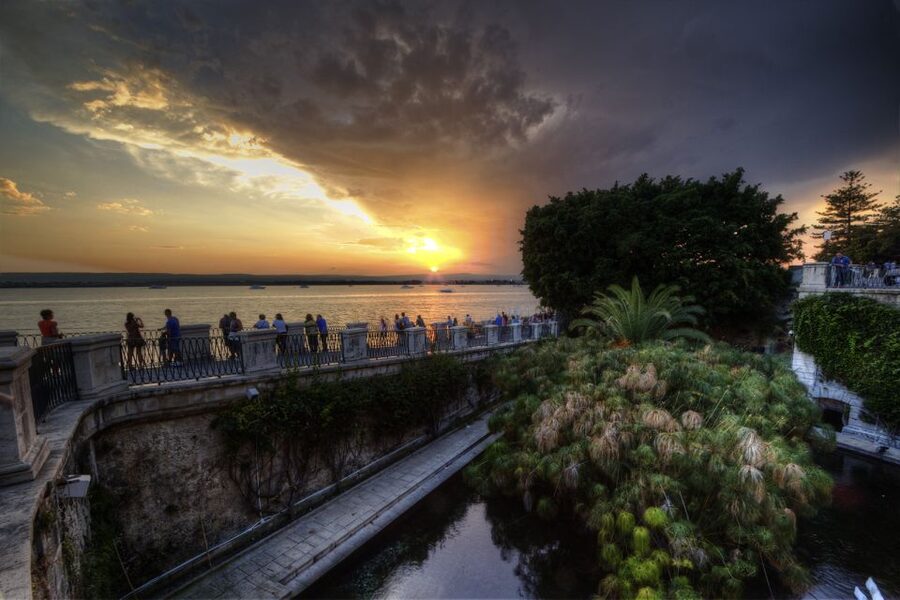
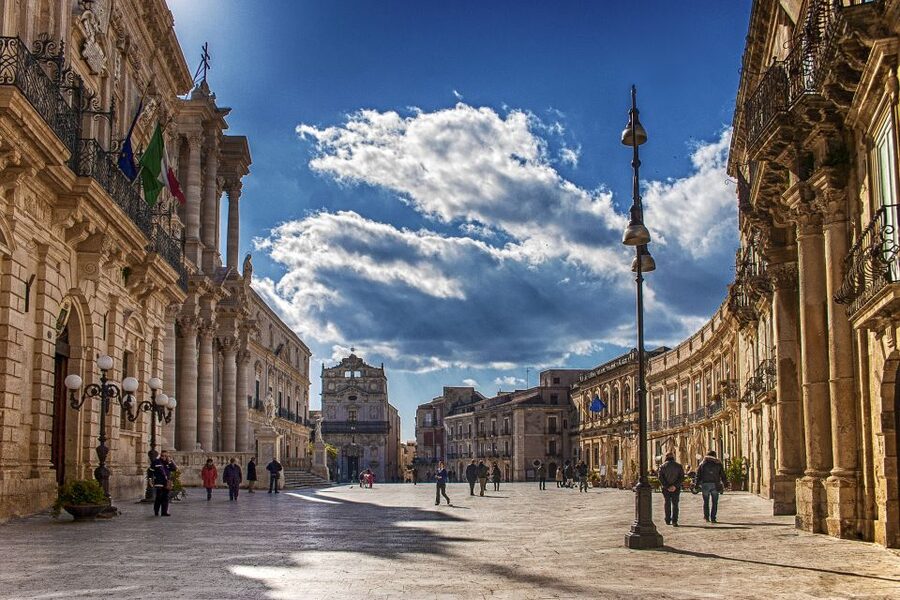
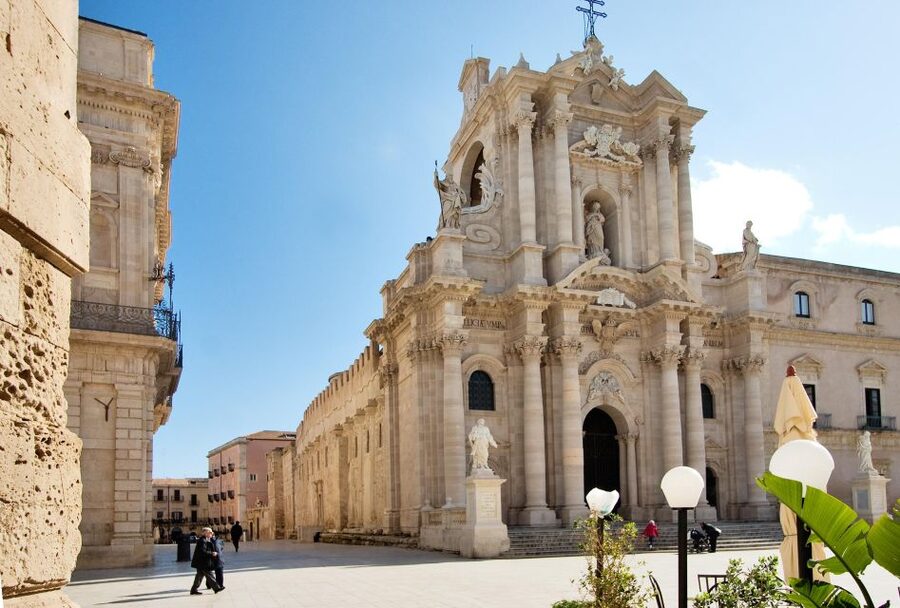
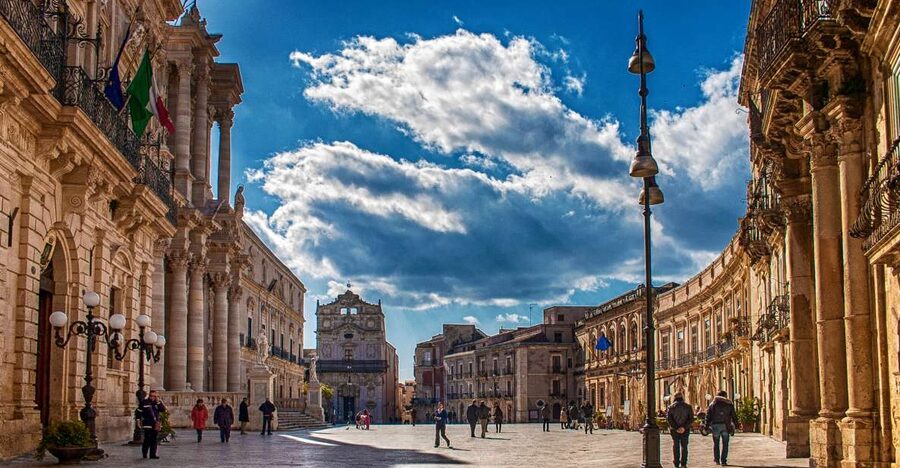
Piazza Duomo is the visual high point of the town center. It gathers several important buildings in one elegant space, including the town hall, Palazzo Vermexio, Palazzo Beneventano del Bosco, the Church of Saint Lucy, and Syracuse Cathedral.
The cathedral is the most unusual stop. Its Christian interior was built inside an ancient Greek temple, and the old columns remain part of the structure. That layering tells Syracuse’s story better than a list of dates can. Pagan worship, Christian practice, earthquakes, rebuilding, and later decoration all meet in one building.
The cathedral is also often selected as a wedding venue, so access is not guaranteed. When the church is open to the group, you can enter with the guide for an additional €2. If it is not practical to enter, the tour provides a short coffee break instead.
That extra charge is modest, but you should know it is not included in the tour price. If the cathedral interior is a major reason for booking, treat the visit as optional rather than guaranteed.
I would also allow time to return to Piazza Duomo later on your own. Two hours is enough for an introduction, but not enough to study every church facade, palace detail, and interior at a slow pace.
More Ortigia walks in Syracuse:
- Siracusa: Ortigia Boat Tour with Marine Grotto
★ 4.7 · 617 reviews - Siracusa: Ortigia & Sea Caves Speedboat Tour with Swim Stop
★ 4.9 · 499 reviews - Syracuse: Pillirina, Ortigia, and Sea Caves Tour by Boat
★ 4.6 · 348 reviews - Syracuse: Ortigia Island and Sea Caves Boat Tour with Drinks
★ 4.6 · 337 reviews
The Aretusa Spring and the waterfront
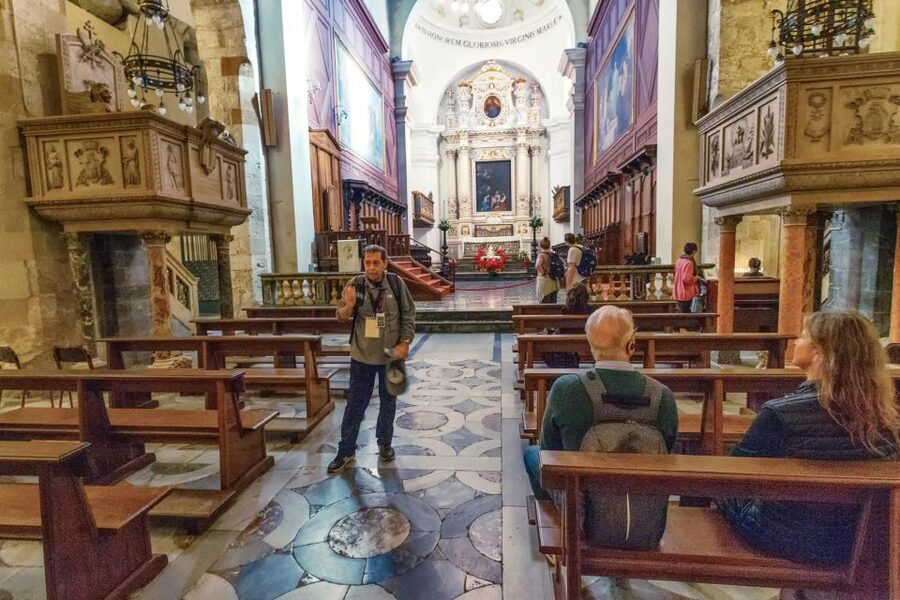
The tour continues to the Aretusa Spring, one of Ortigia’s most distinctive natural sights. The spring is linked to Greek mythology and is famous for its papyrus plants, which give the spot a look unlike the stone-heavy streets around it.
This is a welcome change of pace. After temples, palaces, and churches, you get open views and a chance to consider the island’s position beside the sea. The stop is not only scenic. The guide explains the myths and the place of the spring in Syracuse’s identity.
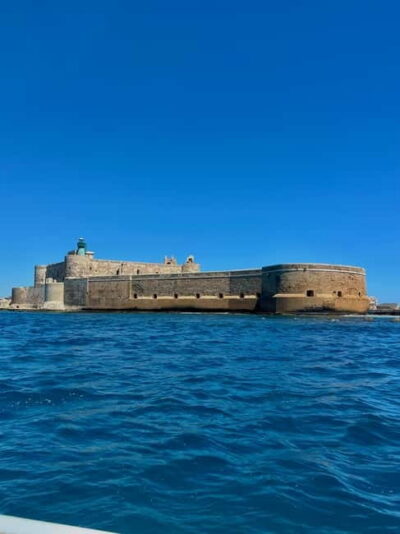
The route then follows the seafront promenade toward Castello Maniace, with scenic views on the way. The castle itself is included as a viewpoint rather than a full interior visit, so do not book this walk expecting an extended castle tour.
Bring a phone or camera, but keep your attention on the guide too. The spring and waterfront are the sort of places where it is easy to spend your entire stop taking pictures and miss the explanation that gives the view its meaning.
Via della Giudecca and the old Jewish quarter
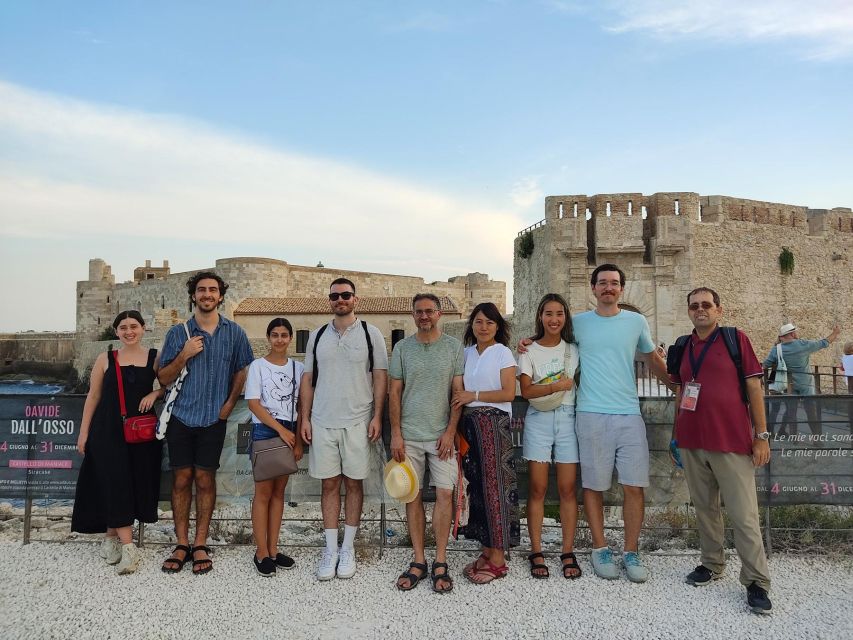
The walk through Via della Giudecca adds an important social and religious layer to Ortigia. This area was once the Jewish district, and the guide gives you a glimpse of its past as you move through the historic streets.
This part of the tour is valuable because it broadens the picture beyond Greek and Christian Syracuse. The old town is not one story preserved in isolation. It is a place shaped by different communities, beliefs, and periods of change.
The streets here are narrow and atmospheric, but they can also be awkward when several groups pass at once. You may encounter school groups, other walking tours, or traffic edging into areas that feel pedestrian-only. The guide’s job is partly to keep the group together, and the small usual group size helps.
Church of Saint John the Baptist
The route includes the Church of Saint John the Baptist, another stop where the guide can explain the religious and architectural side of Ortigia. The church adds variety after the cathedral and shows that Syracuse’s churches are not all alike in age, appearance, or role.
The tour also covers local traditions, with particular attention to Saint Lucy’s feast and its grand procession. This is the sort of detail I value on a city walk. You learn not only what a building is, but how local people connect with it during the year.
The guide’s explanation of Saint Lucy helps you understand why religious buildings remain active parts of Sicilian life rather than simply historic backdrops. It also gives you a useful lead if you want to ask about festivals, customs, or other places to visit after the tour.
The guides and the feel of the group
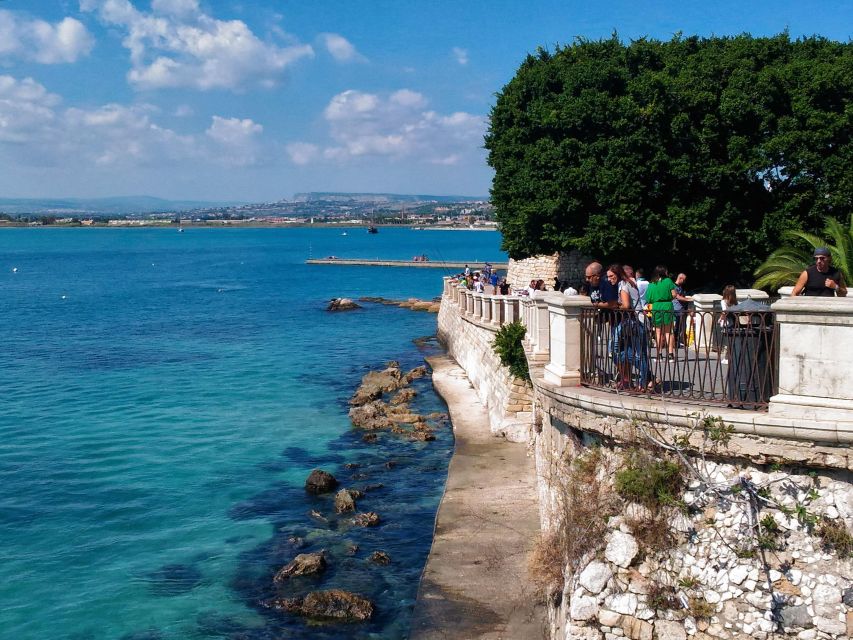
The strongest feature of this experience is the guide. Eva is singled out for clear explanations, a friendly manner, and a good walking pace. She is also described as inclusive and willing to answer questions about architecture, culture, and the city beyond the route.
That matters in Ortigia. The streets are compact, and a guide who rushes can turn the tour into a blur of names. Eva’s reported pace allows time for photographs and lets you absorb the information without feeling hurried.
Groups can reach 25 people, though they typically run closer to 10. That is a useful distinction. A maximum of 25 is not truly intimate, but the usual size should feel more personal and manageable.
Audio equipment is supplied free when the group is larger. It works through a microphone and headset, so you can hear the commentary without standing directly beside the guide. This is particularly helpful in noisy squares and narrow streets.
As with any shared walk, the experience depends partly on the group. You may need to pause while people take pictures or wait for others to catch up. The route is not designed as a private tour, but the smaller typical group keeps it from feeling like a large procession.
How much value do you get for $22?
At $22 per person, this is a reasonably priced introduction to Ortigia. The walk lasts two hours and covers the Apollo Temple, Piazza Archimede, the Fountain of Diana, Piazza Duomo, the Aretusa Spring, the seafront near Castello Maniace, Via della Giudecca, and the Church of Saint John the Baptist.
You are paying mainly for interpretation and structure. The sights themselves are viewed from public areas, and the cathedral costs another €2 if entry is available. Still, a good guide can save you time and help you notice the connection between places that might otherwise seem unrelated.
I see the tour as better value for a first visit than for someone who has already spent a full day studying Ortigia. If you have limited time, the route gives you a solid overview. If you already know the old town well, you may prefer to explore independently and pay only for the specific interiors you want to visit.
The ability to reserve now and pay later adds flexibility, while cancellation is available up to 24 hours before the tour for a full refund. Those terms are useful if your Sicilian plans are still shifting.
Practical advice for a smoother walk
Wear comfortable shoes. You will spend the full two hours on foot, moving through old streets and public squares, with stops along the waterfront.
The tour runs rain or shine, so bring suitable protection for the forecast. The supplied information does not specify a weather shelter plan, so do not assume the route will be shortened during rain.
Confirm the meeting point when you book. The start may be listed around Largo XXV Luglio, but the exact meeting option can vary. Since several walking tours may gather in the same area, arriving early is sensible.
This activity is wheelchair accessible. If mobility access is especially important to you, confirm the exact route and meeting point in advance, since the walk passes through historic streets and different public spaces.
Use the final minutes to ask the guide for recommendations. You can request suggestions for other monuments, nearby towns, restaurants, or activities. That can make the tour more useful than a simple two-hour history lesson, especially at the beginning of a longer stay.
Who should book this Syracuse walking tour?
I would choose this tour if you are visiting Syracuse for the first time, want a guided introduction without spending half a day, or enjoy seeing architecture through several periods of local history.
It suits couples, families, and independent visitors who want orientation but still prefer to explore at their own pace afterward. The English and Italian options make it practical for many visitors, and the usual group size should keep questions and conversation manageable.
You may want something else if you need a private experience, dislike busy historic centers, or want extended access to the cathedral or Castello Maniace. This is an overview walk, not a detailed archaeological tour or a full church-and-castle admission package.
Should you book the Ortigia Classic Walking Tour?
Book it if you want the main story of Syracuse’s old town in two well-paced hours. The route connects the Greek Temple of Apollo, the Christian cathedral, the Aretusa Spring, the old Jewish quarter, and Saint Lucy’s traditions in a way that makes the city easier to read.
The $22 price is fair, especially with a strong guide such as Eva and headsets available for larger groups. Just confirm the meeting point, wear good shoes, and remember that cathedral entry costs €2 extra and depends on access.
FAQ
How long does the Ortigia Classic Walking Tour last?
The tour lasts two hours. Check availability for the current starting times.
Where does the tour start?
The tour starts at the entrance to Ortigia, near Largo XXV Luglio and the Temple of Apollo. The exact meeting point may vary according to the option booked.
Where does the tour end?
The activity ends around the Fountain of Diana or Piazza Archimede, depending on the selected meeting option.
Is the cathedral entrance included?
No. Cathedral entry is optional and costs €2. The guide provides access when the church is available to visitors.
What languages are offered?
The tour is bookable in English or Italian. In rare cases with very small groups, explanations may be given in both languages.
Is the tour wheelchair accessible?
Yes, the activity is listed as wheelchair accessible.
What should I bring?
Bring comfortable shoes. The tour takes place outdoors and runs rain or shine, so weather-appropriate clothing is also sensible.
Just added around Syracuse
- Sicily Boats Avola: Plemmirio boat tour 4 people 4 hours★ 5.0 · 3 reviews
- From Syracuse: Private Taormina and Castelmola tour with lunch★ 5.0 · 3 reviews
- Siracusa Iris Photography Experience★ 5.0 · 3 reviews
- Siracusa E-bike rental service★ 5.0 · 3 reviews
- Tour Ragusa Ibla, Modica and Noto, from Syracuse★ 5.0 · 3 reviews
- Cyclops Tour★ 4.5 · 3 reviews
- Archaeological Syracuse: Neapolis Park private tour★ 5.0 · 3 reviews
- Tour of Syracuse by Ape Calessino★ 3.0 · 3 reviews
Ortigia Tours, compared.
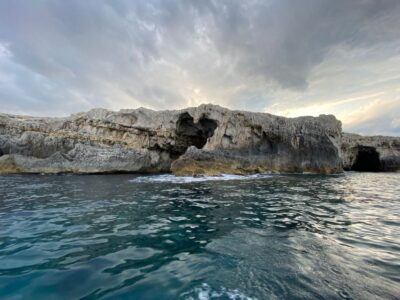
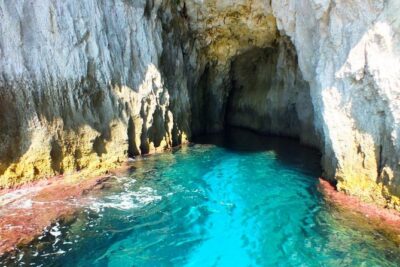
Tour of the island of Ortigia and exploration of sea caves with baths.
Read our review →

Ortigia & Sea Caves Speedboat Tour with Swim Stop
Read our review →

Ortigia Island and Sea Caves Boat Tour with Drinks
Read our review →Browse the lists this tour appears in