
Reviewed · CITY TOURS
Scicli: Guided Walking Tour in Baroque City Center
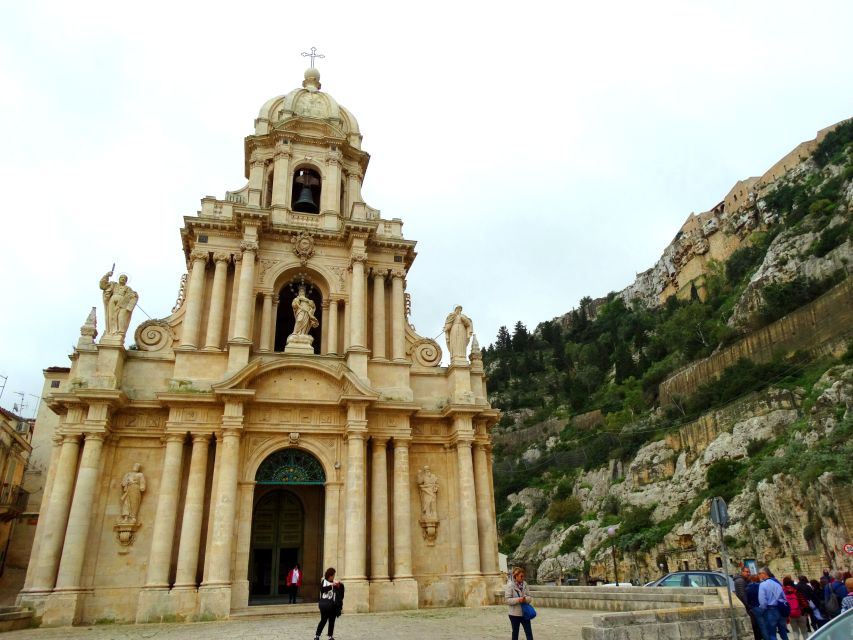
Scicli’s greatest surprise is how much beauty fits into a small walk. The tour begins at San Bartolomeo, a Baroque church pressed against the rock, then threads through noble streets, old religious buildings, and places familiar from Inspector Montalbano. You get art, local stories, and film locations without spending a full day on your feet.
I like the tour’s clear focus on Scicli’s historic center, especially Via Penna and Beneventano Palace. I also like the chance to see unusual art inside San Giovanni, including the Spanish Christ of Burgos, shown wearing a white garment on the cross.
The main caution is the guide-language experience. English is offered, but one booking had trouble when the guide switched to Italian and relied on Italian-speaking members to translate. Confirm your language needs clearly, and meet near the exact entrance to San Bartolomeo.
In This Review
- Key points at a glance
- Why Scicli works so well on foot
- Starting at San Bartolomeo’s rock-cut setting
- Via Penna and the old Cartia Pharmacy
- Beneventano Palace and the theater of Baroque stone
- Scicli Town Hall as Inspector Montalbano’s Vigata station
- San Giovanni and the unusual Christ of Burgos
- Views of the old river and local shops
- What the guide can add, and what to confirm
- Timing, price, and who gets the best value
- My call: book it for the right kind of day
- FAQ
- Where does the Scicli walking tour start?
- Where does the tour finish?
- How long does the walking tour last?
- What languages are available?
- Is this a private tour?
- How many people can join one booking?
- What is included in the tour price?
- Are museum and attraction tickets included?
- What places are visited?
- Can I cancel for a full refund?
Key points at a glance
- San Bartolomeo begins the story: See a Baroque and Rococo church set against rock-cut homes and cave dwellings.
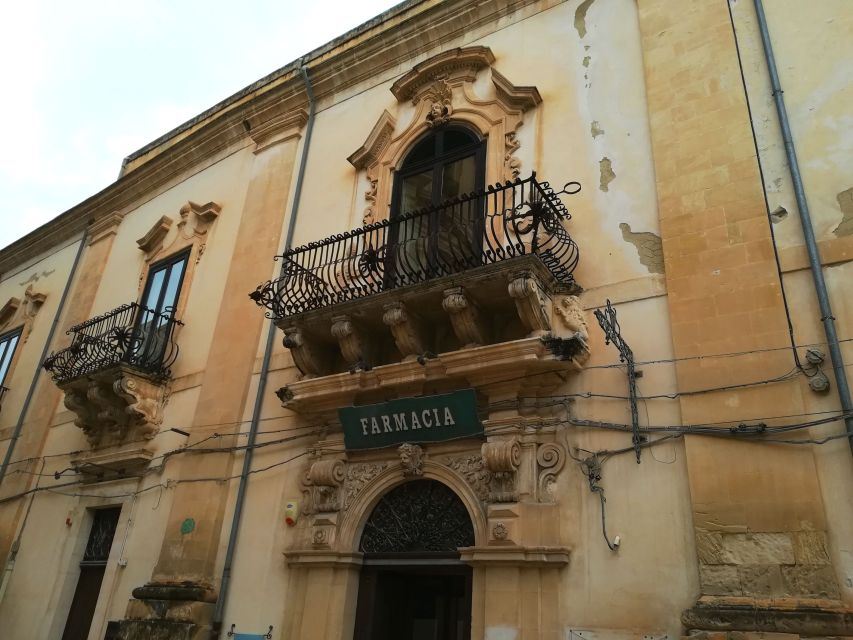
- Via Penna brings the grand street scenes: Walk past noble palaces and the early-1900s Cartia Pharmacy, used in Inspector Montalbano filming.
- Beneventano Palace is a highlight: Look for carved stone figures, Moor’s heads, masks, and theatrical Baroque balconies.
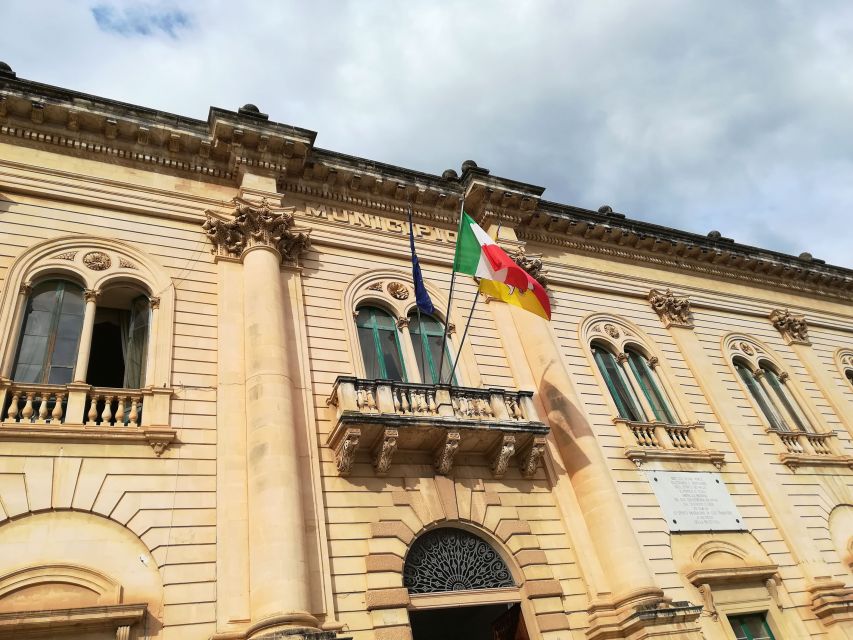
- Scicli’s Town Hall doubles as Vigata: The building became widely known as the police headquarters in the Montalbano television series.
- San Giovanni has a rare painting: Christ of Burgos is shown in an unusual white garment that resembles a skirt.
- Private touring keeps the pace personal: The booking covers up to 20 people, with a licensed guide in Italian or English.
Why Scicli works so well on foot
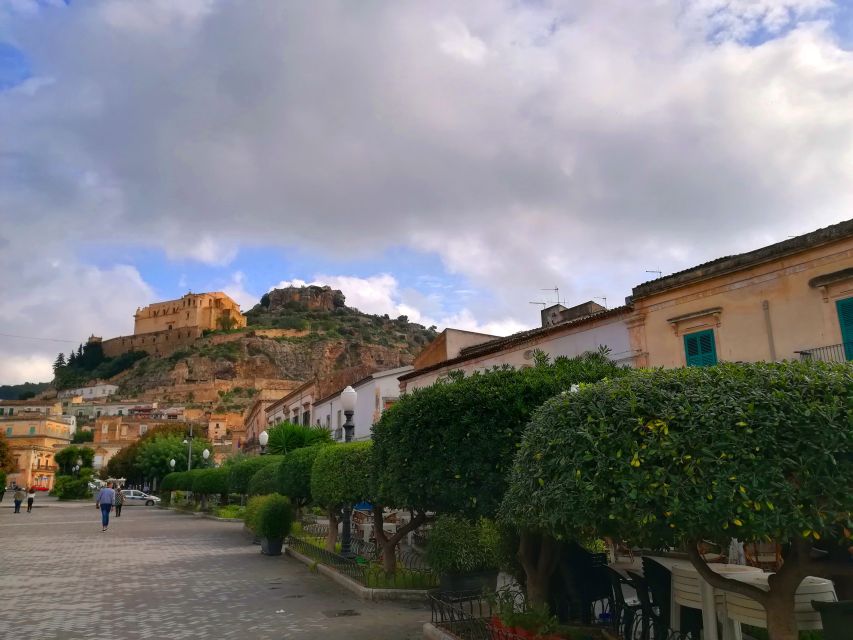
Scicli is one of the towns in southeastern Sicily recognized by UNESCO as part of the Val di Noto’s Baroque heritage. Its appeal comes from the way the town rises around stone, churches, stairways, old streets, and formal palaces.
This is not a tour built around one enormous monument. Instead, you move from one view to another and gradually understand how Scicli fits together. The route links religious art, aristocratic architecture, local craft shops, old river views, and television locations.
I find that useful because Scicli can be easy to underestimate. It is smaller and less immediately famous than some Sicilian destinations, yet the center has a strong visual character. The two-hour format gives you a guided introduction without taking over your entire day.
The experience is a private group tour, so you are not placed with a large mixed crowd. The advertised price is $351.18 for up to 20 people, not per person. That makes the value depend heavily on your group size. For a couple, it is a costly walking tour. For a family or larger private group, the same flat price becomes easier to justify, particularly if you want your own guide and a fixed two-hour visit.
More Noto, Modica and Scicli days from Ragusa:
- Chocolatier for a day: raw bean to bar chocolate in Modica
★ 5.0 · 33 reviews - 8-hour tour of the Baroque cities Noto-Modica-Ragusa-Ortigia
★ 4.9 · 18 reviews - Ragusa, Noto and Chocolate Tasting – Day tour from Siracusa
★ 4.7 · 7 reviews
Starting at San Bartolomeo’s rock-cut setting
The meeting point is near the entrance to the Church of San Bartolomeo. Look for a guide wearing a clearly visible license badge around the neck. Since one booking had confusion about the exact meeting spot, I would arrive at the church entrance itself, check the street signs, and keep your phone available if the meeting becomes unclear.
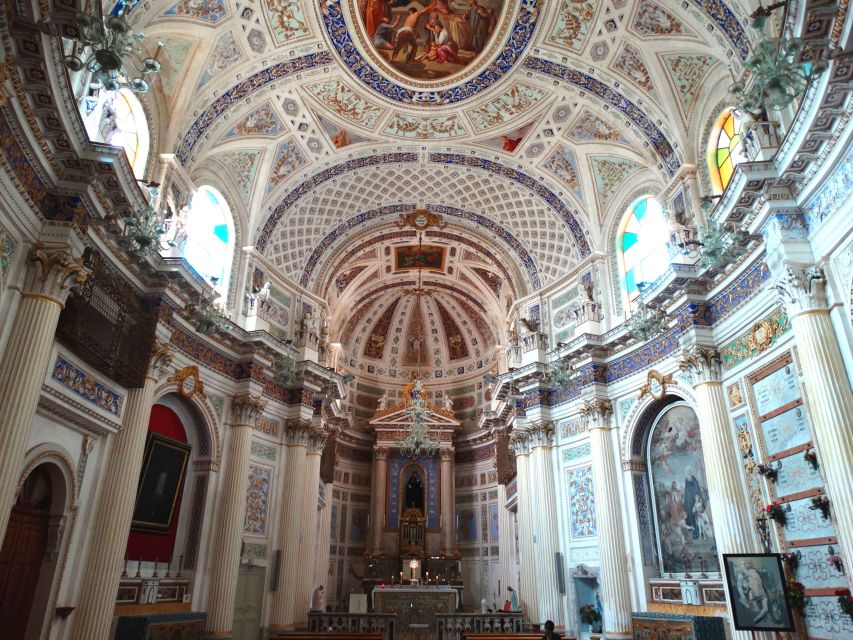
San Bartolomeo is a strong place to begin because it gives you Scicli in one glance. The church is set against rock, and nearby homes are carved into the stone. The setting has a visual connection to the famous rock dwellings of Matera, though this tour is about Scicli and the Val di Noto.
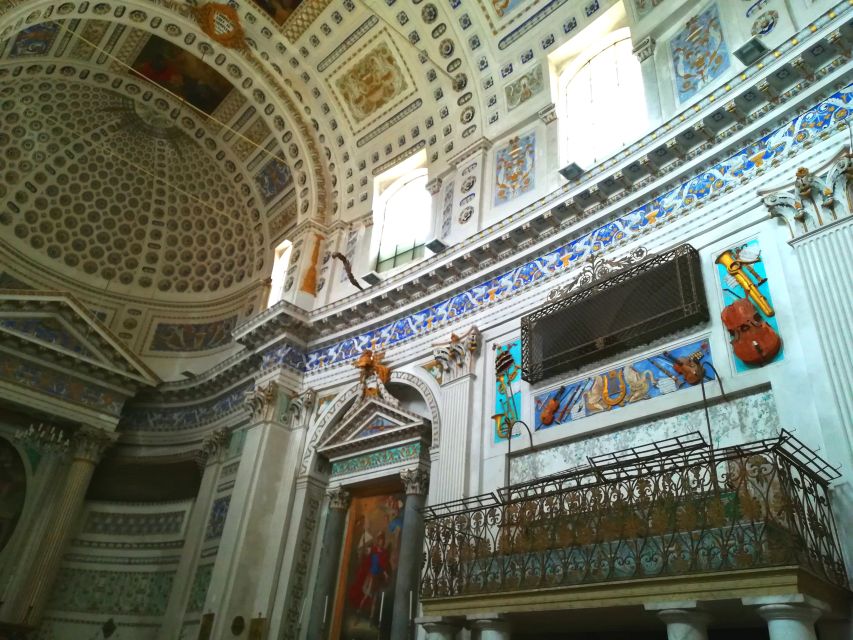
The church also offers a useful lesson in survival. It resisted the earthquake of 1693, the disaster that reshaped much of southeastern Sicily and helped produce the region’s later Baroque style. Inside, you can expect stuccos, frescoes, statues, and sculptures rather than a bare shell.
An 18th-century wooden nativity scene from the Neapolitan school adds a more intimate note. It is the sort of detail that can be easy to miss when you walk in alone. A guide can point out why it matters and help you read the church as a work of art rather than simply a photogenic interior.
The church is called both Baroque and Rococo in the tour description. For you, the practical point is that the decoration is ornate, light, and full of movement. Give yourself a moment to look upward and around the side chapels before moving on.
Via Penna and the old Cartia Pharmacy
From San Bartolomeo, the route continues through the center and onto Via Penna. This is one of Scicli’s most elegant streets, lined with noble Baroque buildings. The street makes the town’s social history visible through stone facades, balconies, and formal doorways.
You are not simply walking between sights here. You are seeing how powerful families used architecture to display status. The scale and decoration change as you move along the street, and a guide can help connect those details to the broader character of Sicilian Baroque towns.
The Ancient Cartia Pharmacy offers a different kind of stop. Dating from the early 1900s, it retains original wooden furniture and Liberty-style decoration. The interiors preserve the look of an older working business, giving you a glimpse of everyday commercial life rather than another church or palace.
Cartia Pharmacy also appeared in Inspector Montalbano scenes. That makes it useful for two kinds of visitors: people who follow the television series and people who enjoy seeing how ordinary historic interiors become part of a fictional world.
The Montalbano connection is woven through the walk, but it does not replace the architecture. If you have never watched the program, you can still appreciate the pharmacy and the street. If you are a fan, the filming references add an extra layer and may help you recognize Scicli later as you explore on your own.
Beneventano Palace and the theater of Baroque stone
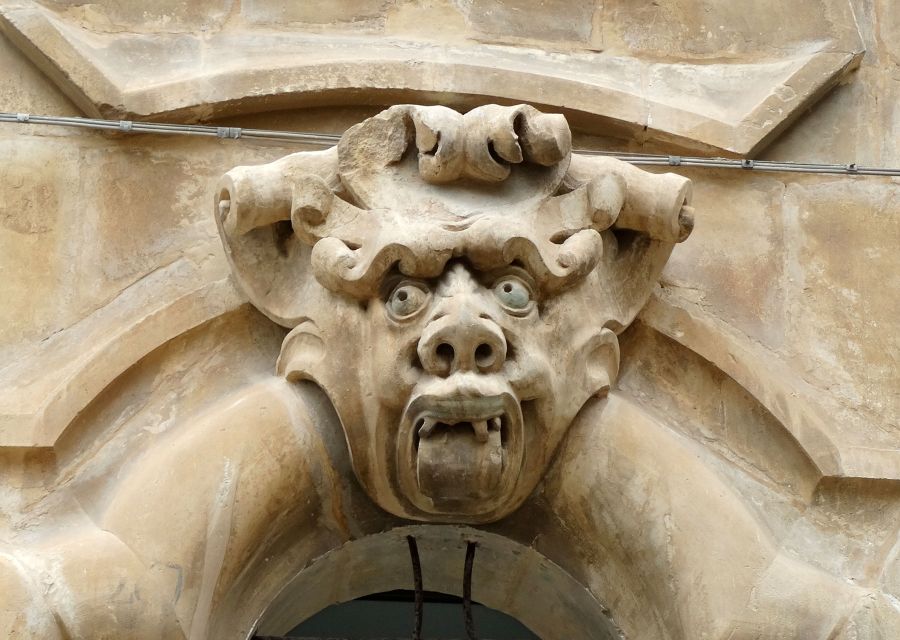
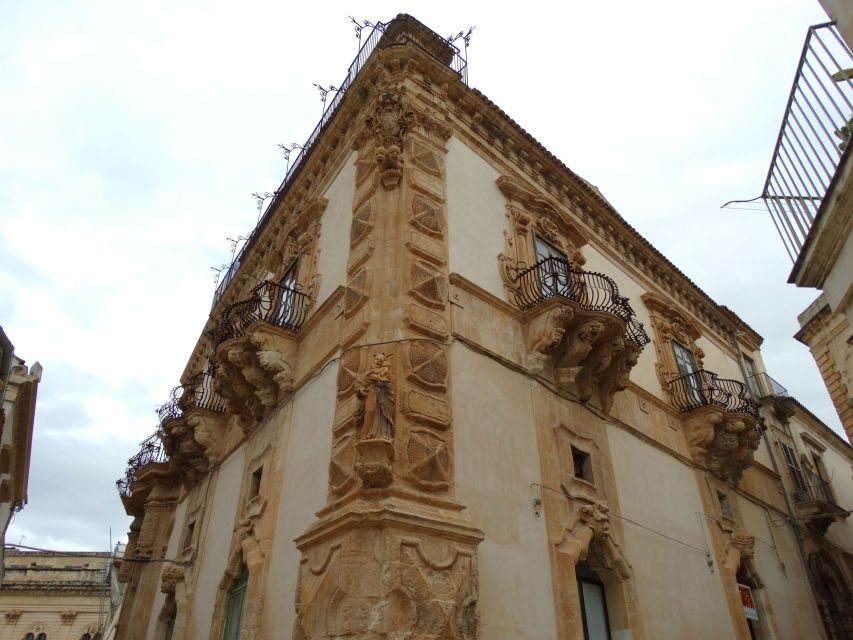
Beneventano Palace is one of the visual high points of the route. It is often described as one of Sicily’s finest Baroque buildings, and the decoration explains why. Look for carved stone statues, Moor’s heads, balconies, and masks with exaggerated faces.
The palace is not subtle. Baroque architecture often aims to surprise and impress, and Beneventano Palace does that with theatrical details. The masks and figures seem designed to catch your eye from the street, while the balconies give the building a sense of ceremony.
This is where a guide adds real value. You can photograph a decorated facade in seconds, but you may not notice how many different sculpted elements are working together. A licensed guide can direct your attention to the faces, the stone carving, and the relationship between the balconies and the street below.
The tour does not list an interior visit to Beneventano Palace. Plan to appreciate it from the outside unless your guide explains that entry is possible. That distinction matters because the advertised price does not include museum or attraction tickets.
For a visitor who prefers architecture over long historical lectures, this section should land well. You get a compact lesson in Sicilian Baroque, with plenty of specific things to look at.
More walking tours in Ragusa:
- 3-hour walking tour Discovering Ragusa Baroque
★ 5.0 · 51 reviews - Ragusa Ibla: Walking Tour with Local Guide
★ 4.4 · 8 reviews - Palermo: NO Mafia Walking Tour
★ 4.8 · 2,431 reviews - Palermo Original Street Food Walking Tour by Streaty
★ 5.0 · 2,105 reviews
Scicli Town Hall as Inspector Montalbano’s Vigata station
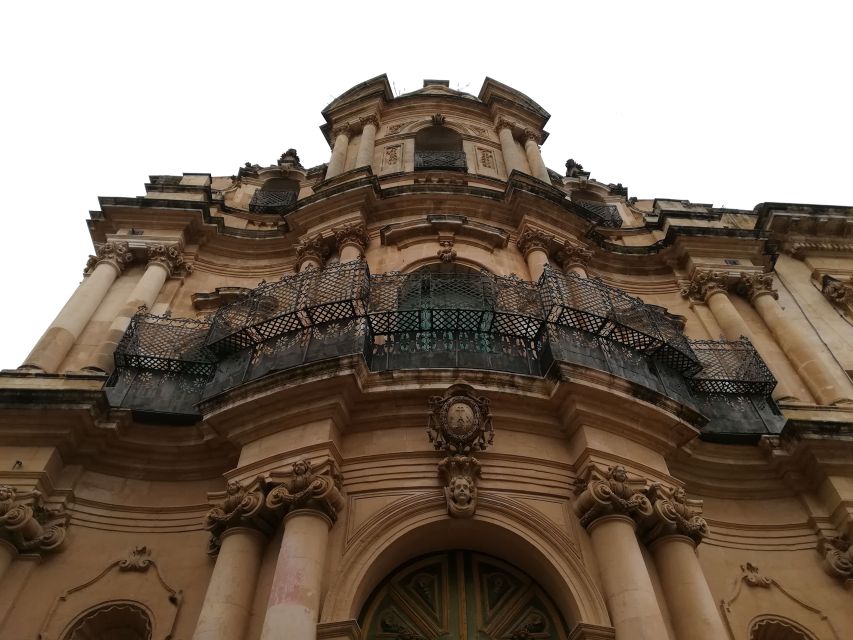
The route returns to the main street and reaches the center of Scicli, where the Town Hall takes a leading role. The building was constructed on the site of an old Benedictine monastery and later became one of the town’s most recognizable landmarks.
Television fans know it as the Vigata police headquarters in Inspector Montalbano. The fictional setting is one reason Scicli attracts visitors who may not otherwise put the town on their Sicilian route.
I like this stop because it connects a real civic building with a fictional place without confusing the two. You can see the Town Hall as part of Scicli’s public life, then recognize how the television production used it to create Vigata.
The exterior is the key point described for the tour. Do not assume that the walk includes a special behind-the-scenes television visit or access to working municipal areas. The attraction is the building’s role in the streetscape and its connection to the series.
If you are traveling with someone who has no interest in Montalbano, this stop still works. The Town Hall occupies a central position and helps orient you in the old center. If you are a devoted viewer, it may be the most personal moment of the walk.
San Giovanni and the unusual Christ of Burgos
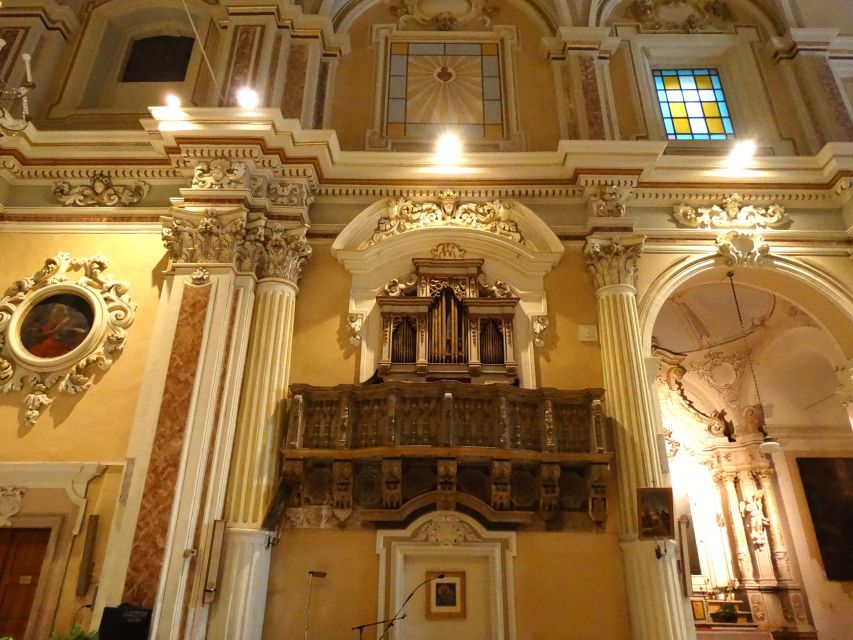
Next to the Town Hall is the Church of San Giovanni Evangelista. Its interior continues the Baroque mood with columns and stucco work, but the main reason to visit is the painting of Christ of Burgos.
The image comes from Spain and is also called Christ in a skirt because Christ appears on the cross wearing a curious white garment. The iconography dates to the 18th century and is presented as a rare sight in Italy.
This is a good example of why guided visits can improve a short city walk. Without explanation, you might notice the unusual clothing but not understand that it belongs to a particular religious image tradition. The guide gives the painting a place in a wider European context.
San Giovanni also provides a change of rhythm. San Bartolomeo introduces the tour with rock, scale, and dense decoration. San Giovanni asks you to focus on one unusual work within another decorated church.
The tour information does not include admission fees in its price. Museum or attraction tickets are specifically excluded, so ask the guide or provider about any entry cost before the visit. The supplied details describe the church visit but do not confirm a separate ticket price.
Views of the old river and local shops
The final section takes you toward additional views of the historic center, including the old river that once crossed the town. This gives you another way to understand Scicli’s layout. The town is not only a collection of facades, churches, and palaces. Its streets and buildings also reflect the older pattern of water, movement, and settlement.
You will also pass shops belonging to local artisans. The tour does not specify which craftspeople you will meet or whether a workshop visit is included, so think of this as a street-level look at local work rather than a guaranteed demonstration.
I appreciate this ending because it moves away from grand monuments. After churches and noble palaces, small shops and old urban views return the tour to present-day Scicli. The activity finishes back at the starting point, so you are not left at an unfamiliar location.
The final views may also help you decide where to wander next. You can use the guide’s orientation to revisit a street, browse a shop, or return to a building for a closer look. Since the route lasts two hours, you still have time afterward for your own exploration.
What the guide can add, and what to confirm
The tour includes a licensed guide and is offered in Italian or English. That sounds straightforward, but language delivery deserves attention. In one booking, the group requested English, yet the guide spoke mainly Italian after discovering that a few people understood Italian and expected them to translate.
That is not a small issue if you are paying for a private guided experience. If you need English, state that clearly when booking and confirm it before the walk begins. Also make sure every member of your group understands which language will be used.
Guide quality can shape this experience. Mara, who led one of the groups, was praised for patience, humor, strong subject knowledge, and a willingness to answer repeated questions. That kind of guide is especially helpful in Scicli, where the pleasure comes from small details rather than a single famous masterpiece.
The feedback is not uniformly positive. One booking also had a meeting-point problem, with the group at the location indicated by street signs while the guide insisted they were elsewhere. Since the guide knows the town and you may not, clear communication at the start is important.
The overall score is 4.3 from three reviews, a small sample. I would treat it as encouraging but not conclusive. The strongest praise concerns the personal quality of the guide, while the main criticism concerns language and meeting coordination.
Timing, price, and who gets the best value
Two hours is enough for the named highlights, but it is not enough for a slow museum day or a full survey of Scicli. You will move through several places, listen to explanations, and pause for views and photographs. If you want extended time inside every church, the pace may feel brisk.
The private format gives you more control than a standard large-group walk. You can ask questions about Baroque decoration, Montalbano filming sites, or the church interiors without competing with a crowd. The tradeoff is the flat $351.18 price for up to 20 people.
For a group of 10, that is about $35 per person. For 20, it is about $18 per person. For two people, it is about $176 each, which is hard to call a bargain unless private guiding is a high priority.
I would book this for a family, reunion, or larger private party that wants a short introduction to Scicli. It also makes sense for people who value a guide’s attention and plan to use the walk to organize the rest of their time in town.
Solo visitors and couples should compare the private price with other ways of seeing Scicli. The tour may still suit you if you want a licensed guide and a focused route, but the cost per person rises sharply.
Free cancellation is available up to 24 hours before the tour for a full refund, and you can reserve now and pay later. Those terms make it easier to fit the walk around changing Sicilian plans.
My call: book it for the right kind of day
I would book this tour if you want a well-shaped introduction to Scicli, especially if your group is large enough to spread the flat price across several people. The route has a satisfying mix of rock-cut homes, Baroque churches, aristocratic facades, an old pharmacy, civic architecture, and Montalbano locations.
I would also book it if you enjoy unusual art. The Christ of Burgos in San Giovanni is not the standard church sight, and the explanation of its white garment can be one of the walk’s most memorable details.
I would hesitate if you are a couple watching your budget, if you want long interior visits, or if you cannot accept uncertainty about the English-language guide. Confirm the language and meeting point before committing.
For the best fit, arrive near the entrance to San Bartolomeo, look for the visible license badge, and treat the walk as an orientation rather than a complete study of every attraction. If that sounds right, this is a useful, visually rewarding way to get to know Scicli.
FAQ
Where does the Scicli walking tour start?
The tour starts near the entrance to the Church of San Bartolomeo.
Where does the tour finish?
The activity ends back at the meeting point near San Bartolomeo.
How long does the walking tour last?
The tour lasts two hours.
What languages are available?
The tour is offered with a live guide in Italian or English.
Is this a private tour?
Yes. It is a private group experience.
How many people can join one booking?
The listed price covers a group of up to 20 people.
What is included in the tour price?
A licensed tour guide is included.
Are museum and attraction tickets included?
No. Museum and attraction tickets are not included.
What places are visited?
The route includes San Bartolomeo, Via Penna, the Ancient Cartia Pharmacy, Beneventano Palace, the Town Hall, and San Giovanni Evangelista. It also includes views of the old river and local artisan shops.
Can I cancel for a full refund?
Yes. You can cancel up to 24 hours in advance for a full refund. You can also reserve now and pay later.
Just added around Ragusa
- Modica private tour: the chocolate town in Sicily★ 5.0 · 3 reviews
- Tour in the heady scents of our garden in Ragusa★ 5.0 · 4 reviews
- Scicli – Bonelli Patané Palace: exclusive private tour★ 4.6 · 4 reviews
- Private tour of the Baroque cities of Eastern Sicily★ 4.5 · 5 reviews
- Ragusa Countryside Home Cooking Class & Meal★ 4.8 · 6 reviews
- Radici: IImmerse yourself in the heady scents of our garden★ 4.7 · 7 reviews
- Ragusa Ibla: Walking Tour with Local Guide★ 4.4 · 8 reviews
- Olive Oil Tasting & Historic Olive Mill Tour in Ragusa area★ 5.0 · 9 reviews
City Tours, compared.
Guided City Walking Tour w/Customizable Itinerary
Read our review →
City Sightseeing Palermo Hop-On Hop-Off Bus Tour
Read our review →
The heart of the City – Tour guidato in Italiano
Read our review →
WalkingTour CATANIA – discovering the city of lava with a licensed guide
Read our review →
Palermo Airport ⇄ Palermo City: Private Transfer Service
Read our review →
Catania Street Food Tour: Fish Market & City Centre
Read our review →Browse the lists this tour appears in