
Reviewed · WALKING TOURS
Ragusa Ibla: Walking Tour with Local Guide
Ragusa Ibla reveals itself best on foot, one staircase, church facade, and narrow lane at a time. This two-hour private walk begins at the pink-stone Portal of San Giorgio, passes through the oldest garden in Ragusa, and ends inside the grand Cathedral of San Giorgio. It is a compact introduction to the town’s late Baroque heart.
I like the mix of outdoor sights and interiors, especially Ibleo Garden and the Church of San Giacomo. I also like that a local guide can explain small details you could easily miss, from the masks under palace balconies to the old-world Conversation Circle. The main consideration is pace: two hours covers the key sights, but it does not allow much time for lingering, shopping, or reaching Ragusa Superiore for a wider view.
In This Review
- Key points
- Beginning at Ragusa’s Pink-Stone Portal
- Ibleo Garden and the Church of San Giacomo
- Baroque Lanes, Ceramic Shops, and Palace Balconies
- The Conversation Circle and Church of San Giuseppe
- San Giorgio Cathedral and the Long Staircase
- What the Two-Hour Format Really Covers
- Guide Style and Languages
- Is $389.70 Good Value for Your Group?
- Who Should Book This Ragusa Ibla Walk?
- Should You Book It?
- FAQ
- Where does the tour begin?
- How do I identify the guide?
- Where does the tour end?
- How long does the tour last?
- What languages are available?
- Is this a private tour?
- What is included in the price?
- Are transportation, pickup, food, or drinks included?
- Can I cancel for a full refund?
Key points
- Start at a surviving medieval landmark: The Portal of San Giorgio is the only architectural element left from the town before the earthquake.
- Walk through Ragusa’s oldest public garden: Ibleo Garden includes palm trees, fountains, monuments, views toward the Irminio Valley and Iblei Mountains, and the Church of San Giacomo.
- See Baroque details at street level: Look for carved masks beneath balconies, colorful Sicilian ceramics, and workshops making traditional Sicilian carts.
- Peek into an aristocratic meeting place: The Conversation Circle, also called Caffè dei Cavalieri, preserves a nineteenth-century interior of frescoes, mirrors, and chandeliers.
- Finish at Ragusa’s great church: San Giorgio Cathedral is reached by a broad staircase and contains paintings, a large pipe organ, and a statue of Saint George.
- Keep the group private: The $389.70 price covers up to 15 people, so the value improves sharply when shared by a larger party.
Beginning at Ragusa’s Pink-Stone Portal
Your guide meets you at the Portal of San Giorgio on Via dei Normanni, in front of the restaurant Risìu. Look for the guide’s clearly visible license badge. There is no hotel pickup or transportation included, so you need to reach Ibla on your own.
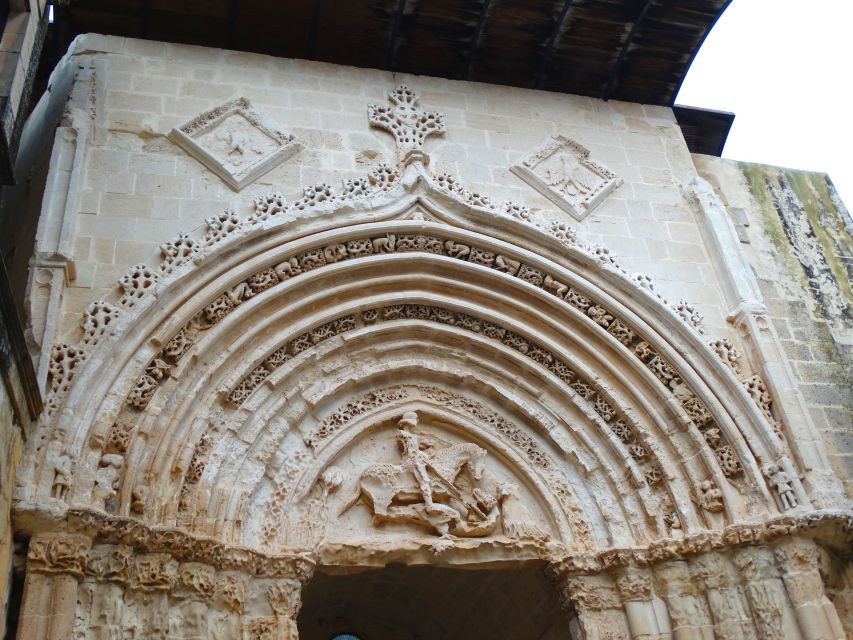
The portal is an excellent starting point because it gives the tour a clear sense of place right away. Built in a Gothic-Catalan style, it uses pale pink stone and shows Saint George fighting the dragon in its central carving. It is also the only surviving architectural piece from the old town after the earthquake that destroyed Ragusa.
That detail gives the gateway more weight than a simple photo stop. The original Cathedral of San Giorgio was destroyed, too, and the church you visit later was built in another part of Ibla. A guide can connect the portal, the lost church, and the rebuilt cathedral into one easy-to-follow story.
The stop is brief, but it rewards a close look. Notice the stone color, the pointed Gothic shape, and the contrast between this older fragment and the later Baroque buildings around it.
More walking tours in Ragusa:
- 3-hour walking tour Discovering Ragusa Baroque
★ 5.0 · 51 reviews - Scicli: Guided Walking Tour in Baroque City Center
★ 4.3 · 3 reviews - Palermo: NO Mafia Walking Tour
★ 4.8 · 2,431 reviews
Ibleo Garden and the Church of San Giacomo
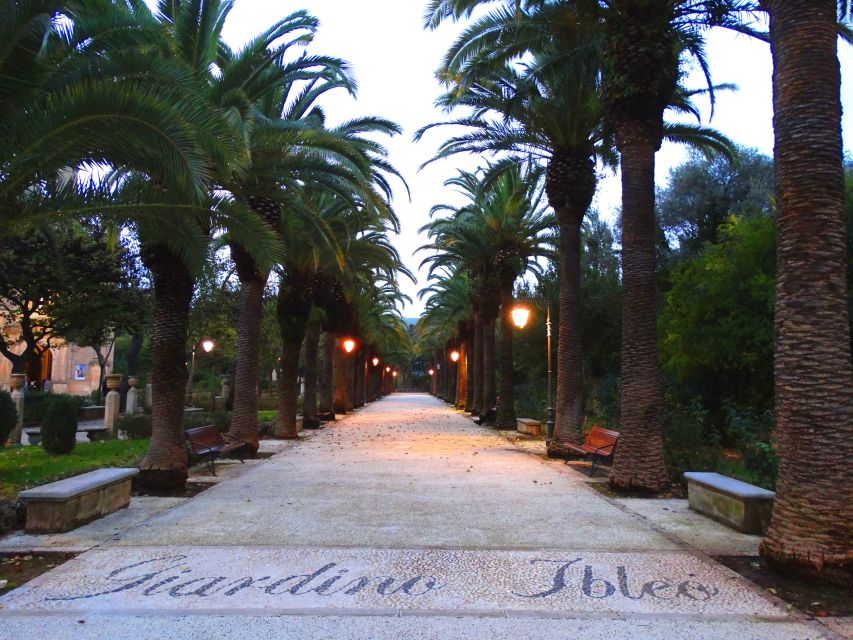
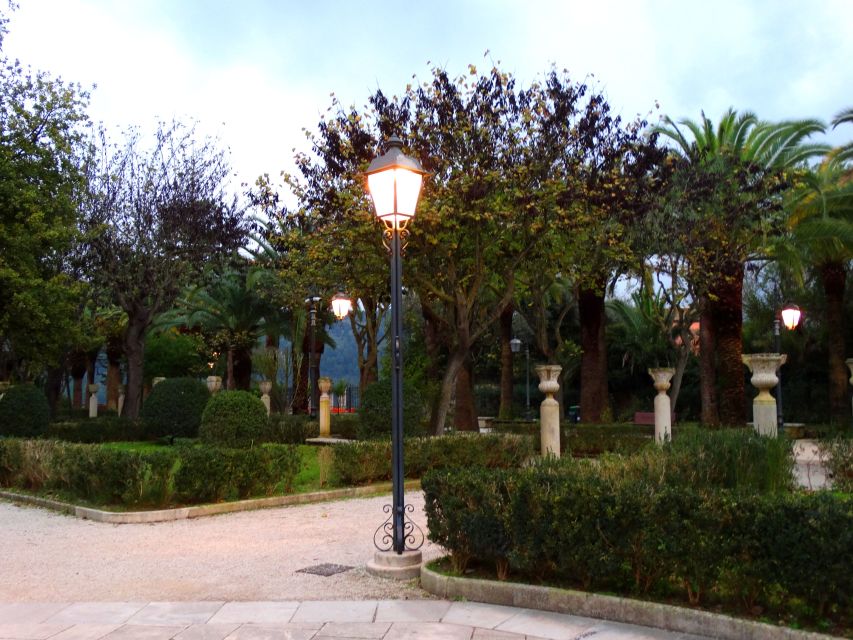
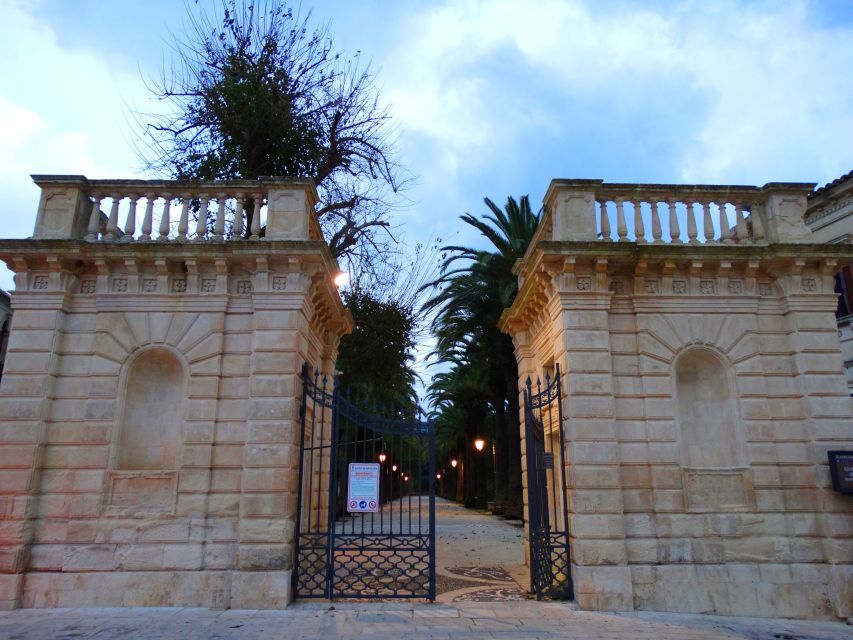
From the portal, the route continues to Ibleo Garden, the oldest garden in Ragusa. The entrance leads along an avenue lined with 50 palm trees, with an elegant balcony bordering the garden and views toward the Irminio Valley and the Iblei Mountains.
This is a welcome change from the stone lanes and church facades. The garden offers shade from mature trees, exotic plants, fountains, and quiet corners. One fountain is shaped like Sicily, a small but memorable detail that gives the visit a local touch.
You will also find a monument to those who died in the First World War and several churches within the garden. The setting is not just decorative. It gives you a chance to pause, look outward, and see how Ragusa Ibla sits above the surrounding countryside.
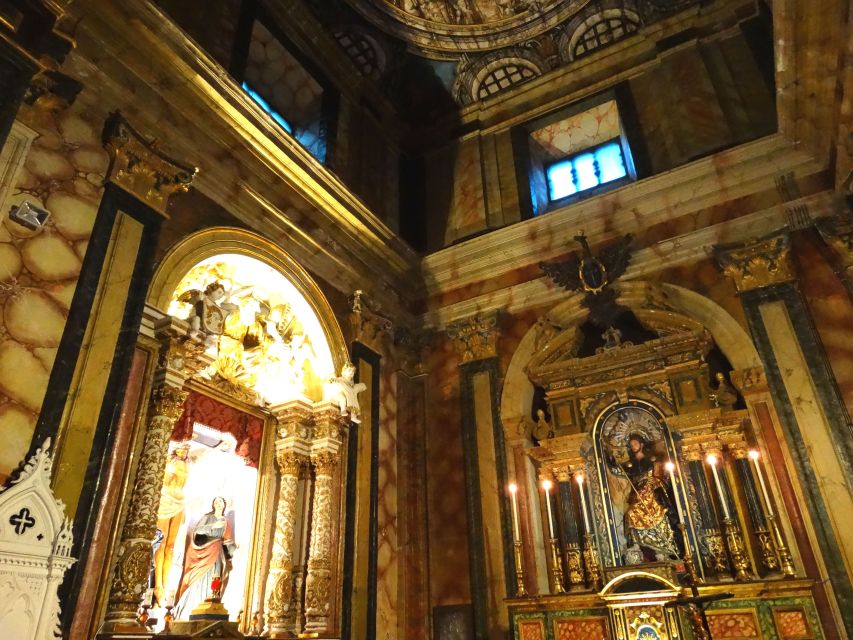
The tour includes a visit to the Church of San Giacomo. The church was built on the site of an ancient temple, and its interior has more visual detail than its exterior may suggest. Look for the wooden ceiling, Corinthian columns, statues, and paintings by eighteenth-century Sicilian artists.
I particularly like this part of the route because it combines a calm garden walk with a focused church visit. You get both open space and careful decoration without leaving the historic center.
Still, keep your expectations in check. The tour description does not specify how long you remain in the garden or church, and the complete route lasts only two hours. If you stop for many photographs, you may need to keep moving later.
Baroque Lanes, Ceramic Shops, and Palace Balconies
The next section takes you through the old center of Ibla. Here, the pleasure comes from walking slowly enough to notice the details above eye level.
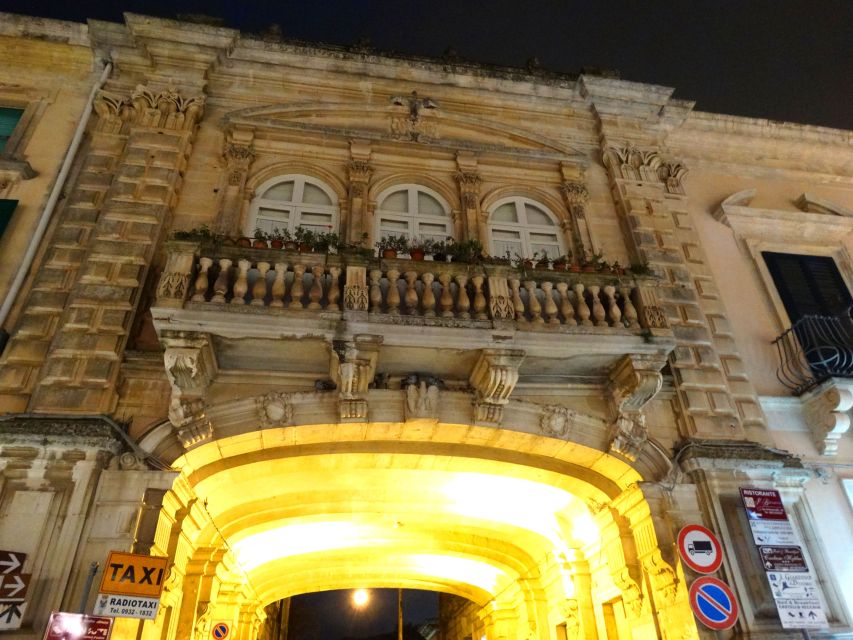
Ragusa’s Baroque palaces often have balconies supported by carved masks. These faces can look comic, stern, or strange, and they are easy to miss if you focus only on the large churches. Your guide can point out how these decorative supports fit into the style of the town.
The route also passes Sicilian ceramic shops and artisan workshops. You may see examples of the colorful pottery associated with Sicily, along with shops where traditional Sicilian carts are still made. The description does not promise a demonstration or shopping time, so treat these as atmospheric stops rather than scheduled craft lessons.
This is one reason a private walking tour can be more useful than a self-guided stroll. You can ask what a particular object is, why a building has a certain feature, or where to return later if you want to buy something. The experience is built around explanation as you walk, not simply checking buildings off a list.
The lanes are also where the tour feels most local. The major churches draw attention, but the small palaces, workshops, and side streets show how the town’s style continues beyond its headline sights.
The tradeoff is that a two-hour walk cannot cover every lane or shop. If you want time for purchases, coffee, or detailed photography, plan to return after the tour.
The Conversation Circle and Church of San Giuseppe
One of the more unusual stops is the Conversation Circle, also called Caffè dei Cavalieri. This elegant neoclassical building was created in the nineteenth century as an exclusive meeting place for Ragusa’s nobles.
The exterior gives only a hint of what is inside. You can see precious ceiling frescoes, chandeliers, and mirrors that create a formal nineteenth-century atmosphere. The building adds social context to the tour. You are not looking only at churches built for worship, but also at a place where the town’s upper class gathered and spent time together.
The route then follows the main street toward the cathedral and stops at the Church of San Giuseppe. Its Baroque facade resembles the cathedral, creating a useful visual comparison before the final church visit.
Inside, the colored majolica floor is a key detail. It is worth looking down as well as up, since Sicilian churches often place as much care into their floors as their ceilings and altars.
These stops help break up the larger monuments. You see a private social setting, a smaller church, and the street itself before reaching the grand finale.
A few more Ragusa tours and experiences worth weighing up
- Distilleria Alma- Rum Distilery Guided Tour & Tasting
★ 5.0 · 11 reviews - Mount Etna: Guided Volcano Summit Hiking Tour with Cable Car
★ 4.7 · 3,784 reviews - Taormina: Ancient Theater Skip-the-Line Ticket & Audio Guide
★ 4.5 · 1,701 reviews - Palermo: Teatro Massimo Opera House Guided Tour
★ 4.5 · 1,573 reviews
San Giorgio Cathedral and the Long Staircase
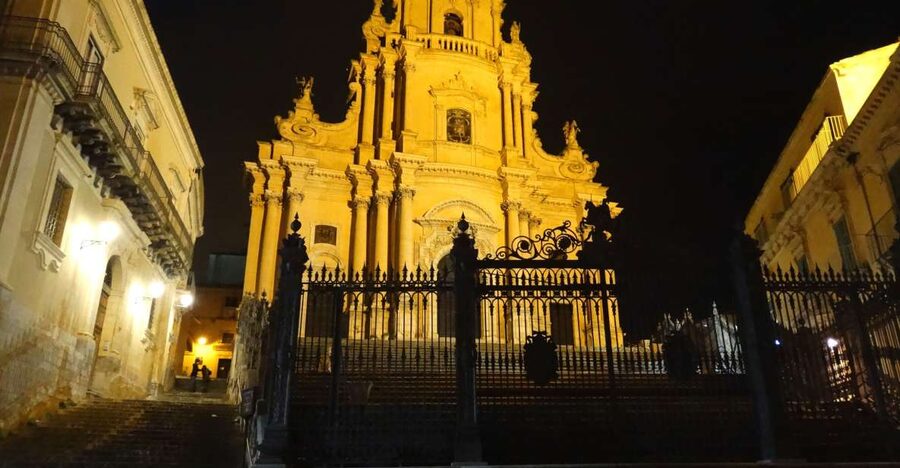
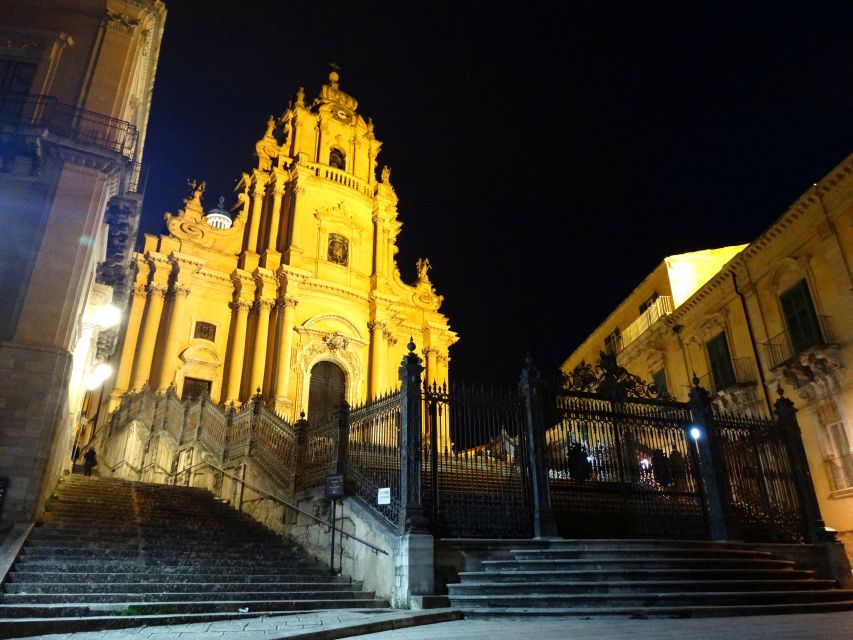
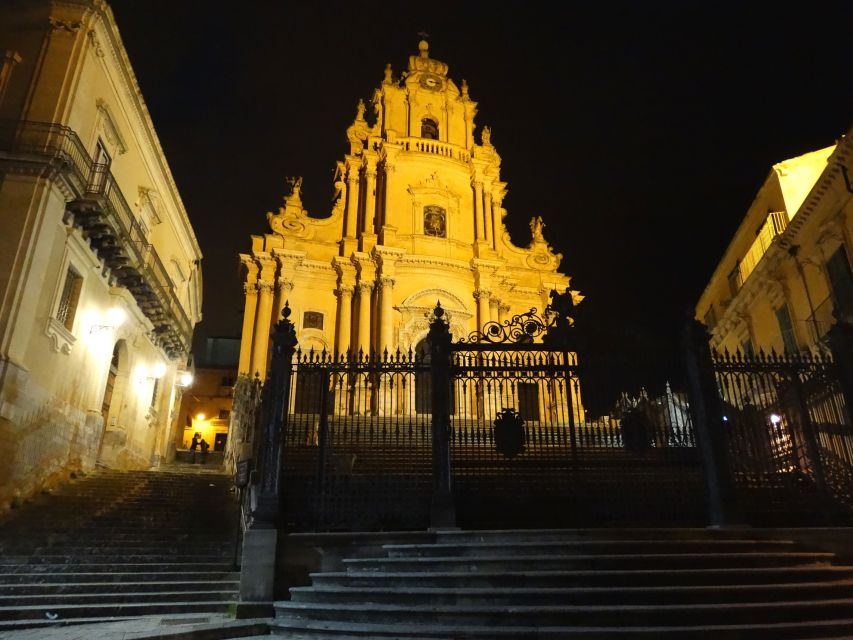
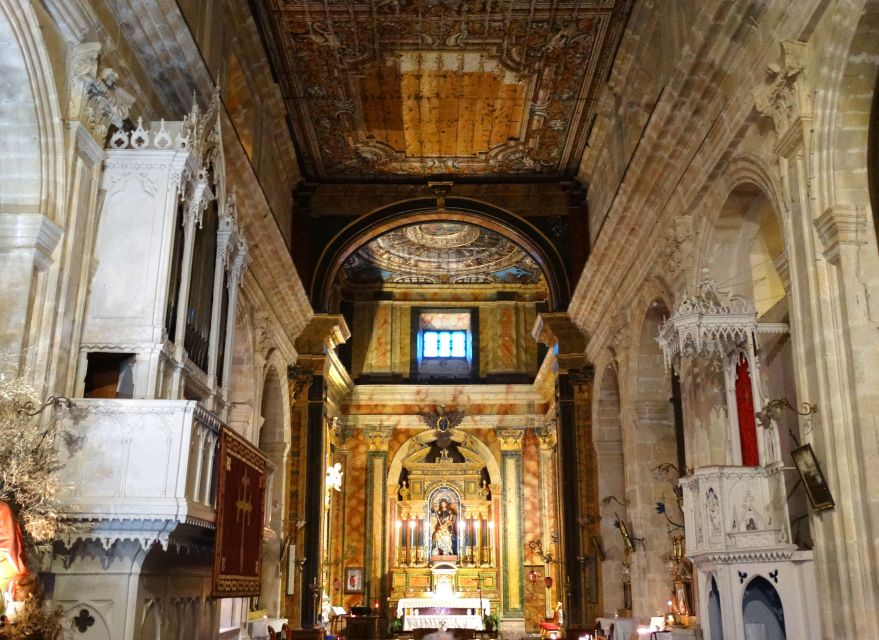
The tour ends at Ragusa’s symbolic monument, the Cathedral of San Giorgio. It sits at the highest part of the main square and is reached by an imposing staircase.
The approach matters. The stairs create a gradual reveal, and the cathedral’s position gives the final stop a sense of arrival. This is not a church you simply pass on a street corner. Its setting makes you look upward and then back across the square.
Inside, the visit includes paintings by eighteenth-century Sicilian masters, a large pipe organ, and a statue of Saint George on horseback with its reliquary. The church connects directly to the earlier story of the destroyed cathedral, since the older building was lost in the earthquake and the present church was later rebuilt elsewhere in Ibla.
The interior is likely to appeal most if you enjoy church art and architectural detail. If your interest is mainly in street scenes and viewpoints, the staircase and exterior may be more important to you than the time inside.
The activity ends back at the original meeting point. That makes it easy to continue exploring Ibla, find lunch, or return to a shop you passed earlier.
What the Two-Hour Format Really Covers
Two hours is enough for a strong orientation to Ragusa Ibla, but it is not a full-day exploration. The route includes the portal, Ibleo Garden, San Giacomo, the old lanes, palace exteriors, artisan shops, the Conversation Circle, San Giuseppe, and San Giorgio Cathedral.
That is a lot of ground for the time available. You should expect a steady walk with stops for explanation, rather than a relaxed wandering tour. The route also includes an imposing staircase at the cathedral, so comfortable shoes are a sensible choice.
One useful point comes from the way the route is shaped: it concentrates on Ibla itself. It does not continue upward to the beginning of Ragusa Superiore for a broader view over the town. If that high viewpoint matters to you, plan to visit it separately or ask your guide if the route can be adjusted.
The private format may help here. A private group can ask questions and set a slightly different pace, though the fixed list of sights and two-hour length still limit how much can be added.
Guide Style and Languages
The tour is led by a licensed local guide and is offered in Italian, English, French, or Spanish. A visible license badge helps you identify the guide at the meeting point.
Federica is one guide associated with this experience, and the tour can also be led by other guides. If you hope to meet Federica specifically, confirm her availability before booking rather than assuming she will lead every departure.
The local element matters most when you want practical help beyond dates and architectural labels. A guide who lives in the area can suggest places to eat after the walk, as one guide did for a participant. That kind of advice can be useful in Ragusa, where the best choice may depend on which part of town you plan to explore next.
The strongest qualities reported about the guiding are clear explanations, good coverage of the main sights, and a pleasant manner. Those are important strengths for a short cultural tour, since poor organization would make the route feel rushed.
Is $389.70 Good Value for Your Group?
The listed price is $389.70 for a private group of up to 15 people. At the maximum group size, that works out to about $26 per person. For two people, the same total is about $195 per person, and for a small family or couple, the price is much harder to justify.
The value therefore depends almost entirely on your group size and how much you want a private guide. A group of friends, a family reunion, or a larger party can share the cost and receive a focused introduction without joining strangers. A solo visitor or couple may prefer to compare this with a shared walking tour, if one is available.
The price includes the licensed guide only. Food, drinks, transportation, and pickup are not included. You also need to reach the Portal of San Giorgio yourself and return there at the end.
I see the best value for people who want context and a smooth first walk through Ibla, not for people who simply want entrance access to one church. The guide’s role is to connect the earthquake, the old portal, the Baroque rebuilding, the garden, workshops, noble meeting places, and cathedral into one route.
Free cancellation is available up to 24 hours before the activity for a full refund, and you can reserve while paying later. Those terms give you some flexibility, but they do not change the basic price calculation.
Who Should Book This Ragusa Ibla Walk?
I would choose this tour if you have only a short time in Ragusa and want to understand the historic center quickly. It is also a good fit if you care about Baroque architecture, church interiors, local craft traditions, and stories tied to the earthquake.
It suits families and groups especially well because the price covers up to 15 people. A private setting also makes it easier to ask questions or request more detail about art, architecture, or food.
You may want a different plan if you prefer long museum visits, extended shopping time, or a slow photographic walk. The tour covers many places in two hours, and the route does not include a higher viewpoint in Ragusa Superiore.
Should You Book It?
Book this Ragusa Ibla tour if you are traveling with a group and want a well-planned introduction led in your preferred language. The strongest reasons are the varied route, the visit inside San Giorgio Cathedral, the peaceful stop at Ibleo Garden, and the chance to understand details that are easy to miss alone.
For a couple, the price is a serious consideration. For a larger group, it becomes much more reasonable, especially when you value a private guide and practical local suggestions. Bring comfortable shoes, arrive at the Portal of San Giorgio, and save time afterward if you want to shop, eat, or explore the upper town on your own.
FAQ
Where does the tour begin?
The meeting point is at the Portal of San Giorgio on Via dei Normanni, in front of the restaurant Risìu.
How do I identify the guide?
The local guide will wear a clearly visible license badge around the neck.
Where does the tour end?
The activity ends back at the original meeting point, the Portal of San Giorgio.
How long does the tour last?
The walking tour lasts two hours.
What languages are available?
The tour is available in Italian, English, French, and Spanish.
Is this a private tour?
Yes. It is a private group activity for up to 15 people.
What is included in the price?
The price includes a licensed tour guide.
Are transportation, pickup, food, or drinks included?
No. Transfer, pickup and drop-off, food, and drinks are not included.
Can I cancel for a full refund?
Yes. You can cancel up to 24 hours in advance for a full refund.
Just added around Ragusa
- Modica private tour: the chocolate town in Sicily★ 5.0 · 3 reviews
- Scicli: Guided Walking Tour in Baroque City Center★ 4.3 · 3 reviews
- Tour in the heady scents of our garden in Ragusa★ 5.0 · 4 reviews
- Scicli – Bonelli Patané Palace: exclusive private tour★ 4.6 · 4 reviews
- Private tour of the Baroque cities of Eastern Sicily★ 4.5 · 5 reviews
- Ragusa Countryside Home Cooking Class & Meal★ 4.8 · 6 reviews
- Radici: IImmerse yourself in the heady scents of our garden★ 4.7 · 7 reviews
- Olive Oil Tasting & Historic Olive Mill Tour in Ragusa area★ 5.0 · 9 reviews
Walking Tours, compared.
Palermo Original Street Food Walking Tour by Streaty
Read our review →
Palermo No Mafia walking tour: discover the Anti-mafia culture in Sicily
Read our review →
Street Food Walking Tour with Local Guide & Tasting
Read our review →
Browse the lists this tour appears in