
Reviewed · SICILIAN MAFIA HISTORY TOURS
Palermo No Mafia walking tour: discover the Anti-mafia culture in Sicily
Palermo’s No Mafia walking tour looks past movie myths and puts the city’s anti-mafia movement at street level. You’ll hear how judges, shopkeepers, politicians, churches, and ordinary families have faced organized crime, then see memorials and businesses tied to that resistance.
I like the small maximum of 15 people, which gives your guide room to answer questions. I also like that part of the $39.30 price supports Addiopizzo, the local group promoting businesses that refuse to pay pizzo, the extortion money demanded by the Mafia.
The main thing to know is that this is not a general Palermo history walk. It covers landmarks, but the focus stays on civil resistance and anti-mafia action. If you want art, architecture, and ancient history at every stop, you may find the discussion narrow and occasionally repetitive.
In This Review
- Key points to know before you book
- Why Palermo’s No Mafia story belongs on your first day
- Teatro Massimo: from film fame to city symbol
- The 70-meter Wall of Legality
- The open-air market and the cost of pizzo
- Piazza della Memoria and Palermo’s murdered judges
- Palermo Cathedral and the church’s difficult relationship with the Mafia
- Cappadonia Gelati and the meaning of an orange sticker
- Palazzo Pretorio and the city’s political story
- What the guide adds to the three-hour walk
- Price, group size, and practical value
- Who will get the most from this experience
- Should you book Palermo’s No Mafia walking tour?
- FAQ
- Where does the Palermo No Mafia walking tour start?
- Where does the tour end?
- How long does the tour last?
- Is the tour offered in English?
- What is included in the price?
- What should I bring?
Key points to know before you book
- The route links major Palermo sights from Teatro Massimo to Fontana Pretoria, with the cathedral and historic center along the way.
- The Wall of Legality puts faces to the story, honoring people killed by the Mafia in a large 70-meter mural.
- Addiopizzo gives the tour a practical purpose, with a small solidarity contribution included in the price.
- The market stop explains extortion in daily life, showing how Mafia pressure affects shopkeepers and neighborhoods.
- Guides bring personal commitment, with highly praised leaders including Sylvia, Valeria, Francesco, Federico, Ermes, and Mariela.
- Plan for three hours on foot, comfortable shoes, and rain protection if the forecast looks poor.
Why Palermo’s No Mafia story belongs on your first day
Palermo is often introduced through crime films, dramatic family sagas, and the familiar image of the Sicilian Mafia. This tour works to dismantle that picture. Instead of treating Cosa Nostra as folklore or entertainment, it examines the cost of corruption and violence, then gives equal attention to the people who resisted it.
That change in emphasis matters. You will learn about victims, but the guide’s main purpose is to explain how Palermo pushed back through public action, legal work, political change, education, and consumer choices. Several guides have also explained how the anti-mafia movement affects their own families and communities, making the subject feel current rather than locked in the past.
I would schedule this walk early in your Palermo visit. It gives you a useful frame for the streets, shops, public buildings, and memorials you pass later. It can also help you separate real civic history from the polished stereotypes sold by television and film.
The tour is offered in English and lasts about three hours. Confirmation arrives when you book, and free cancellation is available up to 24 hours before the start time. The meeting point is at Piazza Giuseppe Verdi, outside Teatro Massimo, and the walk ends at Fontana Pretoria in the old town.
More Walking Tours in Palermo
- Palermo: NO Mafia Walking Tour
★ 4.8 · 2,431 reviews - Palermo Original Street Food Walking Tour by Streaty
★ 5.0 · 2,105 reviews - Palermo: Street Food and History Walking Tour
★ 4.9 · 1,294 reviews
Teatro Massimo: from film fame to city symbol
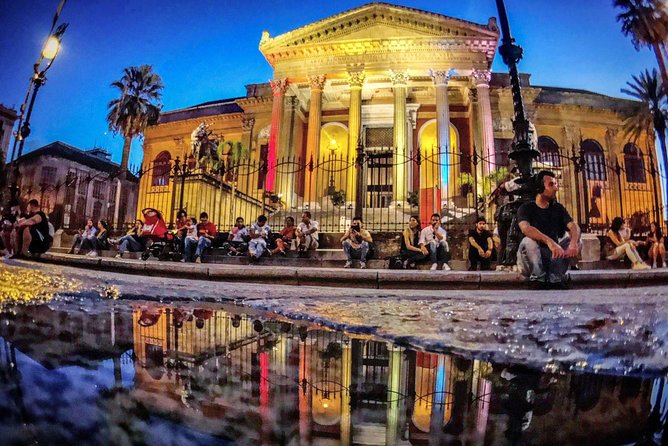
The first stop is Teatro Massimo, Palermo’s grand opera house. Many people recognize it as the setting for the final scenes of The Godfather III, but the tour uses the building for a different reason: it represents Palermo’s attempt to recover from decades of Mafia violence.
You will spend roughly 30 minutes here, with no admission ticket included or needed for this outdoor portion. Your guide sets out the basic story and explains why public places such as this matter in Palermo’s civic identity.
This is a good opening because it challenges the film version of Sicily right away. The building may draw you in through cinema, but the discussion turns toward a city trying to reclaim its public life. I would pay attention to how your guide connects a famous cultural monument with the wider effort to change Palermo’s image.
The stop involves standing while the guide speaks. If you prefer a fast-moving walk with constant sightseeing, the first discussion may feel slow. Still, the location gives the tour a clear starting point and an easy meeting landmark.
The 70-meter Wall of Legality
From the opera house, the route reaches the Wall of Legality, described as Italy’s longest wall painting at 70 meters. Its images represent well-known Mafia victims and form part of an urban renewal project.
This is one of the most direct stops on the route. Rather than hearing a long list of names without a visual reference, you can see faces and connect individuals to the public memory of Palermo. You will have about 10 minutes here, enough for an explanation and photographs.
The mural also shows how anti-mafia culture uses public space. A wall becomes a lesson, a memorial, and a piece of neighborhood renewal at once. I find that more useful than a museum display alone because the subject remains visible in the daily life of the city.
Your guide may cover several people in a short time, so ask questions if you want to understand one story in more detail. The stop is brief, and the route’s purpose is to connect many sites rather than give a full biography of every victim.
The open-air market and the cost of pizzo
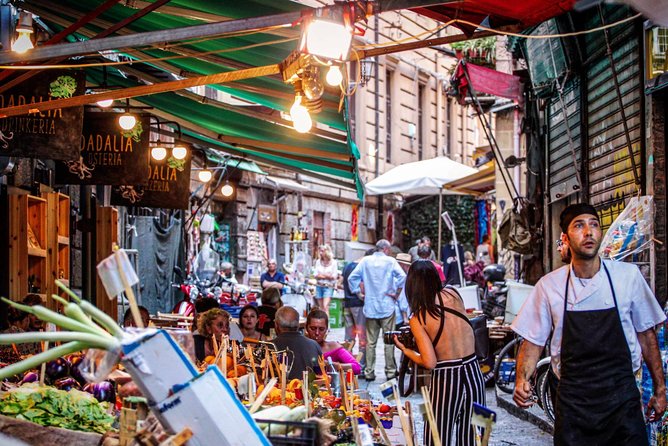
The colorful old market is where the subject moves from public memorials to ordinary commerce. You walk through one of Palermo’s loudest and most interesting areas while learning how Mafia pressure affected shopkeepers.
This stop helps explain what pizzo means in practice. Extortion is not an abstract political problem when a small business owner must decide whether to pay, resist, or risk retaliation. The market setting gives the discussion a human scale and shows why anti-mafia work involves local economic life, not only police raids and courtroom cases.
The supplied route does not name the market, so you should treat this part as a guided walk through an old open-air market rather than a dedicated food tour. You will not receive lunch, and food purchases are your own expense. If you enjoy seeing how a city works, this is likely one of the most revealing sections. If you want quiet streets and formal monuments, expect a sharper change of pace.
More mafia and anti-mafia history walks in Palermo:
- Palermo: Anti-Mafia Heroes Evening Walking Tour
★ 4.6 · 172 reviews - The Godfather Origins of Mafia: Corleone & Visit Monreale Duomo
★ 5.0 · 73 reviews - Corleone: Guided Tour of the C.I.D.M.A – Anti-Mafia Movement
★ 4.6 · 37 reviews - From Palermo: Mafia Tour of Corleone with Hotel Pickup
★ 5.0 · 34 reviews
Piazza della Memoria and Palermo’s murdered judges
At Palazzo di Giustizia, the group visits Piazza della Memoria, a memorial to judges and prosecutors killed by the Mafia. The stop lasts about 15 minutes.
This location explains the role of the legal system in the anti-mafia struggle. The tour is not simply about criminals and victims. It is also about public servants who tried to confront organized crime through courts, investigations, and prosecution.
The memorial gives the guide a natural place to discuss courage and loss without turning the subject into spectacle. You will likely hear about the human cost behind Palermo’s legal campaign and the difficult work of weakening criminal influence through institutions.
Again, this is a standing discussion rather than a museum visit. Wear shoes you can manage for several hours, and bring water if you need it. The tour description places the courthouse stop before the cathedral, so the route continues through central Palermo rather than taking you to a remote site.
Palermo Cathedral and the church’s difficult relationship with the Mafia
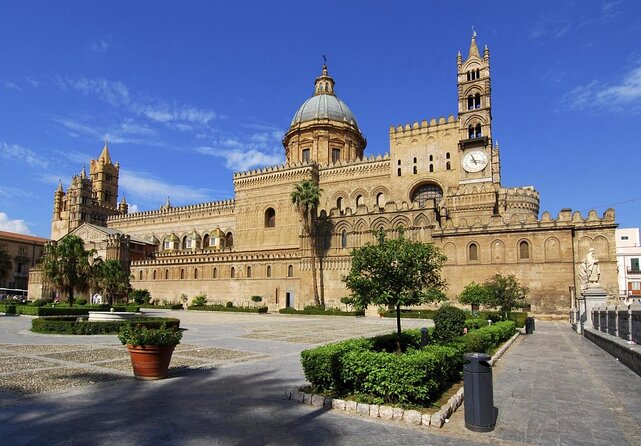
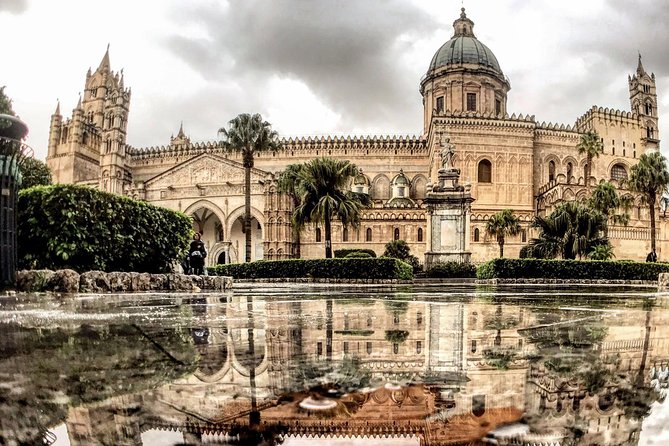
In front of Palermo Cathedral, your guide discusses the relationship between the Catholic Church and the Mafia. The cathedral itself is one of the city’s major Arab-Norman monuments, but the tour uses its setting to ask how religious institutions responded to organized crime.
This is a valuable contrast with the building’s beauty. You are not just admiring the cathedral’s exterior. You are considering the influence of the church in Sicilian society, including the tension between public morality, local power, and resistance.
The discussion lasts about 15 minutes. Admission to the cathedral is not listed as part of the tour, so plan to visit inside separately if you want to explore the building. That is worth remembering when you compare this walk with a standard sightseeing tour. The cathedral is a major landmark on the route, but the ticket covers the conversation outside, not a guided interior visit.
I like this stop because it broadens the subject. The Mafia story is not only about police and politicians. It also involves social institutions that shape how communities think and act.
Cappadonia Gelati and the meaning of an orange sticker
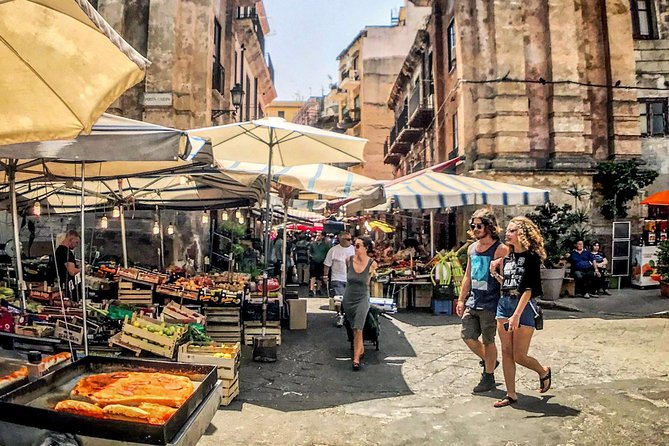
Along the Cassaro, the group stops at Cappadonia Gelati, a business displaying an orange sticker linked with the Addiopizzo campaign. The sticker identifies owners who have refused to pay pizzo and support mafia-free consumption.
This is where the tour turns learning into a small, practical choice. You can buy gelato or another item at your own expense, supporting a business that has taken a public position against extortion. The purchase is optional, but the stop gives you a concrete way to connect your spending with the values discussed during the walk.
The visit lasts about 15 minutes. Do not expect lunch or a full food crawl. The point is not to sample Palermo’s entire cuisine. It is to show how consumers can encourage businesses that refuse criminal pressure.
For me, this is one of the tour’s most useful details because it avoids leaving the anti-mafia message at the level of speeches. You finish with a simple action you can understand: look for participating businesses and spend there when you can.
Palazzo Pretorio and the city’s political story
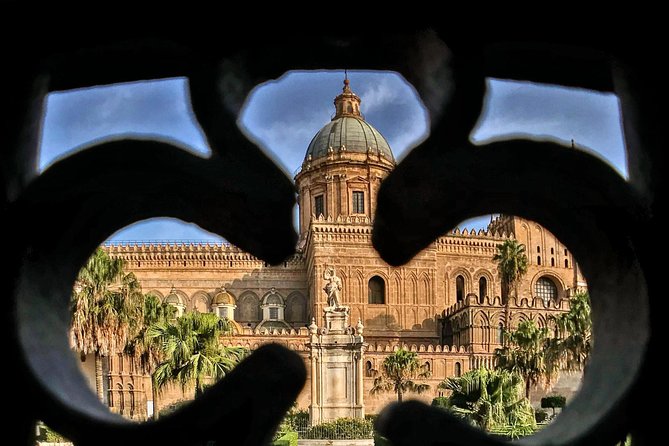
The final listed stop is Palazzo Pretorio, Palermo’s city hall, in Piazza Pretoria. The building has been associated with both corrupt politicians and officials who fought the Mafia.
That dual role makes the stop a fitting close. Palermo’s institutions have not followed a single clean path. The city hall discussion shows how corruption can reach government, but also how political action can help challenge criminal power.
You will spend about 15 minutes here before continuing to Fontana Pretoria. The tour ends in the heart of the old town, where the guide offers tips for continuing your sightseeing and finding Sicilian specialties.
The ending is practical. You are not dropped outside the center or sent back to the starting point. From Fontana Pretoria, you can continue exploring Palermo on foot, use the guide’s food suggestions, or plan your next old-town stop.
What the guide adds to the three-hour walk
The quality of this experience depends heavily on the person leading it. Guides named in the feedback include Sylvia, Giuseppe, Federico, Ermes, Mariela, Marianella, Laura, Valeria, Francesco, and Salvatore. The strongest descriptions emphasize passion, clear English, personal commitment, and the ability to answer questions.
Sylvia receives especially warm praise for her grasp of anti-mafia history and her clear sense of mission. Valeria has explained how Mafia influence touched her own life, friends, and family. Other guides, including Francesco and Federico, have been praised for giving strong background and answering questions carefully.
That range matters because this is a talk-heavy experience. You are not simply following a guide to pretty buildings. You are listening to complex stories about corruption, violence, community action, and continuing resistance. A guide who speaks with care can make the three hours moving and easy to follow.
The format also has limits. One person found there was too much standing while commentary continued and suggested that the route could keep moving during some explanations. Another felt parts of the presentation repeated the same message and wanted more general history.
I would book this if you enjoy asking questions and listening closely. I would not choose it as your only introduction to Palermo’s art and architecture.
Price, group size, and practical value
At $39.30 per person, the tour costs more than a simple stroll through the historic center, but it includes more than a standard orientation walk. You receive a local English-speaking guide, a three-hour route through central Palermo, and a small contribution to Addiopizzo.
The contribution is important to the value calculation. You are paying for an experience tied to a local anti-mafia organization, not only for sightseeing time. The route also uses real businesses, public memorials, and city institutions, so the subject is connected to places you can see for yourself.
A maximum of 15 people is another plus. It is not a private tour, but the group is small enough for a more personal exchange. With a larger crowd, discussions about sensitive topics could become harder to follow and questions might be rushed.
Bring comfortable shoes. You will walk and stand for about three hours. The tour runs near public transportation, but hotel pickup and drop-off are not included. In rainy weather, bring an umbrella and a dry jacket.
Most people can take part, and no health restrictions are listed. The itinerary does not include lunch, cathedral admission, or personal purchases at the gelato shop and market, so budget for those separately.
Who will get the most from this experience
I recommend this tour to you if you want to understand Palermo beyond its postcard sights. It suits first-time visitors who want context, readers interested in Italian organized crime, and anyone who wants to support ethical local businesses while sightseeing.
Families can take part, and one group completed the three-hour walk with a four-year-old. Still, the subject includes violence, murder, corruption, and grief. Parents should decide if that tone suits their child.
The tour also works well for anyone tired of Mafia stories being glamorized by movies. Its purpose is to show how the city, courts, businesses, churches, and citizens challenged that influence. You will learn about the Mafia, but the center of attention is resistance.
Skip it if you want a broad art-and-history tour, a food tour, or a route with little standing. One three-star assessment found the experience only partly satisfying because it was not a conventional historical walk and repeated its message. That is a fair warning, not a flaw for the right audience.
Should you book Palermo’s No Mafia walking tour?
Book it if you want a serious, local view of Palermo’s civic life and can give three hours to listening, walking, and thinking. The strongest reasons are the small group, the emotional force of the memorials, the market stop, and the chance to support an Addiopizzo business at Cappadonia Gelati.
I would place it near the start of your stay, then return later to the cathedral, markets, and old town with the guide’s context in mind. At $39.30, the value is strongest for you if the anti-mafia mission matters as much as the sightseeing.
FAQ
Where does the Palermo No Mafia walking tour start?
The tour starts at Piazza Giuseppe Verdi, 455, Palermo, near Teatro Massimo.
Where does the tour end?
It ends at Fontana Pretoria in Piazza Pretoria, in Palermo’s old town center.
How long does the tour last?
The walking tour lasts approximately three hours.
Is the tour offered in English?
Yes. The experience is offered in English.
What is included in the price?
The price includes a local guide and a small solidarity contribution to Addiopizzo, a local anti-mafia organization.
What should I bring?
Wear comfortable shoes. If rain is expected, bring an umbrella and a dry jacket. Hotel pickup, lunch, cathedral admission, and personal purchases are not included.
Just added around Palermo
- Anti-Mafia Heroes (Cool Hours) Morning Walking Tour★ 5.0 · 3 reviews
- The art of the Italian Aperitivo with a local: Learn & Enjoy in Palermo★ 5.0 · 3 reviews
- Private transfer from Palermo airport to Mercure Palermo Centro or vice versa★ 5.0 · 3 reviews
- ERICE and SEGESTA Private Exclusive Tour starts from Palermo with Guide Driver★ 4.0 · 3 reviews
- Private 10 hour tour to Agrigento (Valley of the Temples) from Palermo★ 5.0 · 3 reviews
- Palermo Private MINITOUR of WEST SICILY 4 Days with Guide Driver★ 5.0 · 3 reviews
- The Best Of Sicily and Sorrento & Culinary Experiences, Deluxe★ 5.0 · 3 reviews
- Transfer from Palermo Airport to Scopello and Tonnara di Scopello★ 5.0 · 3 reviews
Sicilian Mafia History Tours, compared.
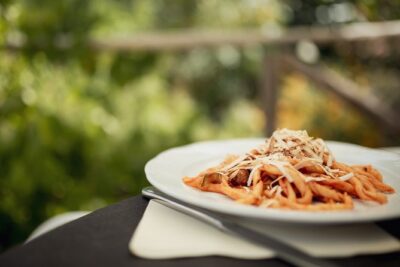
Godfather vs Mafia Tour & Pasta Lunch (Small Group or Private)
Read our review →
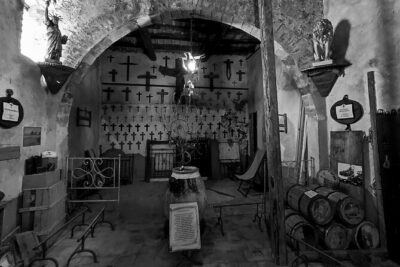
The Godfather Origins of Mafia: Corleone & Visit Monreale Duomo
Read our review →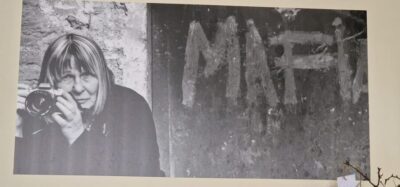
Corleone: Guided Tour of the C.I.D.M.A – Anti-Mafia Movement
Read our review →
Browse the lists this tour appears in