
Reviewed · RAGUSA TOURS
Private tour of the Baroque cities of Eastern Sicily
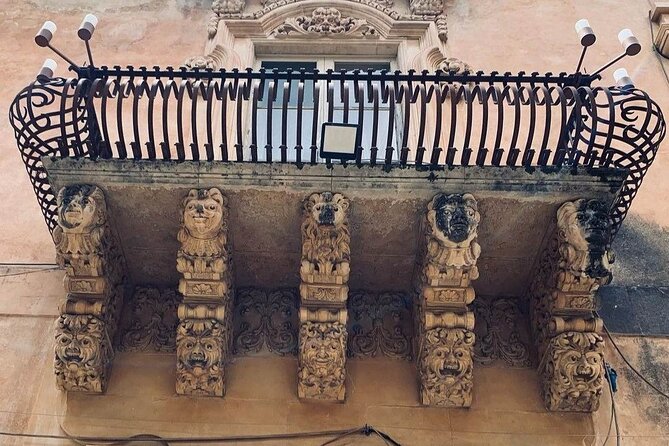
Eastern Sicily’s Baroque towns are best understood as a connected story, not a string of isolated monuments. This private tour links Noto, Modica, and Ragusa Ibla in one long day, following the rebuilding that came after the earthquake of 1693. You get ornate churches, noble palaces, narrow lanes, a coffee or granita break, and Modica chocolate without having to arrange the driving yourself.
I like two things here: the private vehicle and flexible group setting, which let you spend the day with only your own party, and the balance between architecture and food. Modica’s chocolate tasting keeps the churches from becoming a blur, while the guide’s historical commentary gives the decorated stonework a reason to matter. The main consideration is the pace. Seven to eight hours is a long day, and lunch, fuel surcharges, and some pickup fees are extra.
In This Review
- Key points at a glance
- Why Sicily’s Baroque towns deserve a full day
- Noto and the Garden of Stone
- Modica’s churches, steps, and chocolate
- Ragusa Ibla, Sicily’s most atmospheric finale
- What the private vehicle changes
- Guide quality and the Gabrielle tip
- Price, extras, and overall value
- Who will enjoy this day most
- Weather, cancellations, and planning advice
- Should you book this Baroque cities tour?
- FAQ
- How long does the private tour last?
- Which towns are visited?
- Is the first Baroque city Noto?
- What can I see in Modica?
- Is lunch included?
- Is transportation included?
- Is this a shared group tour?
- Can I be picked up from Taormina?
- What happens if the weather is poor?
Key points at a glance
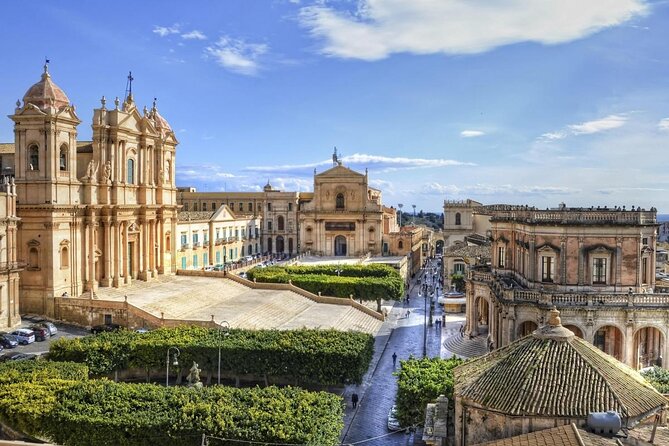
- Three important Baroque towns in one day: Visit the first city known as Sicily’s Baroque capital, then Modica and Ragusa Ibla.
- A private group experience: Only your party takes part, with private transportation in an air-conditioned vehicle.
- Modica chocolate tasting: Stop at a traditional chocolate shop in a town famous for chocolate made in several forms.
- A strong history focus: The route centers on the rebuilding of southeastern Sicily after the 1693 earthquake.
- Coffee or granita break: Pause at a typical bar between the first and second destinations.
- Useful pickup details: Pickup is offered, but Taormina and areas more than 50 kilometers from Catania carry a €130 supplement.
Why Sicily’s Baroque towns deserve a full day
The eastern corner of Sicily has a particular look: pale stone, grand stairways, church façades crowded with columns, and palaces rebuilt in the eighteenth century. The earthquake of 1693 destroyed much of the region, and the rebuilding created a unified style that now defines these towns.
That history gives the day a clear thread. You are not simply checking off three pretty places. You are seeing how a catastrophe reshaped cities and produced some of Sicily’s most distinctive architecture.
A private tour makes sense here because the towns are close enough to combine but spread across hilly ground. You can leave the driving to someone else and use the time between towns to rest. Your guide can also explain what you are looking at without the distraction of a large group.
The tour lasts about seven to eight hours, including driving, sightseeing, breaks, and free time. That is enough to get a useful taste of all three cities, but not enough for a slow, detailed examination of every church or palace. I would treat this as a carefully planned introduction rather than a specialist architecture tour.
A few more Ragusa tours and experiences worth weighing up
- Ragusa: Private Cooking Class at a Local’s Home
★ 4.9 · 13 reviews - Scicli – Bonelli Patané Palace: exclusive private tour
★ 4.6 · 4 reviews - Modica private tour: the chocolate town in Sicily
★ 5.0 · 3 reviews
Noto and the Garden of Stone
The first stop is the city described as the capital of Sicilian Baroque. Its eighteenth-century architecture is sometimes called the Garden of Stone, a fitting name for streets and buildings shaped from warm local limestone.
Here, the pleasure comes from looking upward and around you. Churches, convents, and noble palaces form a consistent architectural setting, rebuilt in a classic style after the 1693 earthquake. The effect is elegant rather than rough or medieval, with façades designed to impress from the street.
Your guide’s role matters most at this first stop. Without context, Baroque decoration can look like one long parade of carved stone. With a good explanation, you can notice the relationship between the buildings, the rebuilding period, and the city’s grand public face.
The tour includes a break at a typical bar. You can have a coffee or try a granita before moving on. This is a small but useful touch. Sicily’s granita is more than a sweet snack, and a short stop gives you a chance to sit down before the day becomes more demanding.
The first city is also where the tour sets its rhythm. You will see major architectural sights, have time to look around, then return to the vehicle. Since the exact amount of free time can depend on the day and your group, ask your guide early how long you will have for photographs, a drink, or a short independent walk.
Modica’s churches, steps, and chocolate
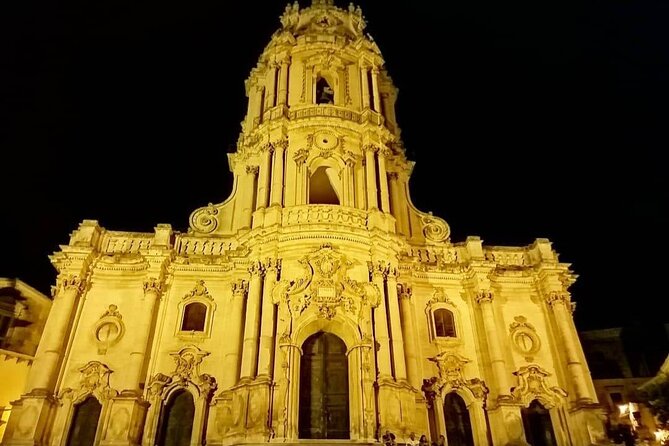
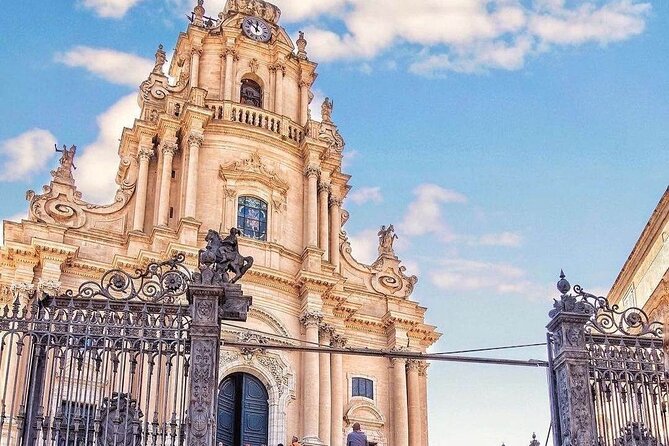
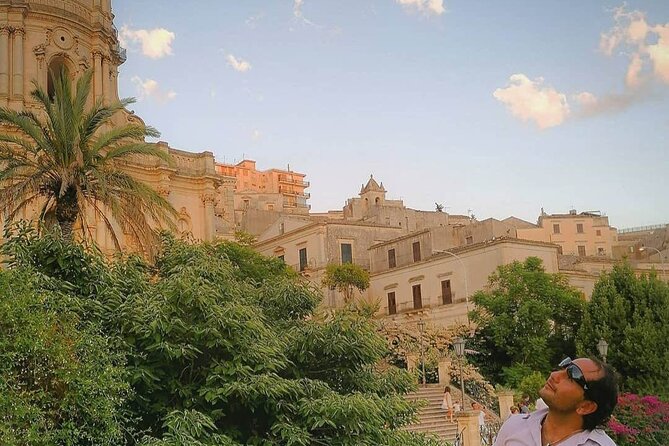
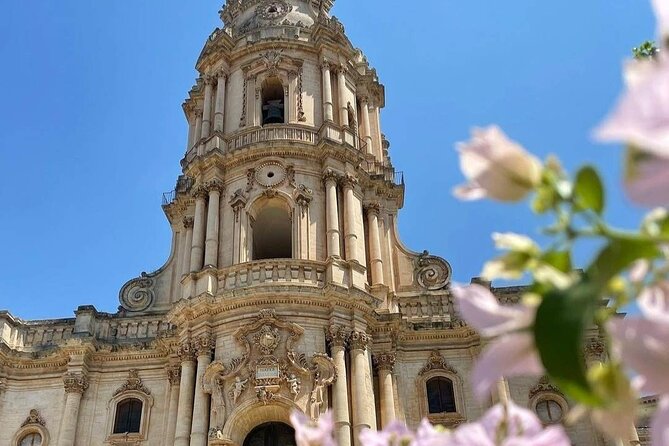
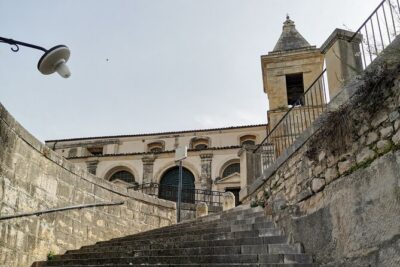
The next major stop is Modica, a town with a dense collection of Baroque buildings. The visit includes the Cathedral of San Giorgio, the city’s mother church and one of its most important monuments.
San Giorgio has a long story behind its eighteenth-century appearance. Before the earthquake, the church stood at the eastern end of the town near the present-day Ibleo garden. Its great fifteenth-century portal, built in Spanish Gothic style, remains as the surviving trace of the earlier church.
That detail gives you something specific to look for. Modica is not only about the later Baroque rebuilding. It also preserves an earlier layer, visible in the Gothic portal. The contrast helps you see that the town’s appearance was built over time, not created all at once.
The tour allows about three hours in Modica, including sightseeing, chocolate tasting, and lunch. This is a substantial portion of the day, though the time is shared among several activities. You should not expect a long museum visit or an exhaustive tour of every church.
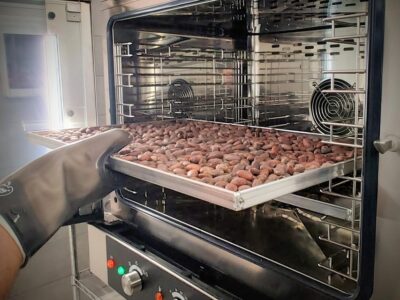
The chocolate stop adds a welcome change of pace. Modica is known for producing chocolate in several forms, and the tasting takes place at a traditional chocolate shop in the center. You can sample a local specialty and decide what, if anything, you want to buy for later.
The tasting is also practical. Food stops make a sightseeing day feel more local, and chocolate gives you a clear connection to Modica beyond its stone façades. It is not presented as a full cooking class, so expect a tasting rather than hands-on instruction.
Lunch follows before the final destination. Lunch is not listed among the included services, so plan to pay for it separately. Since the tour runs most of the day, this is an important budget detail. You may also want to tell the guide early if you prefer a quick meal or more time at the table, although the exact options are not specified.
Modica can be tiring if you are not prepared for the town’s hills and architectural climbs. The tour information says most people can participate, but it does not promise a flat route or step-free access. Wear shoes you can comfortably use for several hours and save room in your schedule for a slower pace.
Ragusa Ibla, Sicily’s most atmospheric finale
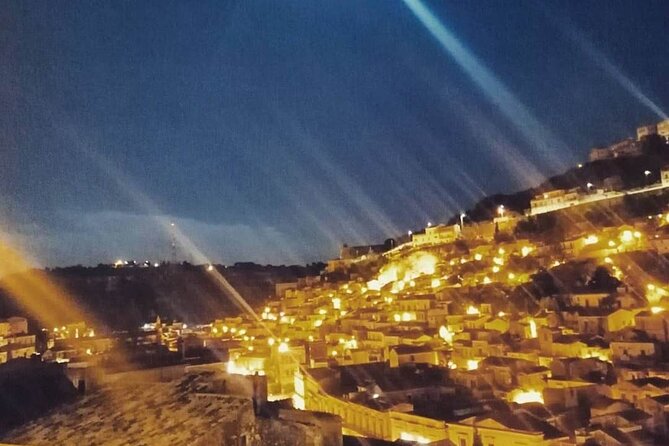
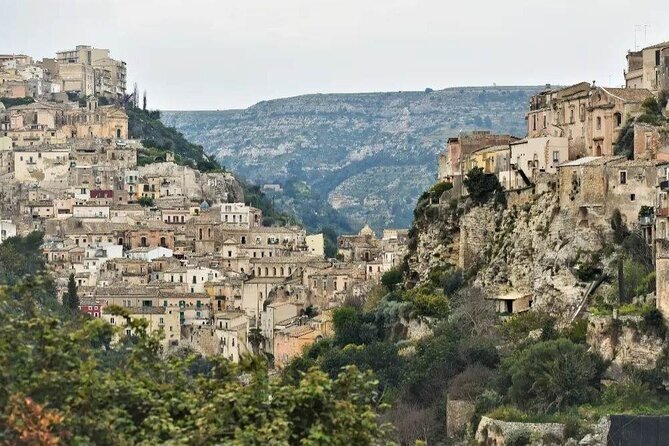
The final destination is Ragusa Ibla, the old part of Ragusa and perhaps the most visually memorable stop on the route. It is a UNESCO World Heritage Site, known for late Baroque architecture, winding lanes, grand buildings, the Iblei gardens, and its cathedral.
Ragusa Ibla rewards wandering. Its narrow alleys and old stone buildings create the feeling of stepping into another period, while the churches and palaces show the same post-earthquake rebuilding that shaped the rest of the day.
The Mother Church, described as one of the city’s most important monuments, gives the visit a strong focal point. You will have a chance to see the cathedral and the surrounding streets rather than viewing the town only from the vehicle.
About three hours are assigned to Ragusa Ibla, including sightseeing and free time. That makes it possible to move beyond a quick photograph and simply enjoy the setting. Still, three hours passes quickly when you include walking, stops, and the return journey.
The Iblei gardens offer a change from the formal façades and church interiors. They are a useful place to slow down and take in the town’s setting. The tour description does not promise a particular viewpoint or a guided walk through every lane, so your experience may depend on how your guide divides the time.
Ragusa Ibla is a fitting last stop because it gathers many of the day’s themes in one place: the rebuilt Baroque style, dramatic streets, religious monuments, and the sense of an old Sicilian town shaped by both disaster and renewal.
Same island, a completely different day out:
- 3-hour walking tour Discovering Ragusa Baroque
★ 5.0 · 51 reviews - Chocolatier for a day: raw bean to bar chocolate in Modica
★ 5.0 · 33 reviews - 8-hour tour of the Baroque cities Noto-Modica-Ragusa-Ortigia
★ 4.9 · 18 reviews - Ragusa: Dining Experience at a Local’s Home
★ 4.9 · 12 reviews
What the private vehicle changes
Private transportation is the practical backbone of this experience. You ride in an air-conditioned vehicle with bottled water, and only your group takes part. That matters in southeastern Sicily, where the towns are not best experienced as one simple walk from a central meeting point.
You do not have to manage the route, parking, or connections between Noto, Modica, and Ragusa Ibla. The time in the vehicle also gives you a break between walking stops. On a hot day, air conditioning can make the difference between enjoying the next town and arriving already worn out.
The private format may also help if your group has different interests. One person can linger over church details while another wants photographs or a coffee break. The guide can potentially adjust the pace, though the overall route and timing still need to fit into the seven to eight hour schedule.
The benefit is less dramatic if you are staying close to the towns and already have a rental car. In that case, compare the tour price with your own driving costs and decide how much you value a private guide. For visitors who would rather not drive unfamiliar Sicilian roads, the convenience is easier to justify.
Guide quality and the Gabrielle tip
The guide can make or break a day built around architecture. The published score is 4.6 from five ratings, and one particularly strong comment praises Gabrielle for explaining Sicilian history and guiding the group through the most beautiful parts of the island.
If Gabrielle is available, you can request him when booking, but no particular guide is guaranteed. That is worth keeping in mind. The tour depends on storytelling, because the buildings are far more meaningful when you understand the earthquake, the rebuilding, and the older traces that survived.
Ask your guide to point out the details you might otherwise miss: the Gothic portal in Modica, the relationship between the churches and palaces in the first Baroque city, and the key monuments in Ragusa Ibla. A private setting gives you a good chance to ask questions without holding up a large group.
Price, extras, and overall value
The listed price is $203.53 per person. Since this is a private experience, the value depends heavily on the size of your party. For two people, it is a significant expense, but you are paying for a full day of private transportation, an air-conditioned vehicle, bottled water, and a guide focused only on your group.
For a family or small group, the cost may compare more favorably with hiring a car, paying for fuel, handling parking, and arranging separate guides or visits. Group discounts are offered, so check the final total rather than judging the per-person figure alone.
The price does not cover everything. Fuel surcharge is listed separately, and pickup from Taormina or areas more than 50 kilometers from Catania requires a €130 supplement. Lunch is also not listed as included, and the coffee, granita, and chocolate tasting may involve purchases depending on how the provider handles them.
Pickup is offered, but you should confirm the exact pickup area before booking. The experience is based in Ragusa, so the added fee can make a major difference if you are staying far away. This is one reason the tour is best suited to people already positioned in southeastern Sicily or willing to pay for the longer transfer.
The fact that it is often booked about 93 days ahead suggests that you should not leave it until the last minute if your dates are fixed. Confirmation is provided at booking, and free cancellation is available up to 24 hours before the start time.
Who will enjoy this day most
I would recommend this tour to you if you want to see several major Baroque towns without renting a car. It suits couples, families, and small groups who value privacy and want a guide available throughout the day.
It is especially good for:
- Art and architecture fans who want churches, palaces, and planned rebuilding explained.
- Food-minded visitors who like the idea of a granita break and Modica chocolate.
- Film-location enthusiasts, since these towns have attracted producers looking for historical and contemporary settings.
- Visitors with only one full day for southeastern Sicily.
- Groups that prefer private transport over a large shared coach.
I would be more cautious if you dislike long day trips or want extended free time in each town. You will see three places, but you will not know every corner of them. The day also includes driving and several walking sections, so it is not a relaxed, stay-in-one-place outing.
The tour information says most people can participate, but it does not provide detailed accessibility information. If you need step-free access or have difficulty with hills and stairs, ask before booking. The Baroque towns are built on uneven, often hilly ground, and the route may include walking between monuments.
Weather, cancellations, and planning advice
This experience requires good weather. If poor weather causes cancellation, you are offered another date or a full refund. For your own planning, that means keeping a little flexibility in your schedule if possible.
You can cancel for a full refund up to 24 hours before the start time. Cancellations or changes made within 24 hours are not refunded or accepted, and the cutoff follows local time.
Bring comfortable walking shoes, a phone or camera, and some cash or a card for lunch and personal purchases. Bottled water is included, but you may still want anything else you normally use during a full day outside.
I would also confirm three points before the day begins: your pickup location, the precise amount of free time in each town, and whether the chocolate tasting includes a set sample or simply a stop at the shop. None of these questions changes the character of the tour, but the answers help you set realistic expectations.
Should you book this Baroque cities tour?
Book it if you want an efficient, private introduction to southeastern Sicily and care more about seeing the major Baroque towns than spending a full day in one place. The combination of Noto’s grand stonework, Modica’s cathedral and chocolate, and Ragusa Ibla’s lanes and cathedral gives you a strong overview of the region.
I would choose it for a small group that wants a guide, air conditioning, and freedom from driving. Ask for Gabrielle if he is available, and budget for lunch, fuel charges, and any distant pickup supplement.
Skip it if you are already comfortable driving, want long museum visits, or prefer a slow schedule. For everyone else, the tour offers a sensible way to connect three major Sicilian sights in one well-supported day.
FAQ
How long does the private tour last?
The tour lasts approximately seven to eight hours, including travel between the towns, sightseeing, breaks, and free time.
Which towns are visited?
The route visits the first city described as the capital of Sicilian Baroque, then Modica and Ragusa Ibla.
Is the first Baroque city Noto?
The first stop is described as Sicily’s Baroque capital and the Garden of Stone, descriptions associated with Noto. Confirm the exact stop with AVAJA TOURS when booking.
What can I see in Modica?
The Modica visit includes the Cathedral of San Giorgio, other Baroque churches, a stop at a traditional chocolate shop, a chocolate tasting, and lunch time.
Is lunch included?
Lunch is not listed among the included services, so you should budget to pay for it separately.
Is transportation included?
Yes. Private transportation, an air-conditioned vehicle, and bottled water are included.
Is this a shared group tour?
No. This is a private activity, so only your own group participates.
Can I be picked up from Taormina?
Pickup is offered, but Taormina and areas more than 50 kilometers from Catania require a €130 supplement.
What happens if the weather is poor?
If the tour is canceled because of poor weather, you are offered a different date or a full refund. You can also cancel up to 24 hours before the start time for a full refund.
Just added around Ragusa
- Modica private tour: the chocolate town in Sicily★ 5.0 · 3 reviews
- Scicli: Guided Walking Tour in Baroque City Center★ 4.3 · 3 reviews
- Tour in the heady scents of our garden in Ragusa★ 5.0 · 4 reviews
- Scicli – Bonelli Patané Palace: exclusive private tour★ 4.6 · 4 reviews
- Ragusa Countryside Home Cooking Class & Meal★ 4.8 · 6 reviews
- Radici: IImmerse yourself in the heady scents of our garden★ 4.7 · 7 reviews
- Ragusa Ibla: Walking Tour with Local Guide★ 4.4 · 8 reviews
- Olive Oil Tasting & Historic Olive Mill Tour in Ragusa area★ 5.0 · 9 reviews
Ragusa Tours, compared.
Chocolatier for a day: raw bean to bar chocolate in Modica
Read our review →
Distilleria Alma- Rum Distilery Guided Tour & Tasting
Read our review →
Olive Oil Tasting & Historic Olive Mill Tour in Ragusa area
Read our review →
Radici: IImmerse yourself in the heady scents of our garden
Read our review →Browse the lists this tour appears in