Reviewed · MOUNT ETNA TOURS
Volcanological excursion of the wild and less touristy side of the Etna volcano
Etna’s north side gives you the volcano without the crowds and commercial feel of the southern station. You ride an authorized 4×4 from Piano Provenzana through pine forest and the raw lava fields of the 2002 eruption, then walk among craters, ash, old lava tubes, and pioneer plants. I especially like the quiet setting and the way guides such as Poldo, Pepe, Linda, and Domenico turn black rock into a readable story about eruptions and geology.
I also like that boots, trekking poles, helmets, warm jackets, spare socks, and an extra backpack are available. That makes a high-altitude walk easier to manage. The catch is that this is a real mountain outing, not a roadside viewpoint: expect about 7 kilometers on loose volcanic ground, little shade, possible dizziness, and an additional 50 euros per person for the 4×4 transfer paid locally.
In This Review
- Key things to know before you go
- Why Etna’s north side feels different
- The 7:45 am meeting at Piano Provenzana
- The 4×4 climb through the 2002 lava fields
- Walking among craters from 1614 to 2002
- The view from Piano delle Concazze
- Equipment, safety, and the real effort involved
- What the price includes, and what it does not
- Who should book this Etna excursion?
- Should you book the north-side wild Etna tour?
- FAQ
- Where does the Etna north-side excursion begin?
- How long does the experience last?
- Is the 4×4 transfer included in the advertised price?
- What equipment is provided?
- How physically demanding is the walk?
- Can children join the excursion?
Key things to know before you go
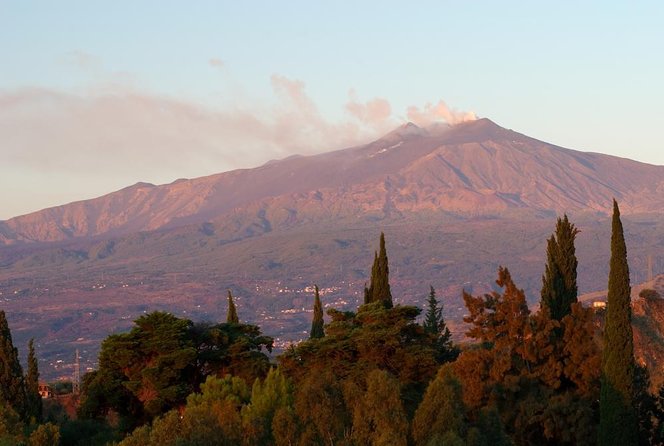
- Etna’s quieter north flank: Piano Provenzana is less crowded than the southern tourist station, with forest, lava flows, cafés, and a more open setting.
- A 4×4 ride to high ground: Authorized vehicles climb from 1,800 meters toward roughly 2,800 to 3,000 meters, depending on access and summit conditions.
- A serious volcanic walk: The route visits craters from several eruptions, lava tubes, ash fields, a north-flank fault, and unstable volcanic soil.
- Strong guide-led interpretation: Guides explain eruption dates, crater formation, monitoring equipment, plant life, and the way Etna changes over time.
- Useful equipment supplied: Trekking poles, boots, helmets, warm jackets, spare socks, and an extra backpack are included.
- Clear-weather views: From the upper route, you may see Catania, Syracuse, Calabria, the Nebrodi, Peloritani, Madonie, and the Aeolian Islands.
Why Etna’s north side feels different
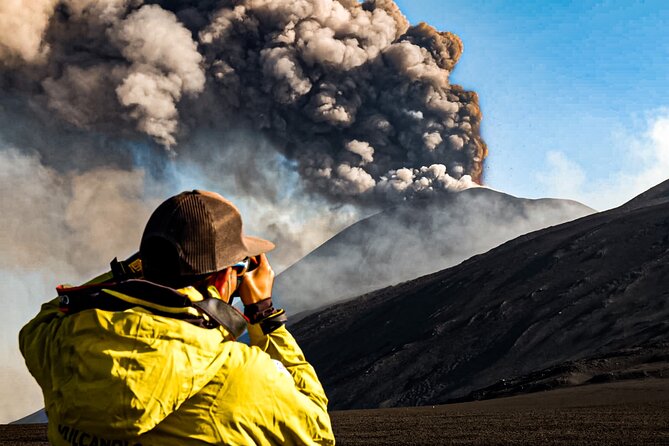
If you picture Mount Etna as a line of cable cars, souvenir stalls, and packed viewing areas, Piano Provenzana will reset your expectations. The northern station sits at 1,800 meters, where pine woods meet broad black lava flows. It feels spare and exposed, but not stripped of useful facilities.
You can reach Piano Provenzana by paved public road in your own car or a rental car. Paid parking is marked with blue lines. The stated rate is 5 euros for the full day on weekdays and 8 euros on Sundays and public holidays. At the station, you’ll find small shops, cafés, bars, restrooms, and places to refill water bottles.
The area was heavily changed by the eruption of October 27, 2002. Earlier tourist buildings, hotels, restaurants, ski lifts, and trails were destroyed. The ruins, including part of a hotel roof emerging from the lava, are not just visual oddities. They show how quickly a developed mountain area can be swallowed by flowing rock.
That contrast is the appeal here. You begin in a place with coffee and parking, then move into terrain that looks almost untouched. Piano Provenzana is also a winter ski station, while in warmer months it serves as a base for guided walks and 4×4 trips.
More ways up Etna and around the craters:
- Catania: Mount Etna Morning or Sunset Day Trip with Tasting
★ 4.8 · 4,028 reviews - Mount Etna: Guided Volcano Summit Hiking Tour with Cable Car
★ 4.7 · 3,784 reviews - Catania: Sunset Jeep Tour of Mount Etna and Lava Flow Caves
★ 4.8 · 2,113 reviews
The 7:45 am meeting at Piano Provenzana
The excursion begins at 7:45 am at Chiosco Bar Mareneve di Ferraro on Via Provenzana. Arrive ready to go, since the early start helps you use the cooler part of the day and gives the group time to reach the upper route.
You meet the volcanological guide at the station for a short briefing. This is when you should explain any health concerns clearly. The outing is not recommended for people with cardiovascular or breathing problems, hypertension, or limited physical conditioning. Volcanic gases and ash can also trouble contact-lens wearers, so glasses are the safer choice.
The group can include up to 20 people, although some departures may be much smaller. A small group makes it easier to ask questions and stay close to the guide. Several guides receive particularly strong praise for their explanations and manner. Poldo is described as clear and engaging on volcanic science, while Pepe is noted for making the walk approachable. Linda and Domenico are also praised for their organization, language skills, and ability to explain the volcano without burying you in technical terms.
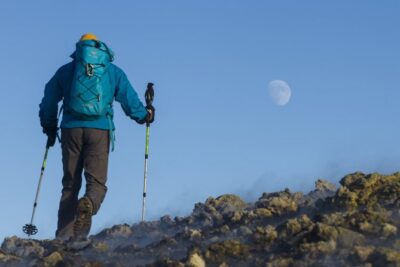
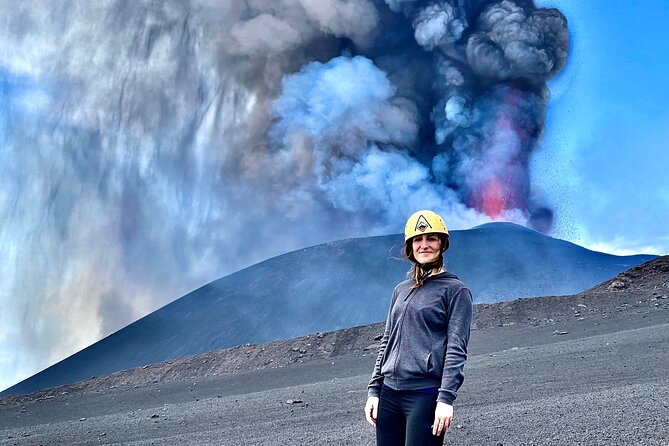
Before setting off, the team checks your equipment and gives you what you need. The supplied trekking shoes are useful because ash and loose volcanic gravel can shift underfoot. A helmet is important near crater edges, while poles help with both uphill footing and sandy descents.
The 4×4 climb through the 2002 lava fields
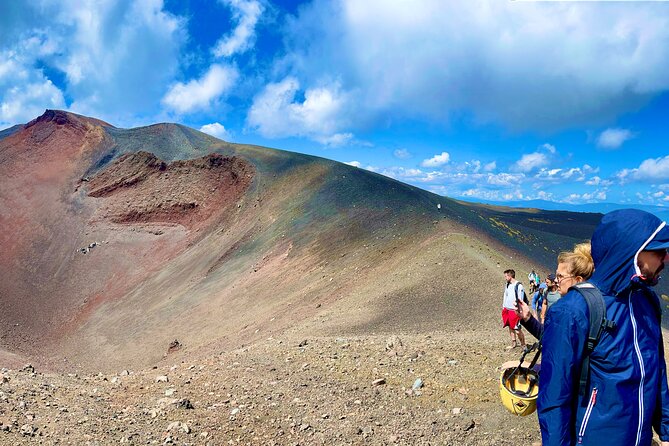
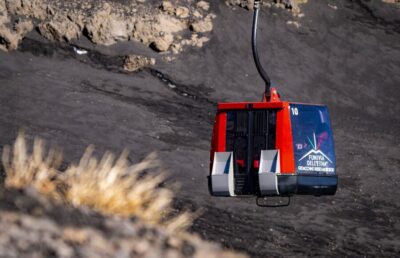
From Piano Provenzana, you board an authorized 4×4 vehicle for the climb along Etna’s north road. Private cars cannot simply continue up this section. Access higher on the mountain is controlled through licensed guides and approved vehicles.
The drive passes through woodland before reaching the wide lava fields created in 2002. The change is quick. Trees give way to open black rock, fractured surfaces, ash, and the remains of the old tourist facilities. The semi-buried hotel roof is a memorable sight because it puts the force and reach of that eruption into human terms.
The road rises from 1,800 meters to the upper Etna Nord area, around 2,800 meters at Piano delle Concazze and, depending on conditions, close to 3,000 meters. When the summit zone is closed, this is about as high as the outing can go. The active summit craters may still be visible above you, often with steam rising from them.
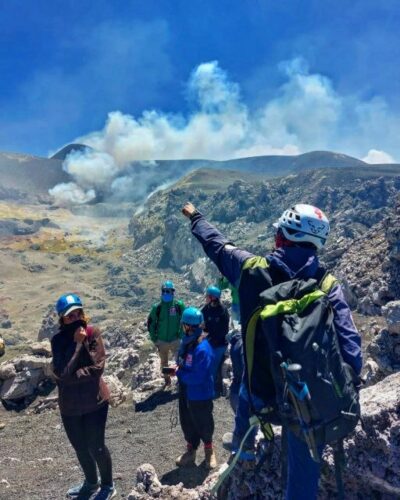
The 4×4 ride is not just transport. Your guide explains the eruptions, the fractures in the ground, and the monitoring equipment used by the National Institute of Geophysics and Volcanology. You’ll pass craters more than 40 meters deep and see lava flows spread across the upper slope.
There is one important price detail. The advertised cost is $71.20 per person, but the 4×4 transfer requires an additional 50 euros per person paid on site. The supplied information describes this fee in connection with the vehicle route between the upper elevations, including the sections from 1,800 to 2,800 meters and from 2,800 to 2,500 meters. Confirm the exact local charge when booking, and budget for it separately. Once that is included, the total cost is higher than the headline price, though it still covers a guide, equipment, insurance, and access to Etna.
Walking among craters from 1614 to 2002
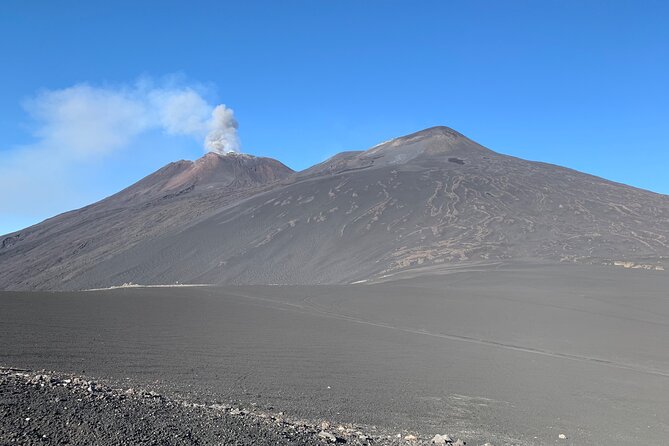
The walk is the heart of the experience. The stated route covers roughly 7 kilometers and takes about two hours on foot, though the entire outing lasts around four and a half hours with the drive, briefing, and return.
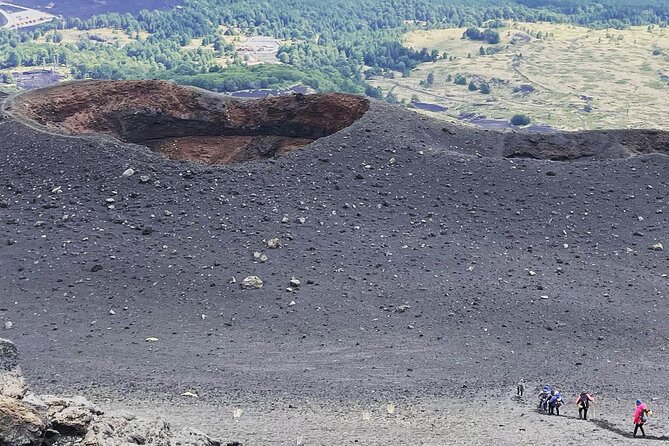
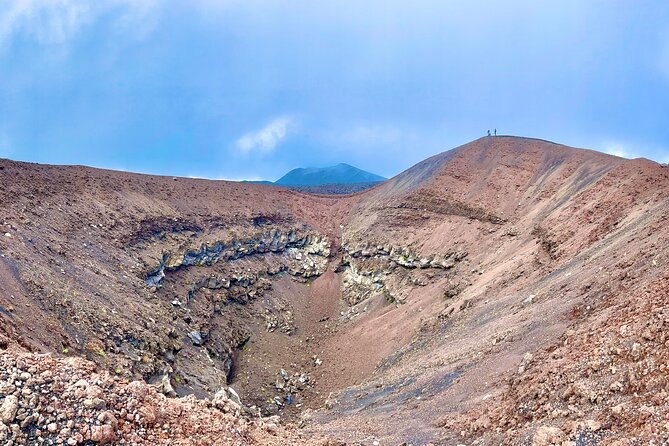
You walk across fresh lava and ash, moving past craters from eruptions dated 2002, 1911, 1923, 1874, 1879, 1809, 1646, 1614, and 1624. The dates are more than decoration. They let you see Etna as a series of events rather than one single mountain. Some craters are relatively recent, while others have had centuries for weathering and plant life to begin reclaiming them.
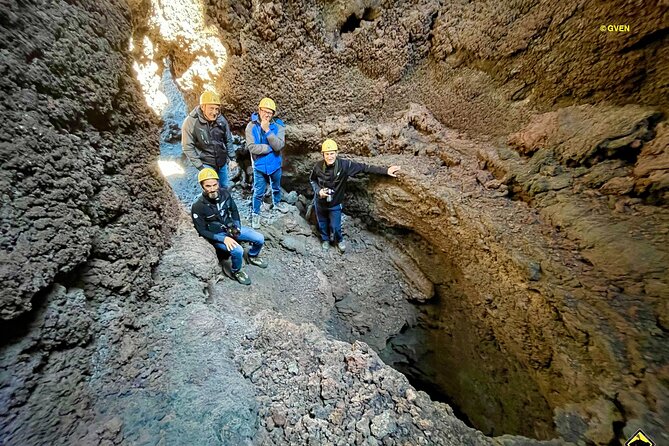
The guide points out eruptive fractures, old lava channels, and ancient lava tubes. You may also see pioneer plants taking hold in the new rock. These small plants are easy to miss, but they help explain how life returns to ground that began as hot, sterile lava.
The route also reaches a dramatic north-flank fault. On volcanic terrain, cracks and ridges can look simple from a distance, yet they reveal how pressure moves through the mountain. Monitoring stations scattered across the upper area add another useful layer. Etna is not only a dramatic natural site; it is also a place of continuing scientific observation.
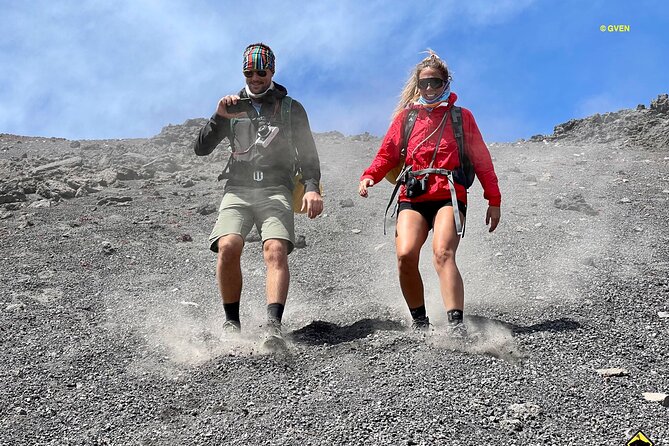
Be ready for uneven footing. Volcanic soil can be loose, inconsistent, and unstable. You may walk through fine dust, over rough lava, and along crater edges where the ground requires care. The descent through a sandy channel is one of the more enjoyable parts for many people, but it can be slippery and tiring. Trekking poles are especially useful here.
The physical demand depends on weather, pace, and your own condition. One account describes the route as easy for someone with basic fitness, while another calls it hard walking that was highly rewarding. Both impressions can be true. The walk is not technical mountaineering, but high altitude, loose ash, sun, wind, and uneven rock make it more demanding than an ordinary countryside stroll.
Same island, a completely different day out:
- Palermo: NO Mafia Walking Tour
★ 4.8 · 2,431 reviews - Palermo: Hop-on Hop-off Bus Tour 24-hour Ticket
★ 3.9 · 2,410 reviews - From Trapani: Cruise to Favignana and Levanzo with lunch
★ 4.2 · 2,286 reviews - Palermo Original Street Food Walking Tour by Streaty
★ 5.0 · 2,105 reviews
The view from Piano delle Concazze
At around 2,860 meters, the route reaches Piano delle Concazze near the Etna Nord Volcanological Observatory. On a clear day, this is the payoff: the view can stretch from Catania to Syracuse along Sicily’s east coast.
You may also see the Nebrodi, Peloritani, and Madonie mountain ranges, the Aeolian Islands, and Calabria across the water. Clouds can move over the mountain quickly, so do not treat a clear panorama as guaranteed. Even when the distant view disappears, the nearby craters and lava formations remain worthwhile.
The summit may be steaming above you, but the excursion does not promise access to the summit craters. Routes change with volcanic activity, weather, and official safety limits. That is one reason this guided format matters. The guide can keep the group within permitted areas and adjust the route when conditions require it.
The open upper plateau has almost no shade. A hat, plenty of water, sunscreen, and a windbreaker are sensible additions. The included warm jacket helps with cold conditions, but the tour specifically lists a windbreaker as not included. Bring one, since wind can make the upper slopes feel much colder than Piano Provenzana.
Equipment, safety, and the real effort involved
The supplied equipment is a practical advantage. You receive trekking poles, trekking shoes, a helmet, a warm jacket, spare socks, and an extra backpack. Insurance for accidents is also included.
Still, supplied gear does not remove the need for preparation. Wear comfortable clothes that can handle dust and changing temperatures. Bring water, a hat, and a windbreaker. The volcanic ash can get into clothing and footwear, and there is no shade on the high section.
The guide will explain how to move safely, but you remain responsible for pacing yourself. Tell the guide about health issues before departure. The route can cause dizziness, fatigue, and breathing discomfort at altitude, particularly for anyone unused to regular physical activity. Children over six can join, but the physical demands still need careful thought.
The tour allows service animals. The maximum group size is 20. It ends back at the same meeting point, and accommodation transport is not included, so you need to arrange your own way to Piano Provenzana.
What the price includes, and what it does not
At $71.20 per person, the basic price looks reasonable for a guided half-day on Etna, especially because it includes a licensed volcanological guide, equipment, accident insurance, and admission to Mount Etna.
The extra 50-euro vehicle fee changes the calculation. Add parking if you drive, with the stated 5-euro weekday or 8-euro Sunday and holiday rate. There is no pickup from your accommodation, so that transport cost is also yours.
Even with those additions, you are paying for more than a short viewpoint stop. The route gives you access to the less crowded north side, an authorized high-altitude vehicle, a substantial walk, and detailed interpretation of multiple eruption sites. The value is strongest if you want geology and active outdoor time rather than a quick photo stop.
If you are comparing this with a southern Etna excursion, the main difference is not just scenery. The north route offers a quieter setting and a more direct sense of the mountain’s exposed terrain. The trade-off is fewer large tourist facilities and more physical effort.
Who should book this Etna excursion?
I would choose this tour if you want to understand Etna while walking through its volcanic terrain. It suits people with good general health who are comfortable on uneven ground and willing to spend several hours outdoors.
It is especially appealing if you have already seen Sicily’s towns and coast and want an experience that feels completely different. The north side provides forest, recent lava, old craters, research equipment, and wide views in one outing.
I would think twice if you want a relaxed sightseeing trip, dislike loose ground, or need guaranteed access to the summit. The route may reach about 3,000 meters when the summit is closed, but conditions and official restrictions can alter the upper section.
Bad weather can cancel the experience. In that case, you are offered another date or a full refund. You can also cancel for a full refund up to 24 hours before the start time. Last-minute cancellations or changes within 24 hours are not refunded or accepted.
Should you book the north-side wild Etna tour?
Book it if your priority is quiet volcanic terrain, strong guiding, and a proper walk rather than a quick stop at a busy resort. The combination of 4×4 access, eruption craters, lava tubes, ash fields, and expert explanation gives you a fuller sense of how Etna works.
The extra vehicle payment and physical demands deserve attention. But if you arrive prepared, wear the supplied boots, carry water, and accept that weather may limit the views, this is a solid way to experience Etna’s less touristy side. For a first visit to the volcano, I would pick it for the north’s open spaces and the chance to walk through the evidence of eruptions from 1614 to 2002.
FAQ
Where does the Etna north-side excursion begin?
It begins at 7:45 am at Chiosco Bar Mareneve di Ferraro, Etna Nord Piano Provenzana, Via Provenzana, 95015 Linguaglossa, Sicily. The activity ends back at the same meeting point.
How long does the experience last?
The full excursion lasts approximately four hours and 30 minutes. The 4×4 route takes about one hour, the main walk takes about two hours, and the Piano Provenzana portions account for about 30 minutes at the beginning and end.
Is the 4×4 transfer included in the advertised price?
A separate 50-euro payment per person is required on site for the authorized 4×4 vehicles. The advertised price is $71.20 per person, so budget for this additional charge.
What equipment is provided?
The tour provides trekking poles, trekking shoes, helmets, a warm jacket, extra socks, and an extra backpack. A windbreaker is not included, so you should bring one.
How physically demanding is the walk?
The route covers about 7 kilometers on high volcanic ground and requires good physical preparation. Loose ash, unstable volcanic soil, crater edges, altitude, fatigue, and possible dizziness can make it harder than a normal walk. It is not recommended for people with cardiovascular or breathing problems, hypertension, or limited physical activity.
Can children join the excursion?
The route is suitable for children over six years old, but the outing still requires good physical health and the ability to walk over loose, uneven volcanic ground. The guide should be told about any relevant health condition before the excursion.
Just added around Sicily
- Anti-Mafia Heroes (Cool Hours) Morning Walking Tour★ 5.0 · 3 reviews
- Nicolosi: Excursion Etna Craters at 3000 mt.★ 4.2 · 3 reviews
- DISCOVER THE SECRET OF PALERMO Walking Tour Combining Art and best street food★ 5.0 · 3 reviews
- The art of the Italian Aperitivo with a local: Learn & Enjoy in Palermo★ 5.0 · 3 reviews
- Taormina PRIVATE EAST COAST EXCURSIONS 2 Exclusive Days with Guide Driver★ 5.0 · 3 reviews
- Guided kayak tour inside the Stagnone of Marsala★ 5.0 · 3 reviews
- Monti Rossi Adventure Park Entry Ticket Full★ 5.0 · 3 reviews
- Catania : Diving for patented divers★ 5.0 · 3 reviews
Mount Etna Tours, compared.
Mount Etna Morning or Sunset Day Trip with Tasting
Read our review →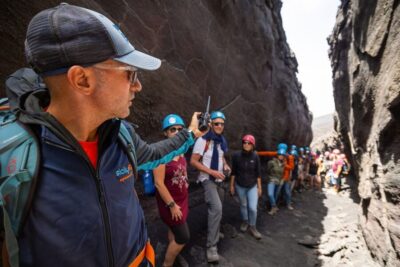
Guided Volcano Summit Hiking Tour with Cable Car
Read our review →
Sunset Jeep Tour of Mount Etna and Lava Flow Caves
Read our review →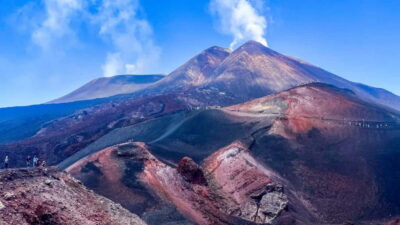
Etna and Alcantara Gorges Full-Day Tour with Lunch
Read our review →