
Reviewed · MOUNT ETNA TOURS
Mount Etna: Summit Crater Trek with Cable Car
Mount Etna gives you the rare chance to walk toward the summit of a living volcano, not just admire it from a lookout. The best moments come near the upper craters, where steam, sulfur, black volcanic sand, and wide Sicilian views make the setting feel almost unreal.
I like the combination of cable car access and a real hike, which saves your legs for the high slopes. I also like the small groups, the supplied boots and poles, and guides such as Simone, Alessandro, Vincenzo, and Basilio, who explain the geology while keeping the pace manageable.
The main catch is the price structure. The advertised activity price is $77 per person, but the cable car and 4×4 cost an additional €65 per adult in cash. This is a strenuous outing at high altitude, and volcanic activity or bad weather can change the route or prevent a summit attempt.
In This Review
- Key points to know before climbing Etna
- Why this Etna hike feels different from a standard volcano visit
- Meeting at Etna South and getting geared up
- The 15-minute cable car ride up Etna
- The 4×4 ride to Torre del Filosofo
- Bocca Nuova at 3,300 meters
- Summit views, steam, and the Central Crater
- Barbagallo Crater and the 2002 eruption zone
- The Valle del Bove viewpoint
- Returning by cable car and finishing the five-hour tour
- How hard is the summit trek?
- What the guides add to the experience
- Is the €65 transport fee good value?
- Who should book this Etna experience?
- Should you book the Mount Etna summit trek?
- FAQ
- How long does the Mount Etna summit trek take?
- Is the cable car included in the $77 activity price?
- What happens if bad weather or volcanic activity blocks the summit?
- What equipment is provided?
- What languages are available?
- Is the hike suitable for children and people with limited mobility?
Key points to know before climbing Etna
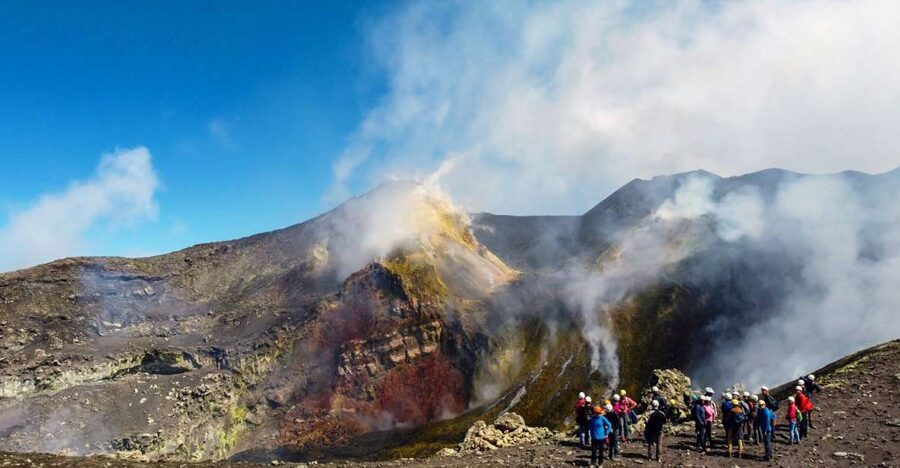
- The summit route reaches about 3,300 meters, with the Bocca Nuova crater as a major goal.
- A cable car and 4×4 transfer save time and energy, taking you first to roughly 2,850 meters.
- The hike is not a gentle sightseeing walk, with loose scree, steep sections, cold wind, and volcanic sand.
- A volcano guide adds real value, explaining eruptions, crater formation, lava flows, and safety decisions.
- The route may change at short notice, and reaching the summit is never guaranteed.
- Boots, poles, helmets, wind jackets, and insurance are included, but you still need warm layers, water, food, and sun protection.
Why this Etna hike feels different from a standard volcano visit
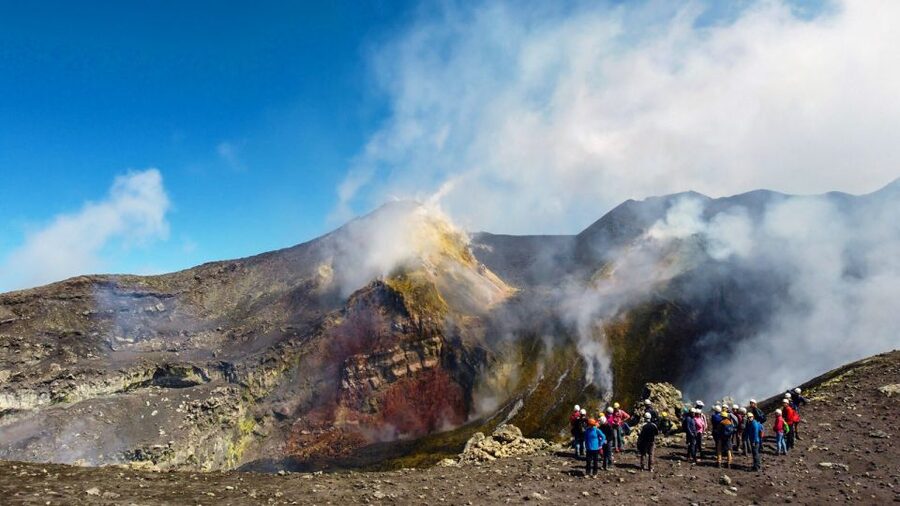
Many Etna excursions rely mainly on a cable car, a 4×4 ride, or a short walk around lower craters. This experience uses those vehicles as a starting point, then takes you on foot into the rough upper world of Mount Etna.
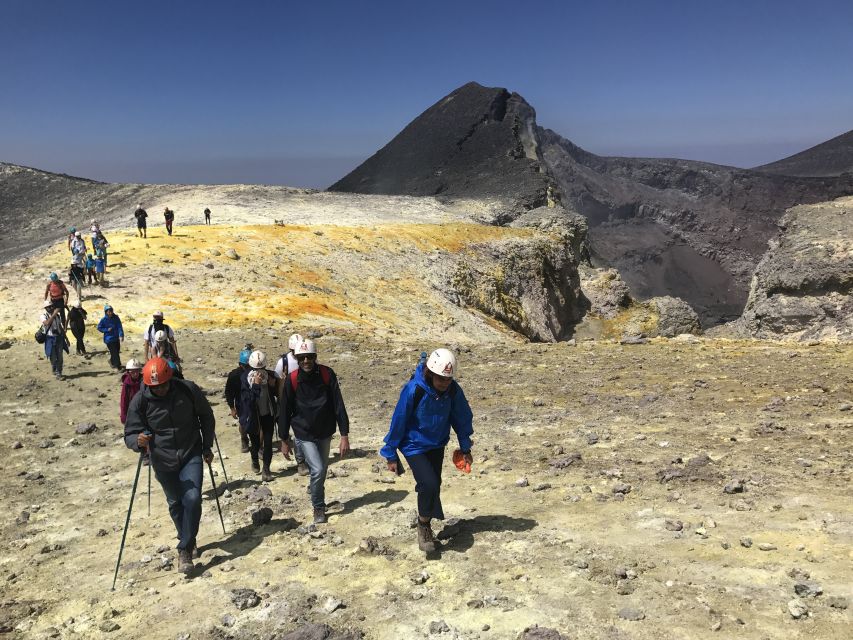
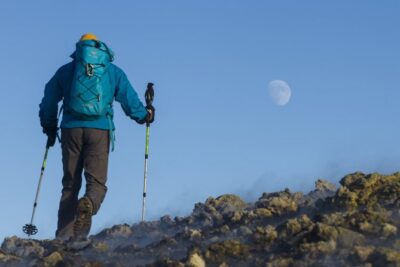
That difference matters. Walking across the black volcanic surface lets you feel the changes underfoot. Some sections are firm and rocky. Others are covered in loose ash or fine volcanic sand, where each step slides a little. You are not simply looking at an eruption site from behind a barrier. You are moving through old craters, lava channels, and slopes shaped by repeated eruptions.
The highest point described on the route is around 3,300 meters, near the Bocca Nuova. At that height, the air can feel thin and the weather can turn quickly. Even in warmer months, you may need a jacket, and high winds can make the upper section unpleasant or unsafe.
The group is limited to eight participants according to the activity details, although one reported outing had 10 to 12 people. Either way, this is far smaller than the large coach-style excursions you may see around Etna. A smaller group gives the guide more room to adjust the pace and check on people who are struggling.
More ways up Etna and around the craters:
- Catania: Mount Etna Morning or Sunset Day Trip with Tasting
★ 4.8 · 4,028 reviews - Mount Etna: Guided Volcano Summit Hiking Tour with Cable Car
★ 4.7 · 3,784 reviews - Catania: Sunset Jeep Tour of Mount Etna and Lava Flow Caves
★ 4.8 · 2,113 reviews
Meeting at Etna South and getting geared up
You meet at the AITNE office near the restaurant La Terrazza dell Etna, opposite the southern Etna cable car station. Free parking is available until the limited spaces run out, so arriving early is sensible. Parking on the north side is separate and costs €3 per day.
The first stage is a safety briefing. This is not a formality to rush through. The guide needs to explain where to step, how to handle loose ground, and what to do if weather or volcanic conditions change the plan.
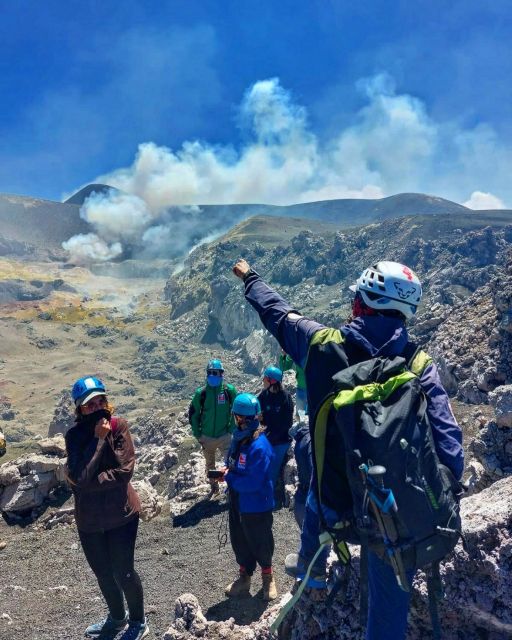
The operator provides hiking boots, walking sticks, a helmet, and a wind jacket. That is useful if you have packed for a sunny Sicilian holiday rather than a cold mountain walk. Still, I would bring long trousers, a warm base layer, sun cream, water, and a snack. One participant specifically advised bringing something to cover your mouth and nose because sulfur can irritate your throat.
The supplied equipment also helps reduce the cost of preparing for a single mountain outing. You do not need to buy boots or poles for this trek, though you should wear comfortable clothing that works under the borrowed gear.
The 15-minute cable car ride up Etna
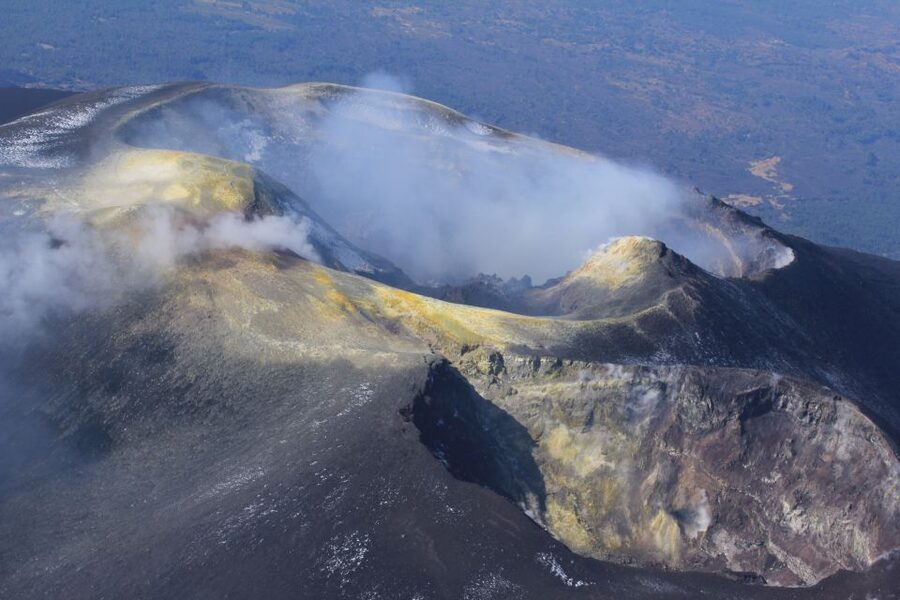
The cable car carries you from the southern station toward the upper slopes in about 15 minutes. It is a pleasant break before the harder walking begins, and it gives you a quick sense of how fast the mountain rises above the lower slopes.
The cable car is not included in the headline tour price. Adults pay €65 in cash for the round trip together with the 4×4 section, while children under 11 pay €50. If conditions prevent the 4×4 from going higher, the cable car arrangement may change. If the summit cannot be reached because of weather or volcanic activity, the listed cable car-only cost is €52 per person.
This extra charge is the biggest value issue. The base price may look appealing, but your actual cost is closer to the advertised amount plus the transport fee. I would calculate the full price before booking, especially if you are arranging this for a family.
The 4×4 ride to Torre del Filosofo
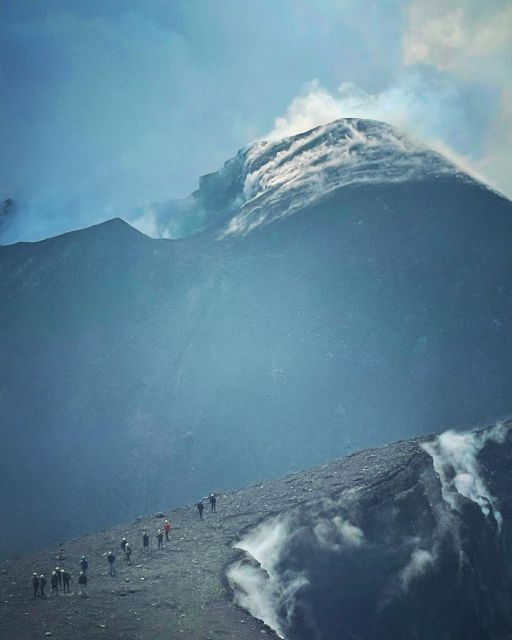
At the top of the cable car, a 4×4 vehicle continues across the upper slopes to the Torre del Filosofo area, around 2,850 meters. The ride takes about 15 minutes.
This transfer is more than a convenience. Starting the hike at this height lets you reach the upper craters within a five-hour tour rather than spending the entire day on the approach. It also means the walking begins in a stark world of black rock, ash, and open volcanic ground.
The road and route depend on current conditions. High winds, recent eruptions, or unstable ground can force the operator to use a lower starting point or switch to another part of Etna. Several outings were redirected to the north side or stopped short of the summit, but still included crater walks and strong views.
That flexibility is part of visiting an active volcano. If you need a fixed route and guaranteed summit access, this is the wrong kind of excursion. If you can accept a carefully managed change of plan, the experience remains worthwhile even when the highest section closes.
More walks and treks around Mount Etna:
- Mount Etna: Trek to 3000m with cable car and jeep
★ 4.7 · 1,978 reviews - Etna Volcano: South Side Guided Summit Hike
★ 4.7 · 1,545 reviews - Catania: Mount Etna Trekking Trip off the Tourist Path
★ 4.9 · 1,351 reviews - From Taormina: Etna Tour with Hiking, Cave Visit, & Tastings
★ 4.7 · 518 reviews
Bocca Nuova at 3,300 meters
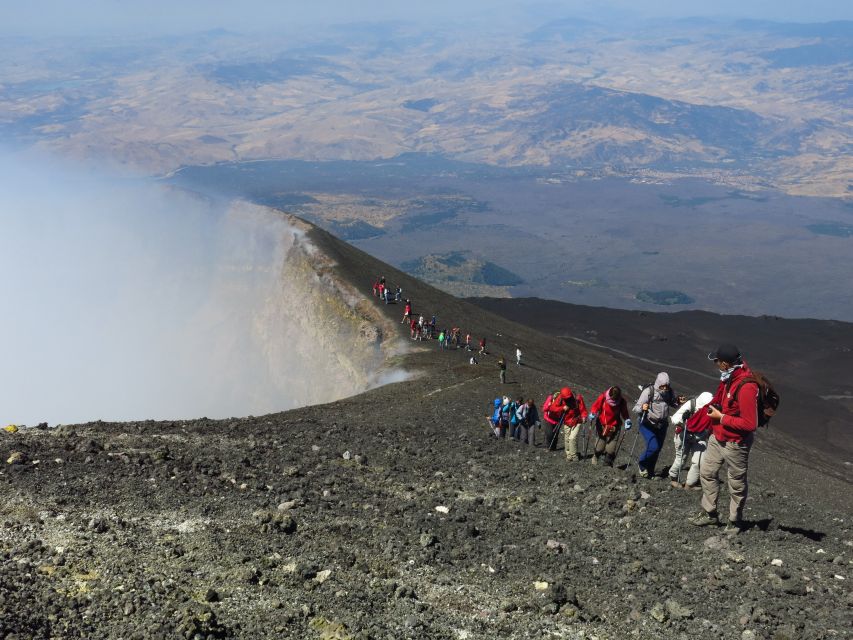
The principal climb heads toward the edge of Bocca Nuova, a crater that opened in 1968. The walk and guided exploration around this area take about two hours, making it the longest single section of the day.
Here, the guide’s role becomes especially important. A good guide does not just point toward a crater and name it. The guide explains how Etna changes, why some areas are closed, and how old eruption sites differ from more recent ones. Alessandro, Simone, Vincenzo, Marco, Giuseppe, Basilio, and several other guides received repeated praise for combining clear explanations with patience and humor.
The climb can be hard. Loose volcanic scree makes uphill progress tiring, and the ground may shift beneath your boots. One participant described the route as demanding but manageable for anyone reasonably fit. Another noted that the descent was the toughest part because volcanic sand can make you slide and work your legs more than expected.
Pacing depends on the group. The guide normally keeps the slowest person from being left behind, which is reassuring but also means a strong hiker should not expect a fast ascent. You will have time to rest and listen, but you may find the pace slow if you are used to mountain hiking.
Summit views, steam, and the Central Crater
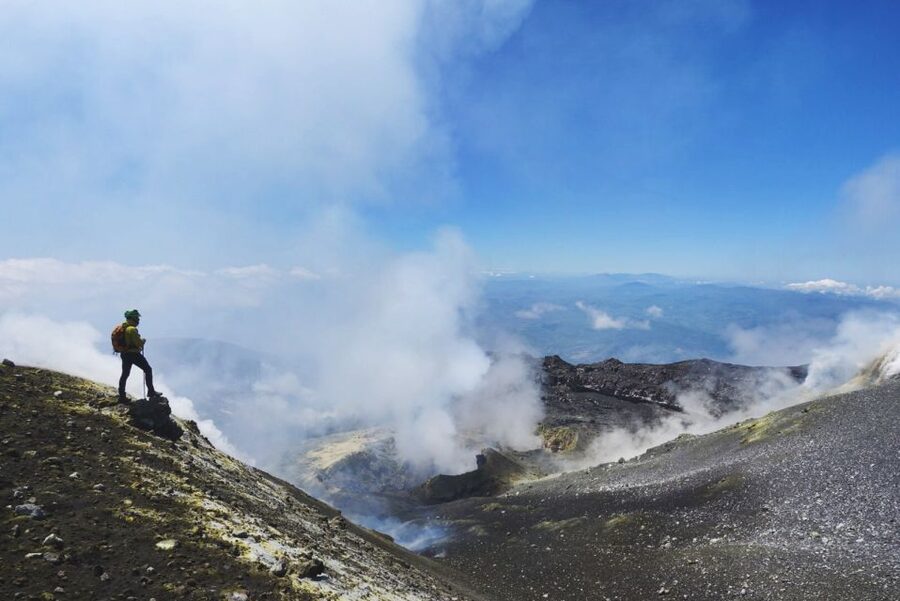
The itinerary allows around 30 minutes at the Central Crater area, with time to walk and take in the summit surroundings. On a clear day, you may see across much of northern Sicily and as far as the Aeolian Islands. The promised 360-degree view is one of the strongest reasons to take the upper route.
Visibility is never guaranteed. Clouds can cover the summit, and wind can make the crater rim feel cold even during summer. Some outings had poor visibility but still offered a memorable sense of the volcano’s scale. If you arrive hoping only for postcard views, weather could disappoint you. If you care about the physical setting and the guide’s explanations, a cloudy day can still work.
You may also see steam or smoke, and the summit can make loud sounds. That is a reminder that Etna is active, not a dormant cone turned into a park attraction. The guide controls how close the group goes and may change the route when volcanic risk rises.
The word summit can also be misleading. Reaching the upper crater area is possible only when conditions allow it, and it is never an automatic part of the booking. Recent activity stopped some groups before the summit, while others reached the highest permitted point.
Barbagallo Crater and the 2002 eruption zone
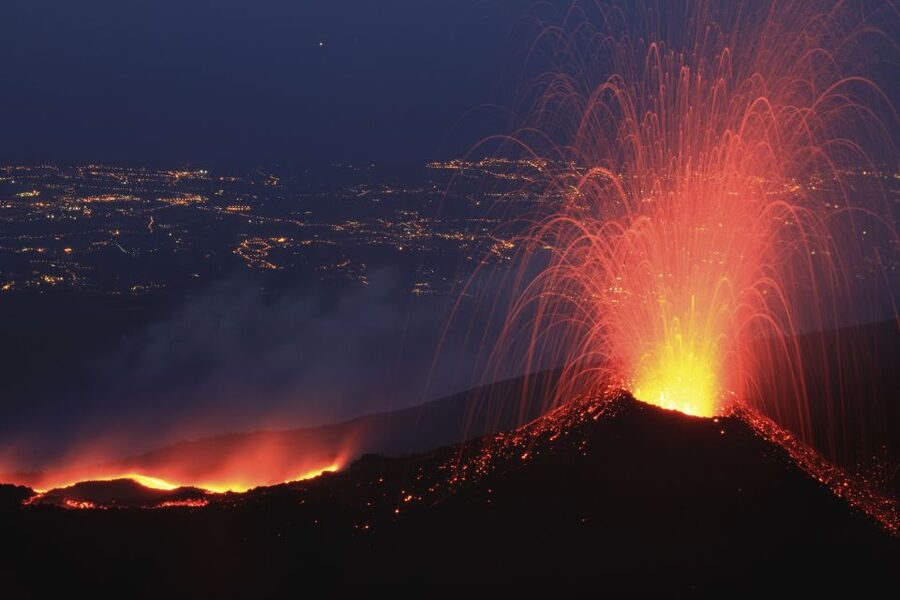
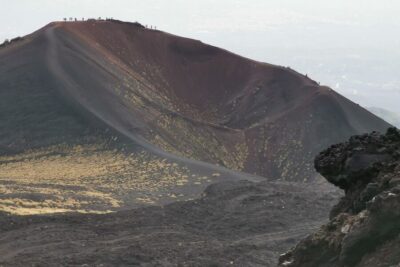
After the upper crater section, the route descends through the craters linked with the 2002 eruption and continues toward Barbagallo Crater. This part takes about an hour and offers a different view of Etna’s recent activity.
The descent is often more fun than the climb, but it is not effortless. Volcanic sand can let you make a controlled sliding step downhill, almost like skiing in hiking boots. It can also put strain on your knees and ankles. Walking sticks are useful here, and the supplied boots provide better grip than ordinary trainers.
Barbagallo Crater gives you another chance to examine the shapes left by an eruption rather than focusing only on the main summit. Depending on the day’s volcanic conditions, you might see recent lava flows or feel warmth from volcanic stones. Those moments cannot be promised, and the guide will keep the group at a safe distance.
The changing surfaces are a key part of the outing. You might move from hard rock to ash, then cross rough lava and descend loose black sand. This variety makes the hike interesting, but it also explains why the activity is not suitable for people with limited fitness, mobility problems, respiratory issues, heart problems, or recent surgery.
The Valle del Bove viewpoint
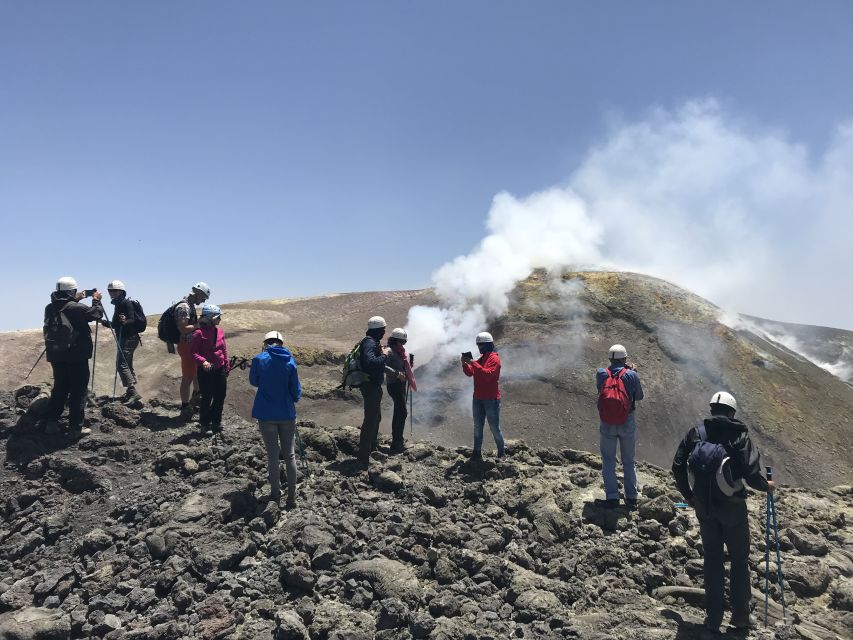
The descent also brings you toward the Valle del Bove, a huge volcanic caldera described as about 8 kilometers long and 4 kilometers wide. Its scale helps you understand how much of Etna has been shaped by collapse, lava, and repeated eruptions.
This is one of the quieter visual moments of the day. The summit craters are dramatic and active, while the Valle del Bove gives you a broad view of the mountain’s structure. Your guide can connect what you see in the valley with the eruption sites you have crossed above it.
The route may not include every stop in exactly the same way. If the southern paths are difficult or the north side is safer, the group can be redirected. That happened on some outings, with the north route producing snow, clear views, and a different angle on the volcano.
Returning by cable car and finishing the five-hour tour
The final cable car ride takes you back to the southern station, followed by the short walk to the meeting area. The total duration is about five hours, but timing can shift with weather, group pace, cable car operations, and volcanic restrictions.
Do not schedule a tight afternoon appointment immediately afterward. One outing had to change its timing because the cable car closed before the descent was complete, forcing the group to walk farther. That is not the normal plan, but it shows why you should leave some spare time.
There is no food or drink included. La Terrazza dell Etna is near the meeting point and can provide breakfast and water, but you should still carry your own snack and water for the hike. Base-area restaurants were described as disappointing by one participant, so I would not rely on them for a special meal after the walk.
How hard is the summit trek?
I would rate this as a demanding mountain walk rather than a casual excursion. You do not need to be an expert climber, but you should be able to walk for several hours on steep, uneven ground and manage a descent over loose volcanic material.
The most difficult features are:
- High altitude, with the upper route reaching about 3,300 meters
- Loose scree and volcanic sand
- Cold temperatures and strong wind
- A long descent that can tire your legs
- Uncertainty about the final route
The guides appear to take fitness differences seriously. Several outings were paced slowly, with regular checks on the group. One guide carried an older participant through a difficult downhill section, and another helped a sick child. That kind of care matters, but it does not turn the hike into an easy walk.
Children under six or seven are not accepted, with the supplied information giving both age limits. Pregnant people, wheelchair users, people with mobility or respiratory problems, and people with heart conditions should not book. You should also avoid the activity if you have been scuba diving within the previous 24 hours.
What the guides add to the experience
The guide is the heart of this tour. The mountain itself is impressive, but without context you may see only black rock and holes in the ground. A strong guide explains the eruption dates, crater changes, lava channels, sulfur, and the forces shaping Etna in plain language.
The best guide reports describe a mix of safety, humor, patience, and geology. Simone was praised for helping less confident hikers and explaining complex volcanic ideas clearly. Alessandro was described as funny and well organized, while Vincenzo was noted for checking on the whole group and helping a child who felt unwell. Basilio was praised for his care, enthusiasm, and explanations.
French, English, and Italian tours are available. Confirm your preferred language at booking, since the quality of the explanation matters as much as the view.
Is the €65 transport fee good value?
At first glance, the extra €65 may feel steep. It covers the cable car and the 4×4 transfer, and those services remove a large amount of lower-slope walking from a five-hour itinerary. You also receive boots, poles, a jacket, helmet, insurance, a safety briefing, and a guide-led hike.
For me, the fee is reasonable if your goal is to reach the highest permitted area and you do not own mountain gear. It is less attractive if the summit route is closed and the day becomes a shorter crater walk. The operator does still provide an alternative route, and several changed tours remained enjoyable, but you should book with that uncertainty in mind.
Bring the €65 in cash, as the information specifically says the payment is made at the office. Children under 11 pay €50. If only the cable car operates because the 4×4 or summit route is unavailable, the stated cost is €52 per person.
Free cancellation up to 24 hours before the activity and reserve-now, pay-later booking make it easier to keep plans flexible. Those terms are useful for Etna, where weather and volcanic activity can affect the day.
Who should book this Etna experience?
I would choose this tour if you want a close look at Etna’s upper craters and prefer a guide-led walk over a vehicle-only visit. It suits people with decent fitness who enjoy unusual terrain, changing weather, and the possibility of seeing active volcanic features from a safe distance.
It is also a good choice if you want to learn as you walk. The guides add much more than route finding, and the small group format should feel more personal than a large bus excursion.
I would choose a shorter or lower-level outing if you dislike loose ground, struggle with steep descents, or need a guaranteed schedule. I would also think twice if the extra transport cost makes the trip too expensive, since the advertised $77 does not include the €65 adult cable car and 4×4 fee.
Should you book the Mount Etna summit trek?
Book it if standing near Etna’s summit craters matters more to you than comfort or certainty. You will get a serious volcanic experience, not a quick photo stop: cable car, 4×4, rough hiking, crater rims, lava features, and wide views when the sky is clear.
The strongest reason to book is the guide. The repeated praise for guides such as Simone, Alessandro, Vincenzo, Giuseppe, Marco, and Basilio points to a team that takes safety and explanation seriously. Just arrive prepared, bring cash for transport, pack warm clothing and water, and accept that the volcano makes the final decision.
If you can handle the effort and the changing route, this is one of Sicily’s most memorable outdoor experiences. If not, Etna still has easier ways to visit, and you should not feel pressured into a summit trek that does not fit your fitness level.
FAQ
How long does the Mount Etna summit trek take?
The activity lasts about five hours, including the cable car, 4×4 transfer, guided hiking, crater visits, and return cable car ride.
Is the cable car included in the $77 activity price?
No. The roundtrip cable car and 4×4 ticket cost an additional €65 per adult, or €50 for children under 11. This payment must be made in cash at the office.
What happens if bad weather or volcanic activity blocks the summit?
The route may be changed for safety. If the summit cannot be reached, the group may visit lower or different craters, and if only the cable car operates, the stated cable car cost is €52 per person.
What equipment is provided?
The tour includes hiking boots, walking sticks, a wind jacket, a helmet, and insurance. Food and drinks are not included.
What languages are available?
The live guides operate in French, English, and Italian.
Is the hike suitable for children and people with limited mobility?
The activity is not suitable for young children under the stated minimum age of six or seven, wheelchair users, people with mobility impairments, people with heart or respiratory problems, pregnant people, or those with a low fitness level.
Just added around Mount Etna
- Nicolosi: Excursion Etna Craters at 3000 mt.★ 4.2 · 3 reviews
- Monti Rossi Adventure Park Entry Ticket Full★ 5.0 · 3 reviews
- Full circuit of Etna by MTB small group★ 5.0 · 3 reviews
- From Messina: Mount Etna and Taormina Trip with Tastings★ 5.0 · 3 reviews
- Etna & Snorkeling Jeep Tour★ 4.5 · 3 reviews
- From Catania/Taormina: Mount Etna Private Wine Tasting Tour★ 4.7 · 3 reviews
- Etna Summit Craters in 4×4 and Trekking★ 5.0 · 3 reviews
- Catania: Summit Craters from North Etna with 4×4 vehicles★ 5.0 · 3 reviews
Mount Etna Tours, compared.
Mount Etna Morning or Sunset Day Trip with Tasting
Read our review →
Guided Volcano Summit Hiking Tour with Cable Car
Read our review →
Sunset Jeep Tour of Mount Etna and Lava Flow Caves
Read our review →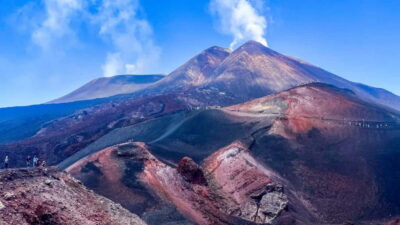
Etna and Alcantara Gorges Full-Day Tour with Lunch
Read our review →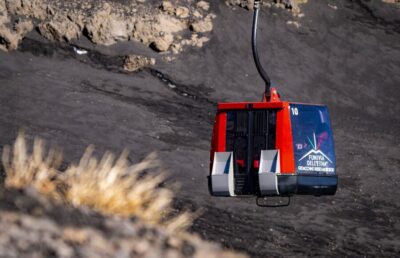
Mount Etna Trekking Trip off the Tourist Path
Read our review →Browse the lists this tour appears in