
Reviewed · MUSEUMS
Tecnoparco Archimede Museum Exhibition Ticket
Archimedes’ ideas come to life at Tecnoparco Archimede, where you can see full-scale replicas of machines linked to the great Syracuse mathematician and engineer. Instead of studying a small model behind glass, you get a clear look at levers, cranes, catapults, water screws, clocks, and the famous burning mirrors.
I like the practical, hands-on focus and the way the six sections connect mathematics with real machines. I also like the price: at $9 per person, this is an easy addition to a Syracuse day. The main consideration is that the visit centers on replicas and explanations, not original ancient objects, and outdoor heat may affect your comfort.
- Full-size machines: See 1:1 replicas of equipment associated with Archimedes and 3rd-century BC technology.
- Six clear sections: Move from levers and pulleys to war machines, lifting devices, hydrostatics, burning mirrors, and water clocks.
- English or Italian guidance: A live scientific guide leads the visit, with audio guides available in six additional languages.
- War technology in Syracuse: Learn how machines such as the ballista, scorpion, onager, ram, and catapult relate to the city’s defense.
- Good for families: Explanations are designed to be visual and interactive, with children and older children specifically included in the demonstrations.
- Low-cost, flexible visit: The ticket costs $9, lasts for one day, and allows cancellation up to 24 hours before the visit.
In This Review
- Why Archimedes Works Better as a Machine Museum
- Starting with Levers, Pulleys, and Winches
- The War Machines That Protected Syracuse
- Cranes and the Manus Ferrea
- Archimedes’ Screw and the Hydrostatics Area
- Burning Mirrors and the Limits of the Legend
- Water Clocks and Repeated Ideas
- What the Guided Visit Adds
- Is $9 a Good Value?
- Heat, Timing, and Who Should Go
- Should You Book Tecnoparco Archimede?
- FAQ
- Where is Tecnoparco Archimede located?
- How much does the ticket cost?
- How long is the ticket valid?
- Is the tour available in English?
- Which audio-guide languages are available?
- What does the exhibition include?
- Is the museum wheelchair accessible?
- Can I cancel or pay later?
Why Archimedes Works Better as a Machine Museum
Archimedes is often reduced to a few schoolbook stories: a bath, a shout of Eureka, and a difficult formula. Tecnoparco gives you a more useful picture. Here, his work is presented through devices that lift, move, measure, throw, pump, and tell time.
That change matters. A lever on a page is an idea. A lever connected to a pulley or winch is something you can understand with your eyes. The exhibition shows how a simple principle can become a crane, a lifting system, or a weapon.
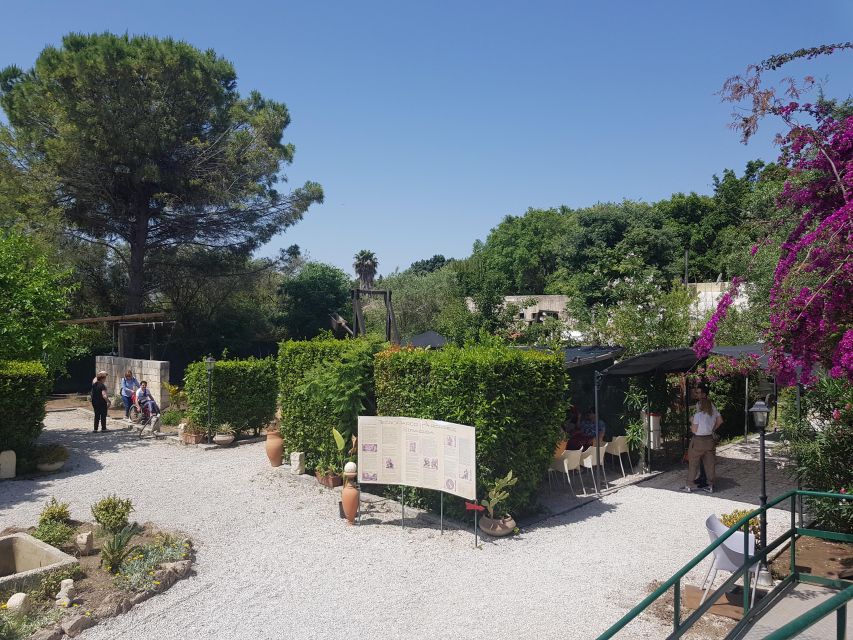
The museum is a permanent exhibition in Syracuse, the city closely associated with Archimedes. It focuses on replicas and scale reproductions of machinery used in the 3rd century BC, with important Archimedean contributions. You should come expecting interpretation and demonstration rather than a conventional collection of fragile archaeological pieces.
The activity is listed as a private group experience, and the tour is guided in English or Italian. A scientific guide leads the visit, while audio guides are available in English, French, German, Russian, Spanish, and Portuguese. That combination makes the museum easier to use for mixed-language groups.
Starting with Levers, Pulleys, and Winches
The first thematic area covers the basic machines that make heavy work possible. You can expect levers, pulleys, and winches, all linked to the central question of how a small force can move a much greater load.
This is a good opening because it gives you the vocabulary for the rest of the museum. Once you understand mechanical advantage, the cranes and lifting machines later in the visit make more sense. You are not just looking at large wooden or metal forms. You are seeing the same basic ideas used in different jobs.
The section is especially useful for families. Children can follow the simple cause and effect: change the position of a lever, add a pulley, or use a winch, and the task becomes easier. Older children can also connect the display to physics lessons without the museum feeling like a classroom.
The quality of the explanation matters here. Guides have been praised for working well with children and for encouraging interaction. Erika, one of the named guides connected with the experience, is described as enthusiastic and passionate, while Martina is noted for being prepared, friendly, and clear. Guide assignments can vary, but those details give you a sense of the tone to expect.
More museums in Syracuse:
- Syracuse: Museum Guided Tour with Sicilian Puppet show
★ 4.1 · 27 reviews - Guided tour of the Trapani Salt Pans and Salt Museum
★ 4.7 · 423 reviews - Guided tour of the salt pans of Trapani and the Salt Museum
★ 5.0 · 188 reviews
The War Machines That Protected Syracuse
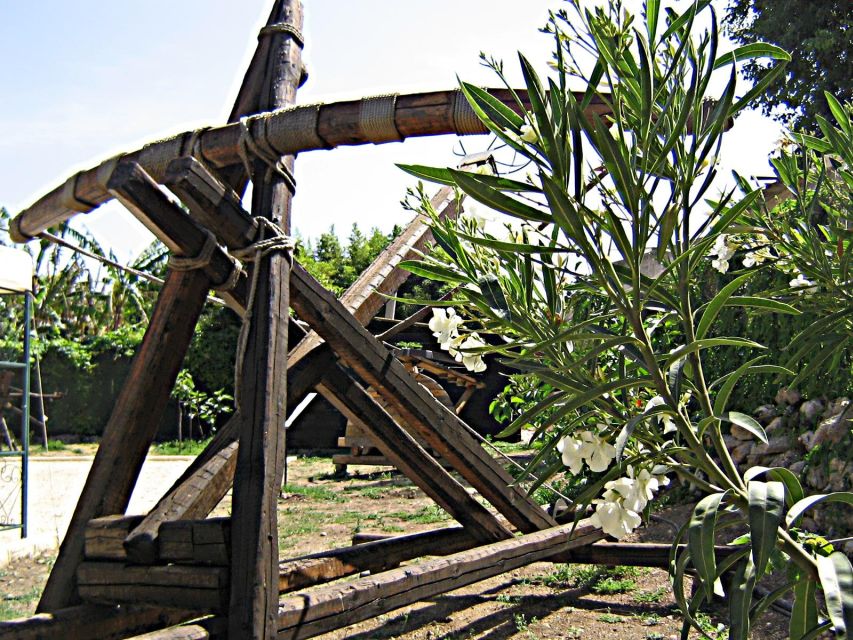
The war-machine section is likely to be the biggest draw for many people. It includes a catapult, ram, crossbow, scorpion, onager, and ballista. These are not presented as tiny tabletop models. The exhibition uses replicas and scale reproductions, including 1:1 natural-scale versions.
This part of the museum connects Archimedes with the defense of Syracuse during the Roman attack. You can see how engineering was turned toward military use, and how different machines served different purposes. Some launched projectiles. Others helped break through defenses or attack from a distance.
The value is not simply the spectacle of ancient weapons. The displays show that defense depended on calculation, materials, force, and range. The machines needed to be designed for a purpose, then operated by people who understood how to use them.
I would give this section extra time if you are visiting with children or teenagers. Large mechanisms are easier to remember than abstract dates, and the war machines provide a natural way to discuss engineering, ancient warfare, and the difficult choices made during a siege.
Keep your expectations measured. The exhibition explains and displays the devices, but the supplied information does not promise live firing or a full battle reenactment. Think of it as a guided technology display, not a military show.
Cranes and the Manus Ferrea
The lifting-machines section moves from attack to construction and heavy labor. It includes two types of cranes and the manus ferrea, a device associated with Archimedes’ defensive engineering.
The cranes show how pulley systems and levers could be combined to lift heavy objects. This is one of the clearest places to see that Archimedes was not only a theorist. The exhibition presents him as a problem solver who applied mathematics to ships, buildings, water systems, and war.
The manus ferrea is particularly interesting because it links lifting technology with the defense of Syracuse. Its inclusion helps explain how a machine could be used in an attack on ships or other heavy targets. You can compare it with the projectile weapons in the previous section and see the range of methods used in ancient defense.
For you, the main benefit is scale. A small diagram can tell you that a crane used a pulley. A full-size replica helps you understand the space, leverage, and physical effort involved. It also gives the guide something concrete to point to, which keeps the tour from becoming a long speech.
Archimedes’ Screw and the Hydrostatics Area
The hydrostatics section is one of the most important parts of the visit because it presents ideas that remain familiar today. You can see the Archimedes’ screw, experiments connected with Archimedes’ principle, corobats, presses, and worm screws.
The Archimedes’ screw is a simple but powerful device for moving water. It demonstrates how a rotating spiral can raise water from a lower level to a higher one. The display also includes different applications of the screw in the water-clock section, so pay attention to the way the same principle appears in more than one setting.
Experiments on Archimedes’ principle bring buoyancy into view. This is the idea behind why an object displaces water and why some objects float while others sink. The exhibition’s value is that it turns a familiar science lesson into something you can watch and discuss with the guide.
The corobat is another useful piece in this area. Along with presses and worm screws, it shows how ancient technology depended on accurate measurement, pressure, and controlled motion. These devices may sound less dramatic than a catapult, but they help explain the everyday side of engineering.
If you are short on time, do not skip this room in favor of the weapons. The war machines catch the eye, but hydrostatics gives you a stronger sense of the range of Archimedes’ work.
A few more Syracuse tours and experiences worth weighing up
- Palermo: Hop-on Hop-off Bus Tour 24-hour Ticket
★ 3.9 · 2,410 reviews - Taormina: Ancient Theater Skip-the-Line Ticket & Audio Guide
★ 4.5 · 1,701 reviews - Mount Etna: Roundtrip Cable Car and 4×4 Bus Ticket
★ 4.3 · 1,602 reviews - Agrigento: Valley of the Temples Ticket & App Audioguide
★ 4.3 · 1,160 reviews
Burning Mirrors and the Limits of the Legend
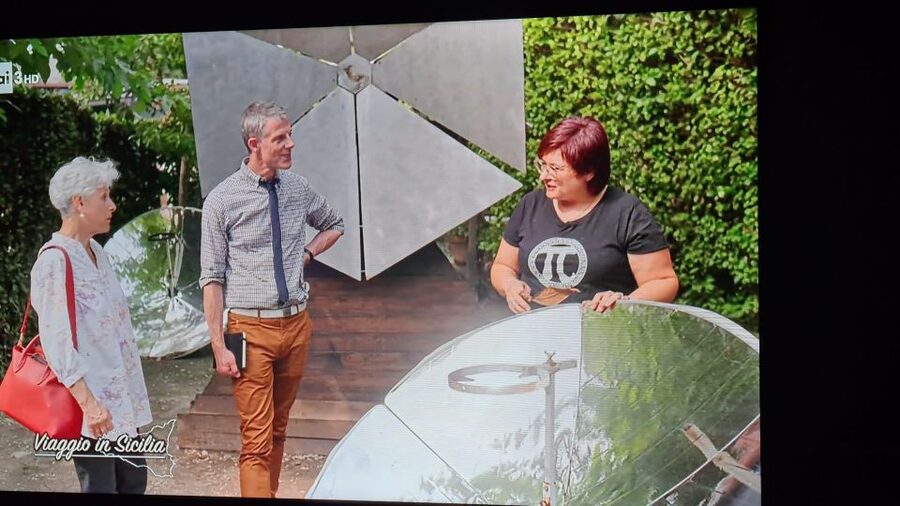
The burning-mirrors area is dedicated to Archimedes’ most famous invention in the exhibition. You can see two different models of the burning mirror, a device traditionally linked with the defense of Syracuse.
This is the section where it helps to separate the dramatic story from the engineering question. The idea of using mirrors to focus sunlight has fascinated people for centuries, and the display lets you examine how such a concept might work. The museum presents the models as part of Archimedes’ inventions and defensive strategies.
For you, the interest is in the design: how mirrors are arranged, how light is focused, and how a scientific principle becomes a proposed weapon. The two models give you a chance to compare different approaches rather than accepting a single picture of the device.
I appreciate that this subject invites questions. How much sunlight would be needed? How would the mirrors be aligned? Could the system work under real conditions? The supplied information does not promise a live demonstration or settle every historical debate, so treat this as an informative display of an important Archimedean idea.
That makes it a good stop for curious adults and older children. Younger children may prefer the larger machines, but a guide can help turn the mirrors into a simple lesson about light and focus.
Water Clocks and Repeated Ideas
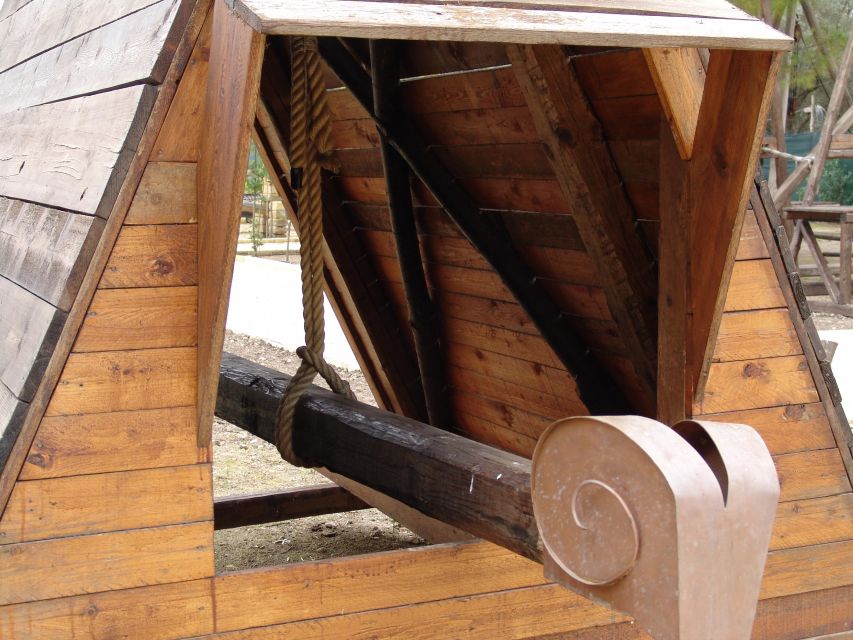
The final thematic area covers water clocks and more applications of the Archimedes’ screw. Water clocks measure time through the controlled movement of water, making them a fitting end to a museum devoted to machines that regulate motion.
This section shows another side of ancient technology. A water clock is not as immediately imposing as a crane or ballista, but it requires careful control. Water must flow in a predictable way, and the device must translate that flow into a measure of passing time.
The repeated use of the Archimedes’ screw is worth noticing. By the end of the visit, you have seen the same broad principle applied to water movement, lifting, and mechanical systems. That repetition helps the exhibition feel connected rather than like six unrelated rooms.
The water clocks also provide a quieter finish after the dramatic war machines. If you are visiting as a family, this is a useful moment to ask children which machine seemed most clever and why. If you are visiting with an interest in ancient science, the final section reinforces the link between observation, measurement, and invention.
What the Guided Visit Adds
The live guide is a key part of the experience. You can book guidance in English or Italian, and a multilingual audio guide is included in English, French, German, Russian, Spanish, or Portuguese.
A good guide can make the difference between seeing equipment and understanding it. The machines are large and visually clear, but their purpose is not always obvious at first glance. A scientific guide can explain what each part does, connect one display to another, and show how a basic lever principle appears again in a crane or war machine.
The named guides Erika and Martina have different strengths in the available feedback. Erika is associated with enthusiasm and passion, while Martina is described as smiling, prepared, and especially helpful during a visit that arrived close to closing time. You should not assume either guide will lead your particular visit, but the examples suggest that personal explanation is central to the experience.
The tour is described as suitable for private groups. That can be helpful if you want to ask questions or keep the pace suited to your party. It also means the cost should be judged per person, not only as a quick museum admission.
The audio guide is a useful backup for language needs, but if you understand English or Italian, I would choose the live guide when available. The machines are easier to grasp when someone can respond to your questions and point out details in real time.
Is $9 a Good Value?
At $9 per person, Tecnoparco Archimede is priced as an affordable cultural stop. You receive access for one day, a guided visit in English or Italian, a multilingual audio guide, and the full exhibition of replicas and models.
The value is strongest if you enjoy science, ancient technology, or family activities that give children something to look at and think about. It is also a good choice if you want a break from ruins and churches. Syracuse offers plenty of major historical sights, but this museum explains how people solved practical problems rather than only showing you remains.
The price is less compelling if you want original antiquities, a large traditional museum, or a long half-day attraction. The supplied details do not give a specific visit length, so you should not plan your entire day around it. The ticket is valid for one day, but that refers to the admission period rather than a stated tour duration.
Food and drinks are not included, and transportation to and from the museum is not included. Plan those parts separately. The attraction is wheelchair accessible, which is useful for many visitors, though the available information does not describe every surface or facility in detail.
A flexible booking policy adds practical value. You can cancel up to 24 hours in advance for a full refund, and you can reserve now and pay later. Starting times depend on availability, so check the schedule before building the museum into a tight Syracuse itinerary.
Heat, Timing, and Who Should Go
One practical point is the Sicilian heat. Some parts of the visit involve outdoor areas, and a guide named Erika has been noted for finding shade spots and taking the heat into account. Even so, bring water, wear a hat, and avoid treating the hottest part of the day as your only option if you have flexibility.
The experience suits families particularly well. The machines are large, the themes are varied, and the explanations can be adapted for older children. The war machines provide drama, while the levers, hydrostatics, and water clocks give adults enough substance to stay interested.
It also suits adults who like applied science. You do not need advanced mathematics to enjoy it, but you should be ready for explanations about force, water, movement, measurement, and mechanical design.
It may be less suitable if your priority is ancient art or original archaeological finds. Tecnoparco is about reconstruction and demonstration. That is its strength, but it is also the reason to choose it with clear expectations.
The overall rating is 4.8 from 14 recorded ratings, with praise focused on friendly staff, clear explanations, enthusiasm, and the unusual nature of the visit. The most useful takeaway for me is that the guides work especially well when they interact with families instead of simply reciting facts.
Should You Book Tecnoparco Archimede?
I would book this experience if you have an interest in how things work, are visiting Syracuse with children, or want a lower-cost attraction that breaks up a day of ancient sites. The $9 price is fair for a guided look at full-scale machines, and the six sections give the visit more range than the war-machine title alone suggests.
Choose it with realistic expectations. You will see replicas, not original 3rd-century BC machinery, and the information provided does not promise demonstrations of every device. If that sounds worthwhile, the museum offers a clear, lively way to understand Archimedes as an engineer and inventor, not just as a name from a school lesson.
FAQ
Where is Tecnoparco Archimede located?
Tecnoparco Archimede is in Sicily, Italy, in Syracuse, the city connected with Archimedes and the exhibition’s focus on its defense against the Romans.
How much does the ticket cost?
The ticket costs $9 per person.
How long is the ticket valid?
The ticket is valid for one day. Specific starting times depend on availability.
Is the tour available in English?
Yes. A live guide is available in English or Italian.
Which audio-guide languages are available?
Audio guides are available in English, French, German, Russian, Spanish, and Portuguese.
What does the exhibition include?
It includes replicas and scale models of 3rd-century BC machinery, exhibits about Archimedes’ inventions, and six areas covering levers, war machines, lifting machines, hydrostatics, burning mirrors, and water clocks.
Is the museum wheelchair accessible?
Yes, the activity is listed as wheelchair accessible.
Can I cancel or pay later?
You can cancel up to 24 hours in advance for a full refund. You can also reserve your place and pay later, keeping your plans flexible.
Just added around Syracuse
- Sicily Boats Avola: Plemmirio boat tour 4 people 4 hours★ 5.0 · 3 reviews
- From Syracuse: Private Taormina and Castelmola tour with lunch★ 5.0 · 3 reviews
- Siracusa Iris Photography Experience★ 5.0 · 3 reviews
- Siracusa E-bike rental service★ 5.0 · 3 reviews
- Tour Ragusa Ibla, Modica and Noto, from Syracuse★ 5.0 · 3 reviews
- Cyclops Tour★ 4.5 · 3 reviews
- Archaeological Syracuse: Neapolis Park private tour★ 5.0 · 3 reviews
- Tour of Syracuse by Ape Calessino★ 3.0 · 3 reviews
Museums, compared.
Guided tour of the salt pans of Trapani and the Salt Museum
Read our review →
Tile Museum – Majolica Museum – Rooms at the Genius
Read our review →

Tour and Soap personalization at the Soap Museum in Sciacca
Read our review →
Guided tour of the Archaeological Museum of Aidone Morgantina.
Read our review →
Messina Regional museum and historical city center
Read our review →Browse the lists this tour appears in