

Reviewed · SICILIAN SALT PAN TOURS
Guided tour of the Trapani Salt Pans and Salt Museum
Trapani’s salt pans turn a simple ingredient into a full Sicilian story. At Saline Culcasi, you walk beside shallow ponds, touch newly formed salt, taste several varieties, and then enter an old farmhouse museum with a mill dating from the 1400s. The Culcasi family has worked salt here for four generations, so the visit feels tied to a living trade rather than a display frozen in the past.
I especially like the hands-on salt collection and the tasting of flavored fleur de sel, including salt from a Slow Food Presidium. The views across the sea, pink pools, gray clay, and white salt are another strong point. The main caution is practical: this is a roughly one-hour walk, and one recent booking was unhappy that the fitness requirement became clear too late. Wear good shoes and be ready to walk.
In This Review
- Key points at a glance
- Why Trapani salt is worth a closer look
- Starting beneath the windmill at Salina Culcasi
- Walking the white, pink, and blue salt ponds
- Collecting salt and tasting the finished product
- Entering the old farmhouse salt museum
- A short tour with a useful sense of place
- Who will get the most from this visit
- Practical value at $21 per person
- Should you book the Culcasi salt pans tour?
- FAQ
- How long does the guided salt pans tour last?
- Where is the meeting point?
- Which languages are available?
- Is tasting included?
- Can I touch or collect the salt?
- How much walking is involved?
- What should I bring?
Key points at a glance
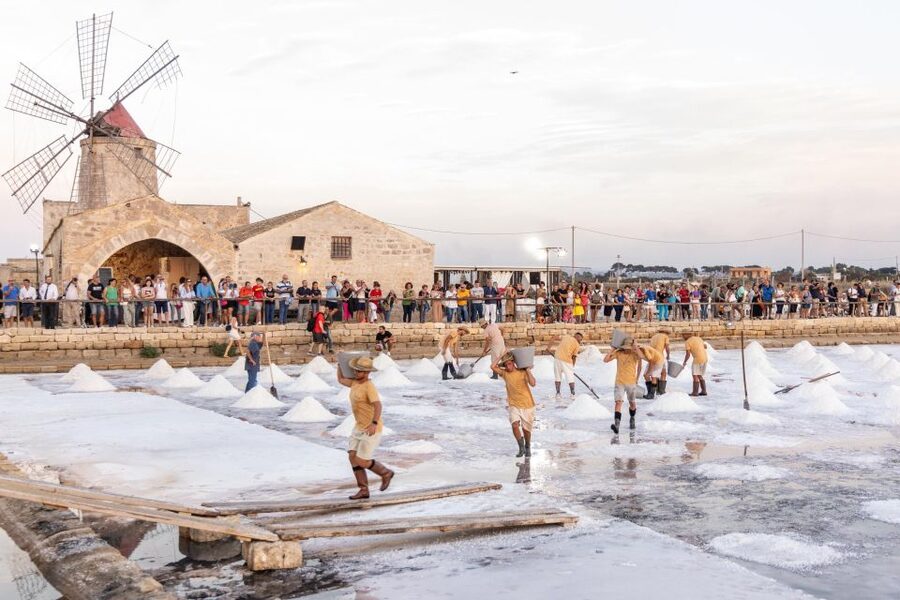
- Touch salt straight from the production ponds: You can collect salt by hand and follow how seawater becomes the crystals used in kitchens.
- Meet a four-generation salt-making tradition: The Culcasi family still presents its own working salt pans and family story.
- Taste several salts: The visit includes whole salt and flavored fleur de sel made on site.
- See a 1400s mill and old farmhouse museum: The second half shifts from outdoor nature to the tools and labor of salt production.
- Walk through a protected wetland: The salt pans sit within the WWF reserve, with protected plants and birds around the ponds.
- Plan for a one-hour walk: The pace is suitable for many age groups, but comfortable clothes, a hat, shoes, and basic fitness matter.
Why Trapani salt is worth a closer look

Salt looks ordinary in a supermarket packet. Around Trapani, it becomes much more interesting. Seawater moves through a series of ponds, slowly losing water under the Sicilian sun until salt crystals form. The tour lets you see that process at ground level instead of hearing about it in a dry museum label.
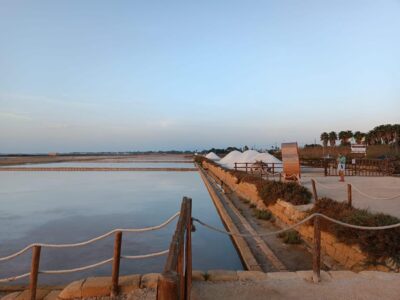
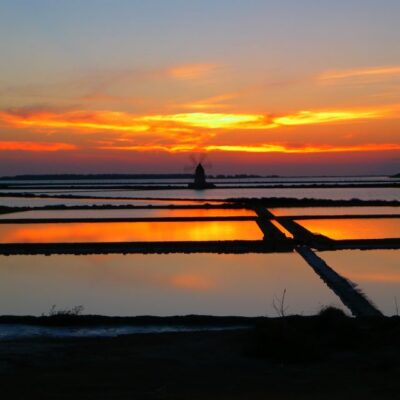
The setting does much of the work. You walk past ponds in several shades, from bright white salt to soft pink water and gray clay. The sea brings blue into the view, while the ponds reflect the sky. It is a calm place, but it is also a working place, shaped by water, weather, and repeated human effort.
This is not simply a scenic stop for photographs. You can collect salt from the tanks with your hands, which gives the tour a useful physical element. You see where the product begins, how it changes, and why the work takes patience.
The salt pans are within the WWF reserve, so the walk also connects the industry with protected nature. Plants and birds share the area with the ponds and old structures. The tour does not promise a wildlife outing, but you will be walking through a protected wetland rather than an isolated industrial site.
More salt pan visits near Trapani:
- From Palermo: Erice, Salt Pans, and Segesta Day Trip
★ 4.5 · 202 reviews - Marsala: Guided Salt Pans Walk Tour with Windmill Visit
★ 4.7 · 162 reviews - Marsala: Guided tour of the Genna Salt Pans
★ 4.4 · 97 reviews
Starting beneath the windmill at Salina Culcasi
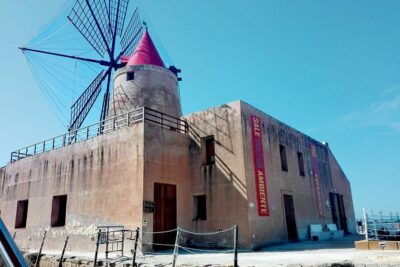
Your visit begins at Via Salina Chiusa, 1, at the ticket office in the forecourt below the windmill. Look for the guide behind the salt sales counter. This detail matters because the salt sales area and the meeting point are together, and you do not need to search for a separate entrance.
The tour lasts 75 minutes. The live guide speaks English or Italian, so choose the language that lets you ask questions easily. The Culcasi family offers this tour themselves, and the family connection is one of its best features. Four generations of salt workers have shaped the place, giving the visit a personal thread.
You should arrive prepared for an outdoor walk. Comfortable shoes are important because the first portion follows the perimeter of the salt pan and its banks. A hat, light comfortable clothing, and water are sensible choices for a sunny day, though the supplied details specifically require comfortable shoes, a hat, and comfortable clothes.
The activity is described as wheelchair accessible, but you should also weigh that against the stated one-hour hike and basic fitness requirement. Accessibility on paper does not always answer every question about surfaces, distance, or the exact route. If you need particular assistance, confirm the practical details before booking.
Walking the white, pink, and blue salt ponds
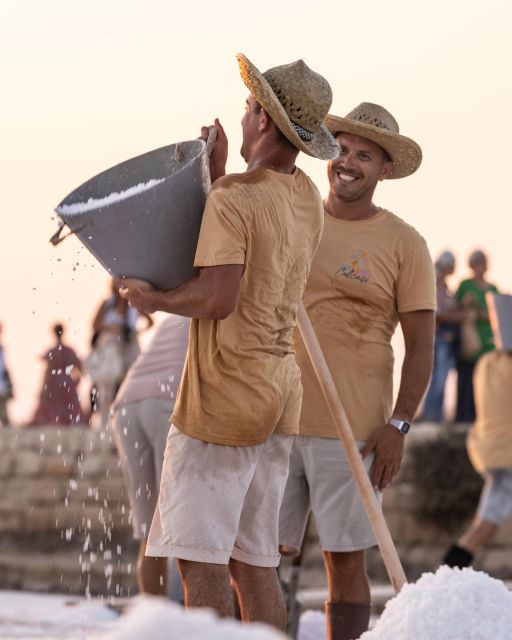
The first part is a relaxed walk around the salt pan. You follow its perimeter toward the banks, where the water reflects the sky and the salt gathers in the production tanks. This is the section that makes the visit feel most connected to the place itself.
Expect a changing palette as you walk. Salt can appear white and bright, while the water in some pools takes on pink tones. Gray clay and the blue of the sea add contrast. These colors are not a stage set. They come from the changing stages of salt production and the wetland setting.
The guide explains the process step by step. Seawater enters the pans and gradually changes as water evaporates. The salt becomes visible in the tanks, and you get to touch and collect it. That small act makes the lesson easier to remember than a talk alone.
I like this part because it gives you a clear answer to a basic question: how does seawater become table salt? You see the water, the shallow ponds, the forming crystals, and the work required before salt reaches a kitchen.
The route is presented as suitable for all age groups, but that does not mean it is effortless. The tour information calls it a one-hour hike and asks for a basic level of fitness. If you are recovering from illness, have limited stamina, or assumed this would be a short stop beside the car, reconsider the booking or ask for clarification first.
The protected setting adds another layer. You are walking among plants and birds in the WWF reserve, while the salt pans continue their work. This link between food production and nature is one of the more memorable parts of the visit.
Collecting salt and tasting the finished product
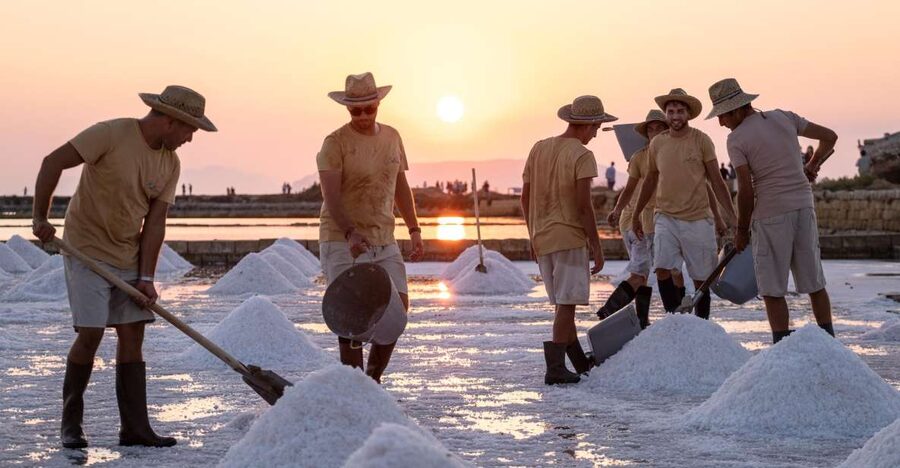
The tasting comes from the salt made by the Culcasi operation. You receive whole salt and fleur de sel in different aromas. Fleur de sel is the delicate salt that forms at the surface of the ponds, and tasting it beside the place where it forms gives the sample more meaning.
The flavored versions are a welcome touch. They let you compare the plain product with salts prepared using different aromas, rather than treating the tasting as a single quick pinch. One highly positive account specifically praised the chance to taste different salts and spice salts, which is useful if you enjoy local food products.
This is also where the $21 price begins to make sense. You are not paying only for entry to an outdoor view. The admission includes the guided walk, the museum, and a tasting of products from the site. For a 75-minute activity, the price is reasonable if you want an organized explanation rather than a quick photograph from the roadside.
The value is less certain if you only want scenery. The salt pans can be seen as part of a wider day around Trapani, but this tour adds the context, tasting, and family story. I would book it for the complete package, not just for the color of the ponds.
You can also buy salt at the sales counter. The supplied details do not specify product prices or how much you can take home, so treat the tasting as the included part and view any shopping as optional.
More museums in Trapani:
- Guided tour of the salt pans of Trapani and the Salt Museum
★ 5.0 · 188 reviews - Tile Museum – Majolica Museum – Rooms at the Genius
★ 5.0 · 85 reviews - Enchanted Castle of Sciacca – Museum Tickets
★ 3.5 · 63 reviews - Syracuse: Museum Guided Tour with Sicilian Puppet show
★ 4.1 · 27 reviews
Entering the old farmhouse salt museum
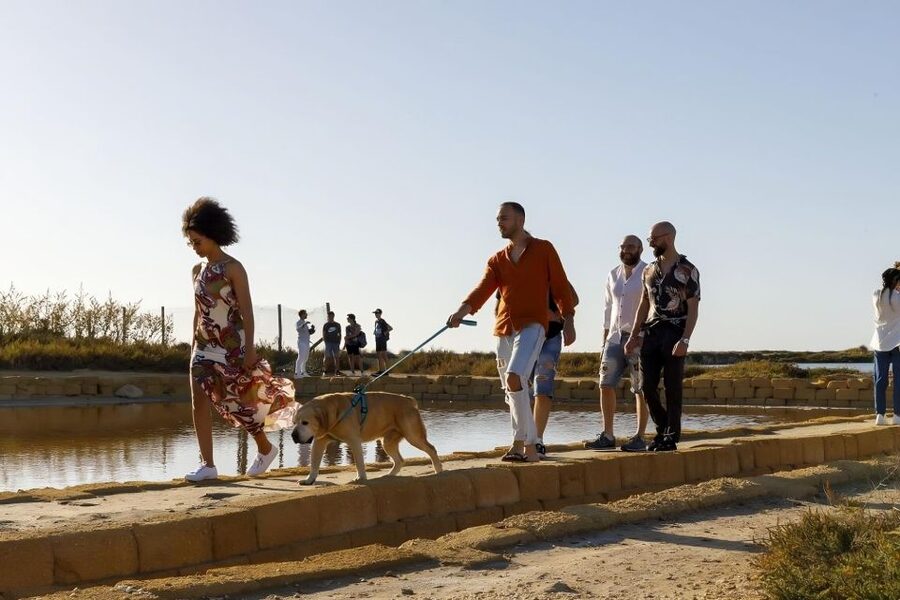
The second part moves indoors to the ancient salt museum. It sits inside an old farmhouse and is included in the official guide of the European Union. That setting matters: the museum is part of the salt-working property, not a modern gallery detached from the ponds.
Inside, the guide traces the work of the salt pans and the story of the family that has managed them for generations. You get a closer look at the human side of the process, including the hard labor behind an ingredient most people rarely think about.
The ancient mill from the 1400s is a major reason to stay for the full tour. It connects the salt trade to older methods and machinery, and it gives the visit a physical sense of age. The museum’s strongest point is not a large collection of objects. It is the relationship between the old building, the mill, the ponds outside, and the Culcasi family’s continuing role.
The museum also reinforces the link between salt and the sea. The entire visit moves between water, evaporation, tools, labor, food, and family. You do not need a specialist interest in industrial history to follow it, but curiosity about how local products are made will make the stop more rewarding.
If you prefer a fast outdoor visit, the indoor portion may feel slower. I would not skip it, since the museum supplies the background that the walk alone cannot provide.
A short tour with a useful sense of place
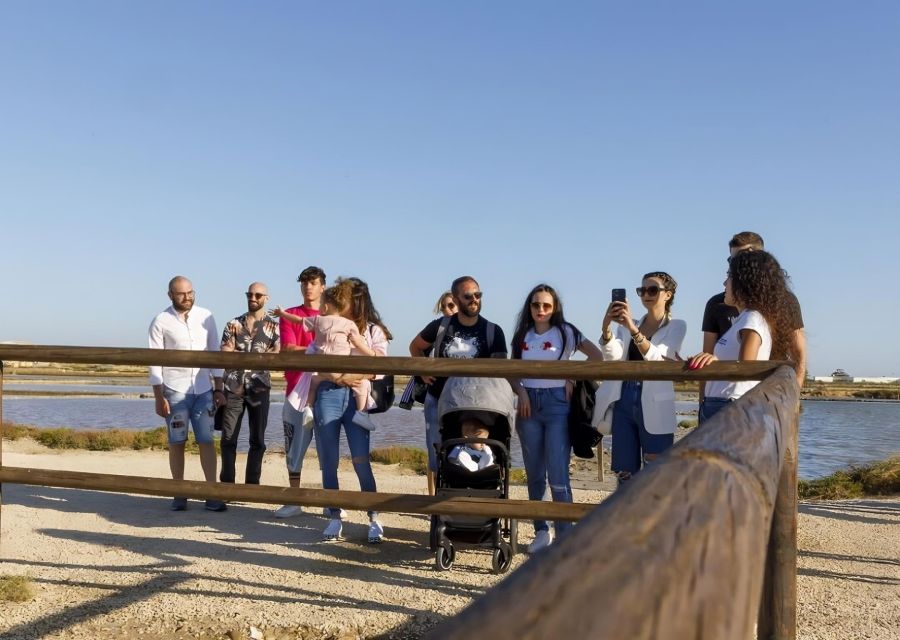
At 75 minutes, this is easy to fit into a day in the Trapani area. It is long enough to include both the salt pans and museum without taking over your schedule. The walk also gives you time to notice the colors and views instead of rushing from one explanation to the next.
The trade-off is that 75 minutes does not allow for a long, detailed exploration of every pond or museum object. The guide has to keep the group moving. Think of this as an introduction to the salt pans and the Culcasi family operation, not a full-day workshop in salt production.
After the tour, you can have an aperitif with a broad view or eat at the restaurant. The available information does not give menu details, meal prices, or opening times, so check those separately if you want to build lunch or dinner into your plan. Still, the option is useful because it lets you linger after the guided portion instead of leaving as soon as the museum visit ends.
The view is likely to be the best companion for a drink, while the tasting gives you a small food-focused finish. If you are planning a full day in the area, the salt pans can work well as a stop before or after other sights in Trapani.
Who will get the most from this visit
I would choose this tour if you like local food, working traditions, family-run places, and outdoor walks with a clear purpose. It also suits families and mixed-age groups, provided everyone can manage the one-hour route.
It is a good fit for you if:
- You want to understand how Sicilian salt is produced.
- You enjoy tasting regional ingredients at their source.
- You like old mills, farm buildings, and family stories.
- You want a nature stop that is more than a viewpoint.
- You can walk for about an hour at a basic fitness level.
- You are comfortable in English or Italian.
I would pause before booking if you need a very short walk, dislike sun and open outdoor settings, or cannot manage the stated fitness level. The wheelchair-accessible label is encouraging, but the walk requirement means you should confirm the route if mobility is a concern.
The mixed score details also suggest that clear expectations matter. The overall rating is 4.7 from 423 reviews, and the strongest praise centers on the information, salt tasting, and overall organization. But one person who was ill felt frustrated by the late notice about the walk, while another short assessment called the promotion misleading. I would treat that as a warning to read the physical requirements carefully rather than as a reason to dismiss the whole visit.
Practical value at $21 per person
At $21 per person, you receive a 75-minute guided activity, entry to the salt pans and museum, and a tasting of whole salt and flavored fleur de sel. That is fair value for a specialized local visit, especially because the tour combines an outdoor route with an old museum and mill.
The strongest value comes from the access to the working process. You are not simply looking at a salt pan from a road. You can touch the salt in the tanks and follow the production stages with a guide. The tasting then turns the subject from an abstract process into something you can compare and use.
The price will feel less attractive if you cannot complete the walk or have no interest in local food production. In that case, the main elements of the tour may not suit you. For everyone else, the combination of setting, explanation, and tasting gives the cost a sensible balance.
Free cancellation up to 24 hours before the start and the option to reserve now and pay later also reduce the risk of fitting this into a changing Sicily itinerary. Check the available starting times when you book, since the tour schedule is not fixed here.
Should you book the Culcasi salt pans tour?
Book it if you want a close look at one of Trapani’s working traditions, not just another scenic stop. The best reasons are the chance to collect salt by hand, taste several flavored fleur de sel varieties, walk through a protected wetland, and hear how one family has kept the salt pans going for four generations.
Give it a miss if a one-hour outdoor walk is beyond your comfort level. Otherwise, I think the $21 fee buys a useful, well-shaped visit: salt ponds first, old mill and family museum second, with a tasting to tie it together. Bring a hat, wear solid shoes, and arrive knowing that this is a real walk, not a five-minute photo stop.
FAQ
How long does the guided salt pans tour last?
The tour lasts 75 minutes, including the walk through the salt pans and the guided visit to the salt museum.
Where is the meeting point?
Meet at the ticket office in the forecourt below the windmill at Via Salina Chiusa, 1. The guide is behind the salt sales counter.
Which languages are available?
Live guided tours are available in English and Italian.
Is tasting included?
Yes. The ticket includes a tasting of whole salt and fleur de sel in different aromas produced by the salt pans.
Can I touch or collect the salt?
Yes. During the outdoor portion, you can touch the salt forming in the production tanks and collect it with your hands.
How much walking is involved?
The route is described as a one-hour hike around the salt pan. A basic level of fitness is required.
What should I bring?
Bring comfortable shoes, a hat, and comfortable clothing. The tour is outdoors for much of its duration.
Just added around Trapani
- A morning with the Winemaker★ 5.0 · 3 reviews
- From Trapani: Favignana and Levanzo full-day tour with lunch and aperitif★ 5.0 · 3 reviews
- Castellammare del Golfo: Rent a Boat Without a Skipper★ 5.0 · 3 reviews
- Erice: Cathedral of Erice & Old Town Private Walking Tour★ 5.0 · 3 reviews
- Sicily: Segesta Ticket, Shuttle Service & City Audio Tour★ 4.3 · 4 reviews
- From Trapani: Favignana and Levanzo Yacht Tour with Stops★ 5.0 · 4 reviews
- Sicily: Selinunte Park Entry Ticket & Sicily Digital Audio Guide★ 4.5 · 4 reviews
- Trapani: Paragliding flight with GoPro photos and videos★ 5.0 · 4 reviews
Sicilian Salt Pan Tours, compared.
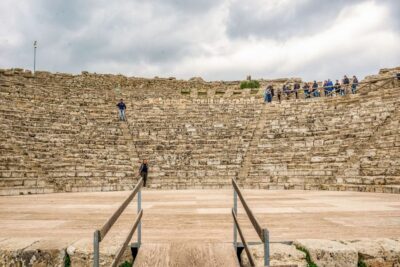
Segesta, Erice and Salt Pans Full-Day Excursion from Palermo
Read our review →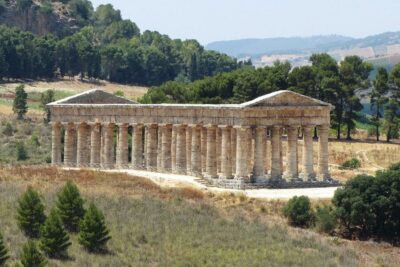
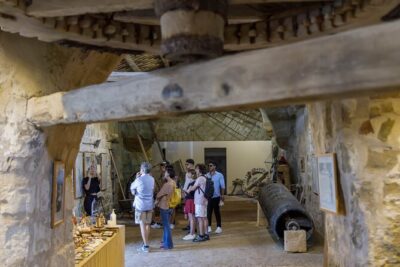
Guided tour of the salt pans of Trapani and the Salt Museum
Read our review →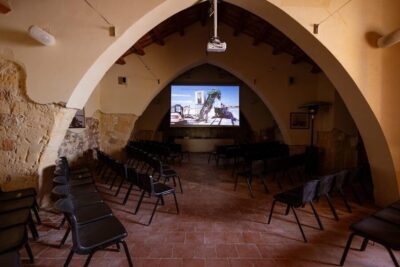
Guided tour of the Marsala Salt Pans and salt harvesting
Read our review →Browse the lists this tour appears in