
Reviewed · SICILIAN SALT PAN TOURS
Marsala: Guided tour of the Genna Salt Pans
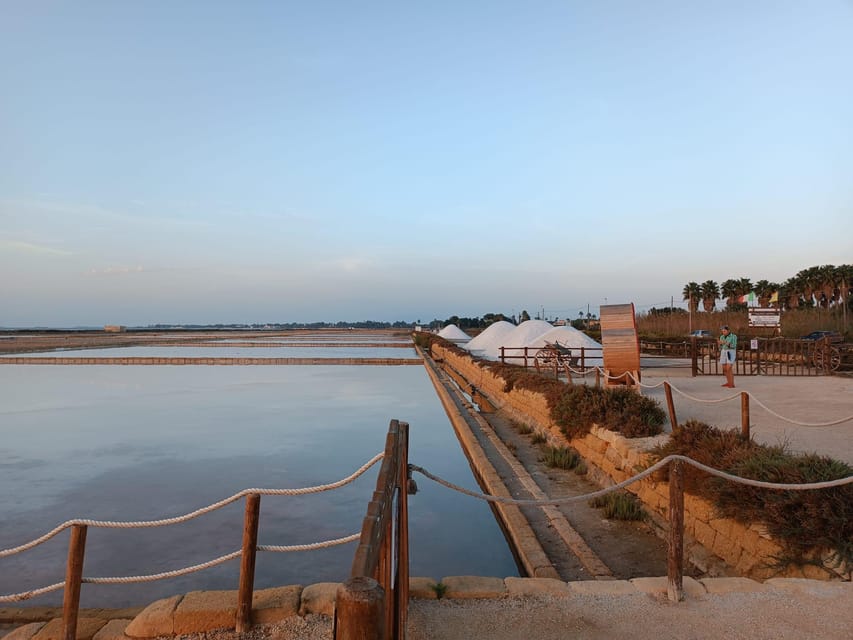
The most striking part of this Marsala outing is the working salt landscape beside Stagnone Lagoon, where sun, wind, and seawater do the hard work. In 45 minutes, your guide explains how water moves through the tanks and gradually turns into salt, ending at crystallization.
I like the 15th-century Spanish-built salt pans, which give this short visit a real sense of place. I also like the low price: at $14, you get a guided look at a traditional industry, not just a view from the roadside. The main caution is that the experience depends heavily on clear spoken explanation, so confirm your language and expect limited visual aids.
- Salt production from seawater: Follow the stages from water movement through the tanks to final crystallization.
- Spanish-era setting: The salt pans were built by the Spanish in the 15th century.
- Stagnone Lagoon views: The setting adds open sky, wind, iodine, and strong Sicilian light.
- Four guide languages: Tours are offered in Italian, English, Spanish, and French.
- Short and inexpensive: The visit lasts 45 minutes and costs $14 per person.
- Practical footwear matters: Wear gym shoes, bring water, and protect yourself from the sun with a hat.
In This Review
- A Working Salt Pan Beside Stagnone Lagoon
- What Happens During the 45-Minute Visit
- Why the Salt-Making Process Is Worth Your Time
- The Spanish-Built Salt Pans and Their Sense of Time
- What the Atmosphere Feels Like on Site
- Is $14 a Fair Price?
- Choosing the Right Language and Time
- Who Will Enjoy Saline Genna Most
- Practical Tips Before You Go
- A Short Tour With a Clear Purpose
- Should You Book the Genna Salt Pans Tour?
- FAQ
- How long does the Genna salt pans tour last?
- How much does the tour cost?
- Where does the tour begin?
- Where does the tour end?
- What does the guided tour explain?
- Which languages are available?
- What should I bring?
- Are strollers and large luggage allowed?
- Can I cancel for a refund?
A Working Salt Pan Beside Stagnone Lagoon
Saline Genna gives you a close look at one of western Sicily’s oldest working traditions. The setting is not a museum display built only for visitors. It is a salt-producing site where shallow tanks, seawater, sunlight, and wind are part of the story.
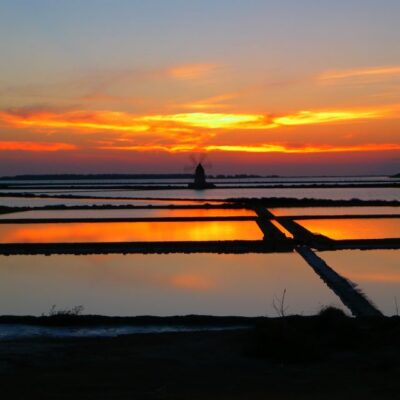
The salt pans sit beside Stagnone Lagoon, so the surroundings are open, bright, and exposed. You get the smell of iodine and salt air, along with the steady effects of sun and wind that make production possible. This is a place where nature is not just scenery. It is one of the tools used to make the product.
The site’s Spanish origins add useful context. These salt pans were built in the 15th century, and the visit connects the old infrastructure with a process that still depends on basic natural forces. You are not simply looking at piles of salt. You are seeing how a local resource has been shaped into a long-running trade.
What Happens During the 45-Minute Visit
The tour begins at the salt shop inside the salt pans. This is your meeting point and the place to get oriented before heading into the production area.
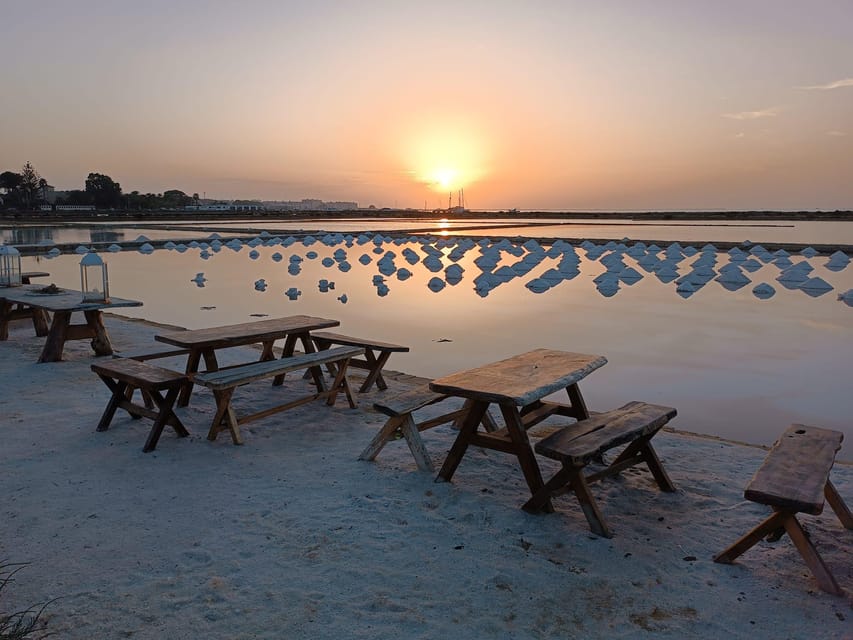
Your guide then explains how the salt tanks work. The key idea is the movement of seawater through a series of tanks, with evaporation increasing as the water progresses. The process ends in crystallization, when the salt separates from the remaining water.
That sounds simple, but the details matter. The guide’s job is to show how each stage depends on the one before it. You should come away understanding why the tanks are arranged as they are and how sun and wind help reduce the water until salt crystals form.
The full visit lasts 45 minutes. That makes it easy to fit into a day of sightseeing around Marsala, especially if you want a focused stop rather than a long excursion. It also means the explanation moves at a steady pace. If you enjoy asking many technical questions or studying working equipment in detail, the short format may feel limited.
One useful point is that the tour can be given in Italian, English, Spanish, or French. Still, language availability is worth checking carefully when you book and again when you arrive. A language mix can affect how much you take from the explanation, especially because the process is easier to understand when you can follow the sequence clearly.
More salt pan visits near Marsala:
- Marsala: Guided Salt Pans Walk Tour with Windmill Visit
★ 4.7 · 162 reviews - Guided tour of the Marsala Salt Pans and salt harvesting
★ 4.7 · 60 reviews - Marsala: Pink Salt Pans Wellness
★ 4.5 · 31 reviews
Why the Salt-Making Process Is Worth Your Time
Salt production is easy to overlook because the final product is familiar. You use it every day, yet the path from seawater to usable crystals is rarely visible. At Saline Genna, the basic process becomes the main subject.
The most useful part of the tour is the explanation of water exchange and flow between the tanks. This is also where a little preparation helps. The site may not provide a model, drawing, or video to show the system, so you need to watch the guide’s gestures and listen closely.
If the explanation is mostly verbal, visual learners may want to ask questions as the tour progresses. Look at the connections between the tanks and ask the guide to point out where water enters, where it moves next, and where crystallization takes place. Those simple questions can make the process much easier to follow.
The production story also explains why the setting feels so exposed. Salt pans require sun and wind, and the lagoon environment supplies both. You may find the air noticeably hot or windy, depending on the time of day and season. The same conditions that help create salt can make the visit less comfortable without a hat and water.
The Spanish-Built Salt Pans and Their Sense of Time
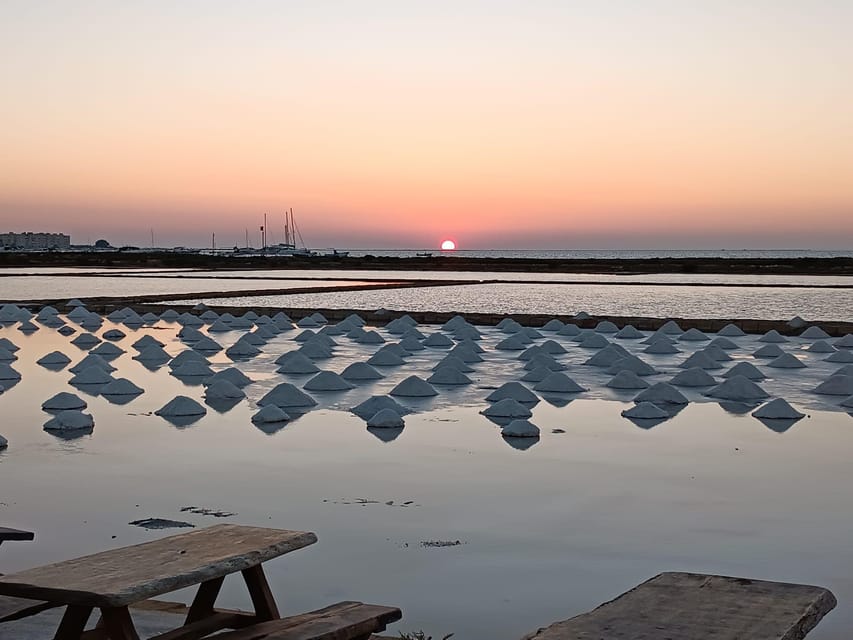
The 15th-century Spanish construction gives Saline Genna more depth than a modern industrial stop. The age of the site links you to the period when salt was a valuable product moved through Mediterranean trade routes.
You will not need a long history lecture to appreciate this. Even a short explanation of the salt pans’ origins helps you read the site differently. The tanks are not random pools. They form part of an old system shaped around the coast, the lagoon, and the practical demands of salt production.
I like this kind of historical stop because it asks little of your schedule while giving you a stronger connection to the area. You can see how local geography and human labor worked together over centuries. The experience is especially useful if you are already exploring Marsala and want something tied to the region’s coastal identity.
Do keep your expectations realistic. The visit is not described as a full historical tour of Spanish Sicily, and the main focus remains production. If your priority is detailed architectural history, you may want to treat the salt pans as one concise piece of a wider Marsala itinerary.
What the Atmosphere Feels Like on Site
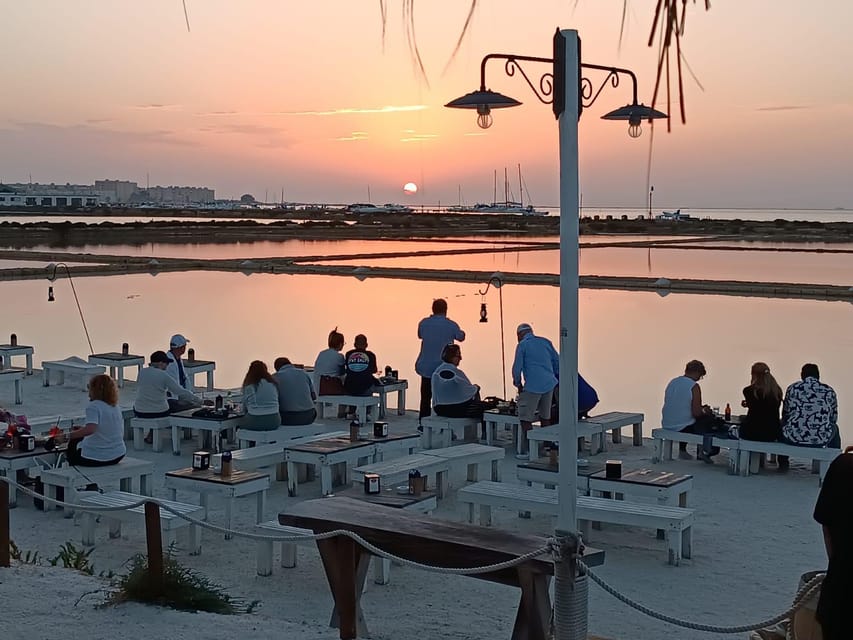
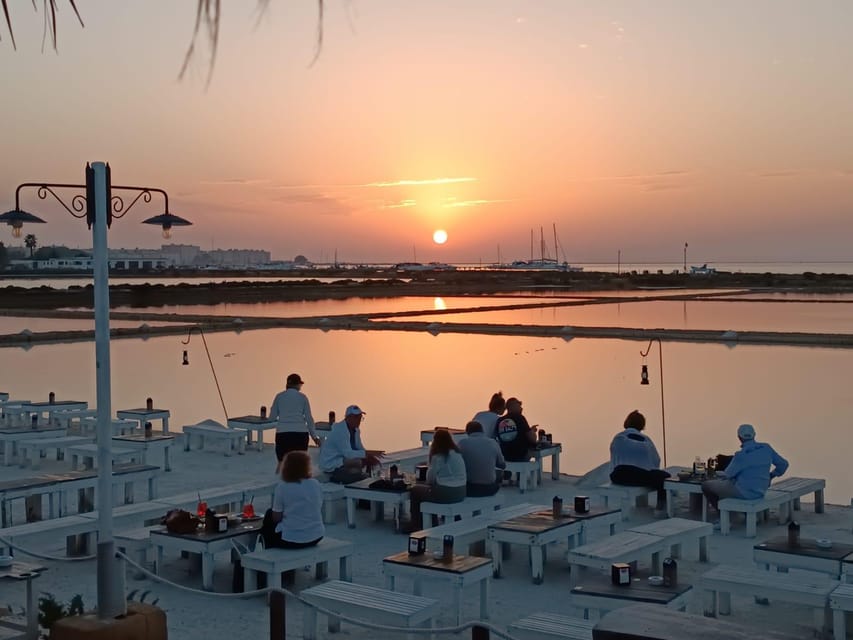
The atmosphere is one of the best reasons to choose this outing. The scent of salt and iodine, the sun on the open pans, and the wind across the lagoon make the visit feel connected to the elements.
This is not a shaded indoor attraction. You should plan for direct exposure and uneven outdoor conditions. The operator recommends a hat, water, and gym shoes, and I would take all three suggestions seriously. Bare feet are not allowed, and the site is not suited to casual sandals or a stroll with heavy luggage.
The rules also tell you something about the character of the place. Oversize luggage, strollers, bikes, scooters, handcarts, pets except assistance dogs, and fishing equipment are not allowed. Alcohol, drugs, fireworks, explosives, diving, and party activities are prohibited as well.
Some of those restrictions may seem obvious, but they matter if you are arriving with children’s equipment or moving between stops. Leave large bags elsewhere and avoid bringing a stroller. The salt pans are a working site, not a place for picnicking, costumes, parties, or recreational water activities.
A few more Marsala tours and experiences worth weighing up
- Mount Etna: Guided Volcano Summit Hiking Tour with Cable Car
★ 4.7 · 3,784 reviews - Taormina: Ancient Theater Skip-the-Line Ticket & Audio Guide
★ 4.5 · 1,701 reviews - Palermo: Teatro Massimo Opera House Guided Tour
★ 4.5 · 1,573 reviews - Etna Volcano: South Side Guided Summit Hike
★ 4.7 · 1,545 reviews
Is $14 a Fair Price?
At $14 per person, the tour offers good value if you want a short, guided introduction to local production. Your ticket includes entry to the salt pans and a live guide, so you are paying for access plus interpretation rather than simply walking into a shop.
The value is strongest for curious visitors who would not understand the tank system by looking at it alone. A guide can explain the sequence, the role of evaporation, and the final crystallization stage in a way that turns a flat salt field into a working process.
The price is less compelling if you expect a large visitor center, hands-on demonstrations, or extensive equipment displays. One practical limitation is that the experience may rely mainly on spoken explanation. There may not be a video, scale model, diagram, or clear display of every tool used in production.
For that reason, I would judge the $14 fee as fair for a concise, place-based tour, but not as a full museum experience. You are buying a focused explanation in an authentic setting. That is its strength and its boundary.
Choosing the Right Language and Time
The available languages are Italian, English, Spanish, and French. If you need a French tour in particular, confirm that the guide assigned to your time can actually conduct the visit in French. A late change in guide availability can create confusion, and an Italian explanation will not be useful if you booked specifically for French.
The same advice applies to any language. Check the starting time and language before you leave for Saline Genna. If the operator contacts you with a change, ask for the replacement time and language in clear terms.
The activity listing gives a 45-minute duration, with starting times subject to availability. That makes it easy to plan around lunch, a drive, or another Marsala sight. Still, allow extra time for finding the salt shop meeting point and getting settled, particularly if you are unfamiliar with the area.
There is no stated group size, so do not assume a private or small-group experience. You should expect a shared guided tour unless your booking specifically says otherwise.
Who Will Enjoy Saline Genna Most
I would recommend this tour to you if you like local industries, food origins, coastal history, and short experiences that explain how a place works. It suits adults, older children, and anyone who prefers a focused visit to a long formal museum stop.
It is also a good fit for photographers who enjoy open skies, salt tanks, lagoon views, and changing light. The visit is not sold as a photography tour, so the guide’s explanation remains the priority, but the setting offers plenty to look at.
Families should consider the practical limits. Strollers and baby carriages are not allowed, and the site is exposed to sun and wind. You will need to manage young children without that equipment and bring water for everyone.
I would be more cautious about recommending it if you dislike outdoor heat, need extensive visual interpretation, or want a detailed demonstration with tools. The tour can explain the production stages, but it may not show every part of the system through models or equipment displays.
Practical Tips Before You Go
Wear closed, comfortable gym shoes. The operator specifically recommends them, and they will give you a better footing than bare feet or flimsy footwear.
Bring a hat and water. The salt pans depend on sun and wind, which means shade may not be the main feature of your visit. Sun protection is especially important because the open surroundings can feel more intense than expected.
Keep your luggage light. Oversize bags, strollers, bikes, scooters, and handcarts are not allowed. If you are touring Sicily with larger bags, make a plan to store them before arriving.
Meet at the salt shop inside the salt pans. Do not confuse the meeting point with a general location somewhere in Marsala. Saline Genna is both the starting and ending point, and the tour returns there after the guided walk.
If your plans may change, you can reserve now and pay later. Cancellation is free up to 24 hours in advance for a full refund. Those terms give you some useful flexibility, but you should still check the exact conditions attached to your booking.
A Short Tour With a Clear Purpose
Saline Genna is not trying to fill half a day. Its purpose is narrower and more useful: show you how salt is produced in a historic Sicilian setting.
The best parts are the lagoon-side location, the Spanish-era salt pans, and the explanation of the process through crystallization. The main weaknesses are the short duration and the possibility that the information may be delivered mainly through speech, without enough drawings, models, or visible tools.
That balance makes the tour easy to judge. If you want a grounded look at an important local product for $14, I think it is worth booking. If you need a highly visual, hands-on activity, confirm what demonstrations are available first.
Should You Book the Genna Salt Pans Tour?
Book it if you are already near Marsala, have 45 minutes to spare, and want to understand how sun, wind, seawater, and old engineering produce salt. The price is modest, the setting is distinctive, and the Spanish history gives the visit more meaning than a simple stop at a salt shop.
Before paying, confirm your language, especially for French, and prepare for an outdoor visit with little room for luggage or strollers. With those points sorted, Saline Genna makes a practical, authentic addition to a western Sicily itinerary.
FAQ
How long does the Genna salt pans tour last?
The guided tour lasts 45 minutes.
How much does the tour cost?
The price is $14 per person.
Where does the tour begin?
You meet at the salt shop inside the salt pans at Saline Genna.
Where does the tour end?
The tour returns to Saline Genna, the same place where it starts.
What does the guided tour explain?
The guide explains how the salt tanks work and follows the production process through to crystallization.
Which languages are available?
Live tours are available in Italian, English, Spanish, and French.
What should I bring?
Bring a hat, water, and gym shoes for the outdoor visit.
Are strollers and large luggage allowed?
Oversize luggage, baby strollers, and baby carriages are not allowed.
Can I cancel for a refund?
You can cancel up to 24 hours in advance for a full refund. You can also reserve now and pay later.
Just added around Marsala
- Marsala: Kayak Tour in Stagnone di Marsala Nature Reserve★ 5.0 · 4 reviews
- Marsala: Market Tour & Meal at a Local’s Home★ 5.0 · 5 reviews
- Marsala Wellness on the Isola Lunga Salt Pans with Aperitif★ 4.7 · 5 reviews
- Salt tub scrub in Marsala★ 3.7 · 6 reviews
- Isola Lunga Marsala★ 3.1 · 7 reviews
- Erice and Segesta Multi-Language Tour from Palermo★ 4.7 · 9 reviews
- Marsala: Favignana dinghy tour with wine tasting★ 5.0 · 9 reviews
- Aperitif in a old tub of salt in Marsala★ 4.3 · 12 reviews
Sicilian Salt Pan Tours, compared.
Segesta, Erice and Salt Pans Full-Day Excursion from Palermo
Read our review →
Guided tour of the salt pans of Trapani and the Salt Museum
Read our review →
Guided tour of the Marsala Salt Pans and salt harvesting
Read our review →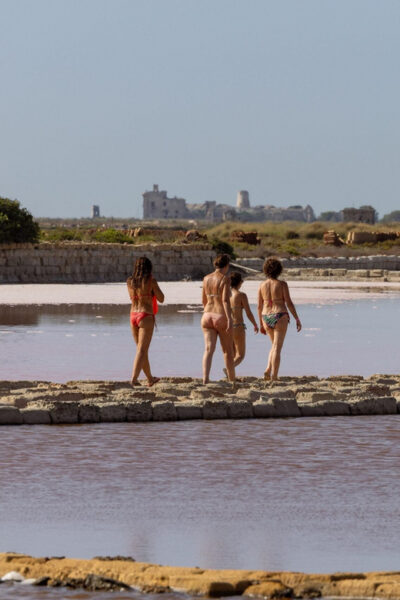
Browse the lists this tour appears in