
Reviewed · VALLEY OF THE TEMPLES TOURS
Agrigento: Valley of the Temples Ticket & App Audioguide
The Valley of the Temples is one of Sicily’s great sights: a long ridge of ancient Doric temples, open countryside, and views toward Agrigento and the sea. This ticket gives you a self-guided visit rather than a live tour, with entry to the archaeological park and a digital audioguide.
I like the freedom to set your own pace, and I like the chance to visit early or near sunset, when the heat eases and the temples take on a different look. The main catch is that skip-the-line does not mean walk straight through: you must exchange your voucher for a paper ticket at the Temple of Juno office, and the audioguide may require extra patience.
In This Review
- Key points to know before you book
- Why the Valley of the Temples deserves your time
- Starting at the Temple of Juno entrance
- The Temple of Juno and the first stretch
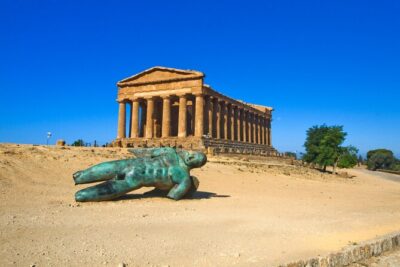
- The Temple of Concordia and the best-preserved monument
- The Temple of Heracles and the Temple of Zeus
- Aqueducts, public spaces, and the ancient gymnasium
- What the digital audioguide is really like
- Timing your visit around heat and sunset
- Walking, parking, and local transport
- Is $19 a good value?
- The Pemcards postcard feature
- Who should book this experience?
- Should you book the Agrigento Valley of the Temples ticket?
- FAQ
- How long is the ticket valid?
- Where do I exchange the voucher?
- Is a live guide included?
- Is transportation included?
- Does the ticket include an audioguide?
- Is the Valley of the Temples wheelchair accessible?
- Do I need identification?
- What exhibition is included?
Key points to know before you book
- The Temple of Juno ticket office is the only voucher exchange point, even though the park has more than one entrance.
- The archaeological area is huge, covering about 1,300 hectares, so allow time for a real walk.
- The digital audioguide is included, but some visitors found it less useful than the information panels or a separate guide.
- Sunset is a terrific time to visit, while early morning is the safer choice in hot weather.
- The ticket covers one entry for one day, with no transportation included.
- The price may not suit every budget, especially families or anyone eligible for free or reduced admission.
Why the Valley of the Temples deserves your time
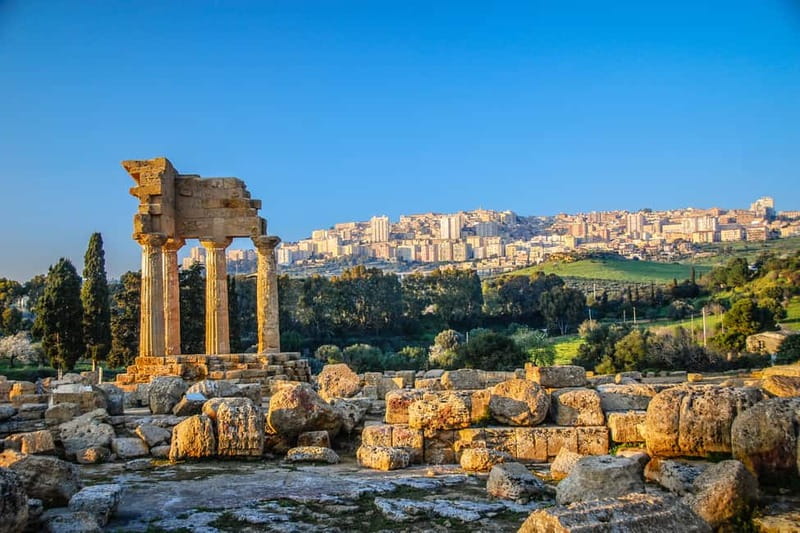
Agrigento began as Akragas, a Greek colony founded in the sixth century BC. In its prime, it was one of the major Greek cities around the Mediterranean. The remains you see today are not a compact collection of ruins in a town square. They stretch across terraces and open ground, creating a long, atmospheric walk through ancient public life.
I find the setting as important as the masonry. You are not only looking at columns. You are walking past olive trees, dry Sicilian hills, wide views, and stone monuments that have survived earthquakes, war, reuse, and centuries of weather. The open setting also explains the main practical issue: shade is limited, and summer sun can be severe.
The archaeological park includes Greek and Roman remains, aqueducts, public spaces, and the gymnasium. It is a place where the scale becomes clear slowly. At first, you see one temple. Then another appears farther along the ridge, and the relationship between the monuments begins to make sense.
More Valley of the Temples visits from Agrigento:
- Agrigento: Valley of the Temples Skip-the-Line Sunset Tour
★ 4.5 · 1,512 reviews - Agrigento: Valley of the Temples E-Scooter Tour
★ 4.6 · 557 reviews - Palermo: Valley of the Temples and Scala dei Turchi Day Trip
★ 4.1 · 380 reviews
Starting at the Temple of Juno entrance
Your first task is not entering the ruins. It is finding the correct ticket office. You must take your voucher to the Temple of Juno ticket office on Via Panoramica Valle dei Templi, near the Temple of Juno. This is the only place where the voucher can be exchanged for entry tickets.
That detail matters. If you arrive at another entrance expecting to scan the voucher, you may waste time walking back. The advertised skip-the-line benefit is useful when the site is busy, but you still need to exchange the QR code for a physical ticket and pass a security check.
Some people found the exchange process quick. Others felt it weakened the fast-track promise because they still had to wait in a shorter line. At quiet times, there may be little or no queue at all. At busier times, particularly in the warmer months, saving a place in the ticket line can be worthwhile.
Your ticket allows one entry only. Once you leave, you cannot use the same ticket to return later that day, so plan your route before you pass through the entrance.
The Temple of Juno and the first stretch
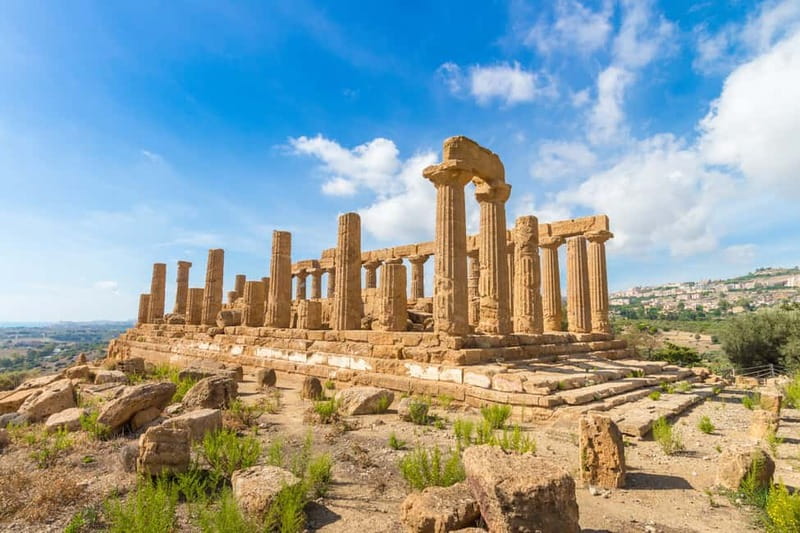
The Temple of Juno is a natural place to begin because it gives you an immediate sense of the site’s long ridge. From here, you can look across the archaeological area and see how far the route extends.
The temple is part of the group of major Doric monuments that make Agrigento special. Doric architecture can look simple at first glance, with sturdy columns and plain lines, but the repeated proportions are powerful when seen at this scale. Take a moment before rushing onward. The first temple is useful for getting your bearings and understanding the route.
The walk continues through the central archaeological area. You will see terraces that once supported public and religious life in ancient Akragas and later in the Roman period. The route is not described as strenuous, but it is extensive. Comfortable shoes, water, and a hat will make a noticeable difference.
The site has some drinking fountains, though not every fountain is guaranteed to be working. Bring water with you rather than relying only on what you find inside.
The Temple of Concordia and the best-preserved monument
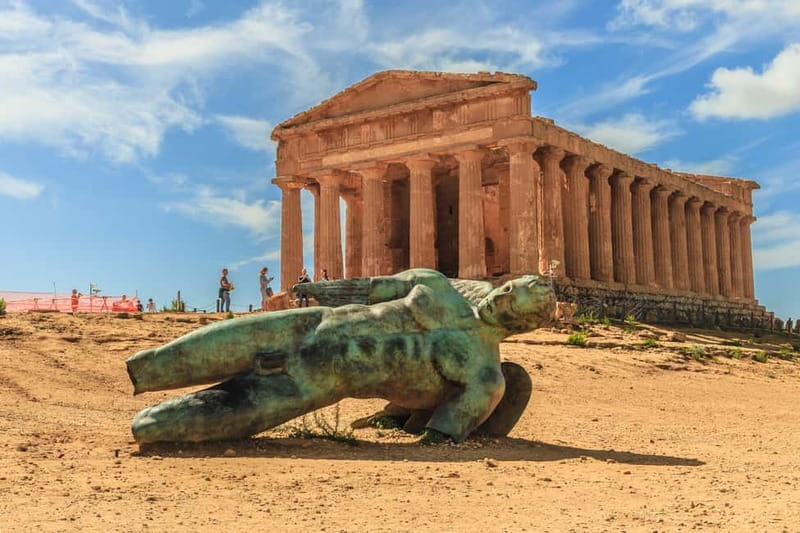
The Temple of Concordia is usually the visual high point. Its columns and general form are remarkably intact, making it easier to imagine the original building than at many other ancient sites.
This is also where the comparison with Greece feels strongest. The Doric design is familiar, but the Sicilian setting gives it a different character. You get open views instead of a dense urban backdrop, and the long line of ruins lets you compare preserved architecture with scattered remains nearby.
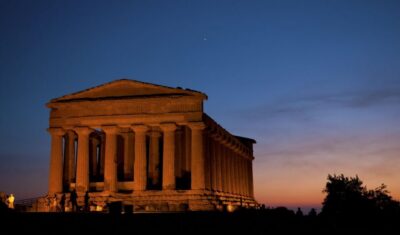
The temple is especially appealing to photographers. Morning light can bring out the warm stone, while late afternoon and sunset create longer shadows and a softer atmosphere. If you choose a late time slot, you may see the monuments in daylight, then watch the site change as evening arrives. The temples are lit at night, although this ticket is for entry during the selected operating period rather than a separate night tour.
Do not expect every monument to be equally intact. The pleasure here comes from the contrast between the nearly complete Temple of Concordia and the more fragmentary temples farther along the route.
A few more Agrigento tours and experiences worth weighing up
- Agrigento: Valley of the Temples Entry Ticket & Audio Guide
★ 4.1 · 268 reviews - Agrigento – Valley of the Temples – audio guide
★ 3.9 · 43 reviews - Agrigento: Valley of the Temples Entry Ticket & Audio Guide
★ 3.0 · 40 reviews - Taormina: Ancient Theater Skip-the-Line Ticket & Audio Guide
★ 4.5 · 1,701 reviews
The Temple of Heracles and the Temple of Zeus
The Temple of Heracles, also called the Temple of Heracles or Eracle, gives you a different lesson in archaeology. Its remains are more broken, with columns and stones spread across the ground. That may sound less impressive than a standing temple, but it helps you see how archaeologists reconstruct the past from fragments.
The Temple of Zeus was once far larger and more ambitious. Today, the site is known for its fallen blocks and massive scale rather than a complete colonnade. It reminds you that ancient Greek architecture was not always small and neat. Monumental buildings could dominate a whole public area.
The park’s historical value lies in seeing these different conditions together. You can study a nearly preserved temple, then walk to a ruin that survives mainly through foundations and fallen stone. The digital audioguide is meant to provide context as you go, but do not depend on it as your only source of information. Some people found the app audio weak or awkward to use, while the on-site signs and maps were sufficient for a basic visit.
If you want detailed interpretation, a live guide would be a different product. This ticket does not include one.
Aqueducts, public spaces, and the ancient gymnasium
The Valley of the Temples is not simply a line of religious buildings. The aqueducts and terraced areas show how the ancient city managed water, movement, and public life.
The gymnasium is another important stop. It was connected with athletic activity, education, and recreation, so it broadens the picture beyond temples and worship. You can begin to see Akragas as a functioning city, not just a collection of monuments left behind.
This part of the visit rewards a slower pace. The most famous temples naturally draw attention, but the less dramatic remains help explain how the city worked. Use the map, read the signs, and give yourself room to pause. The route is straightforward enough for a self-guided visit, though more signposting and extra explanation would make it easier to understand every section.
What the digital audioguide is really like
The included digital audioguide is a useful idea, but it is not the strongest reason to buy this ticket. It can add background as you walk, and the self-guided format lets you stop, replay information, or skip sections.
The practical problem is access. Instructions for activating the guide should be followed carefully, and it is worth checking that the audio works before you move far into the site. Some people had trouble getting the QR code to work for every member of their group and ended up paying extra for an audio guide at the ticket area.
There is also a separate audio option on site, and at least one visitor preferred the basic five-euro guide available when collecting tickets. That does not mean the included digital guide will fail for you, but it does mean the audio feature is not guaranteed to feel like a polished guided tour.
I would treat the app as a bonus, not the core value. The ruins, setting, maps, and signs are what make the visit worthwhile. If you want expert storytelling, book a live guide instead. If you prefer independence, this format gives you the control to explore without being tied to a group schedule.
Timing your visit around heat and sunset
Timing matters more here than at many indoor museums. The site has broad open stretches and limited shade. Afternoon visits can be uncomfortable in summer, even though the late light is beautiful.
Early morning is the practical choice if you want cooler temperatures and a quieter start. Late afternoon can be the most memorable choice if you can handle the heat and stay through sunset. A six o’clock visit, for example, may begin with daylight, move into sunset, and finish with illuminated temples.
Spring can add another pleasure. Almond trees may be in bloom, and the open setting can feel especially pleasant at that time of year. Conditions change with the season, so pack water and plan around the weather rather than assuming every time slot will feel the same.
The full archaeological area is large, but you do not have to treat it as a race. A slower visit gives you time to read, photograph, and sit for a few minutes. If you have children or need a break, there is a café roughly halfway along the route according to practical visitor advice.
Walking, parking, and local transport
Transportation is not included. You must make your own way to the entrance, and the correct starting point is the Temple of Juno ticket office.
If you arrive by car, parking is available and has been described as good value. One useful strategy is to park near Gate V and use the taxi service to reach the upper entrance, allowing you to walk downhill through much of the site. This can reduce the effort of climbing, though you should still expect a substantial walk.
A shuttle also operates between parts of the site for an additional charge, reported as about three euros each way. That can be helpful if you are tired, traveling with young children, or have limited mobility. The activity itself is listed as wheelchair accessible, but the size and outdoor character of the archaeological park still make it sensible to ask staff about the most suitable route on arrival.
If you arrive by train, you will need a taxi to the archaeological site. Taxi fares from Agrigento have been reported in the range of 10 to 15 euros, but prices can change. Transportation costs should be part of your budget because the $19 ticket covers admission only.
Is $19 a good value?
At $19 per person, this is a reasonable convenience purchase, but not automatically the cheapest choice. The value depends on crowd levels, your group size, and whether you need the digital guide.
The ticket saves you from buying admission at the regular ticket office in advance and may shorten the wait during a busy period. That can matter if you have traveled a long way to Agrigento or have only one day available. Reserve-now, pay-later booking and free cancellation up to 24 hours before the visit also give you some flexibility.
The price is less attractive for families. Children may qualify for free admission, and reduced-price visitors must bring valid identification. One family paid for tickets that were not needed because a disability concession allowed free admission for some members. Check eligibility before booking.
The standard on-site ticket has been reported as about 13 euros, and a combined ticket with the museum may offer better value. Prices and ticket arrangements can change, so compare the current official options before you pay. If there is no queue on the day, the main advantage of this booking may disappear.
My view: pay for this option when convenience, advance planning, or a busy travel date matters. Buy directly when the site is quiet and you are comfortable handling admission yourself.
The Pemcards postcard feature
The ticket includes access to Pemcards, which lets you turn a digital photo into a real postcard sent to an address anywhere in the world. It is a fun souvenir, especially if you prefer something more personal than a shop-bought magnet.
The weak point is finding the Pemcards stand. Some people could not locate it, and staff did not always know where it was. Ask about it as soon as you enter rather than waiting until the end, when you may not have time to track it down.
Treat Pemcards as an optional extra rather than a reason to choose the ticket. The actual value is the archaeological entry. If the postcard service works smoothly, it gives you a nice way to share a temple photo with someone at home.
Who should book this experience?
I would recommend it to independent visitors who want to explore without a fixed group or live guide. It works well for a day trip from Agrigento and can also suit people driving from Catania, with enough time set aside for the road and the site.
It is a good fit if you want to choose your own pace, stop for photos, and decide whether to spend two hours or much longer among the ruins. It also helps if you are visiting during a busy period and want to reduce the regular ticket wait.
I would think twice if you are traveling with several children, qualify for reduced or free entry, or are visiting during a quiet period. In those cases, the direct ticket may cost less and involve fewer steps. I would also skip this format if a detailed human explanation is essential to your enjoyment.
Should you book the Agrigento Valley of the Temples ticket?
Book it if you want advance entry, flexible self-guided sightseeing, and the chance to visit at a carefully chosen time such as early morning or sunset. The temples, aqueducts, gymnasium, and broad Sicilian setting easily justify making time for Agrigento.
Just keep your expectations clear. This is not a guided tour, transportation is not included, and the audioguide may be uneven. Check the price against the current on-site and combined museum tickets, confirm that you qualify for any concessions, and arrive at the Temple of Juno office with water and comfortable shoes.
For many independent visitors, the convenience is worth the extra cost. For families and budget-minded visitors, direct admission may be the smarter buy.
FAQ
How long is the ticket valid?
The ticket is valid for one day and allows a single entry into the Valley of the Temples.
Where do I exchange the voucher?
Exchange the voucher at the Temple of Juno ticket office near the Temple of Juno on Via Panoramica Valle dei Templi. This is the only stated voucher exchange location.
Is a live guide included?
No. The experience includes a digital audioguide, but not a live guide.
Is transportation included?
No. You must arrange your own transportation to and from the archaeological site.
Does the ticket include an audioguide?
Yes. A digital audioguide is included, though the audio may require setup and some people have had difficulty using it for every member of a group.
Is the Valley of the Temples wheelchair accessible?
The activity is listed as wheelchair accessible. Since the site is large and outdoors, ask staff about the most suitable route when you arrive.
Do I need identification?
Bring valid identification if you have selected a reduced-price ticket.
What exhibition is included?
The ticket includes access to the I Tesori d’Italia exhibition until December 31, 2025.
Just added around Agrigento
- Catamaran excursions to the Scala dei Turchi★ 4.3 · 3 reviews
- Private Tour : Agrigento & Scala dei Turchi★ 5.0 · 3 reviews
- From Agrigento to Siracusa: Valley of Temples & Roman Villa★ 5.0 · 3 reviews
- Agrigento: Valley of the Temples and Historical Center by E-Bike with Lunch Included★ 5.0 · 4 reviews
- E-BIKE TOUR AGRIGENTO: Valley of the Temples & Old Town with meal included★ 5.0 · 4 reviews
- Full day Agrigento from Palermo – Tuesday, Thursday, Friday★ 4.0 · 4 reviews
- Private tour from Palermo to Agrigento and Piazza Armerina★ 4.0 · 4 reviews
- Horseback riding in the beaches of Sciacca★ 4.8 · 4 reviews
Valley of the Temples Tours, compared.
Valley of the Temples Skip-the-Line Sunset Tour
Read our review →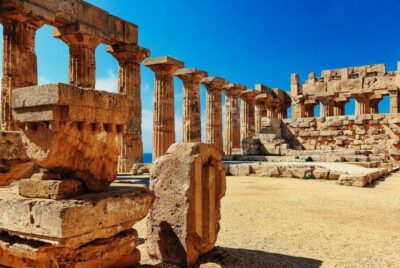
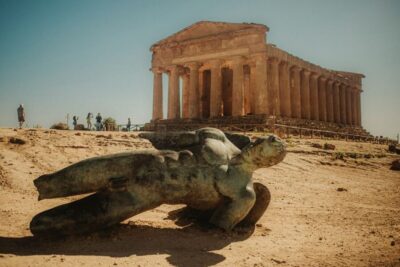
Agrigento and the Valley of the Temples Day Tour
Read our review →
Valley of the Temples and Scala dei Turchi Day Trip
Read our review →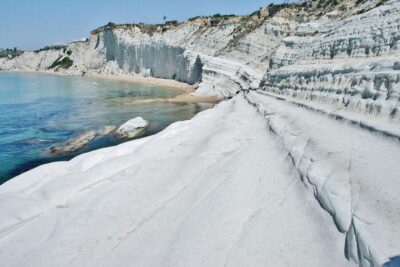
Valley of the Temples and Turkish Steps with Snack
Read our review →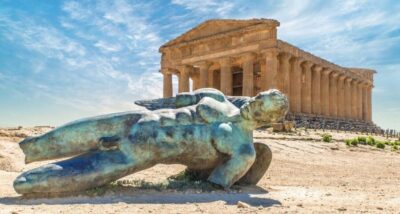
Valle dei Templi Fast-Track Ticket & Smart Guide
Read our review →
Valley of the Temples Entry Ticket & Audio Guide
Read our review →Browse the lists this tour appears in