Reviewed · MOUNT ETNA TOURS
Excursion to the top of Etna |For good walkers (transport services not included)
Mount Etna is not a tidy mountain walk. It is a demanding climb over ash, loose volcanic rock, old lava flows, and crater rims, with the route changing according to gas, wind, heat, and fresh volcanic activity. On a clear day, you may reach one or more summit craters near 3,300 meters and look down toward the sea.
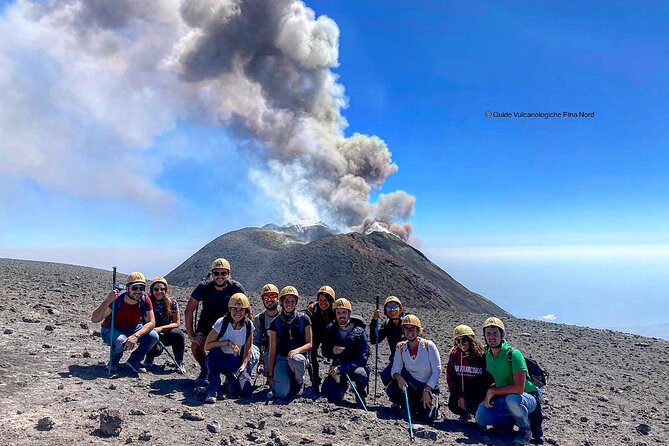
I like the small groups of up to 10 and the serious safety approach. I also like that guides such as Domenico and Vincenzo explain the geology while leading you across the rough ground, rather than simply pointing out a view. The main drawback is the effort: this is not a gentle sightseeing trip, and the extra €52 cable-car charge is not included.
In This Review
- Key points before you book
- What this Etna hike is really like
- The 8:30 am start at Etna Sud
- Reaching 2,750 meters before the main walk
- Walking across ash, lava, and volcanic bombs
- Crater rims, fumaroles, and changing volcanic activity
- The descent is harder than it looks
- Why the guide matters on an active volcano
- Is the $129.40 price good value?
- Who should book this Etna excursion?
- Practical preparation for the morning
- Should you book this Etna hike?
- FAQ
- Where does the excursion start?
- Where does the tour finish?
- How long does the excursion last?
- How far do you walk?
- How high does the route go?
- Is the cable car included?
- Is equipment provided?
- Do I need to be physically fit?
- Can the route or summit access change?
Key points before you book
- Reach Etna’s high summit zone: The route can climb to about 3,300 meters, and up to 3,380 meters when conditions permit.
- Expect real volcanic terrain: You walk across ash, lava, unstable rock, and volcanic bombs from earlier eruptions.
- Guides control the route: Gas, wind, heat, weather, and volcanic activity can change the plan or stop the climb.
- Equipment is supplied: Helmets, poles, trekking shoes, warm jackets, extra socks, and a spare backpack are available.
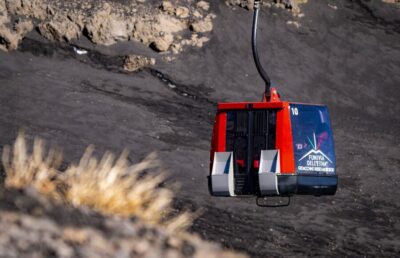
- Budget for the cable car: The round trip from 1,900 to 2,500 meters costs an additional €52 per person.
- Plan for a demanding morning: The walk covers about 12 to 13 kilometers, with roughly 600 meters of ascent and a long descent.
What this Etna hike is really like
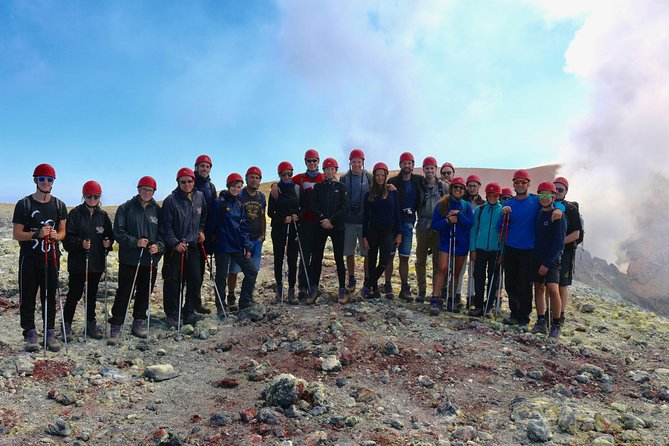
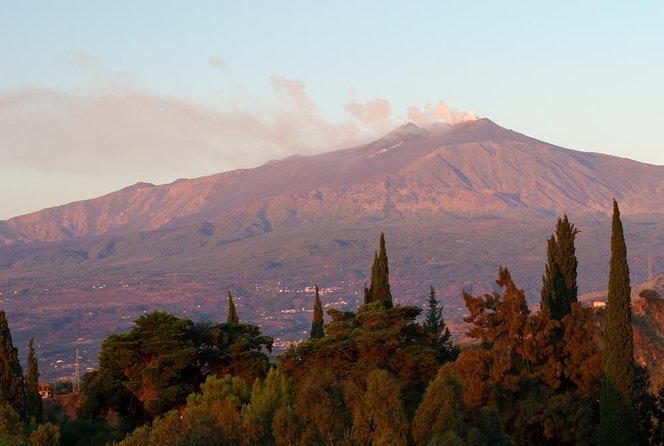
Mount Etna is Europe’s tallest active volcano, but that label does not quite prepare you for the ground underfoot. This is a high-altitude trek through a place that looks closer to another planet than to a normal Sicilian hiking trail.
You begin at the Etna Sud cable-car area, at about 1,900 meters. From there, the upper approach uses authorized 4×4 vehicles to reach roughly 2,750 meters, depending on the arrangements and current conditions. The walk then heads into the summit zone, where black ash, red mineral stains, jagged lava, and old eruption cones replace ordinary vegetation.
The aim is to reach the rim of one or more of Etna’s four summit craters: North-East, Voragine, Bocca Nuova, or South-East. You should treat that as a goal, not a guarantee. Etna is active, and the guide may choose a different route, stop short of a crater, or cancel the outing if the conditions are unsafe.
That unpredictability is part of the experience, but it also requires the right attitude. You are not buying a fixed walk to a guaranteed viewpoint. You are joining a guided mountain outing in an active volcanic area.
More ways up Etna and around the craters:
- Catania: Mount Etna Morning or Sunset Day Trip with Tasting
★ 4.8 · 4,028 reviews - Mount Etna: Guided Volcano Summit Hiking Tour with Cable Car
★ 4.7 · 3,784 reviews - Catania: Sunset Jeep Tour of Mount Etna and Lava Flow Caves
★ 4.8 · 2,113 reviews
The 8:30 am start at Etna Sud
The meeting point is Piazzale Funivia Etna Sud in Nicolosi, at 8:30 am. You must make your own way there because transport from your accommodation is not included.
Parking is available near the meeting area. The listed rate is €5 for a full weekday and €8 on Sundays and public holidays. Public transportation is nearby, though you should check the connection carefully because a late arrival could affect the start of a tightly timed group outing.
The return is normally around 1:30 to 2:30 pm. That gives you roughly five to six hours on the mountain, though the precise finish depends on weather, volcanic activity, route changes, and the pace of the group.
The group size is limited to 10 people. That matters on a steep route. A guide can keep a closer eye on tired walkers, explain what you are seeing without shouting, and adjust the pace more easily than on a large coach-style excursion.
Reaching 2,750 meters before the main walk
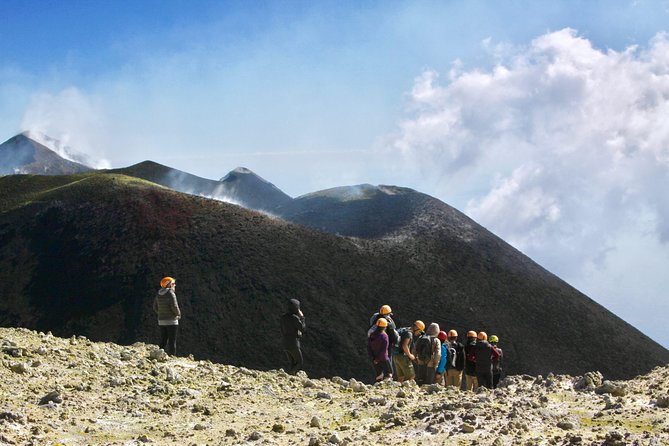
The climb begins above the lower slopes, saving you a large amount of time and effort. Authorized 4×4 vehicles carry the group toward the upper access point, generally around 2,750 meters.
The cable car is a separate cost. The round trip from 1,900 to 2,500 meters is €52 per person, so add that to the advertised price when working out your total. The tour price is $129.40 per person, but the final cost also depends on your transport to Etna Sud, parking, food, and the cable car.
This extra charge is easy to overlook. It is also important because walking from 1,900 meters would make the outing much longer and harder. The high-altitude vehicle and cable-car access let you spend your limited time in the upper volcanic zone rather than using most of the morning on the lower approach.
The exact transport arrangement can depend on the day’s operating conditions. Ask for confirmation before setting out if the cable car or upper vehicles are especially important to your plans.
Walking across ash, lava, and volcanic bombs
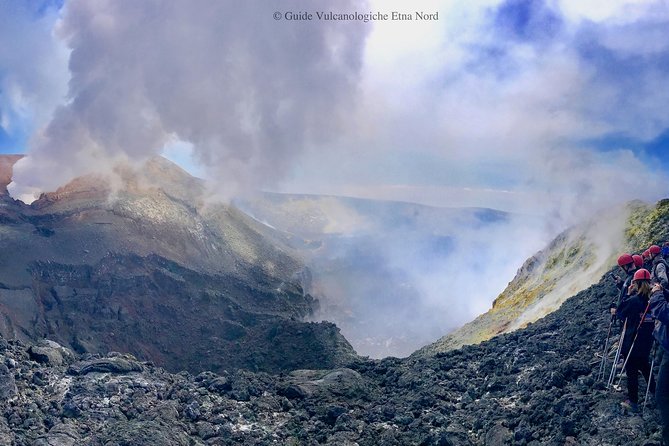
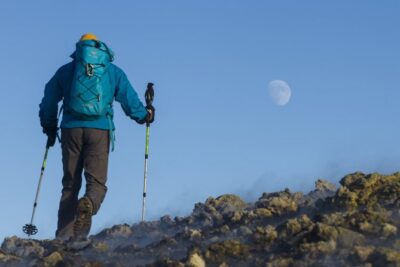
Once the hike begins in earnest, the path is not a smooth trail. You cross loose ash, rough lava, unstable stones, and volcanic bombs left by earlier eruptions. The surface can shift under your boots, and the uphill sections feel harder because you are already at high altitude.
The full route is described as approximately 12 to 13 kilometers, with around 600 meters of ascent and a descent of about 6 kilometers. It is a serious walk, even for people who exercise regularly at sea level.
I would not choose this trip for a first-ever mountain hike. You need good physical health and some preparation for sustained uphill walking. The guide specifically warns about breathing conditions and hypertension, and you should disclose relevant health concerns before the excursion.
Altitude can bring fatigue, breathlessness, dizziness, or a headache. The route along crater edges can also cause dizziness if you are susceptible. Loose rock adds another challenge, so you need to watch each step rather than spending the whole time looking at the view.
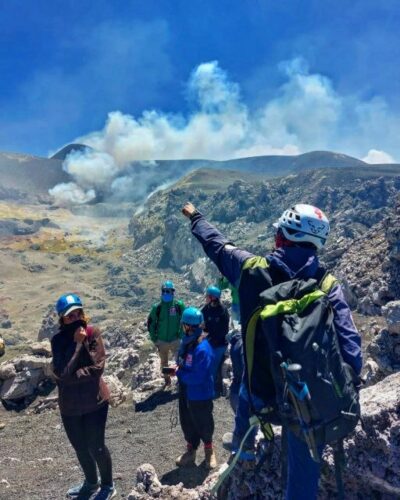
The supplied equipment makes a real difference. You receive trekking poles, hiking shoes, a helmet, a warm jacket, extra socks, and an extra backpack. Wear the proper shoes provided or suitable approved footwear. Without adequate shoes, you are not covered by the stated accident insurance.
You still need to bring personal basics. A lunch bag is not included, and the operator advises bringing a hat and gloves in autumn, winter, and spring. Do not rely on the supplied warm jacket as a substitute for all-weather clothing.
Same island, a completely different day out:
- Palermo: NO Mafia Walking Tour
★ 4.8 · 2,431 reviews - Palermo: Hop-on Hop-off Bus Tour 24-hour Ticket
★ 3.9 · 2,410 reviews - From Trapani: Cruise to Favignana and Levanzo with lunch
★ 4.2 · 2,286 reviews - Palermo Original Street Food Walking Tour by Streaty
★ 5.0 · 2,105 reviews
Crater rims, fumaroles, and changing volcanic activity
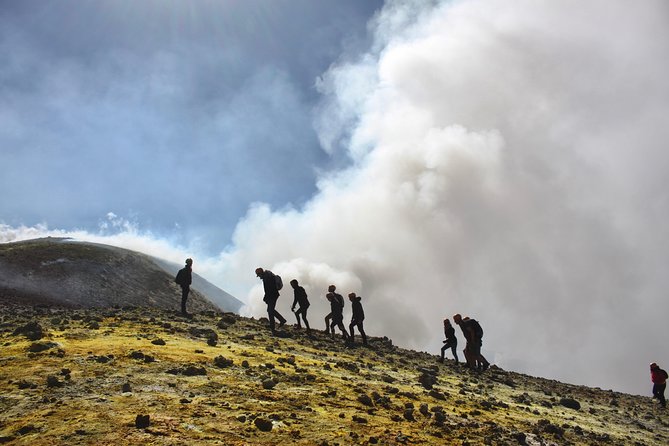
The high point of the outing is the summit zone. Depending on the day, the route may reach around 3,300 meters, or as high as 3,380 meters, and approach the rim of one or more summit craters.
From these heights, you can see the sea when the air is clear. You may also look across the valleys and, on especially clear days, spot Stromboli in the distance. The views are wide, but the ground beneath you remains the main story.
Your guide points out fumaroles, mineral colors, eruption scars, lava channels, and small craters. Gas vents can create an unusual smell and a sense of heat beneath the cold mountain air. Volcanic ash may also blow into your face, which is why contact lenses are discouraged.
Etna’s activity changes constantly. One excursion on the south side may become a north-side outing because of volcanic conditions. Another day may allow a view of the active crater but not access to the highest rim. That is not a poor substitute. It is the sensible response to an active volcano.
A guide such as Domenico may spend as much time explaining Etna’s geology and the history of eruptions as leading the walk. Vincenzo has also been praised for clear explanations and for making good use of the morning when the summit crater was closed to access.
This is where the guided format earns its price. Without a guide, you could see black slopes and smoking openings, but you would miss much of the meaning. You would also face a greater risk of choosing an unsafe route across unstable ground.
The descent is harder than it looks
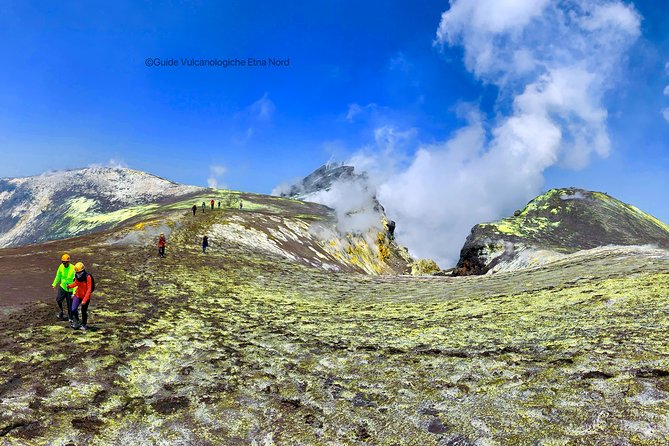
Many people focus on the climb and underestimate the return. The descent covers about 6 kilometers and can be steep, loose, and tiring. Ash sometimes lets you slide downhill, which can be fun for a few steps and awkward for several minutes.
One section near the observatory may be harsh enough that a bus is available for the descent. Do not assume that option is part of the tour price or guaranteed on every date. Ask the guide on the day if your knees or balance are becoming a problem.
The descent also requires concentration. Loose ash can make your feet move unexpectedly, while rough lava catches at boot edges. Trekking poles are useful here, especially when you are tired and the surface is uneven.
The return route may pass small eruption cones and a crater you can inspect from the inside. Helmets are particularly useful around these formations, where rock and ash can be unstable.
By the time you return to the starting point, the walk may have lasted longer than the advertised five and a half hours. Build some flexibility into the rest of your day. This is not a good morning to pair with a fixed lunch reservation immediately afterward.
Why the guide matters on an active volcano
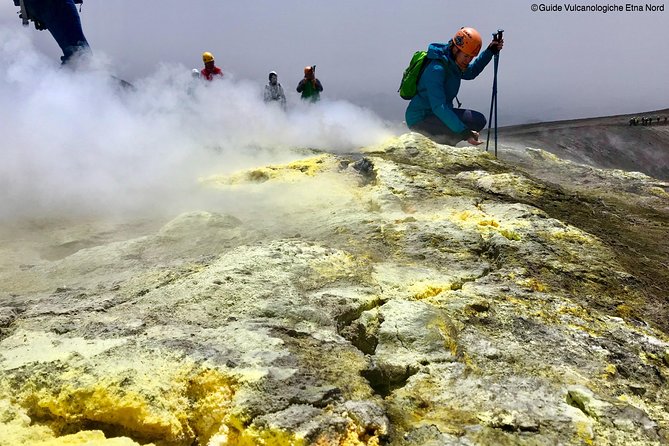
A licensed volcano guide does much more than keep the group moving. The guide watches the weather, wind direction, gas, ground heat, visibility, and official restrictions. Those details decide where you can safely stand and how close you can get to a crater.
Guides also help you read the mountain. Mineral colors, old lava flows, ash layers, and crater shapes make more sense when someone explains how eruptions built and reshaped the summit.
Domenico has been noted for speaking three languages during the outing and repeating explanations so the whole group could follow. That is useful in a mixed-language group, especially when instructions involve safety or changes to the route.
The experience provider is Guide Vulcanologiche Etna Nord. The guide may alter the itinerary or interrupt the walk if environmental, climatic, or volcanic conditions threaten the group. You should see that as an essential part of the service, not a failure to deliver the original plan.
Is the $129.40 price good value?
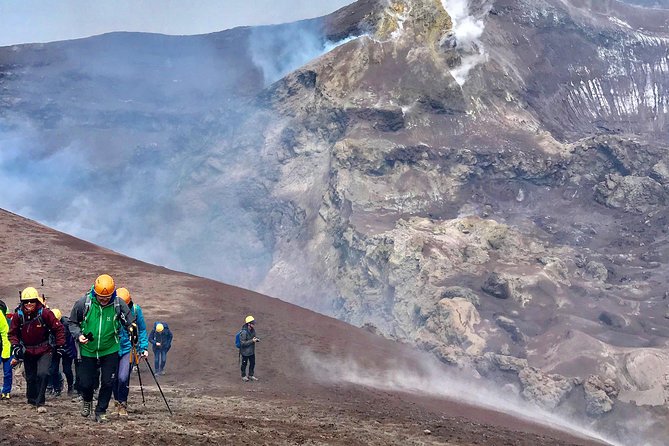
At $129.40 per person, this is not a budget walk. The value depends on how much of the included support you would otherwise need to arrange yourself.
The price includes a licensed volcano guide, accident insurance, Etna admission, trekking poles, trekking shoes, helmets, warm jackets, extra socks, and an extra backpack. For a high-altitude route on an active volcano, that equipment and supervision are meaningful benefits.
The extra €52 cable-car fee changes the calculation. Add the cable car, transport to the meeting point, parking, and lunch, and the outing costs noticeably more than the headline price. You should also check exactly which upper mountain transport is included in your booking, since the tour description refers to 4×4 access while listing transport services and the cable car as separate considerations.
I still see the price as reasonable for a person who wants the summit zone without arranging specialist equipment or judging volcanic conditions alone. It is less attractive if you mainly want a quick Etna viewpoint or a relaxed walk. In that case, a shorter excursion would better match your needs.
The experience has a 4.8 rating from 98 ratings, with 96 percent recommending it. The strongest praise centers on the guides, organization, equipment, explanations, and the feeling of reaching a genuinely wild part of Etna.
Who should book this Etna excursion?
You are a good match if you:
- Exercise regularly and can manage a long, steep walk.
- Have experience with high-altitude hiking.
- Want geology, volcanic activity, and eruption history explained along the way.
- Accept that weather and gas may change the route.
- Are comfortable walking on loose ash and unstable rock.
- Want a small group rather than a large sightseeing operation.
You should think twice if you have breathing problems, hypertension, poor physical fitness, or a strong fear of heights and unstable ground. The crater-edge sections may cause dizziness, and the altitude can make a normal uphill walk feel much harder.
Pregnant women past the third month are not permitted to join. Contact lenses are also a poor choice because of volcanic gases and airborne ash.
Practical preparation for the morning
Bring a lunch bag and water, since food is not included. Pack a hat and gloves from autumn through spring, and dress for cold, wind, and changing conditions even if Nicolosi feels warm.
Wear the supplied trekking shoes or other suitable footwear accepted by the guide. This is not the place for trainers with smooth soles. Use the trekking poles on both the ascent and descent, not just when you feel tired.
Avoid contact lenses. Volcanic ash can cause trouble if it gets under a lens, and gas around fumaroles can irritate your eyes.
Tell the guide about relevant health conditions before the walk. Pay attention to fatigue, dizziness, and breathing trouble, and do not feel pressured to continue if you are unwell. The guide can change the route, but you need to give accurate information about your condition.
Free cancellation is available up to 24 hours before the 8:30 am start for a full refund. Cancellations or changes inside that window are not accepted for a refund. If poor weather, insufficient numbers, or volcanic conditions cancel the outing, you are offered another date or a full refund.
Should you book this Etna hike?
Book it if you want the demanding version of Mount Etna: high altitude, crater rims, ash slopes, fumaroles, and a real lesson in how an active volcano works. The guide, safety gear, and small group make the upper mountain far more practical than attempting this route alone.
Do not book it simply because you want to say you reached Etna’s highest crater. Access can change at any moment, and the exact summit may be off limits. Book it for the mountain experience itself, knowing the guide may take you to a safer viewpoint instead.
For fit walkers who accept that tradeoff, this is a strong choice. Budget for the €52 cable car, arrive prepared for cold and rough ground, and leave your afternoon open. Etna will decide the final route, as it should.
FAQ
Where does the excursion start?
It starts at Piazzale Funivia Etna Sud, 95030 Nicolosi, Sicily. The meeting time is 8:30 am.
Where does the tour finish?
The activity ends back at the meeting point at Etna Sud.
How long does the excursion last?
It lasts approximately five hours and 30 minutes. The mountain itinerary describes a five to six-hour trek, with the usual return around 1:30 to 2:30 pm.
How far do you walk?
The trek is approximately 12 to 13 kilometers. It includes about 600 meters of ascent and a descent of roughly 6 kilometers.
How high does the route go?
The route generally climbs to around 3,300 meters. It may reach 3,380 meters when volcanic, weather, and safety conditions allow.
Is the cable car included?
No. The round-trip cable-car service from 1,900 to 2,500 meters costs €52 per person.
Is equipment provided?
Yes. The excursion includes trekking poles, trekking shoes, helmets, a warm jacket, extra socks, and an extra backpack.
Do I need to be physically fit?
Yes. The activity requires strong physical fitness and high-altitude hiking preparation. It is not recommended for people with certain breathing conditions or hypertension.
Can the route or summit access change?
Yes. Guides may change or interrupt the excursion because of volcanic activity, gas, wind, weather, heat, or official safety restrictions. Poor weather or volcanic conditions can also lead to cancellation, with another date or a full refund offered.
Just added around Sicily
- Anti-Mafia Heroes (Cool Hours) Morning Walking Tour★ 5.0 · 3 reviews
- Nicolosi: Excursion Etna Craters at 3000 mt.★ 4.2 · 3 reviews
- DISCOVER THE SECRET OF PALERMO Walking Tour Combining Art and best street food★ 5.0 · 3 reviews
- The art of the Italian Aperitivo with a local: Learn & Enjoy in Palermo★ 5.0 · 3 reviews
- Taormina PRIVATE EAST COAST EXCURSIONS 2 Exclusive Days with Guide Driver★ 5.0 · 3 reviews
- Monti Rossi Adventure Park Entry Ticket Full★ 5.0 · 3 reviews
- Guided kayak tour inside the Stagnone of Marsala★ 5.0 · 3 reviews
- Catania : Diving for patented divers★ 5.0 · 3 reviews
Mount Etna Tours, compared.
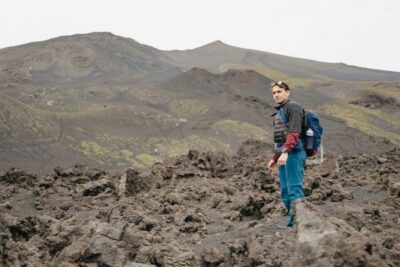
Mount Etna Morning or Sunset Day Trip with Tasting
Read our review →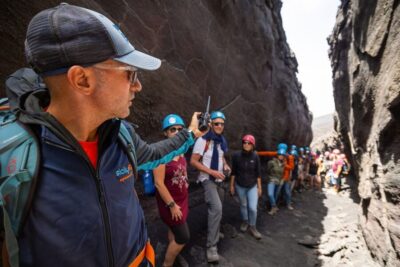
Guided Volcano Summit Hiking Tour with Cable Car
Read our review →
Sunset Jeep Tour of Mount Etna and Lava Flow Caves
Read our review →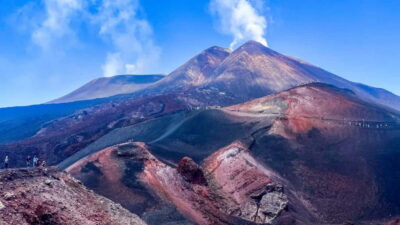
Etna and Alcantara Gorges Full-Day Tour with Lunch
Read our review →