
Reviewed · WALKING TOURS
Syracuse’s Archaeological Park Private Walking Tour
Syracuse’s Neapolis Archaeological Park packs Greek theater, Roman engineering, ancient quarries, and a famous cave into one hillside site. A private guide helps you connect these scattered ruins, rather than simply ticking them off with a map. Marco is a name worth requesting, if he is available, thanks to his strong reputation for stories, legends, and local detail.
I like the two-hour focus, which gives you the park’s major sights without taking over your day. I also like the private format: you can ask questions, set a comfortable pace, and keep children involved instead of trying to follow a large group.
The main catch is cost. At $180.62 per person, with a minimum of two adults, this is a serious spend before the separate €16.50 park admission. You are paying for personal guidance, not transportation or a bargain entry ticket.
In This Review
- Key points to know before you book
- Why two hours works well at Neapolis
- Starting at the Neapolis entrance on Via Luigi Bernabò Brea
- The Greek theater, Syracuse’s grand opening scene
- Nympheum fountain and the park’s plant life
- Latomie, the ancient stone quarries
- The Ear of Dionysius and its remarkable acoustics
- The Roman amphitheater and a change of era
- Hilltop views and local atmosphere
- What a private guide adds to the visit
- Price, park admission, and overall value
- Who should book this Syracuse walking tour?
- Practical details for your visit
- Should you book the Neapolis private tour?
- FAQ
- Where does the Syracuse Archaeological Park tour begin?
- Where does the tour end?
- How long does the private walking tour last?
- Is the tour private?
- What language is offered?
- What sights are included?
- Is the park entrance fee included?
- Is hotel pickup included?
- Can children join the tour?
- What happens if I need to cancel?
Key points to know before you book
- The Greek theater is the centerpiece: See Sicily’s largest Greek theater and learn how the site worked beyond its impressive stone rows.
- The Ear of Dionysius rewards a guide: Its unusual shape and acoustics make more sense when someone explains the cave’s purpose and legends.
- Private means personal: Only your party takes part, so you can ask questions and adjust the pace.
- The Roman amphitheater adds another era: The park lets you compare Greek and Roman building styles in one visit.
- Allow for the entrance fee: The tour price does not include the €16.50 admission charge listed for the archaeological park.
- Wear proper shoes: This is a walking tour over a large ancient site, with a hilltop viewpoint and uneven outdoor surfaces.
Why two hours works well at Neapolis
Neapolis is not a single monument you can understand in one glance. It is a broad archaeological park with theaters, quarries, caves, fountains, plants, and open views. The value of a guide is in the connections: Greek Syracuse was not simply replaced by Roman Syracuse, and the site’s later uses add more layers to what you see.
Two hours is enough for the principal monuments. You will not have endless time to linger at every stone or study each corner of the park, but you should come away with a clear sense of its scale and purpose. I see this as a good first visit for someone who wants the essential sights, especially if a full day of ancient ruins sounds heavy.
The private setup also matters. Your guide can spend more time on the subjects that interest you, explain a point again, or keep moving if the children have had enough ancient masonry for one morning. The relaxed pace is not the same as a slow, scholarly seminar. It is a focused walk with room for conversation.
More walking tours in Sicily:
- Palermo: NO Mafia Walking Tour
★ 4.8 · 2,431 reviews - Palermo Original Street Food Walking Tour by Streaty
★ 5.0 · 2,105 reviews - Palermo: Street Food and History Walking Tour
★ 4.9 · 1,294 reviews
Starting at the Neapolis entrance on Via Luigi Bernabò Brea
You meet your guide at the entrance to the Neapolis Archaeological Park, at Via Luigi Bernabò Brea 14 in Syracuse. The tour begins and ends at this same meeting point, so you need to arrange your own way there and back.
Hotel pickup and drop-off are not included, though they are available on request. If you need that service, ask about it before booking rather than assuming it is part of the standard arrangement. The experience is offered in English, and you are asked to provide your preferred time in the booking requirements field. The local operator then reconfirms the time by email.
The park is large enough that comfortable walking shoes are a sensible choice. You will be outdoors for the visit, moving between several major sites and reaching a high point for views. Bring the same practical attitude you would use for any open-air archaeological area: shoes with a secure sole, water bought before or during the visit, and protection from the sun if needed.
The Greek theater, Syracuse’s grand opening scene
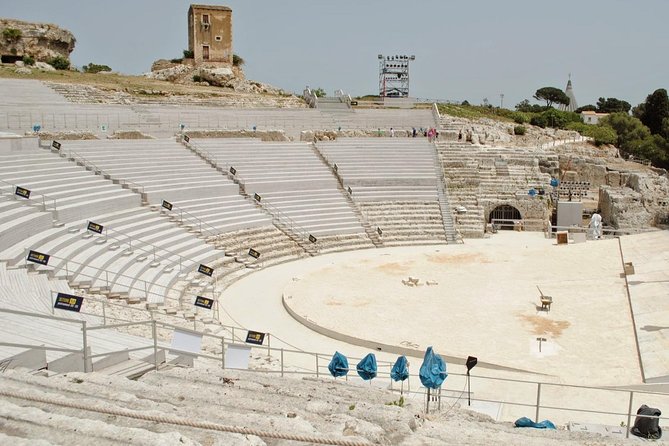
The Greek theater is the first major reason to visit Neapolis. It is described as the largest Greek theater in Sicily, and its size gives you an immediate sense of Syracuse’s importance in the ancient Mediterranean world.
A guide can help you read the theater as more than a large semicircle of stone. Look at the relationship between the seating, performance area, and surrounding hill. The setting explains why ancient builders chose this spot and why the theater remains such a powerful sight even when no performance is taking place.
This is also where a private guide earns the fee most clearly. Without context, you may admire the scale and move on. With a guide, you can ask about the theater’s role in Greek Syracuse, the kinds of performances held there, and the battles and political changes that shaped the city. The supplied information specifically points to stories, legends, and battles as part of the guiding style, which is useful for turning bare ruins into a place with human drama.
Do not expect an uninterrupted private monument. The park is open to other visitors, and the theater is one of its main attractions. The private element belongs to your guide relationship, not exclusive access to the ruins.
Nympheum fountain and the park’s plant life
The Nympheum fountain adds a quieter note to the tour. It is easy to focus only on theaters and stonework, but water was essential to ancient life, and a fountain helps you picture the practical side of the site.
The setting also brings local flora into the conversation. One guide, Marco, is praised for pointing out plants and even connecting them with local culinary uses. That is a small detail, but it can make the walk feel more tied to Sicily rather than like a detached lesson in ancient architecture.
I especially like this part for visitors who want more than dates and rulers. Plants, water, food, and everyday habits give you a sense of how people used the area. The botanical details will not replace the park’s major monuments, but they can break up the steady march from one ruin to another.
The exact amount of time spent here depends on your guide and your interests. Since the entire visit lasts about two hours, you should tell the guide early if flora, food, or daily life matters to you. A private tour gives you a better chance of shaping that balance.
A few more Sicily tours and experiences worth weighing up
- Palermo: Private Custom Walking Tour with Local Guide
★ 4.7 · 661 reviews - Private 6-Hour Tour of Three Etna Wineries with food&wine tasting
★ 5.0 · 417 reviews - Private Tour explore Vulcano Island by Kayak & Coasteering
★ 5.0 · 338 reviews - Godfather vs Mafia Tour & Pasta Lunch (Small Group or Private)
★ 5.0 · 304 reviews
Latomie, the ancient stone quarries
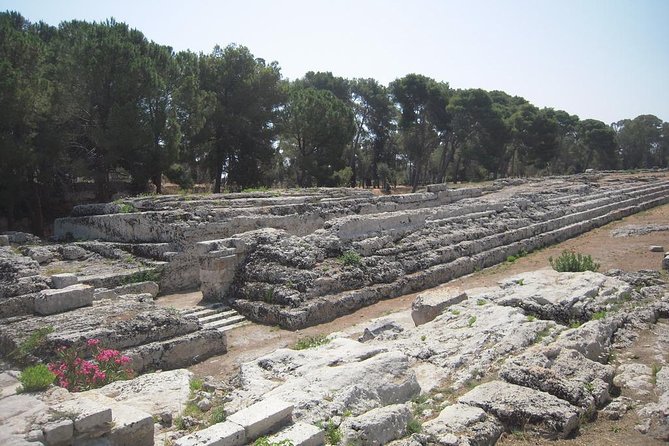
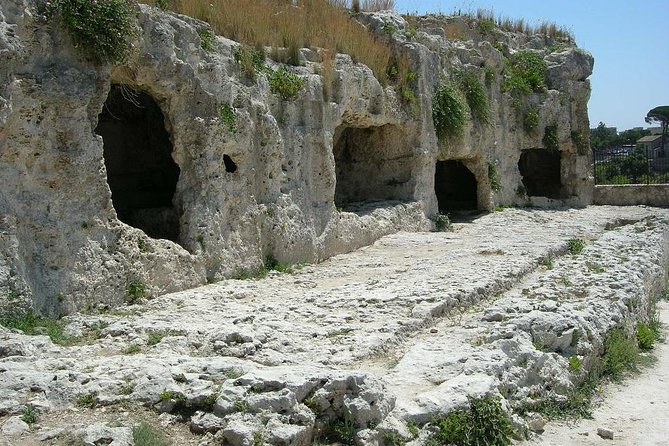
The Latomie are ancient stone quarries, and they help explain where much of Syracuse’s building material came from. These are not polished monuments. Their value lies in the scale of the excavation and in the harsh work required to cut stone from the earth.
A guide can point out how the quarries fit into the wider city. They were sources of building material, but they also became places with darker associations connected to conflict and captivity. The supplied tour description highlights battles and legends, so expect the guide to give the quarries a human story as well as a geological one.
The Latomie are a good reminder that ancient Syracuse was built through labor. Greek theaters and Roman arenas can look almost abstract when you see only the finished stone. The quarries show the rough beginning of that process.
Some visitors may find this section less immediately dramatic than the theater or the cave. That is normal. Give it attention because it explains the raw material behind the monuments, but do not expect a separate, fully developed attraction with displays or indoor exhibits. The appeal is in the open setting and the story told by the rock itself.
The Ear of Dionysius and its remarkable acoustics
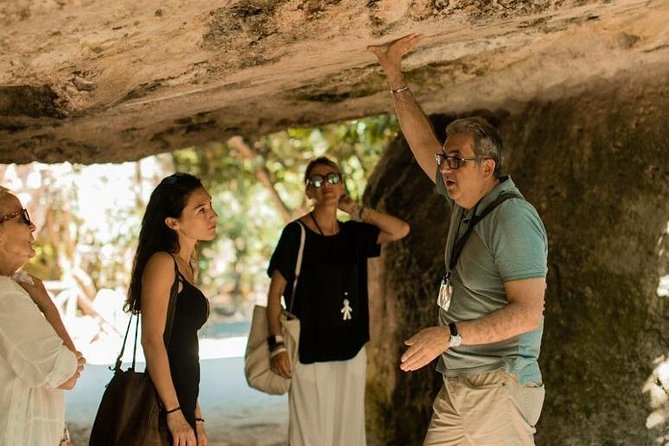
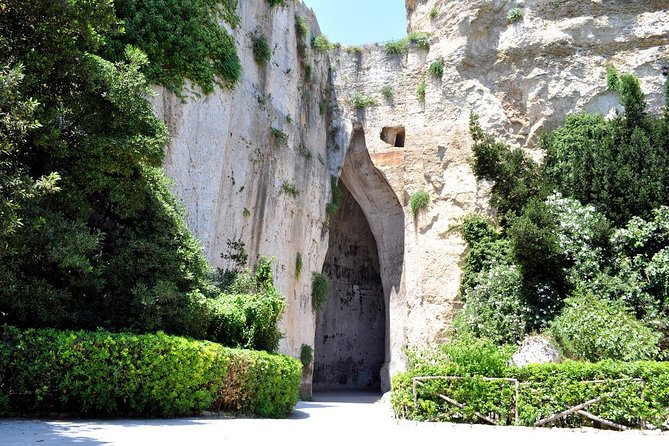
The Ear of Dionysius is the park’s most memorable natural and man-made feature. This cave is famous for its unusual shape and acoustics, and its name comes with a legend connected to the ruler Dionysius.
The cave’s form is the thing to watch. Its tall, curved interior creates an acoustic effect that a guide can demonstrate or explain on the spot. You may notice how small sounds carry, though the exact experience depends on conditions and how crowded the cave is at the time.
This is one of the clearest cases for hiring a guide. You can walk into a cave and see an unusual hollow in the rock, but the name, shape, and political legend give it much more force. A good explanation also helps you separate the physical facts from the stories that grew around the place.
Expect a cave rather than a comfortable museum room. You may find the acoustics impressive, but the space can feel enclosed, and you should follow the guide’s instructions. If you dislike confined areas, keep that in mind when deciding if this tour suits you.
The Roman amphitheater and a change of era
The Roman Amphitheater gives the park a clear change of tone. The Greek theater points to performance and civic life in the Greek world, while the Roman structure reflects a different style of public entertainment and engineering.
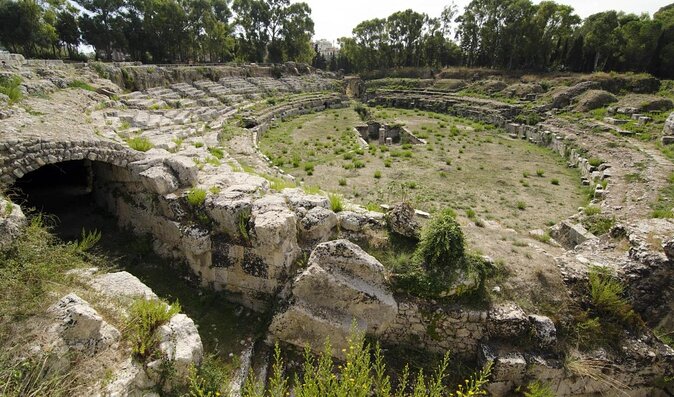
Seeing both in one visit is one of Neapolis’s best advantages. You can compare their shapes, scale, and likely uses while the details are still fresh. The park becomes easier to understand as a place that changed over time, not a single frozen Greek site.
A guide can explain what you are looking at and place it within Syracuse’s later Roman period. That context matters because the amphitheater might otherwise feel like just another large oval ruin. The contrast with the Greek theater gives the whole walk a clearer structure.
The Roman amphitheater is impressive, but do not expect a complete building. As with much of the park, you are reading foundations, surviving stone, and the shape of the remains. The guide’s explanation does much of the work of helping you picture the original structure.
Hilltop views and local atmosphere
The tour includes a viewpoint from the top of the hill. This is more than a quick photo stop. Looking out across the area helps you understand why the ancient site was placed where it was and how the archaeological park relates to modern Syracuse.
Views also provide a welcome pause after the enclosed Ear of Dionysius and the heavy stone of the quarries. The local plants and open air give the visit some variety. I would pay attention to this part if you prefer tours that mix monuments with a sense of place.
The view is weather-dependent, of course. The supplied details promise a panoramic outlook, but they do not specify exactly what will be visible on any particular day. Think of it as a useful orientation point, not a guaranteed perfect photograph.
What a private guide adds to the visit
The strongest reason to book this experience is the guide’s role. You are not just being led from one attraction to the next. The aim is to understand a complicated archaeological area in a short time.
Marco is the guide name associated with the strongest praise, particularly for explaining the site through stories, legends, battles, plants, and food. If you want him specifically, ask the operator before relying on that possibility. The tour is offered in English, while one account also describes a guide speaking French very well, so language availability should be confirmed if French matters to you.
Personal attention is especially helpful for families. Children are more likely to stay involved when the guide can respond to their questions and adjust the explanation. One French-language account specifically describes the guide making sure children participated rather than becoming bored.
Still, private does not mean every guide will use the same style. Some guides focus more on architecture, others on stories or local life. Tell your guide what you want at the beginning: ancient theater, Roman engineering, legends, family-friendly explanations, or local plants. Two hours goes quickly, so a little direction helps.
Price, park admission, and overall value
The listed tour price is $180.62 per person, and at least two adults are required per booking. For two adults, that puts the guide cost at $361.24 before the separate €16.50-per-person entrance fee listed for Parco Archeologico della Neapolis.
That is expensive for a two-hour walk. I would not choose it if your main goal is simply to enter the park and see the monuments at the lowest possible cost. The price makes more sense for a couple or small family that values a private guide, flexible conversation, and a clear explanation of a complicated site.
There is a confusing detail in the supplied booking information: the itinerary line says admission is included, while the inclusions section says the €16.50 entrance fee is not included. Treat the separate fee as payable unless the operator confirms otherwise. This is worth clarifying before you go.
Group discounts are available, but the data does not specify the discount amount. Ask for the total price for your party rather than assuming the per-person figure will remain unchanged. Food and drinks are also not included, though they are available for purchase.
Who should book this Syracuse walking tour?
I would choose this tour for a first visit to Syracuse when you want the major sights explained in one organized walk. It suits couples, families, and small groups who would rather ask questions than read a guidebook while walking.
It is also a good match for visitors with limited time. The two-hour schedule covers the Greek theater, Nympheum, Latomie, Ear of Dionysius, Roman amphitheater, local plants, and a hilltop view. You can then spend the rest of the day in another part of Syracuse.
Families should consider it because the private format allows the guide to keep children involved. History fans may appreciate the stories and battle accounts, while food-minded visitors can ask about the edible or culinary uses of plants in the park.
I would hesitate if you dislike walking, want hotel transport included automatically, or are counting every euro. The tour does not include pickup as standard, and the park entrance fee appears to be extra. It also is not designed as a long, unhurried study of every ruin.
Practical details for your visit
Confirmation arrives at the time of booking, but your preferred tour time must be supplied in the special requirements field. The operator reconfirms the time by email, so check your messages before the visit.
The activity is private for your party only. Children must be accompanied by an adult, and service animals are allowed. Most people can take part, but comfortable shoes remain important because this is a walking tour through a sizable archaeological park.
Protective equipment is provided at the beginning of the excursion, including a mask, gloves, and hand sanitizer. Food and drinks are not part of the tour, so plan for those separately.
Free cancellation is available up to 24 hours before the local start time. Cancellations or changes made less than 24 hours ahead do not qualify for a refund, so watch the local time rather than relying only on your home time zone.
Should you book the Neapolis private tour?
Book it if you want Syracuse’s ancient monuments to make sense, not merely appear in front of you. The private format, two-hour route, strong storytelling, and attention to children give this walk real value for a small party.
Skip it if you are comfortable exploring independently and mainly want a low-cost park visit. The price is high once the possible admission fee is added, but for two adults who want a personal guide and a tight introduction to Neapolis, it can be a smart use of a morning.
FAQ
Where does the Syracuse Archaeological Park tour begin?
It begins at the entrance to Neapolis Archaeological Park, at Via Luigi Bernabò Brea 14, 96100 Siracusa, Italy.
Where does the tour end?
The activity ends back at the meeting point.
How long does the private walking tour last?
The tour lasts approximately two hours.
Is the tour private?
Yes. Only your party participates in the private activity.
What language is offered?
The tour is offered in English. French language service is described in the available tour information, but you should confirm it with the operator if needed.
What sights are included?
The route includes the Greek theater, Nympheum fountain, Latomie stone quarries, Ear of Dionysius, Roman Amphitheater, local flora, and a panoramic hilltop view.
Is the park entrance fee included?
The supplied details conflict. One itinerary line says admission is included, while the inclusions section lists the €16.50 entrance fee as not included. Confirm this point before your visit.
Is hotel pickup included?
No. Hotel pickup and drop-off are not included as standard, though they are available on request.
Can children join the tour?
Yes, but children must be accompanied by an adult.
What happens if I need to cancel?
You can cancel at least 24 hours before the experience start time for a full refund. Cancellations or changes made less than 24 hours before the local start time are not refunded or accepted.
Just added around Sicily
- Anti-Mafia Heroes (Cool Hours) Morning Walking Tour★ 5.0 · 3 reviews
- Nicolosi: Excursion Etna Craters at 3000 mt.★ 4.2 · 3 reviews
- DISCOVER THE SECRET OF PALERMO Walking Tour Combining Art and best street food★ 5.0 · 3 reviews
- The art of the Italian Aperitivo with a local: Learn & Enjoy in Palermo★ 5.0 · 3 reviews
- Taormina PRIVATE EAST COAST EXCURSIONS 2 Exclusive Days with Guide Driver★ 5.0 · 3 reviews
- Monti Rossi Adventure Park Entry Ticket Full★ 5.0 · 3 reviews
- Guided kayak tour inside the Stagnone of Marsala★ 5.0 · 3 reviews
- Catania : Diving for patented divers★ 5.0 · 3 reviews
Walking Tours, compared.


Palermo Original Street Food Walking Tour by Streaty
Read our review →
Palermo No Mafia walking tour: discover the Anti-mafia culture in Sicily
Read our review →


Street Food Walking Tour with Local Guide & Tasting
Read our review →
Browse the lists this tour appears in