
Reviewed · WINE TOURS
Syracuse Private Walking Tour with Traditional Lunch and Wine
The best part of this Syracuse tour is the combination of Ortigia’s major sights with the small stories that make them meaningful. You walk from the glowing limestone of Cathedral Square to the myth of Arethusa, then finish with Sicilian food and wine instead of simply being dropped back on a street corner.
I like the private format, which lets your guide set the pace and answer your questions. I also like the local focus: guides including Biagio, Michele, Marco, and Corrado have been praised for clear storytelling, strong English, and a real connection to Syracuse. The main consideration is price. At $265.05 per person, this costs more than a basic two-hour city walk, so its value depends on how much you want the food, wine, and personal attention.
In This Review
- Key points to know before booking
- Why this Ortigia walk works so well
- Cathedral Square and Syracuse’s Baroque face
- Arethusa Fountain and the myth beneath the city
- The Jewish Quarter and Via Maestranza
- Archimedes Square and the Fountain of Diana
- The Sicilian meal and wine tasting
- Guides, pace, and the private format
- Is $265.05 per person a fair price?
- Who should book this Syracuse experience?
- Final verdict: book it for personal context and a meal
- FAQ
- How long does the Syracuse private walking tour last?
- Where does the tour begin?
- Is hotel pickup and drop-off included?
- What sights are included?
- Is food and wine included?
- Can vegetarian or other dietary requests be accommodated?
- What is the cancellation policy?
Key points to know before booking
- A private walk through Ortigia: Your party joins the guide alone, with no large group to trail behind.
- Four key historic stops: See Cathedral Square, Arethusa Fountain, the Jewish Quarter, and Archimedes Square.
- Local guides make the difference: Biagio, Michele, Marco, and Corrado are among the guides associated with particularly strong experiences.
- Food and wine close the tour: Expect traditional Sicilian food and a tasting at a local wine bar or establishment.
- Flexible timing: Several departure times are available, including an evening start that can work well after arrival.
- Plan for a premium price: The tour is more expensive than many short walking tours, but includes private guiding, food, and wine.
Why this Ortigia walk works so well
Ortigia is compact, but it is not simple. Greek, Roman, Byzantine, Norman, Jewish, and Baroque chapters overlap on the island. You can walk past a grand church, a fountain, or a quiet side street without realizing what you are seeing.
That is where a good guide earns the fee. This experience is not built around rushing through a checklist. It uses a short route to connect Syracuse’s myths, civic life, architecture, and food. The two-hour schedule is long enough to get your bearings without taking over your whole day.
The private setup is especially useful if you are arriving in Syracuse for the first time. You can ask about restaurants, local dishes, or places you want to return to later. Guides such as Marco have also worked well for visitors who took the tour on their first day, helping them understand the island before exploring alone.
The tour is offered in English. One piece of practical advice: stay close to the guide in busy streets and ask for a repeat if traffic or street noise makes a point hard to hear. One person who took the walk in another language found that noise made some details difficult to catch. That is a useful reminder that the storytelling is central to the experience.
More Walking Tours in Syracuse
- Syracuse: Street Food Walking Tour in Ortigia with Tastings
★ 4.9 · 293 reviews - Syracuse: Ortigia and Neapolis Guided Walking Tour
★ 4.7 · 205 reviews - Syracuse: Ortigia Private Walking Tour
★ 4.8 · 181 reviews
Cathedral Square and Syracuse’s Baroque face
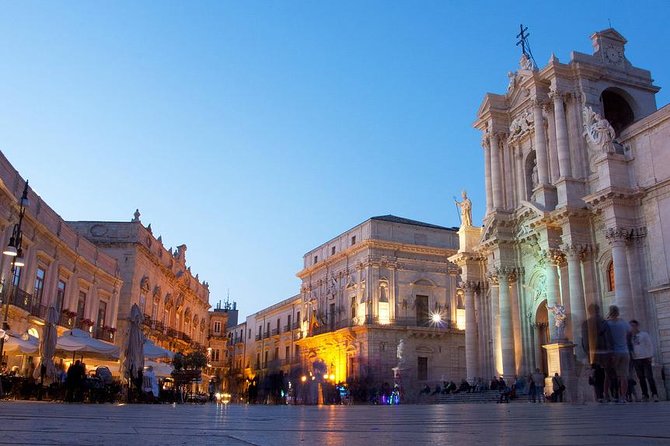
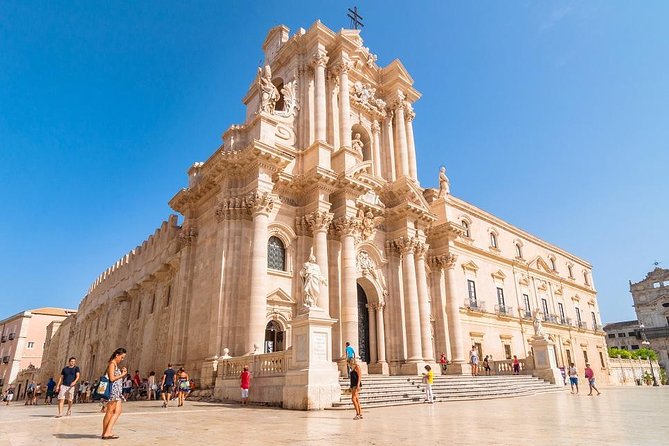
The tour begins at your accommodation in Ortigia, unless you arrange another meeting point. The first major stop is Cathedral Square, a World Heritage site framed by pale limestone buildings.
This is one of Syracuse’s finest open spaces. The bright stone catches the light, and the square has a calm, polished look that can make it easy to forget how many layers of the city are packed into the buildings around you.
The Cathedral is the main event. It is regarded as Sicily’s most important Baroque monument, but its story reaches further back. A guide can help you read the building as a record of changing Syracuse, rather than as a single-period church.
You also see Palazzo Beneventano, once connected with the city senate, and St. Lucy’s Church, a Norman monument from the fifteenth century dedicated to Syracuse’s patron saint. These stops give the square more depth. You are not simply admiring façades. You are seeing how religion and civic power shaped this part of the island.
The Cathedral may be the most rewarding place to hear a guide explain the past. One particularly strong version of the tour included a short look inside, which helped make sense of the unusual building. Since exact access can depend on conditions at the time, treat the interior visit as something to appreciate if available rather than the sole reason to book.
Take a moment to notice the stone. Ortigia’s limestone is not just a backdrop. It gives the square its pale, almost glowing character, especially when the light changes later in the day.
Arethusa Fountain and the myth beneath the city
From Cathedral Square, the walk continues to Arethusa Fountain, one of Ortigia’s signature sights.
The fountain is tied to the story of Arethusa, a nymph who was changed into a watercourse by Artemis, also known as Diana, while escaping the unwanted attention of Alpheus, or Alfeo. The tale is more than a decorative legend. It shows how Greek mythology remains part of Syracuse’s sense of place.
A guide can also explain why this stop feels unusual in an urban setting. You are looking at fresh water in the heart of an island city, surrounded by stone streets and old buildings. The contrast gives the fountain much of its appeal.
This is also a good place to slow down. A rushed group tour may allow only a quick glance and a photograph. On a private tour, you can ask about the myth, the fountain, or the way the site fits into Syracuse’s Greek past.
Do not expect a long stop with a formal presentation. The tour lasts about two hours and covers several areas, so the guide has to keep things moving. Still, Arethusa Fountain provides a welcome change from churches and palaces, and the mythology adds a touch of drama to the walk.
The Jewish Quarter and Via Maestranza
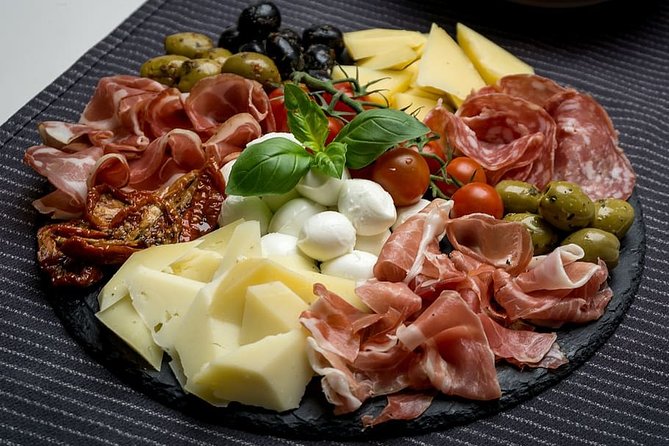
Next comes the Jewish Quarter, including Via Maestranza.
Via Maestranza was once associated with the town’s nobility and is lined with grand homes that reflect the social power of earlier residents. This section of the route helps you see Ortigia as a lived-in city, not just a collection of famous monuments.
The streets are also valuable because they connect the headline sights. You get a sense of how the island’s neighborhoods fit together, and you may notice architectural details that would be easy to miss without local guidance.
The tour’s appeal here lies in context. A guide such as Corrado has been praised for explaining the history of Syracuse and the wider region in a friendly, detailed way. That sort of narration is useful on Via Maestranza, where the meaning is often in the buildings, layout, and layers of occupation rather than in one dramatic object.
If you enjoy architecture, this may be one of the most interesting parts of the route. If you prefer only major monuments, it may feel less immediate than Cathedral Square. I would still keep it in the itinerary. The quieter streets help balance the better-known stops.
Some versions of the experience have also included the local market and conversation about produce and cuisine. The supplied route specifically names the Jewish Quarter and Via Maestranza, so market access should not be treated as guaranteed. If food is a major interest, ask about the exact route when booking.
More Wine Tours in Syracuse
- Syracuse: Boat Trip with Lunch, Wine, and Swimming Stops
★ 4.6 · 85 reviews - From Siracusa: Etna Tour – Trek, Wine and Food
★ 4.8 · 50 reviews - From Syracuse: Etna Tour with Light Lunch and Wine Tasting
★ 4.8 · 25 reviews - Wine Tasting and Typical Tastings in the Val di Noto
★ 4.4 · 20 reviews
Archimedes Square and the Fountain of Diana
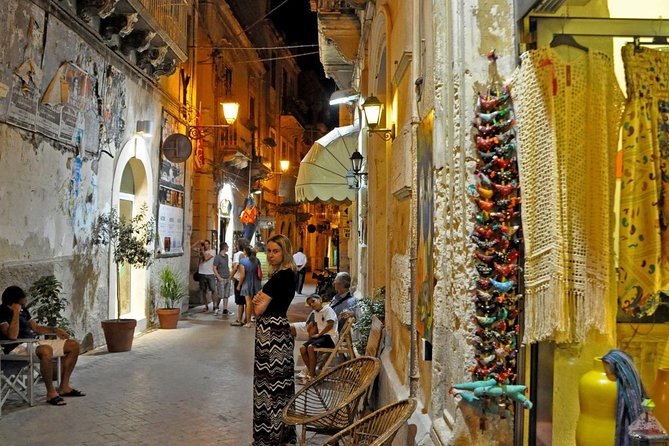
The final sightseeing stop is Archimedes Square, home to the neoclassical Fountain of Diana.
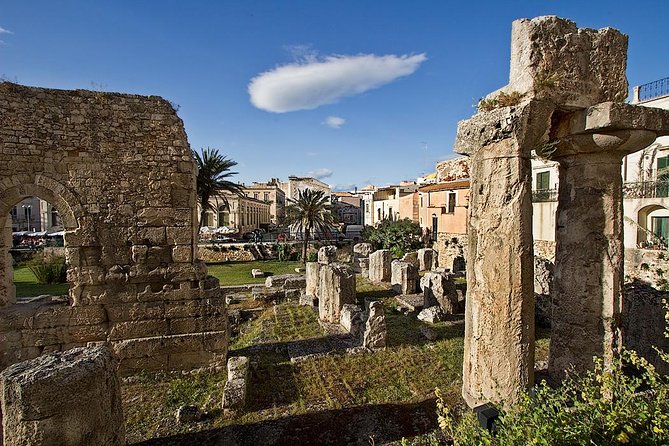
The fountain recalls the city’s long connection with classical stories and Syracuse’s earlier importance. It is a fitting end to the historical portion of the walk because the tour has moved from Baroque churches and Norman monuments back toward the ancient world in the imagination of the city.
This is another place where a guide’s storytelling matters. On your own, you might admire the fountain and move on. With the right explanation, it becomes part of a larger story about Syracuse, its famous figures, its mythology, and its changing public spaces.
The square also gives you a clear sense of the route’s design. You have seen religion at the Cathedral, civic and aristocratic life along Via Maestranza, natural mythology at Arethusa, and public symbolism at Diana’s fountain. For a two-hour walk, that is a useful amount of ground.
The Sicilian meal and wine tasting
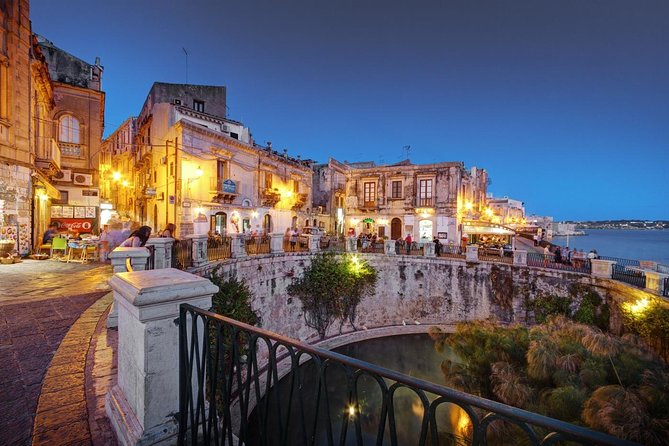
The tour concludes with traditional food and wine. This is not an afterthought. For many people, it is the feature that justifies the higher price.
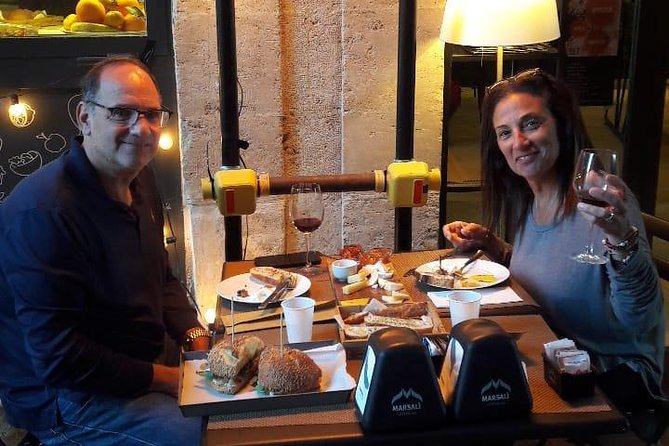
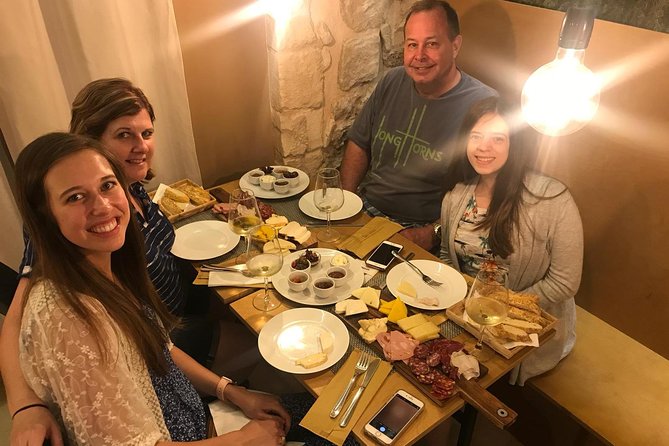
The exact setting can vary. You may finish at a local wine bar, café, or other local establishment. One version ended with a Sicilian platter of cheeses, olives, and meats, along with two local red wines. Another included five Sicilian wines and enough food for some people to skip dinner afterward.
Because the number of wines and precise dishes can vary, do not book expecting one fixed menu. The dependable point is that traditional food and wine tasting are included. Vegetarian and other dietary choices are available if requested in advance.
The food stop changes the rhythm of the afternoon or evening. Instead of ending with a final monument and a polite goodbye, you have time to sit, taste, and ask more questions. Sicilian food is closely tied to local agriculture and custom, so this part can make the earlier conversation about produce and cuisine feel practical.
The word lunch in the tour description may not always match your actual clock time. Departure times are flexible, and one winter experience began at 5:15 p.m. and ended with food and wine in the evening. If you want a midday meal, select an earlier departure. If you are arriving late in the day, an evening start can work nicely.
A small point to keep in mind: the food may be substantial, but the experience is described in different ways, from a traditional lunch to a light tasting platter. Dietary requests should be made before the tour, not when you sit down.
Guides, pace, and the private format
The guide is the heart of this experience. Biagio has been singled out for his warmth, local knowledge, and ability to make visitors feel they are walking with a friend. Michele is associated with a well-paced tour that gives enough information without overwhelming you. Marco has been praised for his mythology and storytelling, while Corrado is known for detailed explanations and visible pride in Syracuse.
Those names do not guarantee your assigned guide, but they give you a useful sense of the style to expect. The strongest descriptions focus on storytelling, warmth, and local insight, rather than on memorized dates alone.
Private guiding also gives you control over the pace. You can ask for more detail at the Cathedral, move along when the group is ready, or pause to clarify a myth. Most people can participate, and the walk is near public transportation. Service animals are allowed.
The tour requires at least two people per booking. Since it is private, only your party participates. That makes it a good fit for couples, families, or friends who want to stay together rather than join a large group.
Protective gloves, masks, and hand sanitizer are provided at the start of the excursion. The meeting point is normally your accommodation in Ortigia. Pickup from a hotel or port in Siracusa can be arranged on request, but hotel pickup and drop-off are not included as a separate transfer service.
Is $265.05 per person a fair price?
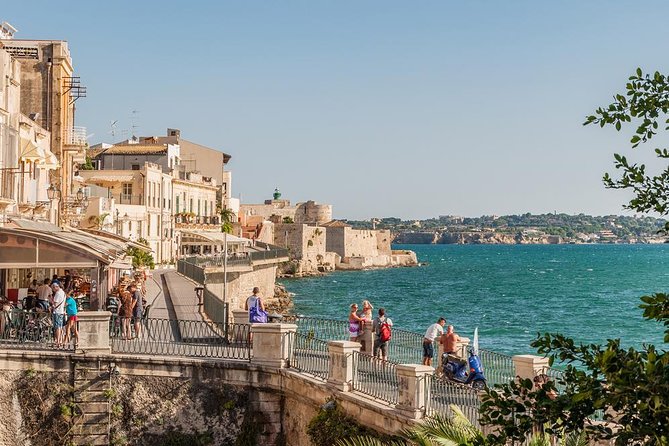
At $265.05 per person, this is a premium short tour. If you compare it with a basic group walk lasting two or three hours, the price may seem high.
The comparison changes once you count what is included. You are paying for a private guide, a route through several important Ortigia sights, traditional food, and wine tasting. You also avoid waiting for a group and can shape the conversation around your interests.
Value depends heavily on your party size and priorities. If you want the least expensive introduction to Syracuse, choose a group tour or explore with a guidebook. If you want a personal welcome, a local meal, and a compact orientation at the start of your stay, the extra cost is easier to defend.
I would especially consider it for a short stay. You get an overview of Ortigia in one sitting, then finish with a meal that can help you decide what Sicilian foods and wines to seek out later. If you have several days and enjoy wandering alone, the same price may be harder to justify.
Who should book this Syracuse experience?
This tour suits you if you want history explained in plain English, prefer a private setting, and like the idea of pairing sightseeing with food. It is also a strong first-day choice because the route introduces the main parts of Ortigia and gives you a local point of reference.
It works well for couples and small groups who do not want to compromise on pace. Families may appreciate the private format too, since the guide can adjust explanations and pauses to suit the group.
Food-focused visitors should request dietary options early. Wine drinkers should remember that the tasting is included, but the number of wines may vary. People looking for an intensive archaeological tour may find this walk too broad, since it concentrates on Ortigia’s streets, squares, churches, fountains, and local culture rather than one archaeological site.
The two-hour duration is another plus. It gives you a useful introduction without exhausting your legs or consuming a full morning. Some experiences have lasted closer to three hours, so allow a little flexibility if your schedule is tight.
Final verdict: book it for personal context and a meal
I recommend this tour if you want more than a quick look at Ortigia’s famous sights. Its best qualities are the private guide, the stories behind the monuments, and the food and wine ending.
Book it early if your dates are fixed, since it is often reserved well in advance. Choose a departure time that matches your meal plans, ask for dietary options, and confirm the meeting arrangement if you want pickup at a hotel or port.
Skip it if your main goal is the lowest possible price or a long archaeological visit. But if you want a friendly introduction to Syracuse, with Cathedral Square, Arethusa Fountain, Via Maestranza, Archimedes Square, and Sicilian flavors tied together in one outing, this is a well-designed choice. Free cancellation is available up to 24 hours before the start time, which gives you some useful flexibility.
FAQ
How long does the Syracuse private walking tour last?
The tour lasts approximately two hours. Some individual experiences have run closer to three hours, so allow extra time if your schedule is tight.
Where does the tour begin?
You meet your guide at your accommodation in Ortigia. Pickup at your hotel or the port in Siracusa can be arranged on request.
Is hotel pickup and drop-off included?
No. Hotel pickup and drop-off are not included as a standard transfer service, although the guide can meet you at your hotel or port in Ortigia by arrangement.
What sights are included?
The route includes Cathedral Square, Syracuse Cathedral, Palazzo Beneventano, St. Lucy’s Church, Arethusa Fountain, the Jewish Quarter, Via Maestranza, Archimedes Square, and the Fountain of Diana.
Is food and wine included?
Yes. Traditional food and wine tasting are included. The final stop may be at a local wine bar, café, or other local establishment.
Can vegetarian or other dietary requests be accommodated?
Yes. Vegetarian and other dietary options are available upon request. Make the request when booking.
What is the cancellation policy?
You can cancel up to 24 hours before the experience starts for a full refund. Cancellations or changes made less than 24 hours before the start time are not accepted for a refund.
More Lunch Experiences in Syracuse
- Private tour Syracuse -Archaeological Park and Ortigia with lunch
★ 5.0 · 28 reviews - From Taormina: Syracuse Tour with lunch in Food Market
★ 4.9 · 12 reviews - Boat tour with typical lunch in Siracusa
★ 4.9 · 8 reviews - Market tour and lunch or dinner at a local’s home in Siracusa
★ 5.0 · 6 reviews
More Sicilian Wine Tastings around Syracuse
- Syracuse: Ortigia Island Boat Tour with Lunch and Wine
★ 4.8 · 9 reviews - From Syracuse: Private Tour Mount Etna with Lunch at Etna Winery
★ 5.0 · 8 reviews - Marzamemi: Val di Noto Wine Tour, Wine Tasting & Aperitif
★ 4.7 · 8 reviews - Palazzolo Acreide: Truffle Hunt with 5-Course Meal and Wine
★ 5.0 · 6 reviews
Just added around Syracuse
- Sicily Boats Avola: Plemmirio boat tour 4 people 4 hours★ 5.0 · 3 reviews
- From Syracuse: Private Taormina and Castelmola tour with lunch★ 5.0 · 3 reviews
- Siracusa Iris Photography Experience★ 5.0 · 3 reviews
- Siracusa E-bike rental service★ 5.0 · 3 reviews
- Tour Ragusa Ibla, Modica and Noto, from Syracuse★ 5.0 · 3 reviews
- Cyclops Tour★ 4.5 · 3 reviews
- Archaeological Syracuse: Neapolis Park private tour★ 5.0 · 3 reviews
- Tour of Syracuse by Ape Calessino★ 3.0 · 3 reviews
Wine Tours, compared.


Private 6-Hour Tour of Three Etna Wineries with food&wine tasting
Read our review →
Browse the lists this tour appears in