
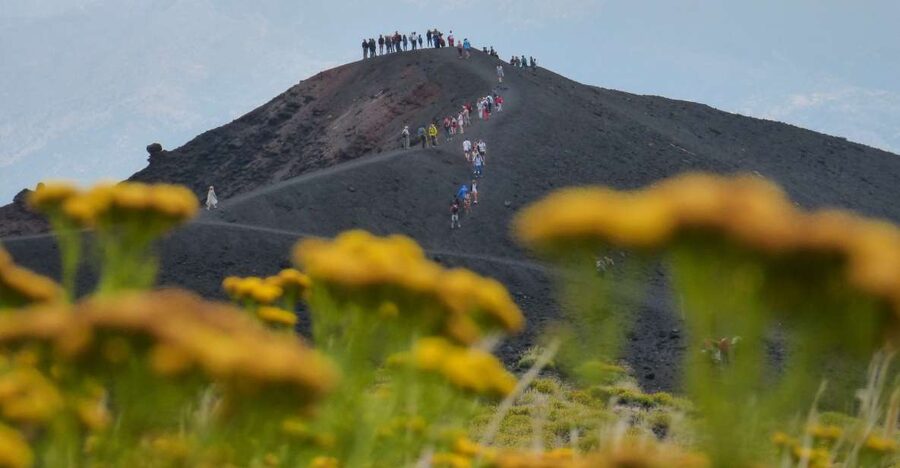
Reviewed · MOUNT ETNA TOURS
Sicily: Mount Etna’s North Slope Craters Guided Hike Tour
Mount Etna’s North Slope gives you a close look at a volcano that is still changing. This three-hour hike reaches the craters formed during the violent 2002 eruption, follows lava flows across the mountain, and ends with wide views over forests and Sicily. You are not just looking at a volcano from a distance. You are walking across its recent work.
I like the mix of scenery and explanation here. You get beech forest, black lava, deep volcanic gorges, and open mountain views in one outing. I also like the guide-led pace and clear science, with guides such as Grazia, Francesco, and Francesca praised for answering questions and keeping the walk comfortable. The main consideration is weather: conditions can force a change or cancellation, and there is no food or drink included.
In This Review
- Key points to know before you book
- Why Etna’s North Slope feels different
- Meeting at Piano Provenzana
- The first section follows an easy lava path
- Beech forest provides a striking change of scene
- Reaching the 2002 craters
- The Ragabo Pinewood canyon shows the cost of an eruption
- Walking the full crater perimeter
- What the three-hour timing means
- Guides make the science easier to understand
- Weather is the main uncertainty
- Is $52 a fair price?
- Who should book this North Slope hike?
- Should you book it?
- FAQ
- Where does the Mount Etna North Slope hike begin?
- How long does the excursion last?
- What languages are available?
- What should I bring?
- How early should I arrive?
- Does the route visit the 2002 eruption craters?
- Can the activity change because of weather?
- Can I cancel for a refund?
Key points to know before you book
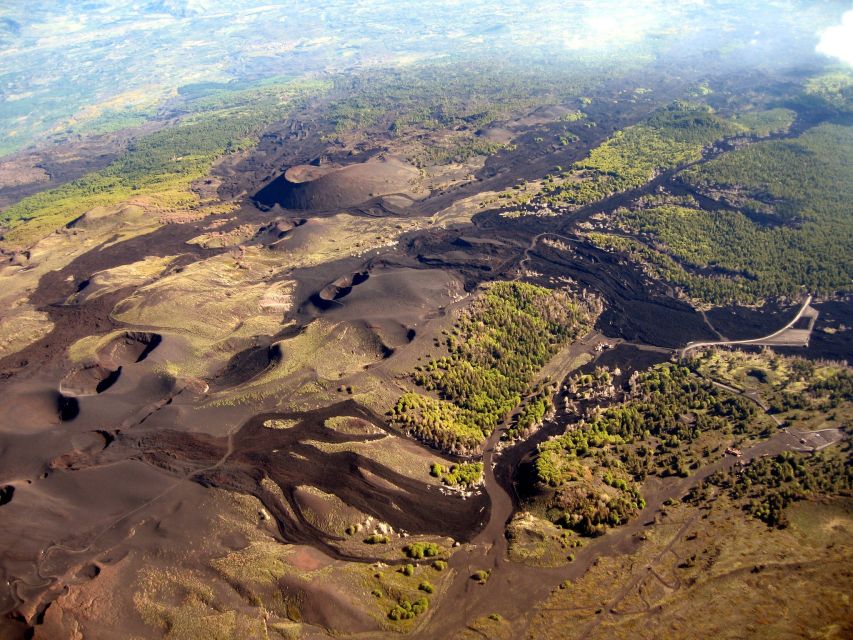
- The route visits the 2002 eruption zone: You walk around craters created during one of Etna’s most important recent eruptions.
- The scenery changes quickly: The route begins beside a lava flow, climbs through beech trees, and reaches stark volcanic terrain.
- Guiding is central to the experience: Your guide explains the craters, lava, plant life, nearby towns, and why volcanic study matters.
- It is a three-hour walk: The excursion is long enough to feel substantial without taking an entire day.
- Piano Provenzana is the meeting point: You meet at the North Slope ski resort area and receive a safety briefing before setting out.
- Bring proper shoes and water: Hiking shoes are required, and snacks and drinks are not included.
Why Etna’s North Slope feels different
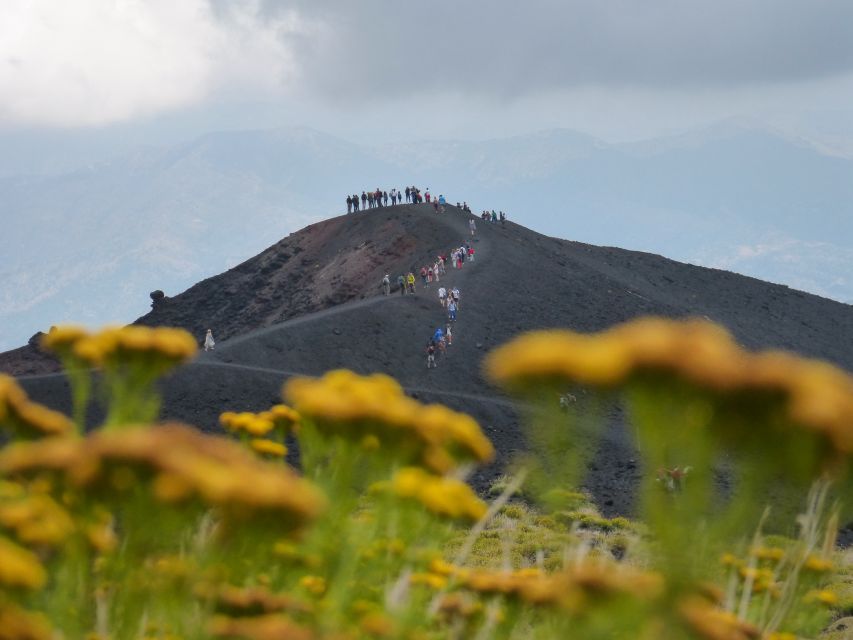
Mount Etna is so large that a short visit can leave you seeing only its outer shell. The North Slope route takes you into a zone shaped by a recent eruption, where the ground itself tells the story.
The craters formed in 2002 are the main attraction. They are not ancient ruins or a distant viewpoint. They are fresh volcanic features in the broad geological sense, formed within living memory. As you walk around their edges, you can picture how lava escaped from the side of the mountain and spread downhill.
That setting gives the hike its force. Black lava sits beside mountain forest. A peaceful path can lead to a fractured, jagged crater rim. The contrast is the point: Etna is both a place of trees and a place capable of sending molten rock down its slopes.
I find the North Slope especially appealing because it offers a strong sense of scale without requiring an all-day expedition. You spend three hours moving through several types of terrain, with a guide helping you understand what you are seeing instead of simply pointing out a few scenic spots.
More ways up Etna and around the craters:
- Catania: Mount Etna Morning or Sunset Day Trip with Tasting
★ 4.8 · 4,028 reviews - Mount Etna: Guided Volcano Summit Hiking Tour with Cable Car
★ 4.7 · 3,784 reviews - Catania: Sunset Jeep Tour of Mount Etna and Lava Flow Caves
★ 4.8 · 2,113 reviews
Meeting at Piano Provenzana
The outing begins at Piano Provenzana, the North Slope area known for its ski resort. You should arrive at least 30 minutes early. That extra time matters because the guide gives you a safety briefing before the walk begins.
The briefing is more than a formal check before departure. Volcanic ground can be uneven, and the route includes lava and crater edges. You need to understand the plan, listen to the guide’s instructions, and make sure you have water and suitable footwear before leaving the meeting point.
Piano Provenzana also gives you a useful sense of the setting. This is a mountain starting point, not a town-center walking tour. The experience is built around open volcanic terrain and natural features, so you should arrive ready to walk rather than expecting facilities along the route.
There is no snack or drink included. Bring your own water, and consider carrying a small snack if you tend to get hungry during a three-hour hike. The supplied essentials are simple: hiking shoes and water.
The first section follows an easy lava path
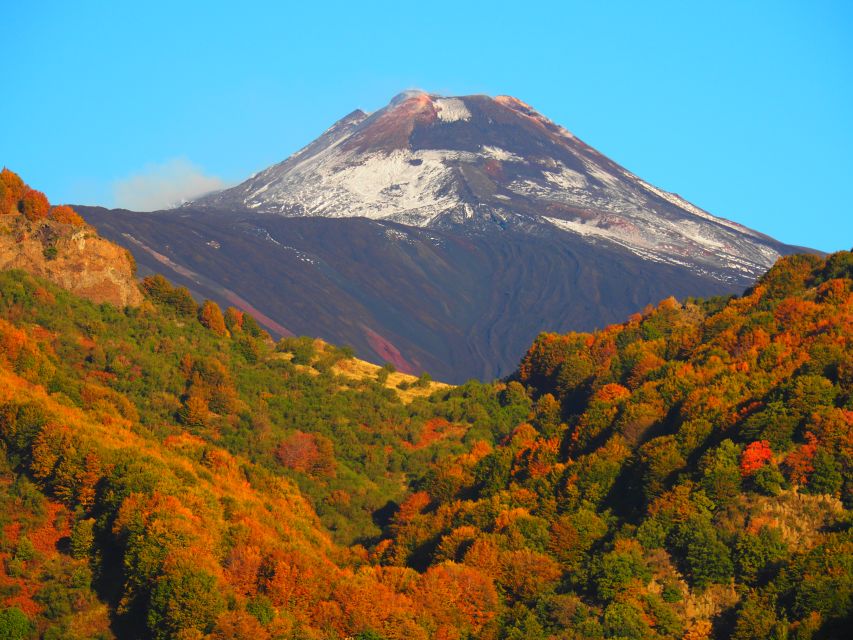
The hike starts on an easy path along the edge of a lava flow. This opening section lets you settle into the walk before the ascent begins.
That lava flow is an important early lesson in how Etna changes. Instead of seeing only a cone-shaped mountain, you begin to follow the material that once moved out from the volcano. The guide can explain how lava travels and how side craters affect the route of an eruption.
The pace is also one of the tour’s practical strengths. A guide can stop to explain a feature, answer questions, and adjust the walk as the group moves upward. One French family specifically completed the hike with an eight-year-old child, which suggests that the route can work for some families. Still, you should judge your own group’s fitness carefully, since the route includes an ascent and uneven volcanic ground.
The walk is not presented as a technical climb. It begins easily, then becomes more demanding as you head toward the craters. You should expect a proper mountain walk, not a flat stroll beside a visitor center.
Beech forest provides a striking change of scene
After the initial lava section, the route climbs through a beech forest. This is one of the hike’s best transitions.
Etna’s volcanic reputation can make you picture nothing but ash and black rock. The forest breaks that pattern. Beech trees create a calmer section of the walk, while the slope and changing vegetation show how life takes hold again on volcanic terrain.
This is also where the guide’s knowledge adds real value. Grazia was praised for explaining Etna’s plant life, nearby towns, and volcanic past, not just the rocks underfoot. That wider context helps you connect the mountain to Sicily as a whole.
The forest is not merely a pleasant backdrop. It is part of the mountain’s ongoing transformation. Volcanic ground may begin as a harsh, exposed surface, then slowly support plants and trees. When you later reach the open craters, you can look back at the forest as another stage in Etna’s long cycle of change.
More walks and treks around Sicily:
- Mount Etna: Trek to 3000m with cable car and jeep
★ 4.7 · 1,978 reviews - Mount Etna: Summit Crater Trek with Cable Car
★ 4.8 · 1,875 reviews - Etna Volcano: South Side Guided Summit Hike
★ 4.7 · 1,545 reviews - Stromboli: Sunset Trekking at Sciara del Fuoco
★ 4.6 · 1,372 reviews
Reaching the 2002 craters
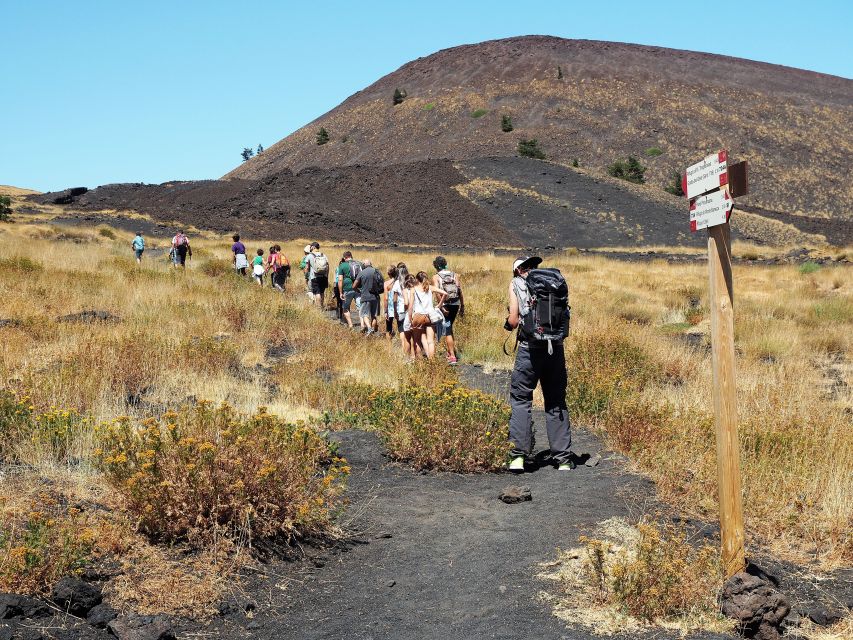
The route eventually reaches the base of the craters on Etna’s northern side. This is the central section of the outing.
The 2002 eruption created new craters and sent lava across the slope. The event is described as one of the most important eruptions of the past few decades, and the route takes you into that area rather than offering only a general view of the mountain.
You carefully cross a lava flow that came from the side craters. The wording matters: this is an area to cross with care and under the guide’s direction. The surface can be rough, broken, and visually confusing, so you should not treat it like an ordinary woodland path.
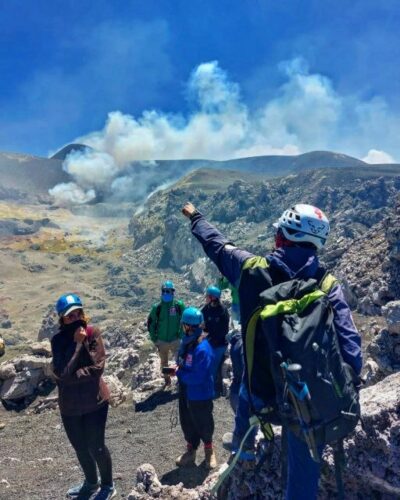
At the craters, the guide explains the science behind volcanic mountains and the importance of studying them. That part makes the experience more than a scenic hike. You learn why researchers watch volcanoes, how eruptions reshape terrain, and how a mountain can remain active even when the immediate surroundings look quiet.
The best way to approach this section is to slow down. Look closely at the rock, notice how the lava differs from the forest floor, and ask questions. Guides such as Francesco and Francesca were praised for their enthusiasm and ability to keep the walk moving while still making time for questions.
The Ragabo Pinewood canyon shows the cost of an eruption
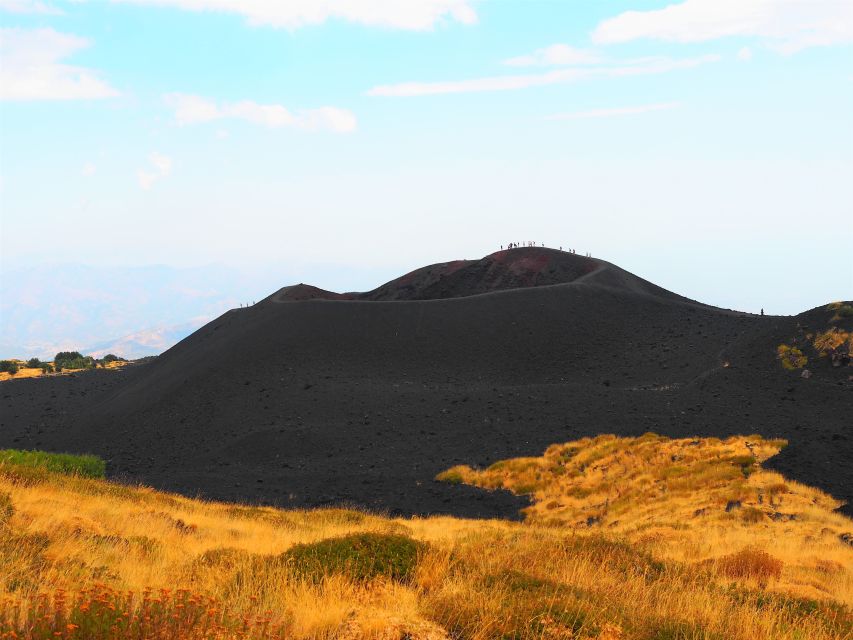
The route follows a deep canyon carved by the enormous mass of magma that flooded the slope. The flow partially destroyed the centuries-old Ragabo Pinewood.
This is one of the most sobering points on the walk. A crater can look dramatic, but a damaged forest gives the eruption a human scale. You can see that volcanic activity does not simply create new cones and attractive black ridges. It can also erase or alter old natural features.
The canyon helps you understand the force behind the scenery. From a distance, lava flows may look like frozen rivers. Here, the channel and damaged woodland show how much material moved and how quickly the mountain’s shape can change.
I like this stop because it adds meaning to the views. You are not just collecting photographs of unusual rocks. You are seeing evidence of an event that redirected water, cut through vegetation, and changed the ground beneath the forest.
Walking the full crater perimeter
The route continues along the edge of the craters and around their full perimeter. This provides repeated views into the volcanic formations and across the mountainside.
Walking the perimeter is more rewarding than stopping at one lookout. The shape of a crater changes as you move, and the surrounding scenery opens in different directions. One moment you may focus on the broken rim and dark lava. The next, you may be looking across forests and distant mountain slopes.
The guide’s explanations are especially useful here. Without context, a crater can look like a large hole in the ground. With an explanation of how magma reached the surface and how side craters formed, the feature becomes easier to read.
This is also the section where you most clearly feel Etna’s size. The mountain dominates the setting, but the craters show that its activity can be local and sudden. The huge volcano is not one smooth object. It is a collection of vents, flows, ridges, forests, and channels that continue to change over time.
You should take your time on the return walk. The route back gives you a chance to absorb the scenery without rushing from one feature to the next. The experience ends not with a grand indoor exhibit, but with the mountain itself gradually becoming familiar.
What the three-hour timing means
Three hours is a useful length for this outing. You get a real walk, a safety briefing, crater exploration, and time for explanations, but you do not give up a full day in Sicily.
The schedule also calls for a steady rhythm. Francesco was praised for timing the hike well, particularly when weather changed later in the day. That matters on Etna, where conditions can shift and a walk needs to finish within the planned window.
Do not read the three-hour duration as a promise of effortless walking. The route includes an ascent, lava crossings, and a crater perimeter. The opening path is easy, but the full experience is still an outdoor mountain activity.
Your enjoyment will depend on shoes, water, and weather. Hiking shoes are specifically required. Ordinary casual footwear is a poor choice for rough lava surfaces and crater edges.
Guides make the science easier to understand
The guide is the heart of this excursion. The listed languages are Italian and English, with French available on request.
The strongest guide feedback centers on clear explanations and personal attention. Grazia was praised for covering Etna’s history, nearby towns, and plant life, as well as for making the walk enjoyable. Francesco was noted for keeping a good rhythm and answering many questions. Francesca was described as friendly and enthusiastic, with one group appreciating how quiet and uncrowded the North Slope felt during its outing.
Those details tell you what to expect from a good departure: not a rushed march from crater to crater, but a walk shaped by explanations and conversation. If you have an interest in geology, volcanoes, plants, or the effects of eruptions, ask questions as you go. The route has plenty of material to discuss.
The experience also suits people who want more than a photograph. The guide helps you understand why a crater formed, how lava moved, and why scientists study Etna. That turns the walk into a lesson in natural change without making it feel like a classroom.
Weather is the main uncertainty
Etna weather can affect the outing. The reservation may be changed or canceled depending on conditions, so you need to keep your schedule flexible.
One outing ended before a storm brought thunder and lightning, adding drama to the sky but also showing why conditions matter. You should not plan this hike on the assumption that the mountain will provide clear views all day.
Bad weather can affect visibility, footing, comfort, and safety. Arrive prepared, listen to the guide, and accept that a change of plan may be the right decision. The activity permits cancellation up to 24 hours in advance for a full refund, and you can reserve now while paying later, which gives you some flexibility when organizing a Sicily itinerary.
Is $52 a fair price?
At $52 per person, the price is reasonable if you want a guided introduction to Etna’s North Slope rather than a self-guided walk.
The fee covers the guide, and the guide is what gives this route its value. You are paying for help interpreting the 2002 craters, lava flow, forest, canyon, and plant life, plus the safety briefing and route management. If you already know the mountain well and prefer to walk alone, the price may feel less useful. If you want context and confidence on volcanic terrain, it is easier to justify.
The three-hour format also offers good planning value. You can fit the hike into a day that includes other parts of Sicily, while still seeing a recent eruption zone up close. Just remember to budget for your own water and snacks because neither is included.
Who should book this North Slope hike?
I would choose this tour if you want a manageable but meaningful encounter with Etna. It suits nature lovers, amateur volcano enthusiasts, families with an appropriately active child, and anyone who prefers learning about a place while walking through it.
It is also a good choice if you want a quieter side of Etna. The North Slope can feel removed from the busy parts of Sicily, and the route moves through forest as well as volcanic terrain.
I would think twice if you dislike uneven ground, climbing, or changing weather. The path starts easily, but the crater section is not a polished urban walkway. You also need to carry your own refreshments and arrive early for the briefing.
Should you book it?
Book this Mount Etna hike if you want to see the mountain’s recent eruption history at ground level. The combination of 2002 craters, lava flows, beech forest, and the Ragabo Pinewood canyon gives the outing real variety.
The strongest reason to go is the guide. Grazia, Francesco, and Francesca are associated with the kind of clear, friendly instruction that helps you understand what Etna is doing beneath the scenery. At $52, that makes the experience a solid choice for a three-hour introduction to one of Sicily’s most powerful natural forces.
FAQ
Where does the Mount Etna North Slope hike begin?
The hike begins at Piano Provenzana, the North Slope area known for its ski resort.
How long does the excursion last?
The guided hike lasts three hours.
What languages are available?
The live guide is available in Italian and English. French can be requested as an additional option.
What should I bring?
Bring hiking shoes and water. Snacks and drinks are not included.
How early should I arrive?
You should arrive at least 30 minutes before the activity begins for the safety briefing.
Does the route visit the 2002 eruption craters?
Yes. The route reaches and circles craters formed during the major 2002 eruption on Etna’s northern side.
Can the activity change because of weather?
Yes. The reservation may be changed or canceled depending on weather conditions.
Can I cancel for a refund?
You can cancel up to 24 hours in advance for a full refund. You can also reserve now and pay later.
Just added around Sicily
- Anti-Mafia Heroes (Cool Hours) Morning Walking Tour★ 5.0 · 3 reviews
- Nicolosi: Excursion Etna Craters at 3000 mt.★ 4.2 · 3 reviews
- DISCOVER THE SECRET OF PALERMO Walking Tour Combining Art and best street food★ 5.0 · 3 reviews
- The art of the Italian Aperitivo with a local: Learn & Enjoy in Palermo★ 5.0 · 3 reviews
- Taormina PRIVATE EAST COAST EXCURSIONS 2 Exclusive Days with Guide Driver★ 5.0 · 3 reviews
- Monti Rossi Adventure Park Entry Ticket Full★ 5.0 · 3 reviews
- Guided kayak tour inside the Stagnone of Marsala★ 5.0 · 3 reviews
- Catania : Diving for patented divers★ 5.0 · 3 reviews
Mount Etna Tours, compared.
Mount Etna Morning or Sunset Day Trip with Tasting
Read our review →
Guided Volcano Summit Hiking Tour with Cable Car
Read our review →
Sunset Jeep Tour of Mount Etna and Lava Flow Caves
Read our review →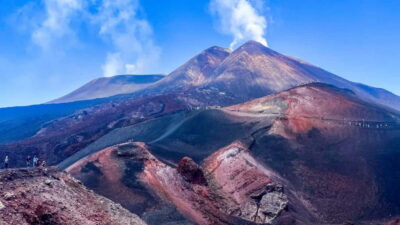
Etna and Alcantara Gorges Full-Day Tour with Lunch
Read our review →
Browse the lists this tour appears in