
Reviewed · WALKING TOURS
Markets and Monuments: Walking Tour in the Center of Palermo
Palermo reveals itself in layers, and this walk gives you a useful cross-section in just three hours. You move from Capo Street Market and its fruit, vegetables, and fish to Teatro Massimo, the cathedral, Baroque squares, and churches covered in gold and colored marble. I especially like the market-to-monument route, since it connects daily Sicilian life with the city’s grand public buildings.
I also like the chance to enter the Palermo Cathedral and Chiesa del Gesù, rather than viewing them only from the street. Guides including Fabrizio and Paulo have earned strong praise for clear English, local pride, and practical city advice. The main caution is the pace: on a hot day, three hours outdoors with few planned water breaks can feel demanding.
In This Review
- Key points to know before you book
- Why this Palermo walk works so well
- Starting at Capo Market
- Teatro Massimo and the city of opera
- Palermo Cathedral and Arab-Norman Palermo
- Quattro Canti and the Baroque city plan
- Fontana della Vergogna in Piazza Pretoria
- La Martorana and San Cataldo
- What the three-hour pace feels like
- Meeting point, ending point, and small practical details
- Who should book this Palermo walking tour?
- Should you book Markets and Monuments?
- FAQ
- How long does the Palermo walking tour last?
- What language is the tour offered in?
- Where does the tour begin?
- Where does the tour finish?
- Is food included in the price?
- Are entrance fees included?
- Is port pickup included?
- How many people can join the tour?
- Can I cancel for a full refund?
Key points to know before you book
- Capo Market comes first, with traditional stalls selling Sicilian produce, fish, and other food.
- The route covers seven major stops, including Teatro Massimo, Palermo Cathedral, Quattro Canti, and three important churches.
- Arab-Norman Palermo gets proper attention, especially at the cathedral and the city center’s mixed architectural sites.
- Food is part of the experience, but not part of the price, so bring money for snacks and drinks.
- The group can be intimate, with bookings capped at 12 and the activity capped at 18 people.
- The route is best for first-time visitors, but you should prepare for steady walking and warm weather.
Why this Palermo walk works so well
Palermo can be confusing at first. Its streets mix Norman churches, Arab details, Spanish Baroque decoration, lively markets, and grand nineteenth-century buildings. A guided walk helps you see the connections instead of treating each sight as an isolated photo stop.
This tour is particularly useful early in your stay. It gives you a map of the historic center, introduces several major landmarks, and points you toward foods and streets you can return to later. The route does not try to cover every corner of Palermo. Instead, it creates a solid first look at the city’s center.
The guide matters here. Fabrizio is described as a proud Palermitano who brings energy to the city’s past and present. Paulo is praised for his English and his command of local details, while Fabrizio and Manuela have also helped with practical matters such as airport transportation. Guide assignments can vary, but the named guides give you a good sense of the experience: local, personal, and more than a simple transfer between sights.
The advertised price is about $39.91 per person. For three hours with a local guide and a broad route through central Palermo, that is a fair price if you want context and orientation. It is less of a bargain if you plan to skip paid interiors, buy no food, and prefer to explore with a map on your phone.
More Walking Tours in Palermo
- Palermo: NO Mafia Walking Tour
★ 4.8 · 2,431 reviews - Palermo Original Street Food Walking Tour by Streaty
★ 5.0 · 2,105 reviews - Palermo: Street Food and History Walking Tour
★ 4.9 · 1,294 reviews
Starting at Capo Market
The walk begins at Piazza Vincenzo Bellini, while the first major stop is Capo Street Market. Confirm the exact meeting instructions when you book, since the starting point and the market stop are separate points on the route.
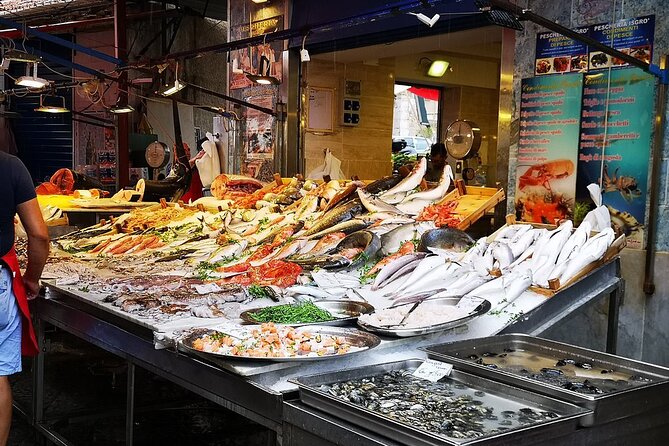
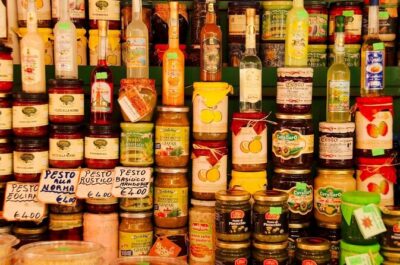
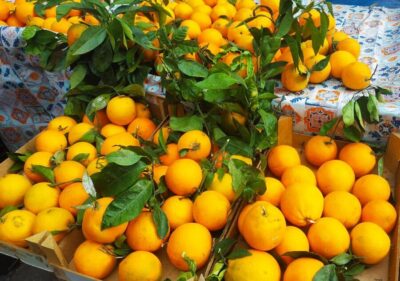
Capo is described as Palermo’s most traditional and popular old food market. The attraction is not simply the shopping. This is where you see the ingredients of everyday Sicilian cooking: fruit, vegetables, fish, and other market produce arranged along old streets.
You receive about 20 minutes here. That is enough for an introduction, though not enough for a long meal or a slow browse through every stall. If you want a classic snack, this is one of the places to consider buying one, since food and drinks are not included in the tour price.
I like beginning with the market because it gives the rest of the walk a human scale. After seeing what people eat and sell, the city’s churches and palaces feel less like a collection of monuments and more like part of a working neighborhood.
Keep your attention on the guide while moving through the market. It can be crowded, and this is not the place to expect a quiet lecture. The reward is a quick, direct look at Palermo’s food culture.
Teatro Massimo and the city of opera
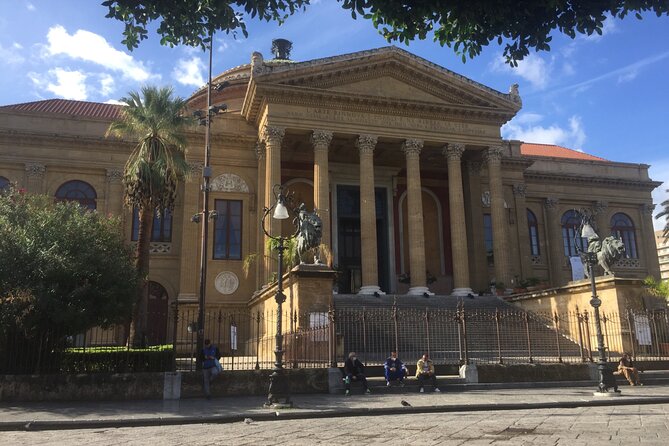
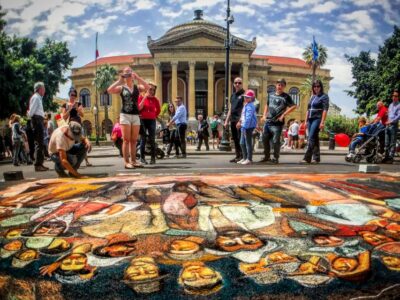
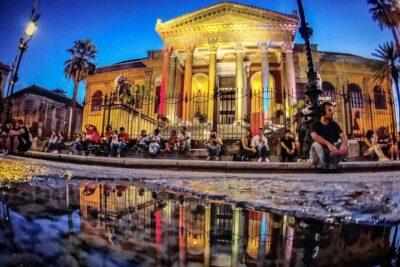
From the market, the walk reaches Teatro Massimo, Italy’s largest opera house and one of Europe’s largest. The building dates from 1875 and carries a long trail of legends, making it one of Palermo’s most recognizable landmarks.
The planned visit here lasts about 15 minutes. That signals an exterior-focused stop rather than a full theater tour. The admission fee is not included, so you should not assume that the guided visit includes the interior or a performance-related admission.
Even from outside, Teatro Massimo helps explain Palermo’s nineteenth-century ambitions. Its scale is very different from the market lanes and medieval churches you see elsewhere on the walk. I find that contrast one of the route’s strengths: Palermo changes character quickly, and the guide can help make sense of those shifts.
If the theater is a personal priority, ask about entry arrangements before booking. The supplied details list an admission ticket as not included, so budget separately for any paid access.
Palermo Cathedral and Arab-Norman Palermo
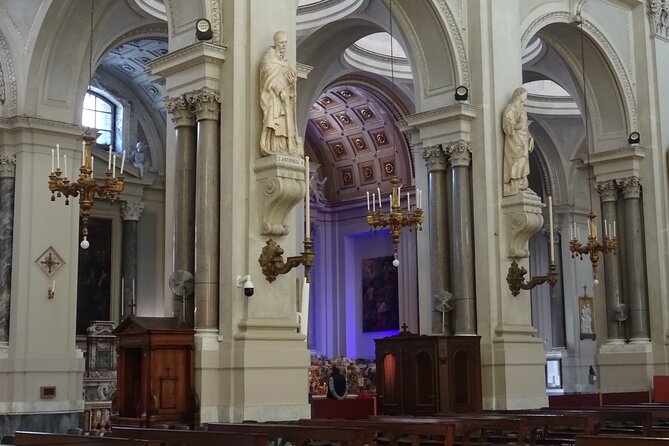
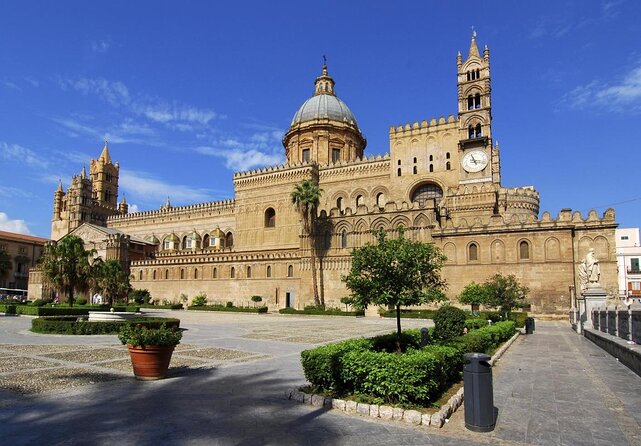
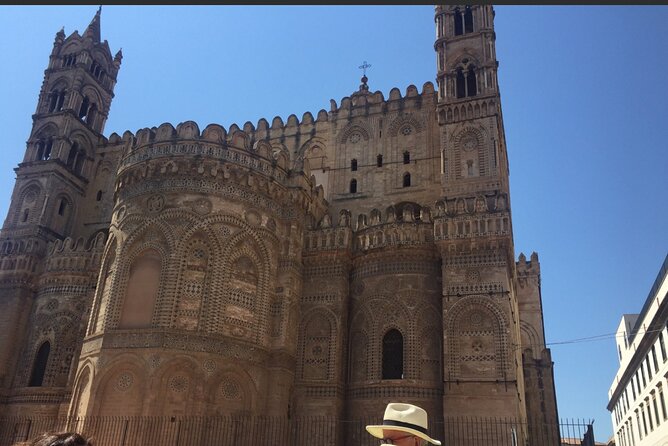
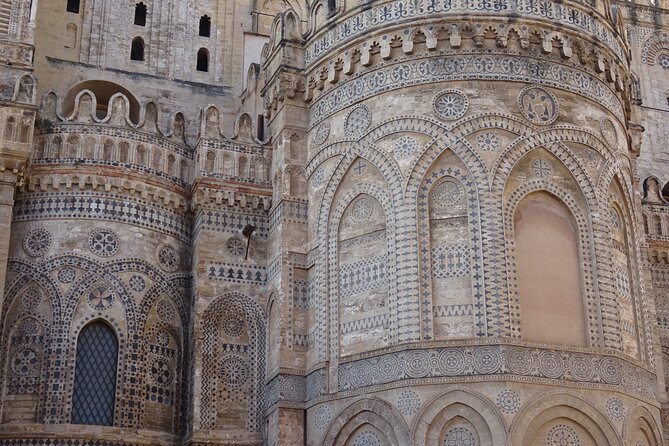
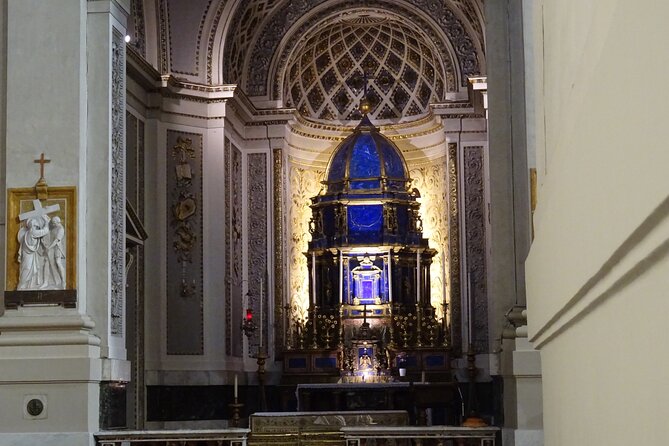
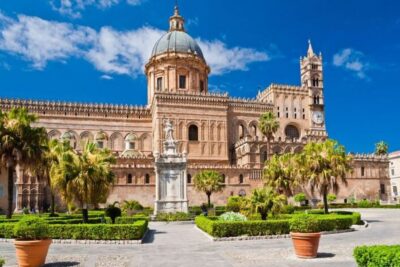
The cathedral receives about 20 minutes, and you will see it inside. That matters because the building’s importance is not limited to its broad exterior and towers. Palermo Cathedral is part of the UNESCO World Heritage designation for Arab-Norman Palermo, a group of sites that reflect the city’s mixture of Arab, Norman, Byzantine, and later influences.
The tour’s value is strongest here when the guide explains how different cultures shaped Palermo. The word Arab-Norman refers to a period when Norman rulers used and adapted artistic and architectural ideas already present in Sicily. You do not need a long academic lecture to appreciate the result, but you do need some context, and this is where a guide earns the fee.
The cathedral stop can also be visually intense. There is a great deal to take in, including architectural details and the notable sundial on the church floor mentioned by one Italian-language review. Twenty minutes will give you an introduction, not a full study of every chapel and decoration.
Admission information deserves a careful note. The stop says you see the cathedral inside, while the general conditions say entrance fees for buildings and churches are not included. Ask your guide or the provider what access is covered on your date, and carry a little extra money in case a fee applies.
Same island, a completely different day out:
- Palermo: Hop-on Hop-off Bus Tour 24-hour Ticket
★ 3.9 · 2,410 reviews - Segesta, Erice and Salt Pans Full-Day Excursion from Palermo
★ 4.2 · 1,791 reviews - Palermo: Teatro Massimo Opera House Guided Tour
★ 4.5 · 1,573 reviews - From Palermo: Monreale and Cefalù Half-Day Trip
★ 4.2 · 1,354 reviews
Quattro Canti and the Baroque city plan
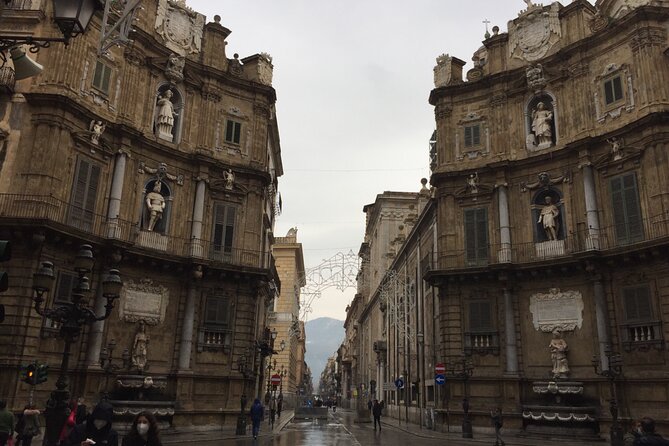
Quattro Canti, officially Piazza Vigliena, is one of Palermo’s most memorable urban spaces. It sits where Via Maqueda meets Corso Vittorio Emanuele, the two principal streets of the historic center.
The square was built in the seventeenth century. Its four curved corners create a theatrical sense of enclosure, with Baroque decoration arranged around the intersection. You have about 10 minutes here, which is enough to understand the layout and take in the façades.
This is a good example of why a walking tour helps. If you pass through Quattro Canti alone, you may see an attractive square and move on. With an explanation of its position in Palermo’s street plan, the space becomes easier to read. It is a crossroads in both the practical and historical sense.
The stop is free and outdoors. In bright sun, the pale stone and elaborate decoration can be hard to study for long, so a quick explanation works better than an extended pause.
Fontana della Vergogna in Piazza Pretoria
The next stop is Fontana della Vergogna, the monumental fountain at the heart of Piazza Pretoria. It was built in Palermo in 1574 and remains one of the historic center’s major landmarks.
You have roughly 15 minutes here. That gives you time to look at the fountain from several angles and hear why it has such a memorable name. The title translates as Fountain of Shame, a reference tied to the fountain’s history and its nude statues.
The fountain is another free outdoor stop, but it rewards close looking. Pay attention to the way the sculpture fills the square and how the surrounding buildings frame it. This is not a place where you need a long visit. A sharp explanation from the guide is more useful than a pile of dates.
La Martorana and San Cataldo
The route then turns to two churches near Piazza Bellini: Santa Maria dell’Ammiraglio, usually called La Martorana, and the Church of San Cataldo.
La Martorana is known for its mix of architectural and artistic styles. Over the centuries, the church was altered and enriched by changing tastes, cultures, and periods. That mixture is central to understanding Palermo. The building is not a single, untouched statement from one era. It is a record of the city’s changes.
The stop lasts about 10 minutes. Admission is not included, so check what your guide plans to show you and set aside money if you want to enter. The church’s interior is an important part of its appeal, but the schedule allows only a short visit.
La Martorana also connects architecture with food. Nuns at the former Martorana convent became famous for molded marzipan shaped like fruit. The convent no longer exists, but frutta di Martorana remains one of Palermo’s best-known food traditions. You may not receive a tasting, since food is not included, but the story gives you a useful reason to look for these colorful sweets later.
San Cataldo is famous for its three red domes and dates from the twelfth century. The domes make the church easy to recognize, while its simple exterior offers a striking contrast to the ornate interiors elsewhere on the route.
You have another 10-minute stop here, and admission is not included. The church is best treated as a focused introduction rather than a long architectural visit. Together, La Martorana and San Cataldo show how close Palermo’s major sights are and how quickly the city moves between different styles.
What the three-hour pace feels like
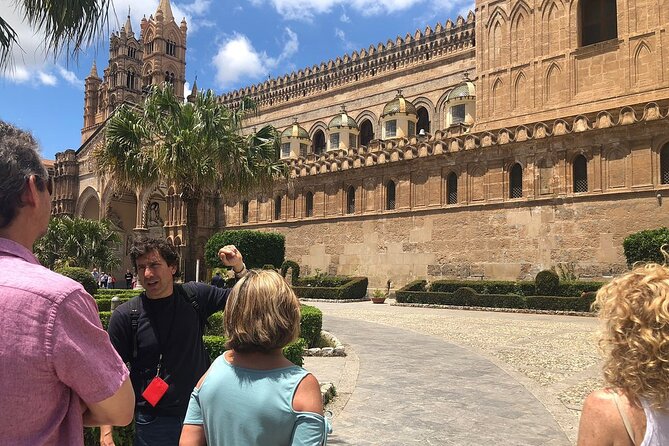
The scheduled stops add up to about 100 minutes, leaving the rest of the three hours for walking, explanations, transitions, and time at the meeting or end area. You cover a lot of central Palermo without turning the outing into an all-day march.
The route is not a food tour in the tasting-heavy sense. It visits a food market and discusses traditional products such as Sicilian produce and frutta di Martorana, but you pay for anything you choose to eat. If snacks are important to you, bring cash or another convenient payment method and ask the guide for suggestions.
Heat is the main practical concern. One person found the walking difficult during a very hot week and wished for more water breaks. I would carry water, wear comfortable shoes, and avoid assuming that the short stop times mean the tour is physically effortless.
Rain does not necessarily ruin the experience. The route is built around churches, covered market areas, and outdoor monuments, so much of the value remains even on a wet day. Still, comfortable rain protection will make the walk easier.
The group limits are reasonably small, though the figures differ slightly in the supplied details: bookings are capped at 12 people, while the overall activity maximum is 18. Either way, this is not presented as a huge coach group. A smaller group usually makes it easier to hear the guide and ask questions.
Meeting point, ending point, and small practical details
The stated meeting point is Piazza Vincenzo Bellini in central Palermo. The tour information also says the walk finishes in front of Santa Caterina church, about 20 minutes on foot from the starting point. Because the page lists Piazza Bellini as both start and end while also naming Santa Caterina as the finishing location, confirm the final route details before you set out.
Port pickup is included, but the supplied information does not explain the exact pickup area or timing. If you are arriving by cruise ship, contact the provider in advance rather than assuming the pickup comes directly to your ship.
The activity is offered in English. Confirmation arrives at booking, and children must be accompanied by an adult. The child rate applies only when a child shares with two paying adults.
The dress code is smart casual. This is especially relevant because the route includes churches. You should choose respectful clothing and comfortable shoes rather than treating the walk as a fashion parade.
Free cancellation is available if you cancel at least 24 hours before the local start time. Changes or cancellations inside that window are not accepted for a refund.
Who should book this Palermo walking tour?
I would choose this tour if you are visiting Palermo for the first time and want a clear introduction to the center. It suits anyone who likes history explained in plain English, wants to see a market as well as famous monuments, and would rather walk than spend the day moving between separate ticketed attractions.
It is also a good fit for cruise passengers with limited time, provided the port pickup and return arrangements suit your schedule. Three hours gives you a useful taste of Palermo without consuming the whole day.
Families can participate, but children must stay with an adult, and the route includes sustained walking. For older children interested in food, churches, and unusual city stories, the market and marzipan details may help keep the experience lively.
I would think twice if you want long interior visits or a formal food-tasting program. The church stops are brief, entrance fees are not generally included, and food and drinks cost extra. You may prefer independent sightseeing if you already know Palermo well and feel comfortable researching its monuments yourself.
Should you book Markets and Monuments?
Book it if you want breadth, local explanation, and a first look at Palermo’s food culture in one compact outing. The strongest parts are the Capo Market opening, the UNESCO context at the cathedral, the sharp contrast between San Cataldo and La Martorana, and the practical guidance supplied by local figures such as Fabrizio and Paulo.
At about $39.91, the price makes sense when you value a guide who can connect the sights and help you get oriented. Bring water, wear sensible clothes and shoes, budget for optional snacks and church admissions, and confirm the exact ending point.
Skip it if your main goal is a slow, detailed inspection of every church interior. For most first visits, though, this is a well-shaped introduction to central Palermo, with enough food, architecture, and local character to help you plan the rest of your stay.
FAQ
How long does the Palermo walking tour last?
The tour lasts approximately three hours.
What language is the tour offered in?
The experience is offered in English.
Where does the tour begin?
The stated starting point is Piazza Vincenzo Bellini in Palermo.
Where does the tour finish?
The information gives Piazza Vincenzo Bellini as the end point and also says the walk finishes in front of Santa Caterina church, about 20 minutes on foot from the starting point. Confirm the precise end location before the tour.
Is food included in the price?
No. Food and drinks are not included, though you have the option to buy classic snacks at the food markets.
Are entrance fees included?
No. Entrance fees for museums, buildings, and churches are not included. The route does include a visit inside Palermo Cathedral, so check the access details for your date.
Is port pickup included?
Yes, port pickup is listed as included. The available information does not specify the exact pickup area or timing.
How many people can join the tour?
A booking can include up to 12 people, while the overall activity has a maximum of 18 participants.
Can I cancel for a full refund?
Yes. You can cancel at least 24 hours before the local start time for a full refund. Cancellations or changes made less than 24 hours before the start are not accepted for a refund.
Just added around Palermo
- Anti-Mafia Heroes (Cool Hours) Morning Walking Tour★ 5.0 · 3 reviews
- The art of the Italian Aperitivo with a local: Learn & Enjoy in Palermo★ 5.0 · 3 reviews
- Private transfer from Palermo airport to Mercure Palermo Centro or vice versa★ 5.0 · 3 reviews
- ERICE and SEGESTA Private Exclusive Tour starts from Palermo with Guide Driver★ 4.0 · 3 reviews
- Private 10 hour tour to Agrigento (Valley of the Temples) from Palermo★ 5.0 · 3 reviews
- Palermo Private MINITOUR of WEST SICILY 4 Days with Guide Driver★ 5.0 · 3 reviews
- The Best Of Sicily and Sorrento & Culinary Experiences, Deluxe★ 5.0 · 3 reviews
- Transfer from Palermo Airport to Scopello and Tonnara di Scopello★ 5.0 · 3 reviews
Walking Tours, compared.
Palermo Original Street Food Walking Tour by Streaty
Read our review →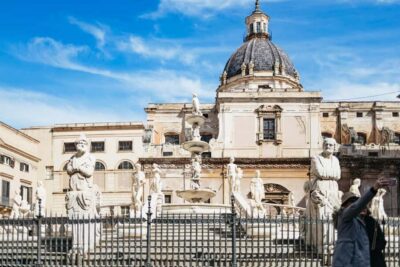
Palermo No Mafia walking tour: discover the Anti-mafia culture in Sicily
Read our review →
Street Food Walking Tour with Local Guide & Tasting
Read our review →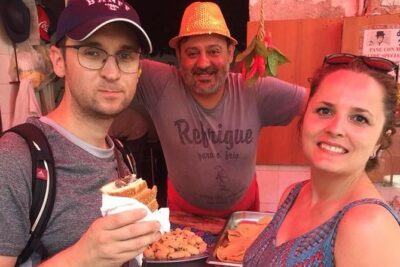
Browse the lists this tour appears in