Reviewed · GUIDED
Group guided tour of the archaeological park of Neapolis
The most striking part of this tour is how much ancient Syracuse fits into one park. You move from the echoing Ear of Dionysius to the Greek Theater, then on to a vast Roman amphitheater and a former stone quarry filled with gardens. I especially like the small maximum group of 15 and the radio guide, which lets you hear the guide without crowding around.
I also like the human touch. Guides including Eva, Federica, Gaetano, and Sebastiano have a gift for mixing solid facts with stories, legends, plants, and local history. The main catch is simple: the entrance ticket is usually extra, and the Greek Theater may be partly hidden by a stage covering during spring and summer performances.
In This Review
- Key points before you book
- Why Neapolis is worth your time
- Meeting at Largo Anfiteatro
- The Ear of Dionysius: a cave built for stories
- The Greek Theater and its changing view
- The Altar of Hieron in ten minutes
- The Roman Amphitheater and the city’s later chapter
- Latomia del Paradiso and the garden walk
- What $26.43 buys you
- Who should choose this guided visit
- Booking, cancellation, and weather notes
- Should you book the Neapolis tour?
- FAQ
- How long does the Neapolis archaeological park tour last?
- Is the park entrance ticket included?
- Where does the tour begin?
- Is the tour offered in English?
- How many people can join the tour?
- Can I cancel for a full refund?
Key points before you book
- A compact tour of major ruins: You see the Ear of Dionysius, Greek Theater, Altar of Hieron, Roman Amphitheater, and Latomia del Paradiso in about 90 minutes.
- Small-group format: The group is capped at 15 people, a useful limit at a busy archaeological site.
- English explanations with a radio guide: You can follow the guide from a little distance instead of pressing into a tight cluster.
- Strong guide team: Eva, Federica, Gaetano, and Sebastiano are specifically praised for clear explanations, good pacing, stories, and personal warmth.
- Admission needs attention: The standard tour price of $26.43 per person does not include park entry unless you select the tour plus ticket option.
- A practical meeting tip: Meet at Largo Anfiteatro, 2, near the street entrance. This is not necessarily the same place as the actual ticket entrance.
Why Neapolis is worth your time
Syracuse was one of the major cities of the ancient Mediterranean, and Neapolis gives you a sharp, physical sense of its scale. This is not a single ruin with one impressive view. It is a large archaeological park where Greek, Roman, and later industrial traces sit close together.
That variety is the real strength of the visit. In one short walk, you hear about theater, religion, public spectacle, quarrying, engineering, and the legends attached to the city. I find guided visits especially useful here because the remains are spread across a broad area, and the meaning of each site is not always obvious from the stones alone.
The 90-minute length works well if you want structure without giving the entire day to archaeology. It also suits a stop in Syracuse when you have limited time. You will not study every corner of the park, but you will come away with a clear picture of its main monuments.
The experience is offered in English and uses a radio guide. That matters in a group, especially when the guide is explaining a feature from several steps away. You can look at the monument instead of trying to stand shoulder to shoulder with everyone else.
A few more Sicily tours and experiences worth weighing up
- Mount Etna: Guided Volcano Summit Hiking Tour with Cable Car
★ 4.7 · 3,784 reviews - Taormina: Ancient Theater Skip-the-Line Ticket & Audio Guide
★ 4.5 · 1,701 reviews - Palermo: Teatro Massimo Opera House Guided Tour
★ 4.5 · 1,573 reviews
Meeting at Largo Anfiteatro
The tour begins at Largo Anfiteatro, 2, in Syracuse. Pay attention to this detail before you arrive. The meeting point is at the street entrance, not necessarily at the park’s actual ticket entrance, so arriving early gives you time to find the guide and sort out admission.
The park is near public transportation, and most people can take part. Service animals are allowed. The group limit of 15 keeps the outing more personal than a large coach excursion, though the experience still depends on staying with the guide and listening through the radio system.
You should also allow a little time before the official start if you need to buy a ticket. One useful tip is to arrive early and avoid leaving the admission purchase until the last moment. If you choose the tour plus ticket option, this concern is reduced.
The activity ends back at the starting point. That makes it easy to continue exploring Syracuse afterward, return to your lodging, or connect with another plan without arranging a separate ride from the park.
The Ear of Dionysius: a cave built for stories
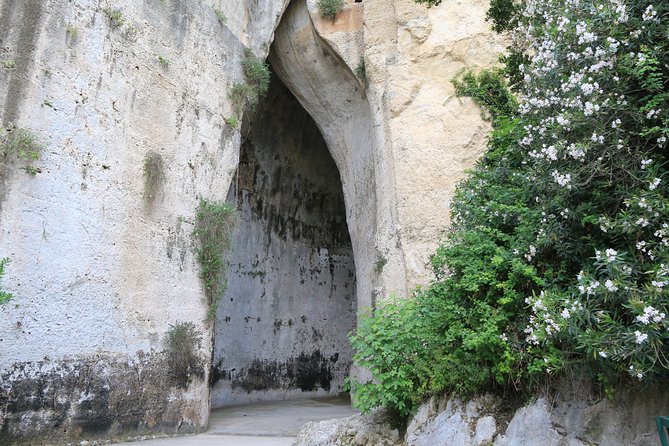
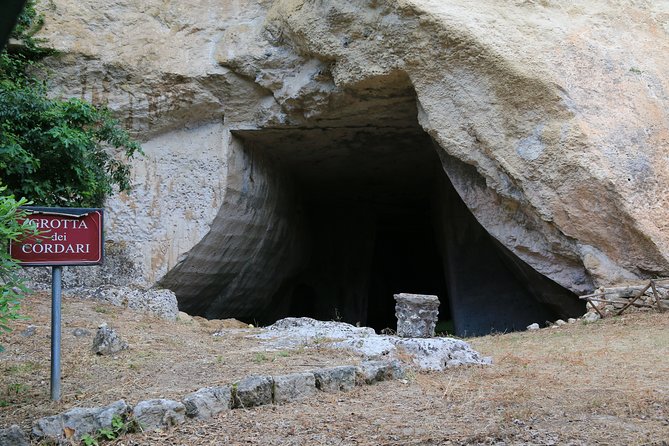
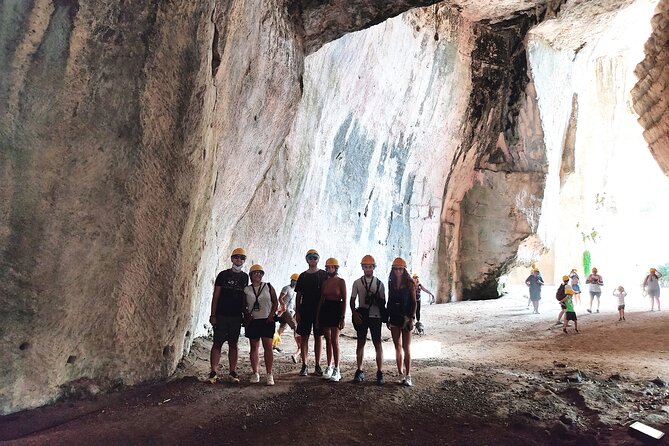
The first major stop is the Ear of Dionysius, a legendary cave cut into the ancient stone quarry. The visit inside takes about 15 minutes, and the enclosed space gives the tour an immediate change of mood.
The name comes from the cave’s ear-like shape and the legend connected with Dionysius. A guide can give that story a useful frame, separating the tale from what is known about the site itself. This is where a good explanation adds real value. Without context, you see a dramatic cavity in the rock. With context, you begin to understand how quarrying, power, and storytelling became tied together in Syracuse.
The cave is also one of the most memorable visual moments of the tour. Its height and curved interior make it feel unlike the open ruins that follow. The visit is short, but it gives you an image you are likely to remember.
The Greek Theater and its changing view
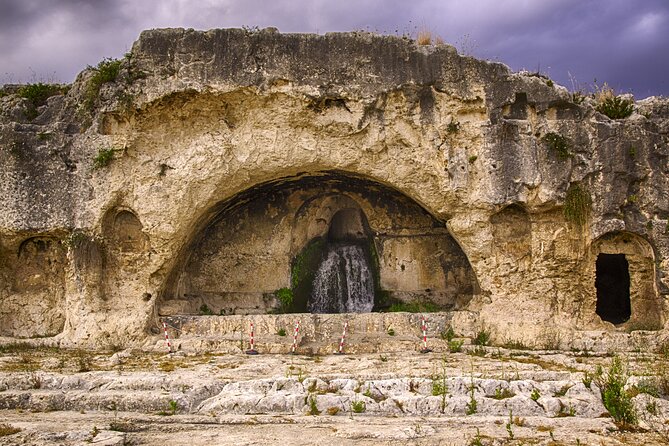
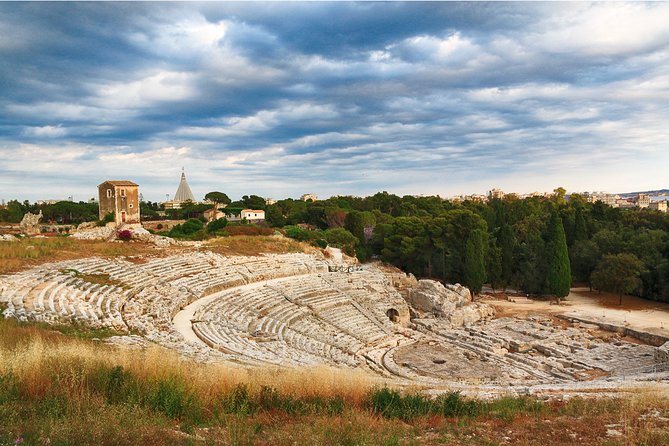
The Greek Theater receives the longest stop, about 30 minutes. The guide explains its archaeological details, history, and use, helping you read the structure rather than simply admire its size.
A Greek theater is not just a pretty semicircle of stone. Its shape tells you about public life, performance, civic identity, and the way audiences gathered. At Neapolis, the theater is one of the park’s central sights, and a measured explanation helps you see how the seating, stage area, and setting worked together.
There is one important seasonal limitation. During the performance period, usually in spring and summer, the theater is covered and only partly visible. That does not remove the historical value of the stop, but it can reduce the visual impact. If the theater itself is your main reason for booking, check the timing of shows before you commit.
The guides praised for this tour are particularly good at pacing. Gaetano is described as clear and calm, even for people who do not speak Italian. Federica is noted for handling large cruise crowds well, and Eva is praised for making the setting enjoyable while adding stories and facts. These details matter because the theater can feel confusing when you only have a short time to look around.
Same island, a completely different day out:
- Catania: Mount Etna Morning or Sunset Day Trip with Tasting
★ 4.8 · 4,028 reviews - Palermo: NO Mafia Walking Tour
★ 4.8 · 2,431 reviews - Palermo: Hop-on Hop-off Bus Tour 24-hour Ticket
★ 3.9 · 2,410 reviews - From Trapani: Cruise to Favignana and Levanzo with lunch
★ 4.2 · 2,286 reviews
The Altar of Hieron in ten minutes
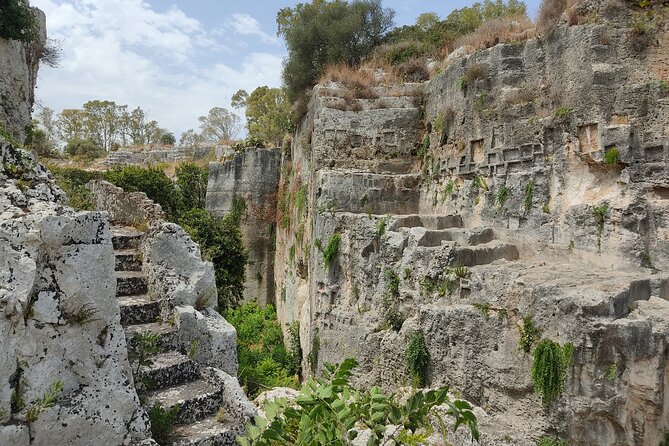
The Ara di Ierone, or Altar of Hieron, receives about 10 minutes. That may sound brief, but the stop works as a focused explanation of one monument rather than a long pause at a single viewpoint.
The guide provides the story behind this suggestive structure and places it within the wider life of ancient Syracuse. You will not get the same extended treatment as at the Greek Theater, yet the short visit keeps the tour moving and prevents one monument from taking over the whole park.
This is a good example of the tour’s basic approach. It gives you a guided introduction to the park’s most important points, then leaves you with a sense of what deserves a closer look if you return independently.
The Roman Amphitheater and the city’s later chapter
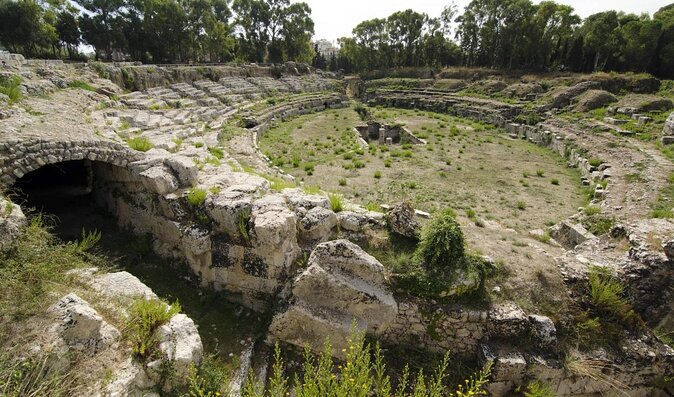
The Syracuse Roman Amphitheater takes about 20 minutes. Its presence beside Greek monuments makes the park especially useful for understanding how Syracuse changed over time.
Here, the focus shifts from Greek performance and religious structures to Roman public spectacle. The amphitheater lets you compare different types of ancient architecture and different uses of public space. A guide can point out the archaeological features and explain how the building fits into Syracuse’s Roman period.
I like this part of the route because it prevents the visit from becoming a single-theme tour. You are not only seeing Greek ruins. You are following the city through several periods, with each monument adding a different piece to the story.
As with the rest of the park, the value lies partly in the explanation. Stone walls and seating areas can look similar to an untrained eye. Clear guidance helps you understand why this structure is different from the Greek Theater and what that difference says about the city.
Latomia del Paradiso and the garden walk
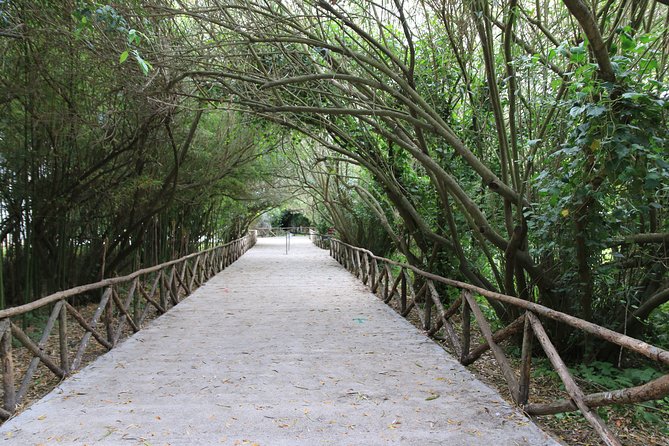
The final stop is Latomia del Paradiso, a former stone quarry visited on a panoramic, guided walk of about 20 minutes. This section brings a softer finish after the carved rock, formal theaters, and monumental ruins.
The gardens let you notice the plant life and setting around the archaeology. Eva is specifically praised for discussing not only the ruins but also the trees and plants in the park. That is a small detail, but it improves the visit. Ancient sites are not museums sealed away from nature. Their atmosphere comes from the meeting of stone, shade, vegetation, and open sky.
The walk also gives you a chance to take in the park at a slower pace. One guide described a late-afternoon visit as especially pleasant on hot days and attractive in the softer light. That timing is not a guarantee of cool weather, but it is a sensible option if you want to avoid the harshest part of the day.
There may also be temporary sculpture displays in the park. One guide specifically praised an exhibition of works by Igor Mitoraj, whose statues were well placed among the ancient remains. Exhibitions change, so treat this as a possible bonus rather than a fixed feature of the tour.
What $26.43 buys you
At $26.43 per person, the tour is reasonably priced for a guided introduction to a large archaeological park, but you need to calculate the admission cost separately. The listed price includes the guide and radio equipment, not the park entrance, unless you choose the tour plus ticket option.
That distinction affects the value. If you already planned to visit Neapolis and feel comfortable reading the site on your own, paying for a guide may not be necessary. If you want the Greek and Roman remains explained in a logical order, the fee buys you context, saved planning time, and a chance to ask questions.
The small group also supports the price. A maximum of 15 people is not the same as a private tour, but it is far more manageable than a large crowd. The radio guide makes the format work better because you can hear the explanation while looking at the monument.
The strongest value comes from the guide quality. Eva, Federica, Gaetano, and Sebastiano are each described as clear, friendly, and good at telling stories without losing the archaeological facts. One guide is also praised for making the material accessible to children. That makes the tour useful for families, provided children can manage a 90-minute walk through an ancient site.
Who should choose this guided visit
I would choose this tour if you want a well-organized first look at Neapolis and do not want to spend hours piecing together the site on your own. It is a particularly good fit for a first visit to Syracuse, a short city stay, or a day when you want archaeology explained in plain language.
It also suits you if you like history with some storytelling. The guides add legends and city anecdotes instead of giving only dates and architectural labels. That mix can keep the visit lively for adults and children.
The tour may be less useful if you want a slow, highly detailed archaeological study. The park is large, and 90 minutes passes quickly. You will see the main places, but you will not examine every ruin or have unlimited time for photographs.
Language is another factor. The tour is offered in English. One guide was easy to understand even for someone who did not speak Italian, but there is no stated Spanish departure. If you need Spanish, check before booking rather than assuming it is available.
Finally, check the Greek Theater situation during the show season. A covered theater can still be worth seeing, but you should set your expectations before arriving.
Booking, cancellation, and weather notes
Confirmation is provided when you book. Free cancellation is available up to 24 hours before the start time for a full refund. Cancellations or changes made less than 24 hours before the activity are not accepted for a refund, and cut-off times follow local time in Sicily.
The experience requires good weather. If poor conditions force a cancellation, you will be offered another date or a full refund. The tour also requires a minimum number of participants. If that minimum is not reached, you will be offered another date or experience, or a full refund.
The tour is booked, on average, about 20 days ahead. That does not guarantee every date fills early, but it is a useful reason to reserve ahead if your Syracuse schedule is fixed.
Should you book the Neapolis tour?
Book it if you want the major Greek and Roman remains placed into a clear story, with a small group and an English-speaking guide. The mix of the Ear of Dionysius, Greek Theater, Altar of Hieron, Roman Amphitheater, and Latomia del Paradiso gives you a satisfying overview in a manageable 90 minutes.
Before paying, confirm two things: the total cost with admission, and whether the Greek Theater will be covered during your visit. If those details work for you, this is a practical, well-priced way to get your bearings in one of Syracuse’s most important ancient sites.
FAQ
How long does the Neapolis archaeological park tour last?
The tour lasts approximately 1 hour and 30 minutes.
Is the park entrance ticket included?
The standard price does not include admission. You can select a tour plus ticket option if you want entrance included.
Where does the tour begin?
The meeting point is Largo Anfiteatro, 2, 96100 Siracusa SR, Italy. The activity ends back at the same meeting point.
Is the tour offered in English?
Yes. The experience is offered in English.
How many people can join the tour?
The group has a maximum of 15 participants.
Can I cancel for a full refund?
Yes, if you cancel at least 24 hours before the scheduled start time. Cancellations made less than 24 hours in advance are not refundable.
Just added around Sicily
- Nicolosi: Excursion Etna Craters at 3000 mt.★ 4.2 · 3 reviews
- DISCOVER THE SECRET OF PALERMO Walking Tour Combining Art and best street food★ 5.0 · 3 reviews
- Anti-Mafia Heroes (Cool Hours) Morning Walking Tour★ 5.0 · 3 reviews
- The art of the Italian Aperitivo with a local: Learn & Enjoy in Palermo★ 5.0 · 3 reviews
- Taormina PRIVATE EAST COAST EXCURSIONS 2 Exclusive Days with Guide Driver★ 5.0 · 3 reviews
- Monti Rossi Adventure Park Entry Ticket Full★ 5.0 · 3 reviews
- Guided kayak tour inside the Stagnone of Marsala★ 5.0 · 3 reviews
- Catania : Diving for patented divers★ 5.0 · 3 reviews
Guided, compared.

Guided Volcano Summit Hiking Tour with Cable Car
Read our review →
Ancient Theater Skip-the-Line Ticket & Audio Guide
Read our review →


Mount Etna Adventurous Tour with a Volcano Guide
Read our review →

Street Food Walking Tour with Local Guide & Tasting
Read our review →