
Reviewed · MOUNT ETNA TOURS
Etna Southern Slope Guided Easy Trek
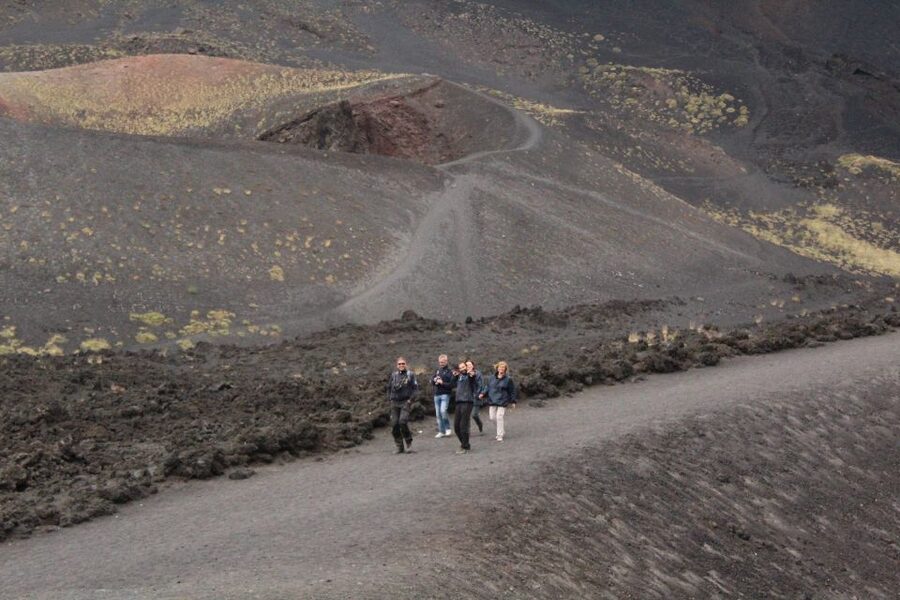
Mount Etna’s southern slope gives you a close look at a living volcano without requiring a full-day mountain expedition. In 2.5 hours, you walk among the upper Silvestri Craters, over lava from 2001, and toward the Calcarazzi craters formed in 1766. It is a striking mix of black volcanic rock, red-brown ash, and wide views from about 1,900 meters.
I like the focused route through several eruptions and the guides’ clear passion for Etna. Mario is especially praised for making a lot of information easy to follow, while Thomas is also noted for his professional, engaging approach. I also like the well-timed pauses, which make the walk manageable for a mixed group.
The main consideration is fitness. Although the experience is called an easy trek, the description also classifies it as medium difficulty, and you are walking at altitude over uneven volcanic ground. Rain or storms cancel the outing, and you need proper shoes, water, and rain protection.
In This Review
- Key points at a glance
- Why this short Etna walk works so well
- Meeting at Rifugio Sapienza at 1,900 meters
- The upper Silvestri Craters and their lunar terrain
- Reading the eruptions of 1766, 1892, and 2001
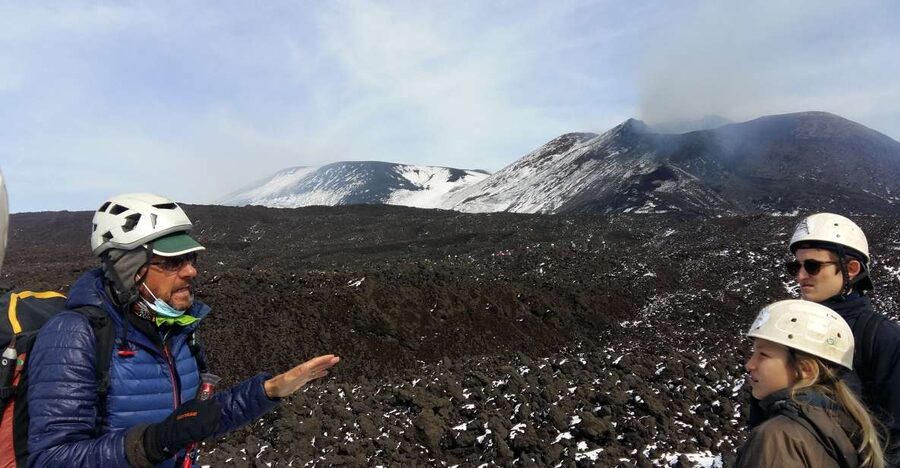
- Walking across the 2001 lava and volcanic fracture
- The Calcarazzi craters from the 1766 eruption
- The highest point and the Catania coast view
- What the $46 price gives you
- Fitness, clothing, and who should book
- How the guide shapes the experience
- Weather and the limits of a mountain outing
- Should you book the Etna Southern Slope Guided Easy Trek?
- FAQ
- Where does the Etna trek begin?
- How long does the activity last?
- At what altitude does the walk start?
- Which languages are available?
- What volcanic sites will I see?
- What should I bring?
- Is food included?
- Does the tour operate in bad weather?
- Who should not take this trek?
Key points at a glance
- Start at 1,900 meters: Meet inside the Esagonal bar at Rifugio Sapienza, beside the Etna cable car station.
- Three eruption stories in one walk: Follow volcanic activity from 1766, 1892, and 2001.
- Silvestri Craters are the first major stop: Walk around the upper craters and climb to their highest point.
- The 2001 fracture brings the volcano’s recent past close: You can see where lava escaped during that eruption.
- Calcarazzi adds older volcanic drama: These craters belong to the 1766 eruption and help show how Etna changes over time.
- The guide makes the difference: Mario and Thomas lead in English or Italian, with a strong focus on natural and volcanic explanations.
Why this short Etna walk works so well
Mount Etna is too large to understand from a single viewpoint. A guided walk helps you read the ground beneath your feet. The dark lava is not just scenery. It records separate eruptions, each with its own shape, age, and story.
This outing stays on the southern slope, near Rifugio Sapienza. That makes it a practical choice if you have limited time in Sicily or want an introduction before considering a longer Etna excursion. You are not committing to a demanding full-day climb, yet you still reach volcanic craters and a high viewpoint.
The experience also offers a useful balance between sightseeing and explanation. You get the visual drama quickly, but the nature guide gives it context. At this altitude, a simple walk around a crater can become far more interesting when you understand how the crater formed and how lava moved across the slope.
The current score is 4.8 from 36 ratings, and the strongest theme is the guide service. Mario receives repeated praise for his passion, clear explanations, and ability to answer questions. Thomas is also singled out for professional and engaging guidance. That matters on Etna, where the quality of the commentary turns a black field of rock into a readable volcanic story.
More ways up Etna and around the craters:
- Catania: Mount Etna Morning or Sunset Day Trip with Tasting
★ 4.8 · 4,028 reviews - Mount Etna: Guided Volcano Summit Hiking Tour with Cable Car
★ 4.7 · 3,784 reviews - Catania: Sunset Jeep Tour of Mount Etna and Lava Flow Caves
★ 4.8 · 2,113 reviews
Meeting at Rifugio Sapienza at 1,900 meters
Your meeting point is inside the Esagonal bar at Hotel and Restaurant Rifugio Sapienza. Look for the flag with the Sicily Touring symbol, where the guide will welcome you.
This location is next to the departure station of the Etna cable car on the southern slope. The setting immediately puts you in the main visitor area of Etna, with the mountain’s high volcanic terrain around you. The meeting point is easy to identify from the supplied directions, but arrive ready to start on foot rather than expecting a transfer to another part of the mountain.
The altitude deserves attention. At approximately 1,900 meters, conditions can feel different from Catania or the coast. Temperature, wind, and weather may shift quickly. Bring layers and rain gear even if the lower part of your day is warm and sunny.
The tour operates in English and Italian. If you care about the language of the explanations, confirm availability for your preferred starting time when booking.
The upper Silvestri Craters and their lunar terrain
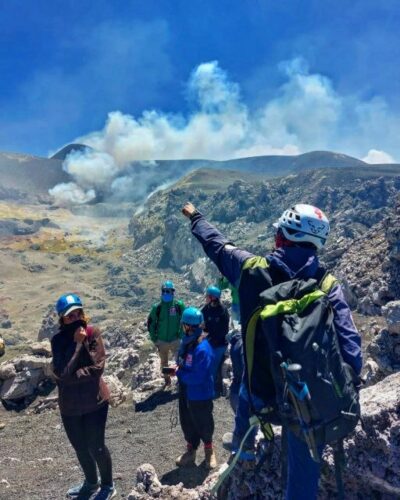
The walk begins around the upper craters of Monti Silvestri. These are among the most accessible volcanic features on Etna’s southern slope, but accessible does not mean dull. The loose volcanic surface, crater rims, and bare slopes create the lunar look that attracts people to Etna.
Here, the guide can help you notice details you might otherwise pass by. A crater is not simply a round hole in the ground. Its rim, color, texture, and position all help explain the eruption that produced it. The route uses these features as a natural classroom.
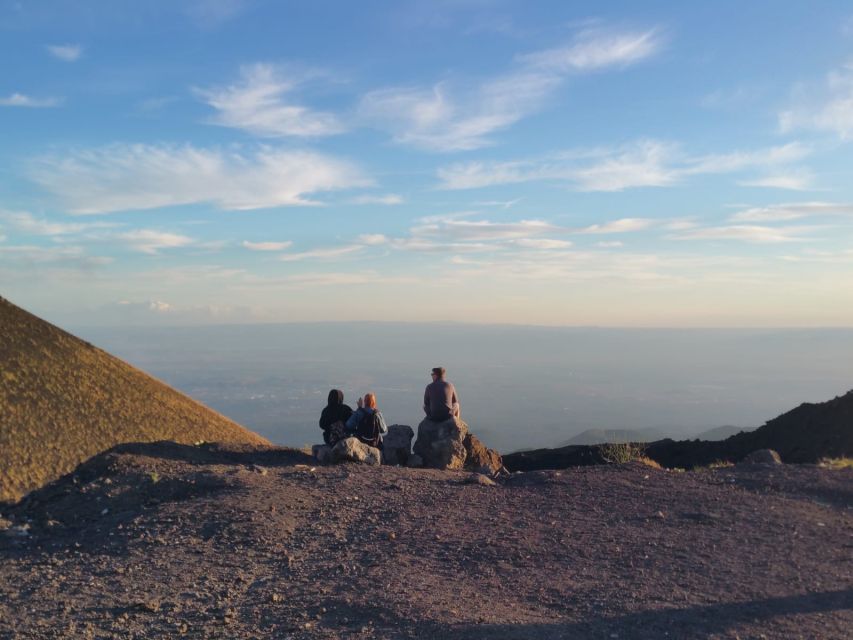
You will cross the upper Silvestri Craters and reach their highest point. That higher position is one of the tour’s best moments because it opens the view toward the Etna foothills and the Ionian coast near Catania. The exact view depends on weather, but the tour specifically includes this panorama as a key reward.
The climb and surface are also where the route’s medium difficulty becomes most relevant. Volcanic ash can feel loose underfoot, and rough lava is not as simple to walk across as a paved path. You do not need to treat this like a technical mountain climb, but hiking shoes are important.
Reading the eruptions of 1766, 1892, and 2001
The route links three eruption periods: 1766, 1892, and 2001. This gives the walk a useful time scale. You are not only seeing old craters. You are moving through evidence of Etna’s repeated activity across centuries.
The 1766 eruption is represented by the Calcarazzi craters, which you reach later in the walk. The 1892 eruption is also part of the volcanic story explained along the route. The 2001 eruption brings the most recent date into view and makes the volcano’s ongoing activity feel more immediate.
I like this structure because it prevents the outing from becoming a string of scenic stops with no connection. Each eruption gives the guide a reason to explain how Etna has shaped its southern side. You can compare older and newer lava, then see how the terrain changes from one eruption zone to another.
Do not expect a museum-style presentation or a long geology lecture. This is a walking excursion, and the information comes as you move. The strongest feedback about Mario points to his ability to deliver many interesting details in a short time without losing the group. That is exactly the skill you want on a 2.5-hour outing.
More walks and treks around Sicily:
- Mount Etna: Trek to 3000m with cable car and jeep
★ 4.7 · 1,978 reviews - Mount Etna: Summit Crater Trek with Cable Car
★ 4.8 · 1,875 reviews - Etna Volcano: South Side Guided Summit Hike
★ 4.7 · 1,545 reviews - Stromboli: Sunset Trekking at Sciara del Fuoco
★ 4.6 · 1,372 reviews
Walking across the 2001 lava and volcanic fracture
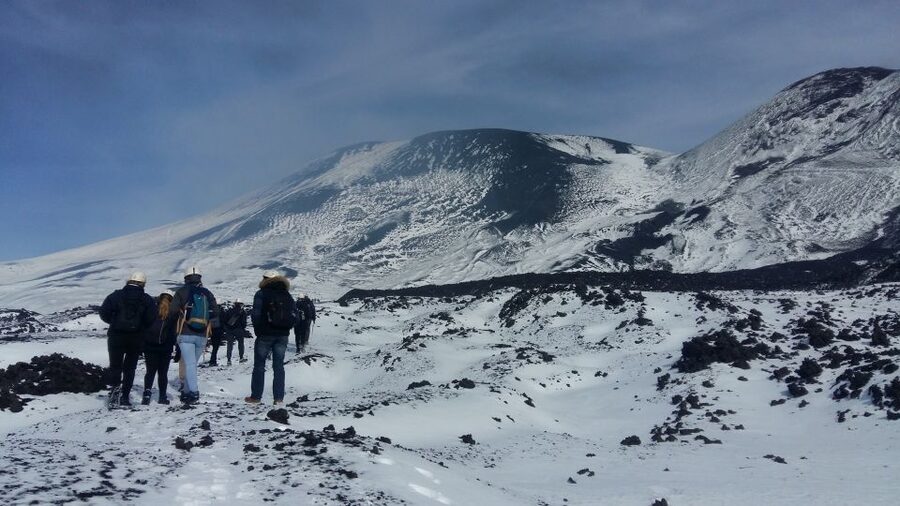
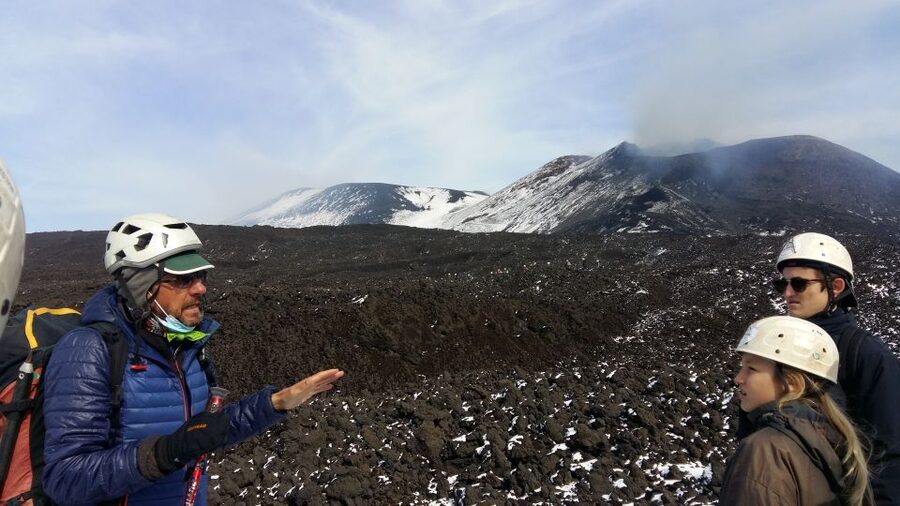
The 2001 section is one of the most distinctive parts of the route. You walk on lava from that eruption and reach the fracture that generated it.
A volcanic fracture is a break in the ground through which lava can rise. Seeing the point linked to a recent eruption gives you a more direct sense of Etna as an active volcano. The date is recent enough to feel connected to modern life, rather than belonging only to the distant past.
This stop also gives the guide a chance to explain the difference between a crater and a fracture. The route does not simply take you to the top of a cone. It shows you another way volcanic activity reshapes the slope.
The surface can be rough and uneven, so keep your attention on your footing while listening. You may need to pause to look at the rock, then turn your attention back to the path. Comfortable clothing and sturdy footwear make the experience much more pleasant.
The Calcarazzi craters from the 1766 eruption
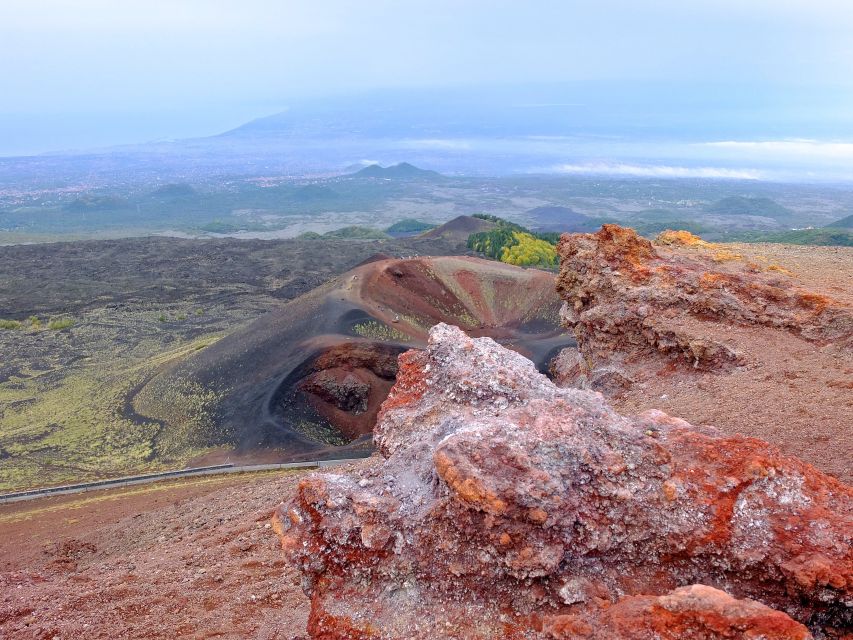
The route continues to the Calcarazzi craters, formed during the 1766 eruption. These craters add an older chapter to the excursion and show how Etna’s southern side has been altered over time.
The value here is comparison. After seeing lava from 2001, you encounter volcanic formations linked to an eruption more than two centuries older. A guide can help you connect the two areas without pretending they are identical. The age, shape, and condition of volcanic features can vary, and the walk lets you see that variation at close range.
The Calcarazzi section also keeps the route from feeling too concentrated around the cable car area. You get farther into the volcanic terrain and continue toward the upper Silvestri viewpoint.
As with the rest of the walk, the experience is more about observation than speed. Pauses are placed at useful points, according to the tour description and the feedback about the guiding style. That is good news if you prefer time for questions and photographs rather than a brisk march.
The highest point and the Catania coast view
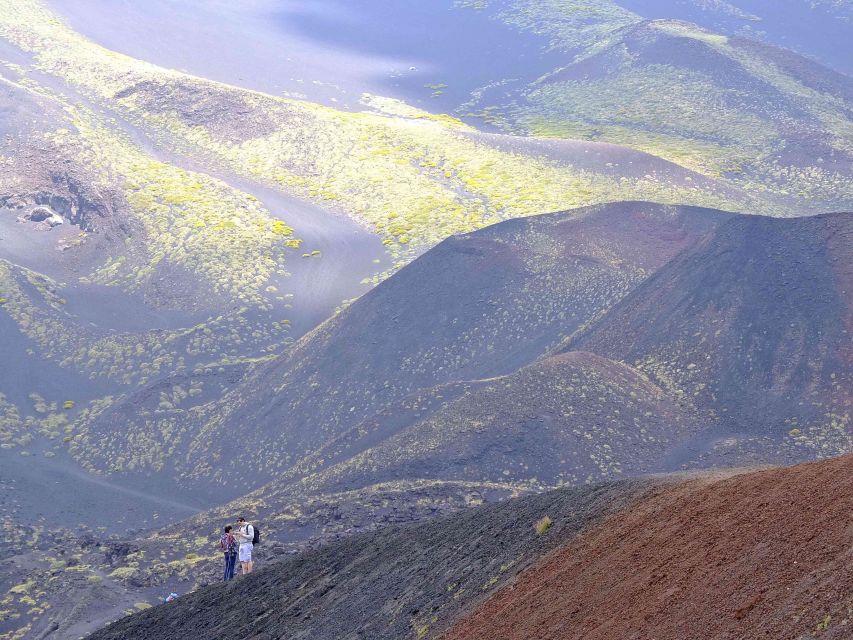
The final high point of the upper Silvestri Craters is the scenic payoff. From here, you can look across the Etna foothills toward the Ionian coast and Catania.
The contrast is memorable: black volcanic ground underfoot, broad coastal views beyond, and the enormous slope of Etna around you. It is also a reminder that the volcano is part of a populated region. Etna is not an isolated peak in an empty wilderness. Its eruptions have shaped the land where towns, roads, and farms exist today.
Weather controls how much you see. Clouds, rain, or storms can block the coast and also stop the tour from operating. This is not a minor detail. A clear day can make the final viewpoint the strongest part of the outing, while poor conditions can remove much of the visual reward.
The guide still adds value in unsettled conditions, but the operator does not run the trek in rain or stormy weather. Keep your plans flexible if the Etna forecast is uncertain.
What the $46 price gives you
At $46 per person, the central purchase is the nature guide service. Food, drinks, tips, clothing, and mountain equipment are not included.
I consider that a reasonable price if you want help understanding Etna rather than simply walking near the craters alone. The route is short, but the subject is large and complex. A good guide can explain what you are seeing, adjust the pace, and make sensible pauses for a group with different abilities.
The price does not cover equipment, so budget for your own preparation. Hiking shoes, water, rain gear, and comfortable clothes are required items, not optional extras. You also need to handle food and drinks yourself.
The value is strongest for people who want a compact, guided introduction. If you already have strong volcanic knowledge and mainly want independent exercise, the guide service may feel less essential. If you are visiting Etna for the first time, the explanations from Mario or Thomas can make the extra cost worthwhile.
The reserve-now-and-pay-later option also helps if your Sicily plans may change. Free cancellation is available up to 24 hours before the activity for a full refund, giving you some protection when mountain weather is hard to predict.
Fitness, clothing, and who should book
The tour is labeled an easy trek, but the detailed description calls it medium difficulty. I would plan for the more cautious interpretation.
You walk at altitude and across volcanic ground. A low level of fitness may make the outing uncomfortable. The tour is not suitable for pregnant women, people with heart problems, people with motion sickness, or anyone over 95 years old.
Wear hiking shoes with good grip. Bring water, rain gear, and comfortable clothes. Do not rely on city shoes simply because the walk lasts only 2.5 hours. The duration is short, but the surface is the important factor.
This experience fits you best if you want:
- A guided introduction to Etna’s southern slope
- A short outing instead of a full-day mountain program
- Volcanic explanations in English or Italian
- Craters, lava, and coast views in one route
- A pace that includes planned pauses
- A practical activity near Rifugio Sapienza
It is less suitable if you need a flat, paved walk or dislike changing weather. The title may suggest a very gentle stroll, but the terrain and altitude deserve proper preparation.
How the guide shapes the experience
The guide is not a small detail here. The route’s main attractions are natural formations, not buildings with signs explaining everything for you.
Mario is repeatedly praised for his passion for Etna and for explaining many details in a short time. The comments about his love for the volcano suggest a lively presentation rather than a dry list of dates. He is also noted for placing pauses at the right moments, which can help the group keep up without rushing.
Thomas receives praise for professionalism and passion as well. Both names are useful to know when you are comparing available departures, although the exact guide depends on the booking.
You should feel free to ask questions during the walk. One of the positive details attached to the guiding is the clear, educational handling of questions. That makes a difference when you want more than a quick photo beside a crater.
Weather and the limits of a mountain outing
Etna does not follow your sightseeing schedule. The tour will not take place in rain or stormy weather, so check the forecast and keep the cancellation deadline in mind.
Even without rain, mountain conditions can affect the views. The panorama toward the Catania foothills and Ionian coast is a planned highlight, not a guaranteed sight on every departure. Clouds may reduce visibility, and wind can make the temperature feel cooler than expected.
I would avoid booking this as the one activity that must happen on the final morning of a short Sicily trip. Give yourself some flexibility if possible. The reserve-and-pay-later arrangement helps, and cancellation up to 24 hours ahead allows you to respond to a poor forecast.
Should you book the Etna Southern Slope Guided Easy Trek?
Book it if you want a short but meaningful look at Etna, especially if you value explanation as much as scenery. The route covers Silvestri Craters, 2001 lava, the volcanic fracture, Calcarazzi craters, and a high viewpoint toward the coast. That is a lot of volcanic variety in 2.5 hours.
I would choose it for a first Etna visit, a free morning in Sicily, or a family group with reasonably fit adults who are prepared for uneven ground. The price is fair for a dedicated nature guide, and the strong praise for Mario and Thomas adds confidence.
Skip it if you want a completely easy paved stroll, need guaranteed clear views, or have a medical or fitness concern listed in the restrictions. For everyone else, bring proper shoes, water, and a jacket, then let the guide help you read the volcano one eruption at a time.
FAQ
Where does the Etna trek begin?
The meeting point is inside the Esagonal bar at Hotel and Restaurant Rifugio Sapienza, next to the Etna cable car departure station on the southern slope.
How long does the activity last?
The guided trek lasts 2.5 hours.
At what altitude does the walk start?
The route begins at approximately 1,900 meters.
Which languages are available?
The live guide service is available in English and Italian.
What volcanic sites will I see?
You will visit the upper Silvestri Craters and the Calcarazzi craters, walk across lava from the 2001 eruption, and reach the volcanic fracture associated with that eruption.
What should I bring?
Bring hiking shoes, water, rain gear, and comfortable clothes.
Is food included?
No. Food and drinks are not included in the price.
Does the tour operate in bad weather?
No. The tour does not take place in rain or stormy weather.
Who should not take this trek?
The activity is not suitable for pregnant women, people with heart problems, people with a low level of fitness, people with motion sickness, or people over 95 years old.
Just added around Sicily
- Anti-Mafia Heroes (Cool Hours) Morning Walking Tour★ 5.0 · 3 reviews
- Nicolosi: Excursion Etna Craters at 3000 mt.★ 4.2 · 3 reviews
- DISCOVER THE SECRET OF PALERMO Walking Tour Combining Art and best street food★ 5.0 · 3 reviews
- Taormina PRIVATE EAST COAST EXCURSIONS 2 Exclusive Days with Guide Driver★ 5.0 · 3 reviews
- The art of the Italian Aperitivo with a local: Learn & Enjoy in Palermo★ 5.0 · 3 reviews
- Monti Rossi Adventure Park Entry Ticket Full★ 5.0 · 3 reviews
- Guided kayak tour inside the Stagnone of Marsala★ 5.0 · 3 reviews
- Catania : Diving for patented divers★ 5.0 · 3 reviews
Mount Etna Tours, compared.
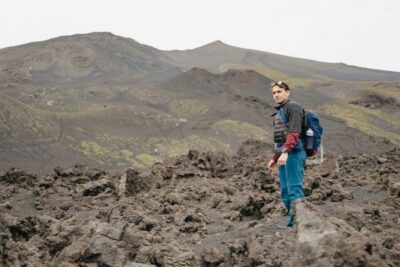
Mount Etna Morning or Sunset Day Trip with Tasting
Read our review →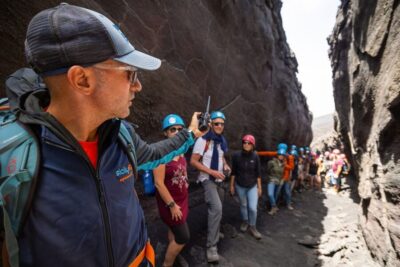
Guided Volcano Summit Hiking Tour with Cable Car
Read our review →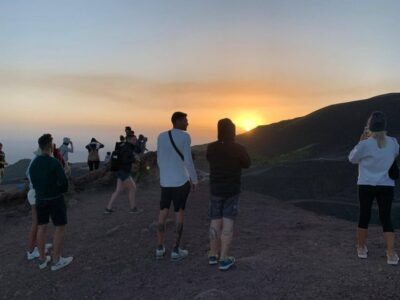
Sunset Jeep Tour of Mount Etna and Lava Flow Caves
Read our review →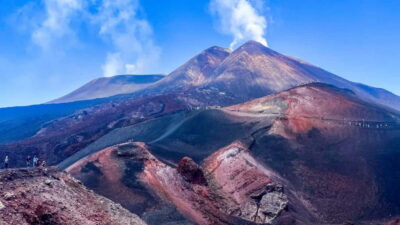
Etna and Alcantara Gorges Full-Day Tour with Lunch
Read our review →
Browse the lists this tour appears in