Reviewed · TOURS
Syracuse: tour of the Neapolis Archaeological Park (max 6 guests)
Syracuse’s Neapolis Archaeological Park packs Greek theaters, Roman ruins, a huge quarry, and one very strange cave into a compact walk. The Ear of Dionysius is the star: a tall limestone cavern famous for its echo and its unusual shape. It is the sort of place that makes ancient history feel physical, not just something printed on a sign.
I like the small six-person limit, which gives you room to ask questions, and I like having Dr. Enrica De Melio, a PhD archaeologist, explain what the worn stones once meant. The main drawback is price: at $249.68 per person, plus the €14 park entrance fee, this is a serious outlay for about 90 minutes.
In This Review
- Key points to know
- Why Neapolis is worth seeing with a guide
- The Ear of Dionysius and the Paradise quarry
- The Greek Theater, built for scale
- Hieron’s Altar and the scale of ancient ritual
- The Roman Amphitheater and changing rulers
- Enrica’s approach to ancient Syracuse
- What the $249.68 price really buys
- Timing, meeting point, and physical effort
- Who should book this Neapolis walk?
- The final call on Enrica’s Syracuse tour
- FAQ
- How long does the Neapolis Archaeological Park tour last?
- How many people can join the tour?
- Who guides the tour?
- What language is the tour offered in?
- Which sites are visited?
- Is the park entrance included in the tour price?
- Where does the tour begin and end?
- Is the tour suitable for people with limited mobility?
- What happens if I need to cancel?
Key points to know
- The Ear of Dionysius takes center stage: Allow about 30 minutes for the park’s most unusual cave.
- Dr. Enrica De Melio leads the walk: Her archaeology background adds context to damaged inscriptions, ruins, and ancient legends.
- The group is capped at six people: This is a much more personal setup than a large coach tour.
- Four major monuments fit into the visit: You’ll see the Ear of Dionysius, Greek Theater, Hieron’s Altar, and Roman Amphitheater.
- The €14 admission fee is extra: The advertised price does not include entry to the monumental area.
- The pace is active but manageable: Expect walking over an archaeological site, with moderate physical fitness recommended.
Why Neapolis is worth seeing with a guide
Neapolis is not a tidy collection of complete buildings. It is a broad archaeological area where theaters, quarries, altars, and fragments sit among the remains of a city used by Greeks and Romans. Some details are easy to miss, especially inscriptions and damaged stonework.
That is where a guide earns the fee. Enrica uses pictures and diagrams to show how parts of the site may have looked in earlier periods. I find that especially useful at the Greek Theater, where the surviving stone does not tell the whole story by itself.
Syracuse has a long and complicated past. Gods, kings, public spectacles, quarry labor, religious ceremonies, and Roman control all appear in this small section of the city. A good explanation helps you connect those pieces instead of simply walking from one ruin to the next.
This tour is also a useful choice if you prefer conversation to a recorded audio guide. With no more than six people, you can stop and ask about a carving, a legend, or a confusing piece of ancient terminology. That personal access is one of the strongest reasons to consider it.
Other Sicily trips travellers book alongside this one:
- Catania: Mount Etna Morning or Sunset Day Trip with Tasting
★ 4.8 · 4,028 reviews - Mount Etna: Guided Volcano Summit Hiking Tour with Cable Car
★ 4.7 · 3,784 reviews - Palermo: NO Mafia Walking Tour
★ 4.8 · 2,431 reviews
The Ear of Dionysius and the Paradise quarry
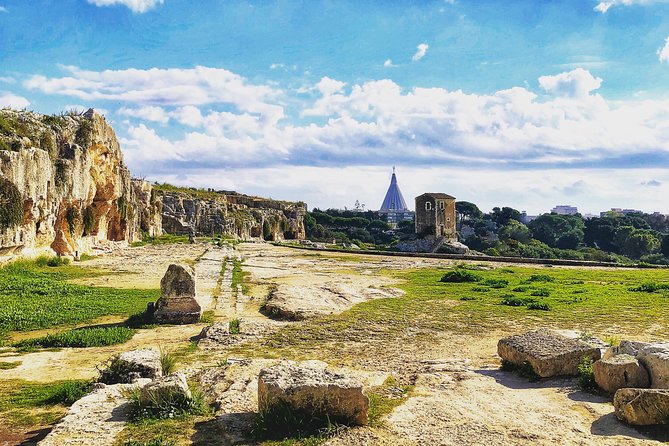
The tour gives about 30 minutes to the Ear of Dionysius, the longest stop of the morning. The cave is a former limestone quarry, with high walls and an acoustic quality that has made it famous.
Your guide can explain the stories linked to its name and the ancient use of the quarry. The name refers to Dionysius, the powerful ruler of Syracuse, and the cave has long been tied to tales about listening in on prisoners. Those stories belong partly to legend, so it is helpful to have someone separate established facts from later tradition.
The cave’s echo is the simple pleasure here. Children often find it especially memorable, and you might hear people testing their voices against the stone. Some guides sing in the cave, but that is not promised as part of this experience.
The wider quarry area is also important. The pale limestone was cut into tunnels and chambers, creating a place that feels very different from the open theater nearby. Watch your footing and expect a fair amount of standing and walking. The tour recommends moderate physical fitness, and that is sensible for an archaeological park rather than a flat city sidewalk.
The Greek Theater, built for scale
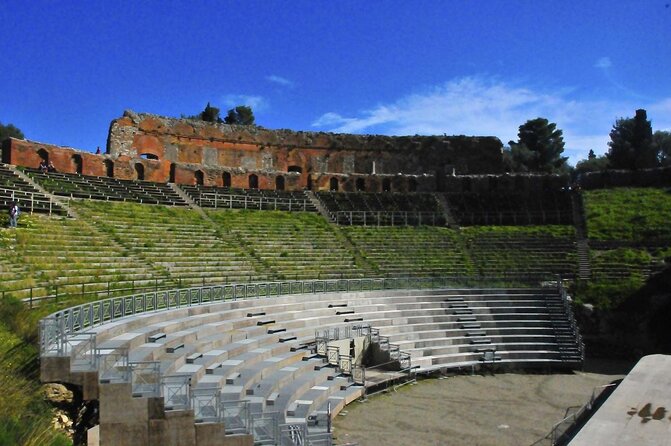
The Greek Theater receives about 15 minutes, though its importance reaches far beyond that short stop. The theater is described as the third largest Greek theater in the world, and its scale is immediately clear from the broad sweep of its seating area.
This is where I most appreciate visual help from a specialist. Much of the original setting is worn or incomplete, so a guide’s diagrams can show how the theater worked as a public space. Enrica also points out inscriptions that you might otherwise walk past without noticing.
The theater connects architecture with civic life. It was not just a place to watch performances. It was part of the public identity of ancient Syracuse, a city that mattered greatly in the Greek world. The stone seating and stage area give you the outline, but the explanation supplies the human part: who gathered here, why the space was built so large, and how its use changed over time.
Fifteen minutes is enough for an introduction, but not for a slow, independent study of every section. If you want to photograph details or sit quietly with the view, you may wish the tour were longer. The visit is designed to give you a focused explanation, not a half-day archaeological survey.
Hieron’s Altar and the scale of ancient ritual
The stop at Ara di Ierone, or Hieron’s Altar, lasts about five minutes. That sounds brief, but the altar’s size makes the point quickly.
This Greek altar dates to the third century BC and was dedicated to Zeus. Its remains help explain the scale of public religious ceremonies in ancient Syracuse. You are looking at an enormous structure rather than a small shrine, so the site raises useful questions about offerings, ritual, political power, and the people needed to organize such events.
The short timing means you should listen closely. There is no long pause built in for wandering around the monument. Enrica’s role is particularly useful here because a large, damaged foundation can be hard to interpret without guidance.
Same island, a completely different day out:
- Palermo: Hop-on Hop-off Bus Tour 24-hour Ticket
★ 3.9 · 2,410 reviews - From Trapani: Cruise to Favignana and Levanzo with lunch
★ 4.2 · 2,286 reviews - Catania: Sunset Jeep Tour of Mount Etna and Lava Flow Caves
★ 4.8 · 2,113 reviews - Palermo Original Street Food Walking Tour by Streaty
★ 5.0 · 2,105 reviews
The Roman Amphitheater and changing rulers
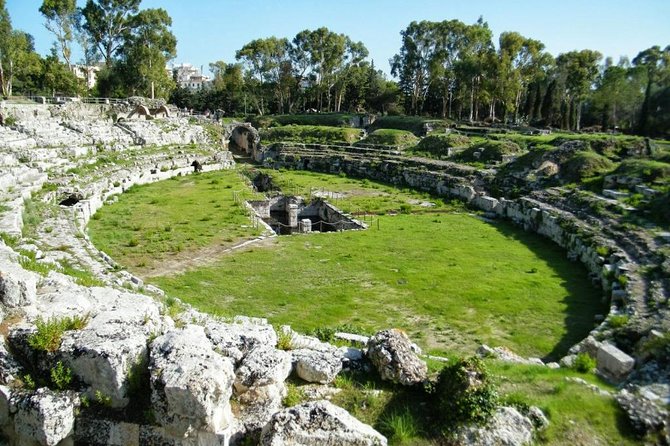
The Roman Amphitheater of Syracuse receives about 10 minutes. It is described as the fourth largest amphitheater in the world, a claim that gives you a sense of its impressive size even before you see the remains.
This stop shifts the story from Greek Syracuse to the Roman period. The amphitheater shows how the city changed under Roman influence and how public spectacles became part of urban life. The surviving structure is incomplete, so the shape of the arena is easier to understand when someone explains what you are seeing.
The amphitheater also helps you compare two different kinds of public building. The Greek Theater was connected with Greek performance and civic culture. The Roman arena served a different purpose and reflects a different political world. Seeing both on one guided walk makes the contrast much clearer.
Ten minutes is enough to establish the main facts, but it will feel quick if you want a detailed look at every surviving passage and wall. You can return on your own if the entrance conditions and opening arrangements suit your schedule, but the experience itself ends back at the meeting point.
Enrica’s approach to ancient Syracuse
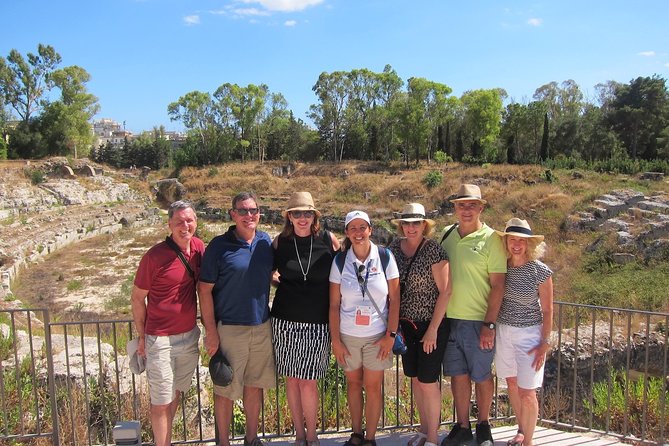
The guide is Dr. Enrica De Melio, a PhD archaeologist. That title matters here because the park has limited information posts, and several features have deteriorated enough to make their original purpose unclear.
Enrica’s approach combines academic training with a friendly, animated style. She uses visual material to help you picture vanished buildings and explains the difference between historical evidence and local legend. That is a better fit for curious visitors than a guide who simply recites dates.
Her answers also appear to be a major part of the experience. You are encouraged to ask questions throughout the walk, and the group size makes that realistic. If you enjoy stopping to ask why an altar was built so large, how an inscription was read, or how Greek and Roman periods overlap, this format should suit you.
The strongest praise connected with Enrica focuses on passion, clarity, and personal attention. Families with teenage children found that her explanations made the ancient city more approachable, while couples appreciated the comfortable pace. Some customers also combined the park with a tour of Ortigia or received food suggestions, but those are separate arrangements and are not part of this 90-minute experience.
What the $249.68 price really buys
The listed cost is $249.68 per person, and you must add the €14 entrance fee for the Neapolis monumental area. The price is high compared with entering the park independently, so you should be clear about what you are paying for.
You are paying for a specialist guide, a small group capped at six, and a focused explanation of four major areas. For two people, the total guide cost alone is close to $500 before admission. For a family or group of six, the per-person cost may feel easier to justify, especially if everyone is interested in archaeology and willing to ask questions.
The value depends on your travel style. If you like reading signs, taking your time, and forming your own interpretation, independent entry may be enough. If you look at weathered stone and think What exactly am I seeing?, a PhD archaeologist can make the extra cost worthwhile.
The 90-minute length also affects the calculation. This is not a full morning or half-day tour. It gives you a concentrated introduction, leaving time for lunch, Ortigia, or another Syracuse sight. But if you want the park at a slow pace, with extensive photography and quiet exploration, you may prefer to visit independently or ask about a longer tour.
Timing, meeting point, and physical effort
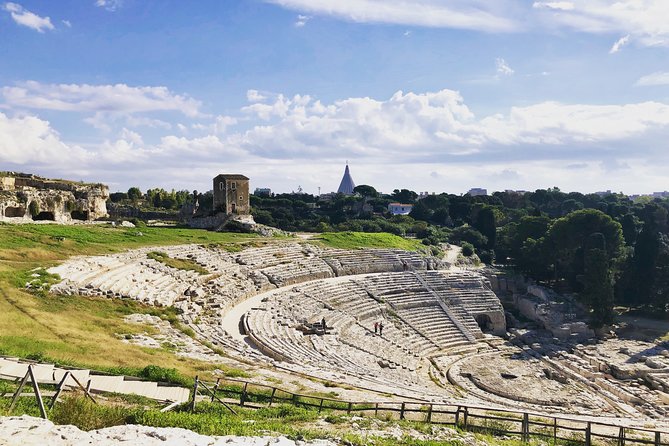
You meet at Neapolis Archaeological Park on Via Luigi Bernabò Brea 14 in Syracuse. The activity ends at the same meeting point, so you do not need to arrange a separate return transfer.
The park is near public transportation, and the activity is offered in English. Confirmation arrives when you book, and mobile tickets are accepted. Service animals are allowed.
Plan for outdoor walking and uneven archaeological surfaces. The stated requirement is moderate physical fitness, which means you should be comfortable standing and moving around a historic site for about an hour and a half. The details provided do not promise wheelchair access or a fully step-free route, so anyone with mobility concerns should confirm conditions before paying.
Good weather is required. If poor weather causes cancellation, you are offered another date or a full refund. Otherwise, you can cancel for a full refund up to 24 hours before the start time. Changes or cancellations inside that window are not refunded.
The tour is often booked well ahead, with an average booking lead time of 46 days. That does not mean every date sells out, but it is a useful warning if you want a specific morning or are visiting Syracuse on a tight schedule.
Who should book this Neapolis walk?
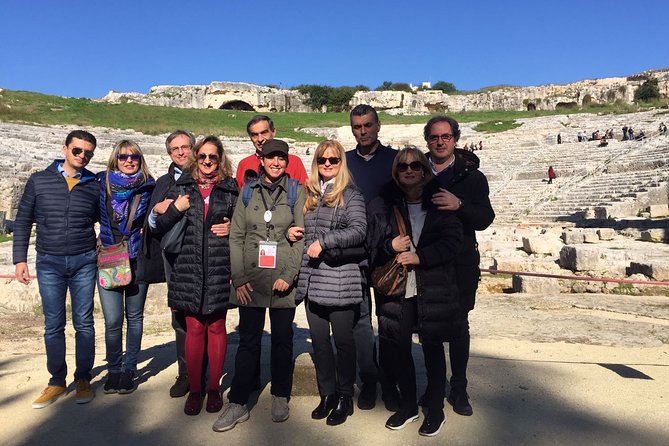
I would choose this tour for you if ancient Greek and Roman sites are a major reason for your visit to Sicily. It is particularly well suited to couples, families, and small groups who prefer a real conversation with a specialist rather than a large group moving from sign to sign.
It also works well for a first visit. You get the main monuments in a clear order, learn the basic story of the park, and can then decide if you want to return for more time. Families with older children and teenagers may find the cave, arena, and stories about ancient public life more engaging than a museum-heavy morning.
I would hesitate if your budget is tight, if you have only a passing interest in archaeology, or if you want a slow half-day visit. The extra €14 admission fee and short duration make the price harder to defend for casual sightseers.
The final call on Enrica’s Syracuse tour
Book this experience if you want Neapolis explained by an archaeologist and value a small group over the lowest price. The Ear of Dionysius, Greek Theater, Hieron’s Altar, and Roman Amphitheater form a strong introduction to Syracuse, and Enrica’s use of diagrams and historical context helps fill in what the ruins no longer show.
Skip it if you would rather explore alone, spend several hours at the park, or keep your sightseeing costs low. For the right audience, though, the personal questions, expert interpretation, and compact route make this more than a quick walk among old stones.
FAQ
How long does the Neapolis Archaeological Park tour last?
The tour lasts approximately 1 hour and 30 minutes.
How many people can join the tour?
The activity has a maximum of six participants.
Who guides the tour?
The guide is Dr. Enrica De Melio, a PhD archaeologist.
What language is the tour offered in?
The tour is offered in English.
Which sites are visited?
The route includes the Ear of Dionysius, Teatro Greco, Ara di Ierone, and the Roman Amphitheater of Syracuse.
Is the park entrance included in the tour price?
No. The entrance fee is separate and listed as €14 per person for the monumental area of Neapolis.
Where does the tour begin and end?
It begins at Neapolis Archaeological Park, Via Luigi Bernabò Brea 14, Syracuse, and ends back at the meeting point.
Is the tour suitable for people with limited mobility?
The activity recommends a moderate level of physical fitness. The supplied information does not confirm a step-free route or specific accessibility arrangements, so you should check before booking.
What happens if I need to cancel?
You can cancel up to 24 hours before the start time for a full refund. Cancellations or changes made less than 24 hours before the start time are not refunded. If poor weather cancels the tour, you are offered another date or a full refund.
Just added around Sicily
- Anti-Mafia Heroes (Cool Hours) Morning Walking Tour★ 5.0 · 3 reviews
- Nicolosi: Excursion Etna Craters at 3000 mt.★ 4.2 · 3 reviews
- DISCOVER THE SECRET OF PALERMO Walking Tour Combining Art and best street food★ 5.0 · 3 reviews
- The art of the Italian Aperitivo with a local: Learn & Enjoy in Palermo★ 5.0 · 3 reviews
- Taormina PRIVATE EAST COAST EXCURSIONS 2 Exclusive Days with Guide Driver★ 5.0 · 3 reviews
- Monti Rossi Adventure Park Entry Ticket Full★ 5.0 · 3 reviews
- Guided kayak tour inside the Stagnone of Marsala★ 5.0 · 3 reviews
- Sicily Boats Avola: Plemmirio boat tour 4 people 4 hours★ 5.0 · 3 reviews
Tours, compared.
Guided Volcano Summit Hiking Tour with Cable Car
Read our review →
Sunset Jeep Tour of Mount Etna and Lava Flow Caves
Read our review →
Palermo Original Street Food Walking Tour by Streaty
Read our review →
Segesta, Erice and Salt Pans Full-Day Excursion from Palermo
Read our review →
Etna and Alcantara Gorges Full-Day Tour with Lunch
Read our review →