
Reviewed · MOUNT ETNA TOURS
Special trekking on the most authentic and wild side of Etna
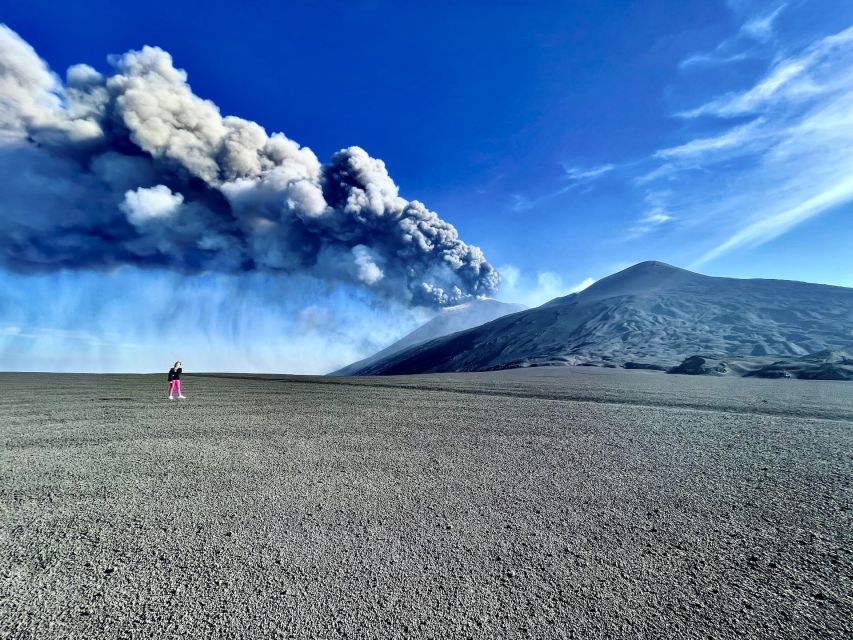
Etna’s north side feels like the volcano’s back room: rough, quiet, and shaped more by lava and ash than by visitor facilities. This four-hour trek uses a 4×4 to reach 2,800 meters, then takes you on foot past crater rims, ground fractures, lava channels, and an intact volcanic chimney.
I like the wild north-side route and the chance to see parts of Etna that most short summit visits miss. I also like the practical gear loan, especially the hiking shoes, warm jackets, helmets, and poles. The main drawback is the extra 50-euro 4×4 charge, paid locally, on top of the tour price.
In This Review
- Key points to know before you book
- Etna’s north side, away from the usual crowds
- From 1,800 to 2,800 meters by 4×4
- The first walk at 2,800 meters
- The 1947 craters and the volcanic chimney
- Walking along Etna’s north-side crater rims
- A guide who explains what you are seeing
- What to wear and pack for Etna
- The extra cost and the practical meeting details
- Who will enjoy this Etna trek most
- Should you book the wild north-side Etna trek?
- FAQ
- Where does the Etna trek begin and end?
- How long does the experience last?
- Is the 4×4 transport included in the tour price?
- What equipment is provided?
- What should I bring?
- Is the trek suitable for beginners?
- What languages are available, and what happens if weather is poor?
Key points to know before you book
- The 4×4 climbs to 2,800 meters: This saves you a long uphill walk and puts the trek straight into Etna’s high volcanic zone.
- The walking route covers about 6 kilometers: Expect a descent over volcanic ash and uneven ground from the high north side to Piano Provenzana.
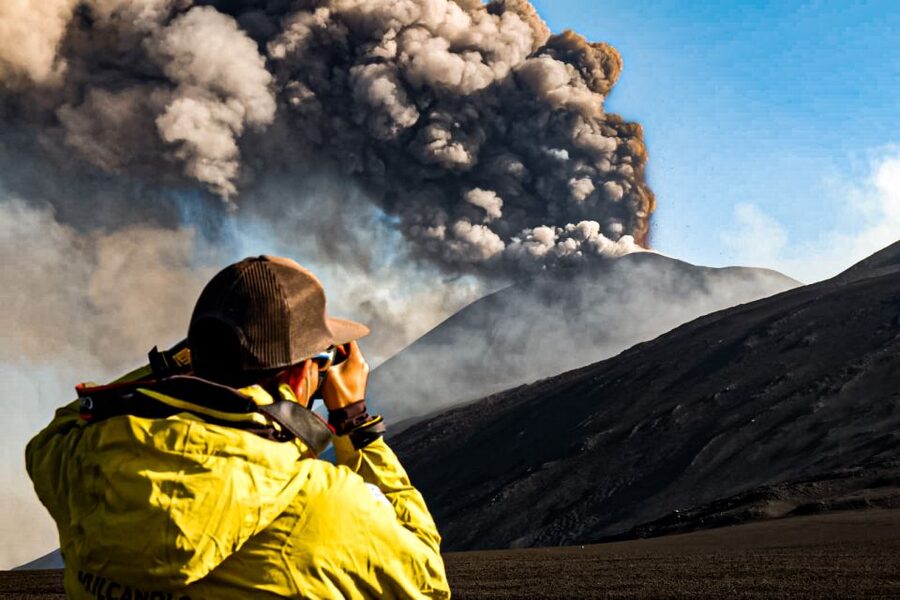
- You enter an intact volcanic chimney: Protective helmets let you inspect the inside of a volcanic cone formed during the February 24, 1947 eruption.
- The views can reach Taormina and the Aeolian Islands: Clear weather makes the first high-altitude walk especially rewarding.
- Ciccio can bring the geology to life: His explanations cover eruption mechanics, local eruptions, lava flows, and the workings of a volcano.
- The route is a summit alternative: It can operate when access to Etna’s summit craters is restricted by volcanic risk, within the safety limits set by authorities.
Etna’s north side, away from the usual crowds
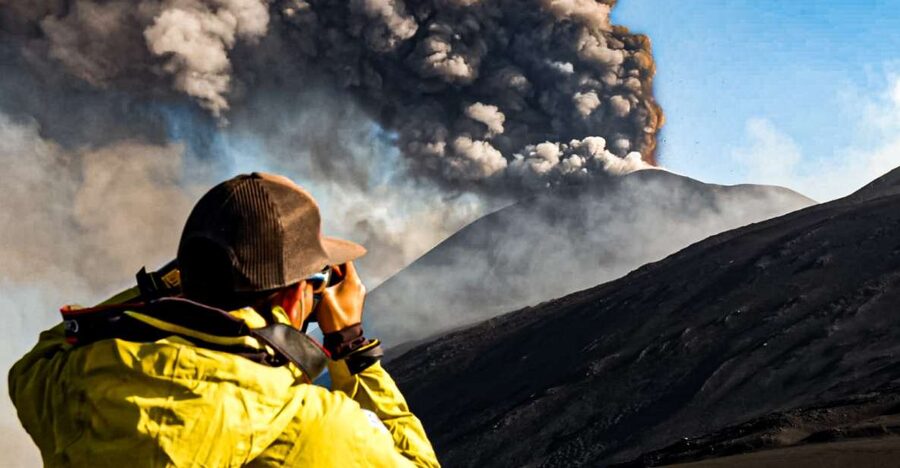
Many Etna outings focus on the summit craters or the busy southern approach. This one takes a different line. You meet at the Chiosco Bar Mareneve near the winter chairlift in Piano Provenzana, then head into the north side, where the volcanic ground is marked by old eruption cones, ash slopes, lava flows, and long fractures.
That choice matters. You are not simply being driven to a viewpoint for a quick look and a photograph. The route is built around reading the volcano. Your guide points out how lava moved, where the ground split, and how separate eruptions added new craters across the north slope.
The north side also has a more rugged feel. The road from 1,800 to 2,800 meters is rough enough to require a special 4×4 vehicle. That ride is part of the experience, but it is not a luxury transfer. Expect a bumpy climb over volcanic terrain, with the guide already explaining what you are seeing from the vehicle.
The total price begins at $62.63 per person, but the required 4×4 transport costs another 50 euros per person on site. Add the 3-euro full-day parking charge, and the real cost is higher than the headline figure. I still find the package reasonable for a guided high-altitude route with equipment included, but you should budget for the transport before comparing it with other Etna trips.
More Hiking Tours in Catania
- Catania: Etna Nature Tour with Hiking, Cave Visit, & Tasting
★ 4.7 · 502 reviews - Etna Volcano: South Side Guided Summit Hike
★ 5.0 · 311 reviews - Mount Etna: North Upper Craters Guided Tour by 4×4 with Trek
★ 4.6 · 243 reviews
From 1,800 to 2,800 meters by 4×4
The excursion begins near the chairlift at Piano Provenzana. The meeting point is the second of four buildings in the parking area, the Chiosco Bar Mareneve. Arrive a little early so the group can organize equipment and transport without a rushed start.
The 4×4 then carries you from about 1,800 meters to the Volcanological Observatory at roughly 2,800 meters. The road covers about 8 kilometers, and the rough surface explains why the transport is handled by off-road vehicles rather than ordinary cars.
This is a useful part of the tour for two reasons. First, it gets you high on Etna without spending hours on a steep ascent. Second, the guide begins explaining the volcano before you even start the main walk. That gives you a framework for the craters and lava features ahead.
You should also expect a noticeable change in conditions at this height. Etna can be cold and windy even when Sicily below is warm. Bring a windbreaker, long trousers, sunglasses, sunscreen, drinks, and food. Warm jackets are supplied, but your own layers still matter because weather can change quickly at altitude.
The 4×4 ride is also where some people may feel the strain. The route is very rough, and anyone with back problems should think carefully before booking. Alcohol is not allowed in the vehicle, and open footwear is not acceptable.
The first walk at 2,800 meters
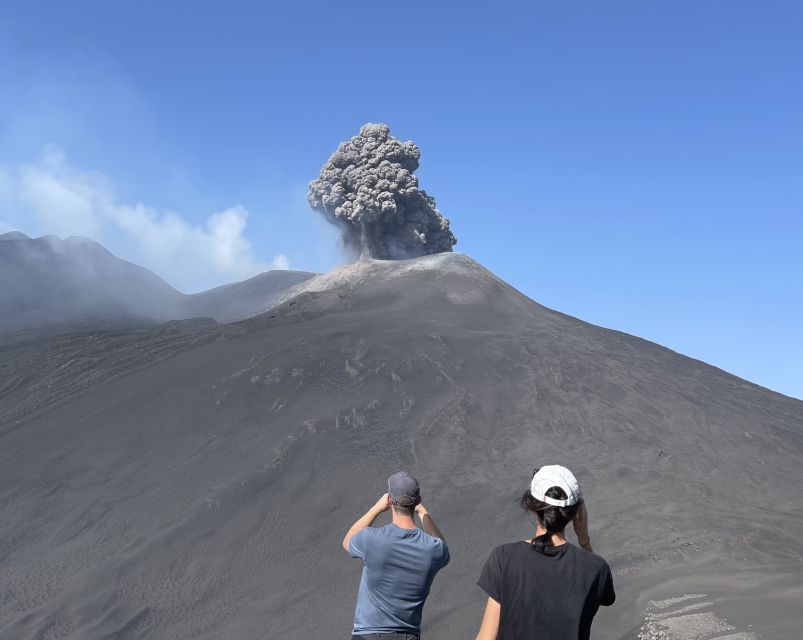
At the high observatory, you begin a shorter walk from about 2,800 meters to approximately 2,900 meters. The distance is modest, but the altitude makes it more demanding than the same walk at sea level.
The reward is a broad lookout toward Etna’s summit craters, recent lava flows, and the Sicilian coastline. In clear conditions, you can see toward Taormina and the Aeolian Islands. Visibility depends entirely on the weather, so do not treat those views as guaranteed. Clouds, wind, or volcanic haze may reduce the scene to nearby black rock and ash.
I like this first walk because it gives you a high-altitude introduction without immediately launching into the longer descent. You get time to adjust to the air, look at the summit area, and hear how current safety rules shape the route.
Etna is an active volcano, so the highest point you reach depends on the conditions and the ordinances in force that day. The guides are authorized to lead visitors on active volcanoes, but they must follow Civil Protection communications and volcanic-risk limits. If the summit craters are closed, this route offers a strong substitute, not a way around the restrictions.
That distinction is important. You are not promised access to the summit craters. You are promised a route to the highest point safely permitted for the conditions.
The 1947 craters and the volcanic chimney
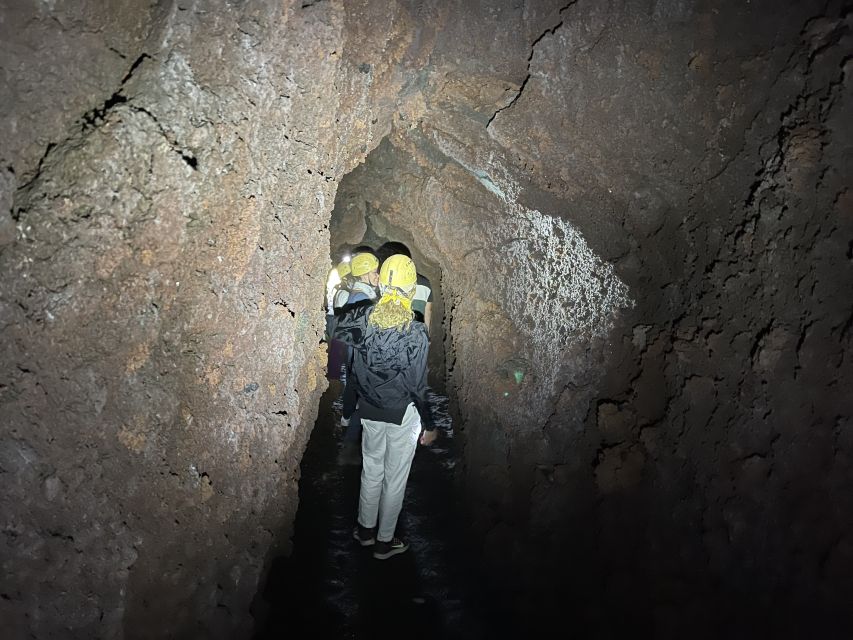
After the first walk, the 4×4 takes you to the side of one of the large craters on Etna’s north slope. This is where the longer walking section begins.
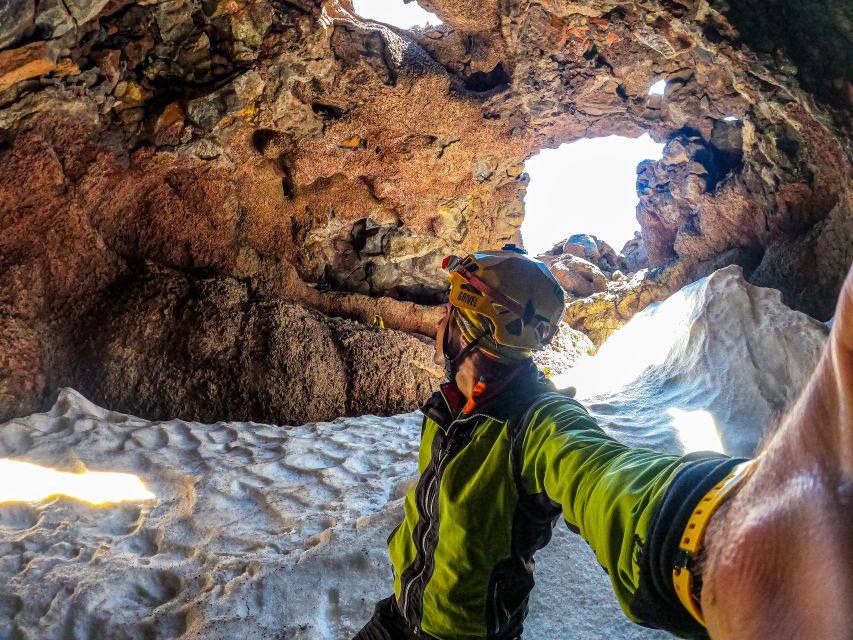
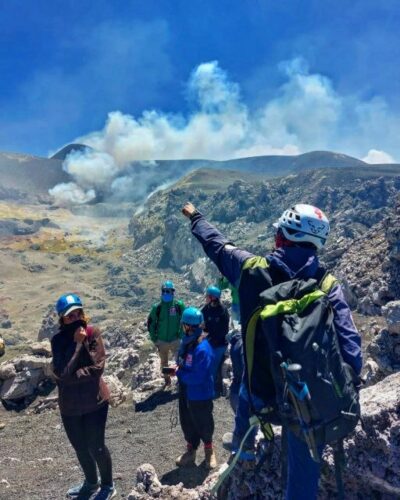
The route visits the fracture known as the north-side Rift and the craters formed during the eruption of February 24, 1947. You also enter the chimney of a volcanic cone that remains intact. Helmets are provided for this section, and you should wear one as instructed by the guide.
Going inside a volcanic chimney gives the geology a physical scale. Instead of hearing only that lava once moved through a vent, you can inspect the opening where molten material rose and boiled. The guide uses this feature to explain eruption mechanics, which is far easier to grasp when you are standing inside the structure itself.
The supplied equipment is a real advantage here. Trekking poles help on loose ash, helmets add protection around the cone, and the loan of hiking shoes means you do not need to pack specialist footwear. The provider also supplies extra socks and backpacks, along with warm jackets.
Still, I would bring your own well-fitting hiking shoes if you have them. The information says adequate shoes are required for accident insurance coverage, so do not arrive in sandals, flip-flops, high heels, or open-toed shoes. The supplied pair may be useful, but it must fit properly and be suitable for uneven ground.
More ways up Etna and around the craters:
- Catania: Mount Etna Morning or Sunset Day Trip with Tasting
★ 4.8 · 4,028 reviews - Catania: Sunset Jeep Tour of Mount Etna and Lava Flow Caves
★ 4.8 · 2,113 reviews - Sicily: Etna and Alcantara Gorges Full-Day Tour with Lunch
★ 4.8 · 1,766 reviews - Catania: Etna Sunset Tour with Pickup and Drop-off
★ 4.8 · 1,348 reviews
Walking along Etna’s north-side crater rims
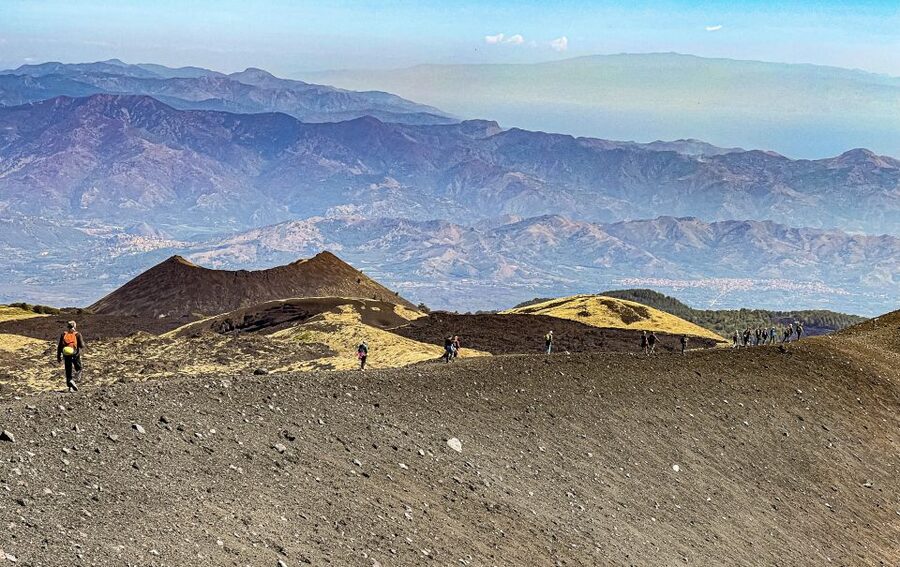
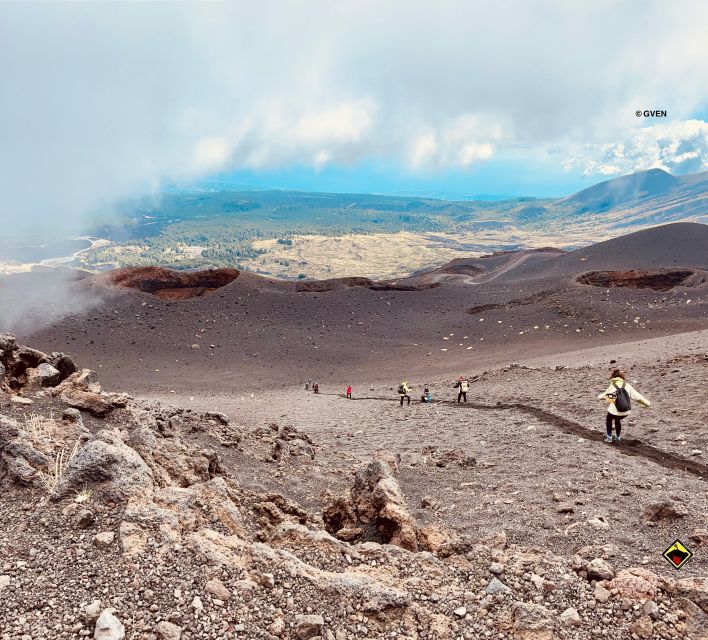
The main route continues along the edges of large explosive craters. You pass through volcanic ash and among cones created by many lateral eruptions, including eruptions in 1809, 1874, 1879, 1911, 1914 to 1924, 1923, 1974 to 1975, and 2002.
These dates are not just a list. They show how Etna keeps adding new features to its sides. A crater that looks ancient may be the result of an eruption within living memory. The repeated eruptions also explain why the north side has such a broken, uneven pattern of cones and lava deposits.
The route covers about 6 kilometers on foot and finishes back at Piano Provenzana. Much of the walk is downhill, but downhill on loose volcanic ash is not easy. Your footing can slide, and the crater edges may cause dizziness for anyone sensitive to heights or vertigo.
I would rate this as suitable for a moderately trained hiker, not a casual stroll. You need enough fitness to walk at high altitude and manage uneven surfaces for several hours. The activity is not suitable for people with mobility impairments, low fitness, respiratory or heart problems, epilepsy, recent surgery, altitude sickness, or a fear of heights. It is also not suitable for people with claustrophobia because of the chimney section.
The guides distribute groups according to size and language, using several guides when needed to avoid very large groups. Tours are available in English, Italian, and French. That group arrangement should help keep the explanations useful and the route manageable, though the total group size depends on the day.
A guide who explains what you are seeing
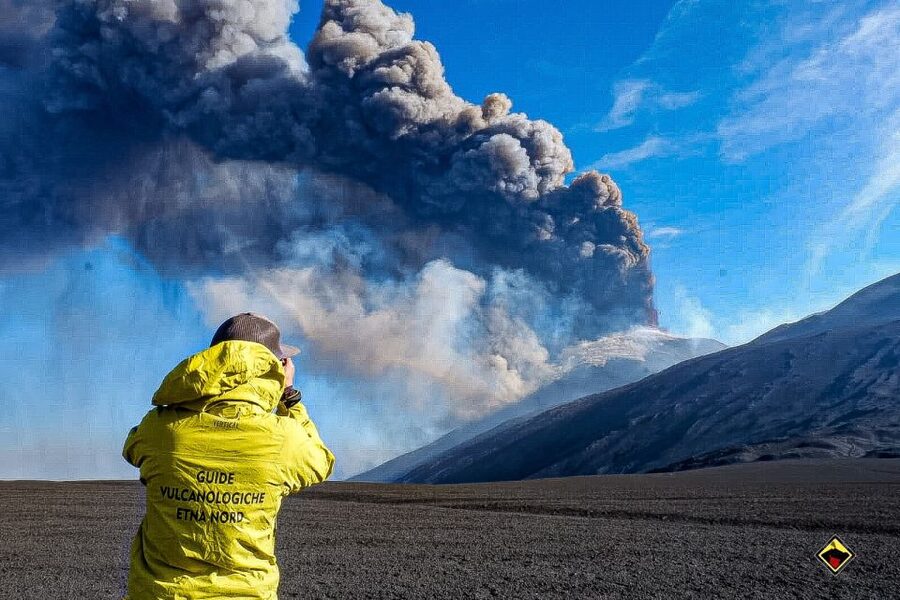
The quality of this experience depends heavily on the guide. The guide is not merely leading you from one crater to the next. The job includes interpreting the volcano, monitoring conditions, and keeping the group within the permitted safety limits.
Ciccio is one guide associated with the experience, and his approach combines scientific and historical explanation with the walking route. He explains the eruption mechanism inside the volcanic cone, discusses the ground fractures, and identifies the lava flows and eruption areas along the way.
That kind of explanation is the main reason to choose a guided trek rather than trying to follow Etna’s north-side paths alone. The ground can look like a field of dark rock and gray ash until someone shows you the difference between a crater rim, a lava channel, a fracture, and a former supply duct.
The guide also helps with the practical side of high-altitude walking. If you feel dizzy, short of breath, or unsteady, tell the guide rather than trying to hide it. The route includes crater edges and loose slopes, so honest communication matters more than keeping pace with the group.
What to wear and pack for Etna
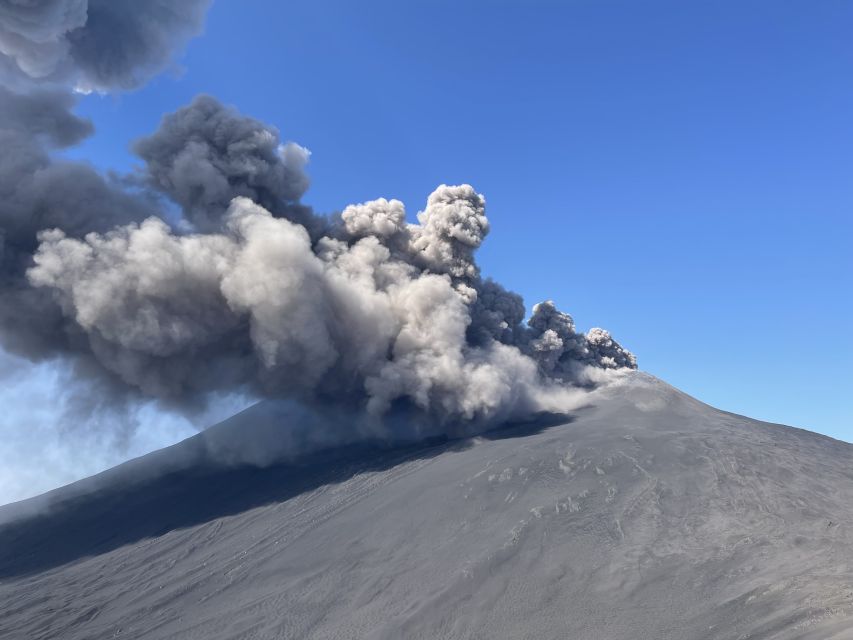
The provider includes trekking poles, protective helmets, trekking shoes, warm jackets, extra socks, backpacks, and accident insurance. That is a generous equipment list for the price, especially if you are visiting Sicily without hiking gear.
You still need to bring several basics:
- A windbreaker or rain jacket
- Long trousers and comfortable clothing
- Hiking shoes, even if you plan to use the supplied pair
- Sunglasses and sunscreen
- Snacks, drinks, and a packed lunch
- A K-way or other waterproof layer
Lunch, bottled water, snacks, and a rain jacket are not included. The lack of food and water is easy to overlook because the tour provides so much other equipment. Pack enough for four hours, since there is no stated meal or refreshment stop.
Weather is the main uncertainty. If conditions become unsafe, the excursion may be cancelled or postponed. Since the route reaches high altitude and follows exposed crater edges, that is a sensible rule rather than an inconvenience. The company advises participants as early as possible when weather affects the outing.
The extra cost and the practical meeting details
The listed tour cost is $62.63 per person, but the 4×4 service costs 50 euros per person on site. The vehicle is needed for the climb from 1,800 to 2,800 meters and for the later transfer from 2,800 to about 2,500 meters, so this is not an optional sightseeing add-on.
You also pay 3 euros for all-day parking after the excursion. Transport from your accommodation to the starting point is not included, so you need to arrange your own way to Piano Provenzana and the Chiosco Bar Mareneve.
The activity lasts four hours, with starting times shown during availability checks. It begins and ends at the same meeting point. The excursion requires at least eight participants in total and may be cancelled if that number is not reached.
Free cancellation is available up to 24 hours in advance for a full refund, and you can reserve now and pay later. Those terms are useful if your Sicily plans depend on weather, but they do not remove the need to check the forecast and your own fitness before setting out.
Who will enjoy this Etna trek most
I would choose this outing if you want Etna explained through its geology rather than viewed only from a cable car or roadside lookout. It suits hikers with moderate fitness who are comfortable walking on ash, standing near crater rims, and dealing with high-altitude conditions.
It is also a strong choice if summit-crater access is closed. The route still takes you to the highest point safely reachable with guides under the current restrictions, then gives you several volcanic features on the north side instead of leaving you with a shortened visit.
You should skip it if you want a gentle walk, a guaranteed summit view, or a simple half-day transfer with little effort. The rough 4×4 ride, loose ash, altitude, and crater-edge walking make this a serious outdoor activity.
The experience has a high rating of 4.9 from 17 reviews, and I can understand why the strongest praise centers on the combination of equipment, rough-terrain transport, and detailed guiding. The practical gear removes some barriers, while the guide’s explanation inside the cone turns an impressive setting into a lesson you can remember.
Should you book the wild north-side Etna trek?
Book this if your idea of a good volcano outing includes walking through old eruption sites, entering a volcanic chimney, and learning how lava moves through the mountain. The north side offers a more rugged route than the standard scenic stop, and the included boots, jackets, poles, helmets, and socks add useful value.
Before booking, set aside the extra 50 euros for the 4×4, the 3-euro parking fee, food, water, and suitable clothing. Check that everyone in your group can handle four hours at altitude and loose volcanic ground.
If those conditions suit you, this is one of the better ways to see Etna beyond its headline summit. You get striking views when the air is clear, but the real reward is the close look at fractures, craters, lava flows, and the volcanic plumbing beneath them.
FAQ
Where does the Etna trek begin and end?
You meet at the Chiosco Bar Mareneve near the winter chairlift at Piano Provenzana. The activity ends back at the same meeting point.
How long does the experience last?
The activity lasts four hours. Starting times depend on availability when you book.
Is the 4×4 transport included in the tour price?
No. The 4×4 transport costs 50 euros per person, paid on site. It covers the route from about 1,800 meters to 2,800 meters and the later transfer from 2,800 meters to about 2,500 meters.
What equipment is provided?
The experience includes an authorized volcanological guide, trekking poles, protective helmets, accident insurance, trekking shoes, warm jackets, extra socks, and a backpack.
What should I bring?
Bring a windbreaker, sunglasses, snacks, drinks, sunscreen, a jacket, comfortable clothes, long trousers, hiking shoes, and a packed lunch. Bottled water, snacks, lunch, and a rain jacket are not included.
Is the trek suitable for beginners?
The trek is intended for moderately trained hikers and is not suitable for people without experience or those with a low level of fitness. It includes high-altitude walking, crater edges, and volcanic ash slopes.
What languages are available, and what happens if weather is poor?
Guiding is available in English, Italian, and French. In adverse weather, the excursion may be cancelled or postponed, and you should be advised as early as possible.
More Walks and Treks around Catania
- Catania: Sunset Trekking on Mount Etna with Wine Tasting
★ 5.0 · 66 reviews - From Catania: Private mt. Etna trekking and pic-nic
★ 5.0 · 37 reviews - Etna trekking and wine tasting
★ 5.0 · 28 reviews - Nature Reserve ,Trekking Eco Tour in Iblei National Park
★ 5.0 · 27 reviews
Just added around Catania
- Catania : Diving for patented divers★ 5.0 · 3 reviews
- Catania AIRPORT transfer From / To Taormina★ 5.0 · 3 reviews
- Transfer Catania / Agrigento Airport★ 5.0 · 3 reviews
- Taormina: exclusive tour with food, drinks, and sunset, pick-up from Catania★ 5.0 · 3 reviews
- From Catania/Taormina: Mount Etna Private Wine Tasting Tour★ 4.7 · 3 reviews
- From Catania: Day Trip to Giardini Naxos and Taormina★ 5.0 · 3 reviews
- Catania: Summit Craters from North Etna with 4×4 vehicles★ 5.0 · 3 reviews
- Catania: Guided Street Food Tour with Tastings★ 5.0 · 3 reviews
Mount Etna Tours, compared.
Mount Etna Morning or Sunset Day Trip with Tasting
Read our review →
Guided Volcano Summit Hiking Tour with Cable Car
Read our review →
Sunset Jeep Tour of Mount Etna and Lava Flow Caves
Read our review →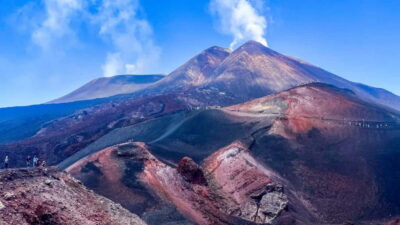
Etna and Alcantara Gorges Full-Day Tour with Lunch
Read our review →
Browse the lists this tour appears in