Reviewed · TOURS
SALT TOUR-all inclusive: salt tour: Trapani, Paceco, Nubia
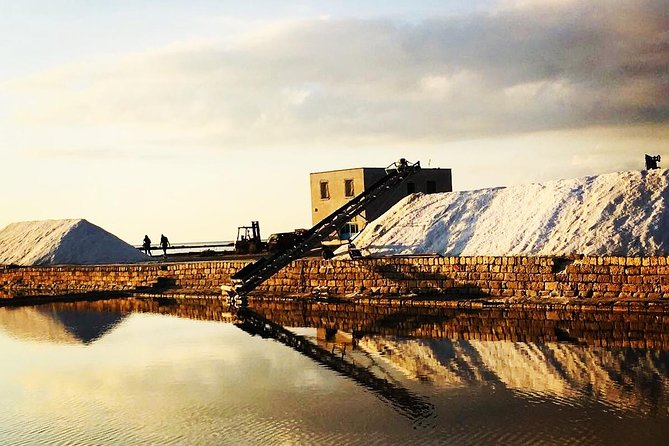
Trapani’s salt pans turn a simple coastal outing into a lesson in work, weather, trade, and taste. You’ll see how seawater moves through four sets of tanks, visit a 600-year-old mill, and sample fleur de sel, the delicate top layer of salt crystals. Guide Alessio brings the process to life with stories about local workers and old measuring systems.
I like two things here: the tour links three separate salt sites instead of stopping only at the museum, and the tasting gives you a clear reason to pay attention to the different grades of salt. The evening light can also be superb, though sunset is weather-dependent, and one possible drawback is the price if you only want a quick look at the salt museum.
In This Review
- Key points to know before booking
- Why Trapani’s salt pans are worth your time
- Meeting at Trapani’s port
- Maria Stella and Trapani’s oldest mill
- Salina Calcara and the four levels of salt water
- The Culcasi salt pan and its 600-year-old mill
- Tasting crystal salt and fleur de sel
- Walking the salt worker’s path
- Guide Alessio and the value of a small group
- Price, timing, and practical value
- Who should book the Trapani salt tour
- Should you book it?
- FAQ
- Where does the salt tour begin?
- Where does the tour end?
- How long does the experience last?
- What language is the tour offered in?
- What places does the tour visit?
- Is museum entry included?
- Is the salt tasting included?
- Can I cancel for a full refund?
Key points to know before booking
- Three salt sites in one short outing: Visit Maria Stella, Salina Calcara, and Saline Culcasi rather than seeing only one pan.
- A working tradition explained clearly: Learn how seawater passes through four tank levels before becoming salt.
- A 600-year-old mill and museum: See old tools, working methods, roof tiles, and the former social order of the salt industry.
- Fleur de sel tasting included: Try plain crystals plus flavored versions with orange, lemon, rosemary, and oregano.
- An evening setting: The salt pans can look especially striking at sunset, but clouds and poor weather may change the experience.
- Small-group format: The tour is described as limited to eight people, while the booking information also gives a maximum of 16, so confirm the expected group size.
Why Trapani’s salt pans are worth your time

The salt works outside Trapani are not just white pools beside the road. They are a carefully managed system that uses sun, wind, shallow water, and patient labor. The sea does much of the work, but people have shaped every stage of the process for generations.
That human element is what makes this outing worthwhile. You are not simply looking at salt piles. You are following the route from seawater to finished crystals and seeing where workers once lived, stored tools, raised water, and gathered the crop.
The reserve of Saline di Trapani and Paceco gives the visit a natural side, too. Depending on the season and conditions, you might see flamingos, herons, egrets, or Italian stilts among the ponds. These birds are an extra, not the main event, so bring binoculars only if you already carry them. The tour is chiefly about salt production and the land shaped around it.
I also like the scale of the experience. At about two and a half hours, it fits neatly into a Trapani stay without taking an entire day. The air-conditioned vehicle matters because the sites are spread out, and the ride lets you move between them without arranging separate taxis or driving unfamiliar roads.
Other Sicily trips travellers book alongside this one:
- Catania: Mount Etna Morning or Sunset Day Trip with Tasting
★ 4.8 · 4,028 reviews - Mount Etna: Guided Volcano Summit Hiking Tour with Cable Car
★ 4.7 · 3,784 reviews - Palermo: NO Mafia Walking Tour
★ 4.8 · 2,431 reviews
Meeting at Trapani’s port
The tour begins at the Vigili Del Fuoco Distaccamento Portuale Trapani, the fire station at Via Ammiraglio Staiti 101. That is a practical meeting point near the port, but you should allow time to identify the correct entrance and arrive ready for a short vehicle transfer.
From the port, it takes about ten minutes to reach the first salt pan. The trip is short, but it changes the feel of the day quickly. Trapani’s urban waterfront gives way to open salt works, old structures, and shallow ponds.
The vehicle is air-conditioned, and all listed fees are included. That removes some of the small costs that can otherwise collect during a half-day outing. Tips are not included, so plan to tip only if the guiding and service deserve it.
Maria Stella and Trapani’s oldest mill
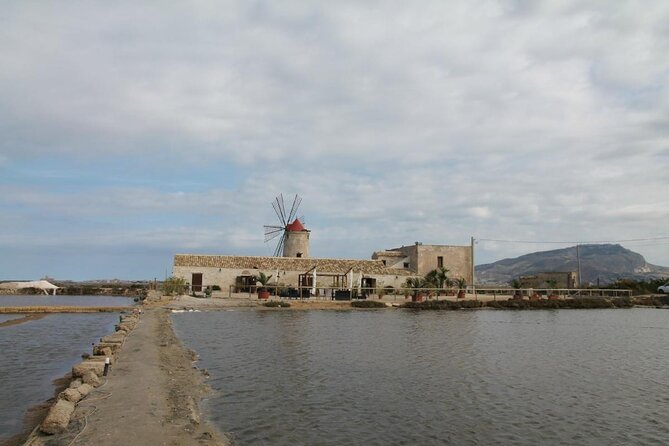
The first salt pan is Maria Stella. Here you see the first mill built in Trapani, dating from the end of the fifteenth century. Even if you have never studied traditional salt production, the mill gives you an immediate sense of how long this industry has shaped the area.
This is a short introductory stop, rather than the main museum visit. Alessio uses it to set up the larger story: mills were not decorative buildings, and salt was not a minor household product. Water had to be moved through the pans, and wind-powered machinery helped make that possible.
The old structures also provide useful visual clues. Roof tiles, mill shapes, and work areas reflect local methods and practical needs. Alessio has explained details such as the old use of 12 as a divisor instead of the decimal system and the way tile widths were linked to an artisan’s thigh. Those small facts help you see the salt works as a place of human decisions, not just a natural site.
Salina Calcara and the four levels of salt water
The next stop, Salina Calcara, includes the Chiusicella salt pan. This is where the basic process becomes easier to understand. Seawater is not turned into salt in one pool. It moves through four orders of tanks, with each stage bringing changes in concentration and texture.
A good guide makes this part simple without making it dull. Alessio explains how the water changes as it travels through the system and how the salt begins to separate. You will see why each pond has a role and why the process depends on the right mix of sun, wind, and time.
The birdlife adds another layer. Flamingos, herons, egrets, and Italian stilts may be visible around the ponds. The exact sightings will depend on the day, and the tour should not be booked as a dedicated bird-watching trip. Still, the reserve gives you more to notice while you learn how the pans work.
This stop lasts about 30 minutes, so expect an explanation and a look around rather than a long walk. Wear shoes you can comfortably walk in, since the final salt-worker route takes you inside the pans. No special equipment is listed, and most people can take part.
Same island, a completely different day out:
- Palermo: Hop-on Hop-off Bus Tour 24-hour Ticket
★ 3.9 · 2,410 reviews - From Trapani: Cruise to Favignana and Levanzo with lunch
★ 4.2 · 2,286 reviews - Catania: Sunset Jeep Tour of Mount Etna and Lava Flow Caves
★ 4.8 · 2,113 reviews - Palermo Original Street Food Walking Tour by Streaty
★ 5.0 · 2,105 reviews
The Culcasi salt pan and its 600-year-old mill
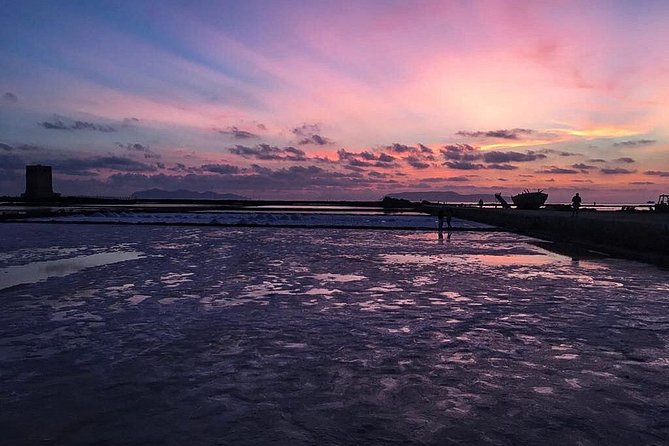
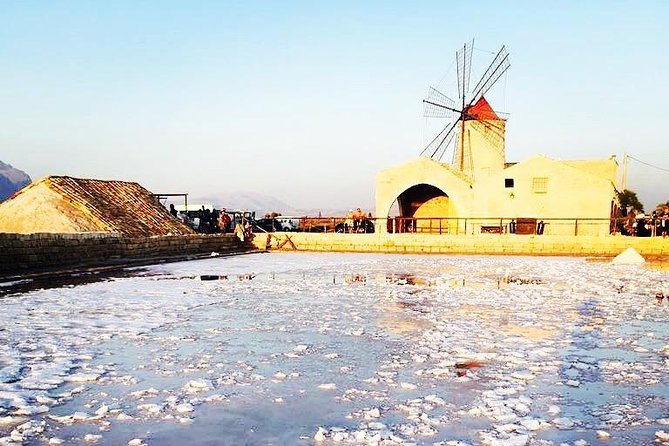
The longest and most rewarding stop is Saline Culcasi. Here you enter an ancient mill more than 600 years old, now used as the Salt Museum. The museum is small, but its value comes from the objects and working details rather than from a large display area.
You learn how salt was collected, how the mill operated, and which tools workers used. Alessio also explains the hierarchy of the old salt works and the different jobs connected with production. That social detail matters. It shows that salt was not only a material gathered from ponds, but an organized trade with skills, ranks, and family knowledge.
The museum also helps you compare past and present. Some parts of production remain partly manual, even though modern methods and equipment have changed the work. That mixture of old and new is more interesting than a polished presentation that pretends the industry never changed.
The old family salt farm includes historic buildings and a rooftop windmill. You get a stronger sense of place here than at a standard museum because the buildings are tied directly to the ponds and the work outside them.
Tasting crystal salt and fleur de sel
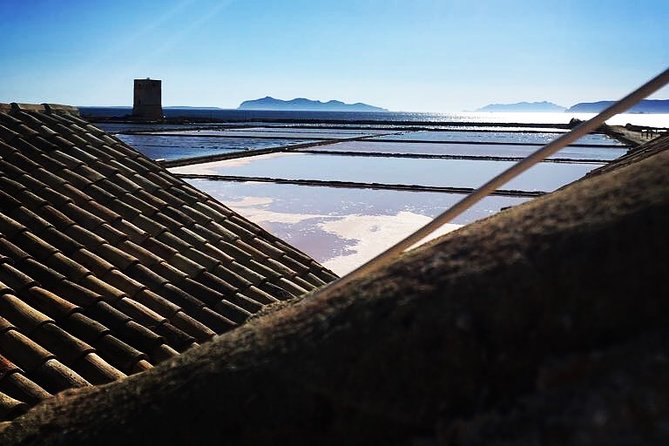
The tasting is a small part of the tour, but it gives the visit a clear finish. You try different salt crystals and the most delicate part, fleur de sel, which forms at the surface. It is lighter and finer than ordinary coarse crystals, and the comparison helps you notice texture as well as flavor.
Flavored samples may include orange, lemon, rosemary, and oregano. These are not simply souvenirs to taste quickly. They show how local plants and citrus can change the role of salt in cooking. If you cook often, this is one of the most useful parts of the experience because it connects the production process to something you can recognize at the table.
Alessio is especially strong when explaining what makes good salt and how Trapani’s integral salt differs from fashionable salts imported from elsewhere. You do not need to agree with every health or culinary claim to enjoy the lesson. The useful point is that salt has different textures, mineral content, collection methods, and culinary uses.
The tasting is included in the price, along with entry to the museum. That makes the $60.46 cost easier to justify than a simple transport service. You are paying for a guide, vehicle, three salt sites, museum access, and a focused explanation that would be hard to reproduce by taking a taxi to one location.
Walking the salt worker’s path

The final part at Culcasi is the salt worker’s path, a walk inside the salt tanks. This is where the tour shifts from looking at the work to moving through its setting.
Expect a suggestive, quiet walk among the shallow pans, old buildings, and bright salt surfaces. The footing and conditions may vary, so sensible shoes are a good idea. The information provided does not promise a particular level of accessibility, but it does say most people can participate and that service animals are allowed.
The walk is also the best place to understand the physical demands of the old trade. Salt production required repeated movement around water, walls, tools, and piles of crystals. The route gives you a modest sense of that routine without pretending to recreate a worker’s full day.
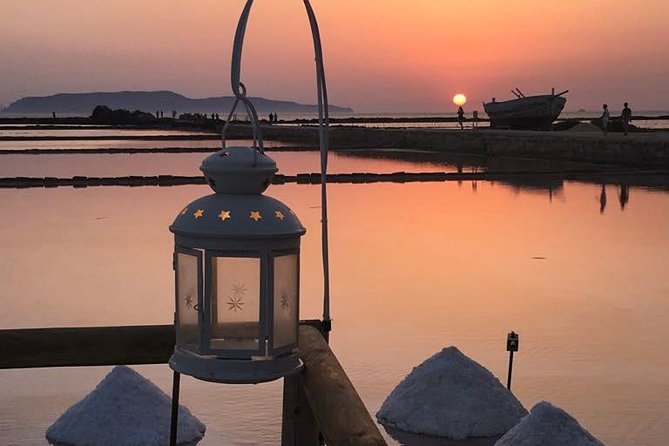
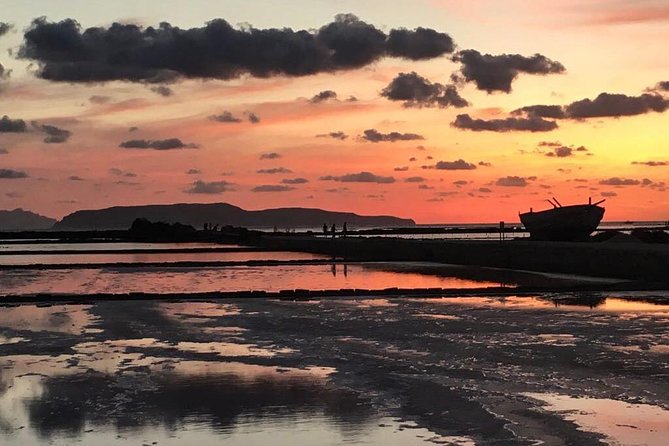
If your tour runs toward evening, the light can transform the ponds. The surface may reflect pink, gold, or pale blue tones as the sun drops. Clouds can block the sunset, so treat the view as a bonus rather than a guarantee. One practical warning: an optional aperitif may sometimes be suggested at the salt pans for an extra €10. It can extend the outing well beyond the stated duration, so ask before agreeing if you have dinner plans.
Guide Alessio and the value of a small group
Alessio is the central reason this tour feels more like a local lesson than a transfer between attractions. He has worked in hospitality, lived and traveled abroad, and returned to Sicily with a strong connection to the salt industry. His explanations cover practical production, local culture, world salt traditions, and small details that are easy to miss on your own.
He also seems comfortable with different audiences. Families with children can follow the basic process, while cooks, teachers, and history-minded visitors can ask more detailed questions. The tour has been described as available in English, and Alessio also speaks Italian. French speakers may need to make some extra effort, but the experience remains possible with his Italian and English explanations.
The advertised group size is small, with places limited to eight people for a more personal outing. Elsewhere, the activity information lists a maximum of 16 travelers. Since those figures do not match, confirm the expected number when booking if privacy or a quiet pace matters to you.
A small group is especially useful here because the old mill is not a huge museum. You can hear the explanation, ask questions, and stay close to the guide without being lost in a crowd.
Price, timing, and practical value
At $60.46 per person, this is not the cheapest way to see the salt museum. If your only goal is to reach Culcasi, a taxi or rental car may cost less, especially for a larger group. One fair criticism is that you can visit the museum independently and avoid paying for a full guided route.
The tour earns its price when you want the complete picture. You get transport from the port, three salt pans, the reserve, the museum, the salt-worker path, a tasting, and Alessio’s explanations. You also avoid the work of planning separate stops and figuring out which parts of the salt works are open or worth seeing.
The stated duration is about two hours and 30 minutes. The main schedule includes roughly five minutes at the meeting point, a short transfer, about 30 minutes at Salina Calcara, one hour and 15 minutes at Culcasi, and the return to Trapani. Allow extra time if the group accepts an aperitif or if traffic affects the transfers.
This is an evening-friendly activity, particularly if you want sunset photographs. For the best salt images, July through September is suggested because that is the harvesting period. Outside those months, the ponds still offer the production story and old machinery, but the visual drama of harvested salt piles may be less certain.
The vehicle is sanitized under the stated health rules, and the tour is offered with a mobile ticket. Confirmation is received when you book. Free cancellation is available up to 24 hours before the start time, but bad weather or an insufficient number of bookings can also lead to a change of date or a full refund.
Who should book the Trapani salt tour
I would choose this for anyone who wants a short excursion with real local character. It suits families, couples, food lovers, photographers, and people who enjoy seeing how everyday products are made. It is also a good choice if you are staying in Trapani without a car and want several salt sites covered in one outing.
You should think twice if you dislike guided explanations, have only a passing interest in salt, or can easily drive to the museum yourself. The tour spends real time on production methods and the old industry, so it works best when you are curious rather than simply looking for a scenic ride.
The strongest parts are Alessio’s clear storytelling, the three-site route, the old mill, and the tasting. The main cautions are the price compared with a self-guided museum visit, the possible mismatch in stated group size, and the chance that an extra aperitif could disrupt your evening plans.
Should you book it?
Book this tour if you want context, not just photographs. The salt pans become much more engaging when you understand the four-stage water system, the work behind the crystals, and the role of the old mills.
Skip it if you prefer independent sightseeing and only want to see one museum. For most visitors with two and a half hours to spare, though, the added transport, tasting, salt-worker walk, and personal guidance make this a worthwhile Trapani outing. Aim for the harvesting season if salt photographs matter most, and confirm the final timing and group size before you pay.
FAQ
Where does the salt tour begin?
It begins at the Vigili Del Fuoco Distaccamento Portuale Trapani, Via Ammiraglio Staiti 101, at the port in Trapani.
Where does the tour end?
The activity ends back at the original meeting point at the Trapani port.
How long does the experience last?
The tour lasts approximately two hours and 30 minutes, although an optional aperitif may extend the outing.
What language is the tour offered in?
The tour is offered in English. Alessio also speaks Italian, and French speakers may need to follow explanations in English and Italian.
What places does the tour visit?
The route includes the Maria Stella salt pan, Salina Calcara and its Chiusicella salt pan, and Saline Culcasi with its Salt Museum.
Is museum entry included?
Yes. Admission to the Salt Museum at Saline Culcasi is included.
Is the salt tasting included?
Yes. The tour includes tastings of salt crystals and flavored fleur de sel, including varieties with orange, lemon, rosemary, and oregano.
Can I cancel for a full refund?
Yes. You can cancel at least 24 hours before the start time for a full refund. Poor weather or failure to meet the minimum number of participants may also lead to a new date or a full refund.
Just added around Sicily
- Anti-Mafia Heroes (Cool Hours) Morning Walking Tour★ 5.0 · 3 reviews
- Nicolosi: Excursion Etna Craters at 3000 mt.★ 4.2 · 3 reviews
- DISCOVER THE SECRET OF PALERMO Walking Tour Combining Art and best street food★ 5.0 · 3 reviews
- The art of the Italian Aperitivo with a local: Learn & Enjoy in Palermo★ 5.0 · 3 reviews
- Taormina PRIVATE EAST COAST EXCURSIONS 2 Exclusive Days with Guide Driver★ 5.0 · 3 reviews
- Monti Rossi Adventure Park Entry Ticket Full★ 5.0 · 3 reviews
- Guided kayak tour inside the Stagnone of Marsala★ 5.0 · 3 reviews
- Catania : Diving for patented divers★ 5.0 · 3 reviews
Tours, compared.
Guided Volcano Summit Hiking Tour with Cable Car
Read our review →
Sunset Jeep Tour of Mount Etna and Lava Flow Caves
Read our review →
Palermo Original Street Food Walking Tour by Streaty
Read our review →
Segesta, Erice and Salt Pans Full-Day Excursion from Palermo
Read our review →
Etna and Alcantara Gorges Full-Day Tour with Lunch
Read our review →