
Reviewed · VILLA ROMANA DEL CASALE TOURS
Piazza Armerina: Villa Romana del Casale Guided Tour
Villa Romana del Casale is one of Sicily’s great surprises: a country villa where floors, not walls, carry the drama. Its fourth-century mosaics show chariot races, hunting scenes, exotic animals, banquets, and the daily habits of people who lived with startling comfort. I especially like the Great Hunt mosaic, which turns a long corridor into a map of the Roman world, and the chance to see the villa’s thermal baths, where engineering and luxury meet. The two-hour guided format gives the sprawling site a clear story instead of leaving you to puzzle over bare ruins.
The main concern is crowding. Several groups may begin at once, and one visitor found that overlapping explanations and weak audio equipment made the guide hard to follow. If you want a quiet, unhurried look at every mosaic, this fixed-time group tour may feel brisk. For most people, though, the guide, fast entry, and strong focus on the artwork make the $51 price reasonable.
In This Review
- Key points to know before you go
- Why Villa Romana del Casale is worth your time
- Meeting the guide at the ticket booth
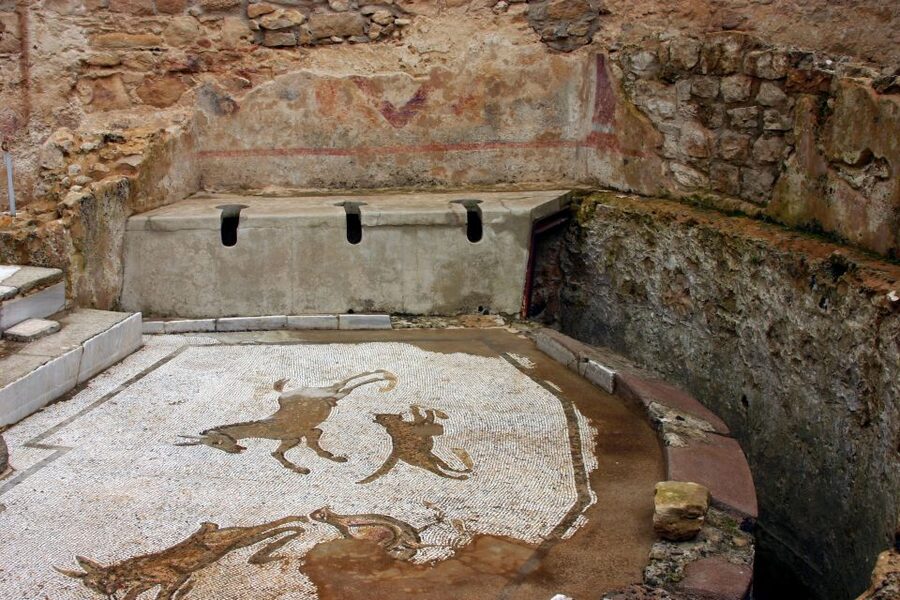
- The thermal baths: Roman comfort in working order
- Guest quarters filled with daily life
- The Great Hunt and the Roman world
- Private rooms for the domina and dominus
- What the $51 price gets you
- Timing, language, and crowd control
- Who will enjoy this guided visit most
- Should you book the Villa Romana del Casale tour?
- FAQ
- Where does the tour meet?
- How long does the guided tour last?
- Is the entrance ticket included?
- What languages are available?
- Is hotel pickup included?
- Can I cancel the booking?
Key points to know before you go
- The mosaics are the main event: See one of the finest Roman villa floors anywhere, including the Great Hunt and Orpheus scenes.
- The tour starts at the baths: The route begins with the caldarium and frigidarium, then moves through guest quarters and private rooms.
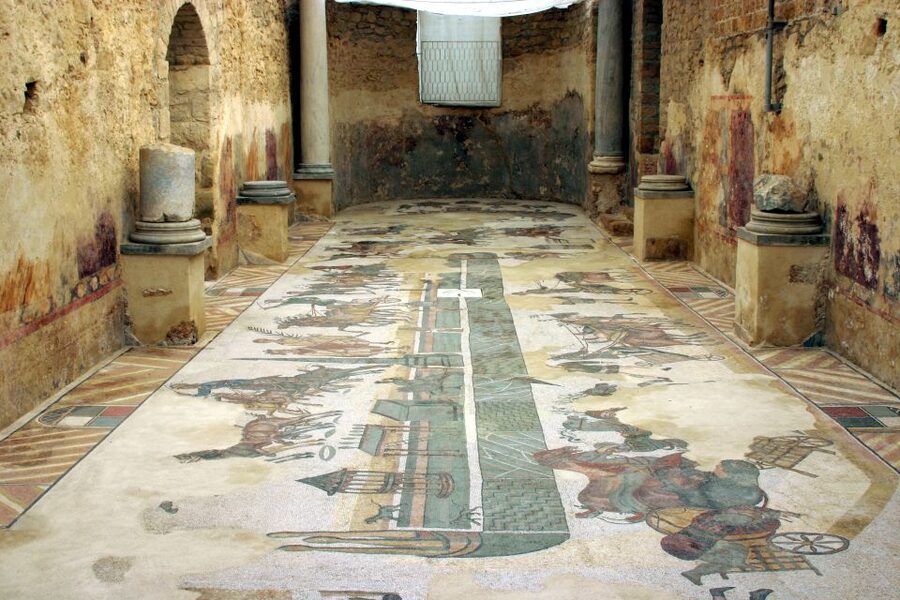
- The Great Hunt reads like a Roman world map: Look for the lioness, elephant, ships, hunters, and scenes of animal transport.
- You get a bilingual guide: Tours are offered in English and Italian, and the two languages may sometimes be used together.
- Skip-the-line entry saves time: Meet your guide outside, in front of the ticket booth, rather than sorting out entry on your own.
- Crowds can affect the sound: If multiple groups gather in the same rooms, stay close to your guide and pay attention to the meeting point.
Why Villa Romana del Casale is worth your time
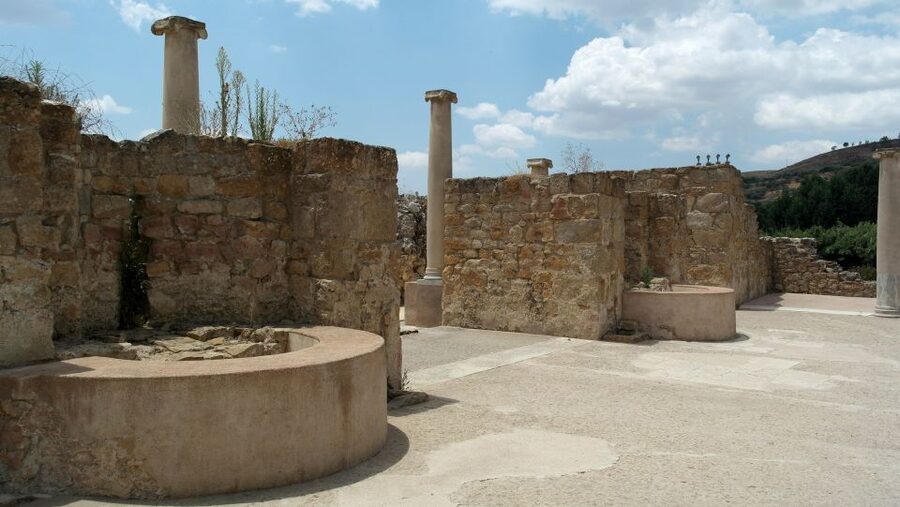
Many ancient Roman sites ask you to imagine the decoration that once filled them. Villa Romana del Casale does the opposite. Here, the floors are the decoration, and they remain remarkably expressive. You walk from room to room across scenes of sport, food, animals, mythology, travel, and work.
The villa belonged to an elite Roman household in the late Roman period, when a wealthy rural estate could function as a residence, business center, entertainment space, and display of status. You are not simply looking at pretty patterns. You are seeing how a powerful family wanted its world represented.
That is why a guide helps. The mosaics are large and detailed, but their meaning is not always obvious at a glance. A figure carrying an animal, a ship crossing the sea, or a procession of hunters can open a window onto Roman trade, leisure, politics, and social rank.
The two-hour visit is long enough to cover the principal rooms without turning into an all-day commitment. It also gives you a useful framework for returning to any section that catches your eye after the guided walk.
More Villa Romana del Casale mosaic tours near Sicily:
- From Palermo: Villa Romana and Valley of the Temples Trip
★ 4.6 · 294 reviews - From Catania: Agrigento and Piazza Armerina Full-Day Trip
★ 4.7 · 140 reviews - Valley of the Temples and Villa Romana del Casale Day Trip from Taormina
★ 4.0 · 137 reviews
Meeting the guide at the ticket booth
Your tour begins outside the villa entrance, in front of the ticket booth. This detail matters because the site is not in central Piazza Armerina, and you do not have hotel pickup or transportation included. You need to arrive at the meeting point independently and be ready at the scheduled start time.
The entrance ticket is included, and the skip-the-line arrangement removes one small nuisance from the visit. You meet the bilingual guide first, then enter together. English and Italian are available, though the tour may be conducted in both languages at the same time.
That shared format can work well when the group is modest and everyone stays close. It can be less effective when several tours occupy the same corridor. Keep yourself near the guide, especially in the larger rooms, and do not drift toward the far end of a mosaic while the explanation is underway.
The guide makes a real difference here. The strongest feedback centers on clear, personable guiding and excellent English skills. No individual guide name is provided, so you should not book expecting a particular person. Instead, think of the guide as the main value of the experience: someone who connects the scenes under your feet with the life of the villa.
The thermal baths: Roman comfort in working order
The first major stop is the thermal bath complex. Roman bathing was not just about washing. It was part of social life, exercise, relaxation, and display. At a wealthy villa, the baths also showed that the owners could reproduce the comforts of urban Roman life in a country residence.
You see the caldarium, the hot room, and the frigidarium, the cool room. The frigidarium was supplied by the Gela River, a useful reminder that comfort depended on careful water management and planning.
The route helps you picture the technology behind the luxury. Roman bath buildings required controlled heat, water flow, and a sequence of rooms designed for changing temperatures. The exact experience is visual rather than physical, of course, but the layout gives you a clear sense of how carefully the complex was organized.
The bath mosaics add a lively touch. One scene invites you to picture a quadriga race, with four-horse chariots charging around the track. Instead of a silent ruin, you get a glimpse of noise, competition, and public excitement.
This is a good place to pay attention to the guide’s explanations rather than rushing toward the most famous corridors. The baths establish the central idea of the villa: its owners had money, space, technical skill, and a taste for spectacle.
Guest quarters filled with daily life
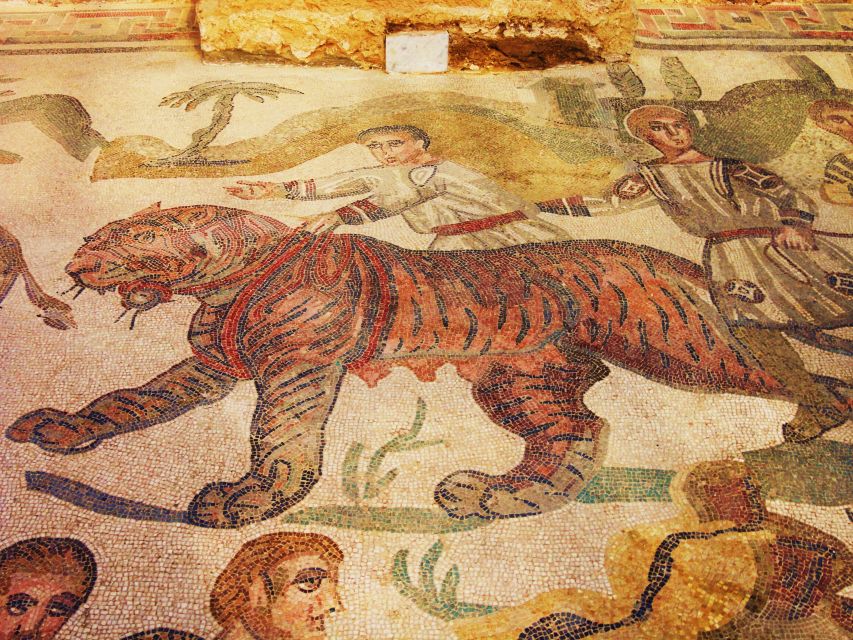
From the baths, the tour moves toward the guest apartment. These rooms show a different side of the estate. The decoration is not only about grand power. It also presents familiar activities such as fishing, hunting, dining, and entertainment.
The hunting scenes are especially useful for understanding the social world of the owners. Hunting was sport, business, and a display of control over nature. In the Little Hunt mosaic, you can look for the tense moment before the action begins, when the hunters are prepared and waiting.
That pause gives the scene its force. Roman mosaic artists were skilled at arranging many small pieces of stone and glass into movement, faces, clothing, animals, and landscape details. A guided explanation helps you see the choices instead of treating the floor as one large decoration.
The dining room offers another change in mood. The Orpheus mosaic shows the musician playing his lyre while animals gather around him. It is a mythological scene, but it also suits a dining space, where music and storytelling would have shaped the evening.
I like this part of the route because it makes the villa feel inhabited. You can imagine guests arriving, meals being served, hunters returning with their prizes, and stories being shared. The rooms are still ruins, but the mosaics preserve the social habits that once animated them.
A few more Sicily tours and experiences worth weighing up
- Mount Etna: Guided Volcano Summit Hiking Tour with Cable Car
★ 4.7 · 3,784 reviews - Taormina: Ancient Theater Skip-the-Line Ticket & Audio Guide
★ 4.5 · 1,701 reviews - Palermo: Teatro Massimo Opera House Guided Tour
★ 4.5 · 1,573 reviews - Etna Volcano: South Side Guided Summit Hike
★ 4.7 · 1,545 reviews
The Great Hunt and the Roman world
The Great Hunt is the tour’s visual centerpiece. It occupies a monumental corridor and presents a series of scenes linked to the capture and transport of animals across the Roman Empire.
Do not look at it as a single picture. Break it into sections. You may see a lioness attacking a hunter, an elephant being loaded onto a ship, and a ship moving across the waves. The variety is part of the point. These are scenes of distance, supply, danger, and imperial reach.
The mosaic has been described as a map of the Roman world, though it is not a modern map with tidy borders and labels. It presents the empire through people, animals, ships, and movement. The message is clear: rare creatures and valuable goods could travel long distances, and the villa’s owners understood themselves as part of that wide Roman system.
This is where the guide’s storytelling earns its keep. Without context, you might focus on the animals and miss the social message. With context, the corridor becomes a record of power and logistics. It shows how an elite household could turn imported spectacle into decoration beneath its feet.
The corridor can also be one of the busiest points on the route. Several groups may pause here at the same time, and the long shape of the space can make voices difficult to hear. If the equipment is not working well, move close to the guide and wait for a quieter moment before studying the details.
Private rooms for the domina and dominus
The final part of the visit enters the private rooms of the villa’s domina and dominus, the female and male heads of the household. These spaces bring the tour back from the empire at large to the owners’ personal world.
You see where the wealthy residents slept, ate, and handled daily business. The rooms help you understand that this was not a single-purpose vacation house. It was a palatial complex with public areas for receiving clientes, guest spaces, working areas, and private quarters.
The distinction between public and private life mattered in Roman society. A powerful household displayed status through architecture, decoration, hospitality, and the people it controlled. The villa’s plan reflects that system, even when the original walls and furniture are gone.
Your guide also discusses who may have owned the villa. The identity is not presented as a simple certainty, which is useful. Ancient buildings often outlast the written records that would tell us exactly who commissioned them. The mosaics provide clues about wealth, taste, trade, and social position, but they do not answer every question.
That uncertainty makes the final rooms more interesting, not less. You can see the owners’ world clearly while still recognizing that some parts of the story remain open.
What the $51 price gets you
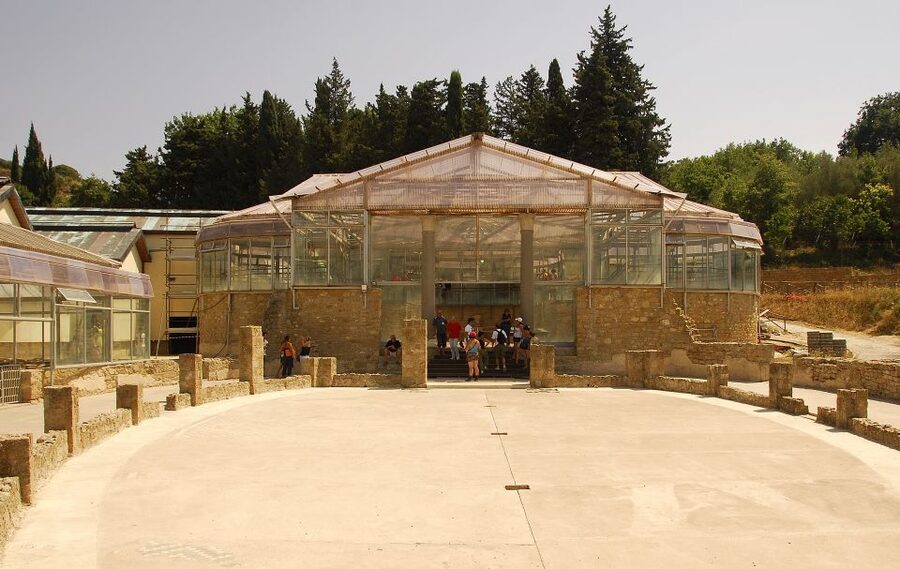
At $51 per person, this is not the cheapest way to enter the villa. The value depends on how much help you want with the mosaics and how much you value saving time at the entrance.
The ticket is included, so you are paying for entry plus a two-hour bilingual guided visit. For someone who knows Roman art well and enjoys reading site information independently, the added cost may be harder to justify. The sheer scale of the mosaics can still make a self-guided visit rewarding.
I would consider the fee fair for a first visit, especially if you have limited time in Sicily or want the major rooms explained in a logical order. The villa contains too many scenes and cultural references to absorb quickly without guidance. A good explanation can turn a collection of beautiful floors into a connected story about status, technology, religion, work, and entertainment.
The price does not include food, drinks, hotel pickup, or hotel drop-off. Plan it as a site visit rather than a complete day trip. You need to arrange your own way to the meeting point and your own refreshments.
The booking terms add flexibility. You can cancel up to 24 hours before the start for a full refund, and you can reserve now and pay later. Those options are useful when your Sicily plans are still changing.
Timing, language, and crowd control
The advertised duration is two hours. That is a practical length for seeing the main sections, but it does not promise unlimited time in each room. If one mosaic fascinates you, you may want to return to it after the guided portion, provided the site rules and timing allow.
English and Italian are the available languages. Because the tour may run in both languages at once, English speakers should confirm the starting time and listen for the correct guide at the meeting point.
The biggest practical issue is sound. One account describes too many groups beginning together, interference from the equipment, and difficulty understanding the explanation. This does not erase the value of the site, but it is a real consideration for anyone who relies heavily on spoken commentary.
You can reduce the problem by arriving early at the ticket booth, identifying your guide before the group moves, and staying close during the most crowded sections. If you are using the tour mainly for photography and independent looking, the crowd issue will matter less. If the explanations are your main reason for booking, it matters more.
Pets are not allowed, so leave them elsewhere before arriving.
Who will enjoy this guided visit most
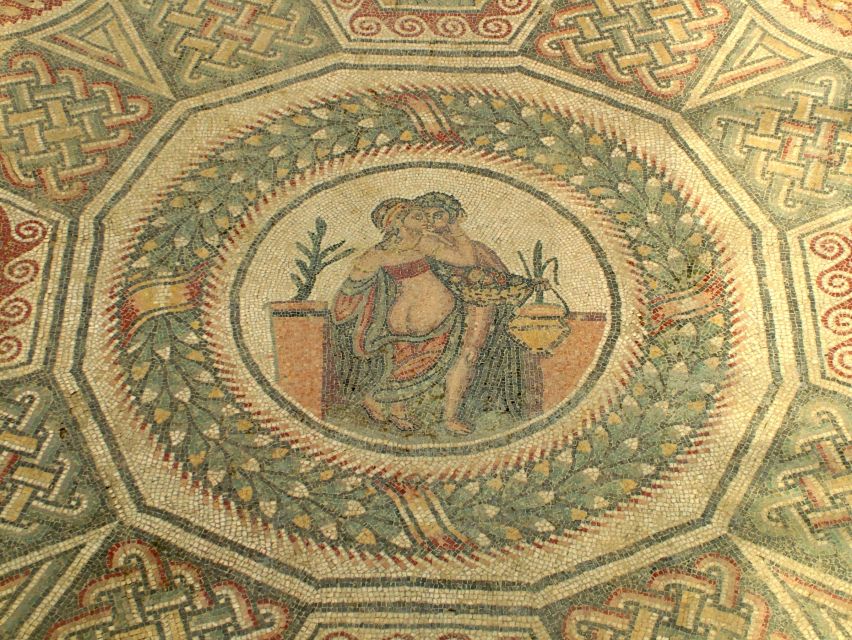
I would choose this tour if you want the villa’s mosaics explained rather than simply photographed. It suits first-time visitors, people interested in Roman art, and anyone who likes seeing how an ancient building worked as a home.
It is also a good match for visitors who prefer a fixed two-hour plan. You see the baths, guest apartment, public halls, Great Hunt, and private rooms without having to decide which corridor matters most.
Families with older children may find the animal scenes and chariot races easier to engage with than a site made up only of broken stone. The lioness, elephant, ships, and hunting scenes give younger visitors clear details to look for.
Independent archaeology enthusiasts may want more time and silence. You can still use the tour as an introduction, but the group pace and shared language format may feel limiting.
Should you book the Villa Romana del Casale tour?
Book it if you want a clear introduction to one of Sicily’s finest Roman sites, value fast entry, and prefer a guide who can explain what you are seeing. The baths, guest rooms, Great Hunt corridor, and private apartments create a strong two-hour route, and the $51 fee is reasonable when the included ticket and interpretation fit your plans.
Skip it if you strongly prefer wandering alone, need a quiet room for close study, or dislike tours that may combine English and Italian. The villa itself is the sure thing. The group experience depends on crowd levels, guide placement, and audio equipment.
My practical choice would be to book the guided visit for a first look, then take a little extra time afterward for the mosaics that caught your eye. Just arrive at the ticket booth ready to stay close to the guide. That small effort can make the difference between hearing the story and merely seeing the floor.
FAQ
Where does the tour meet?
Meet your guide in front of the ticket booth outside the entrance to Villa Romana del Casale.
How long does the guided tour last?
The tour lasts two hours.
Is the entrance ticket included?
Yes. The entrance ticket to Villa Romana del Casale is included.
What languages are available?
The live guide is available in English and Italian. The tour may be conducted in both languages at the same time.
Is hotel pickup included?
No. Hotel pickup and drop-off are not included, and you must make your own way to the meeting point.
Can I cancel the booking?
Yes. You can cancel up to 24 hours in advance for a full refund. You can also reserve now and pay later.
Just added around Sicily
- Anti-Mafia Heroes (Cool Hours) Morning Walking Tour★ 5.0 · 3 reviews
- Nicolosi: Excursion Etna Craters at 3000 mt.★ 4.2 · 3 reviews
- DISCOVER THE SECRET OF PALERMO Walking Tour Combining Art and best street food★ 5.0 · 3 reviews
- The art of the Italian Aperitivo with a local: Learn & Enjoy in Palermo★ 5.0 · 3 reviews
- Taormina PRIVATE EAST COAST EXCURSIONS 2 Exclusive Days with Guide Driver★ 5.0 · 3 reviews
- Monti Rossi Adventure Park Entry Ticket Full★ 5.0 · 3 reviews
- Guided kayak tour inside the Stagnone of Marsala★ 5.0 · 3 reviews
- Catania : Diving for patented divers★ 5.0 · 3 reviews
Villa Romana del Casale Tours, compared.
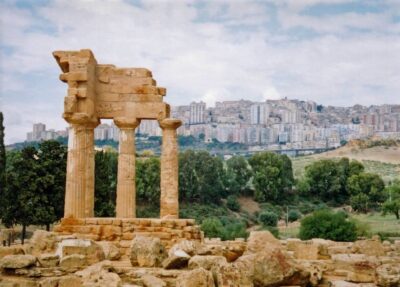
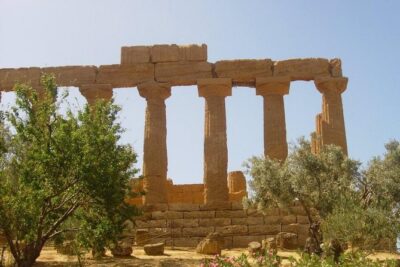
Valley of the Temples and Villa Romana del Casale Day Trip from Taormina
Read our review →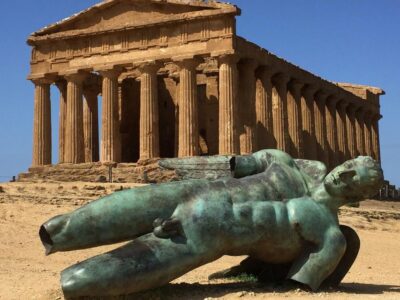
Valley of the Temples & Piazza Armerina with Snack
Read our review →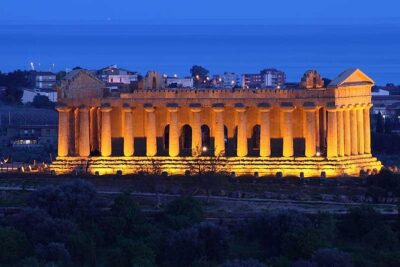
Agrigento Valley of the Temples and Villa Romana del Casale Tour from Palermo
Read our review →
Agrigento and Piazza Armerina: Valley of the Temples and Villa Romana del Casale
Read our review →
Browse the lists this tour appears in