
Reviewed · VAL DI NOTO TOURS
Noto Baroque Masterpieces: small-group tour (max 6 Guests)
Noto’s beauty is packed into a short, walkable stretch of Corso Vittorio Emanuele. This 90-minute tour links oval church interiors, theatrical stonework, and noble palaces with the stories that make them more than pretty façades. The stop at Noto Cathedral also explains the remarkable 1996 collapse of its eighteenth-century dome and the rebuilding that followed.
I like the maximum group size of six, which gives Dr. Enrica De Melio, a licensed guide and PhD archaeologist, room to answer questions. I also like the range of stops: you get famous Baroque buildings, but also smaller churches, trompe-l’oeil chapels, the Infiorata setting, and a working theater.
The main limitation is pace. Seven stops in about an hour and a half means you will see the highlights rather than study every interior at length. The route is best for a first look at central Noto, not for a slow architectural survey.
In This Review
- Key points to know before you book
- Why Noto works so well on foot
- Santa Chiara and the surprise of an oval interior
- Noto Cathedral and the story of the fallen dome
- Via Corrado Nicolaci and the Infiorata
- Palazzo Nicolaci and Noto’s noble families
- San Carlo Borromeo and painted architectural tricks
- San Domenico and the work of Gagliardi
- Teatro Tina Di Lorenzo and the final stop
- What the 90-minute format gives you
- Group size, walking, and practical comfort
- Is the tour good value?
- Who should book this Noto walk?
- Should you book it?
- FAQ
- How long does the Noto Baroque Masterpieces tour last?
- How many people can join the tour?
- Is the tour offered in English?
- Who leads the tour?
- Where does the tour start and finish?
- Is transportation included?
- Is the cathedral admission included?
- What happens if the weather is poor?
Key points to know before you book
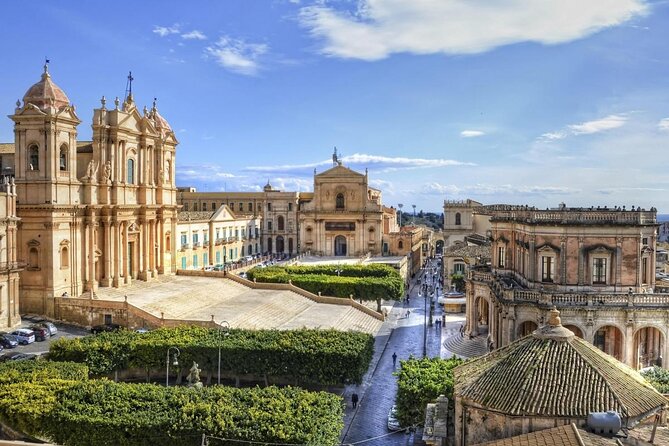
- Seven central sights in 90 minutes: The route runs from Porta Reale to Piazza XVI Maggio, with no transport between attractions.
- A very small group: The tour accepts no more than six people, useful for questions and close conversation with Enrica.
- A guide with an archaeology background: Dr. Enrica De Melio combines licensed guiding with academic training.
- Noto’s 1996 cathedral collapse is part of the story: The visit connects Baroque construction with modern restoration.
- Several churches are viewed inside: Santa Chiara, San Carlo Borromeo, and San Domenico each offer a different look at Noto’s religious art.
- The tour finishes near Teatro Tina Di Lorenzo: That makes Piazza XVI Maggio a handy place to continue exploring after the walk.
Why Noto works so well on foot
Noto is unusually manageable for a sightseeing town. The meeting point is at Porta Reale, also called Ferdinandea, on Corso Vittorio Emanuele. From there, the route stays in the historic center and ends at Piazza XVI Maggio.
That matters because the tour does not spend time loading into a vehicle or crossing between distant sights. You move from church to palace to theater on foot, with the city’s honey-colored Baroque architecture around you. The short walking links allow the guide to explain how the buildings relate to one another.
The small group also changes the feel of the experience. With no more than six participants, you can ask Enrica to clarify a detail, repeat a point, or connect one building to another. Her background as both a licensed tourist guide and PhD archaeologist is especially useful in a city where decoration, urban design, religious art, and rebuilding all overlap.
This is not a museum-style visit with long periods spent in one room. It is a brisk introduction to Noto’s main architectural story. If you want a first orientation before exploring alone, the format makes good sense.
More Noto, Modica and Scicli days from Sicily:
- Catania: Syracuse, Ortigia, and Noto Tour with Brunch
★ 4.6 · 404 reviews - Syracuse, Ortigia and Noto walking tour from Catania
★ 5.0 · 273 reviews - From Catania: Neapolis of Syracuse, Ortygia, and Noto Tour
★ 4.7 · 234 reviews
Santa Chiara and the surprise of an oval interior
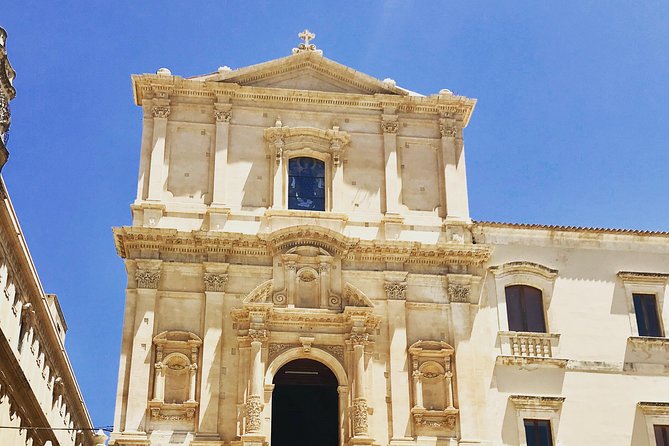
The first stop is Chiesa Santa Chiara, where you visit the interior for about 15 minutes. The church is worth attention because of its unusual oval plan. From outside, Noto’s façades can look like a grand parade of columns and carved stone. Inside Santa Chiara, the shape of the room gives you a different way to understand Baroque design.
The oval plan creates a more controlled, inward-looking space than a simple rectangular church. Enrica discusses the paintings and other works inside, helping you notice how the architecture frames them. That is useful if you are not already comfortable reading church interiors.
The admission ticket is free. The short visit means you should expect selected explanations rather than a full study of every artwork. Still, Santa Chiara gives the tour an excellent opening because it moves quickly from Noto’s street façades to the planning and decoration hidden behind them.
Noto Cathedral and the story of the fallen dome
The Cattedrale di San Nicolo is the central architectural stop. You spend about 15 minutes here, with the cathedral ticket included in the tour details. The building was partly reconstructed after the collapse of its eighteenth-century dome in 1996.
That event gives the visit an important modern angle. Noto is often presented as a finished Baroque city, but the cathedral reminds you that historic buildings can remain fragile, change over time, and require difficult restoration. The rebuilding also gives you a reason to look carefully at the structure instead of treating it as a backdrop for photographs.
I would pay close attention to Enrica’s explanation here, particularly if you want to understand the difference between original Baroque work and later reconstruction. Fifteen minutes is enough for a clear account and a focused look, but not enough for a lengthy architectural inspection.
The tour information has one small inconsistency: the cathedral stop is marked as admission not included, while the inclusions list says the cathedral ticket is included. Since the overall description specifically lists the ticket as included, you should still confirm the current arrangement when booking. That is a practical point worth checking before you set out.
Via Corrado Nicolaci and the Infiorata
The walk continues along Via Corrado Nicolaci for about 10 minutes. This is where Enrica explains Noto’s famous Infiorata, the annual flower festival held along the street.
The value of this stop is that it connects Noto’s Baroque setting with a living local event. You are not only looking at stone balconies and church fronts. You are also learning how the street becomes a temporary display of flower designs, with the architecture providing the stage.
The stop is brief, so expect an explanation of the festival rather than a festival demonstration. The route description does not give dates for the Infiorata, and the tour itself is not presented as a special event-day visit. If seeing the flower designs is a main reason for your trip, check the festival dates separately.
Even without the event in progress, the street helps you read Noto as a planned public setting. Its importance is not limited to individual buildings. The spaces between them matter too.
Same island, a completely different day out:
- Catania: Mount Etna Morning or Sunset Day Trip with Tasting
★ 4.8 · 4,028 reviews - Mount Etna: Guided Volcano Summit Hiking Tour with Cable Car
★ 4.7 · 3,784 reviews - Palermo: NO Mafia Walking Tour
★ 4.8 · 2,431 reviews - Palermo: Hop-on Hop-off Bus Tour 24-hour Ticket
★ 3.9 · 2,410 reviews
Palazzo Nicolaci and Noto’s noble families
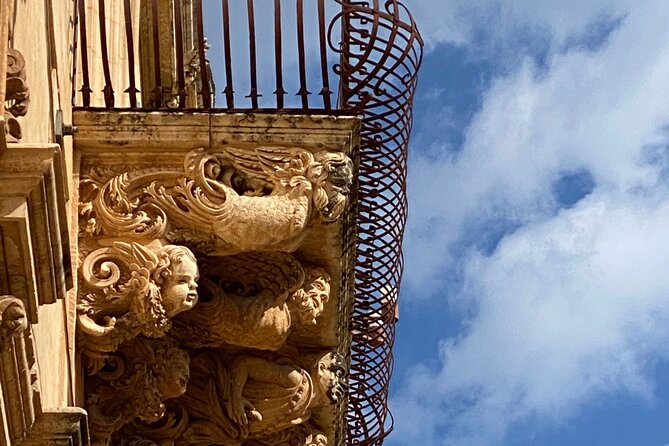
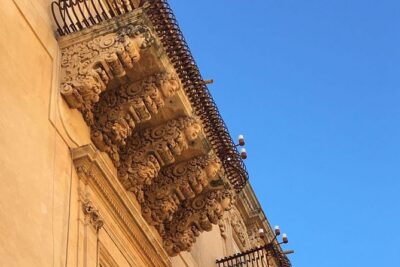
Palazzo Nicolaci receives about 15 minutes. Enrica explains the ornate façade and the family who lived there. For many people, this is the stop where Noto’s social history becomes easier to picture.
A palace façade can be easy to admire and hard to understand. The figures, carved details, balconies, and decorative flourishes may look like pure fantasy until you learn who commissioned them and what the building represented. Enrica’s explanation of the Nicolaci family gives the decoration a human and social context.
The visit described here focuses on the façade and the family connected with the palace. It does not promise an extended interior visit, so keep your expectations focused on the outside of the building and its place in Noto’s Baroque center.
I like this pause because it balances the churches. The tour is not only about religious architecture. You also get a look at the world of local aristocratic power and display, all within a few minutes of the cathedral and Via Nicolaci.
San Carlo Borromeo and painted architectural tricks
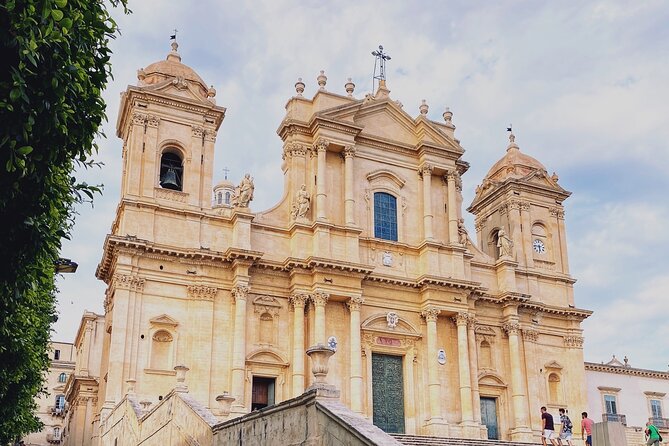
At Chiesa di San Carlo Borromeo, the focus shifts to two side chapels decorated with trompe-l’oeil painting. The stop lasts about 10 minutes, and admission is free.
Trompe-l’oeil means an image made to trick the eye. Painted architectural elements can suggest depth, columns, moldings, or other forms that are not physically present. This is the sort of detail that is easy to miss if you enter alone, take a quick photograph, and move on.
Enrica points out the technique so you can look for the illusion rather than simply register the chapel as decorated. Ten minutes is a sensible amount of time for this stop. The subject is specific, visual, and easy to appreciate once the guide directs your attention.
For me, this is one of the tour’s more useful choices. Noto has no shortage of grand façades, but a smaller interior detail such as painted illusion gives you another measure of Baroque taste. It also keeps the walk from becoming a string of similar church visits.
San Domenico and the work of Gagliardi
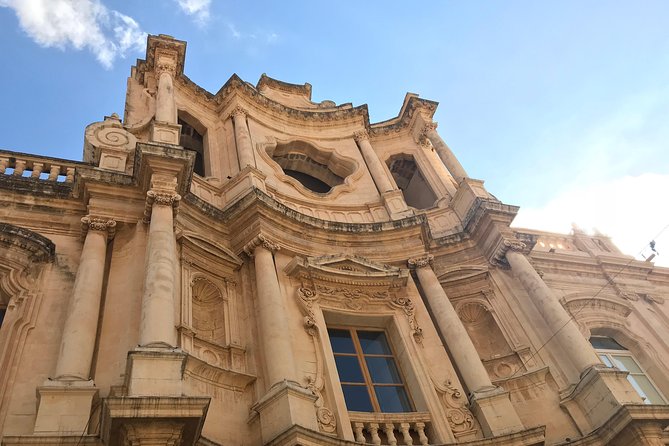
Chiesa San Domenico is another free-admission stop, with about 10 minutes devoted to it. The church was designed by Gagliardi and has undergone recent restoration.
This visit adds another piece to the architectural picture. By now, you have seen the oval plan of Santa Chiara, the cathedral’s rebuilding story, and the painted chapels of San Carlo Borromeo. San Domenico gives Enrica a chance to discuss Gagliardi’s work and the condition of a restored historic church.
The word recent is relative, and the available details do not specify the restoration date or the exact work carried out. You should treat this as a guided look at the church and its design, not as a technical conservation tour.
The 10-minute format keeps the overall experience moving. If you are especially interested in Gagliardi, ask questions during the visit. A small group makes that easier than it would be on a large city tour.
Teatro Tina Di Lorenzo and the final stop
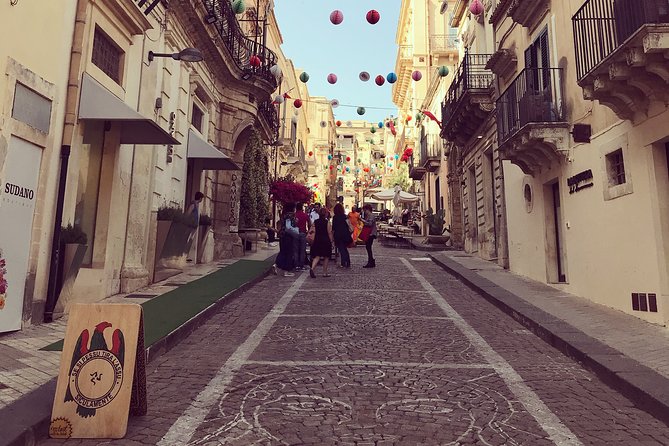
The route ends at Teatro Tina Di Lorenzo, built in 1880 and still used for Noto’s theater and concert season. The scheduled stop lasts about 15 minutes, and the tour finishes at nearby Piazza XVI Maggio.
This ending works well because it brings Noto’s story into the modern city. The earlier stops focus largely on Baroque churches and noble architecture. The theater shows that the historic center is not only preserved scenery. It remains part of the city’s cultural life.
The tour description does not promise a performance or a full theater interior visit. You should expect an explanation of the building and its continuing use. Even so, it is a thoughtful final stop, especially for anyone interested in how an old city remains active rather than becoming an open-air monument.
Finishing in Piazza XVI Maggio also gives you a clear point for the next part of your day. You can continue walking from there, find a place to eat, or use the square as a new reference point in the center.
What the 90-minute format gives you
An hour and a half is short for seven stops, but that is also the appeal. You get a compact introduction without giving up half a day. The route is particularly useful if you have limited time in Noto, are visiting as part of a wider southeastern Sicily trip, or want context before returning to the buildings on your own.
The tradeoff is depth. Most stops receive 10 or 15 minutes. You will not have time to linger over every painting, compare every architectural detail, or sit quietly in each church. I would think of the tour as a well-organized first layer.
The guide’s preparation and friendly approach are important here. Enrica has been praised for making a large amount of information clear and engaging in a short time. The strongest pattern in the feedback is not one single building, but her ability to combine art, history, local legends, and warmth without losing the group.
That combination also explains why some people have booked another guided visit with her in Ortigia. If you are planning time in Syracuse as well as Noto, her familiarity with both places may be useful. The tour itself, however, covers Noto only, so do not assume an Ortigia visit is part of this booking.
Group size, walking, and practical comfort
The maximum group size is six. That is small enough for a personal discussion, though the experience remains a shared walking tour rather than a private visit. If your party is larger, the stated limit will matter.
No transportation to or from the attractions is included because the stops are visited on foot. You meet at Porta Reale, Corso Vittorio Emanuele 182, and finish at Piazza XVI Maggio. Plan to reach the starting point independently.
The tour is offered in English. Most people can participate, and the meeting area is near public transportation. Service animals are allowed. The suggested dress code is smart casual, with the church visits in mind.
The experience requires good weather. If poor weather causes cancellation, you are offered another date or a full refund. You can cancel for a full refund up to 24 hours before the local start time. Changes or cancellations inside that 24-hour window are not accepted for a refund.
Noto can be comfortable during the Christmas period, when the town may feel quieter and the weather temperate, but conditions vary. Since much of this experience takes place outdoors between buildings, check the forecast and wear shoes suited to a walking route.
Is the tour good value?
No price is provided here, so I cannot judge it against a specific ticket cost. I can still explain what you are paying for. The free church admissions do not tell the whole value story. The main expense is the focused attention of a licensed guide, the archaeology background, the small group, and the time saved in working out what you are looking at.
A self-guided walk can show you the same streets. It may not explain why Santa Chiara’s oval shape matters, how the cathedral’s collapse changed its story, what the Nicolaci façade says about its owners, or why the San Carlo Borromeo chapels deserve a closer look.
The value is strongest if you enjoy context and have only a short time in Noto. It is less compelling if you prefer to wander alone, read at your own pace, or spend a long time inside one church. Since several admissions are free, compare the tour price with the cost of a guide-led experience rather than with entrance tickets alone.
Who should book this Noto walk?
I would choose this tour for a first visit to Noto, especially if you want a clear route through the center and a guide who can connect architecture with local life. Couples, families, and small groups should benefit from the six-person limit and the chance to ask questions.
It also suits people who care about details that are easy to pass by: an oval church plan, painted optical effects, a noble family’s palace façade, or the continuing use of an 1880 theater. Enrica’s archaeology training adds substance without turning the experience into a lecture.
I would look elsewhere if your priority is a long cathedral visit, a full palace interior tour, or a specialist study of Baroque architecture. The schedule is intentionally brisk. Its strength is range, not extended time at one sight.
Should you book it?
Book it if you want a concise, human explanation of Noto’s Baroque center rather than a simple walk past beautiful buildings. The small group, Enrica De Melio’s background, and the mix of churches, palace, flower-festival setting, and theater make the route more useful than a façade-only stroll.
Before paying, confirm the cathedral admission detail because the tour information describes it both as included and not included at the stop. If the weather looks uncertain, remember that the experience can be changed or refunded when poor conditions cause cancellation.
For a first orientation, this is a strong choice. For slow, specialist sightseeing, use it as a starting point and return to your favorite buildings afterward.
FAQ
How long does the Noto Baroque Masterpieces tour last?
The tour lasts approximately 1 hour and 30 minutes.
How many people can join the tour?
The group has a maximum of six participants.
Is the tour offered in English?
Yes. The experience is offered in English.
Who leads the tour?
The guide is Dr. Enrica De Melio, a licensed tourist guide and PhD archaeologist.
Where does the tour start and finish?
The tour starts at Porta Reale, also called Ferdinandea, at Corso Vittorio Emanuele 182 in Noto. It ends at Piazza XVI Maggio.
Is transportation included?
No. Transportation to and from the attractions is not included. The listed sights are visited on foot.
Is the cathedral admission included?
The inclusions state that the cathedral entrance ticket is included, but the cathedral stop is also marked as admission not included. Confirm the current ticket arrangement when booking.
What happens if the weather is poor?
The experience requires good weather. If it is canceled because of poor weather, you are offered a different date or a full refund. You can also cancel up to 24 hours before the start time for a full refund.
Just added around Sicily
- Anti-Mafia Heroes (Cool Hours) Morning Walking Tour★ 5.0 · 3 reviews
- Nicolosi: Excursion Etna Craters at 3000 mt.★ 4.2 · 3 reviews
- DISCOVER THE SECRET OF PALERMO Walking Tour Combining Art and best street food★ 5.0 · 3 reviews
- The art of the Italian Aperitivo with a local: Learn & Enjoy in Palermo★ 5.0 · 3 reviews
- Taormina PRIVATE EAST COAST EXCURSIONS 2 Exclusive Days with Guide Driver★ 5.0 · 3 reviews
- Monti Rossi Adventure Park Entry Ticket Full★ 5.0 · 3 reviews
- Guided kayak tour inside the Stagnone of Marsala★ 5.0 · 3 reviews
- Catania : Diving for patented divers★ 5.0 · 3 reviews
Val di Noto Tours, compared.
Syracuse, Ortigia and Noto walking tour from Catania
Read our review →
Noto, Modica and Ragusa: The Baroque Tour from Catania
Read our review →
Syracuse, Ortygia & Noto small group Tour from Catania with lunch
Read our review →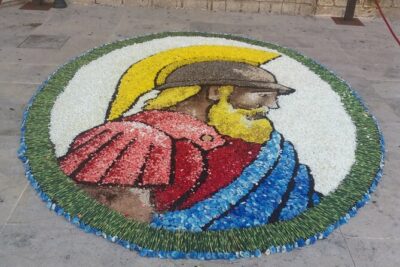
Browse the lists this tour appears in