
Reviewed · MOUNT ETNA TOURS
Mount Etna: Tour to the Summit Craters by Cable Car
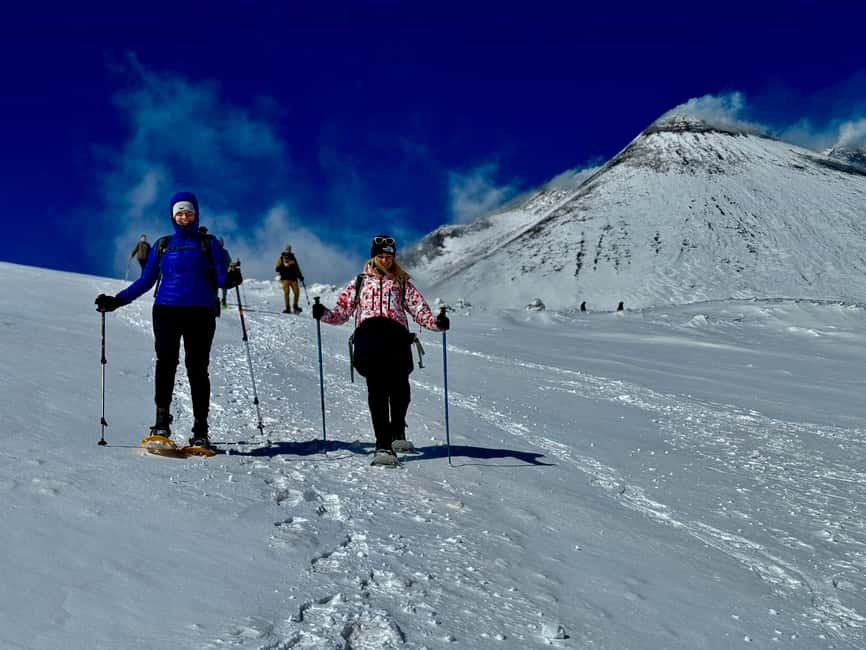
Mount Etna gives you one of Sicily’s most unusual walking days: a climb across black lava and ash, with the sea, mountains, and volcanic craters spread below. The route reaches the edge of the Central Crater at about 3,400 meters, weather permitting, then returns through the craters formed by the 2002 eruption.
I like the way the tour combines a cable-car ride and a special 4×4 transfer with real hiking, rather than leaving you to walk the entire route from the lower slopes. I also like the mix of sights: recent lava flows, a lava channel, a lava tunnel, and the huge Valle del Bove.
The main caution is altitude and changing volcanic conditions. The 62.63-dollar advertised price does not include the south-side cable car and 4×4 fee of 65 euros per person, and a fast pace can be a serious problem if you are not in good physical shape.
In This Review
- Key points to know before you book
- Starting at La Terrazza Dell’Etna
- The 15-minute cable car ride to 2,500 meters
- The 20-minute 4×4 ride toward 2,920 meters
- Hiking toward Etna’s Central Crater at 3,400 meters
- Recent lava flows and the 2002 eruption craters
- Inside a lava tunnel
- The Valle del Bove viewpoint
- Returning by cable car to Rifugio Sapienza
- How the guide and language options affect the day
- Is the extra cost worth it?
- Who should book this Etna trek?
- Final verdict: a serious walk with a memorable payoff
- FAQ
- How long does the Mount Etna summit crater tour last?
- Where does the tour start and finish?
- Is the cable car included in the tour price?
- How high does the trek go?
- What transportation is used?
- Which languages are available?
- What equipment is provided?
- What should I bring?
- Is the tour suitable for everyone?
- Can the route change?
Key points to know before you book
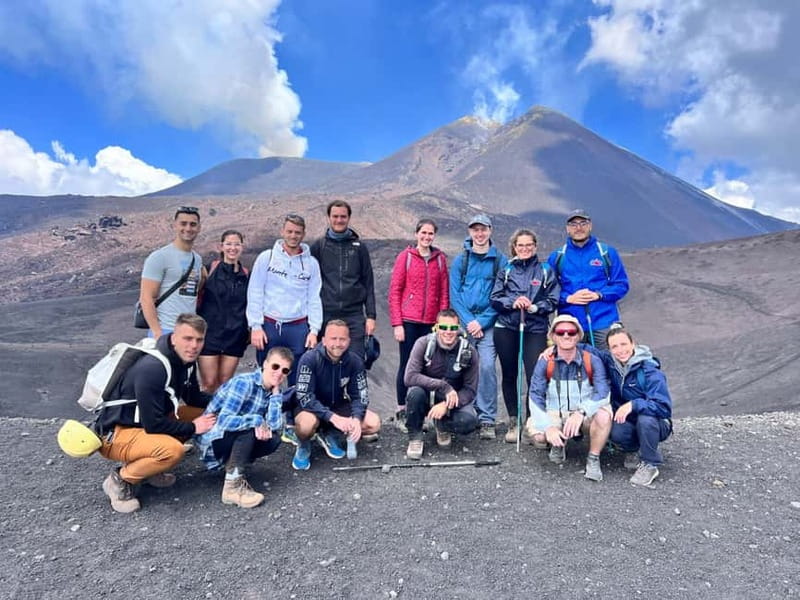
- The high point is about 3,400 meters: You hike toward the edge of Etna’s Central Crater, not simply to a roadside viewpoint.
- Cable car and 4×4 costs are extra: From the south side, budget an additional 65 euros per person for both.
- The route includes several volcanic settings: Expect summit craters, the 2002 eruption craters, a lava channel, a lava tunnel, and the Valle del Bove.
- The tour takes about 5.5 hours: The route begins and ends at La Terrazza Dell’Etna at Rifugio Sapienza.
- A certified guide leads the walk: Luca Cosma’s team offers English, Italian, and French, with guides assigned according to the group.
- Weather and volcanic activity can change the plan: The summit route may be replaced or adjusted for safety.
Starting at La Terrazza Dell’Etna
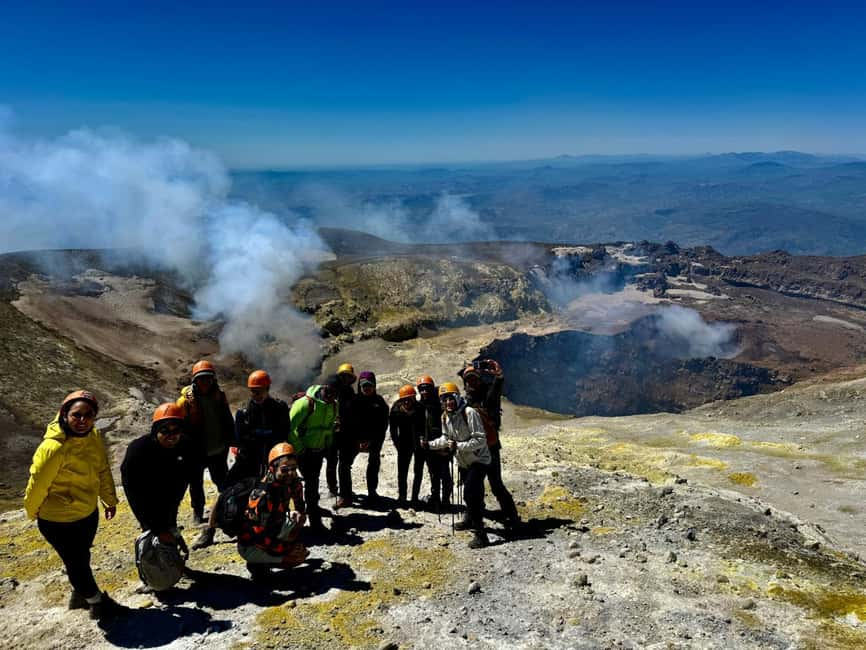
The meeting point is La Terrazza Dell’Etna, at Rifugio Sapienza, directly in front of the Etna South cable car station. This is also where you return at the end, and free parking is available nearby.
That arrangement keeps the day simple. You do not need to arrange a separate mountain transfer if you can reach Rifugio Sapienza yourself. Hotel pickup is not included, and any extra transfer service comes at an additional cost, so check your route to the meeting point before booking.
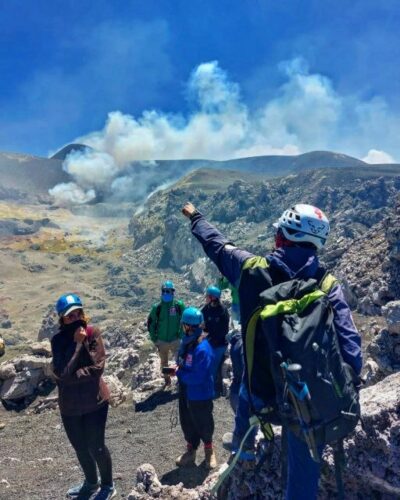
The guide team supplies a certified Alpine or volcanological guide, a helmet, a windbreaker jacket, and trekking boots. I would still arrive dressed for cold, wind, and changing conditions. The supplied information specifically advises bringing a jacket, food and drinks, trekking gear, and a first aid kit.
Bring your own lunch or substantial snack. Food and drinks are not included, and the day is long enough that you will want something more useful than a quick bite.
More ways up Etna and around the craters:
- Catania: Mount Etna Morning or Sunset Day Trip with Tasting
★ 4.8 · 4,028 reviews - Catania: Sunset Jeep Tour of Mount Etna and Lava Flow Caves
★ 4.8 · 2,113 reviews - Sicily: Etna and Alcantara Gorges Full-Day Tour with Lunch
★ 4.8 · 1,766 reviews
The 15-minute cable car ride to 2,500 meters
The first lift carries you from Rifugio Sapienza to roughly 2,500 meters. The ride takes about 15 minutes, but it changes the feel of the day quickly. You leave the lower slopes behind and enter the gray, open world of Etna’s upper volcanic zone.
This is one of the tour’s practical strengths. The cable car removes a large amount of uphill walking and lets you save energy for the higher section, where altitude makes every step harder.
There is an important price detail here. The advertised tour price is 62.63 dollars per person, but the south-side cable car and 4×4 service cost an additional 65 euros per person when used. If the itinerary changes and only the cable car is needed, the stated cable-car price is 52 euros per person.
That extra charge makes the real cost much higher than the headline price. I would compare the full amount, not just the initial booking figure, before deciding if this is good value for your Sicily budget.
The 20-minute 4×4 ride toward 2,920 meters
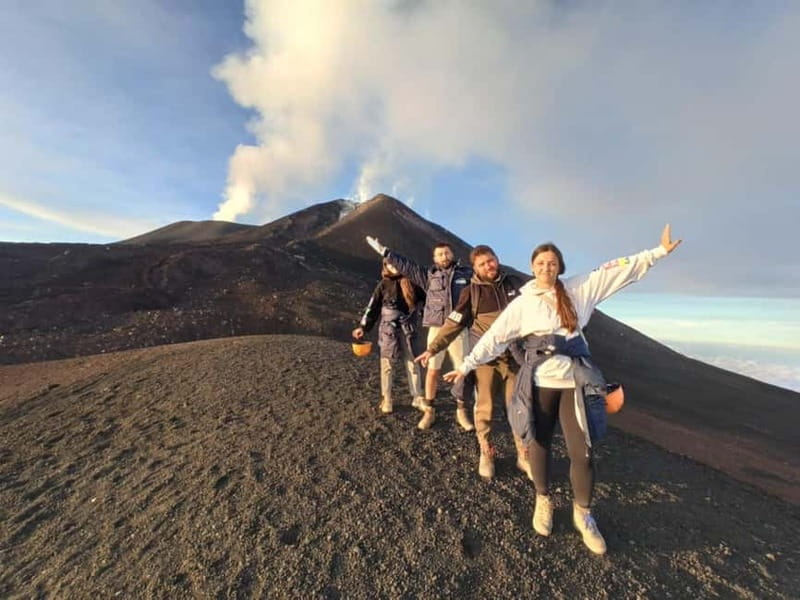
After the cable car, a special 4×4 vehicle takes you higher, reaching about 2,920 meters. This transfer lasts around 20 minutes and crosses the upper slopes through a stark setting of ash, lava, and old eruption scars.
The vehicle is useful for covering ground, but it also creates one possible source of confusion. The 4×4 cannot always operate in winter, and a booking system error once placed a participant on a much faster walking route intended for experienced walkers. That person had to stop after only a few hundred meters.
The lesson is straightforward: confirm the planned transport and walking pace before the tour begins, especially outside the main season. If the 4×4 is not running, ask how far the group will walk and how quickly it is expected to move.
A different arrangement can still produce a fine day. One French-speaking group walked for about five hours from the upper cable-car station to nearly 3,000 meters, visiting craters and old lava flows. The group found the walking route rewarding, but that example also shows that a transport change can turn this into a much more demanding outing.
Hiking toward Etna’s Central Crater at 3,400 meters
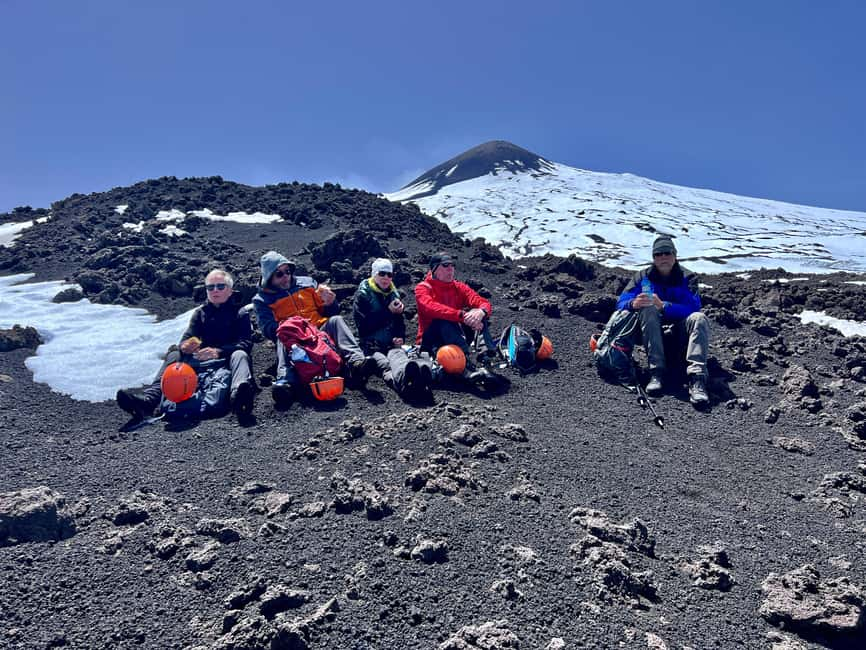
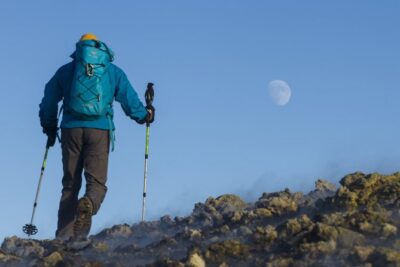
The main guided walk begins near 2,920 meters and heads toward the edge of the Central Crater at roughly 3,400 meters. The guided section is listed as about one hour, although the full mountain portion can vary if the route changes or the group walks from a lower point.
At this height, the issue is not just distance. Thin air, cold, wind, and loose volcanic ground can make a modest slope feel strenuous. The tour information is clear that you need good physical condition, and it is not suitable for people with respiratory or heart problems or for pregnant women.
The payoff is a 360-degree view from Etna’s upper slopes. With clear weather, you may see the Aeolian Islands and much of northern and eastern Sicily. The view is not guaranteed, though. Clouds, wind, volcanic activity, and visibility can all change what you see on the day.
I like that the guide gives this part a scientific and cultural frame rather than treating Etna as a simple photo stop. You are walking beside a living volcano, and the guide helps connect the ash, craters, and lava channels to the forces that shaped them.
Same island, a completely different day out:
- Catania: Etna Sunset Tour with Pickup and Drop-off
★ 4.8 · 1,348 reviews - Mt. Etna and Taormina village full day tour from Catania
★ 5.0 · 1,155 reviews - From Catania: Mount Etna Sunset Tour with Tasting and Cave
★ 4.7 · 1,119 reviews - Catania: Etna Morning Excursion with Tasting and Pickup
★ 4.8 · 820 reviews
Recent lava flows and the 2002 eruption craters
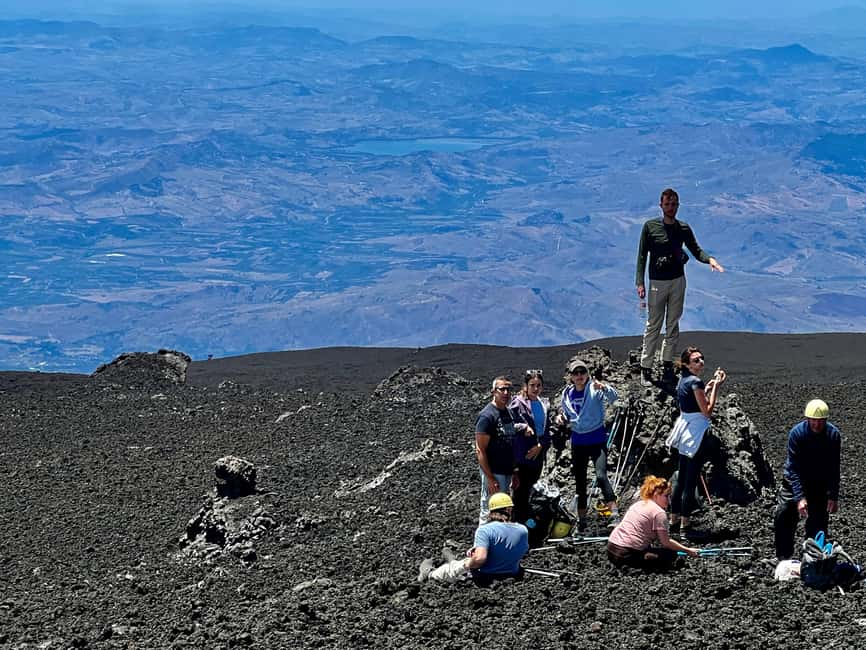
Etna’s upper slopes are not a polished park. They are rough, shifting, and marked by eruptions. The route includes recent lava flows and ground transformed by recent volcanic activity, along with the lateral craters created during the 2002 eruption.
These smaller craters help you understand how Etna grows. Instead of seeing only one famous summit opening, you pass through a series of volcanic forms that show how lava and ash can break out along the mountain’s sides.
This section is also a good reason to choose a guided walk. On your own, you would see black rock and red-brown ash, but you might miss the difference between a lava flow, a crater rim, and a channel carved by molten rock. A volcanological guide can turn those shapes into a readable story.
The ground can be uneven, and a loose surface is more tiring than a normal trail. Use the provided trekking boots if they fit well, or make sure your own footwear is sturdy enough for volcanic terrain.
Inside a lava tunnel
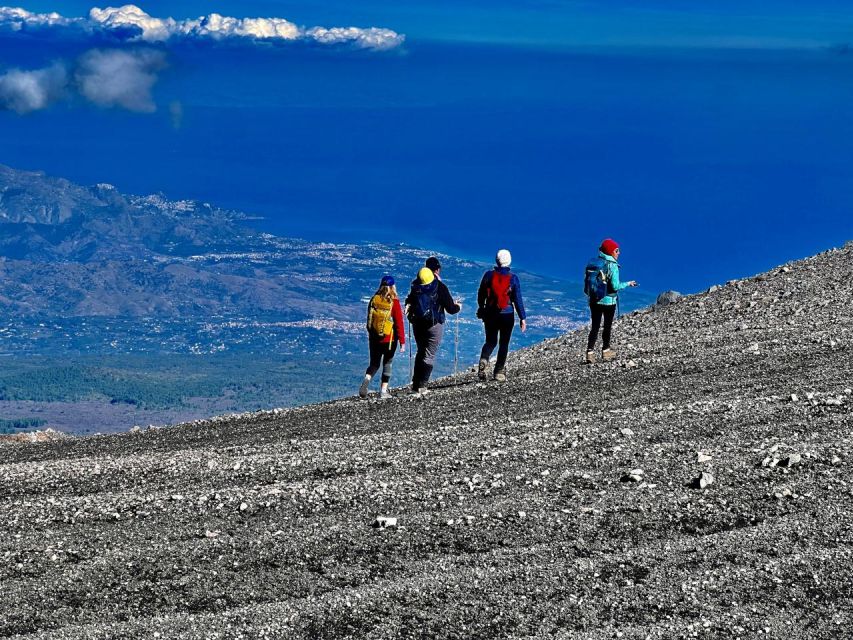
After the summit portion, the route includes a lava channel and a walk inside a lava tunnel. This gives the day a welcome change of scale. At the summit, you are looking across broad volcanic slopes and distant views. Inside the tunnel, the focus shifts to the textures and shapes left behind as lava cooled.
The tunnel is one of the most distinctive parts of the route because it shows what happened below the surface during an eruption. You are not only looking at a crater from the outside. You are also seeing how molten rock moved and left a passage behind.
Your helmet is particularly useful here, and the provided equipment helps keep this part from becoming a gear problem. Still, bring a small light if you have one and if the guide permits it. The supplied information does not promise lighting, so do not assume the tunnel will be bright.
The Valle del Bove viewpoint
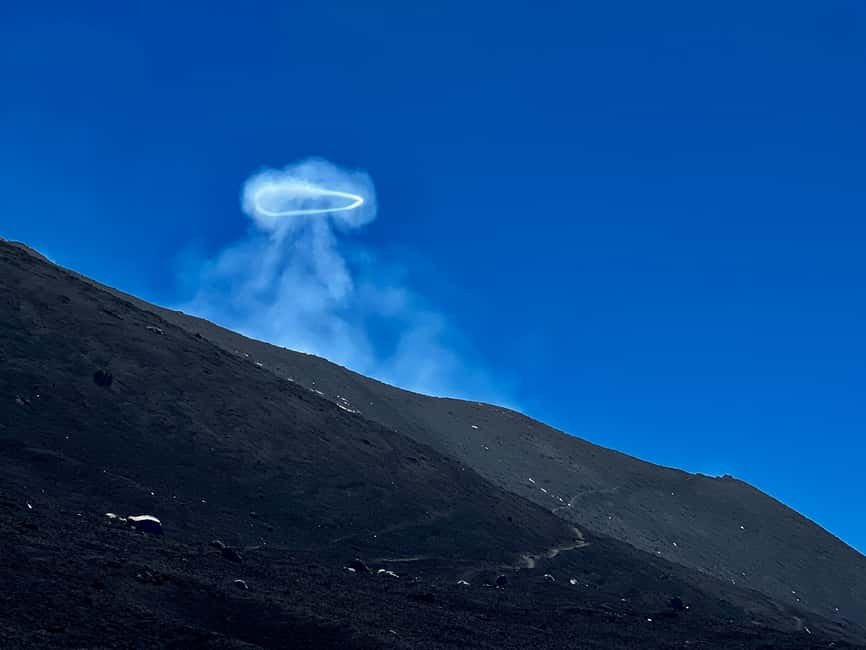
The route also reaches the volcanic amphitheater of the Valle del Bove. This is one of the day’s broadest views, with a huge scooped-out volcanic area opening below Etna’s upper slopes.
I find this contrast valuable. The summit craters show the volcano’s active center, while the Valle del Bove gives you a sense of its much larger structure. Together, they make the mountain easier to understand than a single summit visit would.
This stop can also be a welcome pause during the trek. The tour description specifically includes time to enjoy and relax during the walking portion, though the exact amount depends on weather, volcanic risk, and the group’s pace.
Keep your expectations flexible. Etna is an active volcano, not a fixed attraction with one guaranteed route. Safety rules can close sections or redirect the group, even when the weather looks acceptable from lower down.
Returning by cable car to Rifugio Sapienza
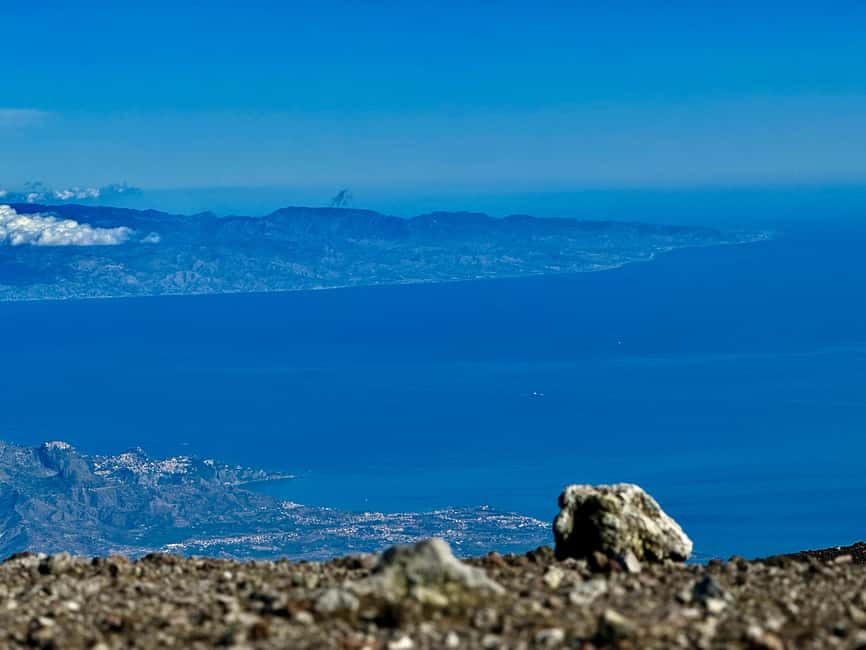
After the upper route, the group returns toward the cable car and descends to Rifugio Sapienza. The listed return schedule includes about 20 minutes by coach and 15 minutes by cable car, followed by arrival back at La Terrazza Dell’Etna.
The full activity lasts about 5.5 hours. That is long enough to make the trip feel substantial, but short enough to fit into a wider day around Mount Etna if your schedule is planned carefully.
The pace matters more than the clock. A group that reaches the summit route may spend the day moving steadily over difficult ground. A changed itinerary can be slower, faster, or more strenuous than expected, so I would not pair this with another demanding activity immediately afterward.
How the guide and language options affect the day
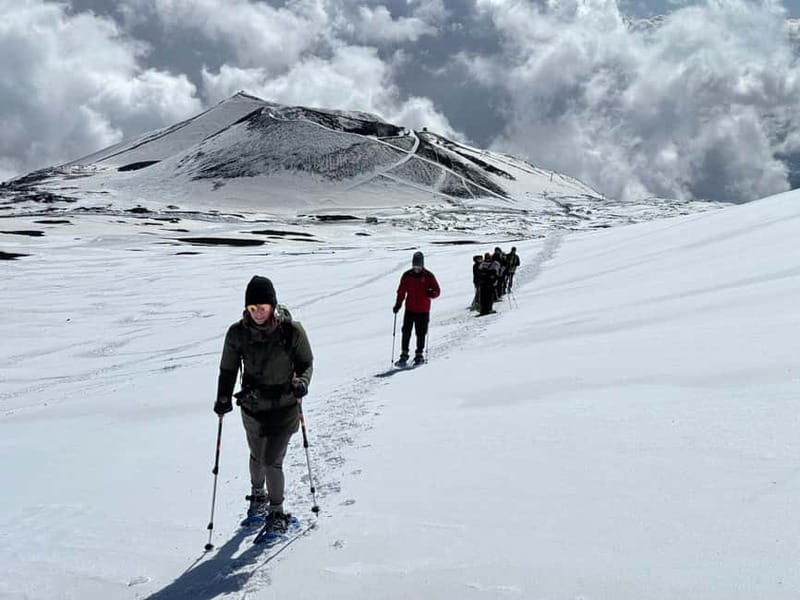
The experience is led by a certified Alpine or volcanological guide, with English, Italian, and French available. Luca Cosma is associated with the guiding operation, and guides may change according to the language and group arrangement.
A French-speaking group was successfully redirected to another partner guide when the original French-language arrangement could not take place. The replacement guide, Maximo, adjusted the outing to the group and helped create a strong day despite the changed plan.
That is encouraging, but I would still confirm your preferred language in advance. Do not assume that a specific named guide will lead your departure. Ask who is scheduled and what happens if the summit route or transport changes.
The guide is most valuable in two ways. First, the guide handles safety decisions on an active volcano. Second, the guide explains what you are seeing, from lateral craters to old flows and the Valle del Bove. That combination gives the experience more substance than a ride up for photographs.
Is the extra cost worth it?
At 62.63 dollars before the south-side transport fee, this looks inexpensive for a half-day guided climb. Once you add the 65-euro cable car and 4×4 charge, the cost becomes much closer to what you might expect for a specialized high-altitude excursion.
I still see value in it if you want the summit zone without planning the route, equipment, and volcanic safety decisions yourself. The price includes the guide, insurance, helmet, windbreaker, and trekking boots, which saves you from arranging several practical pieces separately.
The value drops if you mainly want a quick view from Etna. You are paying for a strenuous guided walk, not a simple sightseeing transfer. It also becomes less attractive if you are uncomfortable with a possible itinerary change or cannot manage a fast pace at altitude.
Because the cable car and 4×4 payment is separate, ask for the total amount in euros before committing. Also confirm if the transport is operating on your date, particularly during winter.
Who should book this Etna trek?
I would recommend it to fit hikers who want an active day and are curious about how a volcano works. It suits you best if you can walk on uneven ground for several hours and handle high altitude without heart or breathing problems.
It is also a good match if you want several Etna experiences in one outing: summit craters, recent flows, the 2002 craters, a lava tunnel, and the Valle del Bove. The route has more variety than a simple cable-car ride.
I would not choose it if you are pregnant, have respiratory or heart problems, or are looking for a relaxed coach excursion. The altitude can affect physical performance, and the route may become harder if the 4×4 is unavailable.
Free cancellation is available up to 24 hours before the start, and you can reserve now and pay later. Those terms help if your Sicily plans are still moving, but they do not remove the need to check weather, transport, and volcanic conditions before the day begins.
Final verdict: a serious walk with a memorable payoff
Book this tour if you want to walk into Etna’s upper volcanic world with a guide and you accept that nature sets the rules. The combination of summit views, fresh lava, the 2002 craters, a lava tunnel, and the Valle del Bove gives you a strong sense of the volcano from several angles.
Skip it if the extra transport fee surprises you, if you need a gentle pace, or if high altitude is a concern. Before booking, confirm the full price, the operating cable car and 4×4 service, your guide language, and the expected walking distance. With those points clear, this is a focused and memorable way to meet Europe’s highest active volcano.
FAQ
How long does the Mount Etna summit crater tour last?
The activity lasts about 5.5 hours. Starting times vary, so you need to check availability for your chosen date.
Where does the tour start and finish?
It starts and ends at La Terrazza Dell’Etna at Rifugio Sapienza, in front of the Etna South cable car station. Free parking is available at the meeting location.
Is the cable car included in the tour price?
No. If the route goes up from the south side, the cable car and 4×4 cost 65 euros per person. If the itinerary changes, the cable car alone is listed at 52 euros per person.
How high does the trek go?
The 4×4 reaches about 2,920 meters, and the trek continues toward the edge of the Central Crater at about 3,400 meters.
What transportation is used?
You take the cable car for about 15 minutes, then a special 4×4 vehicle for about 20 minutes. The return follows the same general arrangement, with a coach section and cable-car descent.
Which languages are available?
Guides are available in English, Italian, and French. The assigned guide may vary, so confirm your preferred language before the tour.
What equipment is provided?
The tour includes trekking boots, a helmet, a windbreaker jacket, insurance, and a certified Alpine or volcanological guide.
What should I bring?
Bring food and drinks, a jacket, trekking gear, and a first aid kit. You should also be prepared for cold, wind, and difficult walking conditions at altitude.
Is the tour suitable for everyone?
No. It is not suitable for people with respiratory issues, heart problems, or pregnant women. Good physical condition is important because the excursion takes place at high altitude.
Can the route change?
Yes. Volcanic risk and weather conditions can require changes to the itinerary. The 4×4 service may also be unavailable in winter, which can affect the amount and pace of walking.
Just added around Catania
- Catania : Diving for patented divers★ 5.0 · 3 reviews
- Catania AIRPORT transfer From / To Taormina★ 5.0 · 3 reviews
- Transfer Catania / Agrigento Airport★ 5.0 · 3 reviews
- Taormina: exclusive tour with food, drinks, and sunset, pick-up from Catania★ 5.0 · 3 reviews
- From Catania/Taormina: Mount Etna Private Wine Tasting Tour★ 4.7 · 3 reviews
- From Catania: Day Trip to Giardini Naxos and Taormina★ 5.0 · 3 reviews
- Catania: Summit Craters from North Etna with 4×4 vehicles★ 5.0 · 3 reviews
- Catania: Guided Street Food Tour with Tastings★ 5.0 · 3 reviews
Mount Etna Tours, compared.
Mount Etna Morning or Sunset Day Trip with Tasting
Read our review →
Guided Volcano Summit Hiking Tour with Cable Car
Read our review →
Sunset Jeep Tour of Mount Etna and Lava Flow Caves
Read our review →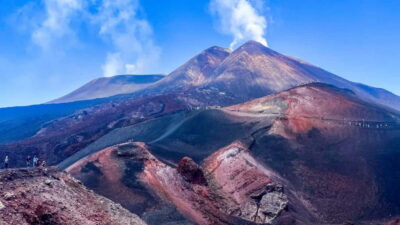
Etna and Alcantara Gorges Full-Day Tour with Lunch
Read our review →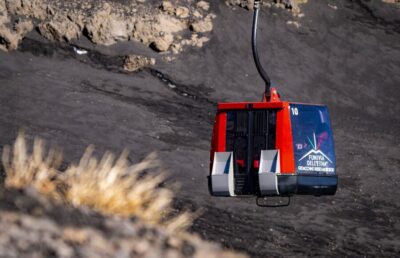
Browse the lists this tour appears in