Reviewed · MOUNT ETNA TOURS
Etna Summit Craters
Etna’s summit is not a gentle stroll to a scenic overlook. It is a high-altitude volcanic trek across black ash and recent lava, ending near the active craters at about 3,340 meters. I like the cable car and 4×4 approach, which saves your legs for the best part, and I like having a qualified mountain or volcanological guide beside you around unstable volcanic ground.
I also like the supplied shoes, socks, windbreaker, poles, and helmet, especially if your luggage is light on hiking gear. The catch is simple: this is a hard hike, not a sightseeing ride. Altitude can hit unprepared walkers quickly, and the €52 cable car plus €25 4×4 ride is paid separately from the $70 tour price.
In This Review
- Key points to know before you book
- Why Etna’s summit feels unlike a normal mountain walk
- Starting at Rifugio Sapienza
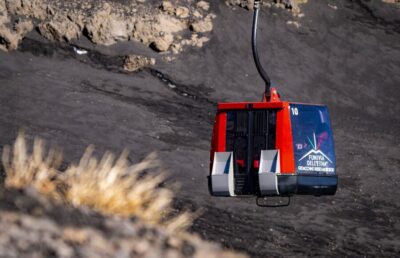
- Cable car and 4×4 ride to 2,800 meters
- The 3.5-hour summit section
- The active craters: Bocca Nuova, Voragine, and more
- Walking on recent lava flows
- The view toward Valle del Bove
- Around the Laghetto crater and back down
- What the guides add
- Fitness, altitude, and who should skip it
- Is the $70 price good value?
- Should you book the Etna Summit Craters hike?
- FAQ
- How long does the Etna Summit Craters excursion last?
- Where is the meeting point?
- How high does the tour go?
- Are the cable car and 4×4 bus included?
- What equipment is included?
- What should I bring?
- Is the hike suitable for children?
- Can I cancel the booking?
Key points to know before you book
- Reach about 3,340 meters: This is the highest point in Sicily and the main prize of the day.
- Walk beside active volcanic craters: The route brings you near Bocca Nuova, Voragine, the Northeast Crater, and the Southeast Crater.
- Expect 5 to 6 hours on foot and at altitude: You need to be comfortable with demanding uphill and downhill walking.
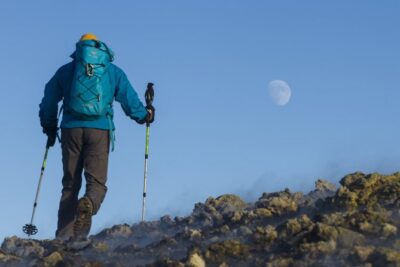
- Use the supplied gear: High-collar hiking shoes, new socks, a windbreaker, poles, and a protective helmet are included.
- Allow for extra transport costs: The cable car costs €52 and the 4×4 bus costs €25, both paid locally.
- Prepare for changing conditions: Long trousers, gloves, a hat, sunglasses, sunscreen, and a scarf are recommended.
Why Etna’s summit feels unlike a normal mountain walk
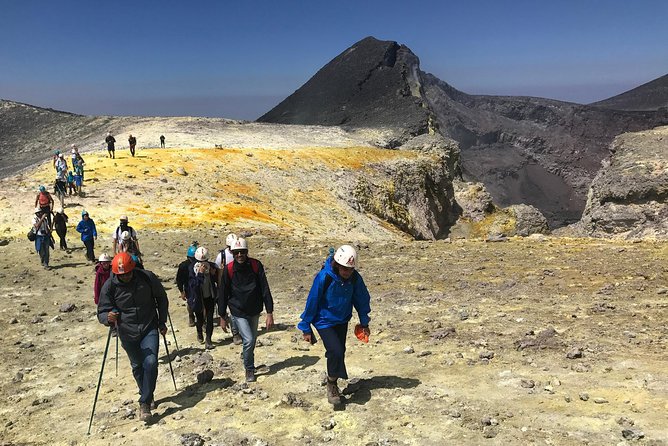
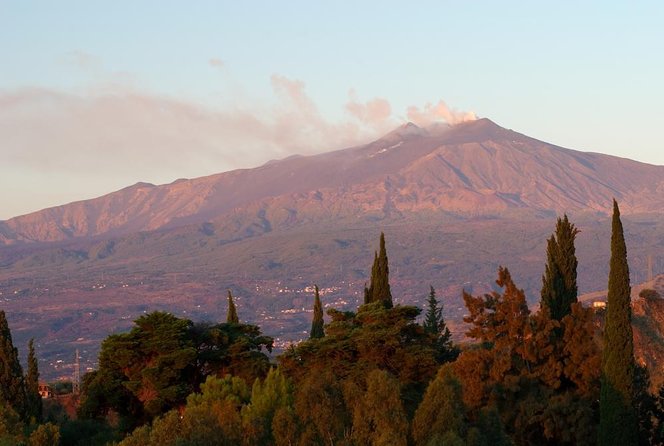
The upper slopes of Mount Etna have an almost otherworldly look. Volcanic ash spreads in broad dark fields, lava flows cut across the ground, and the crater rims rise in rough, irregular shapes. At this height, the color palette can seem stripped down to black, gray, rust, and the pale yellow of sulfur deposits.
I like this excursion because it lets you see Etna as an active force, not just as a large mountain with a view. The summit craters are places of heat, gas, ash, and past eruptions. You may not see flowing lava, and you should not book this trip expecting a guaranteed eruption, but the volcanic setting itself is the attraction.
The enormous crater depressions filled with sulfurous deposits give the upper mountain a severe, almost silent character. Your guide helps explain what you are seeing and keeps the group moving safely over ground that can be loose, steep, or affected by current volcanic conditions.
More ways up Etna and around the craters:
- Mount Etna: Trek to 3000m with cable car and jeep
★ 4.7 · 1,978 reviews - Mount Etna: Roundtrip Cable Car and 4×4 Bus Ticket
★ 4.3 · 1,602 reviews - Etna excursion to 3000 mt. with cable-car and jeep 4×4
★ 4.6 · 550 reviews
Starting at Rifugio Sapienza
Your meeting point is inside the Bar Ristorante Crateri Silvestri at Rifugio Sapienza, around 1,900 meters. This is a practical place to meet because the cable car begins nearby, and you can arrange your final snacks or drinks before setting off.
The tour includes a 20 percent discount on sandwiches, snacks, and drinks at the meeting point. I would use that discount for food before the hike, since the outing lasts most of the day and there is no mention of a meal being included.
You should arrive already dressed for mountain weather. Long trousers, gloves, a cap, sunglasses, sunscreen, and a scarf are recommended. Even if conditions feel mild at Rifugio Sapienza, the summit section is higher, colder, windier, and more exposed.
Cable car and 4×4 ride to 2,800 meters
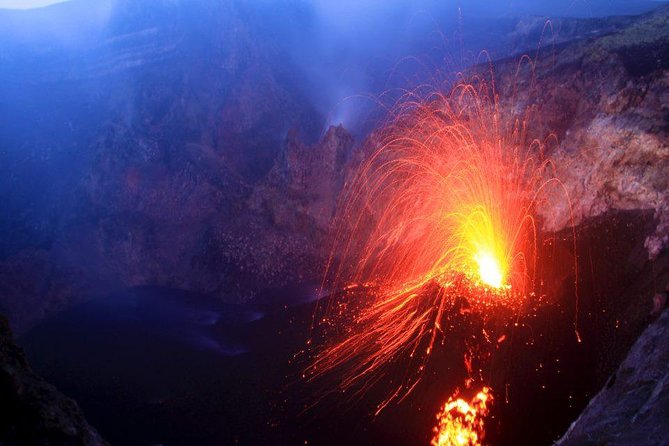
The cable car ride takes about 15 minutes and carries you from the lower station to the upper part of the mountain. It is more than a convenient transfer. It gives you a quick sense of how sharply the terrain changes as you leave the established visitor area and head toward the upper volcanic zone.
From the cable car, the standard itinerary continues by 4×4 bus for about 15 minutes to approximately 2,800 meters. The bus saves energy for the summit route, which matters because the walk still takes several hours.
One recent account described walking farther from the cable car instead of taking the bus, reaching around 3,000 meters on foot. That suggests the exact upper-mountain plan can change with conditions or the guide’s judgment. You should treat the listed cable car and 4×4 route as the normal plan, while understanding that the guide may adjust the walking section.
The 4×4 ticket is not included. At €25, it is a noticeable extra, but it also avoids spending more time and energy on the lower part of the climb.
The 3.5-hour summit section
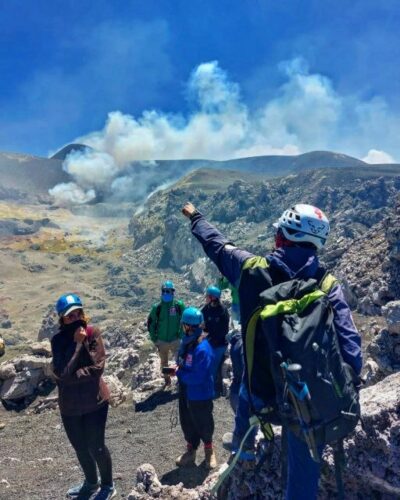
The main mountain visit lasts about three and a half hours within a total hiking time of roughly five to six hours. You will receive a safety briefing before walking, then follow the guide over volcanic ash, lava flows, and upper slopes toward the summit craters.
This is where the trip earns its price. You are not simply being driven to a viewpoint and asked to take photographs. The route puts you into the volcanic terrain, where every ridge and depression has a geological reason.
The hike is challenging for several reasons:
- You are walking at high altitude.
- Volcanic ash can make uphill progress tiring and downhill walking slippery.
- The route includes meaningful elevation changes.
- Wind, cold, sun, and reduced oxygen can make the same distance feel harder than it would at sea level.
A participant who struggled with the altitude still described the guide as considerate and attentive, with regular checks on the group’s condition. That kind of care matters here. A good guide can set a sensible pace, explain when to stop, and help you feel secure without pretending the hike is easy.
Same island, a completely different day out:
- From Catania: Etna tour by Panoramic Bus
★ 4.2 · 197 reviews - From Nicolosi: Mount Etna Quad Volcano Tour
★ 4.7 · 64 reviews - Mount Etna: Summit Tour by Jeep and Cable Car
★ 4.5 · 32 reviews - Mount Etna: Central Crater Tour with cable car and jeep
★ 4.6 · 18 reviews
The active craters: Bocca Nuova, Voragine, and more
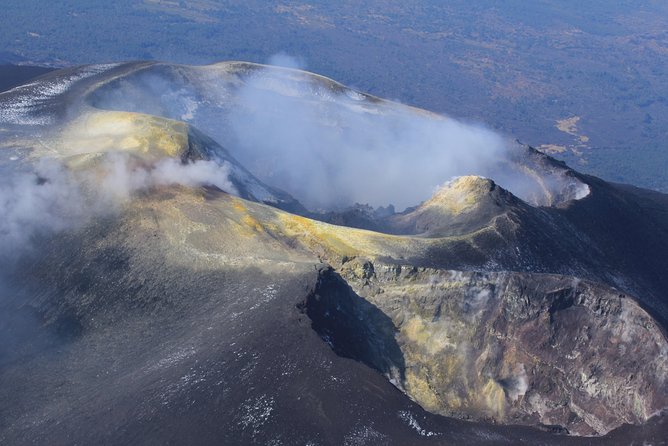
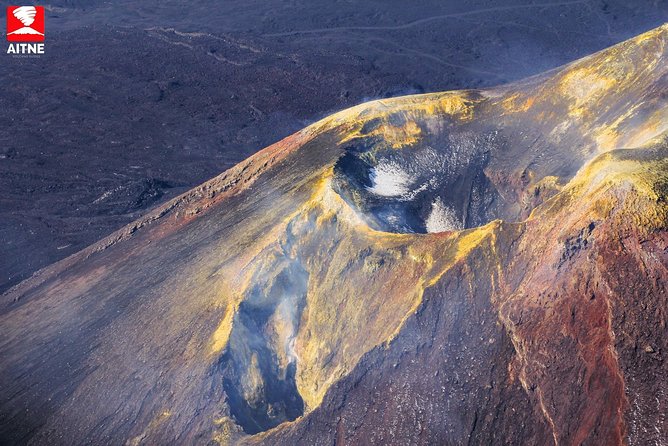
The summit area includes some of Etna’s best-known active craters: Bocca Nuova, Voragine, the Northeast Crater, and the Southeast Crater. The exact views and approach depend on volcanic activity, safety rules, and weather, so the tour does not promise that every crater will be viewed from the same position.
The most striking feature is the scale of the crater depressions. From the rim, you can look across broad volcanic hollows marked by sulfur and ash. The scene carries a strange mix of beauty and danger. The ground may appear quiet, yet these craters are connected to an active volcano.
Your guide’s role is especially useful here. The volcanic forms can look confusing at first, with old cones, newer deposits, lava ridges, and ash fields blending together. Explanations about the eruption centers and the makeup of the ground turn a difficult walk into a lesson in geology and volcanology.
Do not assume you will see lava. One recent outing reached new lava flows but did not include visible molten lava. Another account noted that seeing a lava flow would have made the day even more exciting. That is the right expectation: active volcanic terrain is likely, but a glowing lava stream is not guaranteed.
Walking on recent lava flows
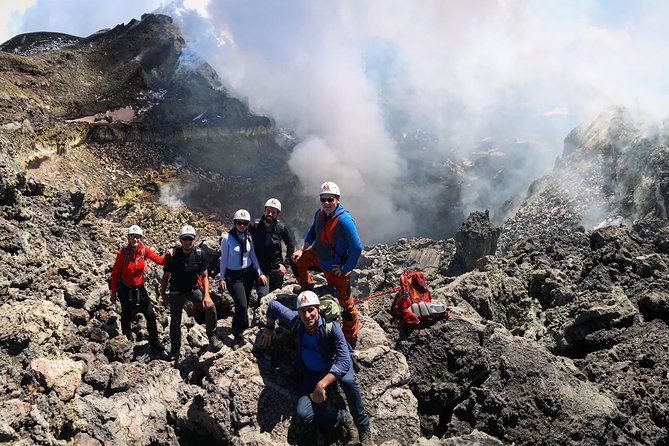
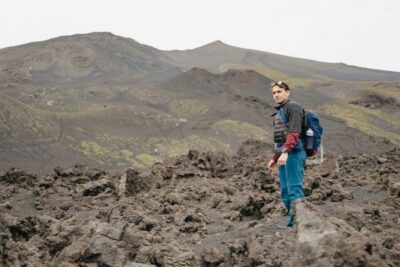
Crossing recent lava flows is one of the tour’s most memorable features. Lava does not cool into a smooth black road. It can form broken rock, ridges, hollows, and sharp-edged surfaces that demand attention with every step.
The supplied high-collar hiking shoes are useful for this ground, and trekking poles offer extra balance on ash and uneven rock. You also receive a protective helmet, which is an important safety item near volcanic terrain.
The gear is a real value for anyone who does not have suitable equipment. You receive the shoes, new socks, windbreaker, poles, and helmet as part of the activity, rather than needing to rent each item separately. You should still bring the personal items listed by the operator, especially gloves and eye protection.
The view toward Valle del Bove
After the summit craters, the route descends on foot over volcanic ash toward the Belvedere della Valle del Bove. This viewpoint looks across a huge caldera formed by older eruptive centers.
I find this part valuable because it changes the scale of the day. The summit craters show you recent and active volcanic features up close. Valle del Bove lets you step back and see how much rock and time are involved in Etna’s wider volcanic story.
The descent is not necessarily easier than the climb. Loose ash can slide under your shoes, and tired legs make balance harder. Trekking poles are especially useful here. Take your time, keep space between walkers, and follow the guide’s route rather than choosing the fastest-looking line.
Around the Laghetto crater and back down
The final section skirts the imposing eruptive cone of the Laghetto crater before reaching the cable car terminal. From there, the cable car takes you back toward Rifugio Sapienza in about 15 minutes.
This ending is welcome after five or six hours of walking. It also keeps the return from becoming an additional long descent on tired legs. You still need enough stamina for the full route, but the cable car removes the need to walk all the way back to the starting point.
The day includes photo stops, guided explanations, scenic views, and a safety briefing. The pace is shaped by the group and by mountain conditions, so you should not plan another tightly timed attraction immediately afterward.
What the guides add
The excursion is available in English and Italian, with a live alpine or volcanological guide. That is a major part of the experience. Etna’s summit is not a place where you want to wander without clear instructions, particularly when ash, steep slopes, altitude, and active craters are involved.
Guides named Peppe, Giovacchino, and Giuseppe have received especially warm praise for kindness, humor, and care. The useful lesson for you is not to expect a scripted lecture alone. The best part of the guiding is the combination of safety checks, local volcanic knowledge, and encouragement when the altitude starts to bite.
One of the strongest accounts described the guide asking often if everyone was all right. That is exactly the sort of attention I would value on this route. Still, a guide cannot remove the physical challenge. You need to judge your own fitness honestly.
Fitness, altitude, and who should skip it
The operator does not recommend this tour for children under 10, pregnant women, people with mobility limitations, wheelchair users, or anyone with heart problems. It is also not suitable for people with vertigo, a fear of heights, epilepsy, haemophilia, high blood pressure, or recent surgery. The stated upper age limit is 95.
Those restrictions are not minor fine print. You climb to around 3,340 meters and spend hours walking over demanding volcanic ground. If you are not used to strenuous hikes, this may feel much harder than the distance suggests.
I would choose this outing if you already enjoy challenging walks and want a close look at Etna’s volcanic core. I would choose a lower-altitude Etna trip instead if you mainly want broad views, light walking, or a relaxed day.
Snow can also change the character of the route. A March outing was described as a demanding but rewarding walk through snow, with new lava flows, strong views, and the sound of volcanic activity. That sounds memorable, but it also shows why proper clothing and a flexible attitude matter.
Is the $70 price good value?
The listed price is $70 per person, but your actual transport cost is higher because the €52 cable car ticket and €25 4×4 ticket are paid on site. That means you should budget for the tour as $70 plus €77 in required transport fees, along with any food or drinks.
At first glance, that can feel expensive. I think the value is reasonable if you specifically want the summit craters. The package includes a qualified guide and a useful set of hiking equipment, and the route reaches parts of Etna that are not accessible by ordinary sightseeing vehicle.
It is less attractive if you only want to see Etna from a distance. In that case, the extra transport charges and demanding walk may not match what you want from the day.
You can cancel up to 24 hours before the activity for a full refund, and you can reserve now and pay later. Those policies help if your Sicily plans depend on weather or volcanic access, though the tour’s availability and start time should still be checked for your date.
Should you book the Etna Summit Craters hike?
Book it if reaching Sicily’s highest point, walking on recent lava, and seeing Etna’s active crater zone are high on your list. You should be fit for a serious five to six hour hike, comfortable with heights and exposed mountain terrain, and prepared to pay the cable car and 4×4 charges separately.
Skip it if you want an easy volcano visit, if altitude causes problems, or if you need a fully accessible route. For the right person, this is a powerful day in a stark volcanic setting, made better by the guide support and included gear. Just come ready for a mountain, not a theme-park attraction.
FAQ
How long does the Etna Summit Craters excursion last?
The hike lasts about five to six hours. The main Mount Etna section in the itinerary is listed at approximately three and a half hours, with cable car rides taking about 15 minutes each.
Where is the meeting point?
Meet your guide inside the Bar Ristorante Crateri Silvestri at Rifugio Sapienza.
How high does the tour go?
The route reaches the Summit Craters at about 3,340 meters, described as the highest point in Sicily. The cable car and 4×4 section takes you to approximately 2,800 meters before the summit walk.
Are the cable car and 4×4 bus included?
No. The cable car ticket costs €52 and the 4×4 bus ticket costs €25. Both are paid on site.
What equipment is included?
The activity includes a volcanological or mountain guide, high-collar hiking shoes, new socks, a windbreaker, trekking poles, and a protective helmet.
What should I bring?
Long trousers, a cap, gloves, sunglasses, protective cream, and a scarf are recommended.
Is the hike suitable for children?
The tour is not suitable for children under 10 years old. It is also described as appropriate only for people accustomed to challenging hikes.
Can I cancel the booking?
You can cancel up to 24 hours in advance for a full refund. The activity also offers reserve now and pay later booking.
Just added around Nicolosi
- Nicolosi: Excursion Etna Craters at 3000 mt.★ 4.2 · 3 reviews
- Monti Rossi Adventure Park Entry Ticket Full★ 5.0 · 3 reviews
- Catania: Mount Etna 3000m Tour with Hotel Pickup★ 5.0 · 3 reviews
- Etna Summit Craters★ 5.0 · 4 reviews
- Monti Rossi Adventure Park Entry Ticket★ 5.0 · 4 reviews
- Etna Central Crater Trekking Tour with cable car & jeep★ 5.0 · 4 reviews
- Nicolosi: Mt. Etna Guided Quad Tour Adventure★ 4.2 · 6 reviews
- Catania, Etna trekking with guide and cable car at 3000 meters + transfer available★ 4.9 · 14 reviews
Mount Etna Tours, compared.
Mount Etna Morning or Sunset Day Trip with Tasting
Read our review →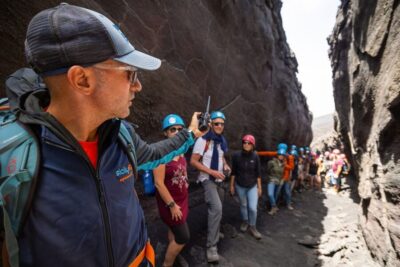
Guided Volcano Summit Hiking Tour with Cable Car
Read our review →
Sunset Jeep Tour of Mount Etna and Lava Flow Caves
Read our review →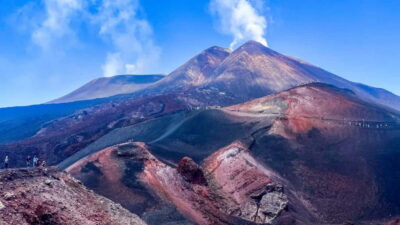
Etna and Alcantara Gorges Full-Day Tour with Lunch
Read our review →