
Reviewed · MOUNT ETNA TOURS
Etna: Craters of the 2002 Eruption Trekking Experience
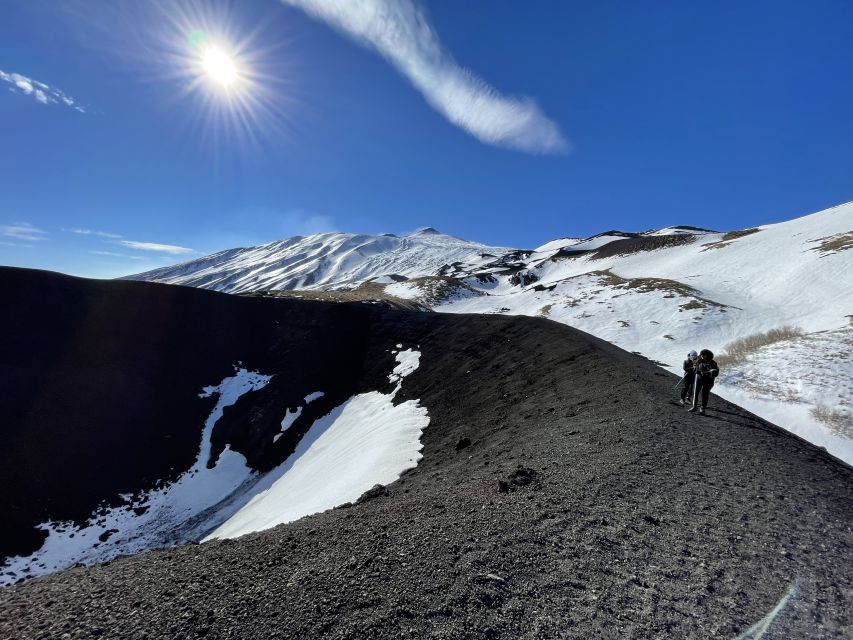
The most striking part of this Etna trek is seeing where the 2002 eruption reshaped the north side of the volcano. From Piano Provenzana, you walk past black lava streams, eruptive cracks, cinder cones, and the ruins of the Hotel delle Betulle, then reach the broad craters that helped destroy the ski area below. You are walking through a real volcanic event, not just looking at a mountain from a distance.
I like two things in particular: the route gives you time to understand what you are seeing, and the setting is usually calmer than Etna’s busiest visitor areas. Guides such as Daniele, Davide, Vincenzo, and Niko have been praised for mixing clear science with humor, photos, and stories from past eruptions. The wide view toward the Calabrian coast is another strong point.
The main catch is the rough ground and exposed weather. The three hours may feel gentle to a fit hiker, but loose volcanic soil, steep sections, wind, and crater edges can make the walk tiring. Proper shoes are essential, and the tour is not a good match for anyone with vertigo, serious breathing trouble, heart problems, or limited mobility.
In This Review
- Key points about the 2002 Etna crater walk
- Starting at Piano Provenzana, not the lower parking lot
- Following the 2002 lava flow toward the upper craters
- The Hotel delle Betulle ruins and what the lava destroyed
- Hornitos, cinder cones, and eruptive fractures
- Reaching the crater rims above Piano Provenzana
- What the guides add to the experience
- Who will enjoy this Etna trek most
- What to pack, and what to rent
- Weather, safety, and route changes
- Is the $41 price good value?
- Should you book the 2002 eruption trek?
- FAQ
- How long does the Etna 2002 eruption trek last?
- Where does the trek begin?
- Is parking included?
- Are hiking shoes included?
- Are snowshoes needed in winter?
- What languages are available?
- Who should not take this trek?
Key points about the 2002 Etna crater walk
- The Hotel delle Betulle ruins: See the only clearly visible structure left by the 2002 lava flow.
- A guided lesson in volcanic form: Study Hornitos, eruptive fractures, lava channels, cinder cones, and crater rims as you walk.
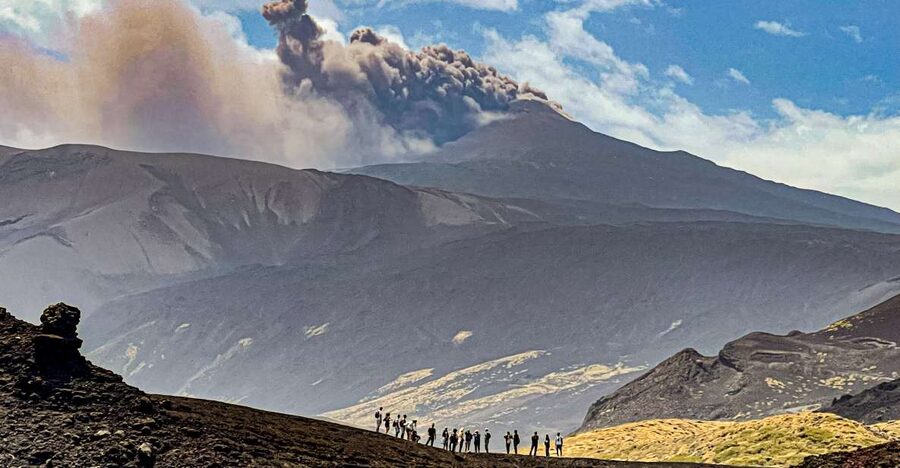
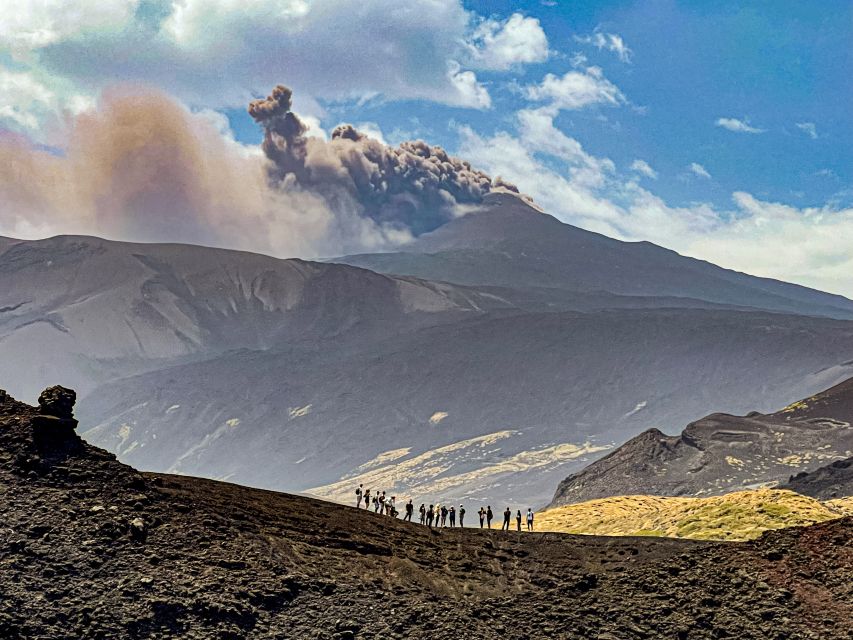
- North Etna views: Look across the eruptive theater toward the Calabrian coast from the upper slopes.
- A three-hour moderate trek: The pace includes stops for explanations, but the ground remains uneven and sometimes unstable.
- A practical meeting point: Start at Chiosco Bar Mareneve, near the winter chairlift, not at Chiosco Bar Etna Nord.
- Weather controls the day: Guides can alter or stop the route because of wind, snow, rain, or volcanic conditions.
Starting at Piano Provenzana, not the lower parking lot
Your meeting point is Chiosco Bar Mareneve, the second of four buildings in the parking area near the chairlift used by skiers in winter. This detail matters because Chiosco Bar Etna Nord is in the lower parking area and is not the correct place to meet your guide.
Allow time to find the right building and get ready before the start. Parking costs €3 for the full day, paid after the excursion. Transport from your accommodation is not included, so you must reach Piano Provenzana independently.
The activity costs $41 per person. That is a fair price if you want a guide who can explain the volcanic features instead of simply leading you uphill. The fee includes an official volcano guide and accident insurance, while parking, food, water, footwear, warm clothing, and winter snowshoes cost extra or must be supplied by you.
The insurance condition deserves attention: without suitable shoes, you are not covered. This is not the place for casual sneakers with smooth soles, sandals, or flip-flops. Authorized rentals near the starting point offer trekking shoes for €5 a pair. In snowy months, snowshoes cost €12 per person to rent on site.
More ways up Etna and around the craters:
- Catania: Mount Etna Morning or Sunset Day Trip with Tasting
★ 4.8 · 4,028 reviews - Mount Etna: Guided Volcano Summit Hiking Tour with Cable Car
★ 4.7 · 3,784 reviews - Catania: Sunset Jeep Tour of Mount Etna and Lava Flow Caves
★ 4.8 · 2,113 reviews
Following the 2002 lava flow toward the upper craters
The route begins along the dirt road from Piano Provenzana toward Etna’s upper craters. You pass through sections of forest before the trees give way to darker, more open volcanic ground. This gradual change helps you see how elevation, lava, and exposure shape the north side of the volcano.
The point is not speed. Your guide stops to explain the shapes around you and how separate eruptions built them. The exact pace depends on the group, and a three-hour schedule can stretch in feel if people need extra breaks or if the ground is difficult.
The 2002 eruption is the focus. It was one of the most powerful recent eruptions on this part of Etna, and its lava reached Piano Provenzana. The route lets you see the results at close range: fractured ground, hardened lava streams, ash and cinder deposits, and the rough edges of newly formed craters.
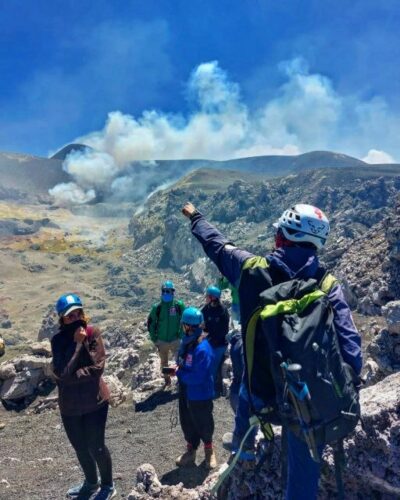
A guide adds real value here. Volcanic rock can look like a pile of black rubble until someone points out the difference between a lava channel, an eruptive fracture, and a cone built from falling cinders. Daniele has used photos and videos from the eruption to make the story easier to picture, while Davide has been praised for keeping the explanations lively with occasional jokes.
The Hotel delle Betulle ruins and what the lava destroyed
One of the most memorable stops is the ruined Hotel delle Betulle. It is described as the only visible structure left by the 2002 lava flow, giving you a clear sense of the eruption’s force.
This stop brings a human scale to the geology. A lava field can seem ancient and abstract, but a damaged building shows exactly what was in the flow’s path. You can pause here to connect the black rock and broken structure with the ski area and road system that once served Piano Provenzana.
Do not expect a preserved building or a large museum display. The interest is in the remains themselves and in the guide’s explanation of how the lava moved. If you prefer polished attractions with signs and railings, this may feel spare. If you want to see volcanic damage in its actual setting, it is one of the strongest parts of the walk.
Hornitos, cinder cones, and eruptive fractures
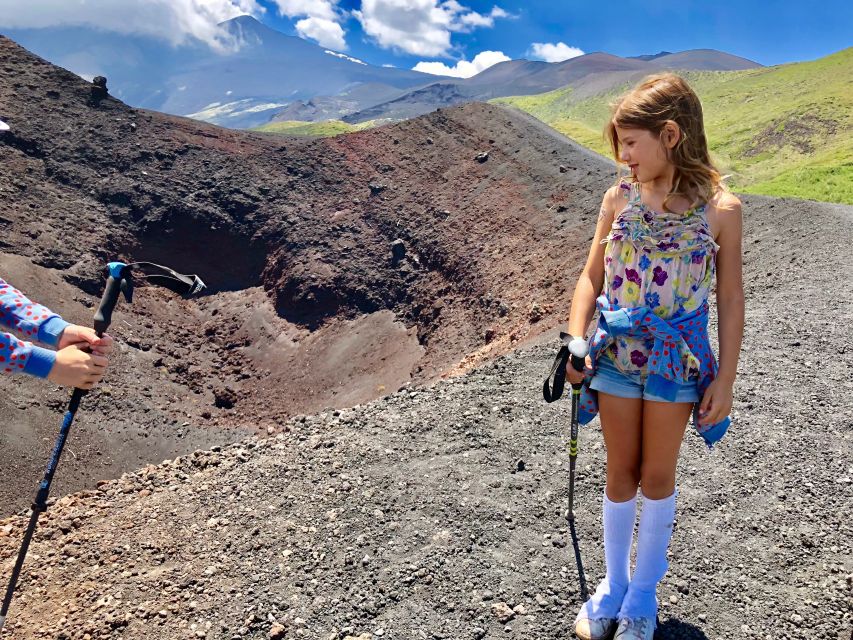
The walk then becomes a practical geology lesson. You encounter features called Hornitos, a name that means small ovens. These small volcanic structures formed around openings where hot material and gases escaped. Their unusual shapes are easier to appreciate when you can examine them beside the larger cones.
You also climb along cinder cones. These are made from loose volcanic fragments thrown from an eruptive vent, so the surface can shift under your feet. This is where the route’s medium training requirement becomes important. The climb is not described as an extreme mountaineering outing, but it is more demanding than a level nature walk.
The ground may be inconsistent and unstable. Use short steps, keep your balance, and follow the guide’s route rather than cutting across a slope. Trekking sticks are not included, so bring your own if you use them regularly. The provider does not rent them as part of the stated package.
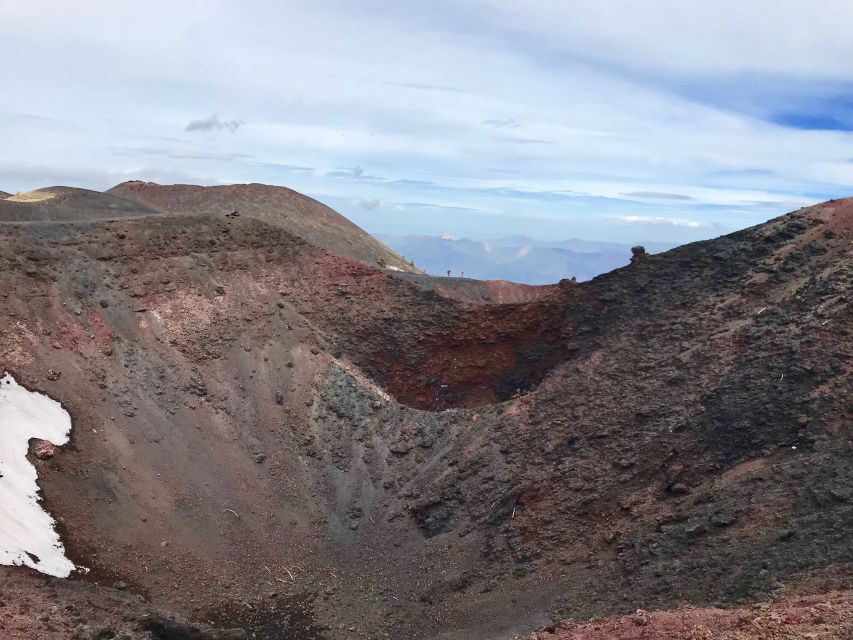
Eruptive fractures add another layer to the story. These cracks mark places where the volcano opened along its flank rather than erupting only from the summit. Your guide can connect these shapes to the series of eruptions that affected Etna’s north side, including the event that threatened Linguaglossa.
More walks and treks around Mount Etna:
- Mount Etna: Trek to 3000m with cable car and jeep
★ 4.7 · 1,978 reviews - Mount Etna: Summit Crater Trek with Cable Car
★ 4.8 · 1,875 reviews - Etna Volcano: South Side Guided Summit Hike
★ 4.7 · 1,545 reviews - Catania: Mount Etna Trekking Trip off the Tourist Path
★ 4.9 · 1,351 reviews
Reaching the crater rims above Piano Provenzana
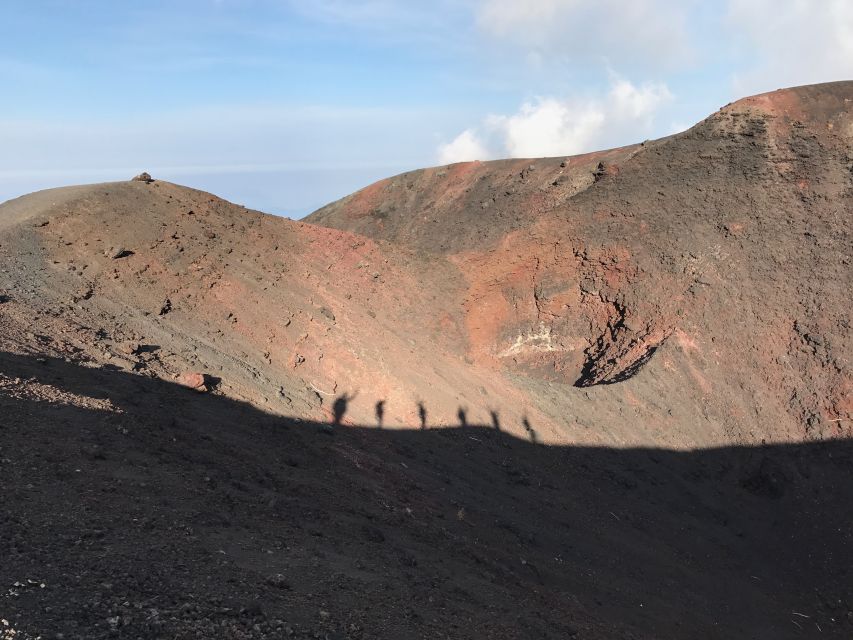
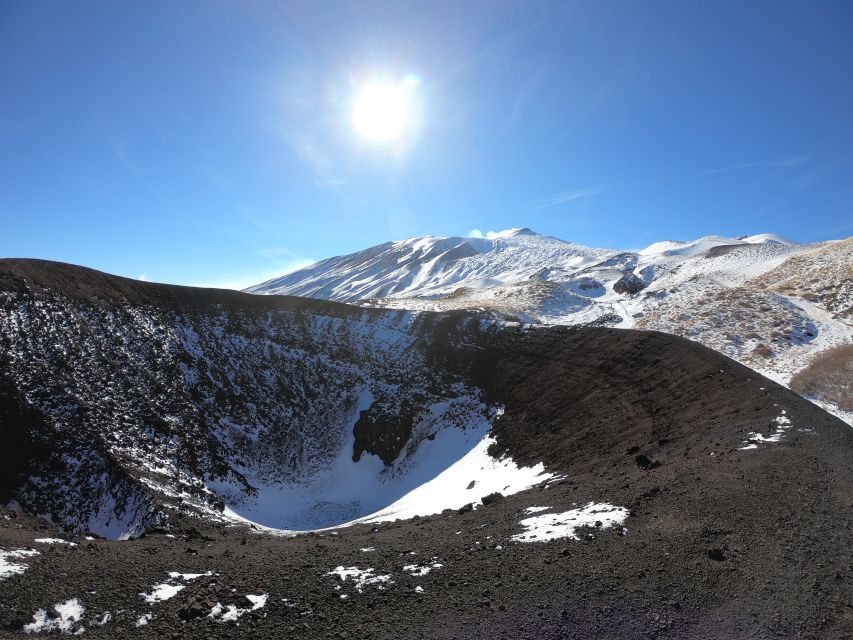
Near the upper section, you look over the edges of the craters and into their sandy channels. This is the point where the outing feels most like a crater trek rather than a walk through a lava field.
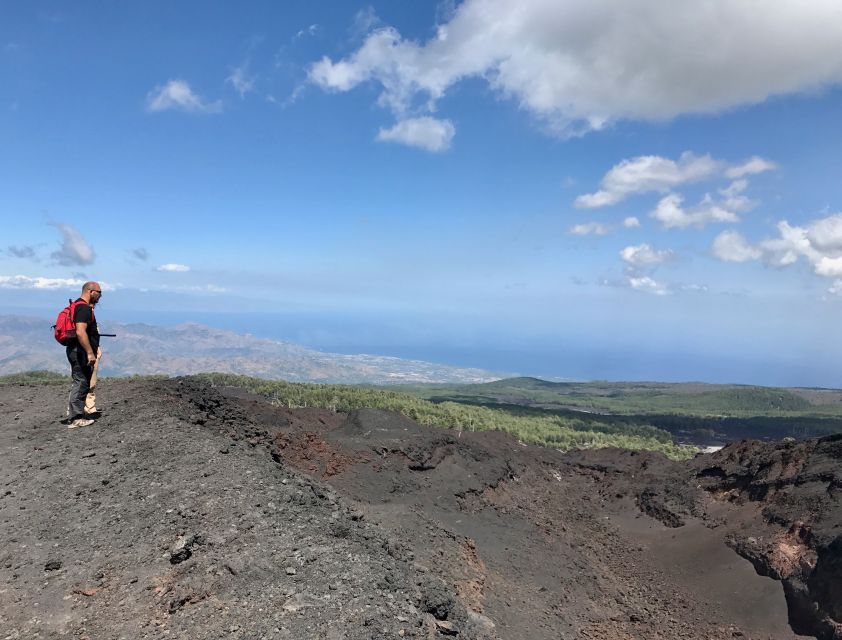
The view reaches across the eruptive theater and toward the Calabrian coast. Clear weather makes a major difference. The north side can be windy, and one account specifically described strong wind as the only serious drawback. Bring a windbreaker even on a sunny day, and pack a warm layer in spring and autumn as well as winter.
Crater edges also require care. The route can cause dizziness for people who are sensitive to heights, and the activity is not suitable for anyone afraid of heights or prone to vertigo. Stay behind the guide’s instructions and do not treat the rim as a place for casual scrambling.
After visiting the upper craters, you descend through a sandy channel to return to the starting point. Walking down loose volcanic material can be harder than walking up it, especially if your knees are tired. Shoes with good grip and clothing that allows free movement make a real difference.
What the guides add to the experience
The guide is central to the value of this tour. You are not simply following a marked route. You are learning how Etna’s eruptions leave different kinds of evidence and why the north side looks the way it does.
The guide roster can vary, but Daniele, Davide, Vincenzo, and Niko have led this excursion. Daniele has been described as attentive to different walking speeds and good at using simple drawings and pictures to explain volcanic processes. Davide brings humor into the commentary, while Vincenzo combines scientific information with an easy manner and has guided in French.
Niko has particular experience with Etna and volcanoes more broadly. The route is also available in Italian, French, and English, so check the language offered for your selected departure.
A useful feature is the guide’s role in managing the group. The route is designed for people with medium training, but the pace is not a race. A slower group can take longer, and the total walking time depends on how quickly everyone moves. The stated minimum is four participants in total.
Who will enjoy this Etna trek most
This experience suits you if you want a close look at Etna’s volcanic features without signing up for a long, technical summit hike. It works well for active adults, older hikers who are comfortable with uneven ground, and families with children over six who can handle a three-hour walk.
The excursion is not automatically easy just because it is short. Some people in their late sixties have found it hard going but worthwhile. Another account described a slow and easy pace with frequent stops, which tells you the actual effort can vary with the group, weather, and route chosen by the guide.
You should be comfortable with:
- Walking uphill on loose volcanic ground
- Following crater edges at high elevation
- Managing wind and sudden changes in weather
- Carrying your own water and snacks
- Walking without a stroller or large bag
The activity is not suitable for children under six, pregnant women, people with back or heart problems, people with mobility impairments, or people with respiratory issues or epilepsy. The provider also excludes those with vertigo or a strong fear of heights.
What to pack, and what to rent
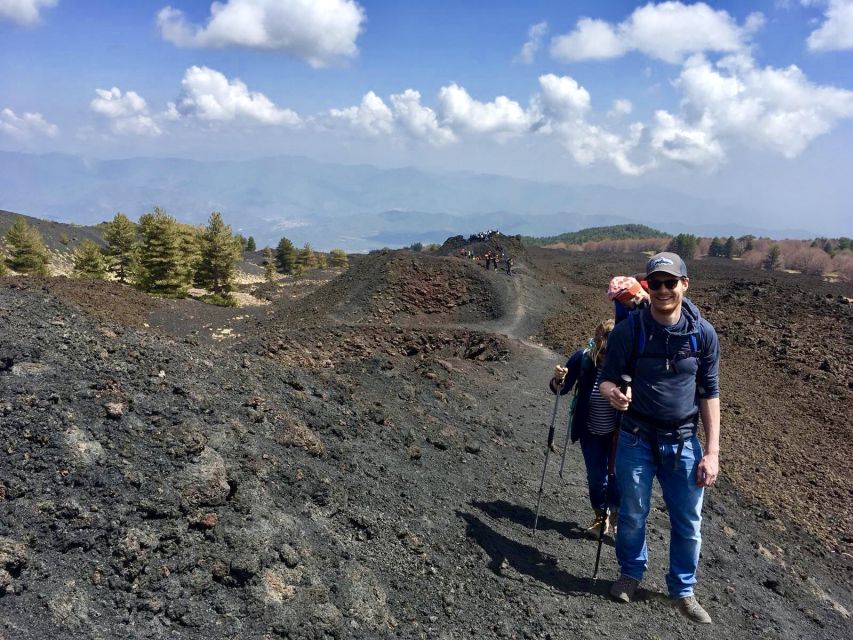
Pack more warmth than you think you need. Etna’s upper slopes can feel cold and windy even when conditions are mild lower down. A windbreaker, jacket, gloves, and hat are sensible, especially from autumn through spring.
Bring hiking shoes, sunglasses, sunscreen, water, snacks, comfortable clothes, and a small daypack. Keep the bag light. Luggage, large bags, skirts, high heels, sandals, slippers, and flip-flops are not allowed.
Trekking shoes can be rented for €5 per pair at authorized rentals near the start. Snowshoes are recommended and rented on site for €12 per person during December, January, February, and March if snow covers the route. Gloves and hats are not supplied, so bring them yourself in cold weather.
Water and snacks are also your responsibility. There is no bottled water or food included in the price. The route lasts about three hours, and a small snack is useful during the stops.
Weather, safety, and route changes
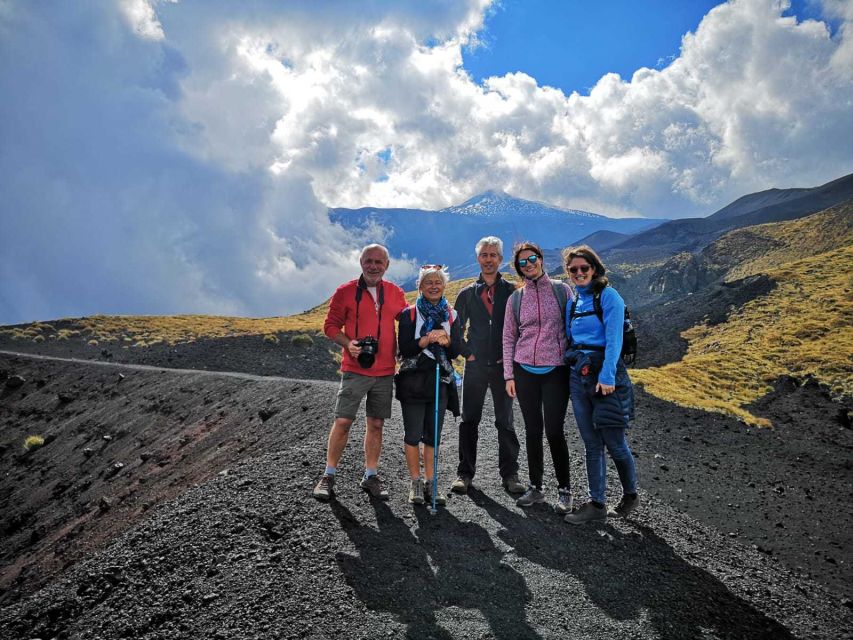
Etna is an active volcano, and conditions can change. The guide may alter or stop the excursion because of weather, climate, or volcanic conditions. That is not a flaw in the operation. It is the sensible response to a mountain where wind, snow, visibility, and volcanic activity matter.
Loose soil is the main physical concern. Take your time on cinder cones and sandy descents, and listen when the guide asks you to stay on a particular line. Walking along crater edges adds exposure, so this is not a good choice if heights or unstable surfaces make you anxious.
The 4.8 rating from 218 ratings reflects strong satisfaction with the guides and the setting, but you should read that alongside the practical warnings. Several people valued the explanations and felt safe with their guide. At the same time, the walk can be strenuous for older participants, and high wind can reduce comfort and views.
Free cancellation is available up to 24 hours before the activity for a full refund. You can also reserve and pay later, which helps if your Etna plans depend on the forecast.
Is the $41 price good value?
At $41, this is good value for a guided introduction to Etna’s north side. The fee covers the official volcano guide and accident insurance, and the guide turns scattered volcanic features into a readable story.
The extras are modest but worth budgeting. Add €3 for parking, €5 if you need trekking shoes, and €12 for snowshoes in snowy months. You also need to provide transport, water, snacks, warm clothing, and trekking sticks if desired.
I would choose this outing over a self-guided walk if you care about geology or want help judging unstable ground. If you already know Etna well and only want exercise, you may prefer a longer independent hike, assuming conditions and access allow it.
Should you book the 2002 eruption trek?
Book it if you want a well-explained, moderate walk through Etna’s recent volcanic past, with crater views and a guide who can make the science accessible. The ruined Hotel delle Betulle, Hornitos, lava streams, and eruptive fractures give the route more substance than a simple viewpoint stop.
Skip it if you want a flat stroll, dislike wind, feel uneasy near crater edges, or are not active enough for three hours on uneven ground. Bring serious footwear and warm layers, and confirm the meeting point at Chiosco Bar Mareneve.
For most fit visitors who want an authentic north Etna experience without committing to a major mountain day, this is a smart, fairly priced choice.
FAQ
How long does the Etna 2002 eruption trek last?
The activity lasts about three hours. The total time can change depending on the group’s walking pace and the conditions on the mountain.
Where does the trek begin?
Meet at Chiosco Bar Mareneve near the winter chairlift at Piano Provenzana. It is the second house of the four buildings in the parking area. Do not go to Chiosco Bar Etna Nord in the lower parking lot.
Is parking included?
No. Parking costs €3 for the whole day and is paid after the excursion.
Are hiking shoes included?
No. You must bring suitable hiking shoes or rent trekking shoes at an authorized rental for €5 per pair. Without adequate shoes, the accident insurance does not apply.
Are snowshoes needed in winter?
If there is snow, snowshoes are recommended. They can be rented on site for €12 per person during December, January, February, and March.
What languages are available?
The live guide service is available in Italian, French, and English.
Who should not take this trek?
The activity is not suitable for children under six, pregnant women, people with mobility impairments, back, heart, or respiratory problems, epilepsy, vertigo, or a fear of heights. It is also not recommended if you do not take part in regular physical activity.
Just added around Mount Etna
- Nicolosi: Excursion Etna Craters at 3000 mt.★ 4.2 · 3 reviews
- Monti Rossi Adventure Park Entry Ticket Full★ 5.0 · 3 reviews
- Full circuit of Etna by MTB small group★ 5.0 · 3 reviews
- Etna & Snorkeling Jeep Tour★ 4.5 · 3 reviews
- From Messina: Mount Etna and Taormina Trip with Tastings★ 5.0 · 3 reviews
- From Catania/Taormina: Mount Etna Private Wine Tasting Tour★ 4.7 · 3 reviews
- Etna Summit Craters in 4×4 and Trekking★ 5.0 · 3 reviews
- Catania: Summit Craters from North Etna with 4×4 vehicles★ 5.0 · 3 reviews
Mount Etna Tours, compared.
Mount Etna Morning or Sunset Day Trip with Tasting
Read our review →
Guided Volcano Summit Hiking Tour with Cable Car
Read our review →
Sunset Jeep Tour of Mount Etna and Lava Flow Caves
Read our review →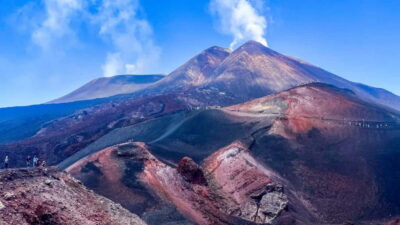
Etna and Alcantara Gorges Full-Day Tour with Lunch
Read our review →
Browse the lists this tour appears in