
Reviewed · PALERMO TOURS
Discover Palermo
Palermo packs centuries of rulers, faiths, and artistic styles into a walkable old center. This tour takes you from the marble Fountain of Shame to Capo Market, with stops at ornate churches, the old Jewish quarter, Palermo Cathedral, and Teatro Massimo.
I like the small group, capped at 10, and the local guides, especially Barbara and Manuela, who are praised for making history clear and keeping children and teenagers interested. I also like the food-market stop, where you can see the city’s everyday side, not just its grand monuments.
The main catch is that church entry fees are extra, and some sites may not be open when you arrive. The walk can also be harder to follow in rain or street noise, since headsets are not provided.
In This Review
- Key points before you book
- A fast introduction to Palermo’s old center
- Piazza Pretoria and the Fountain of Shame
- Quattro Canti, Palermo’s four-sided crossroads
- Santa Caterina, cloisters and sweet traditions
- La Martorana and Palermo’s layered art
- The old Jewish quarter at Giudecca
- Chiesa del Gesù and the Baroque overload
- Via Maqueda and the city’s working streets
- Palermo Cathedral and its many styles
- Capo Market, where Palermo feels most direct
- Teatro Massimo, a grand finish
- Guide quality and the small-group advantage
- What the $54.42 price really buys
- Timing, weather, and practical details
- Who should book this Palermo walk?
- Should you book Discover Palermo?
- FAQ
- How long does Discover Palermo last?
- How much does the tour cost?
- What language is the tour offered in?
- Where does the tour begin?
- Where does the tour end?
- Are church and theater admissions included?
- How many people can join the tour?
- Can I cancel for a full refund?
Key points before you book
- Capo Market is the liveliest part: Expect fruit, vegetables, fish, spices, and chances to try traditional street food.
- Baroque Palermo gets plenty of attention: Santa Caterina and Chiesa del Gesù show off the city’s taste for marble, decoration, and theatrical church interiors.
- The group is genuinely small: A maximum of 10 people should make questions and conversation easier.
- The guides shape the experience: Barbara, Manuela, Lara, and Stefani are praised for warmth, humor, local knowledge, and useful food tips.
- The route is efficient: In about two to three hours, you cover many central sights without needing public transportation.
- Budget for optional admissions: Several churches and Teatro Massimo are not included in the $54.42 price.
A fast introduction to Palermo’s old center
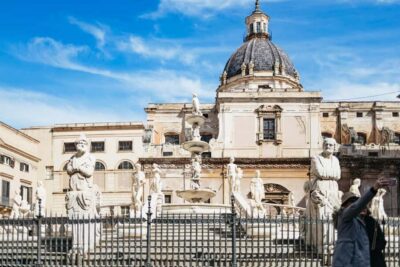
The walk begins at Piazza Pretoria, a good place to meet Palermo face to face. At its center is the grand white-marble Fountain of Shame, surrounded by Palermo’s Town Hall and the Church of Santa Caterina d’Alessandria.
From there, the route moves through the historic center on foot. You get a useful first look at Palermo’s mix of Norman, Baroque, religious, Jewish, and civic landmarks. I see this as a strong first-day activity because it helps you understand the layout before you return to the places that deserve more time.
The tour is offered in English and normally lasts two to three hours. It is priced at $54.42 per person, which is fair if you value a local guide and a compact orientation. It is less of a bargain if you plan to skip the optional interiors and only want a quick outside view of the monuments.
Other Palermo trips travellers book alongside this one:
- Palermo: NO Mafia Walking Tour
★ 4.8 · 2,431 reviews - Palermo: Hop-on Hop-off Bus Tour 24-hour Ticket
★ 3.9 · 2,410 reviews - Palermo Original Street Food Walking Tour by Streaty
★ 5.0 · 2,105 reviews
Piazza Pretoria and the Fountain of Shame
Piazza Pretoria is more than a photo stop. The fountain dominates the square with rows of marble figures, while the surrounding buildings show how public power and religious authority shared this part of Palermo.
The guide can explain the nickname Fountain of Shame, a name linked to the nude statues and the reaction they caused. You also see Palazzo delle Aquile, Palermo’s Town Hall, and the exterior of Santa Caterina, a church that gives you an early hint of the city’s decorative Baroque style.
The scheduled stop lasts about 20 minutes. That is enough for an introduction and photos, but not enough for a close study of every statue or architectural detail. If you want a quiet look at the fountain, arrive a little early before the group gathers.
Quattro Canti, Palermo’s four-sided crossroads
A short walk brings you to Quattro Canti, the famous Baroque junction at the heart of Palermo’s old center. Four curved façades frame the crossing, each decorated with statues, columns, and layered details.
This is one of the best places to understand Palermo’s historic street plan. The four corners create a formal gateway in every direction, yet modern traffic and foot traffic flow around them. Your guide will likely explain the symbolic arrangement and point out details that are easy to miss when you are simply passing through.
The stop is planned for around 15 minutes. It is brief, but sensible. Quattro Canti works best as part of the larger walk because its meaning becomes clearer when you see how it connects the main streets and squares.
Santa Caterina, cloisters and sweet traditions
Santa Caterina d’Alessandria is one of the most rewarding stops, though you should pay attention to the admission arrangement. The beautiful cloister and the former Dominican monastery’s confectionery are part of the visit, while entry to the Baroque church requires an extra ticket.
The monastery gives the tour a more intimate side. Instead of only looking at grand façades, you get a sense of the enclosed religious world that once shaped daily life in Palermo. The monastic confectionery is also a memorable link between local food and religious tradition.
The stop lasts about 20 minutes. That is enough to see the cloister and hear the main explanation, but you may want to return later if the church’s marble work catches your eye. The extra fee is small according to the supplied information, but several paid entries can add up, so keep a few euros aside.
Same island, a completely different day out:
- Segesta, Erice and Salt Pans Full-Day Excursion from Palermo
★ 4.2 · 1,791 reviews - Palermo: Teatro Massimo Opera House Guided Tour
★ 4.5 · 1,573 reviews - From Palermo: Monreale and Cefalù Half-Day Trip
★ 4.2 · 1,354 reviews - Palermo: Street Food and History Walking Tour
★ 4.9 · 1,294 reviews
La Martorana and Palermo’s layered art
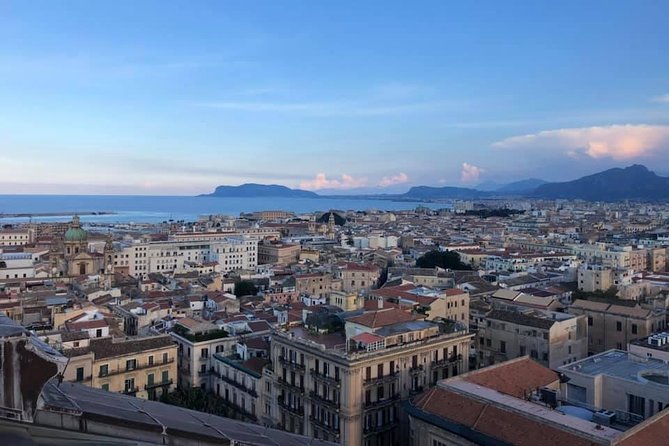
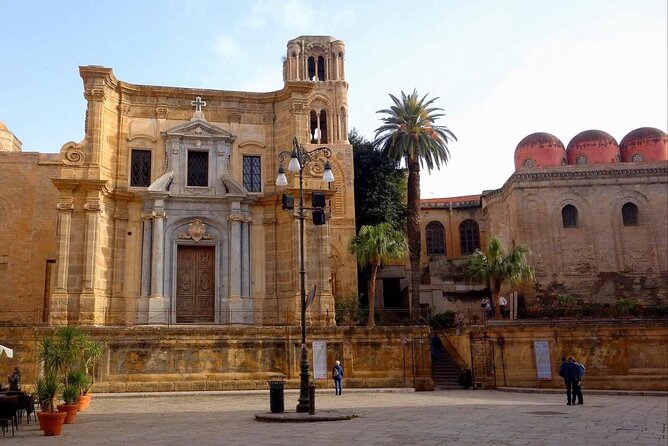
Santa Maria dell’Ammiraglio, better known as La Martorana, is one of Palermo’s most important churches. It brings together Norman and Baroque elements, showing how the city’s buildings changed as different rulers and artistic tastes took hold.
The attraction here is contrast. You may see older decorative traditions alongside later additions, rather than one perfectly uniform style. That makes La Martorana useful for understanding Palermo’s habit of building, adapting, and redecorating over the centuries.
The church is available only when the site permits visits. If it cannot be entered, the route may use the Church of Jesus as an alternative or include both, depending on access. Admission is not included, so confirm the day’s plan with your guide and expect to pay separately if you go inside.
The old Jewish quarter at Giudecca
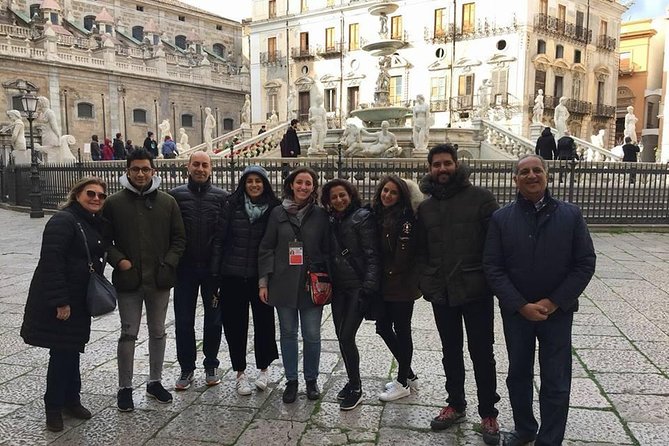
The walk continues into Giudecca, part of the Meschita neighborhood where Palermo’s Jewish community lived until its expulsion in 1493. This is a valuable stop because it adds a human story to the city’s architecture.
The visit is not simply about another old street. It helps you see Palermo as a place shaped by communities that lived, worked, worshiped, and traded here before political decisions changed the city. The 15-minute visit is short, but it gives you a piece of the city’s past that can be easy to overlook when focusing only on churches and palaces.
You will not get a separate museum visit here. Think of Giudecca as a walking-history stop, where the guide uses the streets and neighborhood setting to explain what once occupied this part of Palermo.
Chiesa del Gesù and the Baroque overload
Chiesa del Gesù is the tour’s most dramatic church interior. Its Palermo Baroque decoration uses marble in abundance, with intricate surfaces that can feel almost overwhelming after the simpler streets outside.
This is a good place to let your eyes adjust slowly. Look at the walls, columns, chapels, and patterned details rather than trying to take in the entire room at once. The church shows how decoration could be used to express power, faith, and wealth.
The planned visit lasts about 25 minutes, making it one of the longer stops. Entry is extra. That cost is worth considering if ornate church interiors are a major reason you are visiting Palermo, but you may prefer to save your budget for another site if you have already seen several paid churches.
Via Maqueda and the city’s working streets
The tour follows the city’s oldest and most important street, lined with noble palaces, shops, and Sicilian craft businesses. The supplied route does not name this stop, but its role is clear: it connects the monuments while showing Palermo as a lived-in city.
This section can be especially useful after the churches. You move from formal religious spaces to ordinary storefronts and street activity. Look for the change in scale, from grand façades to small shops and daily commerce.
Do not expect a long shopping break. The point is to walk through a central artery and understand how the old center functions today. If you see a craft or food shop you want to revisit, note its location because the group will continue at the tour’s pace.
Palermo Cathedral and its many styles
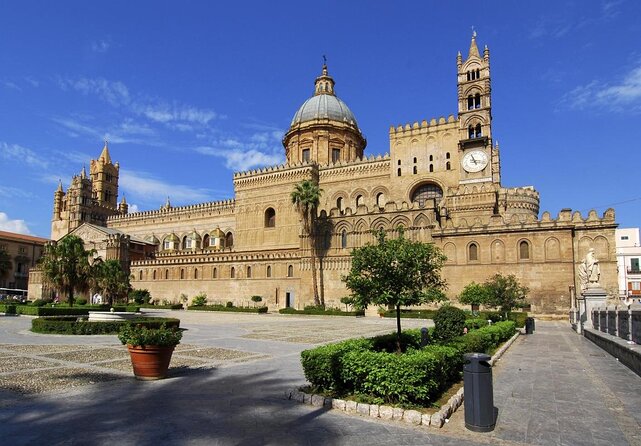
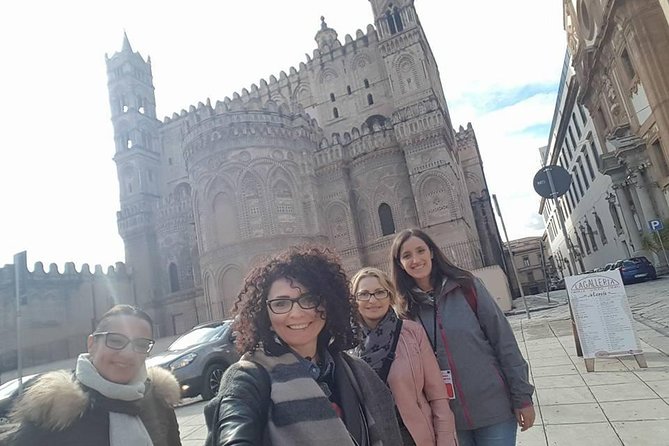
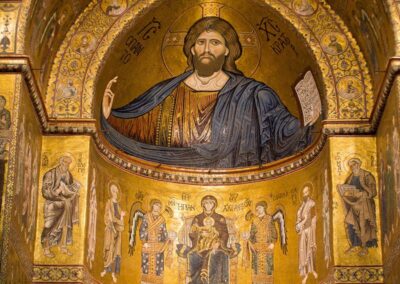
Palermo Cathedral is one of the route’s big landmarks. Its exterior reflects several periods and cultures, and the building is important not only for its appearance but also for the tombs of Norman kings and the silver chapel of Santa Rosalia.
The cathedral helps tie together much of what you have seen earlier. Palermo’s architecture rarely fits into one neat category, and this church is a clear example. Its changing styles reflect the city’s long sequence of rulers, religious influences, and building campaigns.
The scheduled stop lasts around 20 minutes and admission is listed as free for the tour. That does not mean every area or special section has identical access, so follow the guide’s instructions on the day. If the cathedral interests you, plan a separate return visit rather than trying to inspect every detail during a moving group walk.
Capo Market, where Palermo feels most direct
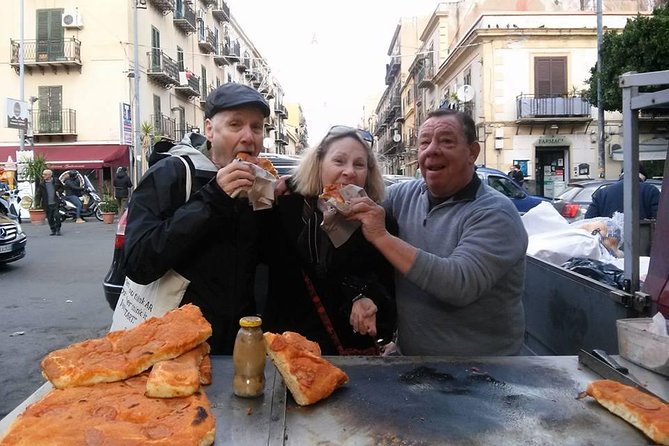
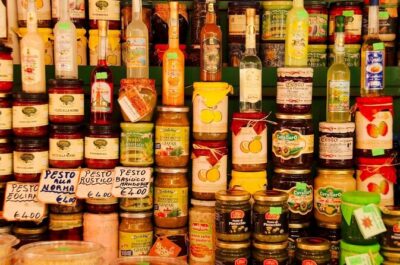
Capo Market is the tour’s strongest everyday experience. Stalls run through the historic food market with fruit, vegetables, fish, spices, and other ingredients that show how Palermo shops and eats.
I would pay close attention here. The market is not polished for sightseeing, and that is precisely its value. You see food laid out for local use, hear the noise of vendors and shoppers, and get a better sense of the city beyond its stone monuments.
Several tour guides offer food suggestions, including advice on arancini and cannoli. The supplied information also notes traditional street-food sampling, though the exact tasting arrangements are not specified. Ask before buying so you know what is included and what you are paying for yourself.
The market stop lasts about 20 minutes. That is enough to get a taste, but not enough for a leisurely food crawl. If Capo becomes your favorite part, return later with an appetite and more time.
Teatro Massimo, a grand finish
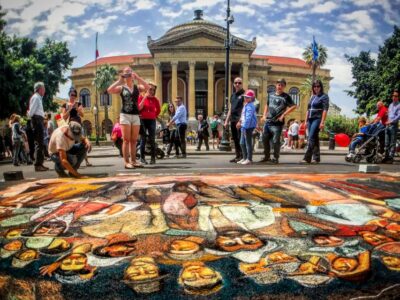
The walk ends at Piazza Giuseppe Verdi, dominated by Teatro Massimo. The neoclassical opera house is described as the largest in Italy and the third largest in Europe, making it a fitting final landmark after Palermo’s churches and narrow historic streets.
The square gives you room to step back and take in the building’s size. After the dense decoration of Santa Caterina and Chiesa del Gesù, Teatro Massimo offers a different kind of spectacle: broad steps, formal symmetry, and civic grandeur.
The planned stop lasts around 15 minutes. Entry to the theater is not included, so the tour normally gives you an exterior introduction rather than a full theater visit. If you want to see inside, check the separate admission arrangements before booking or ask the guide for current options.
Guide quality and the small-group advantage
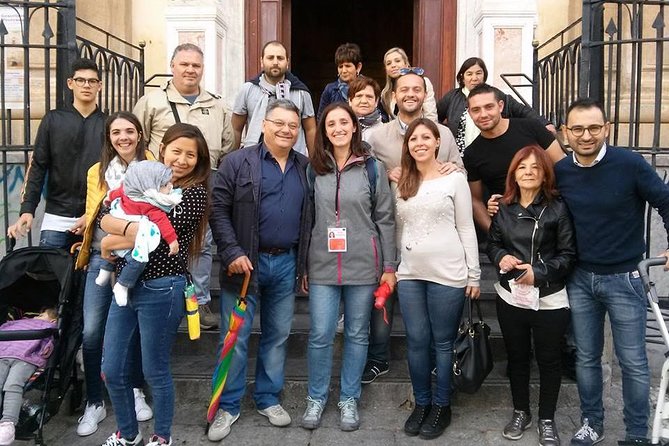
The strongest thread running through the supplied feedback is the quality of the guides. Barbara is repeatedly praised for her warmth, humor, food advice, and ability to connect with children and teenagers. Manuela is noted for detailed explanations and a strong grasp of Palermo and Sicilian history. Lara is described as personable and entertaining, while Stefani is praised for bringing old buildings to life with useful details.
That does not mean every guide will use the same style. One person found the presentation dry, and another had trouble hearing in street noise. The tour does not provide headsets, so stand close to the guide and speak up if you cannot hear.
A maximum of 10 people is a real advantage here. You are not being moved through Palermo in a large crowd, and a small group gives you a better chance to ask about food, churches, or places to return to later. The experience seems especially suitable for families, since several guides have been able to hold teenagers’ attention.
What the $54.42 price really buys
At $54.42, the price pays for a guided walk through a dense section of central Palermo, not for a package of museum and church admissions. Several interiors require payment by you, including Santa Caterina’s church, La Martorana when open, Chiesa del Gesù, and Teatro Massimo.
I think the value depends on how you use the guide. If you want context, orientation, and help making sense of Palermo’s competing styles, the fee is reasonable for a small English-language group. If you are comfortable reading signs and visiting churches alone, you may find the cost harder to justify.
The tour’s efficiency also matters. In two to three hours, you cover a lot of ground and finish near one of Palermo’s major landmarks. You will not study every church in detail, but you will know which ones deserve a return visit.
Timing, weather, and practical details
The meeting point is Piazza Pretoria, while the walk ends at Piazza Giuseppe Verdi beside Teatro Massimo. Both are central locations near public transportation, and the route is conducted on foot.
Most people can take part, and service animals are allowed. The tour is offered in English, with a mobile ticket and confirmation at booking. Wear comfortable shoes, since the experience links several central sights on foot, and keep small cash available for optional admissions and food purchases.
Weather can affect the outing. The experience requires good weather, and poor conditions may lead to a different date or a full refund. If rain is forecast, bring protection and understand that wet streets, noise, and crowded covered areas can make it harder to hear the guide.
Cancellation is free up to 24 hours before the start time. Cancellations or changes made less than 24 hours in advance are not accepted for a refund, and the cut-off follows Palermo local time.
Who should book this Palermo walk?
I would choose this tour for a first day in Palermo, especially if you want a quick map of the old center and an explanation of what you are seeing. It also suits families who want a guide able to keep younger visitors involved, and anyone who prefers a small group over a large city walk.
Food lovers should value the Capo Market stop, though you should not treat it as a full meal tour. Art and church fans will appreciate the Baroque interiors, provided they are willing to pay the extra entry fees.
I would hesitate if you want long, quiet visits inside every building, a fully accessible indoor route in poor weather, or a tour with all admissions included. You should also confirm which churches are open on your date, since La Martorana is subject to site availability.
Should you book Discover Palermo?
Yes, if you want an efficient introduction led by a local English-speaking guide. The combination of Baroque churches, Palermo Cathedral, Giudecca, Capo Market, and Teatro Massimo gives you a broad first look at the city, while the 10-person limit keeps the walk personal.
Book it with realistic expectations. You are paying mainly for interpretation and structure, not a long series of included admissions. Arrive on time, budget for church entries, stay close enough to hear, and return to Capo Market or your favorite church afterward if the short visit leaves you wanting more.
FAQ
How long does Discover Palermo last?
The walking tour lasts approximately two to three hours.
How much does the tour cost?
The listed price is $54.42 per person.
What language is the tour offered in?
The experience is offered in English.
Where does the tour begin?
The meeting point is Piazza Pretoria, 90133 Palermo, Italy.
Where does the tour end?
The tour ends at Piazza Giuseppe Verdi, beside Teatro Massimo.
Are church and theater admissions included?
No. Admission fees for Santa Caterina’s church, La Martorana, Chiesa del Gesù, and Teatro Massimo are not included. La Martorana is visitable only when the site is available.
How many people can join the tour?
The tour has a maximum of 10 travelers.
Can I cancel for a full refund?
Yes. You can cancel at least 24 hours before the experience start time for a full refund. Poor weather may also result in a different date or a full refund.
Just added around Palermo
- Anti-Mafia Heroes (Cool Hours) Morning Walking Tour★ 5.0 · 3 reviews
- The art of the Italian Aperitivo with a local: Learn & Enjoy in Palermo★ 5.0 · 3 reviews
- Private transfer from Palermo airport to Mercure Palermo Centro or vice versa★ 5.0 · 3 reviews
- ERICE and SEGESTA Private Exclusive Tour starts from Palermo with Guide Driver★ 4.0 · 3 reviews
- Private 10 hour tour to Agrigento (Valley of the Temples) from Palermo★ 5.0 · 3 reviews
- Palermo Private MINITOUR of WEST SICILY 4 Days with Guide Driver★ 5.0 · 3 reviews
- The Best Of Sicily and Sorrento & Culinary Experiences, Deluxe★ 5.0 · 3 reviews
- Transfer from Palermo Airport to Scopello and Tonnara di Scopello★ 5.0 · 3 reviews
Palermo Tours, compared.
Palermo Original Street Food Walking Tour by Streaty
Read our review →
Segesta, Erice and Salt Pans Full-Day Excursion from Palermo
Read our review →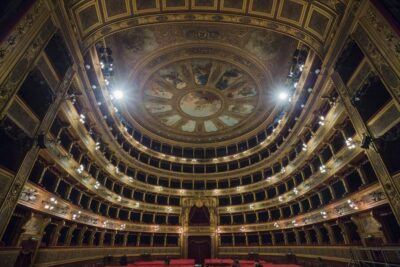
Agrigento and the Valley of the Temples Day Tour
Read our review →Browse the lists this tour appears in