
Reviewed · COOKING CLASSES
Cooking Class Arancini in Catania
The best part of this Catania class is that you learn arancini from the inside out: how to cook the rice, prepare several fillings, shape the rice, and give it that crunchy Sicilian coating. You also make almond paste, a sweet local staple that balances the savory meal.
I like the small group of up to six, which gives you room to ask questions and work directly with the chef. I also like the generous tasting at the end, with several arancini, almond paste, Sicilian wine, coffee, and possibly leftovers to take home. One point to consider: the recipe booklet may not provide enough detail for every cook, especially the rice quantities and method, so take careful notes during class.
In This Review
- Key points at a glance
- Making arancini in a Catania laboratory
- The three-hour class, step by step
- Almond paste adds a sweet Sicilian finish
- The tasting is part of the lesson
- Why the six-person limit matters
- Food quality and the chef’s teaching style
- The recipe booklet needs a little help from you
- Who will get the most from this class
- Location, timing, and language
- Is the class good value?
- Practical tips before you go
- Should you book it?
- FAQ
- Where does the cooking class take place?
- How long does the class last?
- What will I learn to cook?
- Are vegetarian fillings available?
- What food and drinks are included?
- What languages are spoken?
- How many people can join the class?
- Do I receive recipes to take home?
Key points at a glance
- Two classic Sicilian recipes: Make both savory arancini and sweet almond paste in one three-hour session.
- Rice-to-crust instruction: Learn the less obvious steps, including rice preparation, filling, shaping, and crunchy breading.
- Small, personal setting: Groups are limited to six, with some sessions running with only two people.
- Vegetarian options: Fillings can include vegetarian choices if requested or available.
- Food and drink included: Taste your work with Sicilian-style wine, water, and coffee.
- Recipes to take home: Receive a booklet, but write down missing quantities and rice instructions as you go.
Making arancini in a Catania laboratory
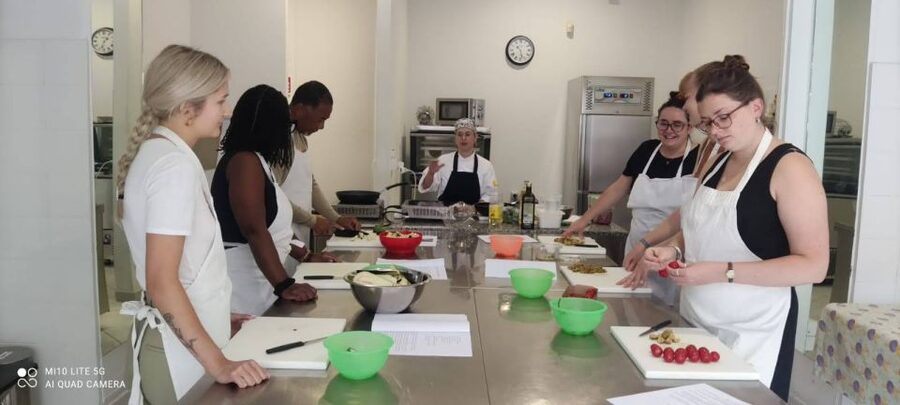
This is a hands-on lesson in a real cooking laboratory, not a quick demonstration followed by a snack. The focus is on two foods that are strongly linked with Sicily: arancini and almond paste.
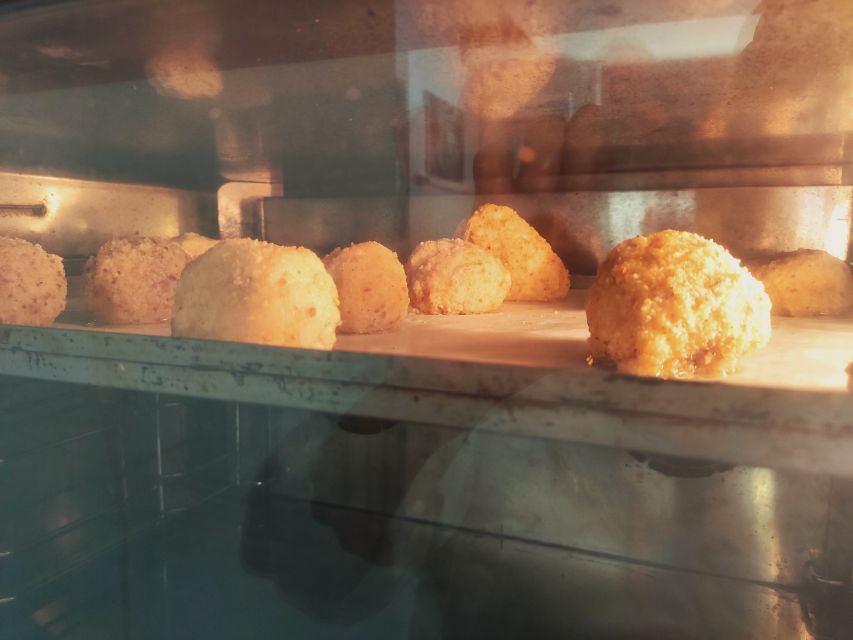
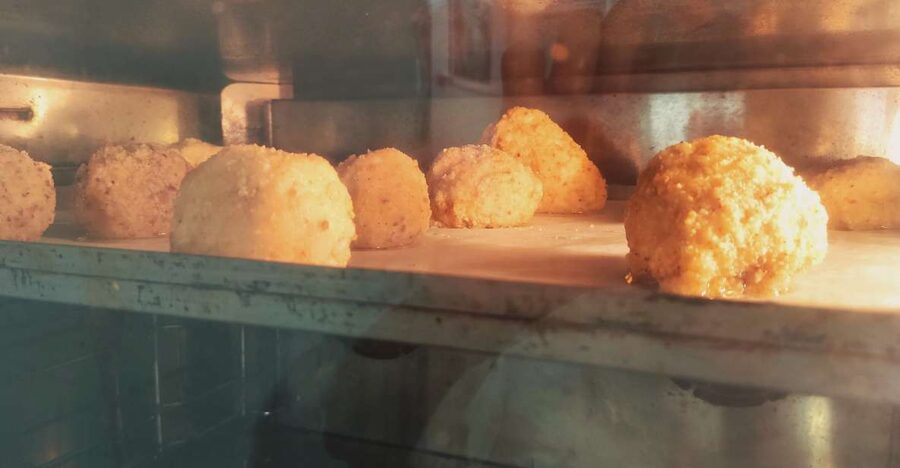
Arancini are rice-filled snacks, usually shaped into balls or cones, coated, and fried until crisp. The technique looks simple when you see the finished result, but the rice must hold together, the filling must sit in the center, and the coating must stay put during cooking.
That is why the rice lesson matters. You are shown how the rice should be cooked before you begin shaping. You then work through the fillings, assemble the arancini, and learn the breading method that creates the crisp outer shell.
The class is led by a professional chef, with instruction in English or Italian. Agata is named as an excellent chef and teacher by a past participant, so you can ask at booking if she will be teaching your session. The available information does not promise a specific instructor for every date.
More Cooking Classes in Catania
- Catania: Pistachio Ravioli, Pasta Home Cooking Class w/ Wine
★ 4.7 · 204 reviews - Cooking lesson in Catania with lunch or dinner
★ 5.0 · 154 reviews - Catania: Market Tour and Cooking Class with Chef Riccardo
★ 5.0 · 40 reviews
The three-hour class, step by step
The session starts with the rice, the part many home cooks might otherwise rush. You learn the texture needed for arancini and how the rice is prepared so it can be shaped later.
This is also the moment to pay close attention and take notes. One booklet was found to have incomplete instructions, including no clear quantities for the rice. The method was explained verbally, but a cook hoping to recreate the dish at home should record the measurements and timing during the lesson.
Next come the fillings. The class includes different types of filling, giving you the chance to compare flavors rather than make just one standard version. Vegetarian fillings may be available, which is useful if you do not eat meat or simply want more variety.
You then place the filling inside the rice and learn to shape the arancino. This is the practical heart of the lesson. The rice must be firm enough to hold its form, while the filling needs to stay enclosed. It is a tidy process once you get the hang of it, but the chef’s guidance helps you avoid splitting or overfilling.
The final savory step is the breading. You are taught how to coat the arancini so the outside becomes crunchy when cooked. That contrast between crisp coating, tender rice, and soft filling is the reason arancini are so satisfying, and the class gives you the full process rather than only the finished bite.
Almond paste adds a sweet Sicilian finish
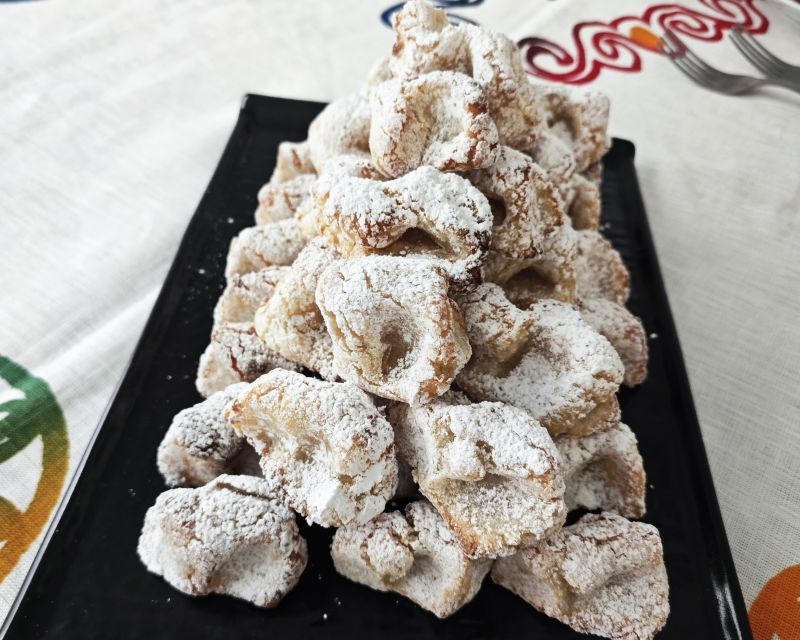
The second recipe is Sicilian almond paste. This makes the class more than a single-focus lesson and gives you a useful sweet preparation to remember.
The almond paste also changes the pace of the class. After working with rice and fillings, you move to a different kind of mixture and learn how a traditional almond-based sweet is made. The information provided does not specify the exact shapes or final presentation, so expect instruction in the preparation rather than a fixed pastry display.
I like this pairing because it reflects the way Sicilian food moves between savory and sweet. You leave having worked with two very different preparations, and the almond paste may be easier to repeat at home than the arancini if your kitchen setup is limited.
The tasting is part of the lesson
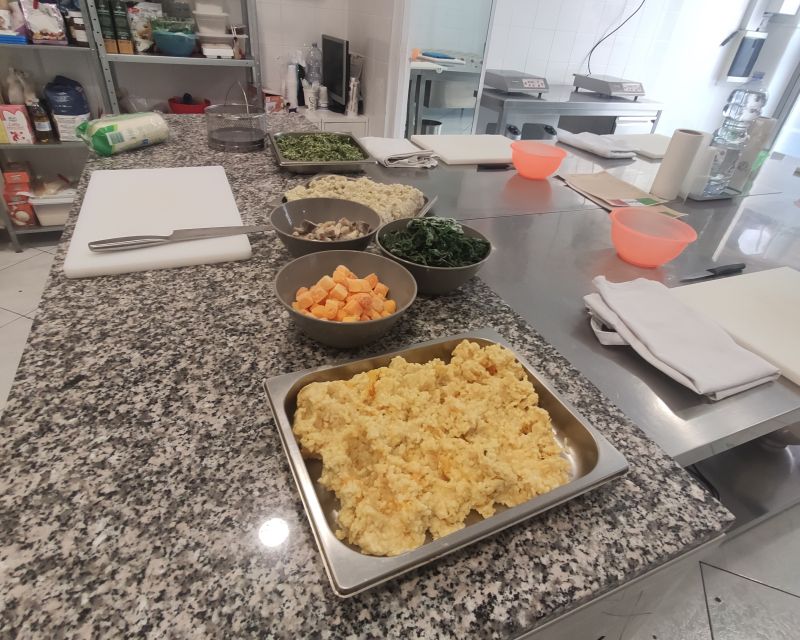
At the end, you taste the different arancini and the almond paste made during the class. Sicilian-style wine, water, and coffee are also offered.
This final meal is not an afterthought. Tasting several fillings side by side helps you understand how the choices affect the finished dish. It also gives you a chance to see how the arancini should feel when properly cooked: crisp outside, cohesive in the middle, and filled without becoming heavy.
One participant reported having enough food left to take home, but this should not be treated as a guarantee. The amount depends on the group, the recipes prepared, and how much everyone eats during the tasting.
The social side is another strength. In at least one small session, two people prepared a different dinner and shared what they made. That suggests the format can be friendly and communal, even when everyone is not working on exactly the same food.
More Sicilian cooking classes in Catania:
- Catania: Pasta & Tiramisu Cooking Class at a Local’s Home
★ 4.8 · 39 reviews - Catania: Pizza Cooking Class
★ 4.9 · 18 reviews - Cooking class fresh pasta
★ 4.8 · 17 reviews - Cesarine: Home Cooking Class & Meal with a Local in Catania
★ 4.5 · 10 reviews
Why the six-person limit matters
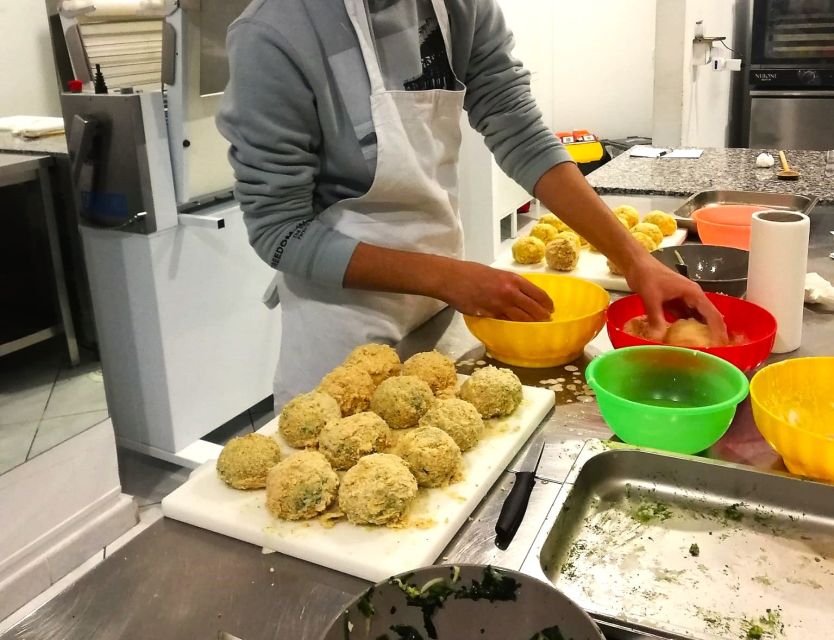
The group is limited to six participants. That is a useful size for a cooking class because you are not standing at the back of a crowded room trying to see a demonstration.
Some sessions may be even smaller. One booking had only two people, creating a very personal class with plenty of contact with the chef. A small group also makes it easier to ask about rice texture, filling amounts, shaping, or breading without waiting for a long line of other participants.
The tradeoff is that a small class may feel less lively if you prefer a large social event. The format is better for learning and conversation than for a noisy party atmosphere.
Food quality and the chef’s teaching style
The strongest praise centers on the chef’s manner and the food itself. The class has been described as fun, informative, friendly, and well explained. English instruction has also been praised, which matters if you do not speak Italian.
Past sessions have included guides who were hospitable and good at explaining the process. Agata, specifically, is described as an excellent chef and teacher. Still, instructor assignments can vary, so confirm the teaching language and instructor if those details matter to you.
The class appears to balance instruction with enjoyment. You are not simply handed ingredients and left to figure things out. At the same time, the setting is not described as a formal culinary school, so expect a relaxed practical lesson rather than technical restaurant training.
The recipe booklet needs a little help from you
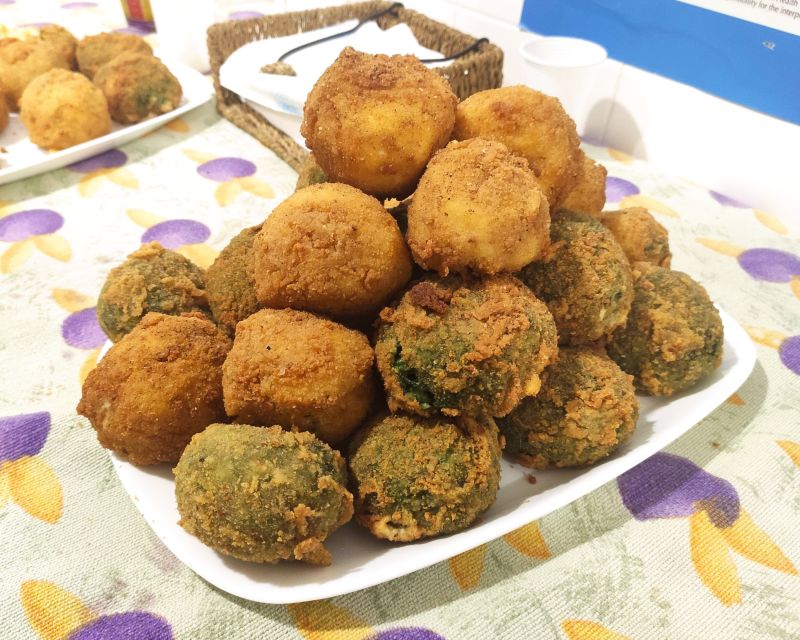
A recipe booklet is included at the end, which is valuable if you want to make arancini and almond paste for friends or family.
There is one important caution. At least one booklet had only two copied recipes and lacked complete instructions. The missing information included how to make the rice and the quantities for ingredients such as cheese, butter, and saffron.
My advice is simple: bring your phone or a small notebook and write down the details as the chef explains them. Ask for quantities, cooking times, rice texture, and the exact order of assembly. The booklet can serve as a useful reminder, but you should not rely on it as the only record of the class.
This is especially important for arancini because rice consistency controls the whole result. If the rice is too loose, shaping becomes difficult. If it is too dry, the finished arancino may not hold together properly.
Who will get the most from this class
This class suits you if food is one of the main reasons you visit Sicily and you want more than a market tasting. It is also a good choice for couples, friends, and solo visitors who like a small group and direct contact with a chef.
You do not need to be an experienced cook based on the way the class is presented. The steps are explained from the rice onward, and the chef guides you through filling, shaping, and breading.
It is particularly useful for:
- People who want to recreate Sicilian food at home
- Visitors seeking an indoor activity on a hot Catania day
- Couples who prefer a shared meal with a practical element
- Vegetarians who want to ask about meat-free fillings
- Anyone curious about both Sicilian savory food and almond-based sweets
The activity is not suitable for babies and very young children. The supplied information lists restrictions for children under two, three, and four years, as well as babies under one year. Since the categories overlap, check the exact age rule for your booking before you reserve.
Location, timing, and language
The meeting point is a cooking laboratory at the listed coordinates, 37.51484298706055, 15.102240562438965. No hotel pickup or transport is included in the supplied details, so plan to make your own way to the laboratory and allow time to find the entrance.
The class lasts three hours. Start times vary, so you need to check availability for your chosen date. Three hours is long enough to cover the rice, fillings, shaping, breading, almond paste, and tasting without turning the activity into a rushed demonstration.
Instruction is available in English and Italian. If you have dietary needs, ask about vegetarian fillings before or at the start of the class. The information confirms the possibility of vegetarian fillings, but it does not list allergy procedures or promise specific substitutions.
Is the class good value?
No price is supplied here, so I cannot judge the exact cost against other Catania cooking classes. I can judge what you receive: three hours of instruction, hands-on preparation, a tasting of multiple arancini and almond paste, wine, water, coffee, and recipes to take home.
That package offers better value than a simple food tasting if you will actually use the techniques later. You are learning a complete process and eating the result, rather than paying only for a finished plate.
The value is weaker if your main goal is a polished dinner with no work. You spend part of the session preparing food, and the recipe booklet may require your own notes to become fully useful.
The small group also matters when comparing prices. A six-person limit, and the chance of a two-person class, gives you more attention than a large workshop. For many people, that personal instruction is the main reason to choose this activity.
Booking flexibility helps reduce the risk. You can cancel up to 24 hours in advance for a full refund, and the reserve-now, pay-later option lets you hold a place without paying immediately. Check the terms attached to your selected booking, since start times and availability can change.
Practical tips before you go
Arrive ready to work, not just watch. Wear clothing you do not mind cooking in, though no specific dress code is provided.
Keep your phone nearby for notes. Record the rice ingredients and quantities first, then the filling amounts, shaping method, breading sequence, and almond paste measurements.
If you are vegetarian, raise the request early. The class allows for vegetarian fillings, but the exact choices are not listed.
Do not plan a large meal immediately afterward. The tasting includes several kinds of arancini, almond paste, wine, water, and coffee, and the food may be substantial. You might also have leftovers, depending on the group and the amount prepared.
Finally, confirm the meeting point carefully. The activity begins at the laboratory rather than at a general city-center meeting spot, and no transfer service is listed.
Should you book it?
Book this class if you want to understand how arancini are made and you enjoy learning by doing. The combination of a small group, a professional chef, several fillings, almond paste, and a sit-down tasting gives you a clear taste of Sicilian cooking in one compact activity.
I would be more cautious if you need perfectly written take-home recipes. The booklet may be incomplete, so plan to take your own notes. If that small flaw does not bother you, the class offers a warm, practical way to spend three hours in Catania, especially on a hot day or when you want a break from sightseeing.
FAQ
Where does the cooking class take place?
The class meets at a cooking laboratory in Catania, Sicily. The listed coordinates are 37.51484298706055, 15.102240562438965.
How long does the class last?
The cooking class lasts three hours. You need to check availability for the starting time on your chosen date.
What will I learn to cook?
You will learn to prepare Sicilian arancini and almond paste. The arancini lesson covers the rice, fillings, shaping, and crunchy breading.
Are vegetarian fillings available?
Vegetarian fillings are possible. Ask about the available options when you book or at the beginning of the class.
What food and drinks are included?
The final tasting includes different types of arancini and almond paste. Sicilian-style wine, water, and coffee are also offered.
What languages are spoken?
The instruction is available in English and Italian.
How many people can join the class?
The group is limited to six participants. Some sessions may have fewer people, including only two participants.
Do I receive recipes to take home?
Yes. You receive a booklet with the recipes at the end of the lesson. Since some instructions may be incomplete, take notes during the class, especially for the rice quantities and method.
More Workshops in Catania
- Private Catania Pasta-Making Class in a Local Home by Cesarine
★ 5.0 · 27 reviews - Catania: Private Cooking Class at a Local’s Home
★ 4.9 · 9 reviews - Cooking Class with lunch or dinner
★ 4.9 · 7 reviews - Cooking class, visit to the Catania market and light lunch
★ 5.0 · 7 reviews
Just added around Catania
- Catania AIRPORT transfer From / To Taormina★ 5.0 · 3 reviews
- Catania : Diving for patented divers★ 5.0 · 3 reviews
- Transfer Catania / Agrigento Airport★ 5.0 · 3 reviews
- Taormina: exclusive tour with food, drinks, and sunset, pick-up from Catania★ 5.0 · 3 reviews
- From Catania/Taormina: Mount Etna Private Wine Tasting Tour★ 4.7 · 3 reviews
- From Catania: Day Trip to Giardini Naxos and Taormina★ 5.0 · 3 reviews
- Catania: Summit Craters from North Etna with 4×4 vehicles★ 5.0 · 3 reviews
- Catania: Guided Street Food Tour with Tastings★ 5.0 · 3 reviews
Cooking Classes, compared.
Seaview Cooking Class & Taormina local flavors with Chef Mimmo
Read our review →
COOKING CLASS in Taormina at Chef Massimo HOUSE!!
Read our review →
Cannolo Cooking Class with Completion Certificate
Read our review →
Pistachio Ravioli, Pasta Home Cooking Class w/ Wine
Read our review →Browse the lists this tour appears in