
Reviewed · ORTIGIA TOURS
Classical Ortigia Guided Group Tour
The most striking feature here is Syracuse Cathedral, a Baroque church built into an ancient Greek temple. That single stop gives you a quick lesson in how Ortigia was rebuilt, reused, and reshaped across centuries. I like the route’s mix of major sights and smaller lanes, and I like that guide Eva has been praised for making the history clear without rushing. The main consideration is time: two hours gives you a strong introduction, not a full visit to every interior.
I also like the low price, about $30.12 per person, and the optional cathedral entry, just €2. You can skip the interior and take a short coffee break instead. The group can reach 20 people, so a large departure may feel less personal, though radio receivers are provided when needed.
In This Review
- Key points to know before you book
- Why this short Ortigia walk works
- Starting beside the Temple of Apollo
- Medieval lanes and Palazzo Montalto
- Piazza Archimede and the Fountain of Diana
- Piazza Duomo, Syracuse’s grand central room
- The cathedral built on a Greek temple
- Santa Lucia alla Badia and Caravaggio
- Aretusa Spring and the sea
- The eastern promenade and Cala Rossa
- Through the Giudecca district
- What $30.12 buys you
- Group size, pace, and practical comfort
- Who will get the most from this tour
- Should you book the Classical Ortigia Guided Group Tour?
- FAQ
- How long does the Classical Ortigia Guided Group Tour last?
- What language is the tour offered in?
- Where does the tour start?
- Where does the tour end?
- Is entrance to Syracuse Cathedral included?
- What is included in the tour price?
- How many people can join the group?
- Can I cancel for a full refund?
- What happens if bad weather or low participation cancels the tour?
Key points to know before you book
- A Greek temple forms the core of Syracuse Cathedral: You see ancient columns incorporated into a later Baroque church.
- The route crosses several eras: Greek, medieval, Jewish, Baroque, and neoclassical Ortigia all appear within two hours.
- Eva is a particularly praised guide: Her explanations, historical context, and easy pace are important strengths when she leads the walk.
- The optional cathedral entrance costs €2: You can also remain outside and use the break for coffee.
- The walk ends with sea views and Ortigia’s Jewish quarter: Aretusa Spring, Cala Rossa, and the Giudecca district add atmosphere beyond the central squares.
- The group may reach 20 people: Large groups receive radio guide receivers, but the experience may be less intimate than a private tour.
Why this short Ortigia walk works
Ortigia is compact, but its story is not. The island has Greek foundations, medieval lanes, Baroque churches, Jewish heritage, and a handsome waterfront, all packed into a walkable center. Without some guidance, it is easy to admire the stonework while missing the layers beneath it.
This tour gives you a useful first reading of the island. You begin at the Temple of Apollo and finish after passing through the Giudecca district, with the main historic sights arranged in a sensible walking route. The stops are short, usually 10 to 20 minutes, so you get context and photographs without spending the whole day on one monument.
The pace is one of the tour’s best features. The feedback connected with guide Eva repeatedly points to clear explanations, strong historical detail, and enough time to look around. That matters in Ortigia, where a guide can easily talk too much and leave you staring at the back of the group. Here, the stated pace leaves room for photographs and brief pauses.
You should view the experience as an orientation walk rather than a series of full visits. Most admission is free, but the cathedral interior is optional and not included in the price. The route is aimed at showing you how the center fits together.
More Ortigia walks in Sicily:
- Syracuse: Boat Trip of Ortigia Island and Sea Caves
★ 4.7 · 937 reviews - Tour of the island of Ortigia and exploration of sea caves with baths.
★ 5.0 · 668 reviews - Siracusa: Ortigia Boat Tour with Marine Grotto
★ 4.7 · 617 reviews
Starting beside the Temple of Apollo
The meeting point is the Temple of Apollo, also called the Apollonion, at 96100 Syracuse. This is an effective starting place because it takes you straight to the ancient Greek roots of Ortigia rather than opening with a modern street or a general introduction.
The guide explains the origins of the Greek city and the temple’s link to Apollo, the god of light. You have about 10 minutes here, with no separate admission charge listed. That is enough for an introduction and exterior viewing, but not a detailed archaeological study.
I would arrive with your bearings already sorted out. The meeting point is on Ortigia, and the tour is near public transportation, but no transport is provided as part of the walk. The group then continues on foot through the old center.
Medieval lanes and Palazzo Montalto
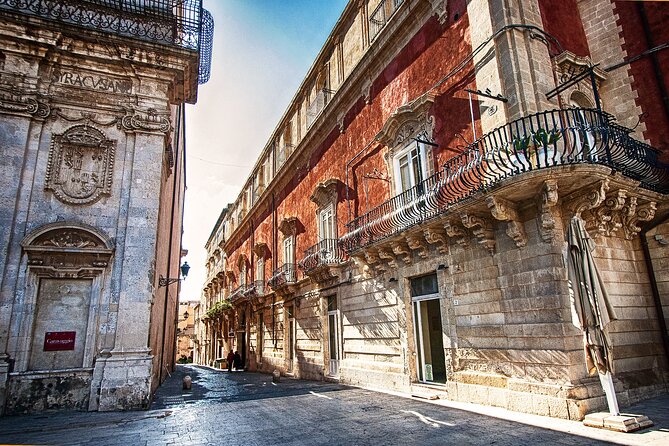
From the temple, the route moves through Ortigia’s alleys and the old Spirduta district. This part is useful because it shifts your attention from large monuments to the island’s street pattern and local stories.
Palazzo Montalto supplies the medieval focus. The guide discusses the building and the urban legends tied to the area, giving you a sense of how Ortigia’s past survives in narrow passages and building facades, not just in formal museums.
The stop lasts about 10 minutes and admission is free. You should expect an exterior-focused explanation rather than a long palace visit. That is not a weakness if you want a broad introduction, but it may feel brief if medieval architecture is your main reason for booking.
The alleys also make this a practical stop for anyone trying to get oriented. A guide can point out how the old district connects to the squares ahead, while you begin to understand the island as a small historic center rather than a collection of isolated sights.
Piazza Archimede and the Fountain of Diana
The walk reaches Piazza Archimede, where the neoclassical Fountain of Diana becomes the focal point. The square is surrounded by suggestive historic buildings, so the guide can explain both the fountain and the urban setting around it.
This is another 10-minute stop with no admission fee. It is a good place for photographs and a visual pause after the tighter lanes. The shift from medieval streets to a more formal square helps you see how Ortigia changed over time.
The listed end point for the experience is also Piazza Archimede, but the route description continues beyond it to Piazza Duomo, the waterfront, Cala Rossa, and the Giudecca district. For planning purposes, follow the meeting instructions supplied for your booking and confirm the exact finishing point with the guide at the start. The route details clearly describe a longer circuit through the historic center.
A few more Sicily tours and experiences worth weighing up
- Mount Etna: Guided Volcano Summit Hiking Tour with Cable Car
★ 4.7 · 3,784 reviews - Taormina: Ancient Theater Skip-the-Line Ticket & Audio Guide
★ 4.5 · 1,701 reviews - Palermo: Teatro Massimo Opera House Guided Tour
★ 4.5 · 1,573 reviews - Etna Volcano: South Side Guided Summit Hike
★ 4.7 · 1,545 reviews
Piazza Duomo, Syracuse’s grand central room
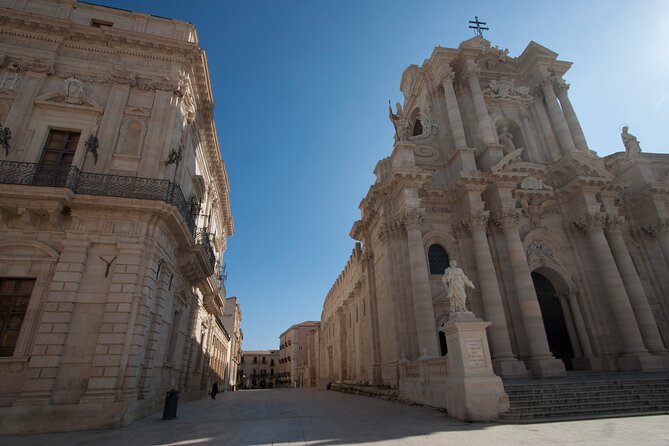
Piazza Duomo is the visual center of the walk. The group pauses for about 10 minutes to admire the square and the buildings that frame it. The setting gives you a chance to step back from individual details and see how Syracuse presents its civic and religious heart.
This is the point where the tour’s different historical threads begin to meet. Ancient stone, later churches, grand facades, and the open square all appear together. I find this kind of explanation especially helpful in Sicily, where a building may look like one era from the outside but contain much older material.
Because the stop is free, the guide can spend the time on interpretation rather than ticket handling. Still, you should not expect a long architectural lecture or extended free time. The tour has several more stops ahead.
The cathedral built on a Greek temple
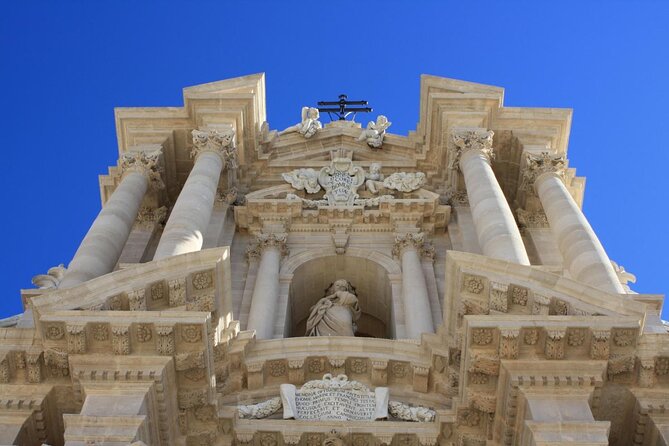
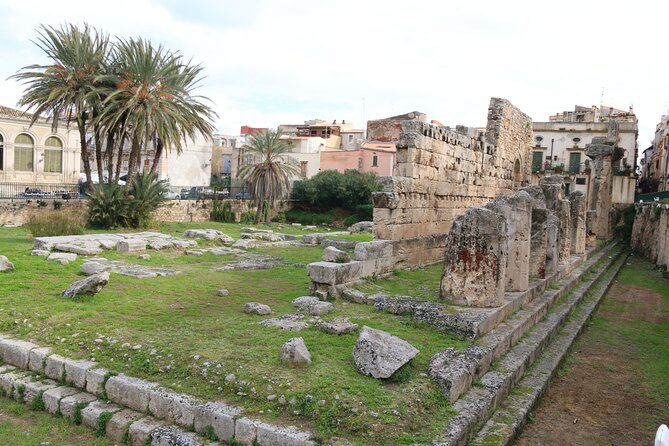
Syracuse Cathedral is the most distinctive stop. The guide points out how a Baroque cathedral was built on the site of an ancient Greek temple. That combination is the central architectural lesson of the tour, and it makes the €2 interior option worth considering for most people.
The interior visit is optional and lasts within a 20-minute segment. The €2 entrance fee is not included. If a religious service is taking place, the interior may not be available, so the outside explanation remains the dependable part of the stop.
If you enter, you gain a closer look at the way older temple elements were incorporated into the church. If you prefer not to go inside, you can use the short break for coffee. That choice gives the tour some welcome flexibility, especially for anyone who has already spent a full morning on church interiors.
I would keep the €2 ready and ask the guide at the start how the visit is expected to work that day. Since the entry is optional and services can affect access, this is the one part of the route where timing may change.
The cathedral stop also shows why a local guide adds value. A plaque can tell you a date or an architectural label, but the guide connects the temple, the cathedral, and the square into one story. Eva has been singled out for giving an in-depth historical perspective and for keeping the pace comfortable. If she leads your group, her style appears to suit people who want detail without a rushed march.
Santa Lucia alla Badia and Caravaggio
The next stop is Chiesa di Santa Lucia alla Badia, with about 15 minutes devoted to the church and its place in Syracuse’s religious life. The guide explains the importance of the Santa Lucia celebration, an important local religious holiday.
The church is also linked to the work of Caravaggio, described here as the most important painting in Syracuse. That detail gives the stop extra weight for art lovers, although the provided tour information does not promise a full interior visit or guarantee that the painting will be accessible during the walk.
This is a good example of the tour’s balance. You get a cultural reference that you might otherwise miss, but you should not treat the two-hour route as an art museum visit. If Caravaggio is your main interest, ask the guide what can be seen that day and plan extra time separately if needed.
Aretusa Spring and the sea
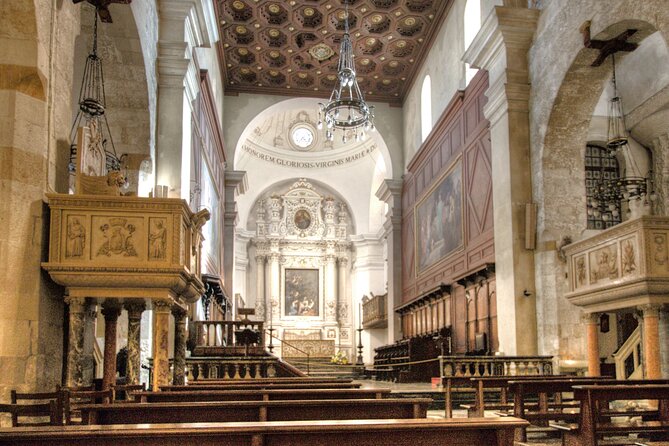
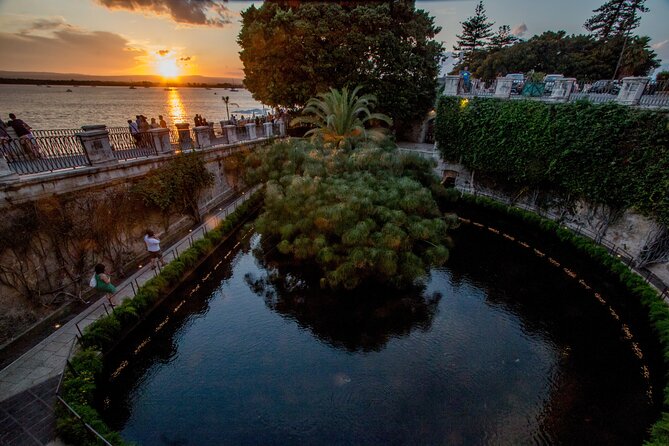
Leaving Piazza Duomo, the group heads toward the water and Fonte Aretusa. The spring is one of Ortigia’s most memorable natural features, with papyrus plants growing beside the water. The guide also tells the romantic myth associated with Aretusa, adding a poetic turn after the architectural stops.
The visit lasts about 15 minutes and is free. This is a welcome change of scene. Instead of another facade or church, you get open water, plant life, and a story rooted in Greek mythology.
You will have time for photographs, but not an extended waterfront break. The spring is part of a moving walking tour, so keep your attention on the guide before wandering off for a better angle.
The eastern promenade and Cala Rossa
The walk then crosses the island to Lungomare di Levante Ortigia, the eastern promenade. The route includes a look at the small beach of Cala Rossa, adding a coastal note to an otherwise urban history walk.
This section helps you understand Ortigia’s shape. You are not simply moving from square to square. You cross the island and reach its eastern edge, where the setting opens toward the sea.
The stop is listed at about 10 minutes and has no admission fee. It is not a beach outing, and you should not expect time for swimming or a long rest. Think of it as a short scenic pause and a chance to see a different side of the island.
Through the Giudecca district
The tour closes by crossing the picturesque Giudecca district, the old Jewish quarter of Syracuse. The final 20-minute segment adds social and religious history to the Greek and Baroque material covered earlier.
This is one of the route’s strongest choices. Many short city walks focus only on temples, churches, and grand squares. By including Giudecca, the guide gives you a broader sense of who shaped Ortigia and how the historic center changed over time.
The stated route description says the walk ends after passing through this district and the fish bar La Via Della Giudecca area. The formal meeting details list Piazza Archimede as the end point, so you should clarify the exact finish with the guide. Either way, the route reaches the old Jewish quarter rather than ending at the cathedral.
What $30.12 buys you
At roughly $30.12 per person, the tour offers a reasonable introduction to Ortigia, especially if you are new to Syracuse. You are paying for an English guided walk through nine points of interest, including the Temple of Apollo, the cathedral, Aretusa Spring, the eastern promenade, and Giudecca.
The value comes from the connections between places. You could walk past the cathedral, fountain, and spring on your own, but the guide explains why they belong to different chapters of the island’s past. The price is also helped by the fact that most stops have no separate admission charge.
The cathedral costs another €2 if you choose to enter. That is modest, but it is still worth knowing that the advertised price does not cover it. Radio guide receivers are supplied for large groups, which should make the explanations easier to hear when the group reaches its maximum of 20 people.
The tradeoff is depth. Two hours is efficient, but you will not have long inside each site. If you want private attention, lengthy photography stops, or a detailed archaeological tour, a private guide or a longer specialist visit may be better value for you.
Group size, pace, and practical comfort
The maximum group size is 20. That is small enough to remain manageable on narrow streets, though it is not the same as walking with a private guide. When the group is large, radio receivers are provided.
The route is offered in English and takes about two hours. Most people can participate, and service animals are allowed. The walk is near public transportation, which helps if you are coming from another part of Syracuse, but the experience itself is a walking tour with no transport included.
The route includes alleys, squares, church surroundings, and waterfront paths. The supplied information does not give a precise accessibility grade or promise step-free access at every point, so anyone with mobility concerns should confirm the route directly before booking.
The tour requires good weather. If poor weather cancels it, you are offered another date or a full refund. It also requires a minimum number of participants, and if that minimum is not met, you are offered another date or experience, or a full refund.
Free cancellation is available up to 24 hours before the start time. Cancel later than that, or make changes inside the 24-hour window, and the payment is not refunded. The cut-off follows local time in Sicily.
Who will get the most from this tour
I would choose this walk early in an Ortigia stay. It gives you a map in your head, introduces the central sights, and helps you decide which places deserve a longer return visit.
It suits you if you want:
- A short English introduction to Syracuse
- Ancient Greek and Baroque architecture in one route
- A guide who explains local myths and religious traditions
- A manageable group rather than a large coach outing
- Time for photographs without a packed schedule
- A low-cost way to understand the historic center
It may not suit you if you want full interior visits at every church, a specialist archaeology lecture, or lots of unstructured free time. The tour’s strength is its range, not its depth at any single stop.
Should you book the Classical Ortigia Guided Group Tour?
Book it if you want a well-paced first look at Ortigia and value the explanation behind the buildings. The cathedral’s Greek temple foundations, the Aretusa myth, the Caravaggio connection, and the Giudecca district give this short walk more substance than a simple photo tour.
I would be especially inclined to book if Eva is leading, since her clear historical explanations and relaxed pace have been praised repeatedly. Just remember that the group may reach 20 people, the cathedral costs €2 extra, and two hours will leave you wanting more time at some stops.
For about $30.12, this is a sensible introduction to Syracuse. Take the optional cathedral visit if access permits, bring comfortable walking shoes, and use the tour as a framework for exploring Ortigia on your own afterward.
FAQ
How long does the Classical Ortigia Guided Group Tour last?
The tour lasts approximately two hours.
What language is the tour offered in?
The tour is offered in English.
Where does the tour start?
The meeting point is the Temple of Apollo, also called the Apollonion, at 96100 Syracuse, Italy.
Where does the tour end?
The meeting details list Piazza Archimede as the end point. The route description also includes the Giudecca district and the area of the fish bar La Via Della Giudecca, so confirm the exact finishing point with the guide.
Is entrance to Syracuse Cathedral included?
No. The optional cathedral entrance costs €2 per person and is not included. If you do not enter, you can take a short coffee break instead.
What is included in the tour price?
The guided walking experience is included. Radio guide receivers are provided when the group is large.
How many people can join the group?
The tour has a maximum of 20 participants.
Can I cancel for a full refund?
Yes. You can cancel at least 24 hours before the experience start time for a full refund. Cancellations or changes made less than 24 hours before the start time are not refunded.
What happens if bad weather or low participation cancels the tour?
If bad weather causes cancellation, you are offered another date or a full refund. If the minimum number of participants is not reached, you are offered another date or experience, or a full refund.
Just added around Sicily
- Anti-Mafia Heroes (Cool Hours) Morning Walking Tour★ 5.0 · 3 reviews
- Nicolosi: Excursion Etna Craters at 3000 mt.★ 4.2 · 3 reviews
- DISCOVER THE SECRET OF PALERMO Walking Tour Combining Art and best street food★ 5.0 · 3 reviews
- The art of the Italian Aperitivo with a local: Learn & Enjoy in Palermo★ 5.0 · 3 reviews
- Taormina PRIVATE EAST COAST EXCURSIONS 2 Exclusive Days with Guide Driver★ 5.0 · 3 reviews
- Monti Rossi Adventure Park Entry Ticket Full★ 5.0 · 3 reviews
- Guided kayak tour inside the Stagnone of Marsala★ 5.0 · 3 reviews
- Catania AIRPORT transfer From / To Taormina★ 5.0 · 3 reviews
Ortigia Tours, compared.
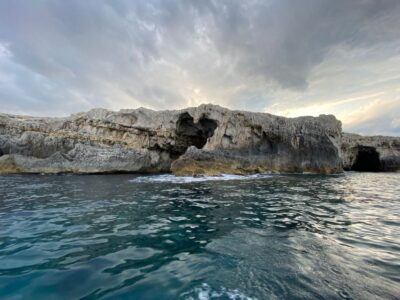
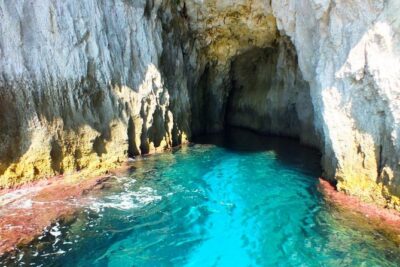
Tour of the island of Ortigia and exploration of sea caves with baths.
Read our review →
Ortigia & Sea Caves Speedboat Tour with Swim Stop
Read our review →

Ortigia Island and Sea Caves Boat Tour with Drinks
Read our review →Browse the lists this tour appears in