
Reviewed · GUIDED
Benedictine Monastery of Catania – English Guided Tour
Catania’s Benedictine Monastery is not just a pretty church complex. It is a layered slice of the city, where Roman houses, lava-built cellars, lavish Baroque rooms, and a modern university library occupy the same enormous building. I like the way the tour turns a confusing maze into a clear story, and I like that it opens parts of the complex you would likely miss on your own.
The 75-minute length works well for a morning or afternoon in Catania, and the $11 price is excellent for access to restricted rooms and a live English guide. The main consideration is that this is an active university site, not a silent museum, so some spaces and viewing areas can vary by departure.
In This Review
- Key points to know
- Entering the Monastery at Piazza Dante
- Two cloisters and the rhythm of monastic life
- The Roman house beneath a modern library
- The novices’ garden and working monastery
- Vaccarini’s kitchens and the monastery’s wealth
- Cellars built on Catania’s lava
- Baroque scale, Vaccarini, and the monumental staircase
- Thirty years of restoration and a living university
- What the $11 price gets you
- Who will get the most from this visit
- Booking advice for a smooth visit
- Should you book the Benedictine Monastery tour?
- FAQ
- Where does the Benedictine Monastery tour start?
- How long does the guided tour last?
- What language is the tour conducted in?
- How much does the tour cost?
- What areas are included?
- Can I see areas that are not normally open?
- Is baggage storage available?
- Is the tour wheelchair accessible?
- Can I cancel the booking?
Key points to know
- Roman remains below the university library: See a Roman house directly beneath a modern student mezzanine.
- A cellar built on lava: The lower level gives you a vivid reminder of Catania’s volcanic foundations.
- Grand 18th-century kitchens: The scale hints at the wealth and size of the Benedictine order.
- Restoration spanning more than 30 years: The present-day complex reflects a long architectural rescue project led in part by Giancarlo De Carlo.
- Guides bring the maze to life: Carmen, Giovanni, Nicola, and other guides are praised for clear English, humor, and lively storytelling.
- Useful for a short city visit: The tour begins and ends at Piazza Dante, lasts 75 minutes, and includes baggage storage.
Entering the Monastery at Piazza Dante
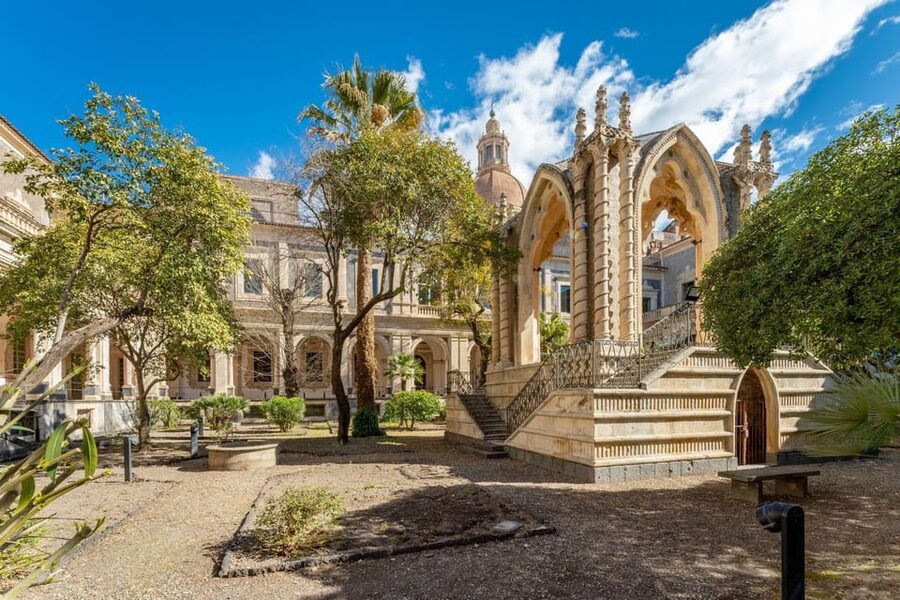
Pass through the main gate on Piazza Dante and look for the information point in the courtyard on your right. This is the meeting spot, and baggage storage is included, a useful touch if you are carrying a daypack or arriving before check-in.
The monastery of San Nicolò l’Arena is among Europe’s largest monastic complexes. That size matters once you are inside. This is not a single polished hall followed by a quick exit. You move through courtyards, corridors, stairways, work areas, archaeological remains, and grand rooms built for a large religious community.
The guided format is important. The building now forms part of the University of Catania, with students using some spaces as libraries and study areas. Without someone explaining what you are seeing, the modern desks and mezzanines could make the old structure feel fragmented. A guide links the pieces together and shows how the site changed from Roman times to the present.
The tour is in English. The guides have been praised for clear delivery, good pacing, and a sense of humor. Carmen is noted for answering questions carefully, while Giovanni and Nicola are remembered for turning architectural details into stories. The exact guide depends on the departure, but the team has a strong record for approachable presentations rather than dry lectures.
A few more Catania tours and experiences worth weighing up
- Catania: Mount Etna Adventurous Tour with a Volcano Guide
★ 4.7 · 736 reviews - Catania: Heart of the City Guided Walking Tour
★ 4.6 · 708 reviews - Catania: Underground Catania Tickets and Guided Tour
★ 4.6 · 536 reviews
Two cloisters and the rhythm of monastic life
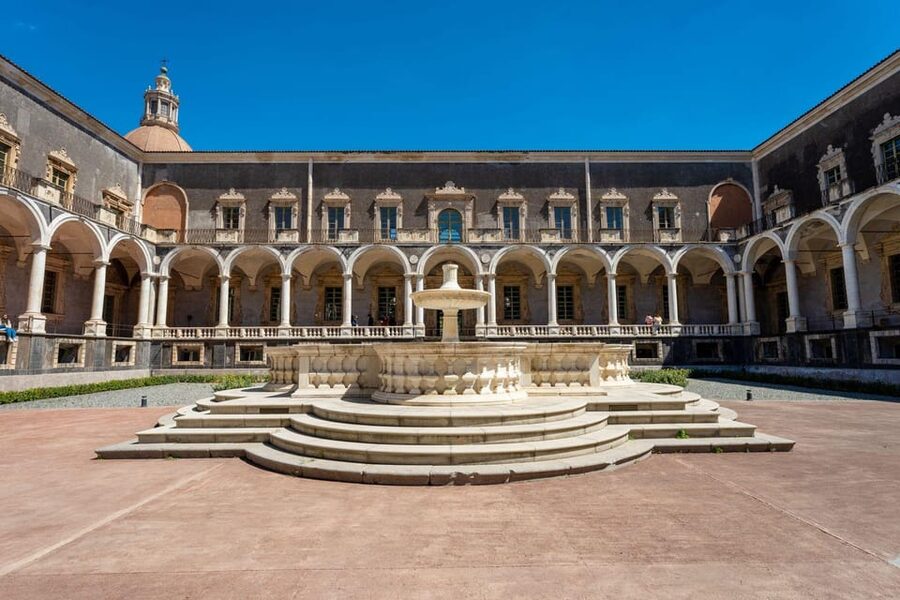
The two cloisters are among the first places where the monastery’s scale becomes easy to grasp. Cloisters were practical spaces as well as beautiful ones. They organized movement, offered quiet outdoor areas, and connected the working parts of monastic life.
Here, I would pay attention to the contrast between repetition and variety. Arches and columns give the courtyards a calm order, while later alterations show that the complex was repeatedly adapted. Your guide helps you understand which areas served religious, domestic, academic, or administrative purposes.
The cloisters are also a good place to slow down. The tour is not described as a rush from room to room, and several departures have been praised for allowing time to look around. That makes a difference in a building with this much visual information. You can enjoy the architectural details without trying to memorize every date.
Do not expect every corner to look freshly restored or staged for visitors. The continuing university use is part of the appeal, but it also means the monastery feels like a working institution. For me, that is more interesting than a building frozen behind ropes, though visitors seeking a purely museum-like visit may prefer a more controlled setting.
The Roman house beneath a modern library
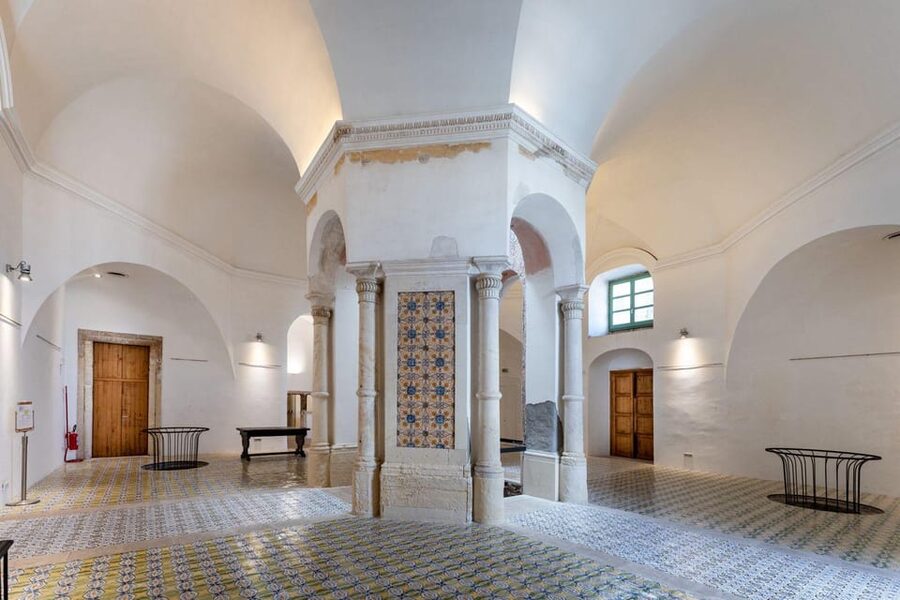
One of the most unusual stops is the Roman House. It is visible directly below a contemporary mezzanine used by students as part of the Department of Humanities library.
This is the kind of juxtaposition that makes Catania especially rewarding. You are not simply looking at an ancient object in a glass case. You are seeing Roman remains incorporated into a building used for study today. The old and new layers are placed side by side, with students working above an archaeological structure.
The Roman section also gives the tour its promised journey through roughly 2,000 years of history. The guide can explain how the site’s function and appearance shifted over time, rather than treating the Roman remains as an isolated attraction.
The lower archaeological areas may involve changes in level, so anyone concerned about mobility should confirm the route at the meeting point. The activity is listed as wheelchair accessible, but the complex is large and historically modified. A guide can clarify which rooms are available on a particular departure.
The novices’ garden and working monastery
The Garden of the Novices offers a quieter change of pace. It helps you picture the people who lived and trained in the monastery, rather than focusing only on wealthy architecture.
This is one reason I prefer a guided visit here. The buildings can easily be reduced to Baroque decoration, but the garden, dining rooms, kitchen, and corridors show the daily systems behind the display. Novices needed places to learn, eat, work, and move through the complex. Those ordinary functions give the grand rooms some human scale.
The route also follows labyrinthine corridors. That sounds simple, but it is a real practical reason to choose a guide. You may find it difficult to know which staircase or passage leads to a significant space, especially when part of the site serves the university. The guide supplies the map and the context at the same time.
Same island, a completely different day out:
- Catania: Mount Etna Morning or Sunset Day Trip with Tasting
★ 4.8 · 4,028 reviews - Catania: Sunset Jeep Tour of Mount Etna and Lava Flow Caves
★ 4.8 · 2,113 reviews - Sicily: Etna and Alcantara Gorges Full-Day Tour with Lunch
★ 4.8 · 1,766 reviews - Catania: Etna Sunset Tour with Pickup and Drop-off
★ 4.8 · 1,348 reviews
Vaccarini’s kitchens and the monastery’s wealth
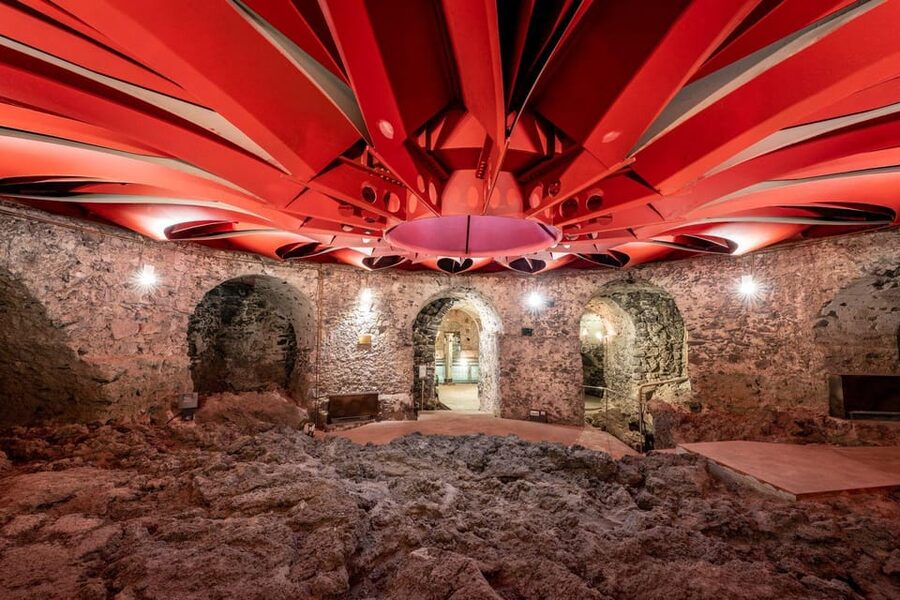
The famous 18th-century kitchens are a highlight for anyone interested in how religious communities actually operated. Their size offers a clue to the resources once available to the Benedictine order.
This is where the tour moves beyond pretty architecture. A kitchen tells you about people, supplies, labor, and social rank. The scale suggests that the monastery supported a substantial community and that its residents enjoyed considerable wealth. Your guide can connect the rooms to the larger story of Catania and the order’s place in Sicilian society.
The kitchen spaces are especially useful for visitors who have already seen Catania’s churches and palaces. Those grand interiors show ceremony and status. The kitchen shows the machinery that supported such a complex institution.
The route may also include dining rooms and other service areas. These stops are less instantly famous than the cloisters, but they often make the monastery easier to imagine as a lived-in place. I would listen for the practical details here, since they explain the building better than another list of architectural dates.
Cellars built on Catania’s lava
The cellar is one of the tour’s most memorable settings. It was built on lava, a detail that connects the monastery directly to the volcanic ground beneath Catania.
The lower level can feel cooler than the rooms above, which is welcome on a hot Sicilian day. More important, it shows how the city has repeatedly built around, over, and alongside volcanic material. Catania’s relationship with Mount Etna is not a distant scenic backdrop. It affects the foundations, streets, buildings, and the way local people understand home.
The cellar is now used as the Library of the Department of Humanities, making it another striking meeting of old structure and modern academic life. A medieval or early modern space used for university study is not a staged contrast. It is part of the building’s current function.
Some visitors are most surprised by the underground chambers and archaeological areas. They add depth to a tour that could otherwise focus mainly on Baroque decoration. If you have limited time in Catania, these lower sections are a strong reason to choose the guided visit instead of simply photographing the facade.
Baroque scale, Vaccarini, and the monumental staircase
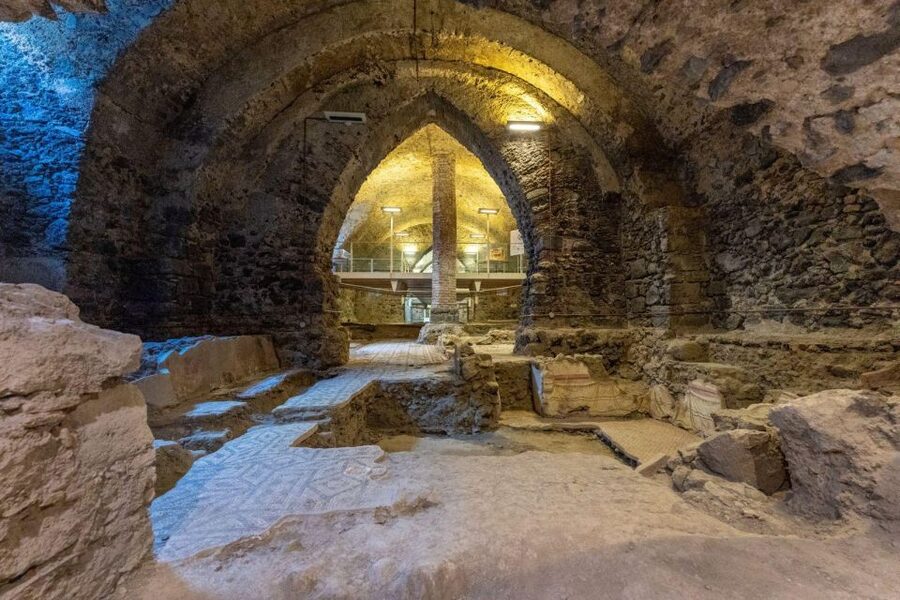
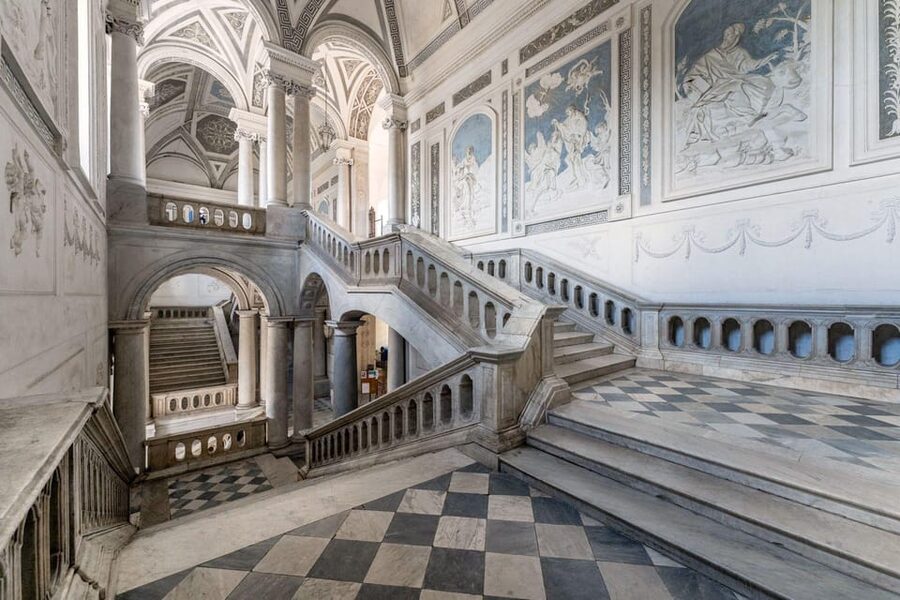
The monastery’s late Baroque architecture reflects the confidence and wealth of the Benedictine order. You will see large rooms, formal circulation spaces, and a monumental staircase associated with the work of architect Vaccarini.
The scale can be hard to appreciate from outside. Inside, the stairway and broad architectural transitions show how the complex was designed to impress as well as function. This was a place of worship and discipline, but it also communicated status.
Your guide places the architecture within Catania’s wider story. Several guides have included background on the city and Italy, not just the monastery itself. That wider context helps explain why the building looks the way it does and why restoration was such a major undertaking.
One point to keep in mind: access to a viewing platform is not guaranteed on every tour. A later departure may be required for that area, so ask when booking if the view is a priority. The main route still covers substantial architectural and archaeological material, but it is better to know this before you arrive.
Thirty years of restoration and a living university
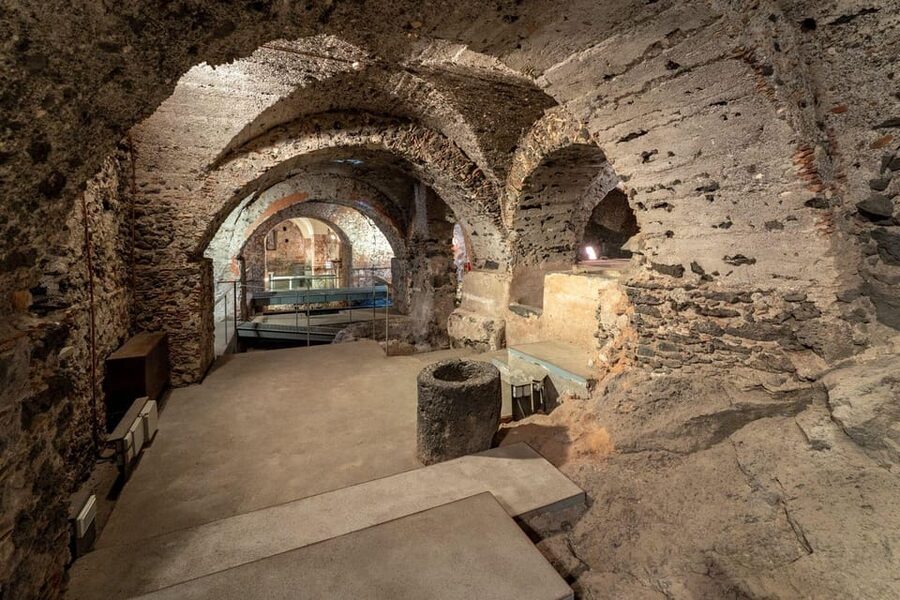
The monastery you see today owes much to a restoration project that lasted more than 30 years. Architect Giancarlo De Carlo played a major role in the contemporary refurbishment, which had to respect the old structure while making it useful for modern academic life.
That work is easier to appreciate once you notice the modern interventions. Mezzanines, library spaces, and student areas sit within historic rooms without pretending that the building stopped changing centuries ago. The result is not uniformly old, and that is precisely the point.
I find this part especially valuable because it gives you a practical view of preservation. Saving a huge historic complex is not just a matter of cleaning stone and replacing roofs. The building needs a present-day purpose, access, services, and users. Here, students and scholars help keep the monastery active.
The restoration story also explains why a guided tour can feel like a behind-the-scenes visit. You are not only admiring finished rooms. You are learning how the structure was adapted and protected over decades.
What the $11 price gets you
At $11 per person, this is one of Catania’s better-value cultural visits. The fee includes entry, a live English guide, access to areas not normally open to casual visitors, and baggage storage at the meeting point.
The value lies less in the number of rooms than in the access and explanation. The monastery is so large and layered that a self-guided wander could leave you with attractive images but little sense of how the parts connect. The guide makes the Roman remains, lava cellar, university library, kitchens, gardens, and Baroque rooms part of one story.
A 75-minute tour also fits neatly into a city schedule. You can pair it with other central Catania sights without giving up half a day. It is long enough to provide substance, but short enough for families, cruise passengers, and anyone working around a restaurant reservation.
The main tradeoff is that the fixed route may not show every possible section. University activity, restoration work, or departure time can affect access. If you want a specific platform or room, ask at the information point rather than assuming every tour follows precisely the same path.
Who will get the most from this visit
I would recommend this tour to first-time visitors who want a quick but serious introduction to Catania. It gives you architecture, archaeology, urban history, volcanic geology, and modern local life in one stop.
It is also a good choice for people who normally skip monasteries because they expect only religious art. The Roman house, lava-built cellar, kitchens, university library, and restoration story broaden the experience considerably.
Families can benefit from the variety of spaces, particularly if children respond better to underground rooms and hidden corners than to long church interiors. The 75-minute format helps keep the visit manageable, though the guide’s historical detail may suit older children best.
Architecture and history enthusiasts will find plenty to study, but the presentation is not meant only for specialists. The strongest guides are described as lively, funny, and able to answer questions without losing the group. If English is not your first language, written translations in French or Spanish can be provided.
The activity is listed as wheelchair accessible. Because this is a very large historic complex with archaeological sections and changing university spaces, it is sensible to confirm the exact accessible route when you arrive.
Booking advice for a smooth visit
The meeting point is straightforward: enter through the main gate on Piazza Dante and find the information point in the courtyard on the right. Arrive with enough time to identify the courtyard and settle any baggage-storage needs before the tour starts.
The tour has free cancellation up to 24 hours before departure, and you can reserve now and pay later. That flexibility helps if your Catania plans depend on ferry schedules, weather, or a shifting day trip.
English is the stated tour language. The guides have been praised for strong pronunciation, clear voices, and well-paced explanations. If you need French or Spanish support, request written translations rather than expecting a separate spoken tour.
The experience carries a 4.8 rating from 434 reviews, with especially strong praise for guides including Carmen, Giovanni, and Nicola. The consistent themes are clear English, humor, useful historical detail, and access to spaces that are easy to miss alone.
Should you book the Benedictine Monastery tour?
Yes, if you want to understand Catania beyond its main streets and cathedral square. The monastery brings together Roman remains, Baroque ambition, lava foundations, university life, and a long restoration effort for just $11 and 75 minutes.
I would be less enthusiastic only if you want a completely independent visit with no fixed route, or if a particular viewing platform is essential. For most visitors, the guide is the advantage, not an inconvenience. Book it if you value access, context, and a good story more than simply ticking off another historic facade.
FAQ
Where does the Benedictine Monastery tour start?
It starts at the Benedictine Monastery of San Nicolò l’Arena. After passing through the main gate on Piazza Dante, find the information point in the courtyard on the right.
How long does the guided tour last?
The tour lasts 75 minutes and returns to the Benedictine Monastery of San Nicolò l’Arena.
What language is the tour conducted in?
The live tour guide speaks English. Written translations in French or Spanish can be provided if English is not your main language.
How much does the tour cost?
The listed price is $11 per person.
What areas are included?
The route includes the two cloisters, the Garden of the Novices, dining rooms, the 18th-century kitchens, cellars, the monumental staircase, the Roman House, and the former cellar now used as the Department of Humanities Library.
Can I see areas that are not normally open?
Yes. Entry includes access to parts of the monastery that are not normally accessible to casual visitors.
Is baggage storage available?
Yes. Baggage storage is included at the meeting point.
Is the tour wheelchair accessible?
Yes, the activity is listed as wheelchair accessible.
Can I cancel the booking?
You can cancel up to 24 hours in advance for a full refund. A reserve-now, pay-later option is also available.
Just added around Catania
- Catania : Diving for patented divers★ 5.0 · 3 reviews
- Catania AIRPORT transfer From / To Taormina★ 5.0 · 3 reviews
- Transfer Catania / Agrigento Airport★ 5.0 · 3 reviews
- Taormina: exclusive tour with food, drinks, and sunset, pick-up from Catania★ 5.0 · 3 reviews
- From Catania/Taormina: Mount Etna Private Wine Tasting Tour★ 4.7 · 3 reviews
- From Catania: Day Trip to Giardini Naxos and Taormina★ 5.0 · 3 reviews
- Catania: Summit Craters from North Etna with 4×4 vehicles★ 5.0 · 3 reviews
- Catania: Guided Street Food Tour with Tastings★ 5.0 · 3 reviews
Guided, compared.
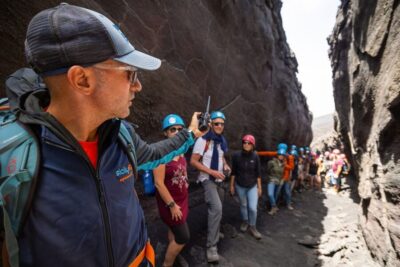
Guided Volcano Summit Hiking Tour with Cable Car
Read our review →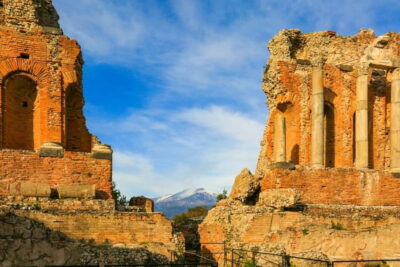
Ancient Theater Skip-the-Line Ticket & Audio Guide
Read our review →
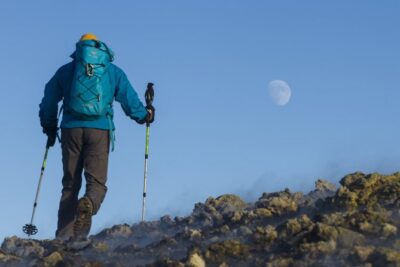
Mount Etna Adventurous Tour with a Volcano Guide
Read our review →

Street Food Walking Tour with Local Guide & Tasting
Read our review →
UNESCO World Heritage Sites Guided Walking Tour
Read our review →Browse the lists this tour appears in