
Reviewed · ORTIGIA TOURS
Syracuse: Ortigia Deep Dive Cultural Tour (max 6 Guests)
Ortigia’s best sights sit close together, but the details are easy to miss without someone to connect them. This small-group walking tour moves from the Greek Temple of Apollo to Piazza Duomo and the mythical Arethusa Spring, with an English-speaking guide explaining what you are seeing.
I like the freedom to choose your meeting time, and I like the six-person limit. Guide Enrica brings energy, answers questions easily, and helps turn a short walk into a clear introduction to Syracuse. The main drawback is the 90-minute length: you will get a strong orientation, but not a slow, museum-style visit.
In This Review
- Key points to know
- Why this short Ortigia walk works
- Starting with the Temple of Apollo
- Piazza Archimede and the Fountain of Diana
- Piazza Duomo, Syracuse’s grand central scene
- The Temple of Athena inside the cathedral
- Ending at the Arethusa Spring
- A small group that leaves room for questions
- Flexible timing and route choices
- What the 90-minute format means for value
- Who should book this Ortigia experience?
- My verdict on the Ortigia walking tour
- FAQ
- How long does the Ortigia tour last?
- Where does the tour begin?
- Where does the tour end?
- What language is the tour offered in?
- How many people can join the tour?
- Can I choose the tour time?
- Is entry to the Temple of Athena included?
- What happens if bad weather cancels the tour?
Key points to know
- Six-person maximum: A small group gives you a better chance to ask questions and stay close to the guide.
- Flexible start time: You can choose a time that fits your day rather than work around a fixed departure.
- Five central stops: The route links the Temple of Apollo, Piazza Archimede, Piazza Duomo, the Temple of Athena, and Arethusa Spring.
- History with a choice of focus: You can request a historical route or a gastronomy-themed experience.
- Optional cathedral entry: The Temple of Athena can be viewed from outside and inside, but entry costs extra.
- A good first look at Ortigia: The walk covers the island’s core sights without demanding a full morning or afternoon.
Why this short Ortigia walk works
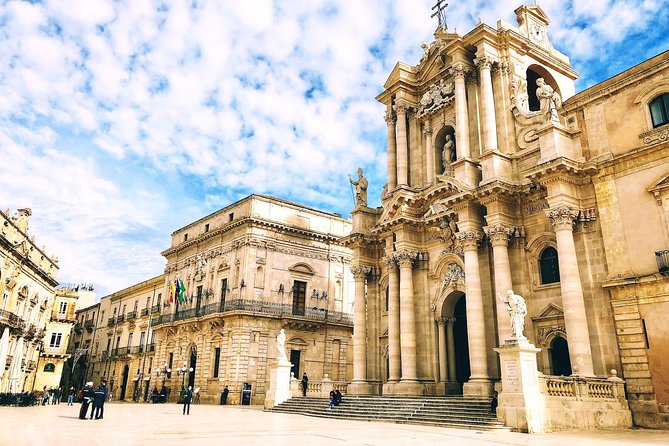
Ortigia is the historic center of Syracuse, and this route gives you a neat line through its most important landmarks. You begin at the Temple of Apollo, move inland through two handsome squares, then finish beside the sea-facing Arethusa Spring.
That order makes sense. You start with ancient Greek Syracuse, see how later buildings shaped the city, and finish with one of its best-known myths. I like tours that give a place a clear story, and this one does that without asking you to spend half a day on your feet.
The guide is the main reason to choose this experience over a self-guided stroll. Enrica is warm, energetic, and ready to handle questions, which matters in a place where Greek, Roman, medieval, and later layers sit close together. The six-person cap should also make it easier to hear and keep the walk personal.
You should think of this as an introduction, not a full archaeological tour. The scheduled stops add up to about 57 minutes, leaving the rest of the 90-minute experience for walking between sites, discussion, and questions. That is enough time to get your bearings and understand the main sights, but you will not have long inside each one.
More Ortigia walks in Sicily:
- Syracuse: Boat Trip of Ortigia Island and Sea Caves
★ 4.7 · 937 reviews - Tour of the island of Ortigia and exploration of sea caves with baths.
★ 5.0 · 668 reviews - Siracusa: Ortigia Boat Tour with Marine Grotto
★ 4.7 · 617 reviews
Starting with the Temple of Apollo
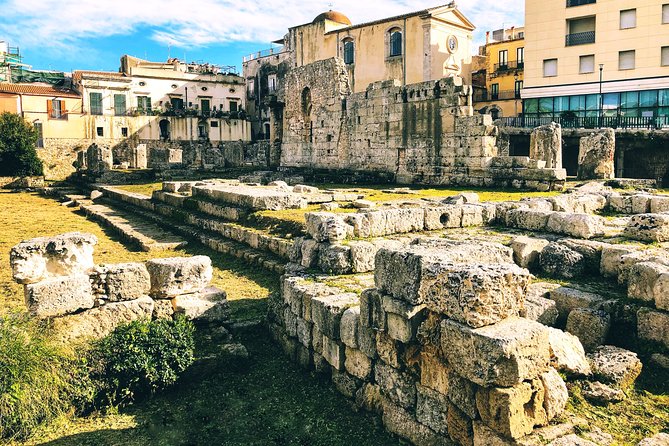
The meeting point is the Temple of Apollo, also called the Apollonion, at 96100 Syracuse. This is a practical place to begin because the first explanation starts right away, rather than using the opening minutes for a general orientation.
The guide explains the Greek temple’s date and importance, including its early sixth-century BC origins. Even if you have seen photographs of Greek temples elsewhere in Sicily, this stop gives you a useful starting point for understanding Syracuse as a Greek city.
Admission is free, so there is no extra ticket decision at the beginning. You can focus on the columns, the remains, and the guide’s explanation. Since this is an outdoor stop, smart-casual clothing is a sensible choice, especially if you are walking in warm weather.
The limitation is simple: the stop lasts about 15 minutes. That is enough for an explanation and questions, but not for a long archaeological study. If ancient sites are your main reason for visiting Syracuse, you may want to give yourself extra time before or after the tour.
Piazza Archimede and the Fountain of Diana
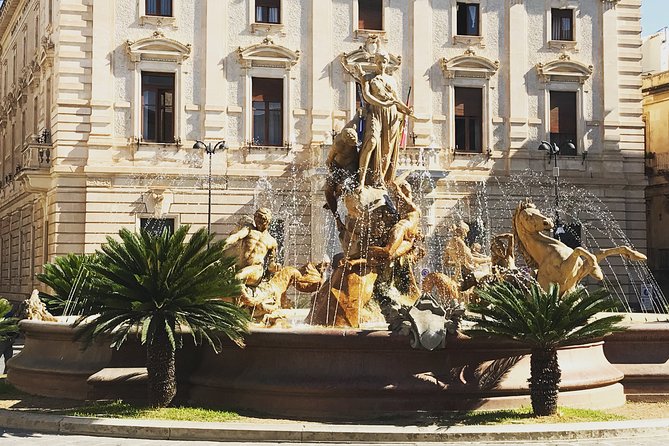
From the temple, the walk continues to Piazza Archimede, where the guide explains the historic buildings around the square and points out the Fountain of Diana. The stop lasts about 10 minutes.
This is where the tour shifts from an isolated ancient monument to the living city around it. You are not only looking at one site. You are learning how a public square works as a setting for buildings, sculpture, movement, and local identity.
The guide’s commentary is especially useful here because façades can blend into one another when you first arrive. A short explanation helps you notice which buildings matter and why the fountain is part of the square’s character.
Ten minutes is a brisk stop, so do not expect time for a long coffee break or extensive photographs. The advantage is momentum. You keep moving through Ortigia instead of getting bogged down at one location.
Piazza Duomo, Syracuse’s grand central scene
Piazza Duomo receives another 10-minute explanation, focused on the important historic buildings around the square. This is likely to be the visual high point of the walk, and it gives the guide a large, memorable setting in which to explain the city’s changing architectural story.
I like this part of the route because a square is easier to understand when someone helps you read it as a whole. Rather than entering one building and missing the surrounding details, you can look across the space and connect the façades, public setting, and religious architecture.
The short timing calls for sensible expectations. You will hear about the buildings and have time to ask a few questions, but you will not receive a full interior tour of every structure around the piazza. If you want detailed photographs or a quiet look at architectural features, return later on your own.
This is also a good point to tell the guide what interests you most. The experience is customizable, and the small group makes it easier to ask for more attention to history, architecture, or food-related details.
More history walks around Sicily:
- Palermo: Street Food and History Walking Tour
★ 4.9 · 1,294 reviews - Palermo: UNESCO World Heritage Sites Guided Walking Tour
★ 4.8 · 548 reviews - Palermo: Walking Tour of Historic Markets and Monuments
★ 4.9 · 478 reviews - Walking Tour and street food Tour Palermo / History and Food
★ 5.0 · 379 reviews
The Temple of Athena inside the cathedral
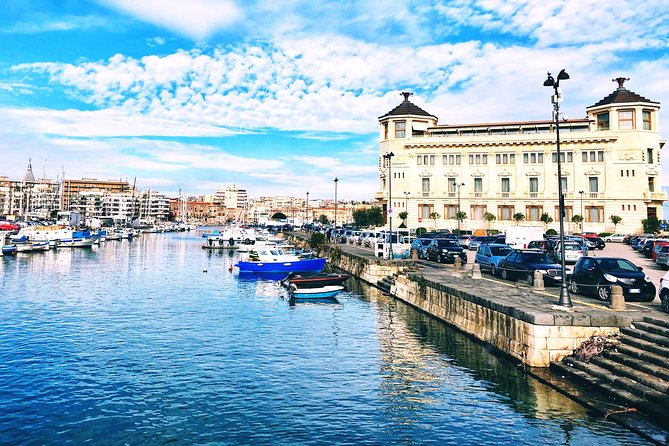
The Temple of Athena is the most unusual stop because it can be explained from both outside and inside the cathedral. The route includes the exterior explanation, while entry inside is optional and requires a separate fee.
That extra choice matters. You can keep the walk within its basic plan if you prefer, or pay for entry if seeing the Temple of Athena from inside is important to you. Since the cathedral combines the temple with a later religious building, this is the point where the city’s different eras come together most clearly.
The guide can explain the temple from the exterior even if you choose not to enter. That makes the stop useful for a budget-conscious visitor, though the optional fee means you should be ready for an additional expense if you want the complete visit.
The planned explanation takes about 15 minutes. This is the longest stop on the route, which feels appropriate for one of Ortigia’s most significant sights. Still, it is not an extended cathedral visit. If you want unhurried time inside, plan to return separately, if opening arrangements allow. The supplied tour details do not give opening hours or the entry price, so check those before booking if this is essential to your plans.
Ending at the Arethusa Spring
The walk ends at Arethusa Spring on Largo Aretusa. The guide spends about seven minutes explaining the spring and its mythology.
This is a compact finish, but a memorable one. The spring gives the tour a change of mood after the temples and formal squares. Instead of ending with another large building, you finish with a natural site tied to an old myth.
The end point is also useful for planning the rest of your day. You can treat the tour as a one-way introduction to Ortigia rather than a loop that returns you to the start. The listed end point is different from the Temple of Apollo meeting point, so keep that in mind when arranging your next stop.
Seven minutes may sound brief, but the guide’s role here is to explain the meaning of the spring, not to run a long activity beside it. If you want photographs or extra time at the site, you can stay after the formal tour ends.
A small group that leaves room for questions
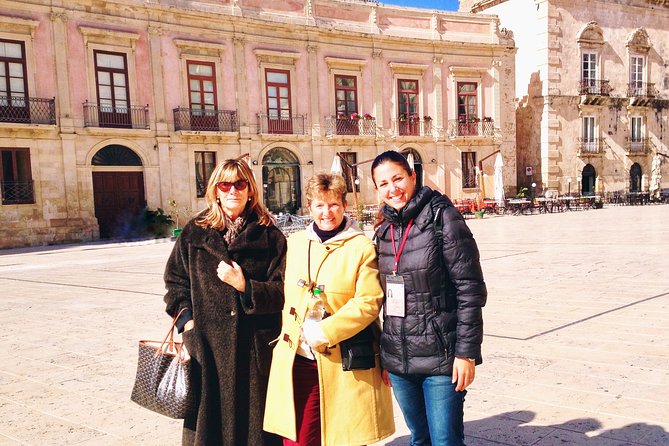
The maximum group size is six people. That is one of the strongest practical features of this experience.
A small group changes the rhythm of a walking tour. You can usually stay close enough to hear the guide, and asking a question does not feel like interrupting a large crowd. The format also suits anyone who wants explanations adjusted to their interests.
Enrica is specifically associated with the tour and is described as friendly, energetic, and able to answer questions with ease. That combination is valuable in Ortigia, where a list of dates and names would not be enough. You need someone who can connect the places as you walk and respond when you want clarification.
The small group does not turn this into a private tour. The maximum is six, not one booking party only, and the route remains a guided shared experience. Still, it is a more personal setup than a large sightseeing group.
Flexible timing and route choices
You can choose the meeting time, which is helpful if your day includes a train arrival, a meal reservation, or another visit in Syracuse. Fixed departures can force you to rearrange a day. Here, the flexible start makes the tour easier to fit into an existing plan.
The route can also be adjusted in emphasis. You can choose among options that include gastronomy-themed activities or a more historical approach. The supplied details do not spell out separate menus of food stops or tastings, so you should confirm exactly what a gastronomy-focused option includes before booking.
That flexibility is best used before the walk begins. Think about what you want from 90 minutes in Ortigia. If this is your first visit, the historic route will give you the clearest foundation. If you already know the main monuments, asking for a food-related focus may make the experience feel more personal.
The mobile ticket is convenient, and confirmation arrives at booking. The meeting point is near public transportation, though exact transit directions are not provided. You should still allow enough time to find the Temple of Apollo before the agreed start.
What the 90-minute format means for value
No price is provided in the available tour details, so I cannot judge the exact cost. The right way to assess value is to consider what you are paying for: an English-speaking guide, a flexible start time, a group capped at six, and a concentrated route through five major places.
That package can be worthwhile if you want context quickly and prefer to ask questions rather than read plaques. The value is strongest for a first visit, a short stay, or a day when you want an efficient introduction before exploring more on your own.
The value is less clear if you prefer long interior visits or a slow photography walk. The tour gives each location a set amount of attention, and the Temple of Athena is the only stop with optional paid entry. You may need to add your own time and possibly another ticket afterward.
Admission to the Temple of Apollo, Piazza Archimede, Piazza Duomo, and Arethusa Spring is listed as free. The Temple of Athena entry is not included, so budget for that separately if you plan to go inside. The tour itself is a walking experience, not a ticket bundle for every attraction.
Who should book this Ortigia experience?
I would recommend it to you if you want a clear first look at Syracuse without committing to a long group tour. It suits couples, families, and small parties who enjoy conversation and want the freedom to ask questions.
It is also a good match for anyone with a tight schedule. The walk lasts about an hour and a half, starts when you choose, and ends at Arethusa Spring. That makes it easier to place before lunch, after arrival, or between other plans.
The route may suit you less if you need extensive accessibility information, detailed transport instructions, or a fully timed food itinerary. The available details say most people can participate and service animals are allowed, but they do not provide specific information about surfaces, steps, or wheelchair access. Ask the provider directly if those details affect your plans.
Wear smart-casual clothing. That is the stated dress code, and it fits the mix of outdoor walking and the optional cathedral visit. Because the tour requires good weather, a poor-weather cancellation may lead to a different date or a full refund.
You can cancel for a full refund if you do so at least 24 hours before the local start time. Cancellations or changes inside that 24-hour window are not refunded or accepted, so keep that deadline in mind.
My verdict on the Ortigia walking tour
Book this tour if you want human explanation, flexible timing, and a very small group. Enrica’s warm, energetic style is a strong reason to choose it, and the route gives you a useful sequence from Greek temple to grand square, cathedral, and mythic spring.
Skip it if you want a lengthy archaeological visit, a detailed interior tour, or a food experience with clearly published tastings. For most visitors making a first pass through Ortigia, though, this is a well-focused way to understand the city before setting off on your own.
FAQ
How long does the Ortigia tour last?
The experience lasts approximately 1 hour and 30 minutes.
Where does the tour begin?
The meeting point is the Temple of Apollo, also called the Apollonion, at 96100 Syracuse.
Where does the tour end?
The walk ends at Arethusa Spring on Largo Aretusa, 96100 Siracusa SR.
What language is the tour offered in?
The tour is offered in English.
How many people can join the tour?
The group has a maximum of six participants.
Can I choose the tour time?
Yes. You can choose the time of day you would like to meet, subject to availability.
Is entry to the Temple of Athena included?
No. The Temple of Athena can be explained from the exterior and interior, but optional interior entry requires a separate fee.
What happens if bad weather cancels the tour?
Because the experience requires good weather, you will be offered a different date or a full refund if it is canceled for that reason.
Just added around Sicily
- Anti-Mafia Heroes (Cool Hours) Morning Walking Tour★ 5.0 · 3 reviews
- Nicolosi: Excursion Etna Craters at 3000 mt.★ 4.2 · 3 reviews
- DISCOVER THE SECRET OF PALERMO Walking Tour Combining Art and best street food★ 5.0 · 3 reviews
- The art of the Italian Aperitivo with a local: Learn & Enjoy in Palermo★ 5.0 · 3 reviews
- Taormina PRIVATE EAST COAST EXCURSIONS 2 Exclusive Days with Guide Driver★ 5.0 · 3 reviews
- Monti Rossi Adventure Park Entry Ticket Full★ 5.0 · 3 reviews
- Guided kayak tour inside the Stagnone of Marsala★ 5.0 · 3 reviews
- Catania : Diving for patented divers★ 5.0 · 3 reviews
Ortigia Tours, compared.
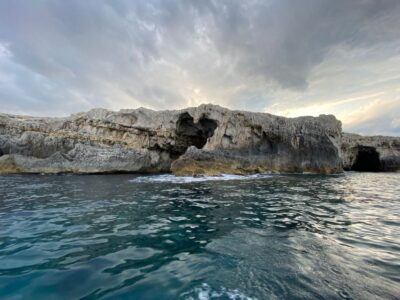
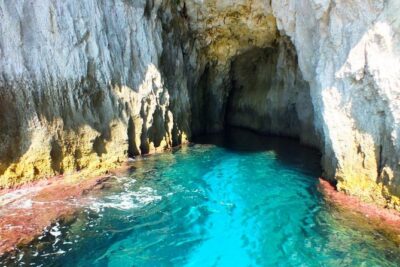
Tour of the island of Ortigia and exploration of sea caves with baths.
Read our review →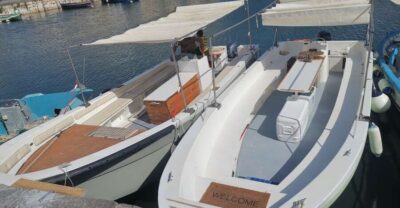

Ortigia & Sea Caves Speedboat Tour with Swim Stop
Read our review →

Ortigia Island and Sea Caves Boat Tour with Drinks
Read our review →Browse the lists this tour appears in