
Reviewed · SYRACUSE TOURS
Syracuse: Neapolis Archaeological Park Small Group Tour
Syracuse’s Neapolis Archaeological Park packs Greek theaters, Roman ruins, rock quarries, and a famous echoing cave into one dramatic visit. The highlight is the ancient Greek theater, cut into Temenite Hill and looking toward the bay, followed closely by the eerie Ear of Dionysius, a quarry grotto shaped by both nature and human labor.
I like the way this tour puts the main monuments into a clear story instead of leaving you to study scattered stones on your own. I also like the modest price, about $26 per person, for a 90-minute guided walk that covers the park’s major sights.
The main consideration is pace. One visitor found the tour slower than expected, while others appreciated the time for explanations and photos. The activity is listed with an Italian-speaking guide, so confirm the language offered for your chosen departure before booking.
In This Review
- Key things to know before you go
- Why Neapolis is worth your time
- Starting at the Neapolis entrance
- Latomie del Paradiso and Grotta dei Cordari
- The Ear of Dionysius and its strange acoustics
- The Greek theater and views over Syracuse
- The Altar of Hiero II
- The Roman amphitheater
- What the $26 price gets you
- Group size, language, and timing
- Who will enjoy this tour most
- Should you book the Neapolis Archaeological Park tour?
- FAQ
- How long does the Neapolis Archaeological Park tour last?
- What monuments are included?
- Is the entrance ticket included?
- Is the tour available as a private experience?
- What language is the tour in?
- Is the tour wheelchair accessible?
Key things to know before you go
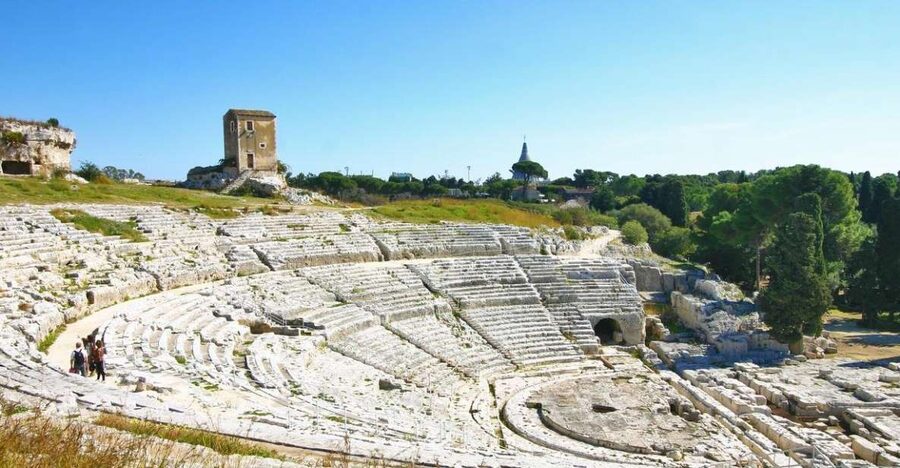
- The Greek theater is the visual centerpiece: Cut directly into the hill, it offers views toward Syracuse’s bay and shows the scale of ancient public life.
- The Ear of Dionysius is more than a quick photo stop: Its unusual shape and echoing acoustics make it one of the park’s most memorable spaces.
- You see both Greek and Roman remains: The route includes the theater, Altar of Hiero II, and Roman amphitheater, giving you a useful comparison between two ancient cultures.
- Guide quality matters here: Guides including Eva, Federica, Galina, and Anne-Marie have been singled out for clear storytelling and strong local knowledge.
- The group format affects the experience: Small groups can be easier to hear and more flexible, while large shared groups may use radio receivers.
- It is a compact tour, not a full-day outing: The advertised duration is 1.5 hours, making it easy to fit into a day in Syracuse.
Why Neapolis is worth your time
Neapolis is not a single ruin. It is a large archaeological zone where Syracuse’s Greek and Roman past appears in several different forms. You move from a working quarry to a performance space, then to a ceremonial altar and a Roman arena.
That variety is the real strength of the tour. A self-guided visit can show you impressive remains, but it may not explain why a theater was carved into a hillside, how stone extraction changed the site, or how Greek and Roman uses of the area differed. A guide gives those pieces a human scale.
I especially like this visit for travelers who do not usually spend hours reading signs at archaeological sites. The route keeps moving, and the explanations connect the monuments to the city of Syracuse. Several guides have also added comments about modern sculptures in the park and life in Syracuse today, which helps keep the visit from feeling like a string of disconnected dates.
The tour is also a good choice for families and mixed-age groups. One guide adjusted the pace and explanation for an eight-year-old, while another kept teenagers interested. That said, the amount of detail can vary by guide and group size.
Other Syracuse trips travellers book alongside this one:
- Syracuse: Boat Tour with Captain Mirko, Snorkeling & Caves
★ 4.7 · 746 reviews - Siracusa: Ortigia Boat Tour with Marine Grotto
★ 4.7 · 617 reviews - Siracusa: Ortigia & Sea Caves Speedboat Tour with Swim Stop
★ 4.9 · 499 reviews
Starting at the Neapolis entrance
You meet your licensed guide at the entrance gate of the archaeological park. The precise meeting point can vary with the option you book, but Largo Anfiteatro, 2 is listed as a starting and finishing location.
This is a walking tour, so wear shoes that feel secure on uneven outdoor paths. The route covers several areas of the park, and you will spend much of the time standing while listening. Bring an identity document, as a passport or ID card is listed among the required items.
The park is wheelchair accessible, an important point for visitors who need step-free access. Still, archaeological sites can have varied surfaces and longer walking stretches, so check the exact route at the meeting point if you have specific mobility needs.
The experience is available as a shared group or private tour. Small groups are especially helpful here because the guide often points to details across a broad open site. On large shared departures, radio receivers are provided. In very small shared groups, the explanation may occasionally be given in two languages.
Latomie del Paradiso and Grotta dei Cordari
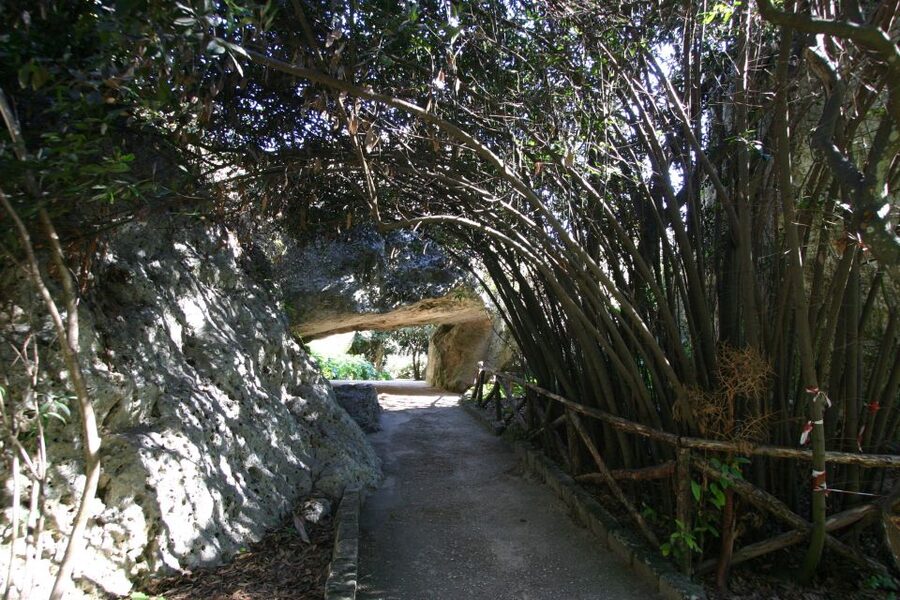
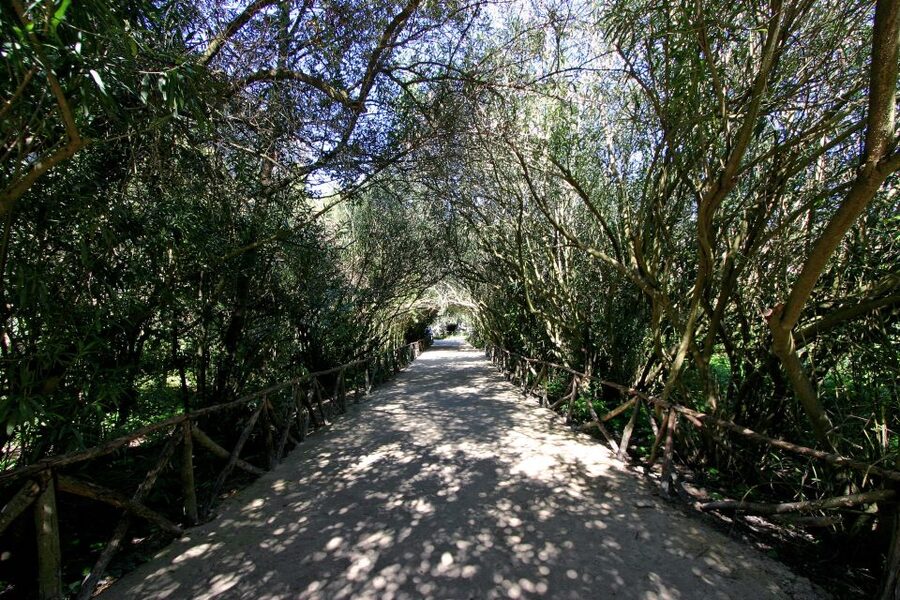
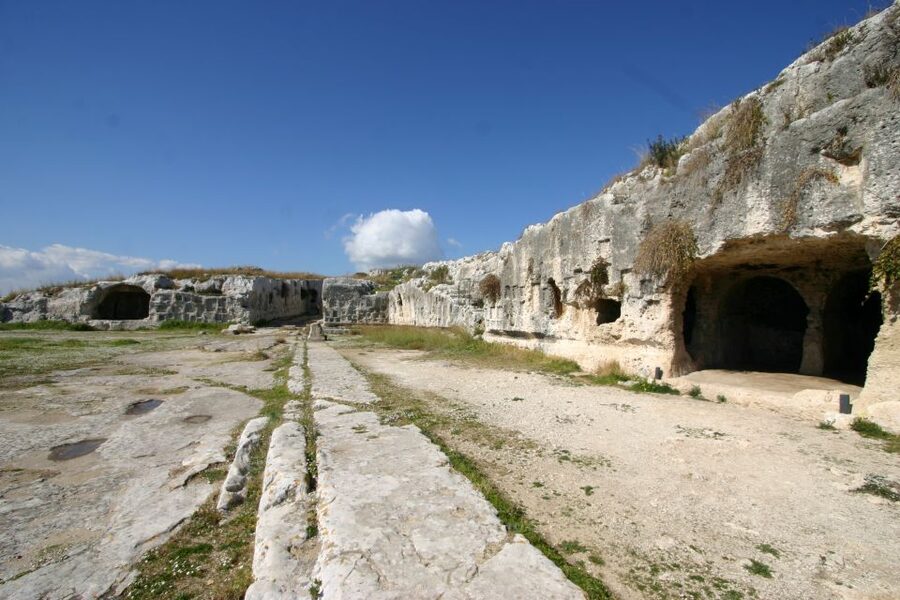
The first major part of the walk takes you into the Latomie del Paradiso, an ancient stone quarry. These quarries were cut from the rock beneath the hill and are now softened by local plant life.
The contrast is striking. You begin with a place shaped by hard labor and stone extraction, yet parts of the area feel quiet and garden-like today. A guide can help you read the walls as evidence of the quarry’s original purpose rather than treating them as simple cliffs.
The itinerary allows about 15 minutes here, followed by another 15 minutes at the Grotta dei Cordari. That second stop gives the tour room to explain the quarry area in more detail. The site is not only about grand monuments. These cut-rock spaces show the practical work that supported Syracuse’s growth.
For me, this is where a guide earns the ticket price. Without context, a quarry can be easy to pass through quickly. With explanation, you begin to see the site as an industrial part of the ancient city.
You may also notice the park’s plant life as you walk. A spring visit can bring the fragrance of orange and lemon blossom, adding a pleasant note to an otherwise stone-heavy setting. In hot weather, the open areas may feel exposed, so an evening departure can be a smart choice. One July group found the heat intense and was glad to tour later in the day.
The Ear of Dionysius and its strange acoustics
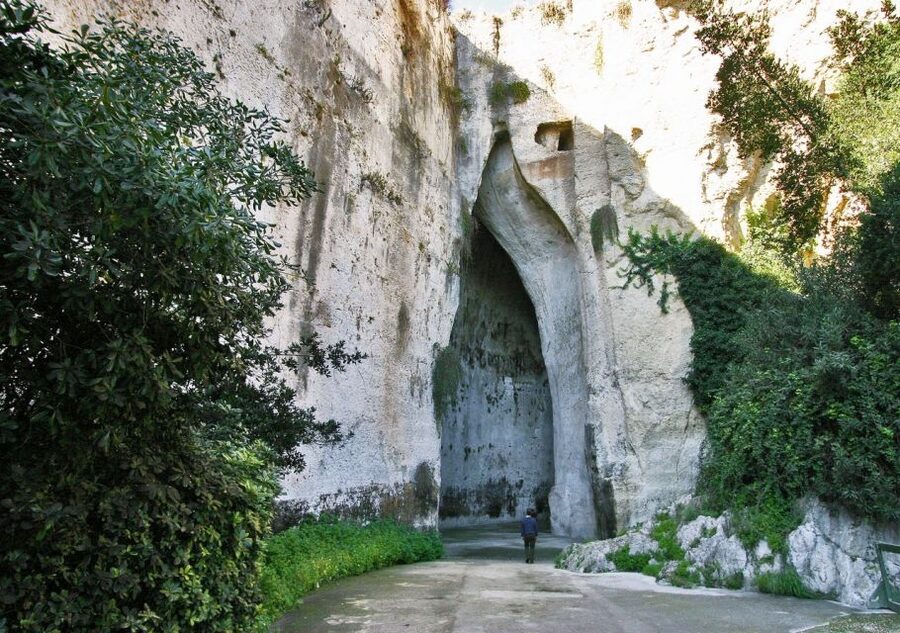
The Ear of Dionysius is the park’s most theatrical natural feature. This tall grotto is famous for its ear-like shape and its echoing sounds.
The stop usually takes around 15 minutes. You enter the quarry space and hear how sound behaves inside it. Keep your expectations sensible: this is a short visit, not a concert or a long technical demonstration. Its appeal comes from the combination of shape, scale, story, and sound.
This is also a good place to listen closely to the guide. The name carries a famous legend, and the guide can separate the physical facts of the grotto from the stories attached to it. The dark, narrow interior gives the tour a change of mood after the open quarry paths.
Photography is possible, but the experience is better if you pause for the acoustics rather than rushing to take a picture. The grotto can feel especially atmospheric on a busy day, when the echo turns ordinary voices into part of the setting.
Same island, a completely different day out:
- Syracuse: Pillirina, Ortigia, and Sea Caves Tour by Boat
★ 4.6 · 348 reviews - Syracuse: Ortigia Island and Sea Caves Boat Tour with Drinks
★ 4.6 · 337 reviews - Syracuse: Coast and Sea Caves Full Transparent Boat Tour
★ 4.8 · 330 reviews - Syracuse: Street Food Walking Tour in Ortigia with Tastings
★ 4.9 · 293 reviews
The Greek theater and views over Syracuse
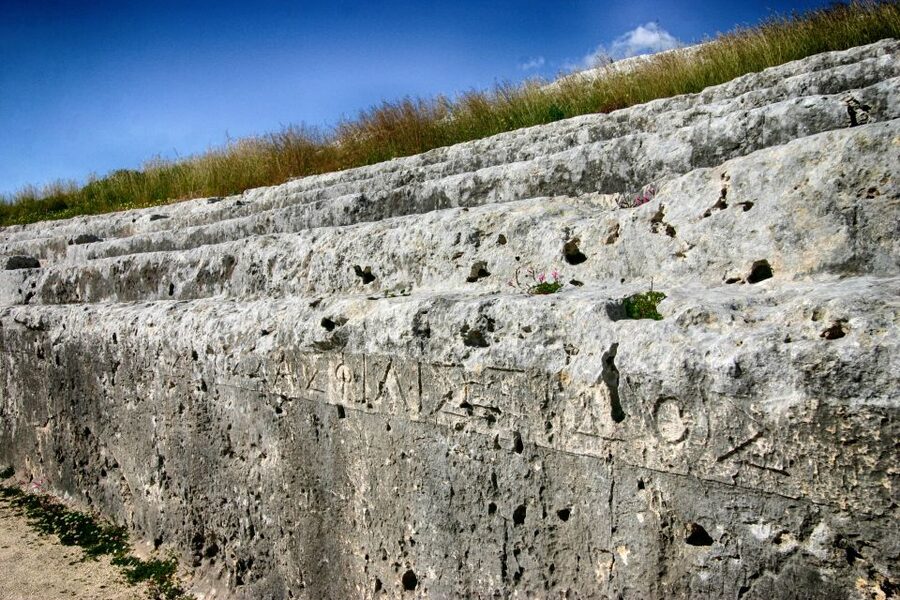
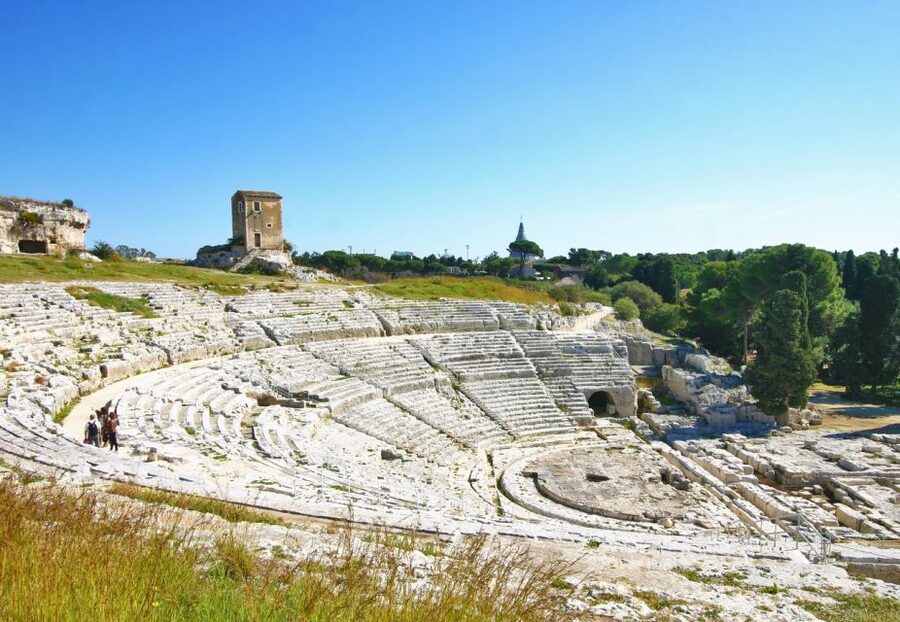
The Greek theater is the centerpiece of the route and receives the longest explanation, about 30 minutes. It was cut into the rock of Temenite Hill, an engineering choice that made use of the natural slope while creating a vast setting for performances.
The theater’s position matters. From the seating area, you can look toward the bay and understand why the site was chosen. This is one of the park’s best viewpoints, and the broad view helps you picture Syracuse as a powerful ancient city rather than an isolated collection of ruins.
Allow yourself time to take in the scale. The carved stone seating is impressive, but the theater is not preserved like a modern venue. Parts can appear worn or restricted, and the experience is about reading the structure rather than expecting a fully restored building.
A guide’s storytelling is particularly useful here. The theater becomes easier to understand when you learn how performance, civic life, and the natural shape of the hill came together. Several guides, especially Eva and Federica, have been praised for explaining complicated Greek and Roman material in plain language and for answering questions without making the tour feel like a lecture.
After the theater, the route includes a short photo stop in the wider Neapolis Archaeological Park. Use it to collect your bearings and take pictures before moving on. The schedule is fairly structured, so do not count on a long period of independent wandering during the guided portion.
The Altar of Hiero II
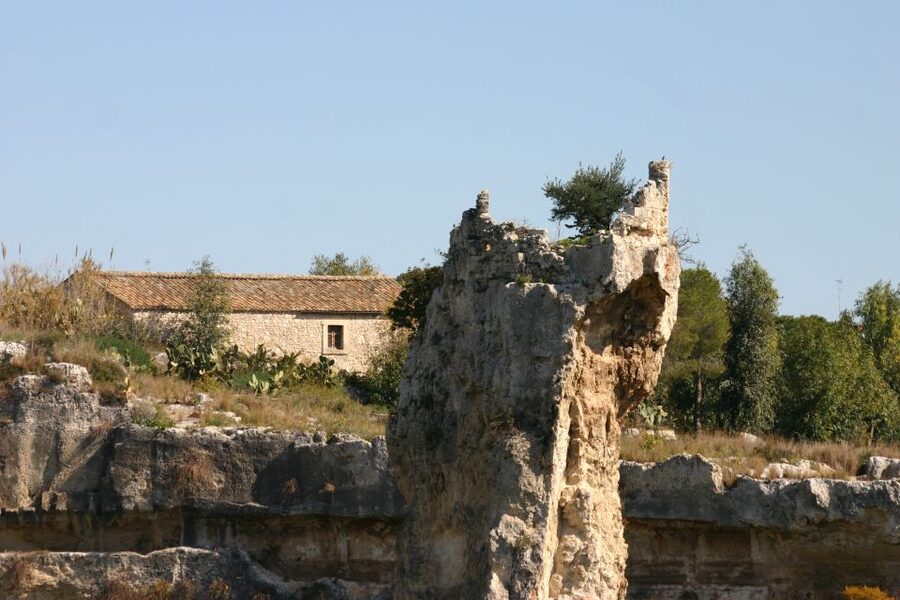
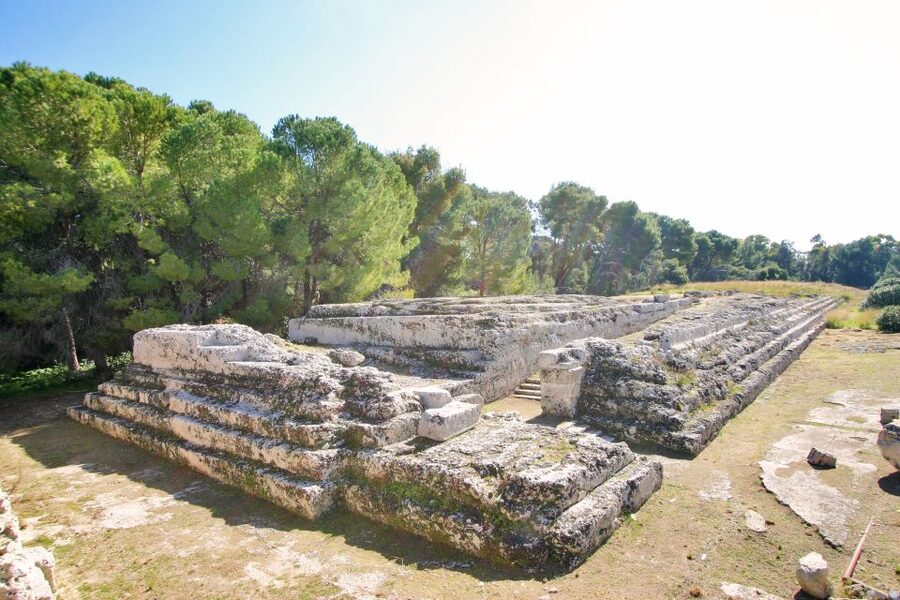
The Altar of Hiero II receives about 10 minutes of guided attention. It is a reminder that ancient Syracuse was not only a place of theater and quarry work. Large religious ceremonies also required substantial architecture and organization.
The remains are more fragmentary than the theater, so this is another stop where explanation adds value. You may see broad foundations and weathered stone rather than a complete altar. The guide helps you understand the scale and purpose of what survives.
I appreciate the inclusion of this monument because it broadens the visit. If the tour stopped after the theater and Ear of Dionysius, you would leave with a strong sense of spectacle but less understanding of public ritual. The altar gives the route another angle on ancient city life.
The short time here also keeps the overall visit moving. If religious archaeology is your main interest, you may want extra time in the park beyond the tour, but the 10-minute stop works well in a compact overview.
The Roman amphitheater
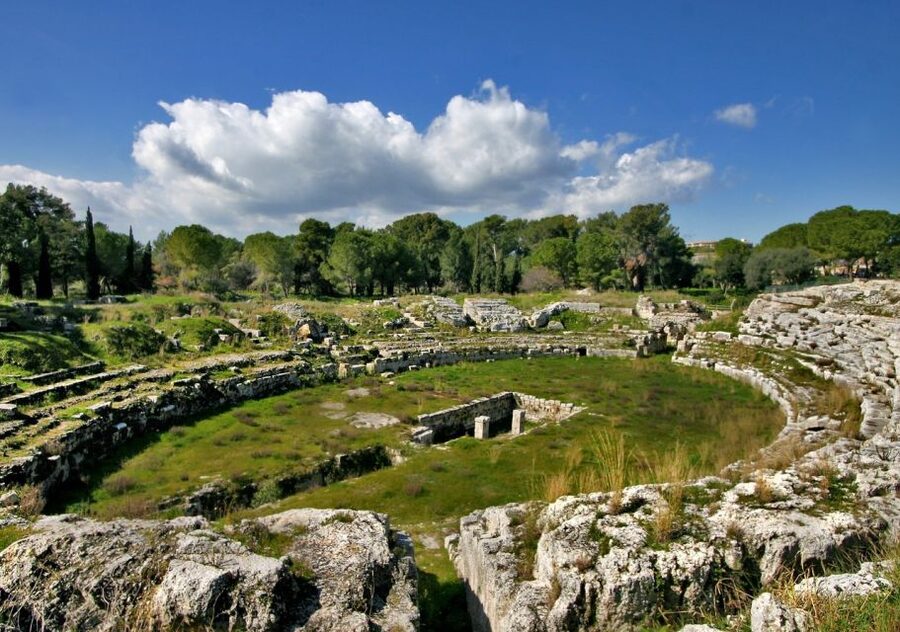
The final major monument is the Roman amphitheater, with about 15 minutes of guided explanation. Its form differs from the Greek theater, and seeing both in one visit lets you compare their design and likely uses.
The Greek theater follows the curve of a hillside and opens toward the surrounding view. The Roman amphitheater is a more enclosed arena form. That difference is useful even if you do not remember every historical detail. The two buildings make the changing priorities of Greek and Roman public entertainment easier to grasp.
The amphitheater can sometimes be affected by access restrictions. One past visit encountered an early closure, and the guide worked to help the group see the area. I would not treat this as a guarantee that every section will always be open. Conditions at archaeological sites can change, so ask your guide about access when you arrive.
The Roman remains make a fitting end to the walk. You have seen Syracuse through its quarries, theater, religious architecture, and arena. The route then returns to Largo Anfiteatro, 2, unless your booked option specifies another drop-off point.
What the $26 price gets you
At around $26 per person, this is a good-value introduction to Neapolis if entry tickets are included in the option you select. You are paying not only for access, but also for a licensed guide who keeps the route focused and explains what you are seeing.
The value is strongest for first-time visitors. I would find the price harder to justify if I wanted a long, highly specialized archaeological seminar or several hours of free exploration. But for a 90-minute orientation to the park’s major monuments, the cost is reasonable.
Check the booking choice carefully because entry tickets are included only if that option is selected. The tour can also be booked as a private experience, which costs more than the shared format but may suit a family or couple that wants its own pace.
The activity offers free cancellation up to 24 hours before the start and a reserve-now, pay-later choice. Those terms are useful when your Syracuse plans depend on weather, transport, or a changing Sicily itinerary.
Group size, language, and timing
Small groups are the sweet spot for this experience. You can hear the guide more easily, ask questions, and stay together without losing much time. A group of about 10 has been described as comfortable, with clear sound and an on-time start.
Large shared groups may use radio receivers, which helps at open-air monuments where people spread out. If you are sensitive to group noise or want frequent questions answered, the private option may be worth considering.
The listed live tour language is Italian. The information also notes that in rare cases of very small shared groups, the explanation may be bilingual. Do not assume that a departure will be in English based on the international booking page or the nationalities of past participants. Confirm the language for your selected option before paying.
The duration is 1.5 hours, though some participants have experienced closer to two hours. That difference may reflect the guide, group questions, or the time needed to move between sites. I would leave a little extra space in your schedule rather than planning a tight train, ferry, or meal reservation immediately afterward.
Who will enjoy this tour most
I would recommend the tour to you if you want the main story of Neapolis without spending half a day planning your own route. It suits first-time visitors, families, history fans, and anyone who finds ancient ruins hard to interpret without help.
It is also useful for people visiting Syracuse on a short schedule. The route covers the park’s major attractions in one sitting and returns you to the starting area, so you can continue toward Ortigia or another part of the city afterward.
You might prefer to visit independently if you already have strong background knowledge, want to linger at one monument, or dislike fixed pacing. The 90-minute format gives you an overview, not unlimited time for close study.
For summer visits, I would choose an evening time if available. The park can be very warm, and later light may make the theater and stone quarries more comfortable to explore. Spring adds the scent of citrus blossom, while rainy weather does not necessarily cancel the experience, but it can make the walking portion less pleasant.
Should you book the Neapolis Archaeological Park tour?
Book it if you want clear explanations and efficient coverage of Syracuse’s most important ancient sites. The Greek theater, Ear of Dionysius, Altar of Hiero II, and Roman amphitheater create a varied route, and a good guide turns each stop from a ruin into part of a connected story.
I would be especially happy booking the shared small-group option at about $26, provided the entry-ticket choice and tour language suit your plans. Choose private if your group wants to control the pace or tailor the explanations for children.
Skip it only if you prefer complete independence or plan to spend much longer examining the park on your own. For most first visits, the guide is the sensible choice. Neapolis has plenty to look at, but the right explanations help you see what you are looking at.
FAQ
How long does the Neapolis Archaeological Park tour last?
The advertised duration is 1.5 hours. Some past departures have lasted closer to two hours, depending on the guide, questions, and pace of the group.
What monuments are included?
The route includes Latomie del Paradiso, Grotta dei Cordari, the Ear of Dionysius, the Greek theater, the Altar of Hiero II, and the Roman amphitheater. It also includes a short photo stop in the wider park.
Is the entrance ticket included?
Entry tickets are included if you select the option that includes them. Check the exact booking choice before confirming your reservation.
Is the tour available as a private experience?
Yes. You can choose between a shared group tour and a private tour.
What language is the tour in?
The listed live tour language is Italian. In rare cases, a very small shared group may receive explanations in two languages, so confirm the language for your selected option.
Is the tour wheelchair accessible?
Yes, the activity is listed as wheelchair accessible. The tour is conducted on foot, so discuss the route with the provider if you have specific mobility requirements.
Just added around Syracuse
- Sicily Boats Avola: Plemmirio boat tour 4 people 4 hours★ 5.0 · 3 reviews
- From Syracuse: Private Taormina and Castelmola tour with lunch★ 5.0 · 3 reviews
- Siracusa Iris Photography Experience★ 5.0 · 3 reviews
- Siracusa E-bike rental service★ 5.0 · 3 reviews
- Tour Ragusa Ibla, Modica and Noto, from Syracuse★ 5.0 · 3 reviews
- Cyclops Tour★ 4.5 · 3 reviews
- Archaeological Syracuse: Neapolis Park private tour★ 5.0 · 3 reviews
- Tour of Syracuse by Ape Calessino★ 3.0 · 3 reviews
Syracuse Tours, compared.
Boat Tour with Captain Mirko, Snorkeling & Caves
Read our review →

Ortigia & Sea Caves Speedboat Tour with Swim Stop
Read our review →
Ortigia Island and Sea Caves Boat Tour with Drinks
Read our review →

Street Food Walking Tour in Ortigia with Tastings
Read our review →
Browse the lists this tour appears in