
Reviewed · ORTIGIA TOURS
Siracusa Tour: Ortigia by Night in English
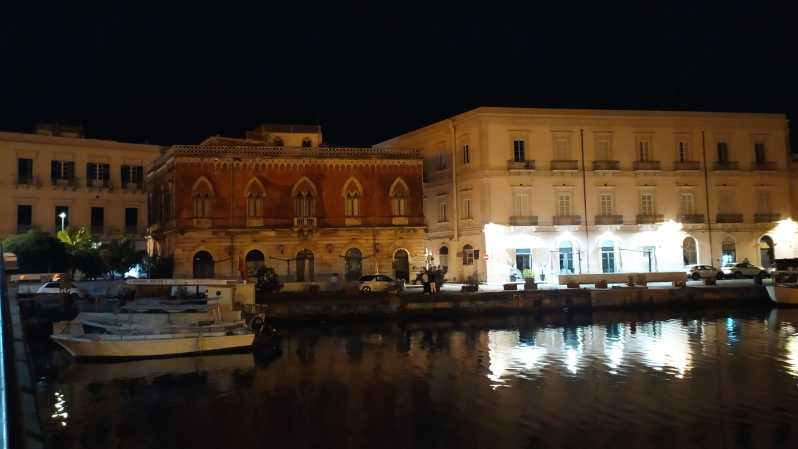
Ortigia is at its most atmospheric after sunset, when soft street lamps pick out Greek ruins, old stone lanes, and Baroque façades. This two-hour evening walk gives you a clear route through Siracusa’s oldest quarter without asking you to plan every turn yourself.
I like the way the tour blends major sights with smaller streets such as Via della Giudecca and Via della Maestranza. I also like the focus on myths, legends, and personal stories, especially with a guide such as Galina, who is praised for adapting her explanations to families and mixed-age groups. The main consideration is practical: you will walk for the full two hours, and the tour is not suitable for wheelchair users.
In This Review
- Key things to know before you go
- Why Ortigia works so well after dark
- Starting beside the Temple of Apollo
- Via Dione and Palazzo Montalto
- Via della Maestranza and Via della Giudecca
- The Church of Saint John Baptist
- Via Roma and Piazza Duomo
- Ending at Fonte Aretusa
- What the $192.58 group price means
- Who will get the most from this evening walk
- Practical details that affect your evening
- Should you book Ortigia by Night?
- FAQ
- How long does the Ortigia night tour last?
- What language is the tour conducted in?
- Where does the tour begin?
- Where does the tour finish?
- What sights are included on the route?
- Is hotel pickup included?
- Are food and drinks included?
- Can I cancel for a full refund?
- Is the tour suitable for wheelchair users?
Key things to know before you go
- Apollo’s Temple begins the story: You start beside one of Sicily’s most important Greek ruins, rather than at a generic meeting point.
- Night changes the mood: Dim lamps soften the monuments and make Ortigia feel quieter and more romantic than it does in full daylight.
- The route covers nine places: You pass through Via Dione, Palazzo Montalto, Via della Maestranza, Via della Giudecca, the Church of Saint John Baptist, Via Roma, Piazza Duomo, and Fonte Aretusa.
- Stories are central: Your guide explains myths, legends, architecture, and the long cultural story of Ortigia as you walk.
- English guiding is provided: The tour is led by a professional local guide in English, with Galina receiving especially warm praise.
- Bring sensible shoes: The route involves steady walking through historic streets, so comfort matters more than dressing up.
Why Ortigia works so well after dark
Ortigia is the oldest part of Siracusa, and its appeal comes from the way different eras sit close together. Greek temples, medieval traces, Gothic details, and Baroque buildings all appear within a compact area. At night, the lamps pull your attention toward columns, balconies, church fronts, and narrow lanes one detail at a time.
I like this setting for a guided walk because the quarter can feel less like a checklist and more like a sequence of scenes. You move from ancient stone to elegant palaces, then into streets shaped by religious communities and later rebuilding. The guide’s stories help connect those pieces instead of leaving you with a collection of attractive façades.
The evening timing also has a practical benefit in hot weather. A July walk after sunset is usually easier on your feet and patience than a midday tour, and the supplied feedback specifically praises the cooler, more pleasant conditions. You still need comfortable shoes, since the entire route is on foot.
This is not a food tour, a boat trip, or an interior museum visit. It is a guided stroll with the atmosphere of Ortigia doing much of the work. If you want a strong first look at the historic center and enjoy listening to local tales, the format makes sense.
More Ortigia walks in Sicily:
- Syracuse: Boat Trip of Ortigia Island and Sea Caves
★ 4.7 · 937 reviews - Tour of the island of Ortigia and exploration of sea caves with baths.
★ 5.0 · 668 reviews - Siracusa: Ortigia Boat Tour with Marine Grotto
★ 4.7 · 617 reviews
Starting beside the Temple of Apollo
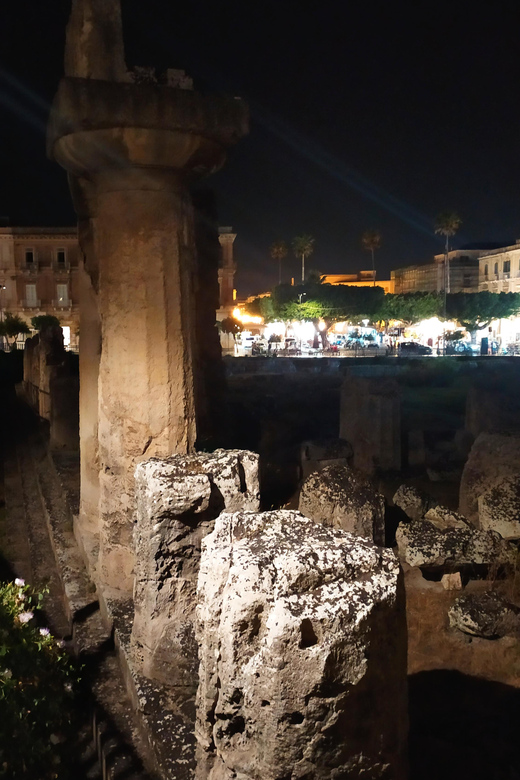
The meeting point is the ruins of the Greek Temple of Apollo, also called the Apollonion. This is a useful starting place because it immediately gives you the oldest layer of the neighborhood.
You do not begin with a modern orientation talk or a long transfer. You meet at an ancient monument, then set off into the streets. That opening helps you understand that Ortigia is not simply a pretty old town. It grew around one of the major centers of ancient Greek Sicily.
The tour description identifies the remains of both Apollo’s Temple and the Temple of Athena as important sights, although the listed route begins specifically at Apollo’s ruins. Ask your guide how the ancient temples relate to the later city as the walk unfolds. That connection between classical remains and later buildings is one of the most valuable parts of the experience.
The temple ruins are an outdoor stop, so the evening light matters. Details may be less stark than they are in full sun, but the lamps create a softer mood. You are likely to appreciate this stop more for its setting and the guide’s explanation than for a long, close inspection of every stone.
Via Dione and Palazzo Montalto
From the temple area, the route continues along Via Dione, where the guide provides about 10 minutes of explanation. This is an early chance to settle into the pace and get a sense of how the ancient core gives way to later streets.
I like the inclusion of Via Dione because a good walking tour should not rush from monument to monument. Streets are part of the story. Their shape, buildings, and connections show how people actually move through the quarter, not just where the most photographed sites happen to be.
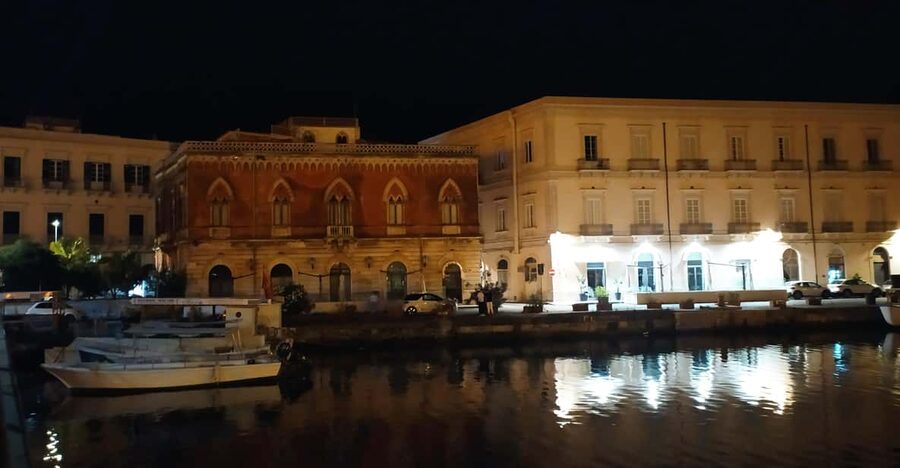
The next stop is Palazzo Montalto, with about five minutes of guided attention. The palace adds a more formal architectural note after the ancient temple. You can expect the guide to point out its place within Ortigia’s collection of historic residences and explain why the building matters.
Five minutes is enough for a focused introduction, but not enough for an interior visit or a detailed architectural study. That is worth keeping in mind. This tour gives you context and an evening overview, not extended time inside each monument.
Via della Maestranza and Via della Giudecca
Via della Maestranza receives about 10 minutes of guiding. This is one of the route’s better opportunities to enjoy Ortigia at street level, where the pleasure comes from looking up, turning corners, and noticing how the old buildings frame the walk.
The street is paired with Via della Giudecca, another 10-minute stop. The names may be unfamiliar before you arrive, but that is exactly why a local guide helps. You can walk these lanes alone, of course, but you may miss the meaning behind the names, the buildings, and the communities that shaped them.
I especially like that the route gives these streets real time instead of treating them as filler between major sights. Ortigia’s character is found in the alleys and piazzas as much as in the temples and churches. The night setting should make this section feel calm and reflective, though the lower light means you will want to watch your footing.
The walking route is compact enough to cover in two hours, but you should not expect long photo breaks at every stop. If you want your own pictures, bring a camera and take them when the guide pauses. A phone is not listed as a required item, but a camera is specifically recommended.
More things to do after dark in Sicily:
- Catania: Mount Etna Morning or Sunset Day Trip with Tasting
★ 4.8 · 4,028 reviews - Catania: Sunset Jeep Tour of Mount Etna and Lava Flow Caves
★ 4.8 · 2,113 reviews - From Milazzo: Panarea and Stromboli Boat Trip by Night
★ 4.2 · 1,605 reviews - Agrigento: Valley of the Temples Skip-the-Line Sunset Tour
★ 4.5 · 1,512 reviews
The Church of Saint John Baptist
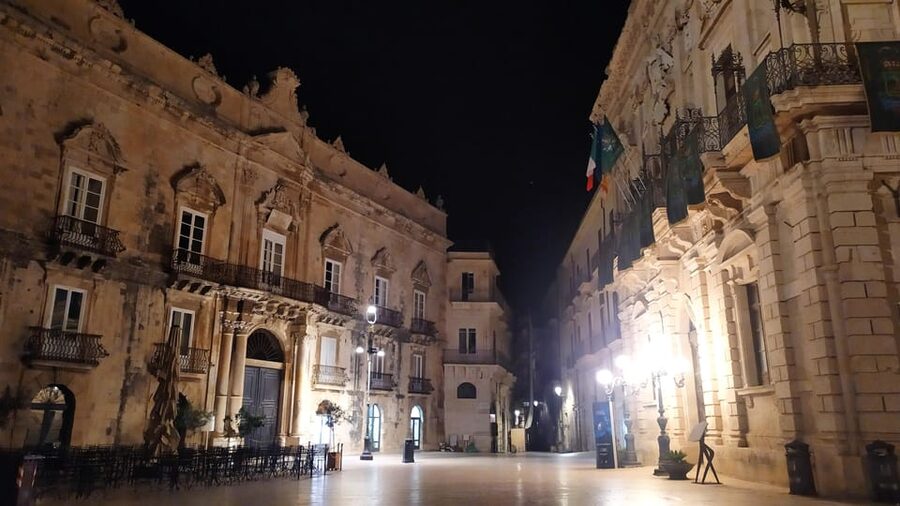
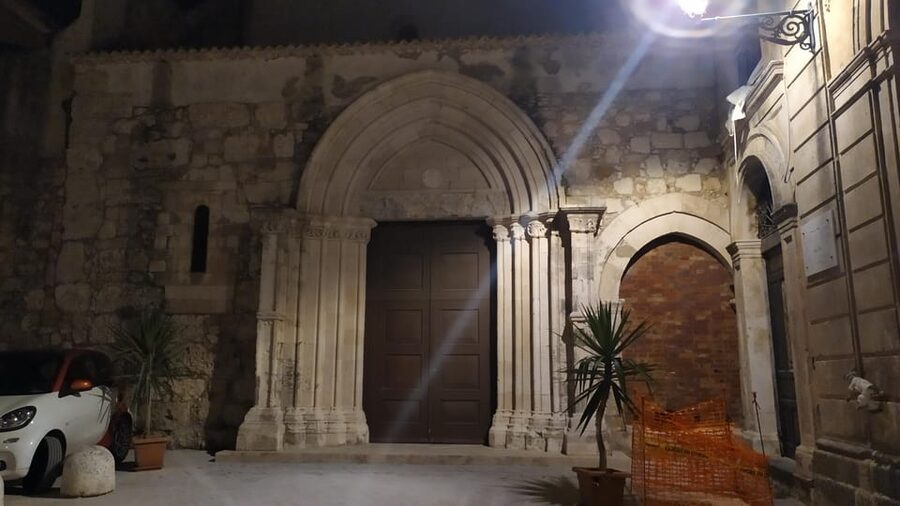
The Church of Saint John Baptist is a shorter stop, with about five minutes of guided explanation. It brings the tour into another religious and architectural layer of Ortigia.
A five-minute visit generally means an exterior-focused look or a concise introduction rather than a full church tour. The value here is in seeing how the church fits the surrounding streets and hearing the guide explain its place among Ortigia’s monuments.
This is also where a guide who tells stories can make a difference. The experience is built around myths, legends, and historical anecdotes, not just dates and names. Galina is praised for tailoring her explanations to different interests, which should help if your group includes children, adults, or people with very different levels of background knowledge.
The church stop will suit you if you enjoy context in small portions. If you want long periods inside religious buildings, this route may feel too brief.
Via Roma and Piazza Duomo
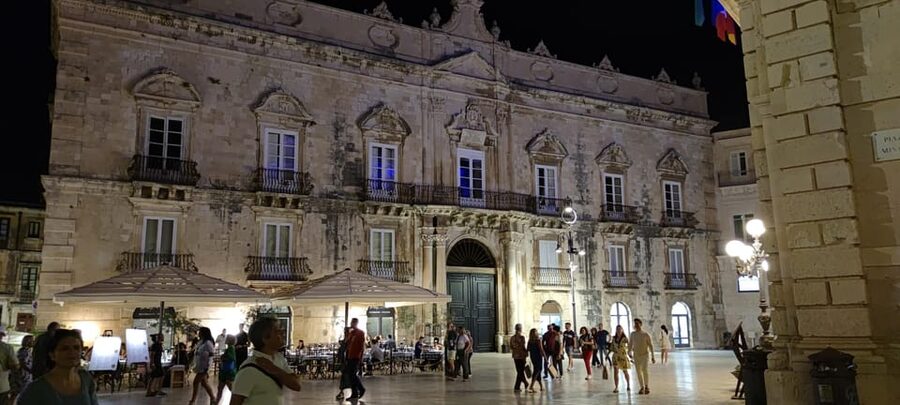
The walk then reaches Via Roma, with about five minutes of guiding. This section continues the transition between street life and major civic architecture. The guide can help you read the buildings as part of a connected urban center rather than isolated photo stops.
Piazza Duomo receives about 10 minutes, making it one of the longer stops on the route. This is likely to be one of the evening’s visual high points, with the square’s Gothic and Baroque architecture showing especially well under the lamps.
The tour highlights Gothic and Baroque palaces across Ortigia, and Piazza Duomo is a natural place to appreciate that architectural mix. I like having this grand square late in the walk, after you have already seen the ancient starting point and the quieter lanes. By then, you have a better sense of how many centuries are packed into a short distance.
The guide’s commentary matters here. A square can look impressive without being easy to understand. Stories about its buildings, monuments, and changes over time give you reasons to pause beyond simply taking a photograph.
You may find the evening light flattering, but it can also hide small details that are clearer during the day. Think of this as a mood-rich introduction. If you want to study carvings or façades closely, return in daylight.
Ending at Fonte Aretusa
The route finishes at Fonte Aretusa, a famous stopping point on the edge of the historic quarter. Ending here gives the walk a natural sense of arrival rather than returning you to the starting ruins.
The itinerary says the activity ends back at the meeting point, while the route also identifies Fonte Aretusa as the finish. Treat the listed endpoint as the practical place where the guided walk concludes, and confirm the exact arrangement when you book if you need to meet transport afterward.
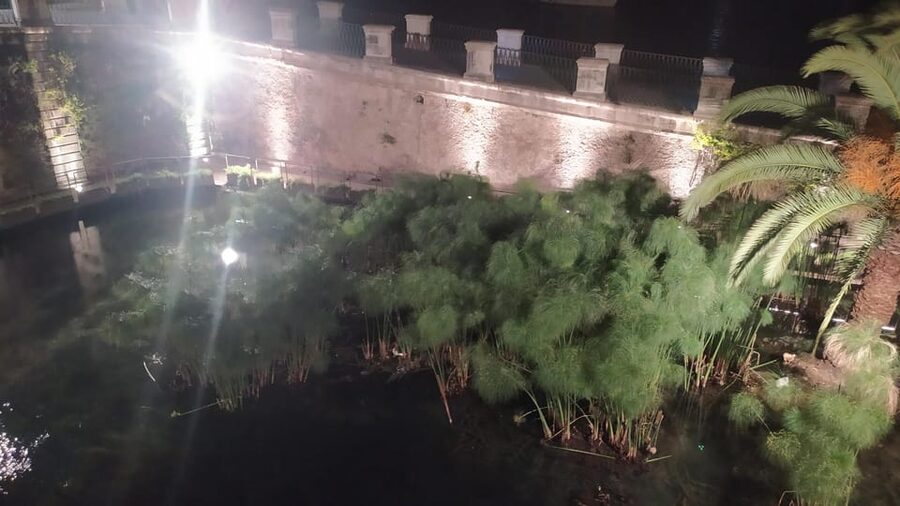
Fonte Aretusa also fits the tour’s theme of myth and legend. Its name and setting connect naturally with the ancient stories that run through the experience. I would save a little attention for the final explanation rather than assuming the last stop is just a place to take a quick picture.
Since there is no hotel pickup or drop-off, you are responsible for getting to the Apollo Temple meeting point and arranging your onward plans. The end point is useful for continuing your evening in Ortigia, but food and drinks are not included.
What the $192.58 group price means
The listed cost is $192.58 per group up to one person, which is an unusual way to display a tour price. You should check the live booking page carefully to confirm how the amount applies to your party and selected time.
If the price is charged as a private group rate, the value depends heavily on how many people share it. For a solo visitor, it is a significant price for two hours. For a larger private party, the cost may make more sense, especially if you value a personal guide and the ability to ask questions.
The supplied information includes groups of seven and eight enjoying the walk, but it does not state a maximum group size or promise a private format. Do not assume either. Confirm the booking terms before paying, particularly because the displayed wording says up to one person.
The tour includes a professional local guide, which is the main thing you are buying. It does not include transport, hotel service, food, or drinks. I would compare the price with your alternatives based on your goals: if you only want to see the streets and take pictures, walking independently costs less. If you want the myths, history, and architectural context in English, the guide adds real value.
You can reserve now and pay later, and free cancellation is available up to 24 hours before the activity for a full refund. Those terms make it easier to fit the walk into a changing Sicily itinerary.
Who will get the most from this evening walk
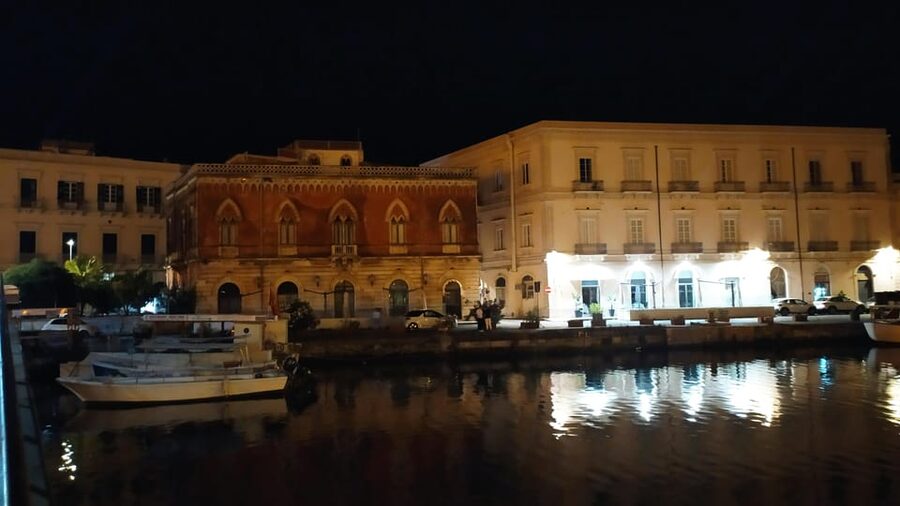
I would recommend this experience to you if you want a gentle introduction to Ortigia with a clear structure. It works particularly well for first-time visitors who do not want to spend their first evening sorting out the old quarter alone.
It should also suit families and mixed-age groups. Galina is praised for working well with a group of eight and for shaping the information around different interests. That does not guarantee the same guide every time, but it gives you a useful sense of the tour’s style.
The walk is a good choice in hot weather, especially during summer. Evening temperatures and softer light can make two hours on foot more comfortable. You still need shoes that can handle historic streets and a pace that keeps you moving.
I would hesitate if you need step-free access, have difficulty walking for two hours, or want a tour focused on entering buildings. The activity is not suitable for wheelchair users, and the schedule allows only short explanations at several stops.
Practical details that affect your evening
The tour lasts two hours, with starting times shown according to availability. Because the experience is tied to night lighting, your start time will affect how dark the streets are and how much of the evening remains afterward.
Wear comfortable shoes. This is the clearest practical instruction, and it matters more than formal clothing. Bring a camera if you want to capture the lamps, ruins, streets, and piazzas.
The tour is in English and uses a live local guide. You should expect spoken explanation throughout the route rather than an audio guide or printed self-guided material.
Plan your own way to the Temple of Apollo. Hotel pickup and drop-off are not included. Food and drinks are also your responsibility, so you can decide whether to eat before the walk or continue to a meal afterward.
The experience has a rating of 4.8 from four submitted ratings. The strongest praise centers on the guides, especially Galina’s friendly manner, local passion, clear knowledge, and ability to adjust the walk for families. That is encouraging, but the small number of ratings means I would treat it as a useful signal rather than a guarantee.
Should you book Ortigia by Night?
Book it if you want stories with your sightseeing, prefer cooler evening walking, and like seeing a city through its streets as well as its headline monuments. The route gives you ancient temples, Gothic and Baroque buildings, churches, alleys, and a myth-linked finish in a compact two-hour format.
Think twice if the price is high for your budget, if you want a full interior tour, or if walking is difficult. Also verify how the displayed group pricing applies to your party before confirming.
For an English-speaking visitor who wants a warm, story-led first look at Ortigia, I see a lot to like here. The atmosphere is the main draw, while the local guide, particularly Galina if she leads your departure, gives the evening its real purpose.
FAQ
How long does the Ortigia night tour last?
The tour lasts two hours.
What language is the tour conducted in?
The live tour guide conducts the experience in English.
Where does the tour begin?
It begins at the ruins of the Greek Temple of Apollo, also called the Apollonion.
Where does the tour finish?
The route finishes at Fonte Aretusa, and the activity information says it ends back at the meeting point. Confirm the exact endpoint arrangement when booking if it affects your plans.
What sights are included on the route?
The route includes Apollo’s Temple, Via Dione, Palazzo Montalto, Via della Maestranza, Via della Giudecca, the Church of Saint John Baptist, Via Roma, Piazza Duomo, and Fonte Aretusa. The experience also highlights the Temple of Athena, Gothic palaces, and Baroque palaces.
Is hotel pickup included?
No. Hotel pickup and drop-off are not included.
Are food and drinks included?
No. You need to arrange your own food and drinks.
Can I cancel for a full refund?
Yes. You can cancel up to 24 hours in advance for a full refund.
Is the tour suitable for wheelchair users?
No. The activity is listed as not suitable for wheelchair users. Comfortable shoes are recommended because the tour involves walking.
Just added around Sicily
- Anti-Mafia Heroes (Cool Hours) Morning Walking Tour★ 5.0 · 3 reviews
- Nicolosi: Excursion Etna Craters at 3000 mt.★ 4.2 · 3 reviews
- DISCOVER THE SECRET OF PALERMO Walking Tour Combining Art and best street food★ 5.0 · 3 reviews
- The art of the Italian Aperitivo with a local: Learn & Enjoy in Palermo★ 5.0 · 3 reviews
- Taormina PRIVATE EAST COAST EXCURSIONS 2 Exclusive Days with Guide Driver★ 5.0 · 3 reviews
- Guided kayak tour inside the Stagnone of Marsala★ 5.0 · 3 reviews
- Monti Rossi Adventure Park Entry Ticket Full★ 5.0 · 3 reviews
- Catania : Diving for patented divers★ 5.0 · 3 reviews
Ortigia Tours, compared.
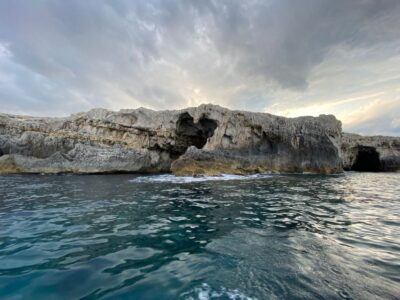
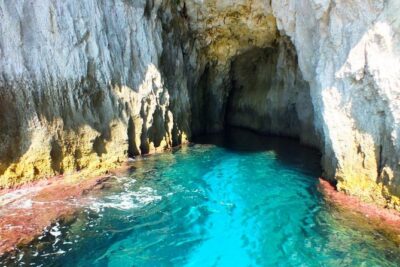
Tour of the island of Ortigia and exploration of sea caves with baths.
Read our review →

Ortigia & Sea Caves Speedboat Tour with Swim Stop
Read our review →

Ortigia Island and Sea Caves Boat Tour with Drinks
Read our review →Browse the lists this tour appears in