
Reviewed · ORTIGIA TOURS
ORTYGIA by night (guided tour)
Ortigia feels made for an evening walk. The sea breeze takes the edge off summer heat, while lamps bring out the honey-colored stone, narrow lanes, and grand facades of Syracuse’s old center. With archaeologist and guide Italo Giordano, you trace the island’s Greek, Jewish, and later Sicilian layers in about two hours.
I like two things right away: the private format for up to 15 people, which lets your group set a comfortable pace, and the timing, which avoids the strongest daytime sun. Italo is also happy to point you toward a restaurant, a useful touch when the walk ends near Fonte Aretusa.
The main consideration is price. At $212.93 per group, it makes better financial sense for a medium or full group than for one or two people. The tour also depends on good weather, and the 24-hour cancellation deadline is firm.
In This Review
- Key points at a glance
- Why Ortigia works so well after sunset
- Starting at the Temple of Apollo
- Through Giudecca, Syracuse’s former Jewish quarter
- Piazza Duomo and Syracuse’s grandest pause
- Ending at Fonte Aretusa
- What the private format adds
- What Italo Giordano brings to the walk
- Price, timing, and the weather rule
- Who should book this Ortigia night walk?
- Should you book it?
- FAQ
- How long does the Ortigia by night tour last?
- Where does the tour begin?
- Where does the tour end?
- Is this a private tour?
- Is the tour offered in English?
- What happens if the weather is poor?
Key points at a glance
- Evening Ortigia setting: Sea air and evening lights make Syracuse’s old center more comfortable and atmospheric in summer.
- Greek beginnings: The Temple of Apollo introduces one of the earliest Greek stone temples in Sicily.
- Jewish Syracuse: Walk the narrow lanes of Giudecca and hear how the Jewish community shaped island life before its expulsion in 1492.
- Piazza Duomo centerpiece: See one of Syracuse’s most striking squares, where many centuries of history meet in one open space.
- Private two-hour walk: Your group alone takes part, with no larger tour to slow the pace.
- A practical finish: The route ends at Fonte Aretusa, close to the waterfront and the evening life of Ortigia.
Why Ortigia works so well after sunset
Ortigia is the small island at the heart of Syracuse, connected to the mainland but distinct in feel. Its old streets are compact enough for a walking tour, yet every turn brings a different period of the city’s past.
At night, the experience is less about checking off monuments and more about seeing how the pieces fit together. Greek remains sit beside later buildings. Narrow lanes lead into broad squares. The sea is never far away, and the evening light softens the stone.
I especially like the timing for a summer visit. A two-hour walk in the middle of the day can feel tiring in Sicily, particularly when the route includes open squares and paved streets. After dark, the cooler air makes it easier to listen, look up, and keep going without rushing.
This is still a history-focused walk, not a food tour or a performance. You should book it if you want context for what you are seeing. If you prefer to spend the evening sampling restaurants or wandering without a set route, a private guide may feel more structured than necessary.
More Ortigia walks in Sicily:
- Syracuse: Boat Trip of Ortigia Island and Sea Caves
★ 4.7 · 937 reviews - Tour of the island of Ortigia and exploration of sea caves with baths.
★ 5.0 · 668 reviews - Siracusa: Ortigia Boat Tour with Marine Grotto
★ 4.7 · 617 reviews
Starting at the Temple of Apollo
The meeting point is the Temple of Apollo, at 96100 Syracuse. This is a smart place to begin because it puts the city’s Greek past at the front of the story rather than treating it as a footnote.
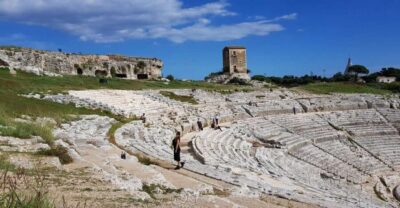
The temple dates to the beginning of the sixth century BC and is one of the oldest examples of a Greek stone temple. Even if you know little about ancient architecture, the age of the site gives the walk a strong opening. You are not simply entering an old neighborhood. You are starting beside the remains of a city with roots reaching back more than two thousand years.
The available details do not specify an interior visit or a separate admission charge, so think of this as a guided stop around the monument rather than a ticketed museum visit. That keeps the evening moving, but it also means you should not book expecting extensive time inside an archaeological site.
Italo Giordano’s background as an archaeologist is particularly suited to this opening. A guide with that training can connect stones and fragments to the wider story of Syracuse, rather than offering only dates and labels. The value is in the explanation: why the temple matters, how early Greek building methods were developing, and how the site fits into Ortigia’s later urban life.
Through Giudecca, Syracuse’s former Jewish quarter
From the Greek beginning, the walk moves into a very different chapter in the Giudecca neighborhood. This was home to one of the largest Jewish communities in the Mediterranean basin. The district was not a ghetto. It was a part of Ortigia where Jewish residents lived and worked as part of the wider society.
That distinction matters. It keeps the story from becoming a simple tale of separation. The narrow lanes offer a chance to discuss a community that was integrated into Syracuse life, while also facing the political and religious pressures of its time.
The Jewish community was expelled in 1492 and did not return to live in Ortigia. That date gives the neighborhood a sharp historical turning point, but the walk’s value is not only in the event itself. It is in seeing how a street pattern and district name can preserve a memory after the people who shaped the area are gone.
You should expect this part of the tour to be more interpretive than monumental. There may not be one enormous building that explains everything at a glance. Instead, Italo’s guidance helps you read the lanes as part of the city’s past.
I like this stop because it broadens the picture of Syracuse. The city is not presented only as an ancient Greek site with attractive Baroque buildings added later. The Giudecca visit adds a human story about coexistence, identity, and forced departure.
The lanes may be uneven or tight, as old streets often are, although the supplied details do not specify a particular accessibility limitation. Most people can participate, and service animals are allowed. If someone in your group has mobility concerns, it is sensible to ask for route details before booking.
Piazza Duomo and Syracuse’s grandest pause
Piazza Duomo is the visual high point of the walk. The square is regarded as one of the most evocative and beautiful in Italy, and its appeal comes from the way it gathers a thousand years of history into one setting.
This is where the evening lighting can make a real difference. Daylight helps you study details, but night gives the square a more theatrical sense of place. Pale stone catches the lamps, the open space provides a break from the narrow lanes, and the buildings around the piazza become easier to appreciate as a group.
The tour description does not list every structure in the square, so I would not book this expecting a building-by-building architectural lecture. Instead, expect Piazza Duomo to work as a broad historical stop. It brings together the layers you have already encountered: ancient Syracuse, religious change, and the later shape of the island’s historic center.
This is also a good point to notice the rhythm of the walk. The route alternates between close, enclosed streets and an expansive public square. That variety prevents a two-hour stroll from feeling repetitive.
More things to do after dark in Sicily:
- Catania: Mount Etna Morning or Sunset Day Trip with Tasting
★ 4.8 · 4,028 reviews - Catania: Sunset Jeep Tour of Mount Etna and Lava Flow Caves
★ 4.8 · 2,113 reviews - From Milazzo: Panarea and Stromboli Boat Trip by Night
★ 4.2 · 1,605 reviews - Agrigento: Valley of the Temples Skip-the-Line Sunset Tour
★ 4.5 · 1,512 reviews
Ending at Fonte Aretusa
The official end point is Fonte Aretusa, at 96100 Siracusa. The fountain is one of Ortigia’s best-known waterfront landmarks, and finishing here gives the walk a natural sense of arrival.
The route begins at an ancient temple and ends beside water, linking two images that define the island: archaeology and the sea. You can use the final stop as a chance to pause after the historical discussion and enjoy Ortigia’s evening atmosphere.
Because the walk ends here rather than returning to the starting point, pay attention to the route when planning the rest of your night. The finish is convenient if you want to continue along the waterfront or find dinner in the center, but you should not assume the guide will escort you back to the Temple of Apollo.
One practical bonus is Italo’s willingness to suggest a restaurant. That can be helpful after a short evening tour, especially if you want local advice rather than picking a place at random. It is not a meal included in the experience, so treat the recommendation as an extra bit of guidance, not part of the package.
What the private format adds
This is a private activity, meaning only your group takes part. The maximum group size is 15, and that changes how the two hours can work.
With a small group, you can usually ask questions without feeling you are holding up a crowd. A larger family group or group of friends can also stay together instead of splitting across several guides. Since the route passes through narrow streets, having your own group may make the walk feel calmer than joining a large public outing.
The format is less useful if you are alone or traveling as a couple and mainly want the lowest possible cost. The $212.93 price is charged per group, not per person. For the full group of 15, that works out to about $14.20 each. For four people, it is about $53.23 each, and for two people, about $106.47 each.
Those figures show the value clearly. Families, reunions, and groups of friends can get a good rate when several people share the cost. Solo visitors and couples may prefer a less expensive group walk unless having a private guide is a top priority.
The duration is about two hours, long enough to cover the listed neighborhoods and landmarks without taking over the entire evening. I see that as a strength. You get a focused introduction to Ortigia, then still have time for dinner or an independent walk.
What Italo Giordano brings to the walk
Italo Giordano is identified as an archaeologist and tour guide. That combination suits a route that moves from a Greek temple to a Jewish neighborhood and then into one of Sicily’s most important historic squares.
The best use of his role is to ask questions that connect places together. For example, you might ask how the ancient temple area relates to the later city, or how the Jewish quarter fits into the social history of Ortigia. The supplied feedback also highlights his friendly manner, his passion for Syracuse, and his willingness to offer a restaurant suggestion.
A second point comes from the French-language description of the experience: the evening timing helps avoid the heat, and the route reaches areas away from the thickest crowds. That is useful advice for summer. You get a more comfortable walk and a chance to see less obvious corners of the island rather than staying only in its famous squares.
Since the tour is offered in English, English-speaking visitors can book with confidence on that point. The available information does not say how much formal commentary is given at each stop, so the experience will likely depend on the questions you bring and the pace your group prefers.
Price, timing, and the weather rule
The $212.93 group price needs to be judged against the private format, not compared directly with a cheap public walking tour. You are paying for a dedicated guide, a route built around your interests, and the ability to keep the whole group together.
For a group of several people, the cost can be reasonable. For one or two, it is a substantial outlay for a two-hour activity. I would book it when you want historical interpretation and personal attention, not simply a pleasant nighttime stroll.
Confirmation is sent within 48 hours of booking, subject to availability. That matters if your Syracuse plans are tight. Do not leave this until the last minute if the evening is the only time you can take the walk.
The cancellation policy allows a full refund if you cancel at least 24 hours before the start time. Changes or cancellations made inside that window are not accepted for a refund. The cut-off follows local time in Sicily.
Good weather is required. If poor weather forces cancellation, you will be offered another date or a full refund. Because the route is outdoors and takes place on foot, this is a fair condition, but it means you should keep some flexibility in your schedule.
Who should book this Ortigia night walk?
I would choose this tour for a group that wants a thoughtful first look at Syracuse without spending half a day in the sun. It is especially suitable for:
- Friends or families who can share the private group price
- History fans who want Greek and Jewish context in the same walk
- Summer visitors who prefer sightseeing after the heat fades
- People who like asking questions and adjusting the pace
- First-time visitors who want help finding the historic center’s main areas
I would hesitate if you want a late-night activity with food, drinks, or entertainment. None of those are included. I would also think twice if your group is very small and cost matters more than having a private guide.
The two-hour length makes it easy to fit into a larger Syracuse visit. It can work as an orientation on your first evening, or as a final look at Ortigia after you have spent the day exploring elsewhere.
Should you book it?
Book it if you want Ortigia explained, not just photographed. The route covers four strong themes: the Greek origins of Syracuse, the former Jewish quarter, the grand sweep of Piazza Duomo, and the waterfront finish at Fonte Aretusa.
The strongest reasons are the cooler evening timing, the private group setup, and Italo Giordano’s archaeological background. The main weakness is the group price for couples or solo visitors, plus the need to keep the evening open for weather.
For a group of four or more, I think the value becomes much easier to justify. You get a compact, well-focused introduction to Syracuse, useful historical context, and a finish that leaves you in the right place for the rest of the night.
FAQ
How long does the Ortigia by night tour last?
The tour lasts approximately two hours.
Where does the tour begin?
The meeting point is the Temple of Apollo in Syracuse, at 96100 Syracuse, Italy.
Where does the tour end?
The walk ends at Fonte Aretusa, at 96100 Siracusa SR, Italy.
Is this a private tour?
Yes. Only your group participates, with a maximum group size of 15 people.
Is the tour offered in English?
Yes. English is one of the listed tour languages, and the experience is offered in English.
What happens if the weather is poor?
The experience requires good weather. If it is canceled because of poor weather, you will be offered a different date or a full refund. You can also cancel for a full refund if you do so at least 24 hours before the start time.
Just added around Sicily
- Anti-Mafia Heroes (Cool Hours) Morning Walking Tour★ 5.0 · 3 reviews
- Nicolosi: Excursion Etna Craters at 3000 mt.★ 4.2 · 3 reviews
- DISCOVER THE SECRET OF PALERMO Walking Tour Combining Art and best street food★ 5.0 · 3 reviews
- Taormina PRIVATE EAST COAST EXCURSIONS 2 Exclusive Days with Guide Driver★ 5.0 · 3 reviews
- The art of the Italian Aperitivo with a local: Learn & Enjoy in Palermo★ 5.0 · 3 reviews
- Monti Rossi Adventure Park Entry Ticket Full★ 5.0 · 3 reviews
- Guided kayak tour inside the Stagnone of Marsala★ 5.0 · 3 reviews
- Catania : Diving for patented divers★ 5.0 · 3 reviews
Ortigia Tours, compared.
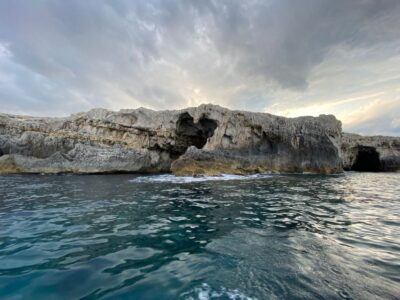
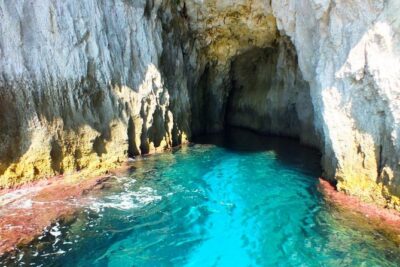
Tour of the island of Ortigia and exploration of sea caves with baths.
Read our review →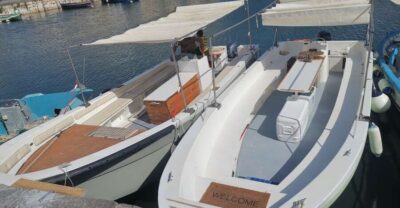

Ortigia & Sea Caves Speedboat Tour with Swim Stop
Read our review →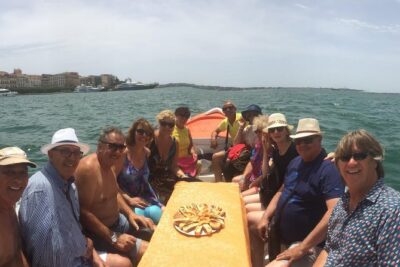

Ortigia Island and Sea Caves Boat Tour with Drinks
Read our review →Browse the lists this tour appears in