
Reviewed · ORTIGIA TOURS
Ortigia guided night tour, Syracuse
Ortigia changes character after sunset. The old lanes grow quiet, stone facades catch the light, and fountains and squares feel more theatrical than they do under the hot Sicilian sun. This two-hour walk takes you from the ancient Temple of Apollo to the legendary Arethusa Spring, with the main sights of Syracuse packed into one easy evening route.
I especially like the nighttime atmosphere and the way the route links several centuries of Syracuse in a short distance. I also like having a live guide explain how Greek, Roman, Byzantine, Arab, Norman, and Swabian influences changed the island. The main limitation is simple: you do not enter the cathedral, and the tour is primarily an exterior walking experience.
In This Review
- Five details to know before you book
- Why Ortigia works so well after dark
- Starting at the Temple of Apollo
- Piazza Archimede and the Diana Fountain
- Piazza Duomo and the cathedral’s changing form
- Palazzo Bellomo and the historic quarter
- Via Castello Maniace and the castle at the island’s tip
- Palazzo Montalto among Ortigia’s lanes
- The legend of Arethusa Spring
- How the two-hour route feels in practice
- Is $88 a fair price?
- Who should book this evening walk?
- Practical booking advice
- Should you book the Ortigia night tour?
- FAQ
- Where does the Ortigia night tour start?
- Where does the tour finish?
- How long does the experience last?
- Which landmarks are included?
- Can I visit Syracuse Cathedral inside?
- Which languages are available?
- Is the tour wheelchair accessible?
Five details to know before you book
- The route begins and ends at the Temple of Apollo, making it easy to understand where you are before exploring the lanes.
- Maniace Castle is viewed at night, when its position at Ortigia’s tip gives the walk one of its strongest visual moments.
- Piazza Duomo receives the longest central stop, with time to hear how Syracuse’s cathedral changed through successive periods.
- Arethusa Spring closes the route, pairing a waterside monument with one of Ortigia’s best-known legends.
- The guide speaks Italian, English, or Russian, and the walk is listed as wheelchair accessible.
- The price is $88 per person, which makes the guide’s historical storytelling and compact coverage important to the value.
Why Ortigia works so well after dark
Ortigia is the small island at the heart of Syracuse, joined to the mainland by bridges and filled with narrow streets, grand squares, churches, palaces, and traces of ancient settlement. This tour does not ask you to spend a full day inside museums. Instead, it gives you a clear evening introduction to the island’s main monuments.
That timing matters in Sicily. A night walk can be more comfortable than a midday circuit, especially when you are already spending your days among archaeological sites and busy city streets. It also changes the mood of the architecture. Pale stone, sculpted doorways, fountains, and church facades take on sharper edges beneath street lighting.
Your guide supplies the thread that connects the sights. Without that context, Ortigia can feel like a beautiful maze. With an explanation of its many colonisations and changes, the island becomes a place shaped by layers of power, religion, trade, and rebuilding.
The tour has a strong reputation for a prepared, kind guide who explains the history clearly and keeps the experience friendly. That matters here because the walk depends more on narration than on entry tickets or formal demonstrations.
More Ortigia walks in Syracuse:
- Siracusa: Ortigia Boat Tour with Marine Grotto
★ 4.7 · 617 reviews - Siracusa: Ortigia & Sea Caves Speedboat Tour with Swim Stop
★ 4.9 · 499 reviews - Syracuse: Pillirina, Ortigia, and Sea Caves Tour by Boat
★ 4.6 · 348 reviews
Starting at the Temple of Apollo
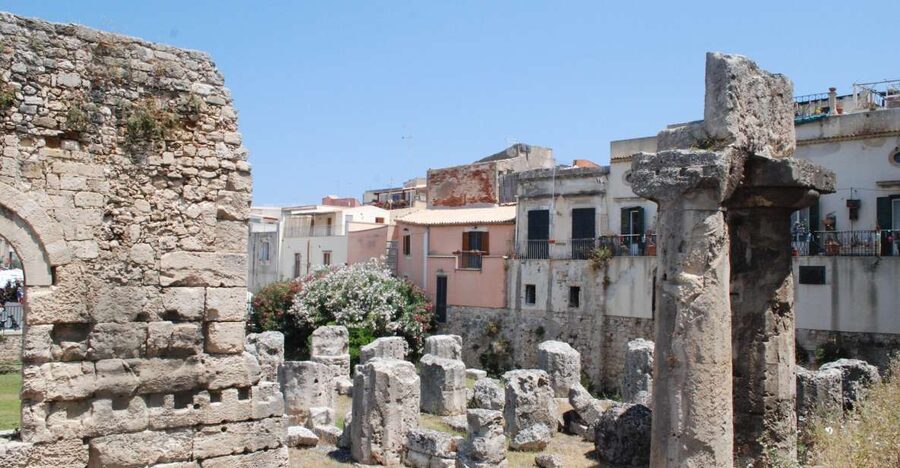
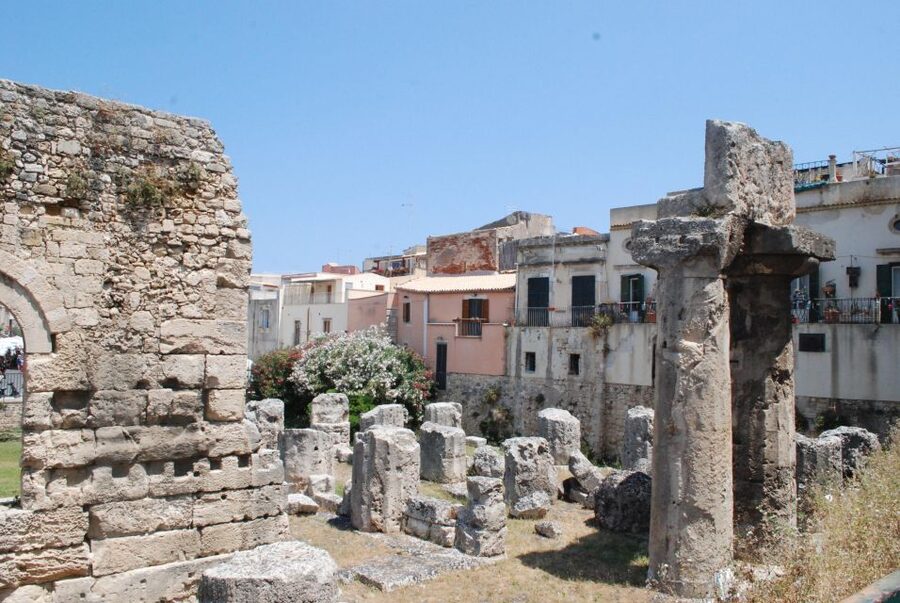
The meeting point is the Temple of Apollo, and that is a smart place to begin. It immediately gives you a sense of the island’s age. The remains belong to one of the oldest Doric temples in the Greek West, so your first stop reaches back far beyond the medieval and Baroque buildings you will see later.
You spend about 15 minutes here. That is enough for an introduction to the monument and the wider story of Syracuse, though not enough for a long archaeological lecture. I would arrive ready to listen rather than expecting an extended site visit.
The temple is an outdoor stop, so the experience depends on the guide’s explanation and your ability to see the remains in the evening light. This is also where the group starts and later returns, giving the route a useful beginning and end point.
Piazza Archimede and the Diana Fountain
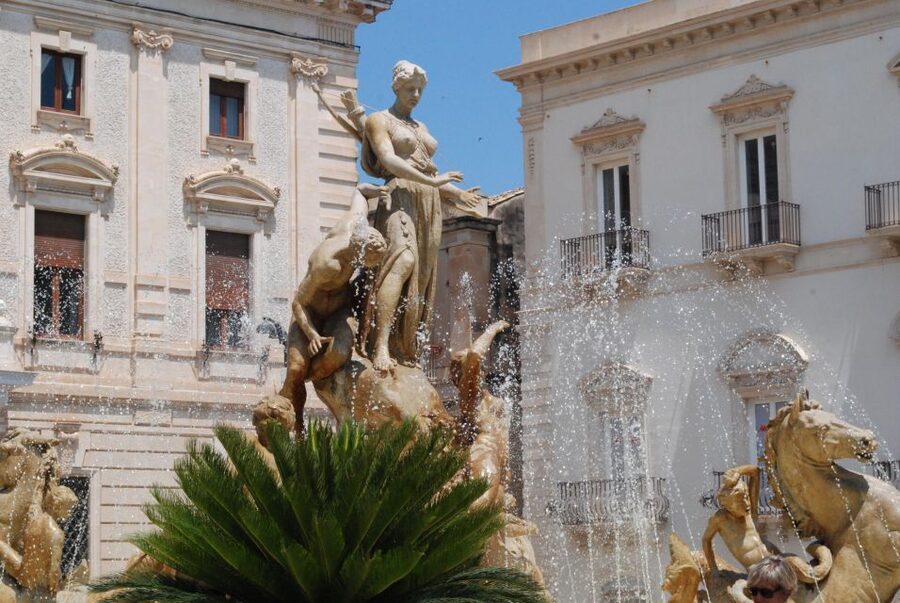
From Apollo’s Temple, the walk continues to Piazza Archimede. The stop lasts about 10 minutes and focuses on the square’s Diana Fountain, created in 1907.
This is a shorter pause, but it helps show that Ortigia is not only an ancient Greek site. The fountain belongs to a much later chapter in the city’s public art and urban design. Your guide can place the square within the changing identity of Syracuse, moving the story from antiquity into the modern city.
Do not expect a long visit here. Piazza Archimede works best as a compact orientation stop while you move through the old center. The value comes from seeing how a public square, a fountain, and surrounding historic buildings fit into the route.
Piazza Duomo and the cathedral’s changing form
Piazza Duomo receives about 25 minutes, one of the longest stops on the walk. It is the architectural center of the evening and a good place to slow down.
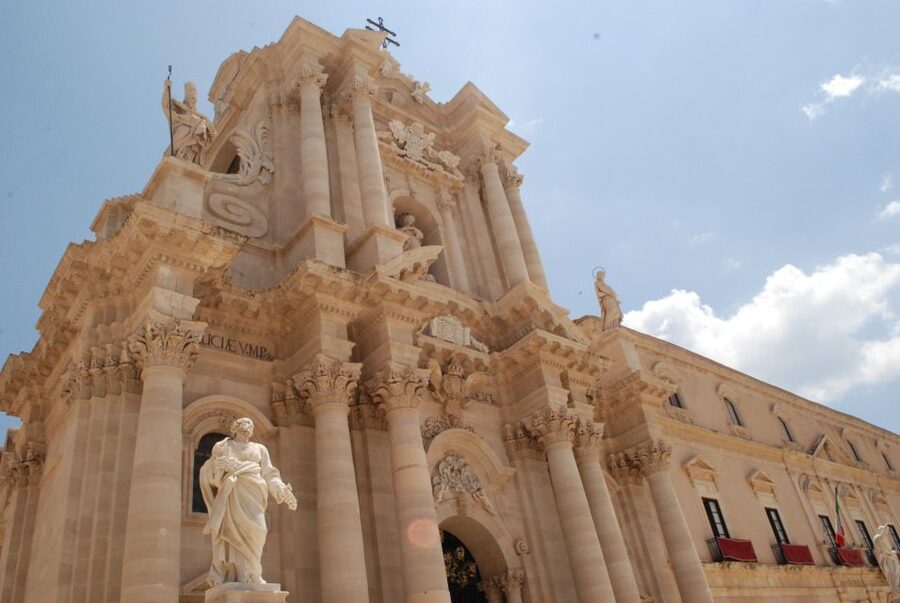
The cathedral is steeped in centuries of change. Your guide explains how the church was affected by the different powers that ruled Syracuse and how its form developed over time. This is not just a stop to admire a grand facade. It is a lesson in how one building can preserve traces of several eras.
You will not go inside the cathedral. That restriction is important if interior art, chapels, or religious architecture are your main reason for booking. The guide can explain the building from the square, but this tour does not replace a separate cathedral visit.
Even so, the exterior setting gives the guide room to explain the relationship between the church and the piazza. The open space makes it easier to take in the scale of the building, while the evening light gives the stone a softer appearance.
More things to do after dark in Syracuse:
- Syracuse: Ortigia Sunset Cruise with Aperitif
★ 4.8 · 291 reviews - Siracusa: Ortigia & Sea Caves Boat Tour with Sunset Apertif
★ 4.9 · 94 reviews - Syracuse: Sunset cruise including aperitif and swim stop
★ 4.9 · 9 reviews - Syracuse: Sunset Aperitif Tour
★ 4.4 · 4 reviews
Palazzo Bellomo and the historic quarter
The next stop is Palazzo Bellomo, with about 10 minutes to observe the building from outside. The palace is connected with the historic fabric of Ortigia and now houses the regional gallery, but this experience does not include an indoor museum visit.
That distinction keeps the pace moving. You get a look at a significant historic building without turning the two-hour walk into a museum tour. If you have already visited galleries during your Sicily trip, you may appreciate the change of rhythm.
This stop also makes sense because Ortigia’s appeal lies in its streets as much as in its headline monuments. Palaces appear along lanes that can feel modest at first glance. A guide helps you notice the age and purpose of buildings you might otherwise pass without a second look.
Via Castello Maniace and the castle at the island’s tip
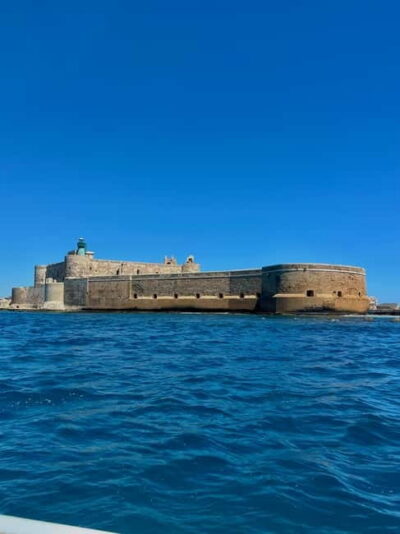
The route then heads along Via Castello Maniace for about 25 minutes. This is one of the longer sections and leads toward Maniace Castle at the tip of Ortigia.
The castle is one of the major monuments associated with the Swabian period. Its location gives this part of the walk a strong sense of place. You are not simply looking at another building in a square. You are moving toward the edge of the island, where the castle forms a clear endpoint to the old city.
At night, the setting becomes especially atmospheric. The lighting, the stone, and the castle’s position combine to make this one of the most memorable portions of the route. Your guide explains its place in Syracuse’s past, while you get time to take in the exterior.
Again, this is an observation stop rather than a castle admission. If you want to explore the interior, you will need another visit. For an evening orientation, though, the outside view is a worthwhile use of time.
Palazzo Montalto among Ortigia’s lanes
Palazzo Montalto receives about 10 minutes. The palace is described as a historic building tucked among Ortigia’s lanes, and that setting is part of its appeal.
Unlike a large square or a prominent fortress, Palazzo Montalto rewards attention to the smaller details of the old center. This is the sort of stop where the guide’s explanation helps you understand why an apparently quiet building matters.
The brief timing keeps the tour from becoming too formal. You see the palace, hear its place in the city’s story, and continue through the surrounding streets. I would treat this as a context stop rather than a major photo session or an extended architectural study.
The legend of Arethusa Spring
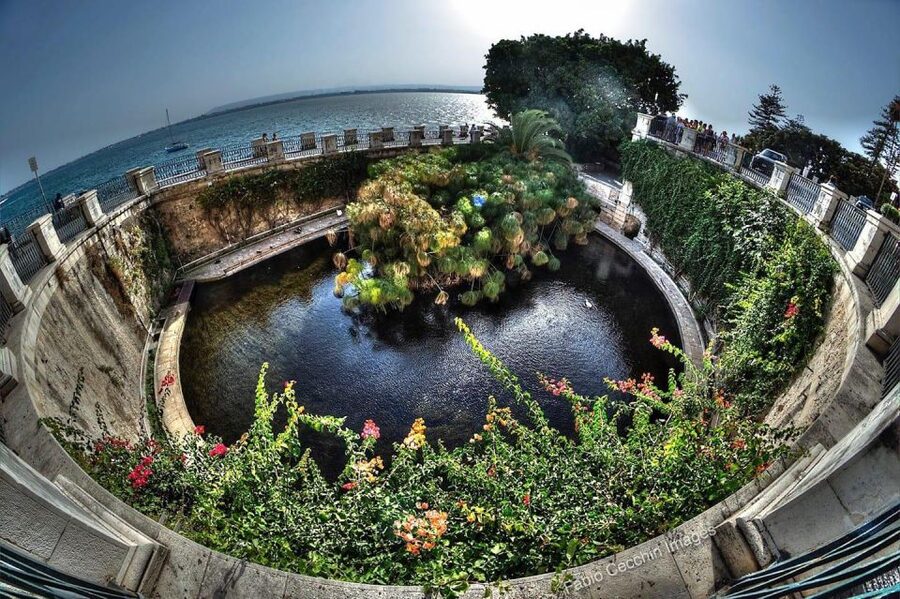
The final major stop is Fonte Aretusa, or Arethusa Spring, with about 25 minutes. The spring is one of Ortigia’s best-known landmarks and a natural place to finish a night tour.
Its importance is not only physical. The spring is tied to a classical legend, and the guide introduces you to that story as part of the stop. This gives the ending a different tone from the earlier monuments. Instead of focusing only on walls, columns, and political periods, you finish with myth and water.
The spring also reinforces the unusual character of Ortigia. Ancient stories, urban life, and the sea are closely linked on this small island. You do not need a long lecture to appreciate the setting, but the legend gives the place a stronger identity than a simple fountain or waterside view.
With about 25 minutes here, you have time to listen and look around before the route returns to the Temple of Apollo. The walk does not finish at a restaurant or include food and drinks, so plan your own evening meal separately.
How the two-hour route feels in practice
The schedule adds up to a compact circuit with stops of 10 to 25 minutes. That structure gives you broad coverage without asking you to spend an entire evening on one monument.
You should expect steady walking through old streets and open public spaces. The tour is wheelchair accessible, which is useful information for anyone who needs a more carefully considered route. Specific surface details and group size are not provided, so you may want to confirm any personal mobility concerns before booking.
The guide speaks Italian, English, and Russian. The quality of the evening depends heavily on the language you choose and on the guide assigned, but the strongest feedback points to a guide who is well prepared, kind, friendly, and clear when discussing local history.
This is not a private archaeological seminar. It is a guided introduction to the main sights, delivered at night, with enough explanation to make the streets and monuments meaningful. If you prefer slow photography, long museum stops, or free time at each landmark, the fixed two-hour schedule may feel brisk.
Is $88 a fair price?
At $88 per person, this is not a bargain-priced stroll. You are paying for a qualified live guide, a two-hour route, and the convenience of seeing many of Ortigia’s key monuments in one organized evening.
The value is strongest if you are new to Syracuse, have limited time, or want a historical framework before exploring independently. A good guide can help you understand why the Temple of Apollo, Piazza Duomo, Maniace Castle, and Arethusa Spring belong to one connected story rather than four unrelated photo stops.
The value is weaker if you already know Ortigia well, speak Italian comfortably, or plan to visit the same monuments with a separate guide. Since meals, drinks, and interior admissions are not included, you should count those costs separately.
Still, the route covers a lot in two hours. You get ancient remains, a 1907 fountain, a cathedral, a historic palace, a Swabian castle, another old palace, and a legendary spring. For a first evening in Syracuse, that broad view can justify the price.
Who should book this evening walk?
I would recommend it most strongly to first-time visitors who want a clear introduction without committing to a full-day tour. It suits couples and small groups looking for an atmospheric night activity, as well as history-minded visitors who want the main landmarks explained in one sitting.
It also works well for anyone who prefers a guide to set the route. Ortigia’s lanes can be confusing at first, and the walk gives you a mental map you can use later when you return for dinner or daytime sightseeing.
Families may appreciate the two-hour limit, though the amount of historical explanation may suit older children better than very young ones. The wheelchair-accessible designation is helpful, but you should still ask for route details if surface conditions are a concern.
I would choose another activity if your top priority is entering the cathedral, visiting the gallery at Palazzo Bellomo, or touring Maniace Castle indoors. This experience is about the island’s streets, exteriors, atmosphere, and stories.
Practical booking advice
The activity offers free cancellation up to 24 hours before the start time, and you can reserve now while paying later. That flexibility helps if your Syracuse plans depend on weather or changes to your evening schedule.
Starting times vary, so check availability before you book. Since the appeal depends on darkness and evening lighting, select a time that gives you the nighttime setting promised by the route.
Wear comfortable shoes and keep your plan simple around the tour. The walk lasts two hours, and there is no meal or drink included. You can finish back at the Temple of Apollo and then choose your own restaurant or evening stop.
Should you book the Ortigia night tour?
Book it if you want a guided first look at Syracuse after dark, with the island’s major monuments linked by history and local legend. The prepared, friendly guiding style is a major part of the experience, and the route gives you strong coverage in a short time.
Skip it if you need interior visits or prefer to explore at your own pace. For most first-time visitors, though, $88 buys a useful introduction to Ortigia’s ancient remains, grand squares, palaces, castle, and spring, all under the softer light of evening.
FAQ
Where does the Ortigia night tour start?
The tour starts at the Temple of Apollo in Ortigia, Syracuse.
Where does the tour finish?
The route returns to the Temple of Apollo at the end of the two-hour walk.
How long does the experience last?
The guided tour lasts two hours.
Which landmarks are included?
The route includes the Temple of Apollo, Piazza Archimede, Piazza Duomo, Palazzo Bellomo, Maniace Castle and Via Castello Maniace, Palazzo Montalto, and Arethusa Spring.
Can I visit Syracuse Cathedral inside?
No. The guide explains the cathedral and its changes from Piazza Duomo, but the church interior is not included.
Which languages are available?
The live guide is available in Italian, English, and Russian.
Is the tour wheelchair accessible?
Yes. The activity is listed as wheelchair accessible.
Just added around Syracuse
- Sicily Boats Avola: Plemmirio boat tour 4 people 4 hours★ 5.0 · 3 reviews
- From Syracuse: Private Taormina and Castelmola tour with lunch★ 5.0 · 3 reviews
- Siracusa Iris Photography Experience★ 5.0 · 3 reviews
- Siracusa E-bike rental service★ 5.0 · 3 reviews
- Tour Ragusa Ibla, Modica and Noto, from Syracuse★ 5.0 · 3 reviews
- Cyclops Tour★ 4.5 · 3 reviews
- Archaeological Syracuse: Neapolis Park private tour★ 5.0 · 3 reviews
- Tour of Syracuse by Ape Calessino★ 3.0 · 3 reviews
Ortigia Tours, compared.
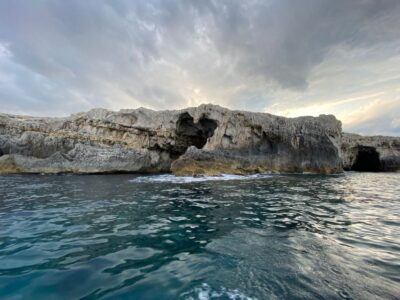
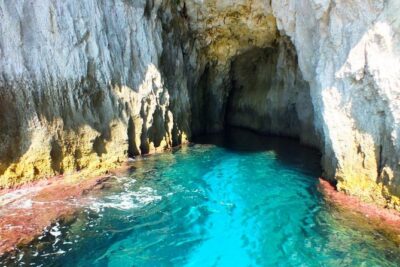
Tour of the island of Ortigia and exploration of sea caves with baths.
Read our review →

Ortigia & Sea Caves Speedboat Tour with Swim Stop
Read our review →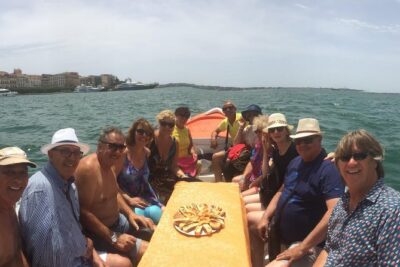

Ortigia Island and Sea Caves Boat Tour with Drinks
Read our review →Browse the lists this tour appears in