
Reviewed · AGRIGENTO TOURS
Agrigento: Private Tour of Ancient Akragas with Local Guide
The most striking part of this Agrigento tour is the setting: a long archaeological area where Doric temples rise above the Sicilian countryside. In two hours, your licensed guide leads you from the Temple of Juno to Concordia, Hercules, and Jupiter, explaining how this Greek city once filled the valley with grand religious buildings.
I like the private-group format, which lets you focus on the ruins that interest you instead of following a large public crowd. I also like the clear route and the mix of famous monuments, prickly pear plants, broad views, and Igor Mitoraj’s fallen Icarus statue. The main consideration is cost: at $326.26 for the group, the tour makes more sense when shared by several people, and admission tickets are extra.
In This Review
- Key points to know before you go
- Why Ancient Akragas makes such a strong first stop
- Starting at the Temple of Juno
- Temple of Concordia and the fallen Icarus
- The Temple of Hercules and the path through the valley
- The Temple of Jupiter and the giant Telamon
- What the private format is worth
- Timing, meeting point, and useful planning
- Who will get the most from this tour
- Should you book the Ancient Akragas tour?
- FAQ
- How long does the tour last?
- Where does the tour begin?
- Where does the activity end?
- Are entry tickets included?
- Is the museum included?
- What monuments are visited?
- Is this a private tour?
- Which languages are available?
- Can I cancel the booking?
Key points to know before you go
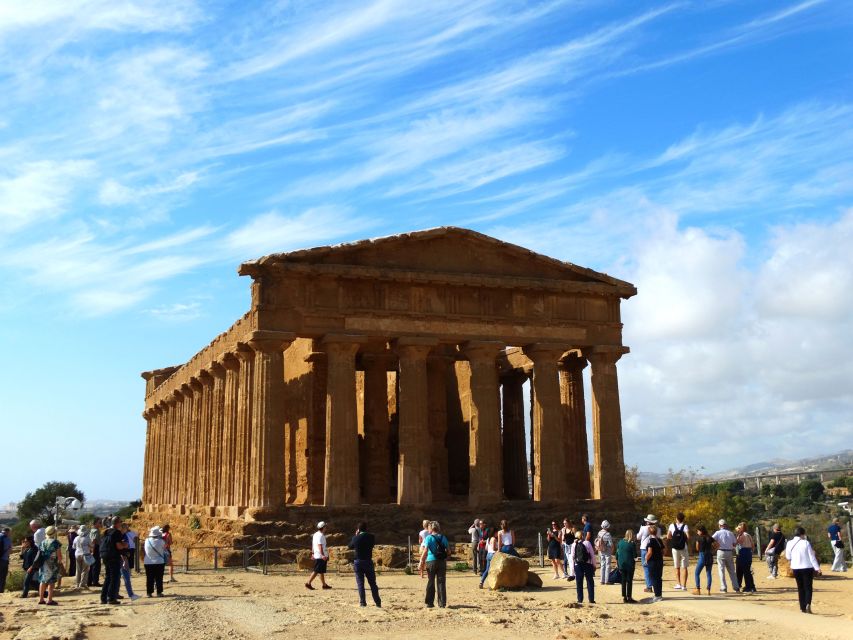
- Temple of Concordia is the star stop: Its excellent preservation makes it one of the most impressive Greek temples outside Greece.
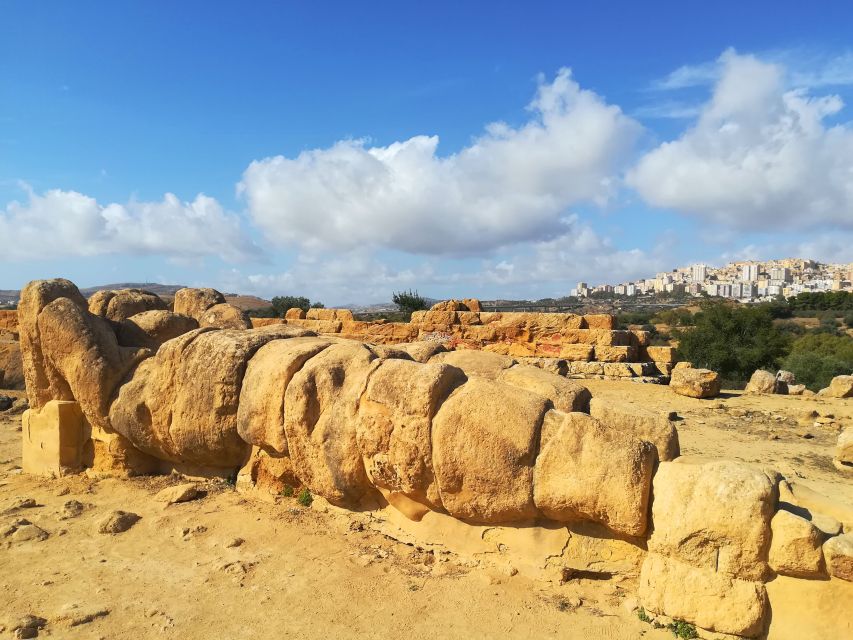
- The seven-meter Telamon gives Jupiter’s ruins scale: This reconstructed giant shows how enormous the original temple was.
- The route begins at Juno: Meet your guide outside the largest ticket office and car park near the Temple of Juno.
- You get a private guide for two hours: The group can include up to 25 people, with Italian, English, French, German, or Spanish available.
- Tickets are not included: Buy archaeological-area entry at the on-site ticket office, and note that the museum is separate.
- The tour stays focused on the valley: It returns to the same meeting point rather than providing transport elsewhere in Agrigento.
Why Ancient Akragas makes such a strong first stop
Agrigento’s ancient name was Akragas, and the Valley of the Temples is its defining sight. The area is not a single enclosed temple square. It is a broad archaeological zone with a series of Doric monuments placed along the old city’s southern edge.
That arrangement matters. As you walk between the ruins, you see the temples as part of a larger Greek city rather than as isolated stones. The route also gives you changing views across the valley, with the remains framed by prickly pear plants and open Sicilian scenery.
A guide is especially useful here because the ruins can look deceptively simple at first. A row of columns tells only part of the story. Your guide can point out the purpose of each temple, explain the surviving architectural details, and help you understand why some buildings remain upright while others survive only as scattered blocks.
The two-hour length is a sensible choice if you want a focused introduction. It is long enough to cover the main temples named in the route, but short enough to fit into a busy day in Agrigento. You will not be trying to absorb every corner of one of the world’s largest archaeological areas, so this works best as a highlights tour rather than a full-day study visit.
A few more Agrigento tours and experiences worth weighing up
- Agrigento: Valle dei Templi Fast-Track Ticket & Smart Guide
★ 4.1 · 344 reviews - Agrigento: Valley of the Temples Entry Ticket & Audio Guide
★ 4.1 · 268 reviews - Agrigento – Valley of the Temples – audio guide
★ 3.9 · 43 reviews
Starting at the Temple of Juno
The meeting point is outside the ticket office and car park at the Temple of Juno, described as the largest ticket office in the area. Look for a licensed guide wearing a clearly visible license badge around the neck.
Beginning at Juno puts you directly among some of the most dramatic remains. The Temple of Hera Lacinia, known to the Romans as Juno, was built around 450 BC on the hill of the Rupe Atenea. Its position, about 120 meters high according to the tour details, helps explain the wide views from this part of the site.
The temple follows the Doric style, with sturdy columns and a strong, simple shape. It was dedicated to Juno, a goddess associated with women and fertility. The description also connects the temple with wedding celebrations and a painting that may have represented the goddess.
That uncertainty is worth keeping in mind. Ancient sites often leave us with clues rather than complete answers. A good guide can make that uncertainty useful, showing you how scholars interpret the evidence without pretending every detail is known.
This first stop also sets the physical rhythm for the tour. You will be walking along paths between monuments rather than moving from one indoor exhibit to another. The views are part of the experience, and the high position near Juno gives you an immediate sense of why the temples were placed so prominently.
Temple of Concordia and the fallen Icarus
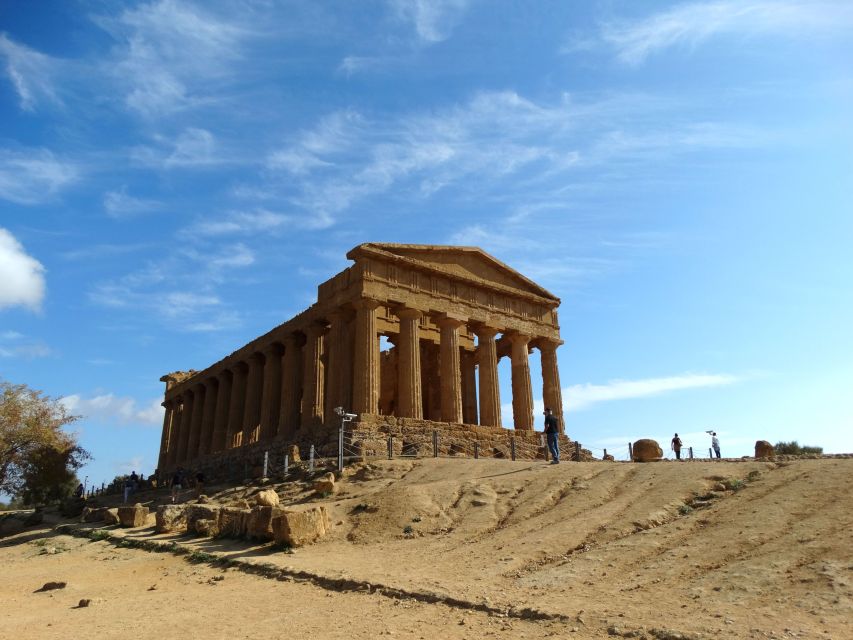
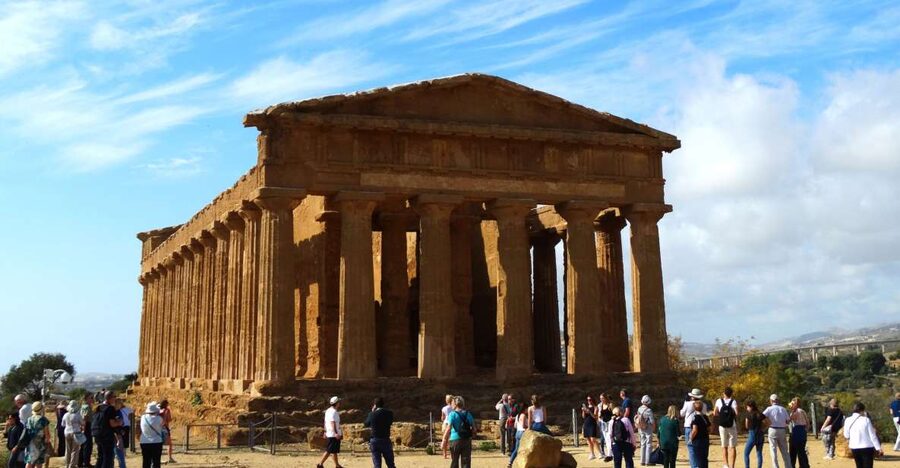
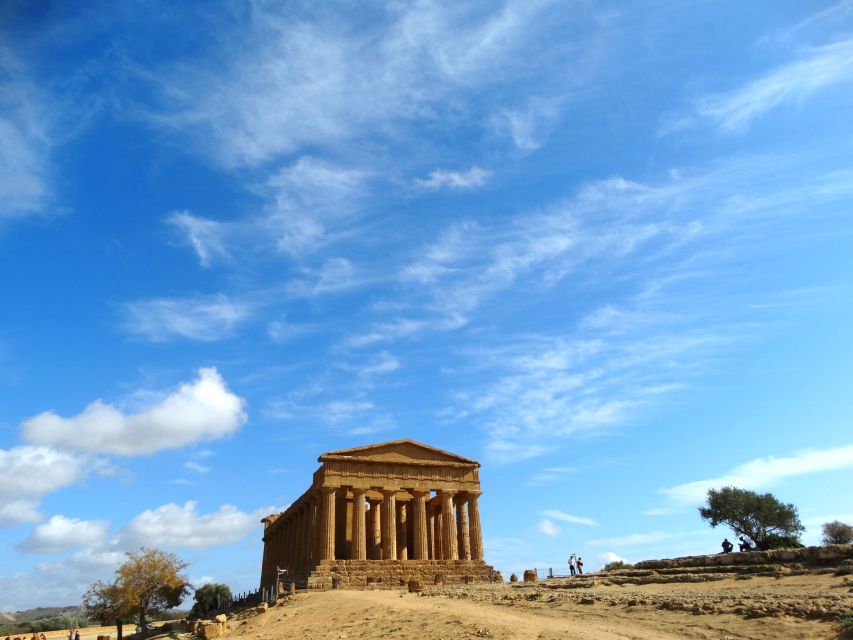
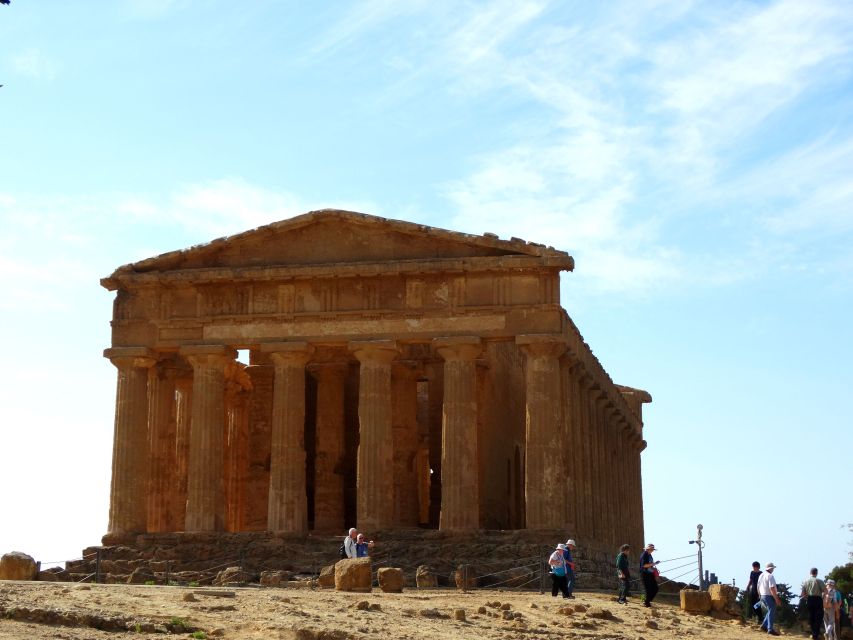
A short distance from Juno, the route reaches the Temple of Concordia, the best-preserved temple in Agrigento and one of the finest surviving Greek temples anywhere. It dates to about 430 BC and owes much of its condition to a later change in use: the building was converted into a Christian church.
That later reuse helped protect the structure. The columns, steps, and main form remain remarkably clear, making Concordia the place where the ancient design is easiest to read. You can see why this temple often becomes the visual centerpiece of a visit to the valley.
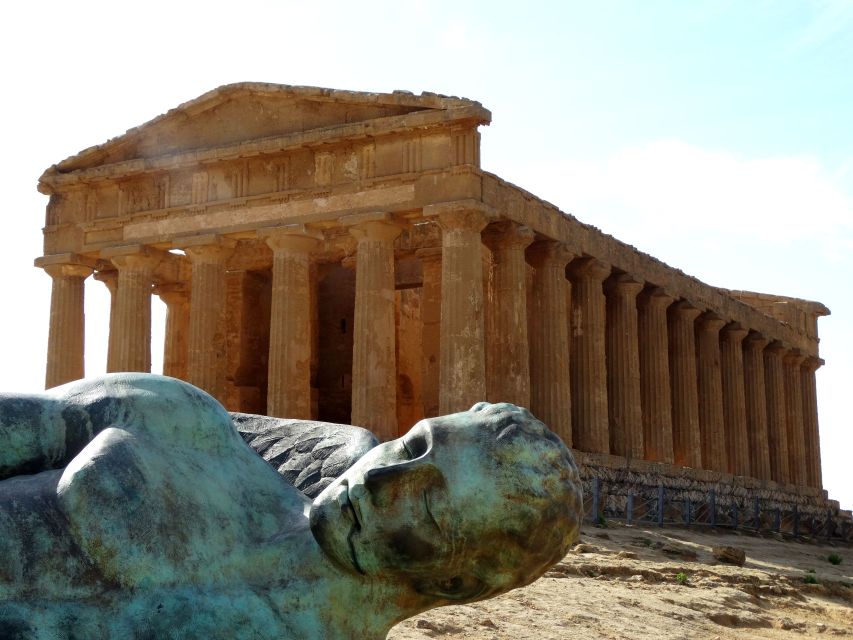
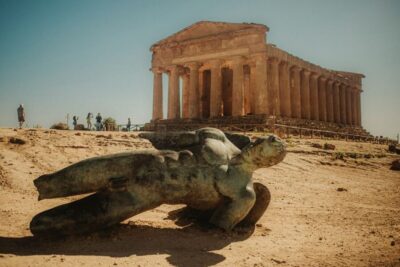
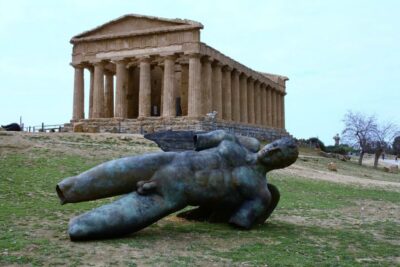
In front of the temple is a bronze statue of Icarus by Polish sculptor Igor Mitoraj. The figure shows Icarus after his fall, recalling the Greek story of the young man who flew too close to the sun, melted the wax holding his wings together, and fell into the Mediterranean.
The statue creates an interesting contrast. Behind it is an ancient temple built for religious worship; in front is a modern work that interprets a famous myth through a damaged, fallen human figure. You get a reminder that the valley is not frozen in one period. Ancient remains, Christian use, modern sculpture, and present-day visitors all form part of what you see.
I would give Concordia your full attention, even on a tight schedule. It is the most complete monument on this route, and the guide’s explanation can help you notice the details that a quick photograph misses.
The Temple of Hercules and the path through the valley
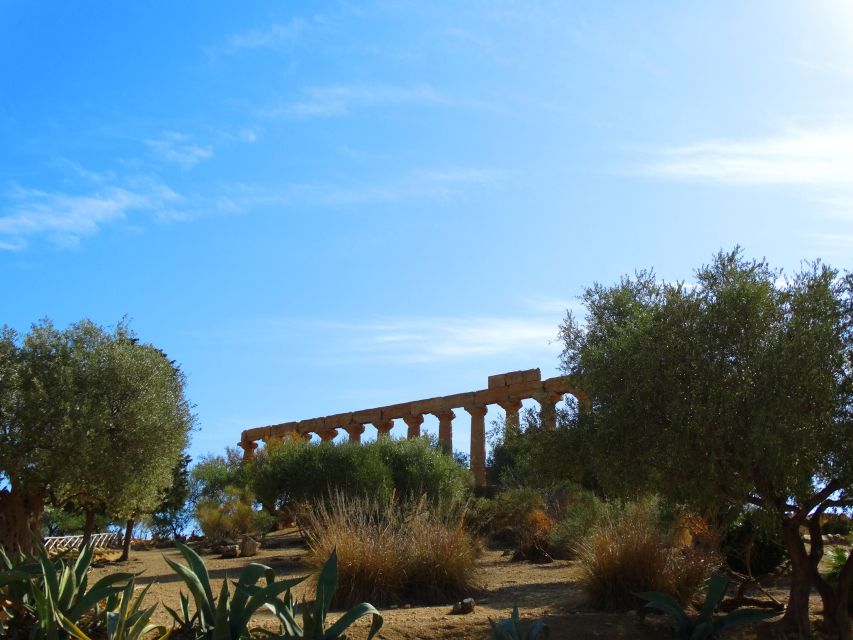
The Temple of Hercules, or Heracles in Greek tradition, is identified as the oldest of Agrigento’s Doric temples. Its name comes from a bronze statue of Hercules that was once associated with the building.
Here, the experience changes from the strong visual impact of a mostly preserved temple to the challenge of imagining what once stood on the site. The surviving remains help establish the building’s size and age, while your guide supplies the missing context.
The walk between the temples is part of the appeal. The route passes prickly pear plants and opens to panoramic views over the valley. I like this section because it gives you room to take in the setting instead of looking only at masonry. It also makes clear that the temples were built into a much larger environment.
The tour details do not promise a completely flat or effortless walk, so sensible shoes are a good practical choice. You are visiting an extensive archaeological area on foot, with paths connecting monuments that are spread across the site. The two-hour schedule keeps the visit moving, but you should still allow enough time around the tour for buying tickets and getting to the meeting point.
Same island, a completely different day out:
- Agrigento: Valley of the Temples Skip-the-Line Sunset Tour
★ 4.5 · 1,512 reviews - Agrigento: Valley of the Temples Ticket & App Audioguide
★ 4.3 · 1,160 reviews - Agrigento: Valley of the Temples E-Scooter Tour
★ 4.6 · 557 reviews - Palermo: Valley of the Temples and Scala dei Turchi Day Trip
★ 4.1 · 380 reviews
The Temple of Jupiter and the giant Telamon
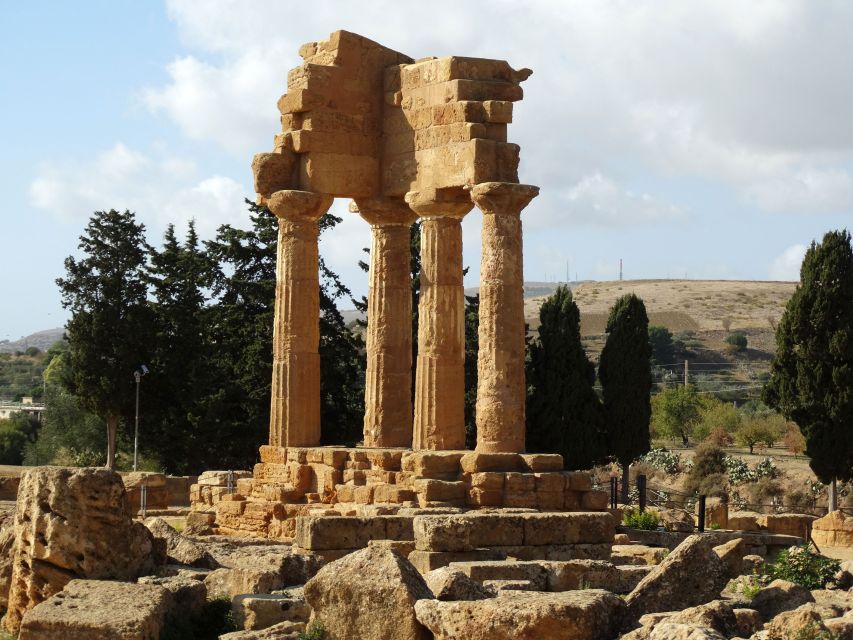
The Temple of Jupiter, or Zeus, is the most ambitious stop on the route. It was originally one of the largest temples of the ancient Greek world, but earthquakes caused serious damage over time. Its fallen blocks were later used as a quarry for construction of the pier at nearby Porto Empedocle.
This history of reuse can be frustrating when you first see the ruins. Instead of a complete temple, you find a wide area of massive stone remains. Yet those fragments also show the scale of the original project. The temple was not simply damaged and forgotten. Its materials continued to serve later building work.
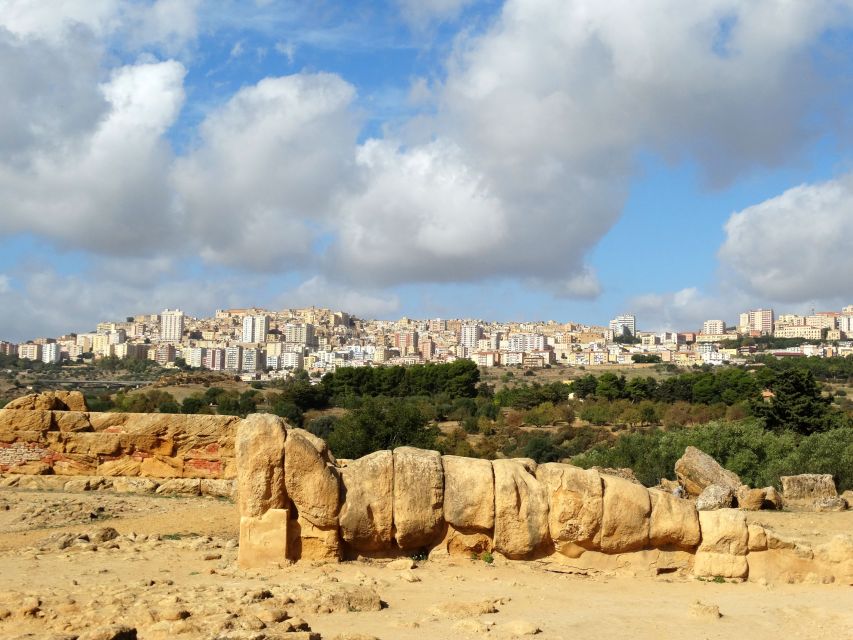
The clearest way to understand its size is the reconstructed Telamon. This stone giant is more than seven meters tall and represents the figures placed outside the temple to protect the deity. Seeing one of these sculptures restored gives you a rough sense of the building’s original ambition.
The Telamons were not ordinary decoration. Their huge bodies were part of the temple’s visual power, making the gods seem even more imposing and the human visitors smaller by comparison. At Jupiter, your guide can connect the surviving blocks, the reconstruction, and the original design so the ruins become easier to picture.
This is a stop where expert explanation adds real value. Without context, the scattered remains may seem less impressive than Concordia. With the Telamon and the story of the temple’s later use, you can better understand why Jupiter was such a remarkable ancient undertaking.
What the private format is worth
The listed price is $326.26 per group of up to 25 people. That price is not per person, so the value changes sharply depending on your group size. For a couple, it is a substantial expense. For a larger family or a group of friends, the same fee can become much more reasonable when divided among everyone.
You are paying for a licensed guide and a private two-hour visit, not for admission. Entry tickets must be purchased separately at the ticket office, and the museum is not included. Budget for both the group price and the archaeological-area tickets before you decide.
The private setup is most useful if you want a set language, a personal pace, or the freedom to ask questions as you go. Italian, English, French, German, and Spanish are available, so check the selected time and language carefully when booking.
A private group of up to 25 is also worth examining closely. The word private does not necessarily mean a tiny tour for two or four people. If your party is large, you can still benefit from having your own guide, but the experience may feel less intimate as the group approaches the maximum size.
The high rating of 4.2 from 11 posted ratings suggests a generally positive response, though it is not a large sample. The strongest praise focuses on the tour being very informative and worth the price. That matches the main strength here: the route covers major sights efficiently, and the guide gives the ruins a clear story.
Timing, meeting point, and useful planning
The tour lasts two hours, with starting times shown according to availability. Since the meeting point is at the Valley of the Temples rather than in central Agrigento, plan your arrival around the Juno ticket office and car park.
Meet outside the ticket office, near the Temple of Juno, and look for the guide’s visible license badge. The activity ends at the same meeting point, which makes it easier to continue your day from there or arrange onward plans without needing a separate return transfer.
Admission is not included, but tickets can be bought on the spot at the ticket office. You may want to arrive early enough to handle that purchase before the tour begins, since the guide is not providing the ticket as part of the booking.
The museum is also excluded. If you want to see it, treat it as a separate part of your Agrigento visit rather than expecting it to be covered during the two-hour walk.
The booking terms are flexible: you can cancel up to 24 hours ahead for a full refund, and you can reserve now while paying later. Those details help if your Sicilian route is still changing, though the key practical issue remains the meeting point and separate admission cost.
Who will get the most from this tour
I would choose this tour if you want the main temples explained in a clear order and do not want to work out the site’s layout alone. It is a good fit for first-time visitors, families who want a focused visit, and groups that prefer a guide speaking their chosen language.
It also suits anyone who cares more about context than simply taking photographs. The Temple of Concordia is easy to admire on your own, but Juno, Hercules, and especially Jupiter become more meaningful when you understand their dates, names, uses, and later damage.
The tour may be less suitable if you want a slow, exhaustive visit to every part of the archaeological area. Two hours gives you the principal route, not unlimited time for lingering at each ruin. You also pay the guide fee in addition to entry, so solo visitors and couples should compare that cost with a regular group tour or a self-guided visit.
The biggest practical advantage is focus. You see four major temples, the Icarus statue, and the Telamon without spending your whole day trying to decide what matters most.
Should you book the Ancient Akragas tour?
Book it if you are traveling with a group, want a licensed guide, and value a well-organized explanation of the Valley of the Temples. The route includes the monuments most people hope to see, and the mix of archaeology, mythology, later Christian use, modern art, and panoramic views gives the visit plenty of variety.
Think twice if your party is very small and the $326.26 group fee feels high before tickets are added. In that case, the guide’s information may still be worth paying for, but the value is strongest when several people share the cost.
For a balanced first look at Agrigento, I would choose this two-hour tour and reserve extra time around it for tickets, the museum if desired, and a closer look at the monuments that catch your eye.
FAQ
How long does the tour last?
The guided visit lasts two hours.
Where does the tour begin?
It begins at the Valley of the Temples, outside the ticket office and car parking area near the Temple of Juno.
Where does the activity end?
The tour ends back at the same meeting point near the Temple of Juno.
Are entry tickets included?
No. Archaeological-area entry tickets are not included, but you can buy them at the on-site ticket office.
Is the museum included?
No. The museum is not included in this activity.
What monuments are visited?
The route includes the Temple of Juno, Temple of Concordia, Temple of Hercules, and Temple of Jupiter. It also includes the bronze Icarus statue and the reconstructed Telamon.
Is this a private tour?
Yes. It is offered as a private group activity, with groups of up to 25 people.
Which languages are available?
The live guide may provide the tour in Italian, English, French, German, or Spanish.
Can I cancel the booking?
Yes. You can cancel up to 24 hours in advance for a full refund. The reserve-now, pay-later option is also available.
Just added around Agrigento
- Catamaran excursions to the Scala dei Turchi★ 4.3 · 3 reviews
- Private Tour : Agrigento & Scala dei Turchi★ 5.0 · 3 reviews
- From Agrigento to Siracusa: Valley of Temples & Roman Villa★ 5.0 · 3 reviews
- Agrigento: Valley of the Temples and Historical Center by E-Bike with Lunch Included★ 5.0 · 4 reviews
- E-BIKE TOUR AGRIGENTO: Valley of the Temples & Old Town with meal included★ 5.0 · 4 reviews
- Full day Agrigento from Palermo – Tuesday, Thursday, Friday★ 4.0 · 4 reviews
- Private tour from Palermo to Agrigento and Piazza Armerina★ 4.0 · 4 reviews
- Horseback riding in the beaches of Sciacca★ 4.8 · 4 reviews
Agrigento Tours, compared.
Valley of the Temples Skip-the-Line Sunset Tour
Read our review →
Valley of the Temples Ticket & App Audioguide
Read our review →
Valley of the Temples and Scala dei Turchi Day Trip
Read our review →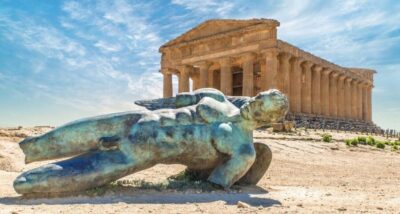
Valle dei Templi Fast-Track Ticket & Smart Guide
Read our review →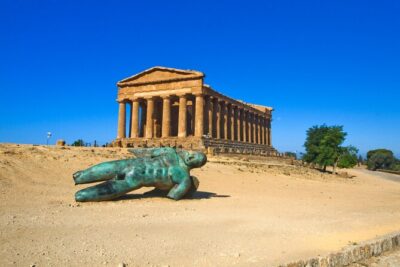
Valley of the Temples Entry Ticket & Audio Guide
Read our review →
Browse the lists this tour appears in