
Reviewed · DAY TRIPS IN TAORMINA
Private Day Trip to Syracuse from Taormina
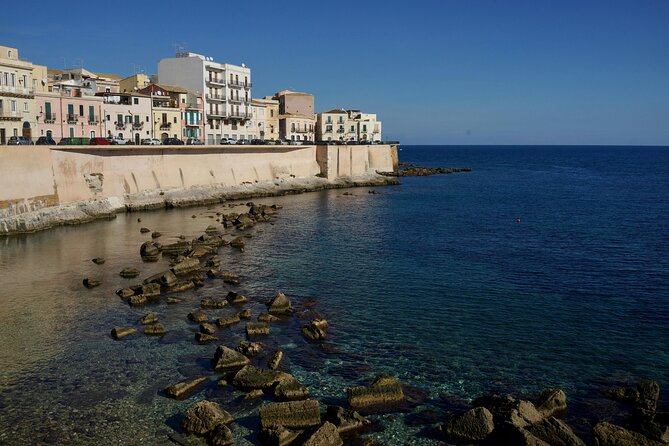
Syracuse gives you a fine change of pace from Taormina. This private day trip combines the Greek and Roman ruins of Neapolis with the old island quarter of Ortigia, where markets, fountains, a cathedral, and sea views fill a compact historic center. The drive takes about 90 minutes each way, so the day is long but worthwhile.
I like the door-to-door pickup and the freedom of having your own vehicle. You also get a useful mix of guided sightseeing and unstructured time, with two hours to eat, shop, or simply wander through Ortigia. Driver Carmelo earned special praise for being prompt and well informed.
The main drawback is the time spent on the road. The archaeological park may also feel less surprising if you have already seen Taormina’s Greek Theater. The short 15-minute cathedral visit and quick stops at several monuments are enough for an overview, not a deep study.
In This Review
- Five things to know before booking
- Why Syracuse makes a good day trip from Taormina
- The 90-minute ride from Taormina
- Walking through Neapolis Archaeological Park
- A quick look inside Syracuse Cathedral
- Following the food smells at Ortigia Market
- The Temple of Apollo and Syracuse’s ancient layers
- Fonte Aretusa and the story of Aretusa
- Piazza Archimedes and the Fontana di Diana
- Two free hours on the island of Ortigia
- What the $600.76 group price covers
- Who will get the most from this private day
- Is this Syracuse day trip worth booking?
- FAQ
- How long does the private Syracuse trip take?
- How long is the drive from Taormina to Syracuse?
- Is pickup included from my accommodation?
- How many people can join the private tour?
- Is the vehicle air-conditioned?
- Is lunch included?
- How much are the entrance fees?
- How much free time do I get in Ortigia?
- What sights are included at Neapolis?
- Can I cancel for a full refund?
Five things to know before booking
- A private vehicle for up to three people: The $600.76 group price works out to about $200 per person for three people, with fuel, parking, water, and transport covered.
- Neapolis takes about 90 minutes: Your ticket is separate, and the park includes the Greek Theater, Roman amphitheater, stone quarries, Ear of Dionysius, and Altar of Hieron.
- Ortigia gets the most free time: You have two hours to explore Syracuse’s oldest district at your own speed.
- The drive is simple but substantial: Plan on roughly three hours in the vehicle over the course of the day.
- Lunch and admission fees are extra: Budget €13.50 for Neapolis and €2 for the cathedral per person, plus your meal.
- Pickup is arranged at your accommodation: If your lodging sits in a pedestrian-only area, you will be given a nearby meeting point.
Why Syracuse makes a good day trip from Taormina
Taormina is famous for its hilltop setting and Greek Theater. Syracuse offers something different: a larger archaeological zone and a historic center built on an island. That contrast gives this excursion a clear purpose rather than simply repeating what you have already seen.
The day is split between two kinds of sightseeing. At Neapolis, you walk among major ancient monuments in a broad green park. In Ortigia, you move through streets and squares that still function as part of a living city, with a food market, churches, fountains, and places to stop for lunch.
I like that the tour does not try to fill every minute with formal commentary. You get a driver, private transport, and a planned route, but the two-hour Ortigia block lets you set your own rhythm. That matters in a city where the best moments often come from pausing in a square or following a side street.
More Day Trips in Taormina
- Mount Etna Day Trip from Taormina
★ 4.5 · 271 reviews - Aeolian Islands Day Trip from Taormina: Stromboli and Panarea
★ 3.5 · 238 reviews - Aeolian Islands Day Trip from Taormina: Lipari and Vulcano
★ 4.0 · 110 reviews
The 90-minute ride from Taormina
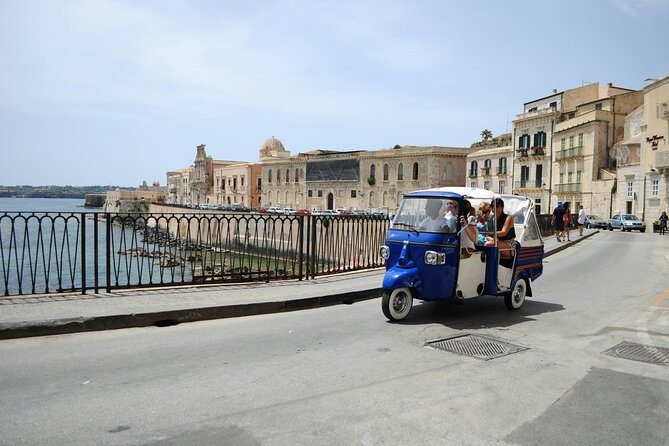
Pickup is offered from your accommodation in Taormina or the surrounding area. If the vehicle cannot reach your lodging because it is in a pedestrian zone, the provider will tell you where to meet the driver.
The ride to Syracuse takes about an hour and a half. That makes the air-conditioned vehicle more than a convenience. It is the reason this outing works as a day trip without asking you to manage trains, buses, parking, or several separate transfers.
Private transport also gives your group a quieter setup than a large coach. The experience is limited to your party, up to three people, so you can keep the day focused on your own interests. Bottled water is included, as are parking fees and the fuel surcharge.
Traffic can affect the timing, and the stated seven to eight hours allows room for road conditions and necessary stops. You should think of this as a full day, not a quick half-day outing.
Walking through Neapolis Archaeological Park
Neapolis is the most substantial sightseeing stop, with about 90 minutes set aside. Admission is not included, so expect to pay €13.50 per person.
The park gathers some of Syracuse’s most important ancient remains in one place. The Greek Theater is the headline attraction, but it is only part of the visit. You can also see the Roman amphitheater, ancient stone quarries, the Ear of Dionysius, and the Altar of Hieron.
The Ear of Dionysius is one of the park’s more memorable features. It is an ancient stone quarry known for its unusual shape and acoustics. The quarries also help you understand how much stone was cut from this area to build the ancient city.
The Greek Theater may feel familiar if you have already visited Taormina’s theater. That is a fair point to consider before booking. Taormina’s setting gives its theater a dramatic appeal, while Neapolis offers a broader collection of ruins. If you care most about ancient structures and want to compare two major Sicilian sites, the pairing works well. If you want a completely new visual experience, the park may not be the strongest part of the day.
Ninety minutes is enough to see the main sections, but it is not enough for a slow archaeological study. You will need to keep moving and accept an overview. The separate admission fee is modest compared with the overall private-tour cost, but include it in your planning.
A quick look inside Syracuse Cathedral
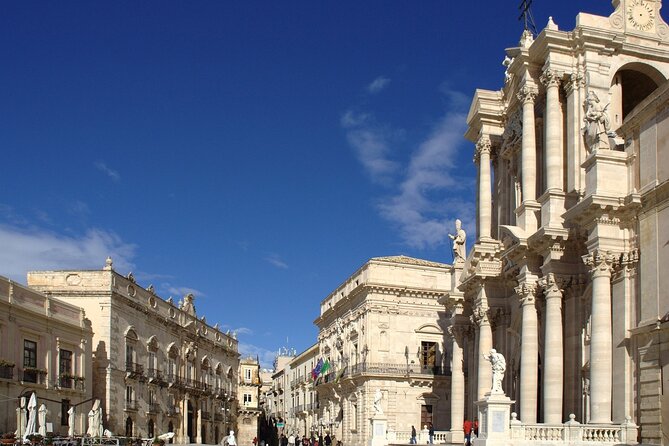
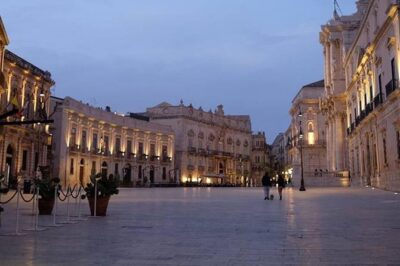
The Cathedral of the Nativity of the Blessed Virgin Mary sits in the highest part of Syracuse’s old center. Its facade combines Baroque and Rococo design, giving you a sharp change from the open ruins of Neapolis.
The planned stop lasts about 15 minutes, and admission costs €2 per person. This is a brief visit rather than a long church tour. You can take in the facade and interior atmosphere, but you will not have much time for a detailed look at the building.
That short stop works best if you treat it as one piece of Ortigia’s larger story. The cathedral is not isolated from the city around it. It helps show how Syracuse moved from ancient Greek settlement to later Roman, Christian, and Sicilian forms.
More full-day trips out of Taormina:
- From Taormina: Syracuse and Noto Guided Day Trip by Bus
★ 4.3 · 101 reviews - From Taormina: Palermo and Cefalù Day Trip
★ 4.0 · 49 reviews - Day Trip: Noto and Siracusa Highlights From Catania or Taormina
★ 5.0 · 25 reviews - Catania: Giardini, Taormina, and Castelmola Day Trip
★ 4.5 · 16 reviews
Following the food smells at Ortigia Market
The market sits near the entrance to Ortigia. Even with only 15 minutes allocated here, you get a quick sense of local food culture through spices, chili peppers from Mount Etna, almond cakes, seafood, and fresh fish.
This is the sort of stop where you should keep your expectations in check. Fifteen minutes is enough to look around and notice the products, but not enough for a relaxed market meal or a long conversation with vendors. The market also gives you ideas for what to order later during your free time.
I like this part because it brings the trip down from grand monuments to ordinary Sicilian food. If you are curious about local ingredients, pay attention to the almond sweets, dried spices, seafood, and Etna-grown peppers. You may find the market more useful as a preview of lunch than as a full activity on its own.
The Temple of Apollo and Syracuse’s ancient layers
The remains of the Temple of Apollo sit in a garden near the entrance to Ortigia. The temple dates to the beginning of the sixth century BC, making it one of the oldest sights on the route.
Only five minutes are set aside here, so this is a photo and orientation stop. You will not have time for a long examination of the ruins. Still, its location helps you see how ancient Syracuse is woven into the modern city rather than confined to one fenced archaeological area.
The stop also makes sense in sequence. You have just visited Neapolis, then you enter Ortigia and encounter another ancient monument within the active city. The result is a quick lesson in how different periods overlap in Syracuse.
Fonte Aretusa and the story of Aretusa
Fonte Aretusa is a water basin in the oldest part of Ortigia. Papyrus plants grow around the water, and the spring is tied to the legend of Aretusa and Alfeo.
The planned visit lasts about 10 minutes. That is enough to pause, see the papyrus, and hear or recall the old story connected with the spring. It is also one of the calmer visual breaks in the route, especially after the stone ruins and city streets.
Do not expect a long stop or a formal nature visit. Fonte Aretusa is best treated as a small but distinctive feature along the Ortigia walk. Its value comes from the combination of water, plants, mythology, and place.
Piazza Archimedes and the Fontana di Diana
Another 10-minute stop brings you to the Fontana di Diana in Archimedes Square. Giulio Moschetti created the monumental fountain, which represents Diana, the goddess of hunting and an ancient protector of Syracuse.
The fountain gives you a clear urban focal point. It is not simply another ruin, and it helps break up the sequence of ancient sites with a later civic monument. The square also works as a useful place to get your bearings before the longer free period.
Because the stop is brief, take a quick look, note the surrounding buildings, and save your energy for Ortigia’s two-hour open block.
Two free hours on the island of Ortigia
Ortigia is the heart of the experience for many people. It is the oldest district of Syracuse, a compact island quarter connected to the larger city. You get two hours here without a fixed list of tasks.
That free time is a real advantage. You can return to a market stall, look more closely at the cathedral, sit down for lunch, or simply walk without watching the clock every few minutes. Lunch is not included, so this is when you will need to pay for your meal.
The area can become crowded, particularly when a cruise liner is in port. That does not cancel the appeal of Ortigia, but it can affect how easily you move through its streets and how quickly you find a table. If your group prefers quiet corners, use the free period to move away from the busiest points rather than trying to see everything.
Two hours is long enough to get a genuine taste of the district, though not enough to cover every street. I would resist spending the whole block shopping or eating. Keep some time for a slow walk through the squares and along the older lanes.
The private format helps here. You are not waiting for a large group to reassemble after each photo stop. You can ask the driver for practical direction, then use the free period according to your own interests.
What the $600.76 group price covers
The price is $600.76 per group of up to three people. For three people, that is about $200.25 each. For two people, the per-person cost is higher, but you are still paying for a private vehicle and driver rather than a seat on a shared excursion.
The included services are useful:
- Air-conditioned vehicle
- Private transportation
- Bottled water
- Parking fees
- Fuel surcharge
- Pickup from your accommodation, subject to access
The value depends on how much you prize convenience and privacy. If you are already comfortable arranging a rental car, parking, and the Syracuse route yourself, the price may feel high. If you want someone else to handle the long drive and road logistics, the cost becomes easier to justify, especially with three people sharing it.
You should add €13.50 per person for Neapolis and €2 per person for the cathedral. Lunch is also separate. These extra costs are small beside the tour price, but knowing them ahead of time keeps the day’s budget clear.
Who will get the most from this private day
I would choose this outing for a couple, small family, or trio staying in Taormina who wants to see Syracuse without changing hotels. It suits people who value a private vehicle, a simple pickup, and a flexible block of time in Ortigia.
It is also a good fit if you want both major ancient remains and a working Sicilian town in one day. The route gives you enough structure to avoid wasting time, while the private format keeps the group small.
You may want to skip it if your main goal is a slow, detailed archaeological visit. The schedule gives Neapolis about 90 minutes and several Ortigia sights only five to 15 minutes. You may also find the day repetitive if Taormina’s Greek Theater already satisfied your interest in ancient theaters.
The tour is offered in English, and confirmation is sent within 48 hours of booking, subject to availability. Most people can participate, and service animals are allowed. Free cancellation is available until 24 hours before the start time, but changes or cancellations inside that window are not accepted.
Is this Syracuse day trip worth booking?
Book it if you want a private, efficient way to reach Syracuse from Taormina and you care most about seeing the main sights without handling transport yourself. The strongest part is the combination of Neapolis and two hours in Ortigia, not any single five-minute monument stop.
I would be especially comfortable recommending it to three people sharing the cost. The outing becomes less attractive for solo visitors or anyone who prefers a slow, highly detailed museum-style tour. Keep the long drive and extra entrance fees in mind, then book if Ortigia’s streets, market, cathedral, and ancient ruins sound like the right contrast to Taormina.
FAQ
How long does the private Syracuse trip take?
The experience lasts about seven to eight hours, including the drive from Taormina to Syracuse and the return journey.
How long is the drive from Taormina to Syracuse?
The drive takes about one hour and 30 minutes each way.
Is pickup included from my accommodation?
Yes. Pickup is offered from your accommodation in Taormina or the surrounding area. If your accommodation is in a pedestrian-only zone, you will be told where to meet the driver.
How many people can join the private tour?
The price covers one private group of up to three people. Only your group participates in the activity.
Is the vehicle air-conditioned?
Yes. An air-conditioned vehicle is included.
Is lunch included?
No. Lunch is not included, so you will need to pay for your own meal during free time in Ortigia.
How much are the entrance fees?
The archaeological park costs €13.50 per person, and Syracuse Cathedral costs €2 per person. Neither admission fee is included in the tour price.
How much free time do I get in Ortigia?
You get about two hours of free time to explore Ortigia.
What sights are included at Neapolis?
The park includes the Greek Theater, Roman amphitheater, ancient stone quarries, Ear of Dionysius, and Altar of Hieron. The park admission fee is separate.
Can I cancel for a full refund?
Yes. You can cancel at least 24 hours before the experience start time for a full refund. Cancellations and changes made less than 24 hours before the start time are not accepted.
Just added around Taormina
- Taormina PRIVATE EAST COAST EXCURSIONS 2 Exclusive Days with Guide Driver★ 5.0 · 3 reviews
- 1-hour quad bike excursion in the Alcantara Valley★ 5.0 · 3 reviews
- Taormina: BOAT PARTY IN CATAMARANO NELLA BAIA DI TAORMINA★ 5.0 · 3 reviews
- Messina, Savoca, Taormina e Castelmola★ 5.0 · 3 reviews
- From Taormina: Private Godfather Tour with lunch★ 4.7 · 3 reviews
- From Catania: Etna & Taormina Day Trip★ 5.0 · 3 reviews
- Boat Tour Taormina Isola Bella Giardini Naxos 8 hours★ 5.0 · 3 reviews
- Taormina: Historical Highlights Private Guided Walking Tour★ 5.0 · 3 reviews
Day Trips in Taormina, compared.


Aeolian Islands Day Trip from Taormina: Stromboli and Panarea
Read our review →
Aeolian Islands Day Trip from Taormina: Lipari and Vulcano
Read our review →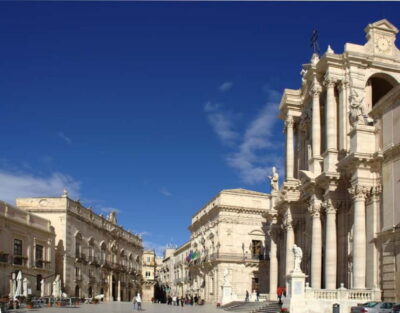

Day Trip: Noto and Siracusa Highlights From Catania or Taormina
Read our review →
Package of 2 private tours in one day: Etna-Godfather with Lunch
Read our review →Browse the lists this tour appears in